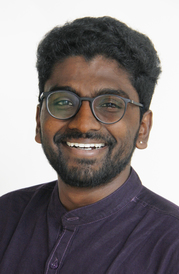
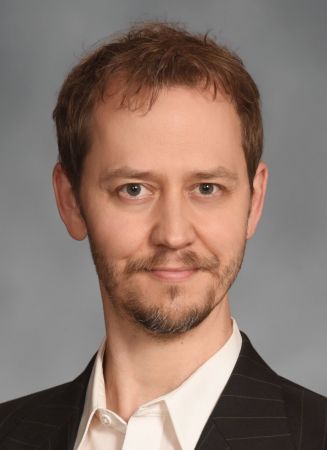
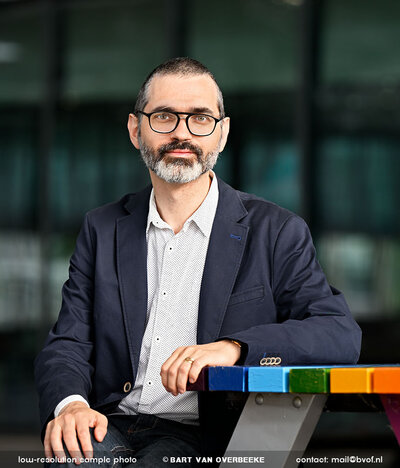
Anjany Sekuboyina is a Postdoctoral Researcher at ETH Zurich's Department of Quantitative Biomedicine, focusing on medical image analysis using machine learning. Her work emphasizes deployable solutions for hospitals, including probabilistic ML, generative models, and relational ML/graph-based approaches. She co-developed the VerSe dataset, a large-scale CT spine segmentation benchmark, and contributed to projects like MedShapeNet and GenerateCT. Research Interests: Medical Image Segmentation (e.g., vertebrae, spine, and vascular structures) Generative Models for Medical Imaging Synthesis Relational Machine Learning and Graph Neural Networks Automated Clinical Workflow Integration Labs/Teams: Bjoern Menze Team at ETH Zurich. Active contributor to open-source repositories like VerSe (234 stars) , focusing on medical imaging challenges and datasets.
Dimitra Gkatzia is an Associate Professor at the School of Computing Engineering and the Built Environment at Edinburgh Napier University. She holds a PhD in Computer Science from Heriot-Watt University (2015) and an MSc in Artificial Intelligence (Distinction, top student) from the same institution, along with a BSc (Hons) in Digital Systems from the University of Piraeus, Greece. Her research focuses on Natural Language Generation (NLG) for low-resource domains/languages , emphasizing commonsense capabilities in human-robot interaction (HRI) systems. She pioneers privacy-preserving NLP methods and advocates for ethical AI innovation . Her work spans uncertain data presentation , multimodal communication , and career decision-making interfaces for youth. Recent publications highlight her expertise in participatory design for social impact, context-aware dialogue systems grounded in documents, and robustness against poisoning attacks in low-resource NLP. She leads the Natural Language Processing Group at Edinburgh Napier and co-leads the SICSA AI Theme (2021–present), fostering interdisciplinary collaborations. Best paper award at INLG 2021 Keynote speaker at INLG 2022 Fellow of the Higher Education Academy Current projects include Natural Language Generation for Low-resource Domains (EPSRC), CiViL: Commonsense and Visually Enhanced NLG (EPSRC), and Blockchain-based Privacy-Preserving Cybersecurity . She supervises PhD candidates in areas like Fake News Detection and Edge NLP Applications .
Eric P. S. Baumer is an Associate Professor of Computer Science & Engineering at Lehigh University’s Rossin College of Engineering. His research focuses on human interactions with algorithmic systems, particularly in social computing contexts. He holds a PhD in Information & Computer Sciences from the University of California, Irvine, and a BS in Computer Science from the University of Central Florida. His work has been supported by the National Science Foundation, including an NSF CAREER grant. Prof. Baumer’s research interests include Human-Computer Interaction (HCI), Social Informatics, and Technology Resistance/Non-use. He explores topics such as privacy pluralism, algorithmic ethics, and the societal impacts of AI. Notable projects include studying privacy concerns during the pandemic, misinformation dynamics in online communities, and the cultural production of ethics in STEM labs. His recent work emphasizes methodological innovation for AI-mediated interactions and the design of privacy-enhancing technologies (PETs). He has published extensively in top venues like ACM CHI and CSCW conferences, and his research engages interdisciplinary perspectives from sociology, political science, and cognitive psychology. Education: PhD in Information & Computer Sciences, University of California, Irvine (2009) M.S. in Information & Computer Sciences, University of California, Irvine (2006) B.S. in Computer Science (with Music minor), University of Central Florida (2004) Awards: NSF CAREER Grant (NSF) Grants & Funding: Ongoing support from the NSF for research on algorithmic systems and privacy. Prof. Baumer’s lab investigates how technology intersects with societal values, emphasizing participatory design and ethical considerations. He collaborates with researchers across disciplines to address challenges in misinformation, privacy, and sustainable technology use.
Jindong Wang is a Tenure-Track Assistant Professor in the Department of Data Science at William & Mary. He is also a faculty member of the AI Safety Community at the Future of Life Institute. Previously, he was a Senior Researcher at Microsoft Research Asia from 2019 to 2024. His work spans robust, trustworthy, and responsible AI, with a focus on foundation models, transfer learning, and AI for social sciences. PhD, University of Chinese Academy of Sciences (2019) Bachelor’s, North China University of Technology (2014) Dr. Wang’s research centers on enhancing the reliability and societal impact of AI systems. Key areas include robust machine learning, domain generalization, federated learning, semi-supervised learning, and large language model evaluation and enhancement. He is particularly interested in the philosophical and behavioral aspects of LLMs and how AI can be leveraged in interdisciplinary domains such as social sciences. His work aims to build AI systems that are not only high-performing but also safe, interpretable, and aligned with human values. His recent publications (2021–2025) in top venues like TPAMI, NeurIPS, ICML, ICLR, and ACL reflect a strong trend toward understanding and improving foundation models—especially in noisy or out-of-distribution settings—and developing frameworks for dynamic evaluation, agent behavior, and trustworthy AI. These works often combine theoretical rigor with practical open-source implementations, demonstrating a commitment to reproducibility and community impact. World’s Top 2% Highly Cited Scientists (Stanford, since 2022) Most Influential AI Scholar (AMiner, since 2022) Best Paper Award, AAAI 2025 Good Data Workshop William & Mary Faculty Research Award (2025) Top 17 Most Cited NeurIPS Papers (2021) PaperDigest Most Influential CIKM Paper (2021) Most Cited Paper in ICDM 2017 and 2nd Most Cited in MM 2018 Dr. Wang actively mentors PhD and master’s students and welcomes internship applications for future cohorts. He has secured significant research visibility and impact, with over 20,000 citations (H-index 50) and leadership roles as associate editor of IEEE TNNLS, guest editor for ACM TIST, and area chair for ICML, NeurIPS, ICLR, KDD, and ACL. He has delivered tutorials at major conferences including IJCAI, WSDM, KDD, AAAI, and CVPR. His research is supported by collaborations with leading institutions and industry partners, and has been featured in Forbes and MIT Technology Review. He leads several influential open-source projects, including transferlearning , PromptBench , torchSSL , and USB , which together have received over 20,000 GitHub stars. These tools support research in transfer learning, prompt engineering, semi-supervised learning, and unified self-supervised benchmarks. He is also organizing key workshops such as FedGenAI-IJCAI’25 and the ICCV 2025 workshop on Trustworthy Study Transfers, fostering community engagement in emerging AI challenges.
Dirk Wulff serves as Senior Research Scientist at the Max Planck Institute for Human Development's Center for Adaptive Rationality and Senior Adjunct Researcher at the University of Basel's Center for Cognitive and Decision Science. His work bridges cognitive psychology, computational modeling, and artificial intelligence to address fundamental questions in human decision-making and semantic representation. Education: PhD in Psychology, University of Berlin & Max Planck Institute for Human Development (2015) Research Interests: Wulff's primary focus spans large language models, semantic networks, and learning mechanisms, with significant contributions to information search strategies, generalizability in psychological measurement, and sustainability applications. His work integrates cognitive network science with behavioral experiments to model risk perception, decision processes, and age-related cognitive changes. He pioneers methods for using LLMs to enhance psychological measurement validity and address taxonomic incommensurability in theoretical constructs. Publication Trends: His 2024-2025 publications reveal intense focus on LLM applications in behavioral science, particularly semantic embeddings for psychological measurement, experiential simulations for risk communication, and open-source tools development. Key themes include resolving conceptual ambiguities in psychological constructs, modeling pre-decisional information search, and translating network science into practical cognitive aging research. His work consistently bridges theoretical cognitive models with real-world applications in sustainability and clinical contexts. Scientific Awards: Otto Hahn Medal, Max Planck Society (€7,000) Grants and Advising: Wulff secured €617,320 from the German Research Foundation for addressing the generalizability crisis using LLMs, €398,972 from the Swiss National Science Foundation for studying age-related semantic network changes, and €49,258 from the Biäsch Foundation for harnessing simulated experiences. While no formal advisees are listed, his R packages (text2sdg, cstab, mousetrap) support widespread methodological training in behavioral science. Labs and Tools: As Head of the 'Search and Learning' Research Area at the Center for Adaptive Rationality, Wulff leads a team developing computational models of human information search. His open-source R packages enable semantic network analysis (text2sdg), cluster validation (cstab), and mouse-tracking data processing (mousetrap), establishing critical infrastructure for cognitive and behavioral research globally.
Jon Clayden is an Associate Professor at University College London (UCL), affiliated with the UCL Great Ormond Street Institute of Child Health and the Developmental Neurosciences Department. His research focuses on understanding brain connectivity and information processing, particularly in pediatric populations, using advanced neuroimaging techniques like diffusion MRI. He develops computational methods for image analysis and applies them to clinical problems in child health. Education: PhD in Developmental Neurosciences from the University of Edinburgh (2007), MSc in Neurosciences from the University of Edinburgh (2004), and MA in Natural Sciences from the University of Cambridge (2002). Research Interests: White matter microstructural development Pediatric neuroimaging Neurological disorders in children Functional and structural connectivity Machine learning in medical imaging His work explores how brain networks change in disease and development, with applications to conditions like sickle cell anemia, epilepsy, and prematurity. He has contributed to tools like TractoR and the Neuroconductor R platform for reproducible neuroimaging analysis. Collaborations: Involved in projects such as the TRIDENT Preclinical Trials (funded by a $24M NIH grant) and the Neurodesk open-source initiative. Active in open science and methodological improvements for MRI techniques.
Michael Greenspan is a Professor in the Department of Electrical and Computer Engineering at Queen's University, affiliated with the Ingenuity Labs Research Institute. His expertise spans computer vision, image processing, and robotics. He holds a PhD in Systems and Computer Engineering from Carleton University and has extensive industry experience, including leading the Computational Video Group at the National Research Council of Canada. His research focuses on object recognition, motion planning, and applied computational geometry, with applications in autonomous robotics and 3D scene analysis. He has published over 30 technical papers and 3 patents, and collaborates with industry on applied projects. Education BSc in Physics and Applied Mathematics (1986), University of Toronto BASc and MASc in Electrical Engineering (1989, 1991), University of Ottawa PhD in Systems and Computer Engineering (1991), Carleton University Research Interests Object recognition and pose determination using geometric probing and minimalist template matching Efficient motion planning algorithms for robotic systems Computational geometry solutions like TINN for nearest neighbor problems Applications in autonomous robotic capture, LiDAR data analysis, and collaborative robotics Dr. Greenspan’s work bridges theoretical computer vision with practical robotic systems, emphasizing real-time performance and industrial relevance. His lab, the Robotics and Computer Vision Laboratory, develops algorithms for 3D localization, sensor fusion, and autonomous navigation. He is active in professional organizations like IEEE and serves on the Research Management Committee of Precarn Associates. Key Contributions Developed TINN for nearest-neighbor problem optimization Pioneered efficient collision detection methods for robotic motion planning Advanced 3D point cloud registration techniques using virtual interest points Co-created the CycleCrash dataset for bicycle collision analysis
Christoph Treude is an Associate Professor at Singapore Management University's School of Computing and Information Systems. He holds a PhD from the University of Victoria (2012) and leads research in software engineering, AI, and digital transformation. His work bridges theoretical foundations with practical applications in industry settings. His research focuses on: Software engineering methodologies and maintenance Human-AI collaboration in development workflows Microservice architecture optimization LLM applications in code analysis Digital transformation in emerging economies Software sustainability practices Ethical AI development frameworks Recent publications (2023-2025) demonstrate strong emphasis on generative AI integration in software development, microservice architecture optimization, and empirical studies of developer behavior. His work frequently addresses challenges in AI adoption, code maintenance, and cross-disciplinary applications of computing technologies. He currently advises graduate researchers: GUAN Xueting LOK Kek Wee
Mihaela Sardiu is an Associate Professor in the Department of Biostatistics & Data Science at the University of Kansas Medical Center (KUMC). Her expertise bridges theoretical physics, bioinformatics, and computational biology. She holds a PhD in Physics from Florida Atlantic University and completed bioinformatics training at the Stowers Institute. Her research focuses on developing computational methods for analyzing large-scale omics data to identify cancer-related biomarkers and study molecular networks using statistical physics principles. Dr. Sardiu’s educational background includes a BS and MS in Physics from the University of Bucharest, followed by postdoctoral work in proteomics and systems biology. She is affiliated with the University of Kansas Cancer Center and holds certifications in data science (Johns Hopkins) and SAS analytics. Her work emphasizes integrative omics analyses, network dynamics, and translational research applications. Her research has produced over a decade of high-impact publications, including studies on protein interaction networks, chromatin remodeling complexes, and statistical methods in proteomics. These contributions highlight her interdisciplinary approach to addressing complex biological questions through quantitative frameworks.
Jacob Steinhardt is an Assistant Professor in the Department of Statistics at UC Berkeley, where he is also part of BAIR (Berkeley Artificial Intelligence Research) and CLIMB. His research focuses on ensuring machine learning systems are understood by and aligned with humans, addressing critical challenges in AI safety and reliability. Dr. Steinhardt's research centers on three main directions: Robustness - developing models resilient to distributional shifts, adversaries, and model mis-specification; Reward specification and reward hacking - creating methods to infer complex value functions from data and prevent degenerate policies; and Scalable alignment - designing ML systems that conform to interpretable abstractions despite their large scale. His work rethinks both theoretical and empirical paradigms of machine learning to address these critical challenges to AI safety. An analysis of his recent publications reveals a consistent focus on understanding the internal mechanisms of neural networks, particularly large language models, to improve their alignment with human values. His research spans interpretability techniques, safety mechanisms, and evaluation frameworks, with significant contributions to understanding reward hacking, distributional shift, and model transparency. His work often combines theoretical insights with empirical validation through novel experimental frameworks. Dr. Steinhardt actively mentors a diverse group of PhD students including Ruiqi Zhong (co-advised with Dan Klein), Meena Jagadeesan (co-advised with Mike Jordan), Erik Jones (co-advised with Anca Dragan), and several others. His former students have gone on to positions at leading organizations including OpenAI, Genentech, and the Center for AI Safety. He is the Founder & CEO of Transluce, a non-profit research lab building open, scalable technology for understanding frontier AI systems. Through this initiative and his academic work, he contributes significantly to the growing field of AI safety research, bridging theoretical foundations with practical applications to make machine learning systems more reliable and beneficial.
Giorgio Valentini is a Full Professor at the Department of Computer Science, University of Milan, and a member of the UNIMI Doctoral School of Informatics. He leads the AnacletoLAB research group, focusing on developing AI methods for bio-medical applications, including genomics, bioinformatics, and computational biology. His work bridges machine learning, network analysis, and big data techniques to address challenges in healthcare and biomedicine. Education: Master Degree in Biology and Computer Science PhD in Computer Science (University of Genoa) Research Interests: Valentini's research emphasizes interdisciplinary approaches to biomedical problems, particularly: Development of imbalance-aware machine learning models for rare variant prediction Network-based gene prioritization and protein function prediction Integration of multi-omics data for disease modeling Applications of graph neural networks and knowledge graphs in healthcare Explainable AI for clinical decision support Awards & Recognition: In 2018, his work on predicting human gene-phenotype associations was honored as one of the best journal articles by the International Medical Informatics Association. He serves on the Editorial Board of Scientific Reports (Nature) . Grants & Collaborations: Principal Investigator of 10+ projects funded by national/international agencies, including collaborations with the European Union’s Joint Research Center, Berlin Institute of Health, and Jackson Lab. His work addresses challenges in rare diseases, cancer genomics, and precision medicine. Teams & Labs: Leads the AnacletoLAB, which develops tools like UNIPred-Web for biomolecular network analysis and RANKS for node classification. The lab emphasizes open-source software and reproducible research.
Alexander Serebrenik is a Full Professor of Social Software Engineering at Eindhoven University of Technology (TU/e), within the Department of Mathematics and Computer Science. He specializes in empirical software engineering, focusing on the socio-technical aspects of software development. His research bridges computer science and organizational psychology, emphasizing observation and experimentation. Serebrenik holds a PhD from KU Leuven and an MSc from the Hebrew University of Jerusalem. He has held academic positions across Europe, including postdoctoral roles in Belgium and France. Notably, he served as a part-time visiting researcher at CWI until 2017. His work includes over 100 publications, including co-authoring the book Evolving Software Systems . He actively contributes to conference organization and editorial boards, receiving multiple best paper and distinguished reviewer awards. Current teaching includes courses on empirical methods and software engineering. His research explores developer interactions with bots, gender diversity in GitHub teams, and strategies for veteran women developers. He advocates for integrating human factors into software tools and workflows. Education Background: PhD in Computer Science (KU Leuven), MSc in Computer Science (Hebrew University), with postdoctoral and visiting roles at Ecole Polytechnique (France), University of Mons, and University of Bari. Research Interests: Social Software Engineering, Human-Computer Interaction in Development, Empirical Methods, Technical Debt, Diversity in Tech, Bot Integration, and Open Source Communities. Key Publications Trends: Recent works focus on GitHub bots' autonomy preferences, veteran women developers' experiences, and dependency security tools like Dependabot. Themes emphasize human factors, collaboration dynamics, and ethical software practices. Scientific Awards: Best Paper Awards, Distinguished Reviewer Awards, IEEE Senior Membership Advising & Grants: Active in mentoring and securing grants for empirical software engineering projects Labs/Teams: Leads the Social Software Engineering group at TU/e, collaborating on projects like PerfBot for performance assessment and LaMa for thematic labeling.
Joanne Cleland is a Professor of Speech and Language Therapy in the Department of Psychological Sciences and Health at the University of Strathclyde, where she has been a faculty member since 2015. Her work bridges theoretical articulatory research and applied clinical practice, focusing on developmental Speech Sound Disorders in children. She leads and collaborates on major funded research projects and is an active member of international professional organizations. University: University of Strathclyde School: Faculty of Humanities & Social Sciences Department: Department of Psychological Sciences and Health Academic Rank: Professor Email: joanne.cleland@strath.ac.uk Her educational background includes a BSc in Speech Pathology and Therapy and a PhD in Speech & Prosody in Developmental Disorders: Autism & Down Syndrome, both from Queen Margaret University, completed in 2002 and 2010 respectively. Joanne Cleland's research centers on improving diagnosis and treatment of Speech Sound Disorders in children, with a special emphasis on visual biofeedback technologies such as ultrasound tongue imaging. She investigates how real-time visualization of articulatory movements can enhance speech therapy outcomes. Her work integrates mixed methods, clinical trials, and co-production with clinicians and families. She is particularly interested in making advanced technologies accessible in clinical and home settings. The recent publications reflect a strong trend in child speech research, focusing on variability in voice quality, phonological awareness, diagnostic standardization, and the development of digital tools for therapy and training. There is a clear emphasis on empirical data collection, technological innovation, and translational research that connects laboratory findings to clinical practice. Scientific Awards: Manuel Garcia Prize (2023) Meritorious Poster Submission (2023) Joanne Cleland is actively involved in advising and grant-funded research. She is Principal Investigator on projects such as 'Maximising the impact of speech and language therapy for children with speech sound disorder' and 'SonoSpeech Cleft Pilot', and Co-investigator on others like 'Variability in child speech (VariCS)' and 'Speech Therapy Animation and imaging Resource (STAR)'. These projects are funded by ESRC, NIHR, Chief Scientist Office of Scotland, and EPSRC. She is accepting PhD students interested in childhood speech sound disorders, particularly those involving cleft palate. She contributes to several research labs and teams, including the VariCS team, the SonoSpeech project, and the BletherNet neural network initiative. She collaborates with researchers such as Anja Kuschmann, Jane Stuart-Smith, and Eleanor Lawson. Her datasets are publicly available via Open Science Framework and University of Strathclyde repositories, promoting open science and reproducibility.
Thomas Durcan is an Associate Professor in the Department of Neurology and Neurosurgery at McGill University's Montreal Neurological Institute-Hospital (The Neuro), where he directs the Early Drug Discovery Unit (EDDU). With over 15 years at the institution, he leads a team of 40+ researchers developing stem cell-based models for neurological disorders through open science practices. His research focuses on applying patient-derived induced pluripotent stem cells (iPSCs) to create phenotypic discovery assays and 3D organoid models for neurodegenerative (e.g., Parkinson's, ALS) and neurodevelopmental disorders. Key methodologies include CRISPR genome editing, multiOmics approaches, and physiological disease modeling to elucidate pathological mechanisms and accelerate therapeutic development through academic-industry partnerships. Analysis of his 15 recent publications (2021-2023) reveals a consistent emphasis on technical innovation in organoid generation and disease modeling. Key trends include CRISPR-engineered isogenic iPSC lines for ALS, α-synuclein aggregation studies in midbrain organoids, and advanced hydrogel-based tissue engineering, all targeting mechanistic insights for therapeutic discovery. Notable scientific recognition includes: First recipient of The Cyril and Dorothy, Joel and Jill Reitman Foundation Prize for Open Science in Action (2019) Neuro Killam Scholar Neuro Killam Trust Memorial Fund recipient Dr. Durcan oversees extensive research mentoring within the EDDU framework, supported by major funding from CIHR, CQDM, Brain Canada, McGill’s Healthy Brains for Healthy Lives initiative, and the Michael J Fox Foundation. His strategic focus integrates cutting-edge stem cell technology with translational pipelines for neurological therapeutics. The EDDU operates as a collaborative hub under Dr. Durcan's leadership, combining stem cell biology, CRISPR editing, and organoid systems to develop physiological disease models. Current projects emphasize scalable organoid production and multiOmics validation for target identification in partnership with academic and industry stakeholders.
Dr. Angelos Chatzimparmpas is an Assistant Professor in the Department of Information and Computing Sciences at Utrecht University's Faculty of Science, specializing in the Visualization and Graphics subgroup. His research focuses on developing visual analytics systems to enhance understanding and trust in machine learning models, particularly in the domain of Explainable AI (XAI). He maintains active collaborations with institutions including Northwestern University where he completed his postdoctoral research. Dr. Chatzimparmpas earned his educational credentials through an impressive international trajectory: BSc and MSc in Informatics and Telecommunications Engineering from the University of Western Macedonia, Greece (2017), PhD in Computer and Information Science from Linnaeus University, Sweden (completed February 2023), followed by a postdoctoral position in Computer Science at Northwestern University, USA (completed March 2024). His research interests span Information Visualization, Human-Computer Interaction, and Machine Learning with a specialized focus on Explainable AI. He investigates visual exploration of machine learning models' inner workings, model uncertainty quantification, evaluation of visualization systems using deep learning architectures, and detection of AI-generated images (deepfakes). His work bridges theoretical machine learning concepts with practical visualization techniques to make complex AI systems more transparent and trustworthy for human users. Analysis of his recent publications reveals a clear trajectory focusing on visual analytics for machine learning interpretability. His work systematically addresses challenges in understanding ensemble learning methods, dimensionality reduction techniques, and deep learning models through innovative visualization approaches. A significant portion of his research targets the growing problem of AI-generated content, developing methods to distinguish authentic from synthetic media. His publications appear in top-tier venues including IEEE Transactions on Visualization and Computer Graphics, Computer Graphics Forum, and CHI Conference proceedings. Dr. Chatzimparmpas teaches several advanced courses including Data Science Colloquium, Game Programming, Optimization and Vectorization, and Visual Analytics for Big Data. His teaching directly reflects his research expertise, providing students with cutting-edge knowledge in visualization and machine learning integration. He is actively involved with the Utrecht Platform for Applied Data Science and contributes to research in Applied Data Science, Game Research, and Human-centered Artificial Intelligence. His work demonstrates strong interdisciplinary connections between computer science, cognitive science, and domain-specific applications requiring trustworthy AI systems.