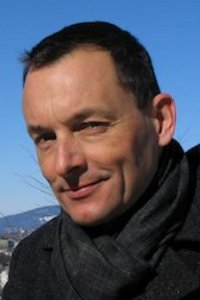
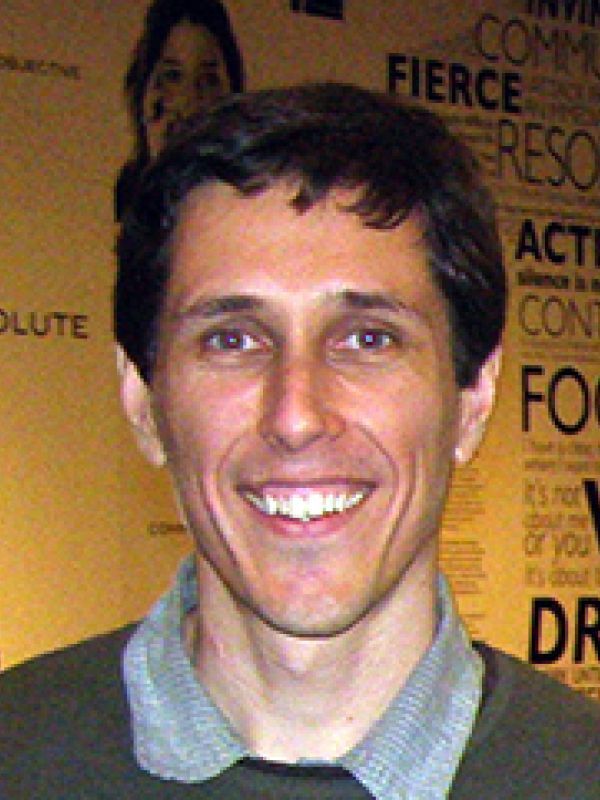
Mikael Thollesson is a Senior Lecturer at Uppsala University, affiliated with the Department of Organismal Biology; Systematic Biology and Klubban’s Biological Station. His research focuses on evolutionary biology, phylogenetics, taxonomy, and molecular biology, particularly in marine and freshwater sponges (Porifera), bacterial pathogens, and computational methods in evolutionary analysis. Evolutionary Biology Marine Biology Taxonomy His recent publications highlight trends in sponge biodiversity, phylogeography, bacterial horizontal gene transfer, and mitochondrial gene evolution. Key articles include studies on Swedish demosponge faunas, Silene sect. Arenosae systematics, and computational tools like SPRIT for detecting gene transfers. No explicit awards or grants are mentioned.
Michael Lampson is Professor of Biology at the University of Pennsylvania's School of Arts and Sciences, with secondary appointments in the Department of Cell and Developmental Biology. He serves as faculty in the Cell and Molecular Biology (CAMB) and Biochemistry and Molecular Biophysics (BMB) Graduate Groups, and is affiliated with the American Society for Cell Biology (ASCB). Ph.D., Cornell University, Weill Medical College, 2002 AB, Harvard College, 1994 Dr. Lampson's research program focuses on fundamental mechanisms of chromosome biology, with particular emphasis on cell division, centromere inheritance, and meiotic drive. His lab investigates how selfish genetic elements can violate Mendel's First Law through meiotic drive, the stability of centromere chromatin through the germline, and the role of repetitive satellite DNA in chromosome segregation. Using innovative approaches including mouse model systems, optogenetic tools, and biochemical techniques, his work bridges cell biology, genetics, and evolutionary biology to address questions with implications for reproductive biology, cancer, and genetic inheritance. Analysis of Dr. Lampson's recent publications reveals a strong focus on the intersection of centromere biology, meiotic drive, and chromosome segregation mechanisms. His work increasingly incorporates computational approaches alongside experimental systems to study evolutionary aspects of centromere function. The research demonstrates consistent innovation in methodology, particularly in developing optogenetic tools for precise manipulation of cellular processes. Key themes include the role of satellite DNA variation, mechanisms of non-Mendelian inheritance, and the stability of chromatin structures through cell division and development. Searle Scholar Award American Association for the Advancement of Science (AAAS) fellow Dr. Lampson's research is supported by multiple NIH grants including from NIGMS, NHGRI, NICHD, and NCI, as well as University of Pennsylvania funding sources including the University Research Foundation, Abramson Cancer Center, and several specialized research centers. He collaborates extensively with researchers across disciplines, including Ben Black (Biochemistry), Dennis Discher (Chemical Engineering), Dave Chenoweth (Chemistry), and Roger Greenberg (Cancer Biology), reflecting the interdisciplinary nature of his work. His lab has trained numerous graduate students and postdocs who have gone on to successful careers in academia and industry. The Lampson Lab maintains state-of-the-art facilities for cell biological, genetic, and biochemical research, with specialized equipment for live-cell imaging, optogenetic manipulation, and mouse genetics. The lab fosters a collaborative environment that bridges molecular, cellular, and evolutionary perspectives on chromosome biology.
Mahipal Singh is a Professor of Animal Biotechnology and Coordinator of the Animal Science Undergraduate Program at Fort Valley State University (FVSU), where he is affiliated with the College of Agriculture, Family Sciences and Technology and the Department of Agricultural Sciences. He has been at FVSU since 2000 in various capacities, progressing from Adjunct Biology/MPH Graduate Faculty to his current position as full Professor since 2019. Dr. Singh earned his educational credentials in India: a B.S. (Hons) in Zoology from Meerut College (1978), an M.S. in Zoology from the Institute of Advanced Studies, Meerut University (1983), and a Ph.D. in Zoology-Microbiology from Banaras Hindu University, Varanasi (1989). His academic journey included prestigious appointments such as International Visiting Fellow at the National Institute of Child Health and Human Development, NIH (1991-1993) and Postdoctoral Fellow at the Medical University of South Carolina (1989-1991). His research focuses on cutting-edge areas of animal biotechnology, particularly in postmortem cell recovery, genome editing in livestock, and myostatin gene targeting. Dr. Singh has pioneered work demonstrating that individual cells remain viable in mammalian tissues for much longer periods after death than previously believed, with applications for cellular therapies and germplasm preservation. His work with CRISPR/Cas technology aims to reduce milk allergens and mastitis in goats, while his myostatin research seeks to enhance muscular mass in meat goats for agricultural applications. Analysis of his recent publications reveals a consistent focus on cellular viability after death across multiple livestock species (cattle, goats, sheep), with particular attention to temperature effects and storage conditions. His work bridges basic cellular biology with practical agricultural applications, demonstrating how fundamental discoveries about postmortem cellular life can translate into biotechnological advances for livestock preservation and improvement. USDA-ARS 1890 Faculty Research Fellowship Award (2017) STEM Research Excellence Award, Fort Valley State University (2014-15) Multiple student research presentation awards at FVSU Annual Research Day symposiums Best Poster Award at National Symposium on Biotechnology, CIMAP, Lucknow, India (1999) Fogarty International Visiting Fellowship at NIH (1991-93) Dr. Singh has supervised an impressive 38 students across multiple educational levels, including 4 PhD, 13 MS, 7 BS, 8 HS, and 6 middle school students. His research has been supported by USDA-ARS, USDA-NIFA programs, and various other grants. He serves on multiple editorial boards, grant review panels, and university committees, and is an active member of professional societies including the American Society of Animal Science and Society for In Vitro Biology. Based in the Stallworth Biotechnology Building at FVSU, Dr. Singh leads research projects that bridge molecular biology with practical agricultural applications, working collaboratively with researchers from USDA-ARS, University of Illinois, University of Maryland, and other institutions to advance animal biotechnology and improve livestock production systems.
Prof. Dr. Jörg Schultz serves as a Professor for Bioinformatics at the Faculty of Biology, University of Würzburg, a position he has held since 2003. He is also a Group Leader at the Center for Computational and Theoretical Biology (CCTB) and was a member of the CCTB Managing Board from 2015-2019. His academic journey includes significant roles as Group Leader at the Max Planck Institute for Molecular Genetics in Berlin (2002-2003) and at cellzome in Heidelberg (2000-2002). He completed his PhD studies at EMBL Heidelberg (1996-2000) after conducting his diploma thesis there in 1995-1996, following biology studies at the University of Konstanz (1991-1996). Prof. Schultz's research spans bioinformatics, computational biology, and evolutionary genomics, with notable contributions to protein domain analysis, phylogenetics, and structural bioinformatics. His recent work has focused extensively on plant genomics, particularly studying carnivorous plants like the Venus flytrap to uncover the evolutionary roots of plant carnivory. His research integrates computational methods with biological questions to address fundamental evolutionary patterns and molecular mechanisms across diverse organisms. Prof. Schultz has maintained a prolific publication record since the late 1990s, with his most recent work demonstrating continued innovation in computational approaches to biological questions. His publications reveal a consistent trajectory from foundational work on protein domain evolution (including the development of the SMART database) to current research on plant genomics, molecular evolution, and bioinformatics tool development. His work shows particular strength in bridging computational methodology with biological insight across multiple domains. Among his significant contributions is the development of the ITS2 Database, a widely used resource for phylogenetic analyses, along with various computational tools including ALVIS for sequence alignment visualization, reper for repetitive element analysis, and BCdatabaser for DNA barcoding. These resources have advanced methodological capabilities in the bioinformatics community. As an academic mentor, Prof. Schultz has guided numerous students and researchers through his laboratory at the University of Würzburg, contributing significantly to the education and training of the next generation of bioinformaticians. His leadership roles demonstrate his commitment to advancing computational and theoretical biology as academic disciplines while maintaining strong connections between computational approaches and biological discovery.
Judith Litvin Daniels is an Associate Professor at Temple University's Lewis Katz School of Medicine, specializing in Biomedical Education and Data Science. She chairs the Curriculum Committee, serves as Vice Chair of Education, and acts as Ombudsperson and Educator across Medical, Dental, Podiatry, and Graduate levels. PhD in Nutrition-Biochemistry, University of North Carolina Post-doctoral Fellowships at Cornell University Medical School and University of Virginia Her research spans cellular and molecular developmental biology, focusing on avian heart development, cardiac progenitor cells, and the role of Periostin-Like-Factor (PLF) in bone-heart connections. Recent work explores PLF's role in bone formation and disease. Key article trends include cardiac development , bone biology , extracellular matrix proteins , and inflammatory responses . Collaborative studies address clinical applications in traumatic brain injury and cancer biology. She has mentored students at all academic levels, with many winning regional/national awards, and organized faculty mentorship workshops. Publications highlight collaborations in Cell Molecular Life Sciences , J Cell Biochemistry , and Development . Labs and teams at Temple University focus on integrating molecular biology with translational research, particularly in the Fels Cancer Institute for Personalized Medicine.
Stephen Bradforth is a Professor of Chemistry at the University of Southern California and Senior Advisor to the Dean for Research Strategy and Development in the Dornsife College of Letters, Arts and Sciences . He earned his PhD in Physical Chemistry from the University of California, Berkeley (1992) and conducted postdoctoral research at the University of Chicago . B.A., Natural Sciences, Cambridge University (1987) Ph.D., Physical Chemistry, UC Berkeley (1992) Postdoctoral Associate, University of Chicago (1993–1996) His research focuses on ultrafast laser spectroscopy to study chemical reactions in complex environments like aqueous systems and molecular materials . Key projects include: Solar Energy Conversion : Investigating photosensitizers based on earth-abundant elements (Cu, Zn, Zr) and organic photovoltaics with BODIPY cores. DNA Photodamage : Mechanisms of cyclobutane pyrimidine dimer (CPD) formation under UV exposure, emphasizing base-stacking effects. Electronic Structure in Ethereal Solvents : Studying solvated electrons in liquid ammonia and their role in carbanion stabilization. His 15 most recent articles (2004–2024) highlight advancements in photoelectron spectroscopy , singlet fission for solar cells, and DNA damage pathways . Collaborations span medicine, physics, and engineering . Scientific Awards include the ACS Physical Chemistry Division Senior Experimental Award (2023) , STAR Awardee (2019) , Cottrell Scholar , and Fellow of APS and AAAS . He has received both Junior (2001) and Senior Raubenheimer Awards (2022) at USC. Advising has been a cornerstone, with 23 PhD students graduated and 4 current candidates. His 15 most recent publications (2012–2024) emphasize ultrafast dynamics , charge transfer mechanisms , and environmental photochemistry . Labs & Teams : The Bradforth Group operates advanced time-resolved photoelectron spectrometers , liquid microjet systems , and high-repetition-rate laser facilities . Current projects include metallic water solutions (Nature 2021), DNA photophysics (FASEB J 2011), and carbanion electronic structure in ammonia.
Cristian Tomasetti serves as Professor and Director of the Early Detection and Prevention Division at City of Hope's Beckman Research Institute, where he leads the Division of Mathematics for Cancer Evolution and Early Detection within the Department of Computational and Quantitative Medicine. His work bridges mathematical modeling with cancer biology to develop novel approaches for cancer detection and prevention. Dr. Tomasetti's research focuses on the mathematical foundations of cancer etiology, evolution, and early detection. His laboratory has pioneered algorithms for early cancer detection using cell-free DNA sequencing and protein data, developing some of the first multi-analyte blood tests capable of identifying cancer at its earliest stages. His work on cancer evolution has produced the most comprehensive mathematical models of tumorigenesis currently available, providing critical insights into mutation rates, driver gene requirements, and fitness advantages in cancer development. His influential research on the relationship between stem cell divisions and cancer risk has reshaped understanding of cancer etiology. The analysis of Dr. Tomasetti's recent publications reveals a consistent focus on liquid biopsy technologies, particularly circulating tumor DNA analysis for early cancer detection and monitoring. His work spans multiple cancer types including colorectal, pancreatic, ovarian, and bladder cancers, with a strong emphasis on translating mathematical models into clinically applicable diagnostic tools. The research demonstrates an evolution from theoretical models of cancer development to practical applications in cancer screening, risk assessment, and treatment monitoring. Dr. Tomasetti has established himself as a leader in the field of mathematical oncology, with his laboratory at the forefront of developing computational approaches to cancer prevention and early detection. His work on cell-free DNA testing has significant potential to transform cancer screening paradigms, moving toward less invasive and more effective methods for detecting cancer before symptoms appear.
Rachel O'Neill serves as a Board of Trustees Distinguished Professor in the Department of Molecular and Cell Biology at the University of Connecticut's College of Liberal Arts and Sciences. Her research bridges molecular genetics, cytogenetics, and computational genomics to investigate fundamental mechanisms of genome stability and evolution across diverse eukaryotic species. Her primary research interests focus on retroelement transcription, centromere function, chromosome evolution, and species-specific genomic adaptations. O'Neill's lab pioneers telomere-to-telomere (T2T) genome assembly methodologies using next-generation sequencing technologies, establishing non-traditional model organisms including marsupials, monotremes, birds, marine species, plants, and insects for comparative genome biology studies. Human Telomere-to-Telomere Consortium Primate T2T Consortium Gibbon T2T Consortium Earth Biogenomes Project Ruminant T2T Consortium Fly T2T Consortium Deep Ocean Genomes Project Antarctic Genomes Consortium Colossal Foundation UConn’s Biodiversity and Conservation Genomics program O'Neill's recent publications (2021-2025) demonstrate leadership in large-scale genomics initiatives, with significant contributions to understanding centromere biology, sex chromosome evolution, and conservation genomics. Her work spans marsupial mole genomics, ruminant chromosome evolution, and epigenetic regulation of X-chromosome inactivation, reflecting her lab's broad impact across evolutionary biology, conservation, and fundamental genome science. Her laboratory actively trains students through cohort-based programs including the RaMP Cohort and Biodiversity and Conservation Genomics Program, securing substantial collaborative funding through multi-institutional consortia. The lab maintains strong infrastructure for advanced genome assembly and epigenomic analysis, with particular expertise in challenging repetitive regions and non-model organism genomics.
Professor Anne Ferguson-Smith is a leading mammalian developmental geneticist and epigeneticist at the University of Cambridge, holding the Arthur Balfour Professorship of Genetics. As Pro-Vice-Chancellor for Research, she oversees the university's research strategy while maintaining her laboratory's focus on genomic imprinting and epigenetic inheritance . Her work bridges experimental and computational approaches through affiliations with the Cambridge Stem Cell Institute, Cambridge Neuroscience, and the Centre for Trophoblast Research. Research in her lab investigates epigenetic mechanisms in developmental processes , particularly through the lens of Dlk1-Dio3 imprinted domain studies. Current themes include: Stem cell epigenetic programming Environmental modulation of epigenetic states Role of repetitive elements in genomic regulation Her group integrates mouse and zebrafish models with high-throughput genomics and mathematical modeling . Key collaborations include: Wellcome Trust UKRI Medical Research Council BBSRC NIH Scientific honors include: Elected EMBO Member (2006) Academy of Medical Sciences (2012) Fellow of the Royal Society (2017) Commander of the Order of the British Empire (CBE) The lab maintains family-friendly research practices and actively participates in interdisciplinary collaborations across Cambridge and internationally.
Professor Marcel Dinger is a prominent academic and researcher currently serving as Professor and Head of School for Biotechnology and Biomolecular Sciences at UNSW Sydney. With over 20 years of experience in genomics, he has established himself as a leading figure in both academic and entrepreneurial spheres within the field. He has published 153 papers with over 24,000 citations and maintains an h-index of 61 on Google Scholar. His leadership extends beyond academia as he serves as President of the Australasian Genomics Technologies Association (AGTA) and holds director positions at Pryzm Health and the National Centre for Indigenous Genomics (NCIG). Professor Dinger's research laboratory focuses on establishing new links between phenotype and genotype, particularly examining rare and complex diseases in relation to underexplored regions of the genome including pseudogenes, repetitive elements, non-canonical DNA structures, and noncoding RNAs. His work harnesses population-scale genomic datasets and sophisticated data science methods to bring an objective perspective to understanding how the genome stores information and how it is transacted in biology. His research interests span genomics, non-coding RNA biology, clinical applications of genomic medicine, and the development of computational approaches for analyzing complex genomic data. Analysis of Professor Dinger's recent publications reveals a strong emphasis on non-coding RNA research, particularly long noncoding RNAs and their roles in disease mechanisms. His work spans cancer genomics, neurological disorders, and fundamental genomic mechanisms including DNA secondary structures like i-motifs and G-quadruplexes. His research combines experimental approaches with advanced bioinformatics to address fundamental questions in genomic medicine and has significant translational implications for disease diagnosis and treatment. Highly Cited Researcher in Cross-Field category (2019, 2020, 2021) Fellow of the Faculty of Science (Research), Royal Society of Pathologists of Australasia (2016) NHMRC Career Development Award (2010) Queensland Government Smart Futures Fellowship (2009) Foundation of Research, Science and Technology New Zealand Postdoctoral Fellowship (2005) Professor Dinger has been instrumental in establishing and leading several significant research initiatives including Genome.One, one of the first companies globally to provide clinical whole genome sequencing services, and the Kinghorn Centre for Clinical Genomics at the Garvan Institute of Medical Research. His entrepreneurial experience includes founding four biotechnology and IT startups. He serves on multiple governance boards including the National Centre for Indigenous Genomics, focusing on using genomics to improve health outcomes for Australia's First Peoples. His laboratory at UNSW continues to advance our understanding of genomic regulation and its implications for human health and disease.
Travis Wheeler is an Associate Professor in the Department of Pharmacy Practice & Science at the University of Arizona. His work spans bioinformatics, computational biology, and algorithm development for genomic sequence analysis. Developed tools like HMMER and Dfam Research focuses on transposable elements, sequence alignment, and epigenetics Co-author of key works with Robert Finn, Sean Eddy, and colleagues Research Interests include machine learning applications in biological sequence annotation, drug discovery, and evolutionary genomics. His work bridges computational methods with biomedical applications. Notable Contributions : Advancing profile Hidden Markov Model (HMM) methodologies Creating community resources for transposable element research Developing alignment algorithms for biological sequences Collaborations include institutions like Institute for Systems Biology, Harvard University, and Montana State University.
Scott A. Jackson is the Georgia Research Alliance Eminent Scholar in Synthetic Biology at the University of Georgia's College of Agricultural and Environmental Sciences (CAES), Department of Crop & Soil Sciences. He holds adjunct professor roles in the Institute of Plant Breeding, Genetics and Genomics. His research focuses on genomic tools for crop improvement, particularly in legumes like peanut and soybean, with emphasis on genome structure-function relationships and synthetic biology applications. Education and career highlights include his tenure as GRA Eminent Scholar in Plant Functional Genomics (2011–2019) and leadership roles in the Plant Center and Center for Applied Genetic Technologies. After industry experience with Bayer Crop Science, he returned to UGA to establish genomic-driven crop improvement programs. He is an Associate Editor of The Plant Journal and Molecular Plant . Research interests span genome evolution, crop domestication, and translating genomic insights into agricultural practices. His work bridges academia and industry, emphasizing sustainable crop productivity and global food security. Awards include the NSF Young Investigator Award (2002) and AAAS Fellowship. Key initiatives include developing genomic resources for legumes, leveraging synthetic biology for crop innovation, and fostering interdisciplinary collaboration. His lab focuses on disease resistance, genomic assembly, and applying advanced modeling to agricultural systems. Awards: NSF Young Investigator Award, AAAS Fellow Labs/Teams: Center for Applied Genetic Technologies (CAGT), Institute of Plant Breeding, Genetics and Genomics (IPBGG) Grants/Funding: GRA Eminent Scholar Program, industry partnerships
Christian Schlötterer is a Full Professor of Population Genetics at the University of Veterinary Medicine Vienna (Vetmeduni Vienna). He serves as head of the Institute of Population Genetics and founded the Vienna Graduate School of Population Genetics, which he has led for over 10 years. His research focuses on experimental evolution, molecular adaptation, and genetic architecture of traits in Drosophila populations. His laboratory investigates Mechanisms of adaptation to temperature regimes using experimental evolution and NGS Gene expression regulation (cis-, trans-effects, sex-biased expression) Comparative analysis of pigmentation and temperature stress resistance via Pool-GWAS Evolutionary dynamics of repetitive DNA, transposable elements, and orphan genes Inference of selection from population genomic data Current research projects are funded by ERC Advanced Grant ARCHADAPT FWF grants (P33734, P29133, P32935, etc.) Translational research in cattle and ecological-genomic studies in Brassicaceae Laboratory team includes PhD students Scientific assistants Technical assistants
Dr. Nicholas Matzke is a Senior Lecturer at the School of Biological Sciences , University of Auckland, New Zealand. His research revolutionizes biogeography by integrating extinction, fossils, organismal traits, and paleogeography into computationally efficient frameworks. Education: PhD in Integrative Biology (2013), University of California, Berkeley MA in Geography (2003), University of California, Santa Barbara Double BSc in Biology and Chemistry (1998), Valparaiso University Dr. Matzke's research spans three major domains: phylogenetic biogeography (developing methods to model trait-dependent dispersal), bacterial flagellum evolution (collaborating on experimental and bioinformatic analyses), and macroevolutionary modeling (integrating fossils and morphological data). His work on the FBD-MSC model and trait-dependent dispersal has transformed divergence time estimation and biogeographical inference. Recent publications show consistent focus on: Integrating molecular and fossil data in phylogenies Quantifying trait-dispersal interactions in rails and crocodiles Modeling historical biogeography using BioGeoBEARS Reconstructing evolutionary timelines with Bayesian methods His 2021 work on Caninae phylogeny demonstrates the power of combined MSC-FBD approaches, while 2019 studies on crocodilian range expansion revealed unexpected trait-dispersal correlations. Scientific Recognition: 2015-2018: Discovery Early Career Researcher Award (DECRA) Fellow at Australian National University 2017: Associate Fellow of The Higher Education Academy As an accredited PhD supervisor with active Marsden Grant projects, Dr. Matzke trains students in phylogenetics, computational modeling, and paleogeographic reconstruction. His lab combines custom software development with empirical studies across diverse taxa, from Rana frogs to Crocodylus crocodiles.
Marcos Gridi-Papp is a Professor in the Department of Biological Sciences at University of the Pacific, specializing in the study of acoustic communication systems in animals. His research investigates the interplay between hearing, vocal anatomy, and communication behavior, with a focus on frogs and crickets. He also teaches courses related to biological sciences and advises biology and pre-dental majors. PhD in Integrative Biology, University of Texas, Austin (2003) MS in Ecology, State University of Campinas, Brazil (1997) BS in Biological Sciences, State University of Campinas, Brazil (1994) Gridi-Papp's research explores how anatomical structures influence vocal performance and auditory sensitivity. His lab investigates: Laryngeal morphology and vocal control in túngara frogs Auditory tuning mechanisms and ultrasound sensitivity Environmental impacts on communication strategies Physiological and behavioral adaptations in vocal systems Signal complexity evolution and middle ear mechanics Eustachian tube control and acoustic reflexes Recent research trends focus on: Bioacoustic adaptations in amphibians Behavioral responses to environmental changes Anatomical constraints on vocalization Acoustic signal optimization Frequency modulation mechanisms Multi-component call structures His lab offers research opportunities in anatomy, electrophysiology, animal behavior, and computational methods, supporting students with credit hours and technical training.