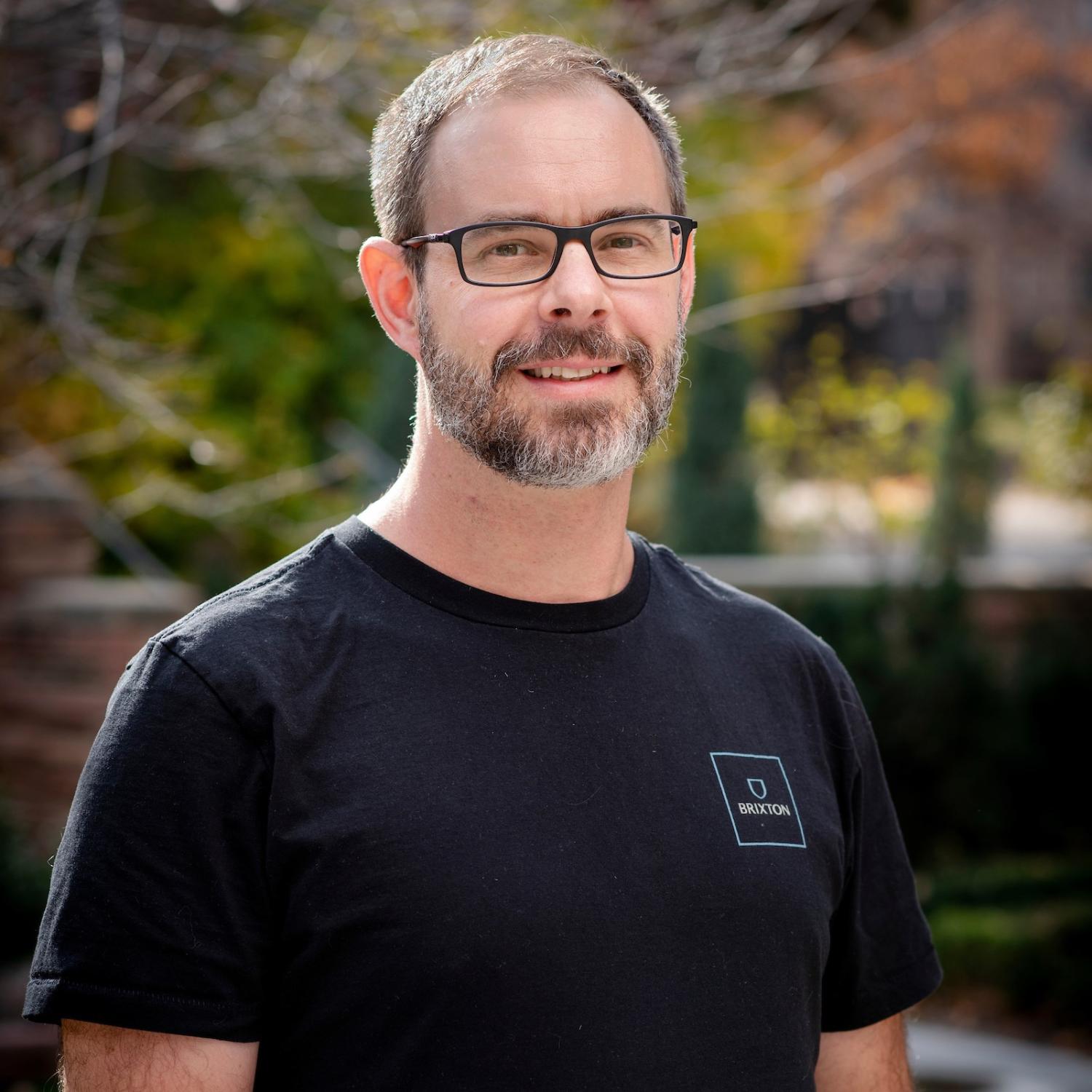
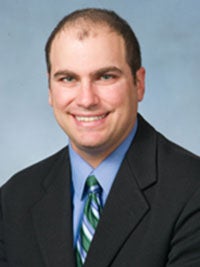
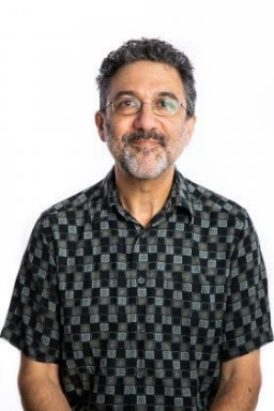
Zhongjian Cheng, PhD, is an Assistant Professor in the Department of Cardiovascular Sciences at Temple University's Lewis Katz School of Medicine. His research focuses on diabetes-mediated cardiovascular complications, particularly the mechanisms of vascular injury, endothelial dysfunction, and myocardial repair. He investigates extracellular vesicles/exosomes from diabetic cells and their modification via genetic, epigenetic, and metabolite approaches to enhance regenerative properties. Education: PhD from University of Helsinki; Postdoctoral fellowship at University of Calgary Affiliation: Member of the Aging + Cardiovascular Discovery Center Dr. Cheng's work spans diabetic cardiovascular complications , extracellular vesicle biology , epigenetic modifications , and non-coding RNA (circular RNA, miRNA). His studies use animal models to explore vascular relaxation impairments , myocardial infarction , and heart failure mechanisms. His recent publications highlight exosome-based therapeutics for heart failure, epigenetic sex differences in cardiac repair, and circRNA/miRNA roles in macrophage and endothelial cell function. Key awards include multiple American Heart Association grants .
Associate Professor Annie Pohlman is a leading scholar in Indonesian Studies at the School of Languages and Cultures, The University of Queensland. With a research focus on Indonesian history, politics, comparative genocide studies, and gendered violence, she has worked closely with human rights NGOs in Indonesia to document gross human rights violations. Academic Affiliation: UQ since 2008 Key Research Areas: 1965-66 Indonesian killings, torture systems, transitional justice, and mass violence complicity Her work explores testimony studies and atrocities documentation , particularly through the Indonesia Torture Mapping Dataset. She has contributed to international tribunals and published extensively on sexual violence as torture, state impunity, and post-authoritarian reconciliation efforts. Publications Trends include comparative analyses of genocide, interdisciplinary approaches to torture documentation, and psychological dynamics of civilian participation in violence. Her recent work (2022-2025) focuses on systematic torture patterns , post-conflict memory , and mass violence denial . Supervision: Currently mentoring PhD candidates on Indonesian trauma narratives, postcolonial illegitimacy, and political biographies, with completed supervision on CAM practices and Roma genocide. Key Collaborations: Jess Melvin, Katharine McGregor, and human rights organizations in Aceh and East Timor.
Nanna Bonde Thylstrup is an Associate Professor on the Promotion Programme in Modern and Digital Culture at the Department of Arts and Cultural Studies, University of Copenhagen (Faculty of Humanities). She leads the Digital Culture Research Cluster and serves as Principal Investigator for multiple funded projects including the ERC-supported Data Loss: The Politics of Disappearance, Destruction and Dispossession in Digital Societies (DALOSS) . Her academic background includes a PhD and MA in Modern Culture from the University of Copenhagen, with visiting fellowships at Duke, Cornell, and Columbia Universities. Thylstrup's research examines the intersection of technology, power, and cultural memory through several interconnected domains: The ethics and politics of data infrastructures and algorithmic systems Machine learning's impact on knowledge governance and archival practices Digital humanities approaches to cultural heritage preservation Theoretical frameworks for understanding data loss and digital disappearance Her publications demonstrate consistent focus on critical data studies, with recent work exploring algorithmic epistemologies in news distribution, political economies of cloud storage, and reparative approaches to digital archives. This scholarship collectively examines how datafication transforms societal structures of memory, power, and knowledge production. Awards include: Europeana Research Grant (2017) She leads significant research initiatives as PI/co-PI including: DALOSS (ERC-funded) AI REUSE Follow Me (FoMe) Personalized Intelligence in News Datafied Living Thylstrup directs the interdisciplinary Digital Culture Research Cluster and serves on the editorial board for Cambridge University Press's AI in Culture and Society series.
Ursula Deser Friedman is a College Fellow in the Department of Comparative Literature at Harvard University's Faculty of Arts and Sciences for the 2024-2025 academic year. Her research centers on literary (self-)translation and transmediation as tools for advancing social justice, with particular focus on queer and speculative émigré fiction within Sinophone contexts. She maintains an office in Barker Hall (room 063) and conducts office hours via Zoom by appointment. Dr. Friedman earned her Doctor of Philosophy from the University of California at Santa Barbara's Department of East Asian Languages & Cultural Studies in 2024, following a Master of Arts from Beijing Foreign Studies University's Graduate School of Translation and Interpretation (2017) and a Bachelor of Arts in East Asian Studies from Oberlin College (2014). Her academic trajectory reflects a deep commitment to cross-cultural communication and linguistic mediation. Friedman approaches literary (self-)translation as a reparative practice that heals historical wounds and enables radical empathy. Her dissertation and forthcoming book project, Self-Translation as Method: Modern Sinophone Self-Translators and their Transmediated Afterlives , conceptualizes self-translation as trauma reconciliation technology that (re-)inscribes national narratives within individual affective structures. She argues that by adapting their creations across languages, cultures, and media, Sinophone self-translators democratize language from the periphery. Her research spans Contemporary Chinese/Taiwanese/Sinophone and Latin American Literature, Translation Studies, Comparative/World Literature, and Media and Sound Studies. Her recent publications reveal consistent engagement with authors like Ha Jin, Kenneth Pai Hsien-yung, and Eileen Chang, examining how self-translation functions as creative subversion within marginalized communities. Friedman's work demonstrates how translation practices intersect with social justice movements, particularly through her focus on LGBTQIA+ narratives and diasporic experiences. She frequently analyzes how authors use self-translation to navigate cultural trauma and construct new identities across linguistic boundaries. Outside formal academic work, Friedman actively engages with creative writing that amplifies marginalized voices, particularly those of LGBTQIA+, BIPOC, imprisoned, and immigrant communities. She is currently compiling a comprehensive database of transcribed interviews with writers who translate and adapt their own work across languages and media, documenting these creative processes and their sociopolitical implications.
Juliana González Villamizar serves as a Research Fellow at the Institute for Sociology within Philipps-Universität Marburg's Department of Social Sciences and Philosophy. Her work bridges academic research and practical peacebuilding through the Colombian Truth Commission (CEV), established under the 2016 peace agreement with FARC. Academic Background: PhD Candidate (2021-present) at Justus-Liebig-Universität Gießen, Faculty of Social and Cultural Sciences MA in Political Theory (2016) from Goethe-Universität Frankfurt/TU Darmstadt Licenciatura in Philosophy (2012) from Universidad Nacional de Colombia Study periods at The New School (2015) and Europa-Universität Viadrina (2010) Her research examines how intersectionality transforms transitional justice frameworks, particularly regarding Indigenous and Afro-descendent women's experiences in Colombia. She analyzes methodological gaps in truth commission work while documenting community strategies for narrative visibility and social change. Current projects focus on memory construction through social inequalities and feminist-decolonial approaches to truth-seeking. Publications reveal strong thematic cohesion around intersectional transitional justice, with 2021 marking significant output across journals, book chapters, and policy briefs. Her work consistently connects Colombian case studies to global decolonial feminist theory, emphasizing transformative potential in truth commission processes. Key Recognition: Dr. Herbert-Stolzenberg-Preis for outstanding contributions to peace and conflict research focusing on transitional justice and the Colombian Truth Commission As an educator, she has developed specialized courses on feminist contributions to transitional justice at Justus-Liebig-Universität Gießen and taught political philosophy at Colombian institutions including Universidad El Bosque and Universidad Nacional. Her lecture series at international venues like Latin American Studies Association Congress demonstrate active knowledge exchange across academic and policy spheres. Current research continues to explore intersectionality's implementation at the CEV while documenting Indigenous women's memory practices.
Professor Pia Wiegmink serves as a BCDSS Professor and Co-speaker at the University of Bonn, where she leads research in Dependency and Slavery Studies. She holds office in Room 2.019 at Niebuhrstr. 5, D-53113 Bonn, with regular office hours on Thursdays from 4–6 pm. Her academic leadership extends to co-organizing working groups including Life Writing, Slavery and Dependency and Rethinking Atlantic Narratives of Slavery and Freedom . In 2024, she was awarded a significant Australian Research Council Discovery Grant worth 882,000 AUSD for her collaborative project Unfreedom, Voices, Redress: Plantation Cultures of the Western Pacific . Professor Wiegmink's research focuses on cultural practices and narratives of American slavery and dependency with global entanglements. Her 2022 monograph Abolitionist Cosmopolitanism redefined the potential of nineteenth century American abolitionist literature as a cultural and political imaginary. Current research includes The Protocols of Dependency in American Literature and German Immigrants, Life Writing, and the Afterlives of Slavery in Queensland . Her recent co-edited special issue (In)Dependent Selves: Interdisciplinary Perspectives on Life Writing, Slavery and Dependency was published in Life Writing (2025). Her publication record demonstrates a clear scholarly trajectory focusing on transnational perspectives of slavery, abolitionism, and dependency. Recent articles analyze Frederick Douglass's narratives, transatlantic slavery connections in Pacific contexts, and the cultural memory of German colonialism. Her work consistently bridges literary analysis with historical research, examining how narratives shape understandings of freedom and unfreedom across cultural boundaries. Scientific Awards: Rob Kroes Award for the best unpublished manuscript in American studies by a European scholar (2021) Best Article Award 2019 Amerikastudien/American Studies Professor Wiegmink has secured significant third-party funding, including an Australian Research Council Discovery Grant (2025–2028), Eccles Centre Visiting Fellowships, and DFG research network support. She has taught courses including Pacific Plantations in the Age of Empire and Abolition and Transatlantic Slavery in 10 Objects at the University of Bonn. Her collaborative work with international scholars across Germany, Australia, and the United States demonstrates her commitment to transnational academic cooperation in addressing the legacies of slavery and dependency.
Christopher Gibson is a tenured Professor of Law and Director of the ADR Program and Business Law and Financial Services Concentration at Suffolk University Law School in Boston. He has taught at Lund University , Eötvös Loránd University , and as a Visiting Professor at Boston University Law School . Education: BA, University of Chicago MPP, Harvard University's Kennedy School of Government JD, University of California, Berkeley His research focuses on international arbitration , intellectual property rights , international investment law , and technology law . He has contributed to domain name dispute resolution frameworks like the UDRP and advised on investor-state arbitration and WTO standard-setting reforms. His publications trend analysis reveals expertise in: International Arbitration (including WIPO, ITA, and FDI Moot initiatives) Intellectual Property (IP licensing, compulsory licenses, technology transfer) Post-Conflict Compensation (UN Compensation Commission processes) Technology Law (internet governance, domain disputes, NAS automation) Scientific and professional honors include: Cornelius J. Moynihan Award for Excellence in Teaching (2008) Thomas J. McMahon Award for Dedication to Students (2011) Selected to Silicon Valley Arbitration and Mediation Center's 2024 List of World's Leading Technology Neutrals Co-founder of the Foreign Direct Investment International Moot Competition He actively serves as Chair of the American Society of International Law's Intellectual Property Law Section and Boston Bar Association's International Law Section , and has acted as arbitrator in over 100 domain name disputes under UDRP/Nominet rules.
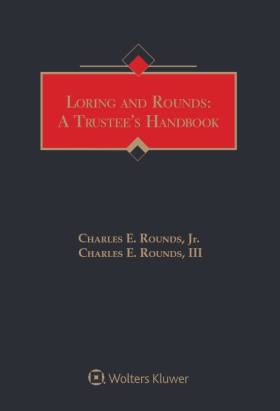
Charles E. Rounds, Jr., a Research Professor of Law at Suffolk University Law School since 2021, has held academic positions there continuously since 1983, including Professor of Law (tenured in 1990). He earned his BA from Columbia University , JD from Suffolk University , and Certificate in German from the Defense Language Institute . As a scholar and practitioner, he specializes in trust and fiduciary law , estate planning , and critiques of legal education . Research Areas : Trust Law, Fiduciary Liability, Social Security Reform, Comparative Legal Structures, and Legal Education Reform. Awards : Dean Frederick A. McDermott Award (1982, 2006) Judge Cornelius J. Moynihan Award (1989, 1993, 1994) Professor of the Year Award (2019) Recent Publications : Focus on trust law evolution, fiduciary duties in modern finance, and critiques of legal education’s alignment with 21st-century needs.
Julius McGee is Associate Professor of Sociology at the University of Oregon's College of Arts and Sciences, with joint affiliation in Black Studies. His scholarship examines intersections of social inequality and climate change, including organic farming systems, renewable energy justice, and mass incarceration's environmental impacts. Research critically analyzes racial capitalism in climate mitigation frameworks and advocates for abolitionist approaches to environmental policy. Recent book projects explore historical connections between slavery and ecological crisis. McGee has published extensively in journals including Monthly Review and Energy Research & Social Science. Awards include research grants focused on decoupling economic growth from carbon emissions through equitable policy frameworks.
Malini Ranganathan is Associate Professor at American University's School of International Service, specializing in environmental justice, caste/race dynamics, and urban political ecology. Her research examines land, labor, and ecological politics in Bangalore and Washington, DC, connecting colonial histories with contemporary climate justice struggles. Key publications: Corruption Plots: Stories, Ethics, and Publics of the Late Capitalist City (Cornell, 2023) — Winner, Anthony Leeds Book Prize The Urbanization of Caste Power (Cambridge, forthcoming) Climate of Labor Justice (in progress) Honors include: Harold M. Rose Antiracism Award (AAG, 2023) NSF RECIPES grant for sustainable food systems American Institute of Indian Studies Senior Fellowship (2024)
Karl Aquino is the Richard Poon Professor of Organizations and Society at the UBC Sauder School of Business, within the Marketing and Behavioural Science Division. He holds a BSc from the University of Illinois at Urbana-Champaign, and MSc and PhD from Northwestern University. His research focuses on forgiveness, moral cognition, organizational justice, and workplace victimization, with notable contributions to understanding vigilantism in organizations and victim signaling dynamics. Education: BSc, University of Illinois at Urbana-Champaign MSc, Northwestern University PhD, Northwestern University Research Interests: Forgiveness and reconciliation, moral behavior in organizations, status and dominance hierarchies, and the psychological underpinnings of workplace victimization. His work often explores how moral identity influences responses to injustice, including vigilantism and third-party reactions to unethical behavior. Recent articles highlight his focus on victim marketplace dynamics, redemption narratives in charitable giving, and the ethical tensions in professional contexts. His lab, the Immorality Lab, investigates how organizations and individuals navigate moral challenges. Courses taught include Management and Organizational Behaviour and Principles of Organizational Behaviour. Notable contributions include studies on workplace vigilantes, gender bias in moral perceptions, and the role of racial identity in consumer behavior. Current research trends emphasize collective consciousness, ethical dilemmas in technology, and the impact of political ideologies on social judgments.
Henry Lovejoy is an Associate Professor specializing in the political, economic, and cultural history of Africa and the African diaspora at the University of Colorado. He directs the Digital Slavery Research Lab and integrates statistical analysis, GIS mapping, and music into his teaching to explore slavery, abolition, and migration. His research focuses on Yorùbá kingship in colonial Cuba and liberated Africans' experiences post-abolition. Lovejoy co-edited key volumes on abolition and African studies, and his work appears in top journals like Past & Present and Journal of African History . He leads digital humanities projects such as LiberatedAfricans.org and SlaveryImages.org , supported by federal grants and academic partnerships. Lovejoy serves on the board of WalkWithWeb.org , an international consortium for African studies digital initiatives. Received the Chief Isaac Oluwole Delano Foundation prize for Yoruba Studies Finalist for the Albert J. Raboteau prize His advising and grants focus on digital humanities infrastructure and collaborative research networks. Lovejoy’s work bridges traditional historiography with computational methods, emphasizing open-source tools for accessibility.
Dr. Alexander M. Schoemann is an Associate Professor and Director of Graduate Studies in the Department of Psychology at East Carolina University. He holds a PhD in Psychology from the University of Kansas (2011), an MS from Wake Forest University (2006), and a BA from Tufts University (2003). His research focuses on quantitative psychology, including latent variable modeling (SEM, MLM, factor analysis), and social psychology topics like prejudice and discrimination. He advises doctoral students and is open to mentoring new candidates starting in 2025-26. His work emphasizes methodological rigor, particularly in mediation models, missing data, and statistical power. Recent studies address HIV patient care, healthcare employee well-being, and military populations' mental health. He has published widely in journals like Psychological Methods , Journal of Happiness Studies , and Health Psychology .
Ron Eglash is a Professor in the School of Information at the University of Michigan, with a secondary appointment in the Penny W. Stamps School of Art and Design. He holds a BS in Cybernetics, MS in Systems Engineering, and PhD in History of Consciousness, all from the University of California. His research focuses on culturally situated design tools, generative justice, and the intersection of indigenous knowledge systems with modern computing. Eglash is known for his book African Fractals , exploring links between indigenous African designs and modern computing. He leads the Culturally Situated Design Tools (CSDT) initiative, which uses heritage algorithms to empower youth in STEM education. His work emphasizes decolonial approaches to technology, advocating for a circular economy and ethical AI governance. Education: BS in Cybernetics, University of California MS in Systems Engineering, University of California PhD in History of Consciousness, University of California Research Interests: Generative Justice: Shifting science/innovation toward sustainability and equity Culturally Situated Design: Bridging indigenous knowledge with computational tools Race and Technology: Addressing equity in AI and STEM Complexity Theory: Applications in social and ecological systems Recent Work: Eglash’s publications explore AI governance, computational reparations, and decolonial approaches to technology. He emphasizes community-driven solutions, such as worker-owned AI systems and ethical automation frameworks. His courses include Design for Generative Justice and Self-organization in Science and Society . Grants & Collaborations: NSF-funded Culturally Situated Design Tools (CSDT) Ubuntu-AI project for equitable machine learning Research on generative justice in circular economies Labs/Teams: Directs the CSDT initiative and collaborates with the International Institute and the Generative Justice Lab at the University of Michigan.
Stephanie Russo is an Associate Professor of Literature at Macquarie University's School of Humanities, affiliated with the Department of Media, Communications, Creative Arts, Language, and Literature. She specializes in historical fiction across film, television, theatre, and literature, with a focus on anachronisms, temporal representation, and early modern women's writing. Her research bridges eighteenth-century studies with contemporary media, analyzing how historical narratives engage with politics, gender, and power. Education: Holds a Postgraduate Certificate in Higher Education from Macquarie University (2015). Teaching includes courses on historical fiction, literary analysis, and research methodologies. Research interests span historical fiction's anachronistic turn, biofiction, and counterfactual narratives. Notable works include *The Afterlife of Anne Boleyn* (2020) and *The Anachronistic Turn* (2023). Upcoming projects explore counterfactual historical novels and global historical fictions. She guest edits journals like *Clio* and *Parergon*, and edits the *Journal of Historical Fictions*. Awards: 2020 Faculty of Arts Research Excellence Award. Grants/Projects: Leads research on eighteenth-century women's novels and queenship representation. Active in editorial roles for Brill's Global Historical Fictions series. Labs/Teams: Collaborates internationally on historical fiction networks and contributes to interdisciplinary research on temporal storytelling.