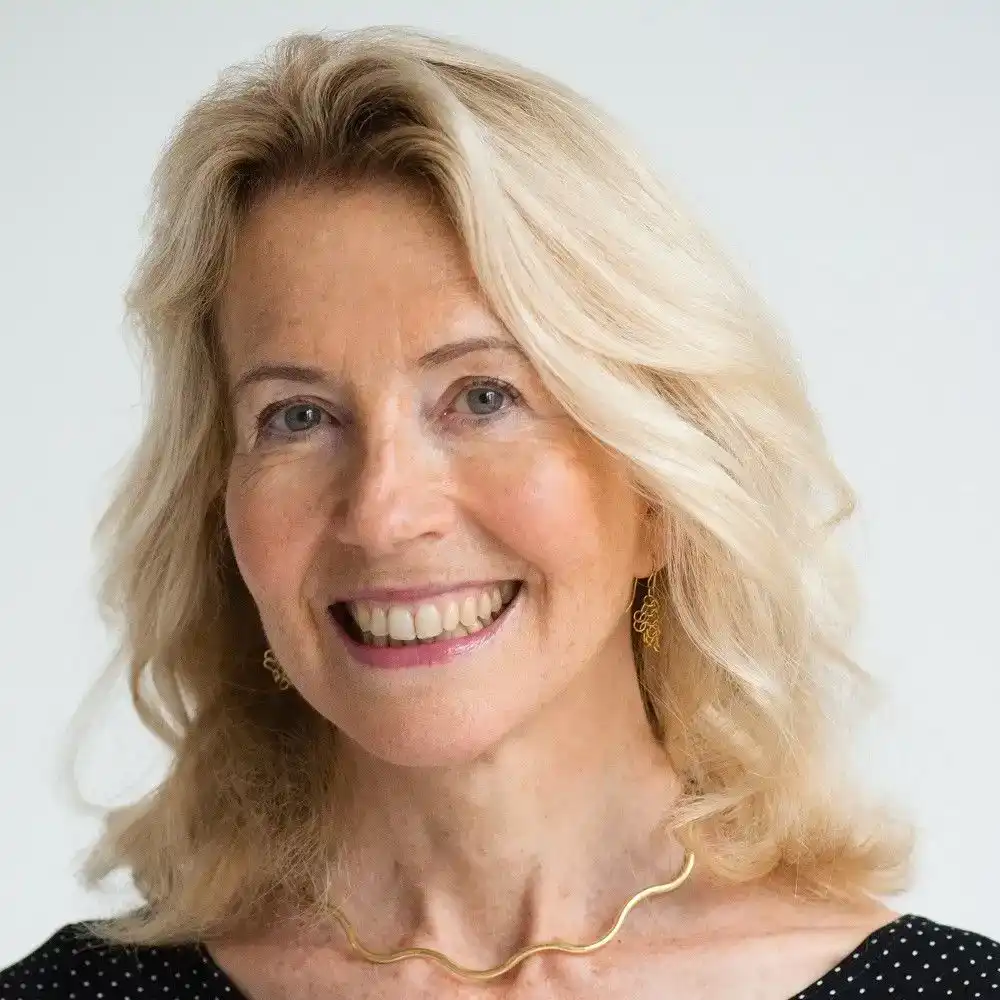
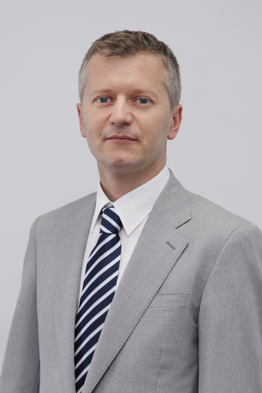
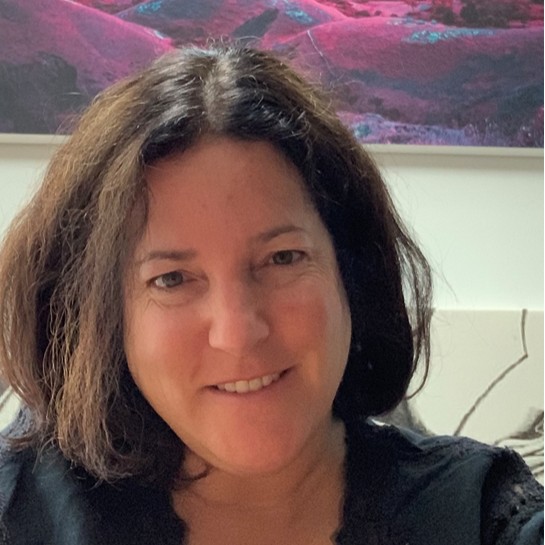
Prof. Dr. Kenny R. Cupers is Professor of Architectural History and Urban Studies at the University of Basel , affiliated with the Department of Social Sciences in the Faculty of Humanities and Social Sciences . He co-founded and leads the Urban Studies division, focusing on the intersections of architecture, urbanism, colonialism, and planetary design in African and European contexts. PhD, Harvard University (2010) M.Sc. and B.Sc. in Architecture, Catholic University of Leuven Studies in Visual Culture and Urban Theory, Goldsmiths College, London His research centers on architectural modernism, housing, infrastructure, and decolonization . Key themes include the planetary politics of design, coloniality of infrastructure, and the role of architecture in state transformation. He is currently working on two book projects in Kenya: one on unmaking the plantation system through arts and architecture, and another on post-independence Nairobi’s urban history. Recent publications include The Earth that Modernism Built: Empire and the Rise of Planetary Design (2024) and The Social Project: Housing Postwar France (2014). He leads the Sinergia project Governing through Design (2020–2025) and previously directed the SNF-funded How Infrastructure Shaped Territory in Africa (2018–2022). His work appears in journals such as e-flux Architecture , Antipode , and Architectural Theory Review . Scientific Awards: No specific awards listed in the provided text. As an educator, Cupers promotes engaged pedagogy and collaborative research, co-editing What is Critical Urbanism: Urban Research as Pedagogy (2022). His public research projects include Swiss Corporate Coloniality and Lamu Futures . He has advised multiple PhD and Master’s students, though specific names are not listed. He is part of a vibrant research team including Dr. Ernest Sewordor, Dr. Laura Nkula-Wenz, and Dr. Prita Meier. Laboratories and Research Teams: Urban Studies, University of Basel Critical Urbanisms Program Sinergia Project: Governing through Design How Infrastructure Shaped Territory in Africa (completed) Infrastructure Space and the Future of Migration Management (completed)
Melissa Adler is an Associate Professor and Graduate Program Chair in Media Studies and Library and Information Science (Doctoral) at the University of Western Ontario's Faculty of Information and Media Studies (FIMS). She holds a prominent role in shaping interdisciplinary research at the intersection of critical classification studies, gender and sexuality studies, and American studies. Her work critiques systemic inequities in library and archival systems, emphasizing repair and justice in knowledge organization. Her research explores how classification systems perpetuate colonialism, racism, and ableism through projects like Useful + Beautiful , funded by SSHRC, which reimagines inclusive knowledge systems. She has published extensively, including her forthcoming book Peculiar Satisfaction: Thomas Jefferson and the Mastery of Subjects (Fordham UP, 2025) and Cruising the Library (2017), which examines LGBTQ+ representation in Library of Congress classifications. Education: Not explicitly stated in text, but inferred through her academic role. Grants: SSHRC Insight Grant (2019). Projects: Collaborations with Journal of Critical Library and Information Studies and Art Libraries Journal . Dr. Adler's pedagogical work integrates critical theory into LIS education, teaching courses like Informing and Unforming Colonial Imaginaries . She advocates for reparative practices in cataloging and has mentored students such as Greg Nightingale.
Dr. Rachel Liebert is a Senior Research Fellow at the University of East London. Her work centers on critical examinations of psychology through decolonial, feminist, and social justice frameworks. She collaborates extensively with interdisciplinary scholars on topics ranging from indigenous epistemologies to institutional critiques of mental health systems. Research Focus Her scholarship interrogates: Decolonization of psychological praxis and epistemology Intersections of power, security, and mental health systems Creative methodologies including experimental writing and arts-based research Critical analyses of subjectivity, affect, and embodiment Psychedelic therapy's social and collective dimensions Publication Trends Recent works (2021-2025) demonstrate: Sustained focus on decolonial psychology and epistemic justice Increasing engagement with indigenous knowledge systems and creative methodologies Interdisciplinary bridges between critical psychology, sociology, and security studies Exploration of liminal spaces in institutional and therapeutic contexts
Susan Forde is a Leverhulme Early Career Research Fellow in the Department of Politics and International Relations at the University of York. She holds a PhD in War and Peace from Liverpool Hope University, where she previously lectured and contributed to the Archbishop Desmond Tutu Centre for War and Peace Studies. Her research centers on peace and conflict studies, with a focus on divided cities such as Mostar, Cape Town, and Belfast. Key interests include spatial justice, structural violence, participatory methodologies, and the role of youth in peacebuilding. She employs innovative methods like mapping and movement-based practices to explore how urban spaces shape and are shaped by conflict and reconciliation. Dr. Forde's recent publications span journals like Political Geography , Journal of Intervention and Statebuilding , and Cooperation and Conflict , with recurring themes of spatial agency, memory, and transformative peace. Her work often bridges human geography and political science, emphasizing local experiences in post-conflict environments. Leverhulme Early Career Research Fellowship She has no named students or formal advising roles mentioned. Her current research project, 'Spatial agency, and spaces of peace and conflict in Cape Town, South Africa,' is supported by the Leverhulme Trust. She has no explicitly listed grants beyond this fellowship. Dr. Forde works independently on her fellowship project but draws on interdisciplinary networks in peace studies, geography, and urban research. Her work is deeply collaborative in method, often involving community engagement and participatory design, though no formal lab or research team is mentioned.
Dr. Shuk Ying Chan is a Lecturer in Political Theory at the Department of Political Science, University College London, affiliated with the School of Public Policy. Prior to UCL, she served as a Postdoctoral Prize Research Fellow at Nuffield College and the Department of Politics and International Relations at Oxford University. Her academic journey includes a PhD in political theory from Princeton University, where she was a Graduate Prize Fellow at the University Centre for Human Values (2018–2019) and a Graduate Fellow at the Princeton Institute for International and Regional Studies (2019–2020). She holds an MPhil in Political Theory and a BA in History and Politics from the University of Hong Kong. Dr. Chan’s research bridges 20th-century anticolonial thought and contemporary debates on global justice. Her book project, Postcolonial Global Justice (under contract with Princeton University Press), examines decolonization as an unfinished project of global justice, drawing on anticolonial thinkers to develop principles for addressing self-determination and equality in global governance, international investment, and cultural exchange. Her work also critiques neocolonial dynamics in trade, health equity, and economic regimes. Her recent publications (2019–2025) span topics such as vaccine distribution ethics, postcolonial critiques of international investment, and decolonial struggles in Hong Kong. These articles emphasize global justice frameworks informed by historical anticolonial movements, with a focus on equity, corporate responsibility, and the moral implications of empire legacies. 2022 Leo Strauss Award for best dissertation in political philosophy (American Political Science Association) She teaches courses on Global Justice (POLS0100), Historical Injustice and the Politics of Decolonization (POLS103), and co-teaches Global Ethics (PUBL0045). Her academic trajectory reflects a commitment to integrating historical anticolonial insights with actionable strategies for global equality and self-determination.
Miriam Cohen is an Associate Professor at the Université de Montréal's Faculty of Law, holding the Canada Research Chair in Human Rights and International Reparative Justice. She specializes in public international law, human rights, and international criminal justice. She earned a Ph.D. from Leiden University and holds advanced degrees from Harvard, Cambridge, and Université de Montréal. Her research focuses on reparative justice mechanisms, climate change accountability, and international bodies' roles in rights enforcement. She leads interdisciplinary projects, including the Human Rights and International Justice Lab, which developed a human rights data analysis platform funded by CFI and Quebec grants totaling $400,000. Education: Ph.D. in International Law, Leiden University (2017) LL.M. Harvard Law School (2009) LL.M. University of Cambridge (2008) LL.B. and LL.M., Université de Montréal (2006, 2007) Research Interests: Reparative justice for international crimes, climate change litigation, international criminal accountability, and the intersection of human rights with environmental and national security policies. Her recent articles and books explore reparations for climate harms, transgenerational trauma in ICC jurisprudence, and the role of public interest litigation in international courts. She has secured grants from SSHRC, CFI, and Quebec, and her work has been recognized with awards from the Canadian Council on International Law and Quebec Bar Foundation. She advises international organizations, serves on multiple editorial and governance boards, and collaborates globally on legal research initiatives.
Professor Peta Mitchell is a leading scholar in digital media and geographies at Queensland University of Technology (QUT), where she holds a Professorship in the School of Communication and the Digital Media Research Centre (DMRC). She leads the Urban Media and Digital Geographies Research Group and serves as Director of Research Training for QUT's Faculty of Creative Industries, Education, and Social Justice. In 2023, Professor Mitchell was appointed to serve a three-year term on the Australian Research Council's College of Experts, recognizing her significant contributions to research in digital media and geographies. Professor Mitchell earned her Doctor of Philosophy from the University of Queensland. Her academic journey has established her as a prominent voice in the interdisciplinary field bridging geography, media studies, and digital culture. She has received prestigious fellowships including a Vice Chancellor's Research Fellowship from QUT (2014-2018) and a visiting fellowship from the Institute for Advanced Studies in the Humanities at the University of Edinburgh (2009). Professor Mitchell's research explores the complex connections among space, place, society, and the digital. Her work focuses on digital and media geographies, everyday digital and data cultures, digital inclusion, and network contagion. She has made significant contributions to understanding how digital technologies reshape our relationship with space and place, particularly in urban environments. Her research examines how location-aware technologies influence social dynamics, cultural practices, and power relations, with particular attention to issues of inclusion, privacy, and justice in digital contexts. Professor Mitchell has investigated how digital media practices shape experiences of belonging, particularly among marginalized communities, and how geospatial data is produced, circulated, and contested in contemporary society. Her extensive publication record reveals a trajectory of increasingly interdisciplinary work that bridges humanities, social sciences, and spatial sciences. Recent publications show a growing focus on the intersection of digital technologies with environmental concerns, multispecies justice, and urban governance. Professor Mitchell's work has evolved to address emerging challenges related to generative AI, smart city technologies, and the ethical implications of location-aware applications. Her research consistently engages with questions of power, equity, and social justice in digital spaces, making significant contributions to both theoretical frameworks and practical applications in the field. Vice Chancellor's Research Fellowship, Queensland University of Technology (2014-2018) Faculty research fellowship, Centre for Critical and Cultural Studies, University of Queensland Visiting fellowship, Institute for Advanced Studies in the Humanities (IASH), University of Edinburgh (2009) Professor Mitchell has successfully supervised numerous doctoral students whose research explores diverse aspects of digital media and geographies. Her current and former students have investigated topics including smart urban governance, digital privacy, diaspora media practices, digital inclusion, and the cultural dimensions of location-based technologies. She has secured substantial research funding through competitive grants, including multiple ARC Discovery and Linkage Projects. Her current projects include "Generative AI and the Future of Academic Writing and Publishing" (2025-2028) and "Promoting Low-Income Parents' Digital Media Literacies" (2025-2028), demonstrating her ongoing commitment to addressing pressing contemporary issues at the intersection of technology, society, and space. As leader of the Urban Media and Digital Geographies Research Group within QUT's Digital Media Research Centre, Professor Mitchell fosters interdisciplinary collaboration among researchers examining how digital technologies reshape urban spaces and social relations. Her research group brings together scholars from geography, communication, design, computer science, and the humanities to investigate the spatial dimensions of digital culture. The group's work has particular relevance for understanding the implications of smart city technologies, location-aware applications, and digital inclusion initiatives in contemporary urban contexts.
Ayesha Bell Hardaway is a Professor of Law at Case Western Reserve University School of Law, where she also serves as Director of the Social Justice Law Center and Director of the Social Justice Institute. Her work focuses on criminal law, policing, and the intersection of race and the law, including legal remedies for police misconduct through federal intervention and community oversight. She has been featured in media outlets such as CNN, USA Today, and the New York Times for her expertise on civil rights and police reform. Education: Juris Doctor (Case Western Reserve University, 2004), Bachelor of Arts (The College of Wooster, 1997) Her research examines structural issues in policing, including how police associations and collective bargaining rights can perpetuate systemic racism and impede reform efforts. She also investigates reparations, the 13th Amendment, and the socio-economic conditions that enable police abuses. Her scholarship bridges labor law, constitutional law, and social justice advocacy. Analysis of her publications highlights a focus on criminal justice reform, police accountability, and racial equity. Her work often addresses the historical roots of police unions, legal mechanisms for oversight, and the tensions between collective bargaining rights and police reform. She contributes to academic discourse through interdisciplinary lenses, integrating critical race theory and public policy analysis. As Director of the Criminal Clinic, she supervises law students in handling misdemeanor cases, emphasizing client-centered pedagogy. Her leadership roles at the Social Justice Law Center and Social Justice Institute facilitate research, community dialogue, and curricular innovation on pressing social justice issues.
Sara B. Demoiny is an Assistant Professor in the Department of Curriculum and Teaching at Auburn University's College of Education. Her work bridges social studies education, critical race theory, and antiracist pedagogy, focusing on teaching difficult histories related to race, whiteness, and systemic oppression. She holds a PhD in Theory & Practice in Teacher Education (Social Science Education) from the University of Tennessee (2017), an M.Ed. in Curriculum & Teaching from Pennsylvania State University (2006), and a B.A. in Liberal Studies with Elementary Education from Carson-Newman University (2002). PhD in Theory & Practice in Teacher Education (Social Science Education), 2017, University of Tennessee M.Ed. in Curriculum & Teaching, 2006, Pennsylvania State University B.A. in Liberal Studies with Elementary Education, 2002, Carson-Newman University Demoiny's research explores how race and whiteness are addressed in social studies teacher education, with a particular emphasis on local histories of Muscogee Creek Indian removal and enslavement. Her pedagogical approaches include threshold concept theory, counter-monuments, free spaces, and text sets to destabilize dominant narratives and foster critical consciousness among preservice teachers. Her recent publications analyze critical citizenship frameworks, Latinx representation in curricula, and connections between white emotionalities and educational practices. She actively engages with community organizations, serving as Education Committee Chair for the Lee County Remembrance Project and designing professional development programs like the Pebble Hill Difficult History Summer Camp.
Sean D. Murphy serves as the Manatt/Ahn Professor of International Law at the George Washington University Law School, where he has been a faculty member since 1998. His distinguished career spans both academic scholarship and practical application of international law principles across numerous international forums. Professor Murphy's educational background includes a BA from Catholic University, JD from Columbia University, LLM from Cambridge University, and SJD from the University of Virginia. His professional experience includes significant government service as legal counselor at the U.S. Embassy in The Hague, where he argued cases before the International Court of Justice and represented the U.S. before the International Criminal Tribunal for the former Yugoslavia. He also served as U.S. Agent to the Iran-U.S. Claims Tribunal and worked in the U.S. Department of State's Office of the Legal Adviser from 1987 to 1995. Professor Murphy's research focuses on public international law, U.S. foreign relations law, and crimes against humanity, with substantial contributions to the International Law Commission where he served as special rapporteur (2012-2022). His scholarly work bridges theoretical frameworks with practical applications, particularly in state responsibility, treaty law, and law of the sea. His publications demonstrate consistent engagement with evolving international legal norms and their implementation in domestic and international contexts. Professor Murphy's major scholarly contributions include his award-winning treatise The Law of U.S. Foreign Relations (2023) and his influential work Humanitarian Intervention: The United Nations in an Evolving World Order . His research trajectory shows increasing focus on codification efforts, particularly regarding crimes against humanity, reflecting his practical involvement in international legal development processes. 2024 American Branch of the International Law Association's Practitioners Book Award 2025 American Society of International Law (ASIL)'s Robert E. Dalton Book Prize 1997 ASIL Certificate for Preeminent Contribution to Creative Scholarship 1994 American Journal of International Law (AJIL)'s Deák Prize for Best Scholarship by a Younger Author Professor Murphy maintains an active international legal practice alongside his academic work, representing countries including Armenia, Ethiopia, Jordan, Kosovo, and the United States in international courts and tribunals. He has served as an arbitrator in inter-State and investor-State arbitrations and sat as an ad hoc judge on the International Tribunal for the Law of the Sea. In 2024, he was appointed to the World Bank's ICSID List of Arbitrators. He currently serves as a U.N. expert for the negotiation of a Convention on Prevention and Punishment of Crimes against Humanity and is an Adviser for the Restatement (Fourth) on the Foreign Relations Law of the United States. Professor Murphy has held leadership positions in major international law organizations, including serving as President of the American Society of International Law (2018-2020) and as a Membre Associé of L'Institut de Droit International. He serves on the American Journal of International Law Board of Editors and continues to teach courses on International Law, U.S. Foreign Relations Law, and Public International Law Seminar at GW Law.
Horatia Muir Watt is a Full Professor at Sciences Po's Law School, where she is a leading figure in private international law and comparative law. She is Co-Director of the Global Governance Studies program and founder of the PILAGG research group. Her scholarship is widely published in top legal journals, and she serves as Director of the Revue critique de droit international privé , the premier French-language journal in her field. She is affiliated with the Institute of International Law and the Institut Universitaire de France. PhD in Private International Law, University of Panthéon-Assas Paris 2 (1985) Agrégation in Private Law, ranked second (1986) Former faculty at University of Tours, Paris XI, and Paris I Panthéon-Sorbonne Appointed to Sciences Po in 2009, instrumental in founding its Law School Her research centers on international private law in global governance , comparative law with new theoretical approaches , and fundamental rights . She critically examines the role of law in transnational disputes, arbitration, migration, and environmental justice. Her work often explores the philosophical and cultural dimensions of legal reasoning, including alterity, translation, and ecological jurisprudence. Her recent publications, spanning 2023–2024, demonstrate a consistent focus on the evolving landscape of private international law. Key themes include jurisdiction in transnational litigation, the recognition of foreign judgments, the impact of war on family law, and the ethics of legal publishing. Her articles appear predominantly in the Revue critique de droit international privé , with additional contributions to journals like Rabels Zeitschrift and Transnational Legal Theory . The body of work reflects a blend of doctrinal precision and critical theory, engaging with EU regulations, comparative methodologies, and global legal challenges. Member of the Institute of International Law (since 2013) Member of the Institut Universitaire de France (since 2018) Horatia Muir Watt has supervised numerous PhD candidates and leads the PILAGG research group, which has produced several influential books with publishers such as Oxford University Press and Edward Elgar. She is part of the core faculty at the Institute for Global Law and Policy (IGLP) and serves on the editorial boards of multiple international legal journals, including the Journal of Private International Law and Transnational Legal Theory . Her work is supported by institutional affiliations and collaborative research projects rather than specific grant mentions in the text. She directs the PILAGG (Private International Law and Global Governance) research group at Sciences Po, which fosters interdisciplinary and critical approaches to transnational law. The group has organized collective research projects resulting in major publications and contributes to shaping contemporary discourse in private international law.
Colleen Murphy serves as the Associate Dean for Academic Affairs and the Roger & Stephany Joslin Professor of Law at the University of Illinois Urbana-Champaign College of Law, with courtesy appointments in Philosophy and Political Science. She chairs the Illinois Scholars at Risk Program and co-edits the International Journal of Transitional Justice. Her academic credentials include: PhD in Philosophy, University of North Carolina at Chapel Hill BA in Philosophy, University of Notre Dame Murphy's research centers on political philosophy , jurisprudence , and ethics , examining transitional justice mechanisms and moral frameworks for risk analysis. She investigates societal approaches to systemic wrongdoing and develops ethical methodologies for disaster risk mitigation through capability-based approaches. Her recent publications (2022-2025) reveal dominant themes in transitional justice, with concentrated analysis on accountability for historical injustices, racial redress, and post-conflict reconciliation. Concurrently, she explores technology's impact on equality and risk assessment, integrating philosophical ethics with practical disaster management frameworks. No specific scientific awards were detailed in the source material. Information regarding student advising and research grants was not provided in the available documentation. Murphy leads the Illinois Scholars at Risk Program supporting persecuted academics globally and shapes scholarly discourse through her co-editorship of the International Journal of Transitional Justice, fostering interdisciplinary research on justice after systemic oppression.
Darko Radić is a full professor at the Faculty of Law , University of Banja Luka, specializing in civil and family law. He is affiliated with the Department of Civil and Business Law and has contributed extensively to legal theory and practice in Bosnia and Herzegovina. His research focuses on marital property regimes , child rights , European Union law harmonization , and constitutional jurisdiction . His recent works address topics like state property, smart contracts, and flood damage reparation models. He has published in journals such as Pravna riječ and Srpska pravna misao , and authored books on family law and property relations. He participated in international conferences including the International Scientific Conference on Transformative Technologies and Kopaonik School of Natural Law . Darko Radić contributed to the national project Harmonization of the law of the Republika Srpska and Bosnia and Herzegovina with the law of the European Union , alongside colleagues like Prof. Dr. Zoran Vasić and Prof. Dr. Radenko Jotanović.
Tristram Wolff is an Associate Professor of English at Northwestern University, affiliated with the Programs in Comparative Literary Studies and Environmental Policy & Culture. He holds a PhD in Comparative Literature from the University of California, Berkeley. His research interrogates intersections of language, time, and nature in transatlantic Romanticism, challenging colonialist and racialized frameworks in literary and linguistic historiography. His first monograph Against the Uprooted Word (2022) re-examines linguistic theories of the Romantic era to contest Enlightenment-era primitivism, while his second book project explores affect theory through Romantic-era critical writing. Wolff teaches courses on William Blake, transatlantic Romanticism, environmental humanities, and literary engagements with geology and extractivism. He co-edited a 2021 special issue of Romantic Circles Praxis Series on public feeling and has published widely in journals like PMLA and English Literary History . His scholarship bridges literary criticism, critical theory, and interdisciplinary environmental studies, emphasizing reparative readings that reimagine social forms through language's material and temporal dimensions.
Professor Carla Ferstman serves as Director of the Human Rights Centre at Essex Law School, University of Essex, holding a full Professorship since October 2021 after previously serving as Senior Lecturer from January 2018 to September 2021. She is an internationally recognized expert in human rights law with extensive practical experience in international human rights institutions. Education: DPhil in Public International Law from University of Oxford (2015) LLM in International Law from New York University (1998) Barrister and Solicitor from British Columbia Bar Association (1994) LL.B in Law from University of British Columbia (1993) BA in Philosophy from University of Western Ontario (1990) Professor Ferstman's research spans three interconnected domains: Public International Law (focusing on law of international organizations, consular assistance, and application of human rights principles); Human Rights Law (specializing in enforcement mechanisms, remedies and reparation, accountability of state and non-state actors, and terrorism law); and International Criminal Law (particularly victims' rights, reparations, prosecutorial discretion, and complementarity). Her work consistently bridges theoretical frameworks with practical implementation challenges. Analysis of her recent publications reveals a clear trajectory toward increasingly complex human rights implementation issues, with growing emphasis on accountability mechanisms, civil society space protection, and the practical realities of reparation systems. Her scholarship shows particular focus on the tension between state sovereignty and human rights obligations, especially in migration contexts and peacekeeping operations. Scientific Awards: Essex Faculty of Arts and Humanities Supervisor of the Year award (2022) MacArthur Foundation Award for Creative and Effective Institutions (awarded to REDRESS during her tenure as Director) Professor Ferstman actively supervises doctoral candidates in human rights and law, with current students including Matteo Bassetti, Benjamin Khastan, Kani Areef, and Nataly Santana Sanchez. Her recent grant funding includes projects on Conflict Reporting Ethics (2025, University of Essex), Accountability for Online Harm Under International Criminal Law (2023, Modern Law Review), and UK Government Accountability for International Crimes (2020, University of Essex ESRC IAA). She has held prestigious fellowships including the O'Brien Residential Fellowship at McGill University (2023) and Fernand Braudel Fellowship at the European University Institute (2022). As a member of the Council of Europe's Expert Council on NGO Law since 2018, Professor Ferstman contributes to shaping civil society regulation across Europe. She also serves on the Justice Rapid Response SGBV Justice Experts Roster and the Advisory Committee of Lawyers for Justice in Libya, demonstrating her commitment to practical human rights implementation beyond academic work.