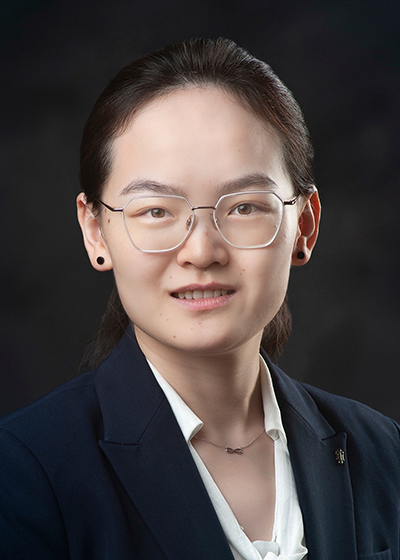
Claire Prada is a CNRS Research Director at the Institut Langevin , specializing in laser ultrasound , guided wave propagation , and time-reversal acoustics . Her work bridges fundamental wave physics and applied nondestructive testing. Research Pillars : Zero-group-velocity (ZGV) Lamb modes for material characterization Anisotropic wave propagation and negative refraction phenomena Time-reversal operator decomposition for structural monitoring Passive acoustic defect localization with ambient noise Technological Innovations : Fourier-domain reconstruction algorithms for 3D imaging Single-pixel photoacoustic microscopy Adaptive projection methods for rib-cage ultrasound focusing Wave Physics Discoveries : Documentation of power flux skewing in anisotropic plates Identification of beating resonance patterns in elastic media Experimental validation of negative reflection in chaotic waveguides Medical & Industrial Applications : Quantitative elastography for tissue stiffness measurement Jet engine blade damage detection Cortical bone femoral neck assessment Thin layer thickness measurement via ZGV resonance shifts
Clara Tattoni is a Professor at the University of Trento, specializing in geomatics, landscape ecology, and wildlife conservation. Her work integrates GIS and open-source tools to study human-wildlife interactions, ecosystem services, and forest dynamics. Doctoral Course: Agri-food and Environmental Sciences Email: clara.tattoni@unitn.it Her research interests include: Human-wildlife conflict resolution Landscape transformation analysis Conservation biology of apex predators like brown bears GIS and FOSS4G applications for environmental monitoring Cultural ecosystem services and public perception Recent publications focus on: Quantifying beta diversity in Alpine regions using historical data Modeling landscape metrics and cell neighborhood effects Stakeholder perceptions of wildlife management Impacts of anthropogenic risk on bear behavior Climate change and EU priority habitat conservation Wildlife crossing design with cost-benefit analysis No scientific awards or grants are explicitly mentioned in the provided texts. She has collaborated extensively with researchers like Marco Ciolli and Paolo Zatelli, often using open-source geospatial tools in ecological studies.
Joseph Allen is a Professor in the Division of Occupational and Environmental Health at the University of Utah and serves as Director of the Rocky Mountain Center for Occupational and Environmental Health (RMCOEH). He also directs the Center for Meeting Effectiveness (CME) and the Occupational Health Psychology program, integrating research, education, and service to apply organizational psychology principles to workplace safety and collaboration. Dr. Allen's research centers on organizational psychology as applied to occupational health, investigating how psychological principles enhance workplace collaboration through effective meetings and the interplay between safety procedures and mental health. His work addresses burnout, engagement, and safety climate in high-risk professions including firefighting, law enforcement, and construction, with a focus on translating research into practical solutions for worker well-being. His recent publications (2023-2025) reveal a strong emphasis on meeting science, safety climate, and mental health across diverse occupations. Key trends include the meeting load paradox, safety climate dynamics in emergency services, and mental health challenges in legal professions, demonstrating interdisciplinary reach from organizational behavior to public health with consistent practical applications. No scientific awards were mentioned in the provided text. As director of RMCOEH graduate programs, Dr. Allen has implemented innovative recruiting and advising practices that increased enrollment during the pandemic. He has consulted for over 350 organizations on meeting effectiveness, though specific grant funding details are not provided in the source material. Dr. Allen directs the Center for Meeting Effectiveness (CME), housed within RMCOEH, which serves as a research and consultation hub focused on optimizing meeting practices to enhance team performance and collaboration across nonprofit and for-profit sectors.
Dr. Adrian Rodriguez is a full-time Lecturer in the Walker Department of Mechanical Engineering at The University of Texas at Austin. He also works as an Engineering Content Developer for zyBooks (a Wiley brand), focusing on interactive textbook development. Research Focus Multibody Dynamics and Contact Mechanics Nonlinear Dynamics of Mechanical Systems Electro-Mechanical System Modeling Innovative Engineering Education Methods Accessibility in STEM Materials His publications reveal a strong emphasis on educational technology, with 12/15 articles addressing interactive learning tools, DEI initiatives, and accessibility solutions for EFL and visually impaired students. This aligns with his professional development work in modern teaching practices. Academic Journey B.S. in Mechanical Engineering from UT Austin M.S. and Ph.D. in Mechanical Engineering from UT Arlington Prior teaching roles at University of Texas at Arlington (2014-), Austin Community College (Adjunct Professor), and outreach programs Specialized Expertise Dr. Rodriguez bridges mechanical engineering research (notably in frictional contact dynamics) with educational innovation through his dual roles in academia and zyBooks content development.
Ginie Servant-Miklos is an Assistant Professor at the Erasmus School of Social and Behavioural Sciences , Erasmus University Rotterdam. A leading figure in environmental education and problem-based learning (PBL), she develops pedagogical frameworks like Experimental Pedagogics and founded the Bildung Climate School and FairFight Foundation , which supports girls and women in Zambia, Zimbabwe, and India through martial arts and education. Her work bridges sustainability education, societal impact, and educational innovation. Bachelor of Arts in Politics, Philosophy, and Economics – University of Kent LLM in International Law – Kent Law School MA in International Relations – Sciences Po Lille PhD in Education Philosophy and Psychology – Erasmus University Rotterdam Post-doctoral research grant – Aalborg University Her research focuses on innovative pedagogies for societal transformation, particularly addressing climate change through problem-based learning . She explores how educational frameworks can cultivate resilience, agency, and ethical responsibility in the face of global crises. Her book Pedagogies of Collapse challenges traditional educational paradigms, advocating for hope-driven learning in the context of existential threats. Recent publications highlight her contributions to climate education and sustainability literacy , analyzing trends in PBL engineering students' awareness and engagement. Her work spans interdisciplinary collaborations, including roles at Tyumen University as a visiting professor. Scientific Awards: Leadership Fellow – Comenius Network for educational innovators (Netherlands) As founder of the FairFight Foundation , she integrates martial arts with mental health support and education for women in marginalized regions. Her advocacy appears in TEDx talks, podcasts, and debates, emphasizing sustainability and gender equality .
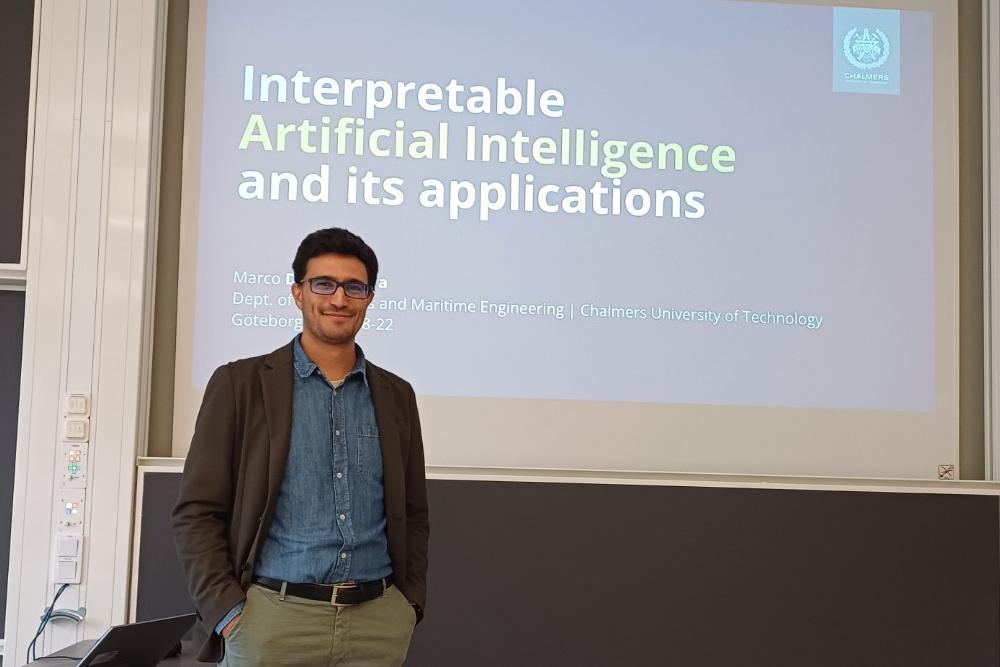
Marco L. Della Vedova is a Senior Lecturer in Applied Artificial Intelligence at Chalmers University of Technology, Sweden. He works in the Vehicle Engineering and Autonomous Systems division within the Department of Mechanics and Maritime Sciences, as part of Prof. Mattias Wahde's research group. Since 2025, he has served as Director of the Data Science and AI master's programme (MPDSC) at Chalmers, where he teaches courses including Introduction to Artificial Intelligence and Digitalization in Sports. Dr. Della Vedova earned his academic foundation at the University of Pavia, Italy, where he completed his BSc (2006), MSc (2009), and PhD (2013) in Computer Engineering. His doctoral research focused on "Real-Time Physical Systems and Electric Load Scheduling" under Prof. Tullio Facchinetti. During his PhD studies, he spent a year at U.C. Berkeley hosted by Prof. Francesco Borrelli at the Model Based Predictive and Distributed Control Lab. His research spans multiple AI domains with a strong emphasis on interpretability. Dr. Della Vedova develops interpretable methods for conversational AI, naturalness evaluation of forests using canopy height models, and geospatial applications. His work bridges theoretical AI with practical societal benefits, particularly in environmental monitoring, transportation systems, and orienteering. He has previously contributed to cloud computing, hate speech detection, and cyber-physical energy systems, demonstrating his interdisciplinary approach to AI research. Dr. Della Vedova's publication record reveals a consistent trajectory of impactful research across multiple domains of artificial intelligence. His recent work shows a strong focus on interpretability in AI systems, with significant contributions to natural language processing, geospatial analysis, and causal inference. The research demonstrates both theoretical depth and practical applications, particularly in environmental monitoring and social media analysis. His methodology often combines traditional machine learning approaches with novel interpretability techniques, creating bridges between complex AI systems and human understanding. Dr. Della Vedova has received several prestigious recognitions for his work: Best PhD thesis award from the Order of the Engineers of Bergamo (2013) Italian champion of Il Cervellone (2012) Top Italian performer in IEEEXtreme 6.0 programming competition (148th overall globally, 2012) Premio Arturo Schena award from Fondazione Credito Valtellinese (2010) With over 50 students supervised through bachelor's and master's theses, Dr. Della Vedova has established himself as a dedicated mentor in the AI community. His current PhD students include Minerva Suvanto working on interpretable NLP and Vivien Lacorre developing AI for railway infrastructure inspection. His supervision spans diverse topics from forest naturalness evaluation to hate speech detection and transportation optimization. Beyond formal supervision, he actively contributes to educational initiatives including serving as Director of Chalmers' Data Science and AI master's program and developing innovative teaching methods that connect theoretical concepts with real-world applications. Dr. Della Vedova is deeply embedded in both academic and professional communities. He leads the Applied Artificial Intelligence research group at Chalmers while maintaining strong connections with European research networks through projects like the ERASMUS+ EUrienteering initiative. His interdisciplinary approach is reflected in collaborations across computer science, environmental science, and social sciences. Notably, he applies his AI expertise to orienteering both as a researcher developing localization methods and as a licensed Event Advisor for the International Orienteering Federation, demonstrating how his professional and personal interests converge in innovative ways.
Richard Harper is a Professor at Murdoch University, affiliated with the Food Futures Institute and the School of Agricultural Sciences within the College of Environmental and Life Sciences. His research focuses on soil, water, and biodiversity management, with emphasis on carbon mitigation, soil water repellency, and ecohydrology. He has held roles including lead author on the 2014 IPCC report and chair of IUFRO’s Forests and Water Taskforce. Harper holds a B.Sc. Agric. (Hons) and Ph.D. (Agriculture) from the University of Western Australia. His current research includes 4 PhD and 2 MSc students, collaborating nationally and internationally. Awards include Murdoch University’s 2021 Excellence in Research Award for sustained achievement. Key research themes involve leveraging carbon markets for landscape restoration, managing soil water repellency in agricultural/forested systems, and exploring bioenergy solutions. His work bridges science and policy, addressing climate mitigation through reforestation, mangrove restoration, and forest hydrology. He teaches soil science, climate mitigation, and hydrology courses at Murdoch. Publications span over three decades, with recent focus on remote sensing for forest monitoring, mangrove carbon projects, and soil carbon dynamics. Grants and collaborations include government and international bodies, reflecting his role in translating research into actionable policy and practice.
Vishal Verma is an Associate Professor in the Department of Civil and Environmental Engineering at the University of Illinois. His research focuses on understanding the sources, chemical composition, and health impacts of atmospheric particulate matter (PM2.5), particularly its oxidative potential. He has contributed to studies on urban air pollution, combustion emissions, and indoor/outdoor environmental monitoring. Key research areas include: Quantifying oxidative potential of aerosols and its relationship with human health Investigating emission sources of PM2.5 in urban environments (e.g., Kuwait, Delhi) Developing novel measurement techniques for real-time aerosol analysis Exploring the impact of atmospheric aging on aerosol toxicity Notable achievements include the NSF CAREER Award (2019) for integrating education and research on particulate matter toxicity. His work has been featured in high-impact journals like Nature Communications and Environmental Science & Technology . Collaborations span global institutions, emphasizing international research networks. Verma’s contributions extend to public health applications, such as studies on N95 mask sanitization using electric cookers and microwave decontamination methods. His research bridges environmental engineering, toxicology, and policy, addressing critical global challenges like climate change and urban air quality.
Christopher Williams is a Research Professor at the University of Colorado Boulder's Department of Aerospace Engineering Sciences, affiliated with the Colorado Center for Astrodynamics Research (CCAR). He holds a PhD in Electrical Engineering from the University of Colorado (1994), an MS from Purdue University (1986), and a BS from California Polytechnic State University (1984). His research focuses on radar remote sensing of precipitation, tropospheric microphysics, and cloud dynamics, with emphasis on satellite, airborne, and ground-based systems. He has contributed to projects like the Global Precipitation Measurement (GPM) mission and led validation efforts using disdrometers and profilers. Key awards include the NASA Goddard Robert H. Goddard Award (2015) and CIRES Outstanding Scientist (2006). Research interests include calibrating cloud radars, analyzing raindrop size distributions, and understanding precipitation processes in diverse environments. His work bridges observational techniques (e.g., Doppler radar, microwave radiometry) with theoretical modeling to improve satellite rainfall algorithms. Recent studies address attenuation effects in radar signals, vertical air motion estimation, and the impact of anthropogenic pollution on Arctic cloud properties. Educations : PhD, Electrical Engineering, University of Colorado, 1994 MS, Electrical Engineering, Purdue University, 1986 BS, Electronic Engineering, California Polytechnic State University, 1984 Key Projects : ARM Climate Research Facility NOAA Earth System Research Laboratory GPM Ground Validation campaigns Publications emphasize radar-based precipitation analysis, with recent trends in airborne W-band applications, PIA modeling, and parameterization of rain variability for large-scale models. His lab collaborations include CIRES and NASA, advancing technologies for climate monitoring and disaster response.
Herman Paryono is a PhD Researcher at the Faculty of Economics and Business, University of Groningen, specializing in Human Resource Management & Organizational Behavior. His research focuses on the impacts of role transitions between work and non-work domains on employee well-being and performance, particularly examining daily role diversity and sequence effects. Education: PhD in Organizational Behavior & HR Management (ongoing), University of Groningen MSc in Social-Organizational Psychology (cum laude), Leiden University BSc in Psychology (cum laude), Universitas Sanata Dharma, Indonesia His expertise spans work psychology, people analytics, and quantitative social sciences. Prior to academia, he held a senior management position at Nutrifood Indonesia, earning awards for leadership excellence. He currently serves as a guest lecturer and frequently presents at conferences like the European Association of Work and Organizational Psychology. Professional Contributions: Delivers talks on People Analytics and Work Psychology through mediums like Medium blog (25k+ followers) Skilled in multivariate analysis, psychometrics, machine learning, and data visualization tools (R, SPSS, Gephi) Research presented across 5+ international associations including Indonesian Positive Psychology groups Awards: Top 3 Indonesia Future Human Resource Leader Award Top 5 Indonesia Young Business Leaders Award His work bridges academic research with industry practice, emphasizing data-driven insights into contemporary work challenges.
Dr. Xin Zhang is an Assistant Professor in the Department of Agricultural and Biological Engineering at Mississippi State University. His research focuses on smart agriculture, AI applications, agricultural robotics, and unmanned aerial systems. He leads the Sensing & Automation in Agrisystems (SAAS) Lab, which develops technologies for crop monitoring, robotic harvesting, and machine vision systems. Dr. Zhang holds a Ph.D. from Washington State University and has held postdoctoral positions at UC Davis. He is a FAA-certified UAS pilot and actively collaborates on projects involving machine learning, computer vision, and precision agriculture. Research interests include digital agriculture frameworks, crop prediction models, and the integration of AI into farming systems. Key achievements include pioneering work in robotic cotton-picking simulations and UAV-based yield estimation. His lab emphasizes interdisciplinary approaches combining robotics, data science, and environmental engineering. Awards include the 2020 Giuseppe Pellizzi Prize for agricultural engineering research and multiple ASABE accolades. Current projects involve scalable field extraction frameworks using satellite imagery and deep learning models for plant phenotyping. He has published over 50 peer-reviewed articles, with a focus on advancing automation in crop handling and environmental sensing technologies. Education: Ph.D., Biological & Agricultural Engineering (WSU), M.S., Agriculture (Northwest A&F University), B.S., Agronomy (Gansu Agriculture University).
Kolbjørn Kallesten Brønnick is a Professor and Dean at the Faculty of Social Sciences, University of Stavanger. His research spans neuroscience, healthcare technology, and digitalization impacts in academia. He has contributed to studies on EEG-based disease classification, digital stressors in academic environments, and telemedicine efficacy. His work emphasizes cross-disciplinary approaches, integrating clinical neuroscience with public health challenges. Key research interests include neurodegenerative disorders, olfactory dysfunction assessment, and healthcare practitioner resilience. His recent publications explore EEG biomarkers for Parkinson’s disease, validation of digital consultation tools, and pandemic-related communication strategies. Brønnick collaborates internationally on projects addressing neuropsychiatric symptoms in dementia and multisite EEG data harmonization. His work is published in high-impact journals like Clinical Neurophysiology and Frontiers in Psychology. Notable contributions include developing the Digital Stressors Scale and the PARPHAIT olfactory assessment tool. Brønnick’s academic leadership role underscores his commitment to advancing social science and health research methodologies.
Megan O'Connell is a Professor and Faculty Member in Psychology and Health Studies at the University of Saskatchewan's College of Arts and Science. She holds an Associate Membership in the Canadian Centre for Rural and Agricultural Health, Medicine, and serves as a Clinical Psychologist specialized in Neuropsychology with the Rural and Remote Memory Clinic (RRMC). She earned her Ph.D. in Clinical Neuropsychology from the University of Victoria, along with an M.A. and B.A. Honors degree. Her research focuses on dementia assessment and interventions, telemedicine applications for rural healthcare, caregiver support systems, and technology integration in aging populations. Dr. O’Connell has received substantial research funding through grants like the New Frontiers in Research Fund ($24M CAD), CIHR grants ($2.1M CAD), and the Weston Family Foundation ($12.2M CAD). She leads projects addressing culturally safer dementia care in Indigenous communities, interprofessional primary care readiness, and cognitive rehabilitation via telehealth. Her lab is managed by Research Coordinator Shoshana Green, who oversees operations and grant administration. Her work emphasizes rural health disparities, particularly in dementia diagnosis and support. Recent studies include longitudinal analyses of pre-COVID-19 social isolation impacts, telehealth-based cognitive interventions, and cross-national cognitive measure harmonization. She actively collaborates with organizations like the Alzheimer Society of SK and the Canadian Longitudinal Study on Aging (CLSA) to advance dementia care equity and interdisciplinary practice. Dr. O’Connell has supervised 28 practicum placements and mentored numerous graduate students. Notable advisees include Karl Grewal (clinical neuropsychology at Glenrose Hospital), Jake Ursenbach (private clinical practice in Calgary), and August Kortzman (currently at the Rural and Remote Memory Clinic). Her research narrative bridges clinical neuropsychology with public health imperatives, addressing both individual patient needs and systemic healthcare challenges.
Andrew Marshall is a Professor at the University of Michigan, affiliated with the School for Environment and Sustainability, Departments of Anthropology and Ecology and Evolutionary Biology, and the Program in the Environment. He holds a PhD from Harvard University and has conducted extensive fieldwork in Indonesian Borneo, Uganda, and the Democratic Republic of Congo. His research focuses on primate evolutionary ecology, tropical forest ecology, and conservation biology, with a primary research site at Gunung Palung National Park, West Kalimantan, Indonesia. Education: B.A. and Ph.D. in Anthropology from Harvard University, postdoctoral work at The Arnold Arboretum (Harvard). Research Interests: Primate behavior and ecology, tropical forest conservation, invasive species impacts, climate change effects on wildlife, and conservation policy. He leads long-term studies on orangutans and other primates, emphasizing their ecological roles and responses to environmental changes. Key Achievements: Awarded UC Davis Chancellor’s Fellow, Fulbright Scholar, and U.S. Rowing Academic All-American. His work addresses global challenges like biodiversity loss and sustainable development in tropical regions. Advising and Grants: Supervises graduate students in anthropology and ecology programs. Secured grants for projects on primate foraging behavior, climate impacts on primates, and invasive species management. Collaborates internationally on conservation initiatives. Labs/Teams: Core member of the Gunung Palung Orangutan Project, involving multidisciplinary teams in ecology, anthropology, and conservation science.
Meley Mekonen Rannestad is a Researcher at the Norwegian University of Life Sciences specializing in forest and resource economics. She leads the interdisciplinary NFR project ClimateSmartForest with a 15 million NOK budget and received the prestigious Human Frontier Science Program research grant in 2024. Her research examines climate-smart forest management, ecosystem services valuation, and sustainable land use in African dryland ecosystems. Recent publications focus on remote sensing applications for biomass estimation, armed conflict impacts on vegetation, and economic analyses of agroforestry adoption. Rannestad represents NMBU at UN climate conferences (COP25, COP27, COP28) and investigates carbon sequestration potential, forest governance, and climate adaptation strategies in vulnerable ecosystems. Her work integrates natural and social science approaches to address climate change challenges.