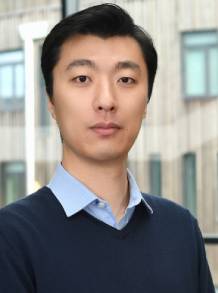
Professor Venerina Johnston is a leading academic in workplace health and rehabilitation at the University of Southern Queensland's School of Health and Medical Sciences. Her research focuses on musculoskeletal disorders, occupational health, and return-to-work interventions within the Centre for Health Research. BPhty, Queensland University (1981) BPhtyHons, Queensland University (1982) GCertMgt, University of Southern Queensland (1999) GDWDP, Sherbrooke University (2012) PhD, Queensland University (2007) Her primary research investigates neck pain management in office workers, ergonomic interventions, and vocational rehabilitation following injuries. Johnston pioneers digital solutions like the Sit-Stand e-Guide and examines economic impacts of workplace interventions through cost-benefit analyses. Current projects address musculoskeletal self-management tools and wellbeing of workers post-compensation claims. Johnston's publication trends reveal strong focus on workplace ergonomics (45% of 2023-2025 articles), injury rehabilitation (30%), and methodological innovations in measurement tools (25%). Recent work emphasizes digital health solutions and longitudinal economic evaluations of interventions. As principal investigator for the NEXpro Collaboration Group, she leads multinational studies on neck pain interventions in Swiss office workers. Her research directly informs clinical frameworks for healthcare providers managing work-related injuries. ORCID: 0000-0003-0911-0866 2,565 total research output views 1,085 total research output downloads
Matthew Schmidt is a Professor in the Department of Workforce Education and Instructional Technology at the University of Georgia. His research sits at the intersection of artificial intelligence, educational technology, and learning experience design (LXD), with a strong focus on health and inclusion. He designs and studies innovative technologies including AI-powered learning tools and immersive VR environments to support individuals with disabilities and chronic medical conditions such as autism, traumatic brain injury, and diabetes. Education: PhD in Information Science and Learning Technologies, University of Missouri, 2010 MA in German Language and Literature, University of Missouri, 1999 BA in German Language and Literature, University of Missouri, 1997 Undergraduate studies at Truman State University Research Interests: Dr. Schmidt pioneers human-centered design of educational technologies through his Sociotechnical-Pedagogical Systems Theory. His work emphasizes ethical integration of AI, XR, and eHealth platforms to create accessible learning experiences for neurodiverse populations. Key focus areas include participatory co-design methodologies, usability of immersive environments for autism spectrum disorders, and mHealth interventions for chronic conditions like diabetes and epilepsy. His research bridges education and health professions to address social determinants of health through technology. Publication Trends: Analysis of his 2022-2025 publications reveals consistent focus on health-integrated educational technologies. Major themes include telehealth interventions for pediatric TBI families, medication adherence systems for epilepsy/diabetes, and inclusive game-based STEM learning for neurodiverse youth. His work increasingly incorporates participatory design with end-users and examines social determinants of health. The research output demonstrates strong federal funding support (NSF, NIH, DoD) and interdisciplinary collaboration across medical and educational fields. Scientific Awards: Multiple prestigious awards for innovative online, multimedia-based, and distance learning solutions Recognition for cutting-edge applications of VR/AI in special education contexts Advising and Grants: Dr. Schmidt leads multiple federally funded projects including NSF, NIH, and DoD initiatives focused on accessible learning technologies. His work involves mentoring graduate students in educational technology design though specific advisee names aren't publicly listed. Current grants support development of platforms like Storiza (AI reading fluency tool) and interventions including Diabetes Journey and Epilepsy Journey. His research emphasizes team-based, transdisciplinary approaches to solving complex educational-health challenges. Labs and Teams: While specific lab names aren't documented, Dr. Schmidt's work involves interdisciplinary teams spanning educational technology, clinical psychology, and medical fields. His projects utilize advanced technologies including spherical VR, biometric sensors, and generative AI. The River's Crossing facility at UGA serves as his operational base for developing and testing inclusive learning platforms focused on real-world healthcare and educational challenges.
Alexandra Covaci is an Associate Professor in the Department of Computer Science at the University of Bedfordshire, specializing in virtual reality, human-computer interaction, and mulsemedia (multisensory media) systems. With a consistent publication record spanning over a decade, her research focuses on enhancing user experiences through multisensory integration in virtual environments, with particular applications in healthcare, accessibility, and social interaction. Her research interests center on virtual reality systems, human-computer interaction paradigms, mulsemedia technologies, accessibility applications, and dementia care interventions. Dr. Covaci's work bridges technical innovation with practical human-centered applications, particularly exploring how multisensory feedback can enhance presence and usability in virtual environments. She has made significant contributions to understanding cross-modal correspondences in multimedia experiences and developing practical applications for vulnerable populations. Analysis of her recent publications reveals a strong trend toward healthcare applications of VR technology, particularly for dementia care and accessibility solutions. Her work increasingly integrates physiological measurements and user-centered design principles to create more effective and engaging virtual experiences. The interdisciplinary nature of her research connects computer science with psychology, healthcare, and social sciences. Multiple publications in IEEE Transactions on Visualization and Computer Graphics Regular contributions to ACM CHI and DIS conferences Editorial work for Multimedia Tools and Applications journal Dr. Covaci actively collaborates with an international network of researchers across Europe and beyond, with frequent co-authorship with Gheorghita Ghinea, Chee Siang Ang, and Sophia Ppali. Her research has been supported by multiple grants focused on VR applications for social good, though specific funding details aren't visible in the publication record. She appears to supervise PhD students working at the intersection of VR, accessibility, and healthcare applications. Her laboratory work focuses on developing and evaluating mulsemedia systems, with particular emphasis on creating standardized testing methodologies for multisensory experiences. Current projects appear to be exploring the integration of VR technologies in dementia care settings and developing more accessible interfaces for people with various disabilities.
Dr. Adrian H Zai is an Associate Professor at UMass Chan Medical School , affiliated with the Division of Health Informatics and Implementation Science and the Population and Quantitative Health Sciences department. He holds a PhD in Pathology , an MD , and an MPH in Healthcare Management , with training from Boston University, Harvard University, and Boston University School of Medicine. Chief Research Informatics Officer at UMass Chan Co-director of Health Informatics and Implementation Science graduate program Faculty in Masters in Clinical Investigation program His research focuses on population-based informatics initiatives that integrate decision support systems , artificial intelligence , and implementation science to optimize patient population management. Key areas include: Virtual desktop implementation for clinical research Large language models for informed consent AI-driven public health interventions COPD remote monitoring systems SARS-CoV-2 diagnostic performance analysis Health equity in test distribution Recent publications (2022-2025) emphasize generative AI infrastructure , decentralized clinical trials , and digital health equity . His work spans medical informatics , primary care innovation , and public health technology , with cross-disciplinary applications in cardiology, oncology, and infectious disease management. Dr. Zai leads the Research Informatics Core , directing strategic data science infrastructure at UMass Chan. He has collaborated extensively with multidisciplinary teams across institutions, focusing on: AI chatbot development for vaccination outreach Telemonitoring systems for chronic conditions Health equity analytics Clinical workflow optimization Epidemiological modeling Health IT cost-benefit analysis
Ying Chen is a Visiting Assistant Professor of Mathematics at Purdue University's Department of Mathematics, affiliated with the College of Science. Her research focuses on mathematical modeling in biology, scientific computing, and computational fluid dynamics. She has contributed to interdisciplinary projects involving autonomous systems, human-computer interaction, and medical visualization. Her work bridges theoretical mathematics with practical applications in healthcare systems, environmental monitoring, and autonomous vehicle technologies. Key research interests include developing algorithms for 3D scene reconstruction, optimizing vehicle interface safety, and applying AI to clinical decision support. Her recent publications explore topics like neural motion flow for autonomous driving, haptic feedback in bicycle safety systems, and LiDAR-camera fusion techniques. Collaborations span computer science, engineering, and biomedical fields. Publications from 2023–2025 reveal a focus on spatiotemporal data visualization, VR training systems, and multi-modal forest monitoring. Notable trends include integrating machine learning with real-world challenges in transportation safety and environmental analysis. While no awards are explicitly listed, her work has been recognized in VAST Challenge competitions for innovative visualization methodologies. Ying Chen’s teaching and research emphasize bridging abstract mathematical concepts with tangible applications. She has developed educational tools like the Mindwriter academic writing environment and conducted studies on visual learning strategies for students with math difficulties. Her work on car dashboard interface design and in-car entertainment systems highlights a commitment to user-centered technology solutions.
Carlos Lucena is an Adjunct Professor at the Cheriton School of Computer Science, University of Waterloo. His work focuses on the intersection of technology and healthcare, particularly in telemedicine, e-learning systems, and human-computer interaction for medical applications. His research spans healthcare informatics, collaborative learning platforms, and accessible e-learning design. Key areas include developing mobile health applications for clinical monitoring, designing telemedicine training systems, and implementing usability frameworks for medical software. A review of recent publications shows strong emphasis on practical healthcare technology implementations, with recurring themes in telemedicine infrastructure, mobile health solutions, and collaborative learning systems. The work demonstrates consistent application of user-centered design principles across medical and educational contexts.
Sangita Pokhrel is a Lecturer in Computer Science and Data Science at York St John University's London Campus. She holds an MSc in Computer Science (Distinction) from York St John and an undergraduate degree in Electronics and Communication Engineering from Tribhuvan University, Nepal. Her research focuses on machine learning, AI applications in agriculture and healthcare, blockchain, and educational technology. She leads the Paragon Research Group, emphasizing interdisciplinary innovation in data science and Gen AI. Research Interests: Machine Learning, Deep Learning, AI in Agriculture, Mental Health Analysis, Blockchain, and Educational Technology. She actively collaborates with IBM UK and universities like St Mary’s University to bridge academia-industry gaps. Her funded projects include SAAR and QR initiatives, and she has published in IEEE journals and conferences. Awards include the Best Presentation Award at CDSBDA 2022. Teaching: She instructs master’s modules in Big Data, Agile Software Development, AI, and Data Visualization. Pedagogical focus on practical learning and real-world problem-solving. Engages students through initiatives like The Dock and MakerVerse, offering hands-on experience with VR and podcasting tools. Labs/Teams: Paragon Research Group (focusing on blockchain and Gen AI), collaborations with UK universities to enhance teaching practices. Part of diversity initiatives like U Connect Mentoring and YSJ London Women’s Network.
Associate Professor Oren Tirosh is an academic in Clinical Biomechanics and Rehabilitation at RMIT University's Department of Health and Biomedical Sciences. He holds a part-time academic position as a Senior Lecturer at Swinburne University of Technology (2016–2024) and has prior roles as a Senior Research Fellow at the Royal Children's Hospital (2006–2016) and Data Manager at Western Health (2012–2016). His industry experience includes founding Motion3D Pty Ltd, a company focused on wearable sensor technologies. His research interests center on movement analysis, wearable sensor applications, 3D clinical gait analysis, and digital health solutions for remote assessments. He has collaborated with elite athletes like F1 driver Mark Webber and Commonwealth Games gold medallist Eleanor Patterson. Oren's work emphasizes MedTech innovations, such as smartphone-based platforms for postural balance and functional assessments. Recent research focuses on spasticity progression modeling, sports biomechanics, and VR interventions for ADHD. He is actively involved in supervising PhD/Masters projects on ankle proprioception, low back pain, and femoroacetabular impingement. His collaboration network is accessible via biomechanics.site .
Dr. Yuchen Zhao is a Lecturer in the Cyber Security and Privacy Research Group at the University of York's Department of Computer Science. His research focuses on privacy-preserving machine learning, edge computing, and healthcare technology, particularly in smart healthcare systems using federated learning. He holds a Ph.D. from the University of St Andrews and has worked at institutions such as Imperial College London and the University of Southampton. Education: Ph.D. in Computer Science, University of St Andrews (2017) M.Sc. in Information Security, Wuhan University (2013) B.Eng in Information Security, Huazhong University of Science and Technology (2011) His research interests include user-centric systems powered by personal data and privacy protection mechanisms in IoT and edge environments. Notable projects include AI Testing Innovation (Innovate UK) and Building a Minimal Viable Digital Identity (EPSRC SPRITE+). He collaborates with interdisciplinary teams to advance usable privacy and security in healthcare and smart systems. Dr. Zhao is actively recruiting PhD students interested in privacy-preserving machine learning, edge computing, and usable privacy. His work bridges theoretical advancements with practical implementations, aiming to reform real-world systems through secure, privacy-aware technologies.
Samantha Horseman is the HDR Innovation and Industry Lead at James Cook University (JCU), bridging academia, research, and industry to foster innovation ecosystems. With 20+ years of experience in invention and entrepreneurship at Aramco, she specializes in Human-Machine Interface (HMI) innovations, health/ productivity management, and data science-driven solutions. Her mission focuses on developing researchers, innovators, and startup founders through programs like the IMPACT 10X simulator and Lab 2 Market initiative. She leads the Cairns AI Hub, promoting AI capabilities in Queensland. Education details are not explicitly listed, but her extensive professional experience spans roles at Aramco and JCU. Research interests include workplace wellness, predictive analytics, and industry collaboration. Her 47 publications and 60 patents reflect expertise in ergonomic systems, wearable tech, and leadership development. Notable contributions include bio-feedback devices, health monitoring systems, and HMI innovations. Her articles (2012–2025) emphasize workplace health optimization, ergonomic solutions, and AI applications. While specific award names are not listed, she has earned 25 local/regional/global awards. She advises on venture growth consultancy and mentors through Founders-in-Residence portfolios. Active in industry partnerships, she connects researchers with industry via platforms like Lab 2 Market and the Cairns AI Hub.
Jennifer Fisher is a Professor in the Department of Visual Art and Art History at York University's School of the Arts, Media, Performance & Design (AMPD). She holds a BFA from NSCAD University, and MA and PhD degrees from Concordia University. Her academic work integrates curatorial practice with research in contemporary art, sensory aesthetics, and feminist theory. Research Focus Fisher's research explores interdisciplinary intersections including: Exhibition studies and archival reinterpretation Affect theory and non-visual sensory aesthetics Feminist performance and display practices Curatorial methodologies and artist archives Professional Recognition Contemporary Art Fellow at the National Gallery of Canada Research affiliations at Cornell University and NYU Tisch School of the Arts Co-founder of the Journal of Curatorial Studies Founding member of DisplayCult curatorial collective Notable Projects Fisher co-curated 'Archives by Artists' (2024) at the Archives of Ontario, featuring 18 international artists who reconceptualize archival practice through interactive multiples. The exhibition engaged AMPD students in hands-on curation and will travel to Québec in 2025. Her work frequently integrates academic research with public-facing curation.
Dr. Efpraxia Zamani is a Full Professor of Information Systems at Durham University Business School, with prior experience as a Senior Lecturer at the University of Sheffield. Her research focuses on digital inequalities, emerging technologies, and workplace IS implications. She leads projects like the EU-funded AGORA program on Metaverse research and has examined digital poverty, remote work dynamics, and healthcare ICT interventions in Malawi and the UK. Efpraxia holds editorial roles at journals like Information Systems Journal and Information Technology for Development , and has received the AIS Sandra Slaughter Service Award (2024). Her recent work analyzes policy narratives around digital exclusion, AI/UX design, and hybrid work models. Supervised students include Georgia Donta and Myrto Dimitriou. Key grants include £1.9M from UKRI EPSRC for Metaverse research and studies on digital inclusion in South Yorkshire.
Dr. Mansoor Abdulhak is a Professor in the School of Computer Science at the University of Oklahoma. He holds a PhD in Artificial Intelligence from Universiti Malaya, Malaysia, an MS in Real-Time Software Engineering from Universiti Teknologi Malaysia, and a BS in Computer Application from Osmania University, India. His research focuses on software engineering, requirement engineering, ontologies, semantic web technologies, and e-Learning systems. He has over 15 years of industry experience, including roles as a Senior Software Engineer and academic positions across multiple institutions in Malaysia, Saudi Arabia, Turkey, and the U.S. Dr. Abdulhak’s research emphasizes AI-driven solutions in healthcare and smart cities, stakeholder analysis in software development, and user-centric design principles. He has contributed to over 30 peer-reviewed publications and authored a book on e-Learning in Malaysia. His work bridges theoretical advancements with practical applications, such as blockchain-based IoT data monetization and explainable AI systems for clinical decision support. He actively engages with professional societies (IEEE, ACM) and serves as a program committee member for major conferences. His accolades include Fellow status in the American Academy of Project Management and certifications in project management. His teaching and research labs focus on collaborative learning, requirement prioritization, and semantic web technologies.
John Sören Pettersson is a Professor of Information Systems Research at Karlstad University, Sweden. He leads research in Human-Computer Interaction (HCI), with a focus on usability methodologies, privacy-enhancing technologies, and crisis management training systems. As former Dean of the Faculty of Economics, Communication and IT (2009-2012) and Director of the HumanIT Research Center (2000-2006), he has held significant academic leadership roles. His research spans multiple areas including: 1) Crisis Management Training via digital tools (e.g., CriseIT Interreg projects), 2) Mobile Technology for Development (M4D) through conferences like M4D 2022 in Rwanda, and 3) Usable privacy in cloud computing (e.g., CREDENTIAL EU projects). He co-developed Ozlab, a non-programming prototyping system, and its web-based successor. Teaching responsibilities include courses in HCI, Information Systems, and interdisciplinary programs like Rules-as-Code applications and AI in Law (starting 2024). He supervises students at all academic levels and collaborates with organizations including the Swedish Tax Agency and local game developers through The Great Journey partnership. Recent projects include the INCREDILAB initiative (2024-2026) addressing climate resilience education and digital transformation, plus pilot studies on generative AI in legal applications. His work bridges technical innovation with societal challenges, emphasizing user-centered design principles across domains.
Claire Ballard is a Researcher at King's College London working on the OPTIMA Programme, a collaborative research initiative with the universities of Nottingham and Southampton funded by an NIHR Programme Grant for Applied Research. Her primary role involves facilitating recruitment for the London site and supporting parents using the STEPS (Structured E-Parenting Support) app, which helps manage children's disruptive and defiant behaviors. Her research spans critical areas in child psychology and digital health interventions, with specific expertise in Child-Parent Relations, Attention Deficit Hyperactivity Disorder, digital parenting solutions, and behavioral management strategies. The fingerprint analysis of her work shows strong concentrations in Patient Referral systems (85%), Attention Deficit Disorder (81%), Randomized Controlled Trials (68%), and related areas including Hyperactivity and Impulsiveness. Ballard's publication record demonstrates consistent focus on developing and testing digital behavioral interventions, particularly examining recruitment strategies, feasibility, and usability of parenting support applications. Her work bridges clinical psychology with practical technology implementation to address real-world challenges faced by families with children exhibiting behavioral difficulties. Professionally, she maintains dual roles with her academic position at King's College London and an external practice as a Therapeutic Counsellor through Claire Ballard Therapy, scheduled to begin September 1, 2024. Her research has garnered 13 citations and engagement across multiple academic platforms including Mendeley and social media channels.


/prod01/yorksjacuk/media/content-assets/staff-profile-images/Sangita-Pokhrel.jpg)