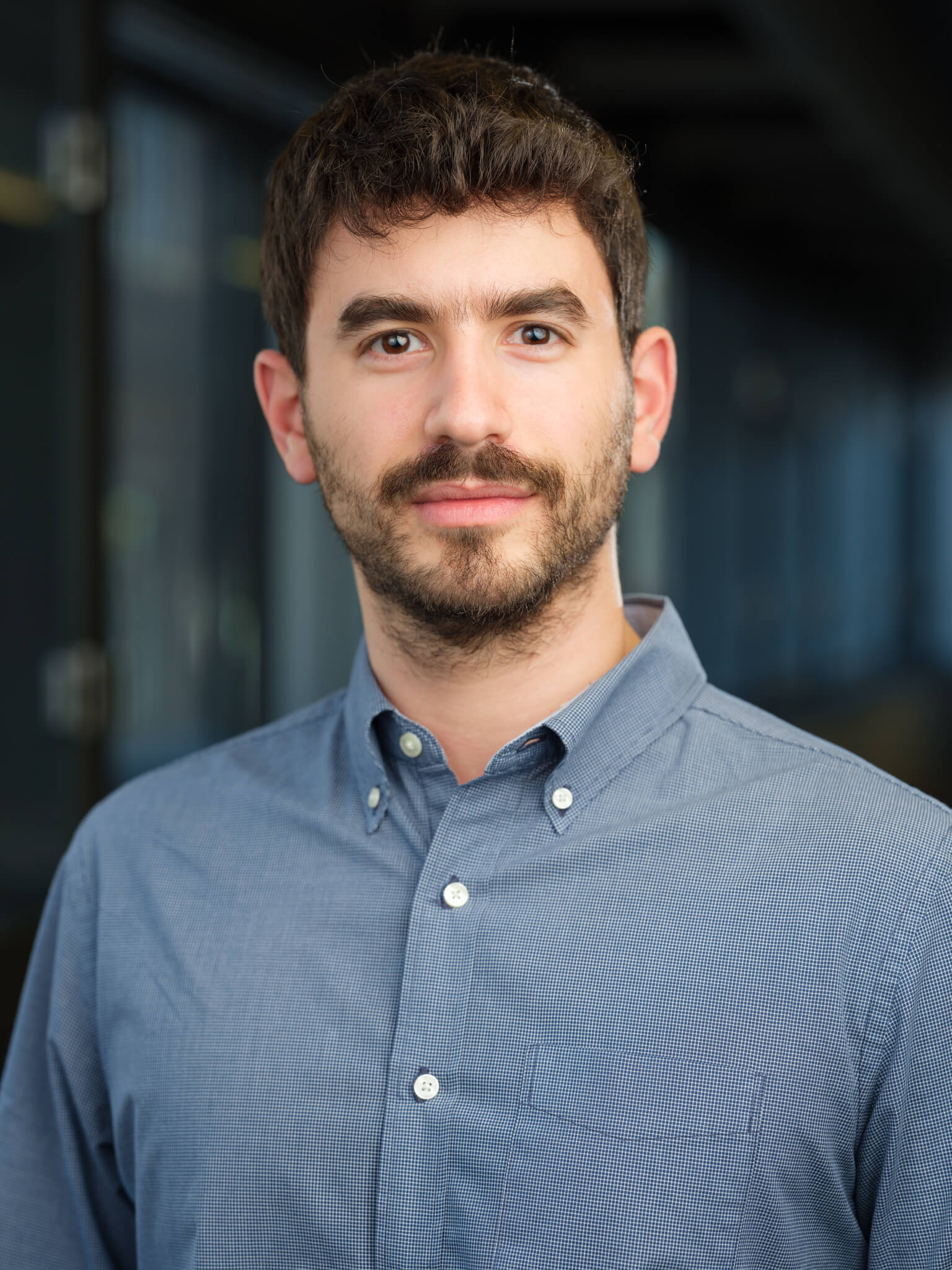
Dr. Marnix Naber is an Assistant Professor at the Department of Experimental Psychology, Faculty of Social and Behavioural Sciences, Utrecht University. He leads the Psychophysiology of Perception Laboratory and maintains a collaboration with Harvard University's Vision Sciences Lab. Current affiliations: Utrecht University (Experimental Psychology), Neurolytics (HR technology), and Holland Startup (external PhD supervision) Previous roles: Leiden University (Cognitive Psychology Unit), Harvard University (Vision Sciences Lab), Philipps-University Marburg (Neurophysics PhD) Research Focus: Integrates psychophysiology with visual perception and consciousness studies. Key methods: pupillometry, EEG, eye tracking, remote photoplethysmography, and computational modeling. Applications span clinical diagnostics, human-centered AI, and HR technology. The 2013-2022 publications show strong emphasis on pupil dynamics (7/15), binocular rivalry (2/15), and remote physiological measurement (3/15). Methodological contributions include open-source MATLAB rPPG tools and standardized reporting frameworks. Scientific Impact: ERC Consolidator grant supporting AttentionLab research NWO grant for 2013 imitation studies Google Scholar: Q4HBMeoAAAAJ Advising: Supervises multiple PhD and Master's students across experimental psychology, ophthalmology, and neurotech domains. Laboratory Activities: Develops and shares open-source tools like rPPG for heart rate detection and maintains active collaborations with medical (UMC Utrecht), tech (Neurolytics), and academic institutions (Harvard, Leiden).
Dr. Matthieu Bolay is a Lecturer and Ambizione research fellow at the Institute of Social Anthropology, University of Bern, where he conducts research on knowledge politics, norm making, and valuation practices in the context of global extraction. His work examines how investment arbitration knowledge is produced and circulated, and how it transforms relations between normative orders governing extractive resource supply chains. Dr. Bolay received his PhD Summa cum Laude from the University of Neuchâtel in 2017, where he worked as a research and teaching assistant at the Laboratory for Transnational Studies. Prior to his current position, he was a postdoctoral researcher at the Graduate Institute in Geneva (2018-2021), investigating emerging forms of corporate governance under transparency politics in extractive industries. During his doctoral studies, he was granted a Doc.Mobility fellowship at the London School of Economics (2015-2016). His research interests focus on the interplay between knowledge politics, norm making, and valuation practices in the governance of extraction, technology, labor, mobility, and migration. Dr. Bolay's work particularly examines artisanal and small-scale mining in West Africa, investment arbitration in extractive industries, and the social dimensions of resource governance. His approach combines ethnographic fieldwork with theoretical insights from political anthropology, economic sociology, and science and technology studies. Dr. Bolay is currently leading a four-year Ambizione research project funded by the Swiss National Science Foundation titled "Arbitraging Extraction (Arbitrex): Arbitral Reasoning in the Legal Topographies of Global Extraction." This project examines how investment arbitration knowledge is produced, institutionalized, and circulated, and how arbitration transforms relations between normative orders governing extractive resource supply chains. His publications span multiple disciplines including anthropology, political geography, migration studies, and resource policy, with a focus on West African mining contexts, supply chain governance, and the social dimensions of resource extraction. A notable trend in his recent work is the examination of how digital technologies mediate resource governance, how moral economies shape supply chains, and how mobility practices intersect with resource extraction. Dr. Bolay has received the prestigious Ambizione fellowship from the Swiss National Science Foundation, which supports promising early-career researchers to lead independent projects. His research has also been supported by various funding mechanisms including the SDC-funded iMoMo project on water management and the SNF-funded Edutrans project on international education. Through his research on artisanal mining, migration, and resource governance, Dr. Bolay contributes to understanding the complex social dynamics at play in extractive contexts, particularly in West Africa. His work bridges theoretical insights from social anthropology with practical concerns in resource governance and sustainable development.
Xavier Begaud is a Professor at Telecom Paris within Institut Polytechnique de Paris, affiliated with the Communications and Electronics (Comelec) Department of the Information Processing and Communication Laboratory (LTCI). He joined Telecom Paris in 1998 and led the RF & Microwave group from 2013 to 2017, currently serving as a core member of the Radio Frequency and Microwaves (RFM²) research team. His work bridges theoretical and applied electromagnetics with strong industry collaboration. Educational background: B.S. in Telecommunication, University of the South, Toulon-Var (1988) M.S. in Optics, Optoelectronics and Microwaves, Institut National Polytechnique de Grenoble (1989) Ph.D. in Electronic and Communications, University of Rennes 1 (1996) Habilitation in Electrical Engineering, Pierre and Marie Curie University (Paris 6) (2007) His research centers on advanced antenna systems with emphasis on metamaterial applications. Key areas include wideband/dual-polarized antenna design, transformation optics for radiation control, and radar absorbing materials (RAM) development. Current work targets 5G/6G communication systems, UAV detection radar, and space applications requiring lightweight electromagnetic absorbers operating from GHz to millimeter waves. He employs numerical methods for modeling antennas over artificial magnetic conductors and defected ground structures. Analysis of recent publications reveals three dominant trends: (1) Metasurface-enabled beam steering for multi-band 5G antennas, (2) Ultra-wideband metamaterial absorbers using composite materials for space/naval applications, and (3) EMF exposure reduction in mobile devices through metamaterial integration. His group consistently applies transformation optics to manipulate radiation patterns and develops multi-sector absorbers with oblique incidence tolerance. Scientific Awards No specific awards, fellowships, or medals were documented in the source material. Advising and Grants Though individual students aren't listed, his supervision is evidenced by 250+ publications. He chaired Meta’12 and AES 2012 conferences and co-edited books on ultra-wideband antennas. Current grant activities include the NF-PERSEUS project (2023-2024) for 6G research and past Orange contracts (2013-2014) developing low-exposure wireless components for D4.1/D4.2 reports. Labs and Teams RFM² (Radio Frequency and Microwaves) research team at LTCI COMELEC Department specializing in communications systems Key development of SAFAS (Self-Complementary Connected Antenna Array with Low Signature) for stealth applications Active collaboration with CNES, DGA, and ONERA on radar-absorbing composites
Professor Vladimir Risojević is a full professor at the Department of General Electrical Engineering, Faculty of Electrical Engineering, University of Banja Luka, Republic of Srpska, Bosnia and Herzegovina. With a prolific research career spanning over two decades, he has established himself as a leading expert in remote sensing, machine learning, and biohybrid systems. His work bridges theoretical advancements with practical applications in environmental monitoring, energy systems, and security technologies, with numerous publications in high-impact journals and conferences. Professor Risojević's research focuses primarily on remote sensing image classification , where he has made significant contributions to understanding the role of pre-training in specialized applications. His work in machine learning spans self-supervised learning, contrastive multiview coding, and efficient neural network architectures. Most notably, his pioneering research in biohybrid systems has developed innovative methods using honeybees as biosensors for landmine and explosive detection, creating a unique intersection between biology and engineering that has received international recognition. His research consistently demonstrates a commitment to solving real-world problems with practical engineering solutions. Analysis of his recent publications reveals a strategic expansion from his core expertise in remote sensing into complementary domains including energy systems (solar irradiance modeling and Li-ion battery monitoring), 3D human body modeling, and novel neural network architectures. A unifying theme throughout his work is the pursuit of computational efficiency, with multiple publications focusing on approximate computing techniques to make AI systems more energy-efficient for deployment in resource-constrained environments. His research demonstrates both depth in specialized areas and breadth across multiple engineering disciplines. Professor Risojević is actively involved in numerous significant research projects including: NATO Science for Peace and Security project valued at €300,415 on 'Biological Methods (Bees) for Explosive Detection' 'Obrada signala primjenom ugradjenih racunarskih sistema i masinskog ucenja' (Signal Processing using Embedded Computer Systems and Machine Learning) 'Masinsko ucenje u rubnom racunarstvu' (Machine Learning in Edge Computing) 'Elektronski sistem za daljinsko pracenje i analizu uticaja parametara zivotne sredine na aktivnost pcela' (Electronic System for Remote Monitoring of Environmental Parameters on Bee Activity) His laboratory has developed specialized video analysis systems for bee monitoring, with multiple publications detailing techniques for tracking bee activity, detecting pollen-bearing bees, and creating integrated sensor platforms for remote bee yard monitoring. This work has positioned him as a leader in applying computer vision techniques to biological monitoring systems with applications in both environmental science and security technologies.
Timothy Filley serves as Professor and inaugural Director of the Institute for Resilient Environmental and Energy Systems at the University of Oklahoma's School of Geosciences, based in the Sarkeys Energy Center in Norman, Oklahoma. His educational background includes: Postdoctoral research at Carnegie Institution of Washington, Geophysical Lab (1997-2000) Ph.D. from The Pennsylvania State University (1997) B.S. from Loyola University (1990) Professor Filley's research centers on biogeochemical processes across terrestrial and aquatic ecosystems. His work examines carbon and nitrogen cycling in soil, litter, and streams within natural and managed landscapes from Peruvian deserts to Chinese plains and U.S. Midwest agricultural fields. Key methodologies integrate organic geochemistry , microbial activity assays , stable isotope techniques , and remote sensing to model soil organic matter dynamics and ecosystem responses to perturbations including fire, agriculture, and invasive species. His recent publications (2018-2021) reveal strong thematic focus on critical zone science and anthropogenic impacts , with recurring patterns in: Storm-driven carbon transport in agricultural watersheds Tillage effects on soil erosion chemistry Soil moisture-geochemistry relationships Microbial deconstruction processes in specialized ecosystems Critical transitions in intensively managed landscapes This integrative approach combines field studies, laboratory analyses, and modeling to address environmental resilience challenges. No scientific awards are listed in the provided information. While specific advising details are unavailable, Professor Filley leads an active research group within the Institute for Resilient Environmental and Energy Systems. His directorship suggests significant involvement in interdisciplinary research initiatives and potential grant funding related to environmental and energy systems resilience. His research team employs diverse analytical approaches to study carbon and nitrogen cycling dynamics across multiple continents, with particular emphasis on how ecosystem perturbations influence soil properties and biogeochemical processes in both natural and human-altered landscapes.
Dr. Anastasios Tsiamis is a Lecturer at the Department of Information Technology and Electrical Engineering at ETH Zürich, working in the Automatic Control Laboratory (Professur Control and Computation). His research focuses on the intersection of control theory and machine learning, specifically investigating how system theoretic properties affect the statistical difficulty of learning in system identification, online estimation, and control. Dr. Tsiamis received his Diploma (MEng, five-year degree) in Electrical and Computer Engineering from the National Technical University of Athens (NTUA). He completed his Ph.D. in Electrical and Systems Engineering at the University of Pennsylvania under Professor George Pappas, following graduate research with Professor Petros Maragos and undergraduate work with Professor Kostas J. Kyriakopoulos at NTUA. His primary research areas include Statistical Learning and Control, Data-Driven Control, Online Learning, Risk-Aware Control, and Security and Privacy in Networked Control Systems. Dr. Tsiamis has made significant contributions to understanding the fundamental statistical limits of learning in control systems, particularly focusing on sample complexity. His work on risk-aware optimization develops algorithms that safeguard against catastrophic events while maintaining good average performance, and his security research addresses eavesdropping attacks in remote estimation and motion planning. Analysis of Dr. Tsiamis's recent publications reveals a strong focus on data-driven approaches to control theory with emphasis on distributionally robust methods, risk-aware optimization, and finite sample guarantees. His work bridges theoretical foundations with practical applications across system identification, online learning, and adaptive control, providing rigorous non-asymptotic guarantees for learning-based control algorithms. Dr. Tsiamis has received several notable research recognitions: Best student paper award at IEEE 61th Conference on Decision and Control (2022) Spotlight Presentation at 41st International Conference on Machine Learning (2024) Finalist for best student paper award at American Control Conference (2019) Finalist for young author prize at IFAC World Congress (2017) Oral presentation at 2nd L4DC Conference (2020) Dr. Tsiamis teaches Linear System Theory (227-0225-00L) at ETH Zürich and collaborates extensively with Professor John Lygeros, Professor Manfred Morari, and researchers from the University of Pennsylvania. His publication record demonstrates strong collaborative research across multiple institutions while advancing theoretical foundations of learning-based control. As an active member of the Automatic Control Laboratory at ETH Zürich, Dr. Tsiamis contributes to advancing control systems science through rigorous mathematical analysis and innovative algorithmic development, with applications spanning robotics, energy systems, and networked control.
Jenefer Husman is a Professor in the Critical and Sociocultural Studies in Education and Educational Foundations departments at the University of Oregon's College of Education. Her research examines how students' future-oriented thinking influences present learning, with a focus on creating equitable access to STEM education for under-served populations, particularly in engineering. She has received national recognition including the Presidential Early Career Award for Scientists and Engineers (2007) and an NSF CAREER award (2006). Education: Ph.D. in Educational Psychology, University of Texas at Austin (1998) M.A. in Cognition, Learning and Instruction, University of Texas at Austin (1996) B.S., The Evergreen State College (1992) Chinese Language and History, Jackson School of International Studies, University of Washington (1990-1991) Husman's work centers on time perspective theory and its application to educational motivation. She argues that envisioning future selves transforms present learning behaviors, especially in STEM contexts. Her research integrates cognitive, emotional, and social dimensions to explore how identity development and future thinking influence engagement in challenging academic environments. Recent projects examine physiological correlates of exam stress and strategies to reduce student resistance to active learning through faculty development initiatives. Analysis of Husman's 2023-2025 publications reveals three dominant trends: (1) Multi-modal investigation of STEM identity development using physiological data (e.g., cortisol measurements during exams) and sociohistorical frameworks; (2) Systematic study of barriers to active learning adoption, particularly regarding gender, belongingness, and communal goals among diverse students; (3) Expansion of future time perspective theory through episodic future thinking interventions. Her work increasingly emphasizes collaborative networks like the Western Regional Noyce Network for scaling teacher development. Scientific Awards: 2012 Keynote Speaker, 1st International Conference on Time Perspective 2010 Benjamin J. Dasher Award for Best Paper at Frontiers in Education Conference 2007 Presidential Early Career Award for Scientists and Engineers 2006 National Science Foundation CAREER Award Husman has secured significant grant funding including her NSF CAREER project connecting future time perspective to STEM career development. As Principal Investigator of the Western Regional Noyce Network, she directs multi-institutional efforts to recruit and retain STEM teachers through scholarships, mentoring, and innovative curriculum development. Her collaborative projects with engineering education researchers focus on translating resistance-reduction strategies into practical faculty development tools for community colleges and four-year institutions. Husman leads research laboratories examining physiological responses during authentic learning experiences and co-directs the Gender & STEM Network exploring interventions to improve diversity in geosciences. Her current work integrates wearable technology with educational psychology to measure real-time emotional and cognitive responses in classroom settings.
Elizabeth Gil García is a Full Professor at the Department of Economic and Financial Disciplines, Faculty of Law, University of Alicante. Her office is located at the San Vicente del Raspeig campus in Alicante, Spain. Education: Degree in Law, University of Alicante, 2012 (Extraordinary Degree Award) Master's Degree in Environmental Law and Sustainability, University of Alicante, 2013 Doctor of Law, University of Alicante, 2016 (International Doctoral Mention, Cum Laude unanimously, Extraordinary Doctorate Prize 2019) Research Focus: Professor Gil García specializes in three interconnected domains: International Taxation (examining cross-border tax frameworks and treaties), R&D Taxation (analyzing innovation incentives and patent regimes), and Environmental Taxation (developing sustainable fiscal policies for ecological challenges). Her work frequently engages with EU law principles, addressing contemporary issues like digital taxation and demographic shifts. Publication Trends: Her recent scholarship demonstrates strong emphasis on European Union tax jurisprudence (2025), sustainable fiscal policy design (2024), and the intersection of customary international law with taxation (2023). Methodologically, she combines doctrinal analysis with policy evaluation, frequently referencing landmark court rulings and EU directives. Awards: Extraordinary Doctorate Prize in Law, University of Alicante (2019) No information is available regarding student advising, research grants, or laboratory affiliations in the provided materials.
Denis Mathis is a Lecturer in Geography at the University of Lorraine since 2016, affiliated with a research laboratory focused on Water and Environments, Landscape and Territorial Transitions, and Transitions in Planning. He serves as Co-head of the MEEF 2D Master's in History and Geography and the Master M1 MEEF 2D Letters-History-Geography program. His academic qualifications include: Thesis from University of Nancy 2 (2009): 'Agrarian geohistory of a Lorraine region: Saulnois' CAPES in History and Geography (1995) Auditor at Institute of Advanced Studies in National Defense (2013) Mathis specializes in historical and retrospective geography, analyzing transitions in landscapes, geosystems, and anthroposystems. His work examines human interactions with hydrosystems (watercourses, ponds, flooding, canals), military geography (border legacies, garrison towns, demilitarization), and rural geography (peri-urbanization, vineyards, forests) across Grand Est, Burgundy-Franche Comté, Luxembourg, and Germany. He employs interdisciplinary approaches combining archival research with field studies to investigate material and immaterial landscape transformations. His 2025 publications reveal strong thematic cohesion around military heritage reconversion, historical water management, and cross-border landscape studies. Key trends include analyzing post-military site transformations in the Pays de Bitche, artisanal knowledge transmission in Lorraine villages, and Solvay company town legacies. His work consistently bridges historical analysis with contemporary geographical challenges, emphasizing the Moselle region as a living laboratory for conflict heritage and territorial transitions. Mathis has supervised 4 professional dissertations for M2 MEEF, PEPA, and PEA programs. His research engagement includes the Patrimart project (2015-2017) on 'Landscape(s) of the strange' and co-leading the 2018 OHM Pays de Bitche project on military vocation. He teaches courses on territory formation, urban geography, and CAPES competition preparation while developing pedagogical approaches using local resources. Within the University of Lorraine laboratory, he collaborates across thematic axes with engineers, technical staff, and doctoral students. His work utilizes technical platforms for hydrometry, topography, sedimentology, and drone-based remote sensing, contributing to online databases like LOTERR (30,000 aerial photographs) and IKARE (karst phenomena mapping).
Alain Breuleux is a retired Associate Professor in the Department of Educational & Counselling Psychology at McGill University's Faculty of Education. He specializes in educational technology integration, teacher professional development, and collaborative learning communities. His work focuses on leveraging technology to enhance pedagogical practices through research-practice partnerships. Dr. Breuleux holds a B.Sc., M.Sc., and Ph.D. from Université de Montréal. His research explores cognition in learning environments, online community dynamics, and sociocultural theories like Cultural Historical Activity Theory (CHAT). He has contributed to scalable professional development models for educators and innovative uses of digital tools in remote learning contexts. His recent publications emphasize active learning strategies, teacher agency, and boundary-crossing in educational research. He has presented widely on topics such as knowledge-building networks and formative change laboratories. Despite not currently supervising students, his scholarship has shaped policies for ICT integration and teacher collaboration.
Rosemary Willatt is a Lecturer in Experimental Ice and Rock Physics for the Environment at the University College London (UCL) Department of Earth Sciences. Her research focuses on sea ice dynamics in polar regions, combining laboratory experiments with fieldwork and remote sensing techniques. She leads projects involving satellite radar altimetry for monitoring snow and ice thickness, with a particular emphasis on advancing Earth Observation missions through the Polarimetric Synthetic Aperture Radar Altimeter (PoSARA) concept. She has been awarded the inaugural Konrad Steffen Award by ESA for her innovative work on snow depth estimation techniques. Willatt’s work integrates field campaigns (e.g., in the Arctic and Antarctic) with analysis of airborne, satellite, and ground-based radar data. She collaborates with space agencies to optimize satellite mission design and has pioneered novel methods for quantifying snow properties and their impacts on cryosphere processes. Her contributions include advancements in understanding brine migration in snow, L-band microwave scattering, and wind-driven snow redistribution effects on radar signatures. As Principal Investigator for the ESA-funded PoSARA project and Sea Ice Earth Observation at the Centre for Polar Observation and Modelling (CPOM), she bridges experimental physics with large-scale climate monitoring. Her research also emphasizes education, diversity, and sustainability initiatives within the scientific community.
Benjamin Weiss is the Chair of the Program in Planetary Science and Robert R. Shrock Professor of Earth and Planetary Sciences at the Massachusetts Institute of Technology (MIT). He leads research in planetary magnetism and serves as Deputy Principal Investigator on NASA's Psyche mission, while also contributing as a Co-Investigator on the Mars Perseverance rover and Europa Clipper missions. Department of Earth, Atmospheric and Planetary Sciences MIT Planetary Magnetism Laboratory Director NASA Psyche Mission Deputy Principal Investigator Mars Perseverance Rover Co-Investigator Europa Clipper Mission Co-Investigator Weiss earned his bachelor's degree in physics from Amherst College before pursuing graduate studies in planetary science and geology at the California Institute of Technology, where he received his master's degree in 2001 and PhD in 2003. His doctoral dissertation on Martian meteorite ALH 84001 provided groundbreaking insights into ancient Martian climate and magnetic fields, demonstrating how meteorites could transfer materials from Mars to Earth without heat sterilization. As a specialist in magnetometry, Professor Weiss investigates the formation and evolution of planetary bodies through laboratory analysis, spacecraft observations, and fieldwork. His research spans nebular magnetic fields in the early solar system , planetesimal structures and dynamos , lunar magnetism and the early lunar dynamo , Hadean Earth and the origins of Earth's magnetic field , the Martian dynamo and changes in Mars' paleoclimate , and innovations in magnetic microscopy . The MIT Planetary Magnetism Laboratory, which he directs, develops high-sensitivity techniques to image magnetic fields in rock samples from meteorites, the lunar surface, and terrestrial sites. Analysis of Weiss's recent publications reveals a strong focus on Mars exploration through the Perseverance rover mission, lunar magnetism studies, and research on asteroid Psyche. His work increasingly integrates data from multiple NASA missions while advancing paleomagnetic techniques to understand planetary evolution and habitability throughout the solar system. Professor Weiss has received numerous prestigious honors including the James B. Macelwane Medal from the American Geophysical Union (2009), election as an AGU Fellow (2009), the Visiting Miller Professor Award from UC Berkeley (2014), and having Asteroid (8069) named 'Benweiss' by the International Astronomical Union (2012). Most recently, he was elected to the National Academy of Sciences (April 29, 2025). James B. Macelwane Medal, American Geophysical Union (2009) Fellow, American Geophysical Union (2009) Visiting Miller Professor Award, UC Berkeley (2014) Asteroid (8069) Benweiss named by IAU (2012) Elected to National Academy of Sciences (2025) As an academic leader, Weiss chairs MIT's Program in Planetary Science and mentors numerous graduate students in the Planetary Magnetism Laboratory. His research is supported by multiple NASA grants related to the Psyche mission, Mars exploration, and lunar science investigations. Weiss also contributes to international collaborations including missions with JAXA (Hayabusa 2), ESA (Rosetta), and SpaceIL (Beresheet). The MIT Planetary Magnetism Laboratory under Weiss's direction develops cutting-edge instrumentation for magnetic analysis, including the Quantum Diamond Microscope. His research team collaborates with scientists across multiple institutions and space agencies to analyze samples from meteorites, lunar missions, and Mars rovers, advancing our understanding of planetary formation and evolution.
Michelle Shevon Troche is a Professor of Speech and Language Pathology at Teachers College, Columbia University within the Graduate School of Education. She serves as Director of the Graduate Program in Communication Sciences and Disorders and Director of The Upper Airway Dysfunction Lab (UAD Lab). Her work focuses on improving clinical outcomes and quality of life for patients with dysphagia, dystussia, and dysarthria through research, clinical care, and education. Dr. Troche earned her educational credentials from the University of Florida, including: Ph.D. in Communication Sciences and Disorders (2006-2009) M.A. in Speech-Language Pathology (2004-2006) B.A. in Communication Sciences and Disorders and Linguistics, with minors in Teaching English as a Second Language and Gerontology (2000-2004) Her primary research interests center on airway protection disorders, particularly dysphagia and dystussia in neurodegenerative conditions like Parkinson's disease. Dr. Troche's work bridges basic science understanding of airway protection mechanisms with clinical applications for evaluation and treatment. She has pioneered research in expiratory muscle strength training, cough rehabilitation, and telehealth applications for swallowing disorders. Her laboratory employs both basic science approaches to understand airway protection mechanisms and clinical research to develop novel evaluation and treatment techniques. Analysis of Dr. Troche's extensive publication record reveals consistent focus on Parkinson's disease and airway protection, with increasing attention to telehealth applications and methodological rigor in swallowing research. Her work demonstrates strong translational value, moving from basic research on cough and swallowing mechanisms to clinical interventions that improve patient outcomes. Dr. Troche mentors numerous students and fellows through the UAD Lab, including post-doctoral researchers, doctoral students, and clinical fellows. Her interdisciplinary approach involves collaborations across departments and institutions, particularly in neurology and rehabilitation science. The UAD Lab forms part of a University-funded and IRB-approved Clinical Research Neurorehabilitation Initiative that provides free clinical research screenings for people with neurological diseases. As director of the UAD Lab, Dr. Troche oversees research on multiple behaviors contributing to airway protection and their modification through non-pharmacological treatment paradigms. The lab works with diverse populations including healthy volunteers, people with Parkinson's disease, other movement disorders, and ischemic stroke patients.
Eoghan Holohan is an Associate Professor in the School of Earth Sciences at University College Dublin (UCD). His research focuses on gravity-driven deformation processes, including calderas, sinkholes, and volcanic systems, with a strong emphasis on fieldwork, remote sensing, and numerical/experimental models. He holds a BA in Natural Science (2002), a Diploma in Statistics (2004), and a PhD in Geology (2008) from Trinity College Dublin. Prior roles include Assistant Lecturer at UCD (2006–2007), postdoctoral fellowships (2007–2012), and a research scientist position at GFZ Potsdam (2012–2015). Since 2016, he has been affiliated with UCD, advancing his academic career to his current rank. Research interests span volcanic edifice evolution, karst landscape dynamics, peatland geohazards, and structural tectonics. He employs methods like satellite InSAR, drone photogrammetry, and discrete element modeling. Notable contributions include studies on the Bárdarbunga caldera collapse (Iceland), Dead Sea sinkholes, and lava dome morphology. Holohan coordinates courses in structural geology, digital geology, and remote sensing, supervising undergraduate and graduate projects. His grants include funding for karst subsidence detection, sinkhole machine learning, and Atlantic geohazard risk management. Scientific accolades include Exceptional Reviewer recognition (Geosphere 2017), AGU invited talks (2013, 2018), and the Bob Hunter Memorial Prize (2005). He actively reviews for journals like Journal of Volcanology and Geothermal Research and participates in international collaborations across multiple countries.
Nicolas Ali Libre is an Associate Teaching Professor in the Department of Civil, Architectural and Environmental Engineering at Missouri University of Science and Technology. He serves as Director of the Materials Testing Lab and has contributed extensively to research and education in civil engineering, with a focus on concrete technology, 3D printing materials, and innovative teaching methods. PhD in Civil Engineering (2009) MS in Structural Engineering (2003) BS in Civil Engineering (2001) His research spans concrete rheology, sustainable construction materials, and engineering education technologies, including 3D concrete printing optimization, fiber-reinforced composites, and digital learning tools. He has pioneered novel testing methods for concrete buildability and extrudability. Award-winning educator, he received the President’s Award for Innovative Teaching (2018) and Missouri S&T Faculty Achievement Award (2018). His scholarly output includes over 20 peer-reviewed journal articles, 60 conference papers, and mentorship of 10 graduate students. He manages the Materials Testing Lab at Missouri S&T and has developed digital educational resources for engineering mechanics courses, including the SecPro App for teaching mechanics concepts.