Sonja Buchegger is a Professor at the Division of Theoretical and Computer Science at KTH Royal Institute of Technology. She serves as Co-PI of the DataLEASH research project (Learning and Sharing under Privacy constraints) and is affiliated with the Digital Futures Faculty, a cross-disciplinary center focused on digital technologies and societal challenges. Her work addresses privacy-preserving technologies in decentralized systems, IoT, and secure communication. Research Interests: Privacy-Preserving Technologies Data Security and Synthetic Data Generation Decentralized Systems and Cryptographic Protocols IoT Privacy and Ownership Management Secure Communication in Social Networks Key Projects: DataLEASH: Focuses on privacy constraints in data sharing and learning chownIoT: Enhances IoT privacy during ownership transfers Anonfaces: Anonymization of facial data with efficacy and security constraints Advising & Grants: As Co-PI of DataLEASH, she leads collaborative research on privacy challenges. Her work is supported by Digital Futures' interdisciplinary initiatives. Labs/Teams: Active contributor to Digital Futures' research on digital technologies and societal impact.
Mehrdad Ghandhari Alavijh is a Full Professor in Electric Power Systems at KTH Royal Institute of Technology. He leads research in power system dynamics, stability, and control, with a focus on FACTS (Flexible AC Transmission Systems), HVDC systems, and advanced control strategies. His work addresses challenges in grid reliability, renewable energy integration, and environmental sustainability. Education: Received M.Sc. (1995) and Ph.D. (2000) in Electrical Engineering from KTH. His research group develops innovative methods for secure, efficient power system operation, leveraging advanced monitoring and communication technologies. Research Interests: Power System Dynamics and Stability Transient Stability Assessment HVDC and FACTS Technologies Renewable Energy Integration Publications: Recent works focus on HVDC systems, battery storage, transient stability algorithms, and frequency control. His studies emphasize real-time monitoring and control strategies to enhance grid resilience against outages. Teaching: Supervises courses in power systems engineering, including degree projects in Electric Power Systems and Energy Innovation. Serves as an examiner and course responsible for multiple graduate programs.
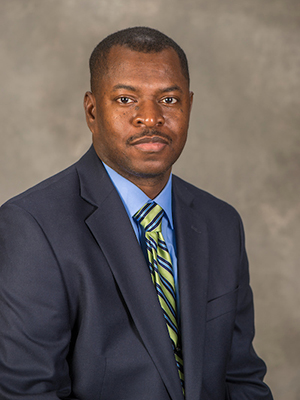
Garth V. Crosby is an Associate Professor at Texas A&M University's Department of Engineering Technology and Industrial Distribution within the College of Engineering. He is also affiliated with the Multidisciplinary Engineering program. His research focuses on IoT and IIoT security, cyber-physical systems, and STEM education innovation. Crosby holds a Ph.D. in Electrical Engineering from Florida International University (2007), an M.S. in Computer Engineering, and a B.S. in Electronics (Applied Physics) from the University of the West Indies. His work spans cybersecurity frameworks for emerging technologies, including blockchain-based federated learning, post-quantum cryptography, and IoT threat mitigation. He has contributed to educational advancements through online lab design and faculty efficacy studies in hybrid learning environments. Crosby's recent publications emphasize securing robotic IoT systems, supply chain blockchain applications, and ransomware evasion techniques using generative AI. His research portfolio includes over 40 peer-reviewed articles in journals like IEEE Transactions and conferences such as ASEE and FiCloud. Key themes include volunteer cloud reliability models (ProTrust), edge computing security, and educational technology evaluation. Crosby's interdisciplinary approach bridges engineering systems with pedagogical innovation, addressing both technical and human factors in modern technological challenges.
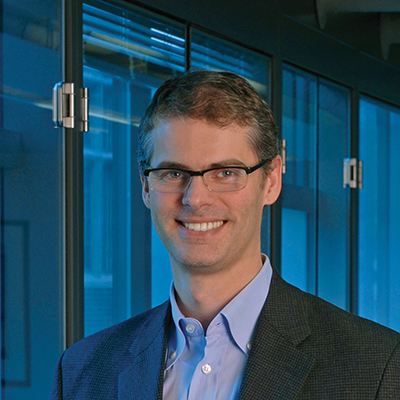
Benjamin C. Pierce is Henry Salvatori Professor of Computer and Information Science at the University of Pennsylvania, with appointments in the School of Engineering and Applied Science. A Fellow of the ACM, his research spans programming languages, formal verification, and security-privacy technologies. He directs the DeepSpec project on verified systems infrastructure and leads climate computing initiatives. Research interests focus on: Formal methods for reliable software via proof assistants like Coq Bidirectional programming and data synchronization Language-based security and differential privacy Publication trends show consistent contributions to type theory foundations, with recent emphasis on property-based testing methodologies and real-world verification. Articles frequently appear in top PL/SEC venues with practical applications in compilers and secure systems. Scientific Awards: ACM Fellow (systems verification) SIGPLAN Distinguished Educator Award (textbook innovations) Advises graduate students through the Penn PL Club. PI for NSF Expeditions in Sustainable Computing. Leads the VERSE project for verified C code and Unison file synchronizer. Directs the Penn Programming Languages Research Group collaborating with industry partners including Amazon and Microsoft Research.
Francesco Regazzoni is a Senior Researcher at the Faculty of Informatics, Università della Svizzera italiana (USI), and affiliated with the Dalle Molle Institute for Artificial Intelligence (IDSIA USI-SUPSI). His work bridges embedded systems, cybersecurity, and artificial intelligence, with a focus on securing hardware and cyber-physical systems. Research Interests: His expertise spans embedded and cyber-physical systems security, side-channel attacks, post-quantum cryptography, hardware trojans, random number generators, and the security of AI and approximate computing. He also contributes to hardware/software co-design and operating systems security. The analysis of his recent publications reveals a consistent focus on hardware and system-level security , particularly in resource-constrained environments like IoT and embedded devices. His work integrates machine learning for attack detection and applies formal methods to ensure trust in hardware. A growing emphasis is placed on securing AI systems from physical and adversarial threats. Scientific Contributions: Over 100 peer-reviewed publications One book and one patent Extensive international collaboration (Belgium, Netherlands, USA, Switzerland, Singapore) Advising and Grants: While specific advisees and grants are not listed, his leadership in funded research projects and involvement with ALaRI and IDSIA suggest active mentorship and project coordination. His work has been supported by industry (e.g., ST Microelectronics, HP), the Swiss National Foundation, and the European Union. Labs and Teams: He is part of the Graph Machine Learning Group (GMLG) at IDSIA, which evolved from the Advanced Learning and Research Institute (ALaRI). This group focuses on graph machine learning, reinforcement learning, and dynamical systems, particularly in non-stationary environments.
Dr. Xiaoyu Xia is a Lecturer (equivalent to Assistant Professor in North America) in Cybersecurity & Software Systems at RMIT University's School of Computing Technologies. He received his PhD with the prestigious Alfred Deakin Medal from Deakin University, Australia, and has established himself as a leading researcher in distributed systems and cybersecurity with over 50 peer-reviewed publications in top-tier venues including IEEE S&P, ACM WWW, and IEEE Transactions. Dr. Xia's research spans critical areas at the intersection of computing and security: System Privacy and Security Distributed Systems and Edge Computing AI Privacy and Machine Learning Systems Sustainable Computing Cybersecurity and Privacy-Preserving Technologies His recent work demonstrates a clear trajectory toward developing practical privacy-preserving frameworks for emerging technologies, particularly in edge computing environments and large language models. Dr. Xia has made significant contributions to machine unlearning, secure data management in distributed systems, and energy-efficient edge computing solutions that balance performance with sustainability concerns. Dr. Xia has received notable recognition for his scholarly impact: World's Top 2% Scientists by Stanford University (2022-2024) Alfred Deakin Medal for PhD research excellence (2021) Teaching Excellence Award from Swinburne University of Technology (2021) As an active researcher, Dr. Xia currently leads multiple funded projects including an ARC Discovery Project grant worth over $500,000 for developing privacy-aware intelligent digital twins for secure critical infrastructures. He is open to supervising motivated PhD students with interests in system security and privacy, and distributed ML systems. Dr. Xia serves the academic community through editorial roles as Associate Editor for IEEE Transactions on Dependable and Secure Computing and as a Review Board Member for IEEE Transactions on Parallel and Distributed Systems, and regularly participates in program committees for major conferences including ACM WWW and IEEE ICDCS.
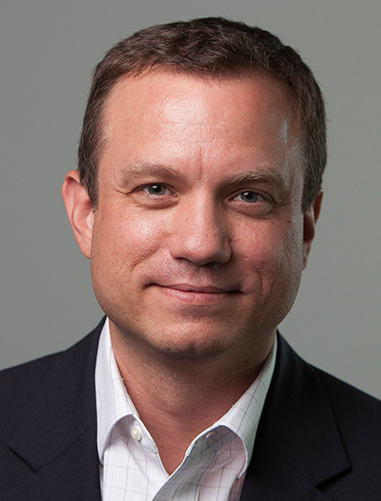
Greg Morrisett is the Jack and Rilla Neafsey Dean and Vice Provost of Cornell Tech, a graduate campus in New York City focusing on technology, business, law, and design. Previously, he served as Dean of Computing and Information Sciences at Cornell University and held the Allen B. Cutting Chair in Computer Science at Harvard University (2004–2015). He earned a B.S. from the University of Richmond and M.S./Ph.D. from Carnegie Mellon University. His research focuses on programming language technologies for secure, reliable software systems, including typed assembly language, proof-carrying code, and provably correct compilers. Notable projects include CertiCoq, GoNative, and CRASH-SAFE. He is an ACM Fellow and recipient of awards such as the Presidential Early Career Award and NSF Career Award. He has advised over 17 PhD students and mentored numerous postdocs. His work spans formal verification, cryptographic protocols, and secure systems design. Morrisett has served on editorial boards for journals like Communications of the ACM and advisory councils for NSF, DARPA, and Microsoft Research. Current research includes formal verification of cryptographic protocols with the INRIA Prosecco Team and advancing compiler correctness through projects like CertiCoq.
David Palma is an Associate Professor at the Department of Information Security and Communication Technology , Faculty of Information Technology and Electrical Engineering , Norwegian University of Science and Technology (NTNU). His research focuses on next-generation networking paradigms, including intent-based networking , knowledge-driven management , and IoT device automation . Key research interests include: Human-centric Internet of Things (IoT) Ontology-based network management Cloud/Edge/Fog computing for IoT Arctic and satellite communication 5G integration in smart grids His recent publications (2024-2019) highlight trends in knowledge graphs for network compliance, XR applications in critical sectors, UAV-based emergency networks , and 5G-enabled smart grid protection . Articles also explore Arctic connectivity via satellite swarms and energy-efficient IoT management.
Dr. Shengquan Wang is an Associate Professor in the Department of Computer and Information Science at the University of Michigan-Dearborn , affiliated with the College of Engineering and Computer Science . His career spans over a decade, with prior academic experience at Texas A&M University as a Research/Teaching Assistant. He received his Ph.D. in Computer Science from Texas A&M University in 2006, preceded by M.S. degrees in Mathematics (Texas A&M, 2000) and Applied Mathematics (Shanghai Jiao Tong University, 1998), and a B.S. in Mathematics (Anhui Normal University, 1995). Research Interests Real-Time Systems Sustainable Computing (Power/Energy/Thermal Management) Networks and Distributed Systems Security and Privacy Optimization and Machine Learning Publication Trends His work focuses on real-time systems under thermal constraints , secure overlay architectures , and energy-efficient server farms . Recent research explores statistical delay guarantees in wireless networks and nonmonotone optimization techniques . Collaborations span institutions like Texas A&M University and Karlsruhe Institute of Technology. Awards and Grants NSF CAREER Award (CNS 0746906) Rackham Faculty Research Grant Best Paper Award at ECRTS 2006 Advising and Leadership Dr. Wang advises Ph.D. and Master's students like Jun Liu and Nan Wang, fostering innovation in sustainable systems. He leads the Research Laboratory for Sustainable Systems (RLSS) , focusing on thermally constrained real-time systems and secure computing.
Jean-Yves Le Boudec is a Professor at École Polytechnique Fédérale de Lausanne (EPFL), affiliated with the School of Computer and Communication Sciences and the Institute of Electrical Engineering. He has been a key figure in advancing the theory and application of network calculus and deterministic networking, contributing significantly to standards such as IEEE Time-Sensitive Networking (TSN) and IETF DetNet. His research focuses on network calculus , time-sensitive and deterministic networking , traffic regulation , worst-case delay analysis , and cyber-physical systems , with cross-cutting applications in smart grids , real-time communication , and network security . He has co-authored foundational texts on network calculus and developed theoretical frameworks for traffic regulators, service curves, and delay bounds in complex networked systems. The recent publications highlight a strong trend in analyzing and improving performance guarantees in deterministic networks, including scheduling mechanisms like Deficit Round-Robin and Cyclic Queuing and Forwarding, traffic shaping via interleaved regulators, and security against time-synchronization attacks in power systems. The work spans theoretical modeling using stochastic and min-plus/max-plus algebra, practical algorithm design, and application to critical infrastructure. IEEE Fellow Le Boudec has advised numerous researchers and PhD students, including Ehsan Mohammadpour, Ludovic Thomas, and Seyed Mohammadhossein Tabatabaee. His collaborative projects often involve grants related to European and Swiss research initiatives in networking and smart grid technologies. He leads a research group focused on networked systems at EPFL, contributing to both theoretical advances and real-world implementations in industrial and energy-critical networks. His lab work centers on modeling and verification of time-sensitive network behaviors, integrating formal methods with practical experimentation. The team investigates regulators, shapers, and synchronization mechanisms, aiming to ensure robustness, predictability, and security in next-generation communication infrastructures. Future work continues to explore the interplay between communication, control, and energy systems in highly reliable environments.
Maurizio Leotta is an Assistant Professor in Computer Science at the University of Genova, Italy, where he has been employed since 2018. He is a member of the Department of Computer Science, Bioengineering, Robotics, and Systems Engineering (DIBRIS) within the School of Mathematical, Physical and Natural Sciences. Additionally, he serves on the School Council and the Department Board of DIBRIS. Dr. Leotta received his PhD in Computer Science from the University of Genova in 2015, with a thesis on Automated Web Testing under the supervision of Prof. Filippo Ricca. His doctoral work was revised by Prof. Massimiliano di Penta (Università del Sannio, Italy) and Prof. Ali Mesbah (University of British Columbia, Canada). Before his academic career, he worked as an IT Technician in various companies and participated in research and industrial projects funded by organizations such as Finmeccanica S.p.A. and the Italian Space Agency. Dr. Leotta's primary research focuses on Software Engineering, with particular emphasis on Test Automation, which is his main research topic. He collaborates with Prof. Paolo Tonella from USI, Switzerland on this area. His other significant research interests include Empirical Software Engineering, Requirements Engineering, Business Process Modelling, and Model-Driven Software Engineering. His work often addresses practical challenges in web and mobile application testing, with a growing interest in applying AI and gamification techniques to improve software testing processes. His recent publications demonstrate a strong trend toward integrating artificial intelligence with traditional software testing methodologies, particularly in end-to-end web testing. He has made significant contributions to improving test robustness, addressing flakiness in test execution, and developing tools for better test maintenance. His work also shows increasing interest in gamification approaches to engage developers and students in software testing activities, as well as applications of large language models to enhance test automation. Dr. Leotta has received multiple prestigious awards for his research, including: Best Paper Award at ICST 2025 (Short Papers, Vision and Emerging Results) Distinguished Paper Award at ICST 2023 (Industry Papers) Best Paper Award at QUATIC 2022 (Full Papers) Best Paper Award at ICST 2022 (Demo and Testing Tool Papers) Best Paper Award at QUATIC 2020 (Full Papers) Best Student Paper Award at ICWE 2016 (Full Papers) Dr. Leotta has advised numerous graduate students, including three PhD candidates who have completed their degrees (Andrea Fasciglione in 2024, Dario Olianas in 2023, and Diego Clerissi in 2020). He currently supervises multiple Master's students working on topics related to software testing, web accessibility, and AI applications in software engineering. He has also served as a postdoctoral advisor for researchers including Diego Clerissi and Dario Olianas. Beyond advising, Dr. Leotta has secured research funding through collaborations with industry partners and has been involved in multiple research projects focused on software testing and verification. He co-directs the Software Engineering for Healthcare (SEH) Laboratory, which has been partially supported by Janssen Italia (previously by Actelion Pharmaceuticals Italia). The lab focuses on applying software engineering techniques to healthcare applications, particularly in the areas of wearable technology for patient monitoring and medical data analysis. Dr. Leotta is also active in the Gamify research community, organizing workshops on gamification in software development, verification, and validation.
Ramy H. Gohary is an Assistant Professor in the Department of Systems and Computer Engineering at Carleton University. His research focuses on advanced wireless communication systems, including machine-to-machine communications, Internet-of-Things (IoT), MIMO systems, convex optimization, differential geometry applications in signal processing, and information-theoretic aspects of multiuser systems. Principal Investigator for Ericsson-Carleton Strategic Partnership projects on 5G+ wireless networks Research emphasizes fairness, cross-layer design, cooperative communications, and jamming-resistant detection techniques His recent work explores direction-of-arrival estimation, non-coherent communication in jamming environments, and distributed MIMO architectures. Publications highlight applications of differential geometry, optimization techniques, and sparse signal recovery in modern wireless systems. He actively contributes to advancements in channel modeling, beamforming, and energy-efficient network design.
Sandro Bartolini serves as Associate Professor in the Department of Information Engineering and Mathematical Sciences at the University of Siena, Italy, where he teaches advanced courses in computer architecture and parallel programming while leading cutting-edge research in high-performance computing systems. His academic journey began with a cum laude Laurea in Computer Engineering followed by a PhD in Computer Science and Engineering from Università di Pisa. Education: PhD in Computer Science and Engineering, Università di Pisa Laurea in Computer Engineering (cum laude), Università di Pisa Research Focus: His work centers on photonic interconnects for chip multiprocessors , energy-efficient software optimization for multi-core/GPU architectures, and performance-portable parallel programming models . Current investigations span cryptographic acceleration, blockchain algorithms, and hardware/software co-design for emerging computing paradigms, with strong emphasis on practical implementations bridging theoretical advances and real-world applications. Publication Trends: Recent publications (2019-2023) reveal three dominant threads: (1) Photonic network innovations addressing energy bottlenecks in chip multiprocessors, (2) The PHAST library ecosystem enabling seamless CPU/GPU programming across domains from autonomous vehicles to UAV navigation, and (3) Hardware accelerator designs for convolutional networks and cryptographic workloads. These works consistently target performance-portability challenges in heterogeneous computing environments. Grants and Collaborations: As principal investigator for the Italian Ministry-funded PHOTONICA project, he established international research partnerships with Murcia University, Columbia University, and Hong Kong University of Science and Technology, while securing industry collaborations with STMicroelectronics, Intel Munich, IBM, and IMEC. He has also managed complex IT system deployments for Siemens Italy, RAI (Italian public broadcasting), and SpaceDys. Academic Leadership: Bartolini serves as Associate Editor for the Eurasip Journal of Embedded Computing and actively contributes to the European HiPEAC network. His research group at Siena maintains strong industry ties for technology transfer, particularly in photonic interconnect validation and parallel programming frameworks for next-generation computing systems.
Dr. Xiaojun Cao is a faculty member at the Andrew Young School of Policy Studies, Georgia State University, specializing in optical and wireless network architectures, protocols, and security. His research addresses challenges in bandwidth scalability, network survivability, and future Internet design through innovations in multi-granular switching, traffic grooming, and cross-layer interactions. B.S., Engineering Physics, Tsinghua University, 1996 M.S., Electrical Engineering, Chinese Academy of Sciences, 1999 Ph.D., Computer Science and Engineering, State University of New York at Buffalo, 2004 His work spans three core areas: Optical Network Optimization : Developing waveband switching frameworks for backbone networks, focusing on multi-layer architectures and performance evaluation. Network Survivability : Designing proactive and reactive strategies for protection and restoration in optical and wireless systems. Edge Network Security : Advancing secure service function chain deployment in multi-vendor and zero-trust environments. Recent research trends highlight his leadership in Network Functions Virtualization (NFV) , Edge Computing , and AI-Driven Networking , with publications on blockchain-based federated learning, prompt chain deployment, and asymmetric protection mechanisms. His work bridges theoretical rigor with practical applications in 5G/6G, UAV networks, and smart infrastructure. Dr. Cao leads a research group exploring optical-wireless convergence and has contributed to foundational studies in network virtualization and traffic management.
Johannes Geier is a Researcher at the Chair of Design Automation at the Technical University of Munich (TUM). His work focuses on electronic design automation, fault injection simulations, and security countermeasures for RISC-V processors. University: Technical University of Munich Department: Chair of Design Automation Email: johannes.geier@tum.de Research Interests Electronic Design Automation (EDA) for analog and digital circuits Fault tolerance and reliability in RISC-V architectures Security analysis of post-quantum cryptographic systems Timing analysis and microfabrication techniques Optical Networks-on-Chip (NoC) and emerging technologies Compiler-assisted hardware security implementations Recent Research Trends Specializes in fault injection methodologies for hardware security validation Develops open-source tools like vRTLmod for RTL simulation acceleration Explores RISC-V vector extensions for post-quantum cryptography Investigates differential fault effect equivalence checks for efficiency Designs compiler-based security countermeasures against instruction skip attacks Works on concurrent multi-node XCP proxy server architectures