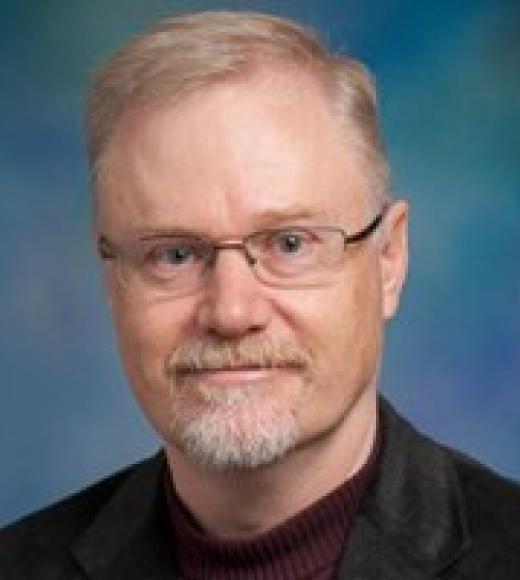
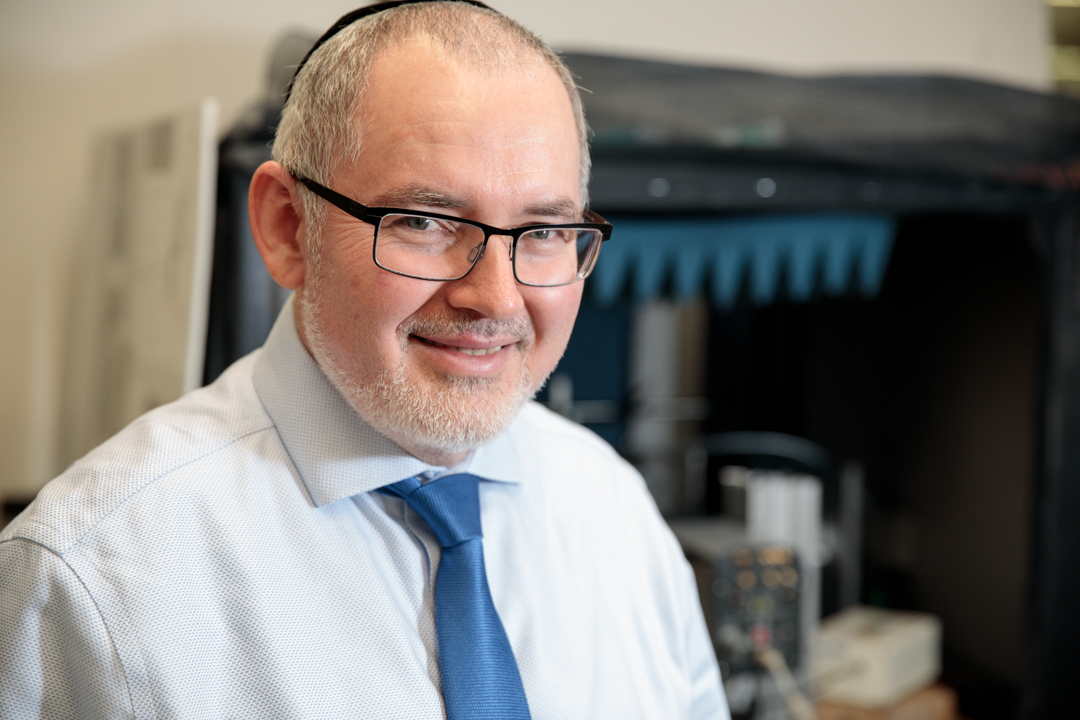
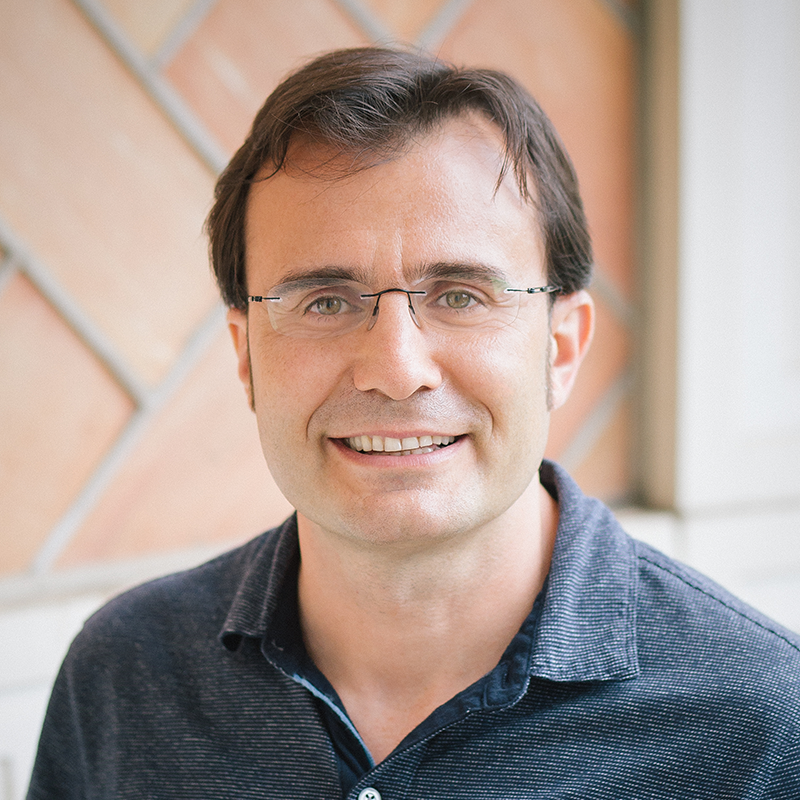
Adelle Forth is a Professor in the Department of Psychology at Carleton University, specializing in psychopathy research. Her work examines cognitive and affective processes underlying psychopathic traits, early manifestations in youth, and societal impacts. She has published extensively on violence risk assessment, forensic evaluation tools, and interpersonal dynamics affected by psychopathy. Research Focus: Her studies explore psychopathy's influence on romantic relationships, empathy deficits, humor styles, and vulnerability perceptions. She also validates cross-cultural diagnostic tools like the Spanish PCL:YV and investigates cyber-related deviant behaviors linked to dark personality traits. Professional Service: Dr. Forth serves on editorial boards and has supervised numerous graduate theses. She no longer accepts new students.
Steve Luck is a Distinguished Professor at the University of California, Davis, holding appointments in the Department of Psychology and the Center for Mind and Brain (CMB). He served as CMB Director from 2009–2019 and is affiliated with the UC Davis MIND Institute and the Center for Neuroscience. His research focuses on attention, working memory, and cognitive dysfunction in psychiatric disorders (e.g., schizophrenia), employing ERP recordings, eye tracking, and behavioral methods. He is a leading developer of ERP methodologies, including the ERPLAB Toolbox and global ERP Boot Camp workshops. Education: Ph.D., Neurosciences, UC San Diego, 1993 M.S., Neurosciences, UC San Diego, 1989 B.A., Psychology, Reed College, 1986 Research Interests: Dr. Luck explores mechanisms of cognitive control, with a focus on working memory's role in guiding attention. His lab investigates ERP correlates of attentional deficits in schizophrenia and develops standardized ERP protocols. Recent work emphasizes multivariate decoding of EEG signals and transdiagnostic neurocognitive biomarkers. Awards: Troland Award (2001) APA Distinguished Scientific Award (1998) McGuigan Young Investigator Prize (2004) Elected Fellow, Society of Experimental Psychologists and AAAS Teaching & Leadership: Professor Luck pioneered hybrid course formats in Cognitive Science and teaches advanced topics in perception and cognitive neuroscience. He co-founded the UC Davis Cognitive Science major and advocates for innovative undergraduate education models. Labs & Collaborations: The Luck Lab integrates clinical and basic research, collaborating globally on ERP method development and schizophrenia biomarker studies. Key projects include ERP Core resources and the CNTRACS consortium for neurocognitive reliability studies.
Vasil Georgiev Tsunizhev is a Professor of Computer Informatics at the Faculty of Mathematics and Informatics, Sofia University, with office hours Monday and Wednesday 13:00-14:00 in room FMI-110. Contact: v.georgiev@fmi.uni-sofia.bg, +359 2 8161-594. His research spans cloud computing, distributed systems, and grid technologies with emphasis on resource management, load balancing, and service modeling. Key contributions include numerical solutions for cloud servicing, distributed coordination mechanisms, and fault-tolerant information services. His work integrates open-source components and addresses scalability challenges in cloud environments. Analysis of his 2009-2015 publications reveals consistent focus on cloud infrastructure optimization, with recurring themes in resource frameworks, quality-of-service models, and distributed coordination. His research demonstrates strong technical depth in numerical modeling and system architecture while addressing real-world scalability and fault tolerance requirements. Professor Tsunizhev collaborates internationally through projects like CoreGRID (contributing to grid security white papers) and works with researchers including R. Zhelev and L. Kirchev. His laboratory work focuses on commodity grid platforms and lightweight resource management systems for distributed computing environments.
Christopher Goyne is an Associate Professor in the Department of Mechanical and Aerospace Engineering at the University of Virginia (UVA) and Director of the UVA Aerospace Research Laboratory. He holds a B.Eng. (1991) and Ph.D. (1999) in Mechanical Engineering from the University of Queensland, Australia. His research focuses on hypersonic propulsion, scramjet technology, instrumentation development, and advanced manufacturing. He leads the UVA Hypersonics Research Complex and is a key figure in the University Consortium for Applied Hypersonics. Goyne’s work includes contributions to NASA’s Hyper-X Program and the HyShot scramjet flight test program. He is an Associate Fellow of the AIAA and serves on editorial and advisory boards for journals and organizations such as the Shock Waves journal and Virginia’s Aerospace Advisory Council. Education: B.Eng. (Mechanical Engineering, University of Queensland, 1991); Ph.D. (Mechanical Engineering, University of Queensland, 1999). Research Interests: Hypersonics and scramjet propulsion Diagnostic techniques (e.g., laser-based methods, optical emission spectroscopy) Wind tunnel and flight testing Controls and adaptive systems for hypersonic flow paths Advanced manufacturing for aerospace components Awards: Recipient of the 2023 James C. McDaniel Fellow Award and 2022 Outstanding Researcher Award. Holds leadership roles in AIAA committees, including past Chair of the HyTASP Program Committee. Recognized with the Sigma Gamma Tau Outstanding Aerospace Professor Award (2006) and multiple research fellowships. Grants and Projects: Funded by NASA, the Air Force Office of Scientific Research, and industry partners. Leads UVA’s contributions to hypersonic ground and flight testing, including sensor development and combustion efficiency studies. Labs and Teams: Directs the UVA Aerospace Research Laboratory, collaborating on projects such as the UVA Hypersonics Research Complex and the University Consortium for Applied Hypersonics. Advises student chapters of AIAA and Sigma Gamma Tau.
Roman Obermaisser is a Professor at the Vienna University of Technology (TU Wien), affiliated with the Cyber-Physical Systems department. His research focuses on real-time systems, system architectures, communication protocols, safety-critical systems, distributed algorithms, and fault-tolerance. He holds a PhD in Computer Science from TU Wien, awarded in 2003 for his work on integrated architectures for control paradigms. His academic contributions span over two decades, with publications in top-tier conferences and journals. Key research themes include time-triggered architectures (TTA), fault containment in embedded systems, and integration of heterogeneous communication protocols like CAN and Ethernet. He has supervised numerous graduate students, contributing to advancements in system-on-chip (SoC) design, transient-resilient architectures, and diagnostic frameworks for real-time systems. Obermaisser’s work emphasizes practical applications in automotive and industrial systems, addressing challenges such as scalability, reliability, and composability. His involvement in projects like GENESYS and DECOS highlights his role in developing cross-domain reference architectures for embedded systems. Recent efforts include evaluating ontology-based reconfiguration and COTS-based Ethernet solutions for safety-critical networks. His articles reflect a focus on real-time communication protocols, fault-tolerant design, and system integration, with applications ranging from automotive networks to smart transducers. Advising over 20 students underscores his commitment to nurturing the next generation of embedded systems researchers.
Professor Michael Keidar holds the A. James Clark Professorship at the George Washington University (GW) , School of Engineering and Applied Science, within the Mechanical and Aerospace Engineering department. He leads the Micropropulsion and Nanotechnology Lab , pioneering research in plasma medicine, micropropulsion systems, and plasma nanoscience. His lab collaborates with industry partners like Vector (licensed plasma thruster technology) and US Patent Innovations, LLC (a $5.3M grant for cold plasma cancer therapy). Key research areas include: Cold plasma applications in biomedical treatment Microthrusters for nanosatellites Synthesis of graphene and carbon nanotubes Multi-scale plasma simulations Scientific accolades include the 2017 Ronald C. Davidson Award and AIAA Engineer of the Year (2016-2017), alongside leadership in interdisciplinary projects with GW’s Global Food Institute .
Joachim Oberhammer is a Professor in Microwave and THz Microsystems at KTH Royal Institute of Technology in Stockholm, Sweden. He leads research in radio-frequency/microwave/terahertz micro-electromechanical systems (MEMS) and has held academic roles since 2005. His work includes pioneering advancements in THz communication, sub-THz radar concepts, and MEMS-based components. Oberhammer has been awarded the 2023 Young Engineer Award by the European Microwave Association and holds multiple grants, including an ERC Consolidator Grant (2013) and SSF framework grants (2014–2025). He has authored over 200 peer-reviewed publications and holds four patents in MEMS and THz technology. Education: M.Sc. in Electrical Engineering (Graz University of Technology, 2000), Ph.D. in Microwave Engineering (KTH, 2004). Postdoctoral research at Nanyang Technological University (2004) and Kyoto University (2008). Guest professorships at Universidad Carlos III de Madrid (2019–2020) and NASA-JPL (2014). Research focuses on MEMS fabrication, THz systems integration, and radar technologies. Key projects include the EU-funded M3TERA and Car2TERA projects, and leadership in SSF framework grants for electronics research. He coordinates the EU RIA projects TeraMeasure and TESLA, advancing terahertz applications. Teaching responsibilities include MSc and PhD courses in MEMS engineering, radar systems, and integrated circuits. His lab develops high-performance THz components, including waveguide switches, antennas, and filters, with applications in communication, sensing, and aerospace.
Gaetano Miraglia is a Fixed-term Assistant Professor in the Department of Structural, Building and Geotechnical Engineering (DISEG) at Politecnico di Torino, where he conducts research in structural health monitoring, seismic analysis, and computational modeling. He is a member of the Interdepartmental Center R3C – Responsible Risk Resilience Centre, contributing to interdisciplinary efforts in risk mitigation and infrastructure resilience. His work spans both theoretical and applied domains, with strong emphasis on heritage preservation and sustainable urban development. His research interests include Bayesian calibration of nonlinear models, hybrid simulation, peridynamics, masonry structures, and the integration of satellite interferometric (InSAR) data with in-situ measurements for structural monitoring. He applies advanced computational and machine learning techniques to improve the accuracy and reliability of structural assessments, particularly in historical and monumental buildings. His work supports UN Sustainable Development Goals 9, 11, and 13. His recent publications demonstrate a consistent focus on data fusion, digital twinning, domain adaptation, and real-time damage detection. He frequently collaborates with researchers such as Rosario Ceravolo and Erica Lenticchia, publishing in high-impact journals like Computer-Aided Civil and Infrastructure Engineering , Structures , and Scientific Reports , as well as at major conferences including EWSHM, SAHC, and EVACES. His research is applied in projects such as the monitoring of the Vicoforte Sanctuary and the development of the CAMELOT and HY-LEARN toolboxes. Research Projects: MONITORAGGIO VICOFORTE (2024–2026) – Member of Research Group CAMELOT – PoC Transition (2023–2024) – Member of Research Group HY-LEARN – Model Calibration via Hybrid Simulation and ML (2022–2024) – Scientific Manager (PNRR Mission 4) He teaches in various programs, including as a course collaborator in PhD, Master’s, and Bachelor’s level courses such as Earthquake Engineering , Structural Consolidation , and Seismic Risk of Cultural Heritage . He is also an inventor on national and international patents and software related to the CAMELOT toolbox, highlighting the translational impact of his research. He has no listed scientific awards or formal advisees in the provided text.
Kash Barker serves as the John A. Myers Professor and David L. Boren Professor at the University of Oklahoma in the Department of Industrial & Systems Engineering within the College of Engineering. As Graduate Liaison, he leads research on network resilience, supply chains, and systems engineering for societal good, with applications spanning infrastructure, supply chains, and community systems. His lab has produced 11 Ph.D. graduates (10 in academia) and 31 M.S. graduates. Research Domains: Resilient networks and interdependent systems Risk and decision analytics Supply chain survivability Pandemic economic impact modeling Climate migration optimization Cyber-Physical-Social Systems Article Trends emphasize disinformation defense , network restoration optimization , and multi-layer resilience modeling across infrastructure, supply chains, and community systems. His work combines game theory , machine learning , and decision analysis frameworks. Scientific Awards & Roles: Fellow, Institute of Industrial and Systems Engineers Senior Member, IEEE Fellow, Fulbright Finland Foundation (2023) Associate Editor roles in IISE Transactions and Naval Research Logistics Editorial Board Member for Risk Analysis and Scientific Reports Faculty Advisor, OU INFORMS student chapter Educational Background: Ph.D., Systems Engineering, University of Virginia M.S., Industrial Engineering, University of Oklahoma B.S., Industrial Engineering, University of Oklahoma
A. Asadi is an Assistant Professor at the Faculty of Electrical Engineering, Mathematics and Computer Science at TU Delft. He leads the Wireless Communication and Sensing (WISE) Lab within the Embedded Systems Group, focusing on the integration of wireless communication and sensing systems for Beyond-5G and 6G networks. His research leverages machine learning to develop practical solutions for next-generation wireless networks, with strong industrial collaborations from companies such as Nokia, NEC, and National Instruments. Research Themes : Wireless Sensing, 6G Networks, Physical Layer Security, Reconfigurable Intelligent Surfaces (RIS), mmWave Communication Key Collaborations : Industry partnerships with Nokia, National Instruments, and NEC Recent research outputs highlight his work on Reconfigurable Intelligent Surfaces (RIS) for 6G systems, including liquid crystal-based designs for fast beam switching and temperature compensation. His publications emphasize practical implementations in mmWave communication, security protocols, and experimental validation. Scientific Awards : Athene Young Investigator Prize (2017) Educational Fellowship (2025) Asadi contributes to the academic community through committee roles at major conferences like IEEE INFOCOM , IEEE ICNP , and ACM CoNEXT , and his work on D2D communication has been cited as an ESI highly cited paper.
Andrea Fumagalli is a Professor in the Department of Electrical Engineering at the Erik Jonsson School of Engineering and Computer Science , The University of Texas at Dallas. He earned his Ph.D. (1992) and Laurea (1987) in Electrical Engineering from Politecnico di Torino, Italy. Research Interests: All-Optical Network Architectures, Photonic Slot Routing, Wavelength Routing and Protection, Sensor Networks, Cooperative Wireless Networks, Network Optimization, Next Generation Internet (NGI), and Multi-hop Optical Networks. Education: Ph.D., Electrical Engineering, Politecnico di Torino (1992) Laurea, Electrical Engineering, Politecnico di Torino (1987) Key Research Trends: His recent publications focus on 5G networking, optical network automation, elastic optical networks, network reliability, and cross-layer optimization. He explores FPGA acceleration in 5G Low-PHY functions, live migration of containerized network components, and spectral fragmentation mitigation in EONs. Scientific Awards: Best Teaching Award, Electrical Engineering, UTD (2002) Best Thesis Award for Ph.D. Advisee Isabella Cerutti (2002) IEEE ComSoc Distinguished Lecturer Tour (2000) Best Paper Award (1999): 'An Optimal Design Algorithm for Photonic Slot Routing Networks Migrating to Optical Packet Switching' Advising and Grants: He advised Ph.D. student Isabella Cerutti. In 2001, he secured a $300,000 grant from FUNDACAO CPqD for optical network reliability research. He leads the Optical Networking Advanced Research (OpNeAR) Lab at UTD, collaborating on international projects like the Italian government-funded grid computing initiative (2002) and the OMEGA Test-bed for differentiated reliability. Laboratories and Teams: He directs the OpNeAR Lab , which develops tools for optical network emulation and reliability testing. His projects involve partnerships with institutions in Brazil (Unicamp), Sweden (KTH), Italy (Politecnico di Torino, Scuola Superiore Sant'Anna), and CNR/CNIT.
Louis-A. Dessaint is a Professor at the Département de génie électrique at École de technologie supérieure (ÉTS). He holds B.Ing., M.Sc.A., and Ph.D. degrees from Polytechnique Montréal. His research focuses on power electronics, renewable energy integration, and smart grid technologies, with affiliations to the GREPCI research group. He has supervised numerous theses and projects, addressing topics like microgrid optimization, energy storage, and voltage stability. Education: B.Ing., M.Sc.A., Ph.D. (Polytechnique Montréal). Research interests include electric machines, power network dynamics, hybrid energy systems, and sustainable development. His recent work emphasizes real-time control of power systems, renewable energy integration, and smart building energy management. Publications highlight advancements in microgrid topology optimization, battery storage systems, and ADRC-based control strategies. Awards include IEEE Fellow (2013) and membership in the Canadian Academy of Engineering (2012). He has advised over 50 students and contributed to projects on smart grids, energy storage, and grid stability. His lab, GREPCI, focuses on power electronics and industrial control.
Gianluca Piazza is the STMicroelectronics Professor of Electrical and Computer Engineering at Carnegie Mellon University (CMU), with a courtesy appointment in Mechanical Engineering. He directs the John and Claire Bertucci Nanotechnology Laboratory (CMU Nanofab). Previously, he was the Wilf Family Term Assistant Professor at the University of Pennsylvania. His research focuses on piezoelectric micro/nano electromechanical systems (M/NEMS) for RF communication, optomechanics, chemical/biological sensing, and mechanical computing. Key projects include nanorelays for low-power computing, ultrasound-based wireless powering, and piezoelectric MEMS for energy harvesting. Education: PhD (2005) in Electrical Engineering from UC Berkeley; MS (2001) from University of Texas at Austin and Politecnico di Milano (Italy). Research Interests: M/NEMS design, micro/nano fabrication, piezoelectric materials, mechanical switches, and energy-efficient electronics. His work bridges fundamental science and applied engineering, with patents in micromechanical resonators and awards including the IBM Young Faculty Award (2006) and multiple IEEE Best Paper Awards. Grants & Collaborations: NSF LEAP-HI grant ($2M) for nanorelay development (2020); CMU Kavčić-Moura Endowment funding. Collaborates with Maarten de Boer (Mechanical Engineering) and institutions like the University of Pennsylvania and City University of Hong Kong. Labs & Teams: Leads the Piazza Micro and Nano Systems Laboratory, focusing on NEMS/MEMS innovation. Active in CMU’s Center for Silicon System Implementation and Engineering Research Accelerator.
Prof. Dr. Gudrun P. Kiesmüller is a full professor of Operations Management at TUM Campus Heilbronn since 2019. Previously, she held full professorships at Kiel University (Supply Chain Management) and Otto von Guericke University Magdeburg (Operations Management). She studied mathematics at Julius-Maximilians-University of Würzburg and later worked as a postdoc and assistant professor at Eindhoven University of Technology. Her research focuses on supply chain management, inventory management (particularly spare parts), maintenance process planning, and manufacturing system design. She develops optimization approaches for decision support, with publications in journals like IISE Transactions and Production and Operations Management . Key awards include an Honorary Doctorate (2023), ISIR Service Award (2022), and multiple teaching and reviewer awards. She has contributed to advancing stochastic inventory models and operational efficiency in complex systems. Her work integrates theoretical rigor with practical applications, addressing challenges in inventory routing, buffer allocation, and component reliability optimization. Current research emphasizes dynamic maintenance planning and capital goods design.
Dr. Qiang Li serves as a Professor in the Department of Electrical and Computer Engineering within the College of Engineering at Virginia Tech. His research activities are closely associated with the Center for Power Electronics Systems (CPES), where he contributes to advancing power electronics technologies for various applications. Dr. Li earned his B.S. and M.S. degrees from Zhejiang University, China, in 2003 and 2006 respectively, followed by a Ph.D. from Virginia Tech in 2011. His academic journey reflects a strong foundation in electrical engineering with specialization in power electronics. His research focuses on high-frequency power conversion and controls, high-density electronics packaging and magnetics integration, and power solutions for high performance computing, datacenters, electric vehicles and energy storage systems. Dr. Li's work emphasizes improving power density, efficiency, and reliability of power electronic systems through innovative circuit topologies and magnetic component design. Analysis of Dr. Li's recent publications reveals a strong emphasis on high-density power conversion for next-generation computing systems, particularly vertical power delivery architectures. His research spans resonant converter topologies, advanced magnetics integration techniques, EMI reduction methods, and GaN-based power systems, demonstrating consistent innovation in power electronics design principles. Dr. Li has received significant recognition for his contributions to the field: National Science Foundation (NSF) Career Award recipient Author of over 230 peer-reviewed technical publications, including more than 70 journal articles Recipient of six prize paper awards Associate editor for IEEE Transactions on Power Electronics and IEEE Journal of Emerging and Selected Topics in Power Electronics As an active researcher and educator, Dr. Li contributes to the advancement of power electronics through his research publications, editorial work, and participation in the academic community. His work with CPES demonstrates strong industry collaboration and technology transfer focus, particularly in high-density power conversion for data centers and electric vehicles.