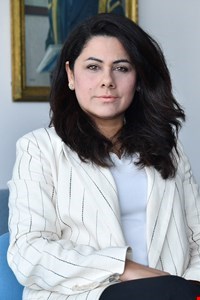
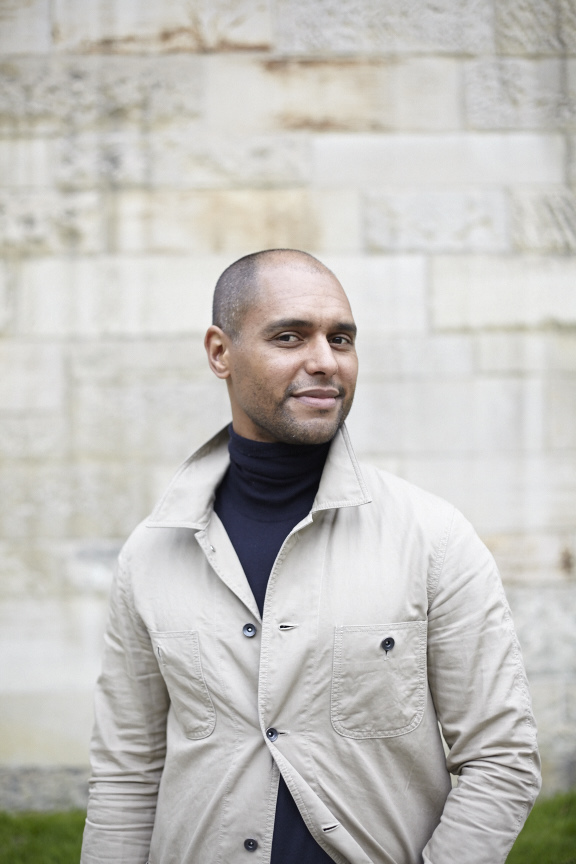
Ian Gilby is an Associate Professor at the School of Human Evolution and Social Change, Arizona State University. His research focuses on the social behavior, ecology, and cognition of wild chimpanzees, particularly within the context of long-term studies at Gombe National Park, Tanzania. Gilby investigates topics such as cooperative hunting, dominance hierarchies, social bonding, and the influence of ecological factors on primate behavior. His work bridges primatology, evolutionary biology, and conservation science, with a strong emphasis on understanding the adaptive strategies of chimpanzees in complex social environments. Key themes in Gilby’s research include the evolution of cooperation, reproductive strategies, and the ecological drivers of social behavior. He has contributed significantly to studies on chimpanzee aggression, hunting tactics, and the role of vocal communication in group coordination. His findings highlight the intricate relationship between social structure, ecological conditions, and individual success in primate communities. Notably, Gilby is involved in the Gombe Chimpanzee Project, analyzing long-term datasets to address questions about data sharing in conservation science and the impacts of environmental changes on wildlife. While no formal awards or grants are explicitly mentioned in the provided texts, his extensive publication record underscores his expertise in primate behavior and ecology.
Scott Walbridge is the Chair of the Department of Civil and Environmental Engineering at the University of Waterloo, where he has been actively teaching and researching since 2006. He holds a Doctorate in Civil Engineering from the Swiss Federal Institute of Technology (EPFL), a Master's from the University of Alberta, and a Bachelor's in Civil Engineering from the same institution. His research focuses on enhancing structural safety and durability through fatigue assessment, retrofitting of welded metal structures, modular construction, and life-cycle cost analysis. He chairs the CSA aluminum structures technical subcommittee for bridge design codes (S6) and actively contributes to code development for structural welding and aluminum design. Walbridge has been Program Director for Waterloo’s Architectural Engineering program (2018–2022) and serves on editorial boards for journals like Structural Engineering International and ASCE Journal of Bridge Engineering . Education: PhD, Civil Engineering (Steel Structures), EPFL, Switzerland (2005) MSc, Structural Engineering, University of Alberta (1998) BSc, Civil Engineering, University of Alberta (1996) Research Interests: Fatigue assessment, welded metal structures, modular construction, structural reliability, fracture mechanics, and life-cycle cost analysis. His work bridges theoretical frameworks with practical applications, such as improving fatigue life prediction for aluminum bridge decks and optimizing material selection for corrosion resistance. Professional Engagement: Chair of CSA S6 Aluminum Structures Subcommittee, active member of welding code committees (W59, W59.2), and contributor to national bridge design standards. His leadership in code development ensures alignment with modern material technologies and sustainability goals. Teaching & Advising: Recently taught courses like CIVE 512 (Rehabilitation of Structures) and CIVE 704 (Bridge Design). He is currently accepting graduate students in structural engineering and bridge design.
Prof. Dr. Gudrun P. Kiesmüller is a full professor of Operations Management at TUM Campus Heilbronn since 2019. Previously, she held full professorships at Kiel University (Supply Chain Management) and Otto von Guericke University Magdeburg (Operations Management). She studied mathematics at Julius-Maximilians-University of Würzburg and later worked as a postdoc and assistant professor at Eindhoven University of Technology. Her research focuses on supply chain management, inventory management (particularly spare parts), maintenance process planning, and manufacturing system design. She develops optimization approaches for decision support, with publications in journals like IISE Transactions and Production and Operations Management . Key awards include an Honorary Doctorate (2023), ISIR Service Award (2022), and multiple teaching and reviewer awards. She has contributed to advancing stochastic inventory models and operational efficiency in complex systems. Her work integrates theoretical rigor with practical applications, addressing challenges in inventory routing, buffer allocation, and component reliability optimization. Current research emphasizes dynamic maintenance planning and capital goods design.
Prof. Tijani CHAHED is a Professor at Telecom SudParis, part of Université Paris-Saclay, affiliated with the SAMOVAR laboratory and the NeSS research group. His work focuses on network optimization, edge computing, machine learning applications in telecommunications, and game-theoretical frameworks for distributed systems. He holds a position in the Department of Computer Science and Telecommunications. His research spans resource allocation in 5G/6G networks, energy efficiency strategies for mobile infrastructure, reinforcement learning for dynamic systems, and coalitional game theory for multi-agent systems. Key contributions include optimization of cache allocation in edge computing, latency-critical traffic management (URLLC), and strategic investment models for distributed computing infrastructures. Selected articles highlight advances in edge computing resource management, metaverse data transport over 5G, and energy-efficient sleep mode control for base stations. His work often intersects with industrial applications in green networks and smart grid integration for mobile infrastructure. Collaborations involve institutions like École Polytechnique, INRIA, and industry partners in telecommunications. Current projects include 6G network architectures, metaverse-enabled edge services, and decentralized resource allocation frameworks. Labs/Teams: SAMOVAR Lab (Signal and Media Access Networks, Optical and Radio Networks), NeSS Group (Networked Systems and Services).
Dr. Asieh Hosseini Tabaghdehi is a Senior Lecturer in Strategy & Business Economy at Brunel Business School, Brunel University of London. She serves as Programme Lead for the BSc International Business Programme and Trade2Grow Executive Education Programme. Additionally, she is Impact Lead at the Brunel Centre for AI: Social and Digital Innovation, where she leads the capability area in the Future of Work. Dr. Tabaghdehi is also an economist and social impact advisor for the independent NGO, Social Innovation Movement. Dr. Tabaghdehi earned her PhD in Economics and Finance (2008) and MSc in International Money, Finance, and Investment (2015), both from Brunel University London. She also holds a BA in Theoretical Economics from University of Mazandaran. She completed the Postgraduate Certificate in Academic Practice and is a Fellow of the Higher Education Academy. Dr. Tabaghdehi is internationally recognized for her research on digital transformation, with particular expertise in the ethical integration of artificial intelligence and digital technologies. Her work focuses on how emerging technologies shape industries, labor markets, and society, with emphasis on enhancing SME growth through technological innovation. She explores applications across critical sectors including social care, supply chain management, and environmental sustainability. A central theme in her research is smart data governance, ensuring ethical, transparent, and responsible use of data in decision-making processes. Her research portfolio demonstrates a consistent focus on the intersection of technology, ethics, and business strategy. She has developed frameworks like the Digital Business Auditing Framework, which has been adopted internationally for smart city initiatives. Her work connects academic research with practical policy applications, as evidenced by her presentations as oral and written evidence to the House of Commons Select Committee. Her publications span AI ethics, digital footprint implications, fertility economics, and healthcare cost analysis, showing interdisciplinary breadth while maintaining thematic coherence around digital transformation's societal impact. Scientific Awards and Recognition Semi-finalist: Research Impact Award at Brunel University London, 2023 Staff Award: Exceptional in Collegiality and Supportive to Colleagues at Brunel University London, 2022 Exceptional Performance at Regents University London, 2018-19 Staff Award in Teaching, Learning and Assessment at Regents University London, 2016 Best Lecturer Award at London Brunel International College, 2014 Best Lecturer Award at London Brunel International College, 2013 Dr. Tabaghdehi actively supervises PhD students researching areas including Smart Data Governance, Ethical AI Governance, Digital Innovation Impact, Responsible AI Adoption Strategies, Sustainability, and Future of Labour Market. She has secured research funding from multiple sources including the Economic & Social Research Council (ESRC), Brunel University London, and Brunel Business School. Her current projects include research on AI Adoption and Governance, Youth digital addiction, Algorithm Reliability Framework, and SMEs digital footprints. She has also co-designed the "Digital Adoption" module for the UK Government's Help to Grow Management program, demonstrating the practical application of her research. As a member of multiple professional organizations, Dr. Tabaghdehi serves as an associate practitioner at Social Value International, associate member of the Big Innovation Centre, and member of the All-Party Parliamentary Group on AI. She is also a member of the ESRC Review College, British Academy of Management Review College, and Energy Institute UK, contributing to the broader academic and policy communities through these roles.
Edward Jones-Imhotep is a historian of the social and cultural life of machines and currently a Professor and Director of the Institute for the History and Philosophy of Science and Technology (IHPST) at the University of Toronto’s Victoria College. He is on leave as Director during 2025-26 but remains an active faculty member. PhD, Harvard University Co-editor, MIT Press’s Inside Technology series Visiting Professor, University of Paris (Panthéon-Assas) Co-founder, Toronto TechnoScience Salon His research explores the historical boundaries between technology and nature, and the relationship between machines and the self, with a focus on underrepresented histories such as the Black technological self, technological underground, and failures of technology. His work bridges Science and Technology Studies (STS), History of the Modern Physical Sciences, History of Technology, and Cultural History of Technology. Notable trends in his articles include analyses of automata, AI, and mechanical failures from the 19th to 21st centuries, alongside interdisciplinary inquiries into race, ethics, and the Cold War. He frequently collaborates with scholars like William Turkel and Tina Adcock. 2018 : Sidney Edelstein Prize for The Unreliable Nation 2017 : Abbot Payson Usher Prize for “Malleability and Machines” Edward co-edits the Inside Technology series and engages with public discourse through the TechnoScience Salon. His projects, such as The Black Androids , connect historical technological narratives to contemporary debates in robotics and AI. Labs and teams include the IHPST and the TechnoScience Salon, which facilitate humanities-based science and technology discussions.
Daria Nemashkalo is a researcher affiliated with the Digital Society Institute and Radio Systems at the University of Twente. Her work focuses on electromagnetic interference (EMI) filter design, time-domain analysis, and multichannel systems, particularly in power electronics and three-phase applications. Key Research Areas: EMI filter performance, mode decomposition, common mode choke saturation, and time-domain measurement techniques. Contributions: Published extensively on EMI mitigation strategies and filter optimization, including work on multichannel testing and real-world implementation challenges. Collaborations: Active in electromagnetic compatibility symposia, notably with peers like Peter Koch and Frank Leferink.
Prof. Dr.-Ing. habil. Gero Mühl is a W2-Professor at the University of Rostock, where he holds the chair for "Architecture of Application Systems" since October 2009. His academic journey includes positions as a Heisenberg Fellow at the Technical University of Berlin (2009), postdoctoral research at TU Berlin (2002-2009), and doctoral studies at TU Darmstadt where he received his Dr.-Ing. degree with distinction in 2002. He completed dual Diplomas in Computer Science (Dipl.-Inform.) and Electrical Engineering (Dipl.-Ing.) from FernUniversität in Hagen in 1998. Prof. Mühl's research focuses on Self-Organizing Distributed Systems , with particular expertise in distributed systems, distributed algorithms, event-based systems, middleware, energy-efficient systems, organic computing, sensor networks, web services, and electronic commerce. His work bridges theoretical foundations with practical implementations in real-world distributed environments. His recent publications show a strong trend toward time-sensitive networking, content-based publish/subscribe systems, and P4 programmable data planes. These works address critical challenges in industrial communication, real-time systems, and network reliability. His research group has made significant contributions to making distributed systems more autonomous, reliable, and efficient. Scientific awards and recognitions include: Nomination for the Berlin Science Award for Young Scientists (2008) Heisenberg Fellowship by the German Research Foundation (DFG) (2008) Best paper award in System Software and Security at SAC 2015 Prof. Mühl has been actively involved in numerous research projects and collaborations, particularly focusing on self-organizing and self-stabilizing systems. His work on the REBECA publish/subscribe middleware represents a significant contribution to autonomous distributed systems. He has supervised numerous students and researchers, contributing to the development of the next generation of computer scientists specializing in distributed systems. His laboratory at the University of Rostock focuses on practical implementations of self-organizing distributed systems, with current projects investigating time-sensitive networking, publish/subscribe systems, and energy-efficient distributed computing. The team combines theoretical analysis with practical system development to address real-world challenges in industrial and commercial applications of distributed systems.
John Driessnack is a nationally recognized expert in Systems and Portfolio/Program/Project Management, currently serving as a Professor at the Naval Postgraduate School, Defense Acquisition University (DAU), and American University (AU). He has also taught at the University of Maryland’s Project Management Center of Excellence. His career spans over a decade of collaboration with federal agencies, focusing on leadership, organizational strategy, and cost analysis in high-reliability endeavors. His research centers on federal government portfolio/program management, optimization of governance structures, and expansion of Integrated Product and Process Development (IPPD) and Integrated Product Team (IPT) frameworks. Notably, he led the strategic review of a major federal health organization in 2019 and co-authored the Guide to Lean Enablers for Managing Engineering Programs (2012). He contributed to the ANSI standard for Earned Value Management and the Section 809 Panel Report Volume III on Portfolio Management. Driessnack holds advanced certifications in defense acquisition (DAWIA Level IIIs) and industry credentials (PMI PMP, PfPM, ICEAA, Scrum CSM). He previously served as a military officer overseeing major defense programs and has since 2004 led senior consulting groups. His patented CREST framework (US Patent Pending 2012/0215574 A1) provides a novel approach to program analysis.
Avinash Kori is a Ph.D. researcher at Imperial College London affiliated with the Safe and Trusted AI Centre for Doctoral Training (CDT). Supervised by Prof. Francesca Toni and Prof. Ben Glocker , his research focuses on Explainable AI (XAI) , causality , and deep learning with applications in medical image analysis and optimization algorithms . His work includes publications on arXiv and conferences like MICCAI , covering topics such as robust segmentation , concept-based explanations , and symbolic reasoning in hyperbolic space . He has also explored stochastic optimization , support vector machines (SVM) , and gradient descent variants , providing theoretical and practical implementations. Recent trends in his publications highlight advancements in robust CNN models , causal logic frameworks , and hyperbolic geometry for hierarchical learning . His research is driven by the need to make AI systems more transparent and reliable for critical domains like healthcare. Scientific Awards: AAAIw Overall Best Paper Award (Feb 2021) for CNN interpretability research. He actively contributes to open-source implementations via platforms like GitHub and shares insights through blogs and paper reviews . His academic journey includes an undergraduate degree in Biomedical Engineering Design with a minor in Machine Learning from Indian Institute of Technology, Madras , followed by research internships at Siemens and Stanford University .
Prof. Dr.-Ing. Jürgen Teich is a full Professor and Chair for Hardware-Software Co-Design at the Department of Computer Science, Friedrich Alexander University Erlangen-Nuremberg (FAU). He serves as Head of Department Computer Science and Vice Dean of the Technical Faculty since August 2024, and has been Speaker of the FAU Research Center Embedded System Initiative (FAU ESI) since 2023. His educational background includes: Diploma degree in Electrical Engineering, University of Kaiserslautern (1989) Dr.-Ing. degree in Electrical Engineering, University of Saarland (1993) Habilitation (PD Dr.-Ing.) entitled "Synthesis and Optimization of Digital Hardware/Software Systems" (1996) Prof. Teich's research focuses on Embedded Systems , Invasive Computing , Hardware-Software Co-Design , and Reconfigurable Computing . His work spans from theoretical foundations to practical implementations, with particular emphasis on resource-constrained systems, many-core architectures, and energy-efficient computing. He has pioneered research in invasive computing paradigms that enable more efficient use of many-core processors by allowing applications to dynamically claim resources. His recent publications reveal a strong trend toward energy-efficient AI deployment on embedded devices , security of embedded systems , and novel memory technologies . There's a clear focus on practical implementations of machine learning on microcontrollers (TinyML), hardware acceleration for data processing, and innovative approaches to power management in self-powered systems. Among his notable scientific awards are: IEEE Fellow (since 2018) Member of Academia Europaea, Section Informatics (since 2011) Member of the National Academy of Science and Engineering (acatech) (since 2018) Member of the German Society of Humboldtians (since 2021) Prof. Teich has been Principal Investigator for numerous DFG-funded projects including SFB/Transregio 89 "Invasive Computing" (2010-2022), SFB 694, and multiple priority programs. He has coordinated large collaborative research efforts across Germany and internationally, with significant funding from DFG and other sources. His research group has produced influential work in embedded systems design and co-design methodologies. He leads the Hardware-Software Co-Design research group at FAU, which focuses on innovative approaches to embedded system design, invasive computing architectures, and efficient implementation of machine learning on resource-constrained devices. The group maintains strong collaborations with industry partners including Intel, Xilinx, and automotive companies.
James Lacefield is a Professor in both the Department of Electrical and Computer Engineering and the Department of Medical Biophysics at Western University. He serves as Director of the School of Biomedical Engineering and maintains his research laboratory in the Amit Chakma Engineering Building. His academic appointments span multiple disciplines, reflecting the interdisciplinary nature of his work in biomedical ultrasound imaging. Dr. Lacefield earned his Ph.D. and B.S.E. in Biomedical Engineering from Duke University. His educational background established the foundation for his current research program that bridges engineering principles with medical applications. His research focuses on the physical acoustics and signal processing aspects of ultrasound imaging, with particular emphasis on quantitative vascular imaging applications. Dr. Lacefield's laboratory develops novel methods for color Doppler, power Doppler, and contrast-enhanced ultrasound imaging, with primary applications in cancer research. Current projects include optimization of high-resolution ultrasound systems for tumor vascular characterization and development of methods to quantify spatial blood flow distribution in tumors. Analysis of his recent publications reveals a strong focus on quantitative ultrasound techniques for cancer applications, with particular attention to tumor perfusion assessment using contrast-enhanced ultrasound. His work demonstrates increasing sophistication in speckle analysis methods to improve the reliability of perfusion measurements in preclinical tumor models. Associate Editor, IEEE Transactions on Ultrasonics, Ferroelectrics, and Frequency Control Member, Council of Chairs of Bioengineering and Biomedical Engineering Member, College of Reviewers, Canadian Institutes of Health Research Dr. Lacefield maintains active collaborations with multiple research groups including the Imaging Research Laboratories at Robarts Research Institute. His professional activities include editorial work for major ultrasound journals and participation in national review panels for biomedical research funding.
Marika Edoff is a Professor in Solid State Electronics specializing in solar cells at Uppsala University. She leads the Thin Film Solar Cell group at the Ångström Solar Center and has held a 50% pro-dean appointment (2014-2018). Her research focuses on Cu(In,Ga)Se2 (CIGS)-based thin film solar cells, including physical deposition methods, alkali-metal doping, and nanostructured passivation strategies. Education : PhD in Solid State Electronics (KTH 1997), Master in Electrical Engineering (KTH 1990) Professional Experience : Full Professor (2012-), Senior Lecturer (2006-2012), Spin-off company founder (Solibro AB) Recent publications highlight her work on rear contact passivation , light management architectures , and wide-gap CIGS solar cells with efficiency breakthroughs (23.6%). Collaborations span institutions in Belgium, Portugal, France, and Slovenia. Scientific Awards : Member, Swedish Research Council Board (2019-2024) Project Leader, EU Horizon Projects (ARCIGS-M, SITA) Coordinator, Ångström Thin Film Solar Center She supervises PhD students including Dorothea Ledinek and Olivier Donzel-Gargand , and has contributed to thermally integrated PV-water splitting and industrial-scale CIGS module development .
Gianni Franchi is an assistant professor at ENSTA Paris , affiliated with the Computer Science and Systems Engineering Unit (U2IS) . His work focuses on theoretical deep learning , with a strong emphasis on uncertainty quantification, robustness, and explainability in machine learning models. Current affiliation: ENSTA Paris (U2IS) Academic rank: Assistant Professor Key collaborators: David Filliat, Emanuel Aldea, Andrei Bursuc, Antoine Manzanera His research spans uncertainty quantification , explainable AI , and reliable machine learning . He investigates methods like Bayesian neural networks, ensemble approaches, and deterministic uncertainty models. His work also addresses domain adaptation , self-supervised learning , and autonomous systems , particularly in trajectory forecasting and semantic segmentation for autonomous driving. Recent publications analyze probabilistic modeling for robustness, symmetry-aware Bayesian methods , and multi-modal datasets like InfraParis. He develops frameworks like Torch-Uncertainty and benchmarks such as MUAD for uncertainty types in autonomous driving. Key themes: Uncertainty Quantification Deep Learning Theory Autonomous Systems Explainable AI Dataset Creation Bayesian Methods
Maarten Sap is an Assistant Professor at Carnegie Mellon University's Language Technologies Institute with a courtesy appointment in the Human-Computer Interaction Institute. He also holds a part-time research scientist position at the Allen Institute for AI (AI2) as an AI safety lead. Current affiliations: CMU (2022–present), AI2 (2022–present) Prior: Postdoctoral Researcher at AI2 (2021–2022), Research Intern at AI2 (2018–2019) and Microsoft (2019) His research focuses on enhancing AI systems with social intelligence and addressing social biases in language technology. Key themes include: Ethical AI and Human-Centric Design Narrative Dynamics and Social Context Analysis AI Agents and Social Intelligence Toxic Language Detection and Cultural Bias Mitigation Recent publications examine: AI safety frameworks like HAICOSYSTEM Clinical reasoning alignment (ALFA) Multilingual moderation (PolyGuard) Cultural sensitivity in non-verbal AI (Mind the Gesture) Personality shaping in LLMs (BIG5-CHAT) Scientific Recognition: 2025 Okawa Research Grant Best Paper Runner Up - NAACL 2025 Outstanding Paper - EMNLP 2023 Best Paper - FAccT 2023 Best Paper - WeCNLP 2020 He advises a diverse group of PhD students across CMU and MIT, and has served on multiple program committees including ACL, EMNLP, and FAccT. His work appears in top venues like Nature Machine Intelligence, PNAS, and ACL.