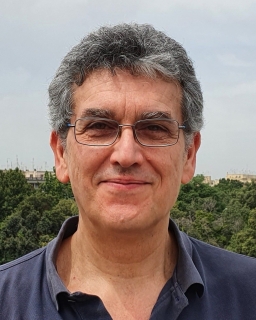
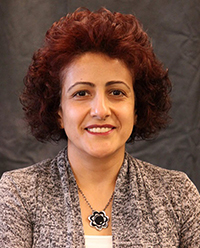
Wenting Pan is a faculty member at the School of Economics and Business Administration of Saint Mary's College of California. Her research focuses on supply chain management, decision theory, and economic modeling under uncertainty. Primary Affiliation: Saint Mary's College of California Research Themes: Supply chain optimization, risk analysis, pricing strategies, and behavioral economics Pan's work explores operational strategies for businesses facing supply and demand uncertainty, with applications to solar energy systems, inventory management, and online retail. She employs mathematical models to analyze risk attitudes and develops optimization frameworks for decentralized systems. Her publications appear in journals like Journal of Cleaner Production and focus on topics such as: Vendor-managed inventory contracts Backup and dual-sourcing strategies Game-theoretic approaches to supply uncertainty Creative optimization models for innovation Economic impacts of pricing decisions Pan collaborates with researchers across disciplines to address challenges in sustainable business practices and operational efficiency.
Alexander Konstantinovich Petrenko is a Professor at the Faculty of Computer Science of the National Research University Higher School of Economics (HSE), where he has been working since 2009. He serves as the Academic Director of the educational program 'System Programming' and is affiliated with the Basic Department 'System Programming' of the Institute for System Programming named after V.P. Ivannikov of the Russian Academy of Sciences (ISP RAS). With 42 years of scientific and teaching experience, he holds a Doctor of Physical and Mathematical Sciences degree (2004) and was awarded the academic title of Professor in 2011. His research focuses on verification and validation technologies, formalization of interface standards, and free software/open standards. His work primarily centers on operating system security, formal methods in software engineering, and system programming. He has made significant contributions to runtime verification of operating systems, access control models, and security policy integration. Professor Petrenko's publication record demonstrates a consistent focus on formal methods for operating system verification, with recent work emphasizing security by design principles, dynamic verification techniques, and integration of multiple security models (RBAC, MIC, MLS). His research bridges theoretical computer science with practical applications in system security and reliability. Letter of thanks from the Vice-Rector of HSE (November 2021) Gratitude from the Faculty of Computer Science of HSE (August 2017) With extensive experience across multiple institutions including the Keldysh Institute of Applied Mathematics (1974-1994), the Institute of System Programming of the Russian Academy of Sciences (since 1994, as head of the Department of Programming Technologies since 2004), and Moscow State University (since 1999, as professor since 2004), Professor Petrenko has established himself as a leading expert in system programming and formal verification. He has contributed significantly to educational programs in software engineering that recently achieved professional accreditation. His work spans both theoretical foundations and practical applications in system security, with strong connections to industry needs through his involvement with the Institute for System Programming and collaborations on real-world security challenges.
Marco Temperini is an Associate Professor of Information Processing Systems at Sapienza University of Rome, where he teaches programming techniques and web programming languages. With a Mathematics degree (1986) and Computer Science PhD (1992) from Sapienza University, he has established himself as a prominent researcher in educational technology. His educational background includes: Laurea in Matematica (1986, Sapienza University of Rome) Dottorato in Informatica (1992, Sapienza University of Rome) Professor Temperini's research focuses on Technology Enhanced Learning, with particular expertise in Student and Teacher Modeling, Adaptive e-learning systems, and the application of Data Mining and Artificial Intelligence techniques to personalize learning content. His work extends to Social and Collaborative Learning environments, Game Based Learning approaches, and innovative Automated and Peer Assessment methodologies. With extensive international collaboration experience, he has coordinated research units and served as work-package leader in numerous projects including EuroCompetence, UnderstandIT, and 9Conversations. His recent publications (2023-2024) reveal a strong trend toward applying advanced AI techniques, particularly large language models, to educational assessment challenges. These works demonstrate increasing sophistication in leveraging natural language processing for automated analysis of student work, concept maps, and programming assignments, while maintaining a strong focus on practical educational applications. Notable scientific recognition includes: 2023 Best Reviewer Award 2023 Best Paper Award 2022 Best Paper Award 2021 Best Paper Award 2018 Best Paper Award at ICWL2018 Membership on the Human-Computer Interaction Awards Committee (2021.6-2024.7) Professor Temperini has been highly active in the academic community, serving as Conference co-Chair for ICWL (2016), Technical Program co-Chair for multiple conferences including MIS4TEL and SETE, and General Chair for MIS4TEL2022 and SETE2023. He is a member of the Steering Committee for ICWL and MIS4TEL conferences and serves on the IEEE Technical Committee on Learning Technology. As an associate editor for the International Journal on Distance Education Technology, Frontiers in Artificial Intelligence, and Computers & Education: Artificial Intelligence, he plays a significant role in shaping research directions in educational technology. His leadership extends to numerous international projects where he has served as coordinator of research units and work-package leader, including EuroCompetence, Socrates Project 56544-CP-1-98-1; CIOC, NFU Project 18; mENU, e-learning Project 2002-0510/001-001; QUIS, e-learning Project 2004-3538/001-001; UnderstandIT, Leonardo Da Vinci Transfer of Innovation; and 9Conversations: Network building for self-employment of refugees. These projects demonstrate his commitment to applying technology to address real-world educational challenges across diverse contexts.
Lindsey Kuper is an Assistant Professor in the Computer Science and Engineering Department at the Baskin School of Engineering, University of California, Santa Cruz. She received her Ph.D. from Indiana University in 2015 and leads the CASL (Concurrency and Safety Lab) research group, which is part of the larger Languages, Systems, and Data (LSD) Lab. Her research focuses on programming-language-based approaches to building concurrent and distributed software systems that are elegant, correct, and efficient. Key research areas include: Library-level choreographic programming (in Haskell, Rust, and TypeScript) Dependently-typed diagrams for inductive reasoning about concurrent executions Expressing and verifying causal message delivery with refinement types Lindsey's research has been recognized with an NSF CAREER Award, a Stellar Development Foundation Academic Research Grant, a Google Faculty Research Award, and support from Amazon Web Services. Her work on "HasChor: functional choreographic programming for all" received the ICFP 2023 Distinguished Paper Award. She teaches courses in programming languages and distributed systems at UC Santa Cruz, including Foundations of Programming Languages and graduate/undergraduate Distributed Systems. Her undergraduate distributed systems lectures from 2020-2021 have been viewed over 200,000 times on YouTube. Lindsey co-founded the !!Con and !!Con West conferences of ten-minute talks on the joy, excitement, and surprise of computing, and serves on the board of the Exclamation Foundation. She has chaired numerous workshops and served on program committees for major programming languages conferences including PLDI, POPL, ICFP, and OOPSLA. Her current PhD students include Jonathan Castello, Tim Goodwin, Nathan Liittschwager, Patrick Redmond, Gan Shen, and Yan Tong. Recent graduates include Shun Kashiwa (MS, 2024) and Ali Ali (BS, 2024).
J. Huang is a faculty member at the Faculty of Electrical Engineering, Mathematics and Computer Science at Delft University of Technology . Their research is centered on federated learning , cybersecurity , and distributed systems , with a strong emphasis on defending against adversarial attacks and ensuring robustness in decentralized machine learning environments. Research Interests: Federated Learning and Distributed AI Adversarial Attacks and Defenses Data Poisoning and Model Robustness Generative Adversarial Networks (GANs) Privacy-Preserving Machine Learning Trustworthy and Secure AI Systems Recent publications reflect a deep engagement with security challenges in federated learning , including gradient inversion attacks, model poisoning without data access, and optimizing client selection strategies. These works contribute to advancing the reliability and safety of distributed AI systems. Scientific Contributions: While no explicit awards are listed, the high citation counts and peer-reviewed contributions in top-tier venues like FC, SRDS, DSN, and PAKDD demonstrate significant academic impact. Collaborations: Huang collaborates with researchers such as Z. Zhao, L.Y. Chen, S. Roos, C. Hong, and others, indicating a strong international research network, particularly within Europe and Asia.
Dr. Chad Rodekohr is a Professor of Mechanical Engineering in the College of Engineering at Anderson University, where he has taught since Fall 2022. His role encompasses teaching core engineering courses, mentoring student research, and advising the Engineering Club. He emphasizes integrating Christian faith with engineering education, preparing students for professional and spiritual life. Education: BS in Aviation Management MS in Physics Ph.D. in Mechanical Engineering Research Focus: Dr. Rodekohr specializes in experimental mechanics and materials science, with emphasis on: Braiding systems mechanics and computational modeling Tin whisker formation mechanisms in electronics Advanced microscopy techniques for materials characterization Vacuum systems and thin-film deposition processes Electronics packaging reliability and failure analysis His research merges theoretical physics with industrial applications. Publication Trends: His scholarly output (2009-2016) shows dual focus: materials science investigations (tin whisker growth, braiding mechanics, surface engineering) and science-faith integration. Early career publications emphasize experimental validation of material behaviors, while recent works explore engineering education philosophy. Professional Activities: Industry collaboration with Dodge Industrial as Manufacturing Engineer during summers Student mentoring through research projects in Sn whisker growth and carbon-fiber braiding Leadership of Engineering Club with extracurricular activities including astronomy nights and technical workshops
Gustavo Benitez Alvarez is a Full Professor in the Department of Exact Sciences at Federal Fluminense University (Universidade Federal Fluminense) in Brazil. His academic profile demonstrates an active research career with numerous publications spanning computational mathematics, numerical analysis, and biomedical applications. His research interests focus primarily on Numerical Analysis , Finite Difference Methods , and Computational Mathematics , with significant applications in Mathematical Oncology and Thermal Physics . He has developed innovative approaches to solving partial differential equations, particularly the Helmholtz equation, where he has created methods that eliminate pollution error in one dimension and minimize dispersion in two dimensions. His publication record shows a strong trend toward interdisciplinary research, with approximately half of his recent work applying advanced numerical methods to biomedical problems, particularly glioma (brain tumor) modeling and treatment optimization. The other half focuses on fundamental numerical methods for PDEs, computational fluid dynamics, and thermal analysis. Gustavo Benitez Alvarez's work demonstrates a consistent pattern of high-quality publications in reputable journals such as Annals of the Brazilian Academy of Sciences , Mathematical Notes , and Semina: Ciências Exatas e Tecnológicas . His research has practical applications in medical treatment planning, engineering design, and computational physics. He collaborates with researchers across multiple institutions, including co-authorship with colleagues from UFF (Universidade Federal Fluminense) and other Brazilian universities. His work on glioma modeling shows particular promise for improving radiotherapy treatment planning through more accurate tumor growth prediction.
Oriol Colomes Gene serves as Assistant Professor in the Offshore Engineering section within the Faculty of Civil Engineering and Geosciences at Delft University of Technology. He leads the Computational Multiphysics in Offshore Engineering research group, focusing on advanced numerical methods for offshore renewable energy applications. His teaching responsibilities include the “Floating and Submerged Structures” module for Civil Engineering master’s students and “Introduction to Computational Dynamics of Offshore Structures” in the Offshore and Dredging Engineering master’s program. His educational background includes a combined Bachelor’s/Master’s degree in Civil Engineering (2011) and a PhD in Civil Engineering (2016) from Universitat Politècnica de Catalunya, followed by postdoctoral research at Duke University (2016-2020). Colomes Gene’s research centers on computational multiphysics with emphasis on: Development of efficient Finite Element solvers for turbulent flows, free-surface flows, and visco-elasto-plastic solids Fluid-structure interaction in complex geometries Numerical methods for multi-phase and multi-material systems Applications in offshore wind, wave energy, and floating photovoltaics His recent work demonstrates strong integration of theoretical numerical methods with practical offshore renewable energy challenges, particularly in hydroelastic analysis of floating structures and optimization of energy capture systems. His scientific recognition includes: NWO Open Technologieprogramma subsidy for the RAPID-Wind project (2025) Colomes Gene actively supervises research within his Computational Multiphysics group and contributes to major collaborative projects including SPARKLES (2024-2030), which investigates nature-positive floating solar solutions. His research is supported by significant grants targeting offshore renewable energy innovation and computational methodology advancement. His laboratory work focuses on high-performance computing for multiphysics simulations, with particular expertise in developing and validating numerical frameworks for: Free-surface flows interacting with structures Vortex-induced vibrations Complex geometry hydrodynamics Hydroelastic response of very large floating structures
Dr. Suzan Gazioğlu is a tenured Full Professor in the Department of Mathematical Sciences at Montana Technological University, where she has served since 2004 after joining as an Assistant Professor of Statistics. Holding a Ph.D. in Statistics from the University of Glasgow (2002), she has established herself through interdisciplinary research bridging statistical theory with environmental and health applications. Education: Bachelor's in Mathematics, Yüzüncü Yıl University, Türkiye Master's in Applied Mathematics, Yüzüncü Yıl University, Türkiye Master's in Mathematical Statistics, University of Toledo, Ohio Ph.D. in Statistics, University of Glasgow, UK (2002) Her research centers on applied statistics, with pioneering work in sensitivity and uncertainty analyses for compartmental models—particularly in environmental systems like the global carbon cycle. She has expanded into secondary analysis of case-control studies in biostatistics while maintaining a strong focus on statistics education innovation, especially in online pedagogy. This dual emphasis creates a unique synergy between methodological advancement and educational impact. Analysis of her publications reveals a clear evolution toward graphical sensitivity techniques and uncertainty quantification in complex environmental models, with recent work emphasizing visualization tools like dot charts and star plots. Concurrently, she has developed influential frameworks for online statistics education, demonstrating how digital platforms can enhance statistical literacy without compromising rigor. Scientific Awards: Distinguished Researcher Award, Montana Tech (2013) Faculty Merit Award, Montana Tech (2013) Nomination for Rose and Anna Busch Faculty Achievement Award, Montana Tech (2013) Fellowship, Royal Statistical Society, UK (2002) National M.Sci. & Ph.D. Scholarship, Turkish Higher Education Council (1994-2002) Dr. Gazioğlu has mentored numerous undergraduate researchers through Montana Tech's Undergraduate Research program, guiding projects that often bridge statistical methodology with real-world applications. Her leadership extends to professional service as former President of the Montana Chapter of the American Statistical Association (2005-2006) and ongoing editorial roles, reflecting significant contributions beyond traditional academic boundaries. While grant details aren't specified, her collaborative research with environmental scientists suggests active engagement with university-wide initiatives. Her work inherently connects with Montana Tech's Center for Environmental Remediation and Assessment (CERA), leveraging institutional strengths in environmental science. This alignment with the university's research infrastructure enables her statistical innovations to directly address pressing ecological challenges through interdisciplinary collaboration.
Professor Mohammad REIHANEH is an Assistant Professor of Operations Management at IÉSEG School of Management. He holds a Ph.D. in Operations Management from the University of Massachusetts (USA), an MSc in Industrial Engineering from Isfahan University of Technology (Iran), and a BSc in Applied Mathematics from Ferdowsi University of Mashhad (Iran). His research focuses on optimization algorithms, vehicle routing problems, scheduling theory, and logistics systems. He is a member of the LEM research group and has published extensively in top-tier journals such as the European Journal of Operational Research and the Journal of the Operational Research Society. Education: 2018: Ph.D., Operations Management, University of Massachusetts, USA 2012: MSc, Industrial Engineering, Isfahan University of Technology, Iran 2009: BSc, Applied Mathematics, Ferdowsi University of Mashhad, Iran Research Interests: Mohammad’s work emphasizes practical applications of optimization in logistics and healthcare systems. He develops exact algorithms (e.g., branch-and-price) and heuristic methods for complex routing problems, maintenance scheduling, and resource allocation in healthcare settings. His contributions bridge theoretical advancements in operations research with real-world operational challenges in industries like renewable energy (offshore wind farms) and humanitarian logistics. Publications: His recent work addresses cutting-edge challenges such as multi-period offshore wind farm routing, hemodialysis center scheduling, and food bank distribution optimization. He frequently collaborates with international researchers on projects involving vehicle routing, reliability engineering, and control chart design for manufacturing systems. Advising & Grants: No specific student advisees or grant details are listed in the provided materials.
David N. Jansen is an Associate Professor at the Institute of Software , Chinese Academy of Sciences , Beijing, China. Previously, he held an Assistant Professor position at Radboud University Nijmegen (2007–2016) and a Postdoc role at RWTH Aachen University (2007). His work bridges academic research, software development, and international collaboration. Education : PhD in Computer Science from University of Twente (1998–2003); Diploma in Mathematics (with minors in Computer Science and Comparative Linguistics) from University of Bern (1990–1997); Certificate of Proficiency in English from University of Cambridge (2000). Research interests include stochastic model checking , UML extensions for probabilistic systems , Markov reward models , and formal verification of embedded systems . He has contributed to tools like MRMC and TCM , focusing on efficient data structures and lumping techniques for system validation. Publication trends show expertise in formal methods , probabilistic verification , and equivalence relations . His work spans automated analysis of probabilistic programs , stuttering equivalence algorithms , and applications to real-world systems like the European Train Control System. Leadership and Service : He has served on doctoral advisory boards (SIKS), supervised student projects (e.g., XML/XMI interface for TCM), and volunteered in Christian organizations. His technical skills include C, C++, UML, model checking, and database systems like MySQL.
Dr. Lennart de Groot is an Associate Professor at Utrecht University's Faculty of Geosciences, Department of Earth Sciences, leading the Paleomagnetic Laboratory at Fort Hoofddijk. His academic journey includes a BSc (2007), MSc (2008), PhD (2013, Cum Laude), and postdoctoral research at Utrecht University. Specializing in geomagnetism and paleomagnetism, his work focuses on understanding rapid fluctuations in Earth's magnetic field using advanced techniques like micromagnetic tomography and multi-method paleointensity approaches. Research Interests: Geomagnetic field dynamics, paleointensity determination, rock magnetism, and micromagnetic analysis. Key Projects: Development of pymaginverse for geomagnetic modeling, study of Mid-Miocene geomagnetic reversals, and analysis of Devonian volcanic records. His articles highlight innovations in paleomagnetic measurement techniques and their applications to ancient geomagnetic field behavior. Notable awards include the ERC Starting Grant (2019), NWO-Vidi (2019), and the William Gilbert Award (2018). He advises on grants and mentors researchers in geophysics and rock magnetism, contributing to the UN Sustainable Development Goals through Earth science research. Lab affiliations include the Paleomagnetic Laboratory Fort Hoofddijk, where cutting-edge equipment enables high-resolution studies of magnetic minerals and their paleoenvironmental records.
Arnab Ganguly is an Associate Professor in the Department of Mathematics at Louisiana State University (LSU), holding this position since August 2021. He previously served as an Assistant Professor at LSU (2015–2021) and the University of Louisville (2012–2015), with postdoctoral research at Brown University (2012) and ETH Zurich (2010–2012). His research focuses on stochastic processes, mathematical biology, and statistical inference, with applications in biochemical reaction networks and control systems. Ganguly holds a Ph.D. in Mathematics from the University of Wisconsin-Madison (2010), and earlier degrees from the Indian Statistical Institute, Kolkata (M.Stat, B.Stat). His work bridges theoretical probability and applied mathematics, addressing challenges in stochastic modeling, parameter inference, and multiscale systems. Key themes include Markov chain approximations, large deviation principles, and nonparametric learning techniques. He has developed efficient simulation algorithms for complex biochemical networks and contributed to understanding enzyme kinetics through stochastic averaging methods. Publications reflect a strong emphasis on stochastic differential equations, ergodic theory, and applications in systems biology. While no awards are explicitly mentioned, his extensive publication record and academic roles highlight significant contributions to the field. His research also explores hybrid spatial models, error analysis in stochastic simulations, and Bayesian nonparametric methods for dynamic systems.
Manfred Jaeger is an Associate Professor at the Department of Computer Science, Technical Faculty of IT and Design, Aalborg University. His research focuses on Artificial Intelligence , Bayesian Networks , and Graph Neural Networks , with significant contributions to probabilistic reasoning and relational learning. University: Aalborg University School: Technical Faculty of IT and Design Department: Department of Computer Science Jaeger's research explores inductive and probabilistic reasoning , statistical relational learning , and model checking . His recent work integrates heterogeneous graph neural networks with relational Bayesian network encodings to enhance reasoning capabilities in complex systems. Key trends in his publications include relational deep learning , probabilistic inference , and graph-based modeling . He has contributed to applications in social network community detection , reinforcement learning for MDPs , and latent variable models for graph learning . Jaeger collaborates on projects involving incomplete data analysis , modularization of complex tasks , and probabilistic logic . His datasets on multi-multi-instance learning networks are publicly available for research use.
Yixuan (Janice) Zhang is an Assistant Professor in the Department of Computer Science at William & Mary, holding a Ph.D. in Human-Centered Computing from Georgia Tech (2023). Her research focuses on Human-Computer Interaction (HCI), Human-LLM Interaction, Data Visualization, and Trust Dynamics, with cross-disciplinary applications in health informatics and STEM education. She has published in top venues like ACM CHI, CSCW, and IEEE VIS, earning awards including the 2022 Rising Star in EECS and Foley Scholar recognition. Research Highlights: Explores ethical implications of LLMs in education and healthcare. Investigates trust dynamics in crisis informatics and social media. Designs AI-driven tools for Alzheimer’s awareness and mental health support. Grants & Collaborations: NSF RITEL Grant ($900K) for LLM-powered collaborative learning systems. Partnerships with WHO, Microsoft Research, and Virginia educational institutions. Co-chaired ACM DIS'24 and served on CHI'24 program committees. Awards: Best Paper Award at CHI'23 Learn, Discover, Innovate grant (2023) General Assembly of Virginia grant for ADRD awareness systems. Her lab actively engages in projects like MetaAgents (CSCW'25) and EmotionPrompt (enhancing LLMs with emotional stimuli). She advises PhD students in AI ethics and education technology.