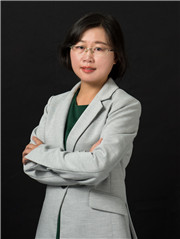
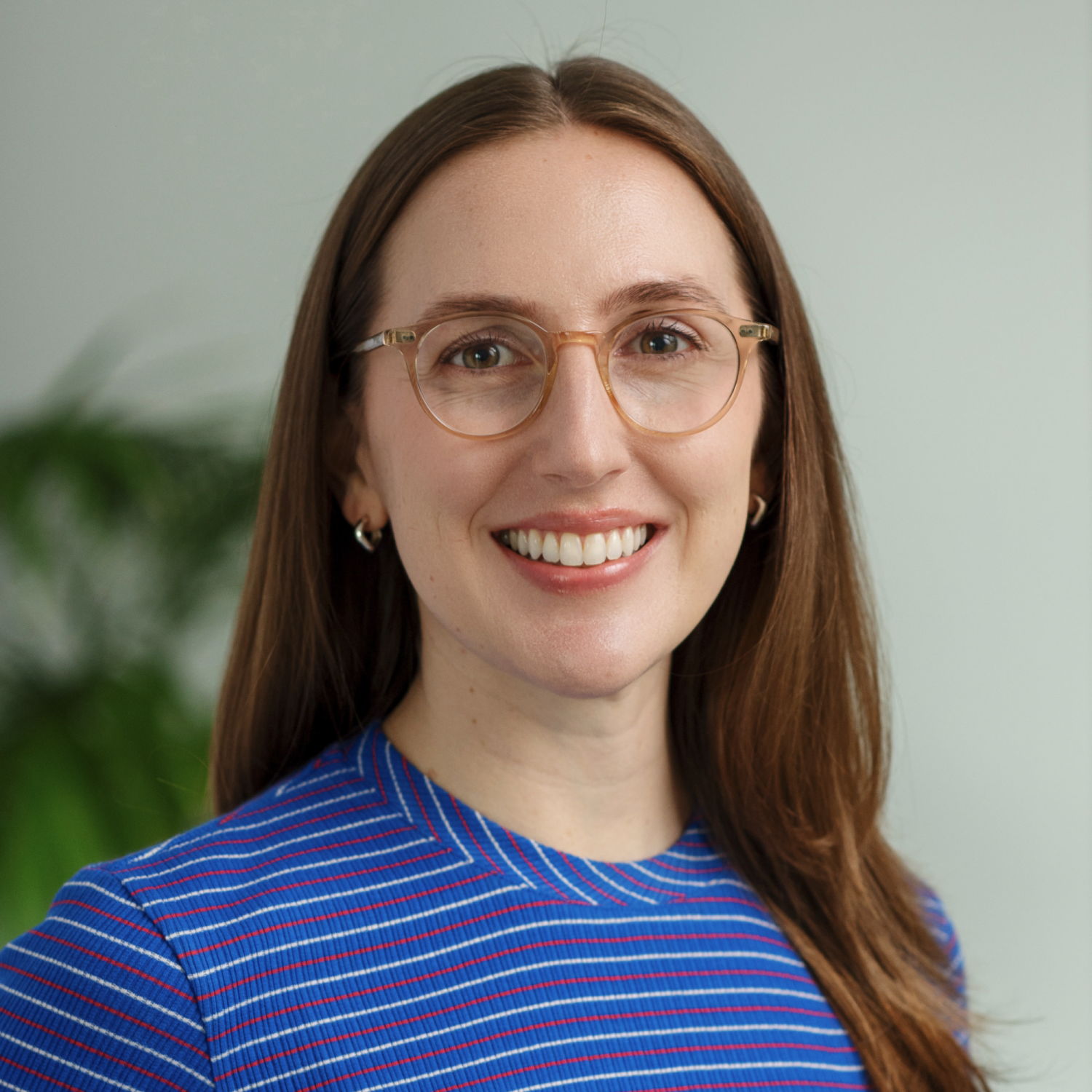
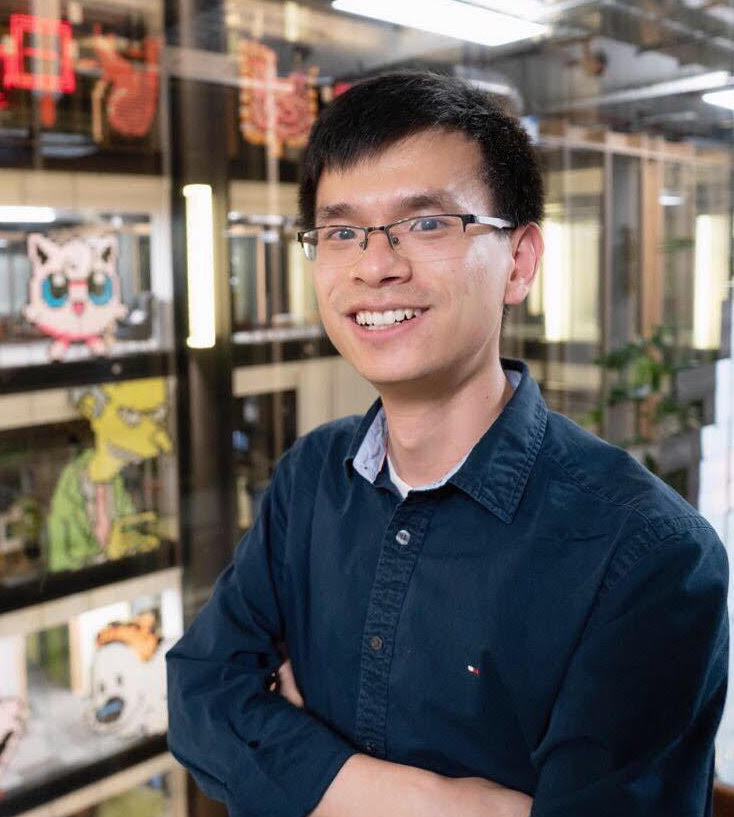
Guiru Nash Liu is a Global Professor in the Department of Materials Science and Engineering at the University of Arizona. She holds a PhD from Illinois Institute of Technology and has prior industrial experience as a senior experimental metallurgist at Progress Rail (Caterpillar Company) and as an adjunct professor at Illinois Institute of Technology. BS: Tianjin University, P.R. China MS: University of Southern California PhD: Illinois Institute of Technology (Materials Science and Engineering) Her research focuses on materials science and metallurgy , with specialization in corrosion, fatigue analysis, microstructural characterization, and alloy development . She has contributed to understanding fatigue failure in metallic components, environmental effects on crack propagation, and corrosion behavior in extreme conditions. Guiru Nash Liu's publications highlight expertise in corrosion kinetics, sintering mechanisms, alloy performance, and fatigue mechanics , particularly for titanium, copper, and steel alloys used in locomotive engines and aerospace applications. Fellow of ASM International (2020) Allan Ray Putnam Service Award (ASM International, 2022) Caterpillar CEO Award (2022) She has authored over 150 internal publications and 14 peer-reviewed works, served as a reviewer for the Journal of Materials Science and Journal of Metallography, Microstructure and Analysis , and was a founding member of the ASM International Failure Analysis Society.
Associate Professor Hu Yunfei is affiliated with the School of New Materials and New Energy at Shenzhen University of Technology , where she leads the New Energy Systems and Smart Microgrids Laboratory . She is a member of the China Renewable Energy Society and Guangdong Solar Energy Association . PhD in Materials Processing Engineering (2005), South China University of Technology Bachelor of Engineering (2000), South China University of Technology Her research focuses on new energy systems , solar-storage direct-flexible systems , and high-efficiency photovoltaic devices , including perovskite solar cells , tandem solar cells , and transparent conductive oxides . Her work spans fundamental materials science and applied energy systems. The 15 most recent publications highlight her expertise in polycrystalline silicon thin films , transparent conductive oxides , perovskite solar cells , and optoelectronic materials . These works reflect trends in improving solar cell efficiency, stability, and manufacturing scalability. She has led projects such as the development of consumer solar power optimizers , optical performance testing for bifacial solar panels , and industrial collaborations on silicon ribbon substrates . Her projects are funded by institutions like the Norwegian Science Foundation and National Natural Science Foundation of China . At Shenzhen University of Technology, she oversees the New Energy Systems and Smart Microgrids Laboratory , integrating advanced materials and system design for renewable energy applications.
Olli Seppänen serves as Associate Professor in Civil Engineering at Aalto University's School of Engineering, specializing in operations management for construction productivity improvement. He coordinates the Vision 2030 consortium—comprising 13 Finnish construction and design firms—to develop industrialized building methods for 2030, while leading multiple Business Finland-funded research initiatives focused on digital construction workflows and real-time monitoring. His research centers on lean construction principles, location-based management systems, and digital transformation through IoT, AI, and robotic vision. Key focus areas include prefabrication optimization, construction logistics, and shifting work off-site to industrialize processes. He aims to solve industry-wide productivity challenges by creating real-time situational awareness and implementing takt production systems for workflow stability. Recent publications (2024-2025) reveal strong emphasis on digital twin frameworks, semantic modeling for quality assurance, and AI applications in risk management. His work bridges theoretical lean construction concepts with practical implementations, particularly in real-time resource tracking, waste reduction in MEP work, and cross-sector learning from high-performing teams. Seppänen has received significant recognition including: School of Engineering doctoral dissertation award (2024) Best paper at IEEE Wireless Sensors Conference (2019) Nordic Conference best paper award for PhD research (2019) DSc dissertation award (2010) As principal investigator, he manages: Vision 2030 consortium projects (2-3 annually; PI for two current projects) iCONS: Real-time resource flow monitoring via indoor positioning RECAP: Deep learning analysis of progress/quality from images/point clouds DiCtion: Integrated data systems for real-time stakeholder situation pictures He actively contributes to the "Performance in Building Design and Construction" research group and leverages the Vision 2030 consortium as a collaborative platform for industry transformation, driving adoption of digitalized, industrialized construction methods through academic-industry partnerships.
Tsun-Ming Tseng is a Professor and principal investigator at the Chair of Electronic Design Automation at the Technical University of Munich (TUM). He leads the Emerging Technology Group and oversees multiple DFG/BMBF-funded research projects in the areas of microfluidic large-scale integration, optical network-on-chip design, and novel microfabrication techniques. Dr. Tseng's research focuses on design automation for emerging technologies, with particular expertise in three main areas: microfluidic large-scale integration, optical network-on-chip systems, and novel microfabrication processes. His work bridges the gap between electronic design automation and cutting-edge applications in bioengineering, photonics, and advanced manufacturing. His research group develops sophisticated algorithms and tools for optimizing design, reliability, and performance in these emerging domains. Analysis of Dr. Tseng's recent publications reveals a strong focus on practical implementation challenges in emerging technologies. His work spans both theoretical algorithm development and practical system implementation, with particular emphasis on reliability, performance optimization, and manufacturing considerations. The research shows increasing integration between different technology domains, particularly the convergence of microfluidics, optical networking, and electronic design automation. Dr. Tseng has been awarded multiple significant research grants including: "DE-TW-CloudWRONoC" (BMBF-NSTC project, PI, 2025-2028, EUR 797.7K) "DE-TW-PI3D" (BMBF-NSTC project, PI, 2024-2027, EUR 391.6K) "Physical Design for Microfluidic Large-Scale Integration" (DFG research grant, PI, 2024-2026, EUR 331.9K) Multiple other DFG and industrial projects totaling over EUR 3 million in funding He has successfully supervised numerous doctoral researchers and postdoctoral fellows, with current group members including Jiahui Peng, Debraj Kundu, Liaoyuan Cheng, and several others. Dr. Tseng leads the Emerging Technology Group at TUM, which focuses on developing design automation methodologies for next-generation technologies. The group maintains strong collaborations with international institutions, including partnerships with researchers in Taiwan and Hong Kong. The team operates state-of-the-art facilities for research in microfluidics, optical networking, and advanced microfabrication techniques.
Zhidan Zheng is a researcher at the Technical University of Munich (TUM), working within the Chair of Electronic Design Automation led by Prof. Ulf Schlichtmann. His office is located in room 0509.05.911 at Arcisstr. 21, 80333 Munich, with direct contact available via email zhidan.zheng@tum.de and phone +49 (89) 289 - 23692. Zheng holds a Master of Science degree as indicated by his academic title M.Sc. and has been actively contributing to the field of optical interconnects and network-on-chip design. Zheng's research focuses on wavelength-routed optical networks-on-chip, with particular expertise in network topology optimization, fault tolerance mechanisms, waveguide routing algorithms, and bandwidth allocation strategies. His work addresses critical challenges in photonic integrated circuit design, including thermal variation effects, crosstalk mitigation, and lifetime extension for communication-intensive systems. Zheng has developed several innovative methodologies including ToPro+ for topology projection, LightR for fault-tolerant architectures, and WROXIM for network-level simulation. Analysis of Zheng's publication trends from 2021-2025 reveals a consistent focus on practical implementation challenges of optical networks-on-chip. His research has evolved from foundational topology design (Light, 2021) to increasingly sophisticated solutions addressing reliability (LightR, 2023) and comprehensive system integration (ToPro+, 2025). The work demonstrates strong collaboration with researchers including Mengchu Li, Tsun-Ming Tseng, and Ulf Schlichtmann across multiple high-impact venues including DAC, DATE, ICCAD, and ASP-DAC. Zheng actively contributes to the Electronic Design Automation research group at TUM, participating in projects related to analog EDA, emerging technologies, and optical networks. His research is situated within TUM's broader initiatives in photonic integration and high-performance computing architectures, working closely with Prof. Schlichtmann's team on funded projects in the optical NoC domain.
Professor Lyudmila Mihaylova is a distinguished academic at the University of Sheffield's School of Electrical and Electronic Engineering, where she holds the position of Professor of Signal Processing and Control. She has established herself as a leading researcher in the fields of signal processing, Bayesian methods, and autonomous systems, with significant contributions to particle filtering techniques for intelligent transportation systems. Her work bridges theoretical developments with practical applications across multiple domains including transportation, healthcare, and industrial automation. Prof. Mihaylova's research interests center on nonlinear filtering, sequential Monte Carlo methods, statistical signal processing, and sensor data fusion. Her work spans both theoretical advancements and practical implementations, with particular focus on high-dimensional problems including vehicular traffic flow estimation, image processing, and localization in sensor networks. She has extensive experience with various image modalities such as optical, thermal, LIDAR, SAR, and hyperspectral imaging. Her group actively develops novel methods for autonomous intelligent systems focusing on sensing, tracking, decision making, and machine learning applications. Analysis of Prof. Mihaylova's recent publications reveals a strong trend toward uncertainty quantification in machine learning models, particularly for safety-critical applications. Her work increasingly integrates traditional signal processing techniques with modern deep learning approaches, with applications spanning sewer inspection robotics, medical diagnostics (particularly sleep apnea detection), UAV swarm tracking, industrial manufacturing, and autonomous vehicle systems. A significant portion of her recent research focuses on developing robust methods that can handle incomplete or outlier-corrupted data while providing reliable uncertainty estimates. Among her notable professional achievements: President of the International Society of Information Fusion (ISIF) Senior member of the IEEE Signal Processing Society Associate Editor for IEEE Transactions on Aerospace and Electronic Systems Associate Editor for Elsevier Signal Processing Journal Prof. Mihaylova has successfully mentored numerous PhD students and postdoctoral researchers, many of whom have gone on to prominent academic and industry positions. Her research has been supported by major funding bodies including EPSRC, EU, MOD/DSTL, and industry partners, with recent projects including 'Protecting Environments with UAV Swarms' (InnovateUK, 2022-2024), 'ShiRAS: Towards Safe and Reliable Autonomy in Sensor Driven Systems' (NSF-EPSRC, 2019-2023), and 'Confident safety integration for Cobots' (Lloyd's Register Foundation, 2019-2020). Her research group follows a collaborative approach with the philosophy 'We share knowledge, we grow.' Prof. Mihaylova maintains active research collaborations with institutions worldwide and has held previous academic positions at Lancaster University (2006-2013) and University of Bristol (2004-2006), along with research visiting positions at the University of Ghent, Katholic University of Leuven, and the Bulgarian Academy of Sciences.
Ola Carlson is a Professor in Sustainable Electric Power Production at Chalmers University of Technology. He specializes in electrical systems for renewable power production and hybrid electric vehicles. Since 2022, he serves as a senior advisor to the Swedish Wind Centre, focusing on island operation with Chalmers wind turbine and battery systems. Research Interests His research spans renewable power systems, wind energy integration, grid stability, and microgrid optimization. Key projects include modeling Nordic transmission systems, analyzing wind turbine bearing currents, and developing maintenance schedules for aging components. Article Trends Recent publications emphasize wind turbine design, microgrid stochastic optimization, and dynamic state estimation for transmission protection. Topics cover machine learning applications in forecasting, fault handling, and battery degradation impacts on energy systems. Projects & Collaborations RESIST - Energy islanding for resilient systems (2026–2027) COSPACT - Nordic-Baltic co-simulation platform (2020–2023) Fossil Free Energy Districts (2016–2019) Collaborations with ABB, Swedish Energy Agency, and European Commission Labs & Teams Works with Power Grids and Components at Chalmers, leading projects like 'Detecting and eliminating bearing currents' (2018–2023) funded by the Swedish Energy Agency. Involved in Chalmers Campus as a testbed for intelligent grids.
Marina Petrova is a Professor at RWTH Aachen University, holding positions in both the Teaching and Research Area of Mobile Communications and Computing and the Chair and Institute for Networked Systems. She is also a member of the Steering Committee for the Mobility & Transport Engineering (MTE) profile area at the university. Her office is located at Kackertstraße 9, 52072 Aachen, Germany. Professor Petrova's research focuses on cutting-edge wireless communication technologies, with particular emphasis on next-generation mobile networks. Her work spans multiple dimensions of wireless systems including: 5G and 6G network architectures and protocols Cell-Free Massive MIMO systems Millimeter-wave communications Resource allocation and scheduling in wireless networks Wi-Fi sensing and coexistence analysis Integration of distributed learning services in wireless networks Beamforming and beam management techniques Ultra-Reliable Low-Latency Communications (URLLC) Her recent publications demonstrate a strong trend toward the integration of artificial intelligence and machine learning techniques in wireless network design and optimization. She has been particularly active in exploring the convergence of communication and sensing functionalities (ISAC - Integrated Sensing and Communication), which is considered a key enabler for future 6G networks. Professor Petrova's research also addresses practical implementation challenges in next-generation wireless systems, with several publications focusing on ns-3 implementations and experimental validations. Professor Petrova has received recognition for her contributions to the field through numerous publications in top-tier venues, though specific awards are not mentioned in the available information. Her work shows strong industry relevance with applications in smart industries, autonomous systems, and future communication networks.
Dr. John O. Miller is an Associate Professor of Operations Research in the Department of Operational Sciences at the Air Force Institute of Technology (AFIT), where he has served since 1997 in roles including Military and Civilian Deputy Department Head and Director of the Center for Operational Analysis. A retired U.S. Air Force Lieutenant Colonel, he combines more than three decades of military experience with scholarly expertise in simulation modeling, defense logistics, and operations research. Education: Ph.D. in Industrial Engineering, The Ohio State University, 1997 M.S. in Operations Research, Air Force Institute of Technology, 1987 M.B.A., University of Missouri at Columbia, 1983 B.S. in Biology, United States Air Force Academy, 1980 Dr. Miller’s research focuses on the development and application of simulation methodologies—especially agent-based and discrete-event modeling—to military logistics, weapon system evaluation, and combat readiness. His work often integrates multivariate statistics, experimental design, and optimization techniques to address Air Force and Department of Defense challenges such as sortie generation, munitions supply chains, and directed-energy weapon assessment. Across more than 40 refereed articles, recent publications demonstrate a sustained emphasis on: Metamodeling of large-scale simulations using dynamic Bayesian networks and bootstrapping Agent-based exploration of air-to-air missile concepts and aircraft maintenance manpower Statistical evaluation of pattern-recognition and automatic-target-recognition algorithms Logistics degradation modeling for bomber fleets and brigade combat teams These contributions underscore his leadership in military simulation and defense-focused operations research. Scientific & Teaching Honors: AFIT Instructor of the Quarter, 2005 Tau Beta Pi Engineering Honor Society (Alumnus Member), 2001 AFIT Student Chapter ORSA Outstanding OR Educator, 1999 MORS Barchi Prize Nominee, 1998 Alpha Pi Mu & Omega Rho Honor Societies USAFA Department Instructor of the Year, 1993 Dr. Miller has advised numerous M.S. and Ph.D. students whose dissertations and theses advance simulation optimization, military logistics, and combat modeling. His teaching interests span simulation modeling and analysis, design of experiments, probability and statistics, and operations research methods for defense applications. He maintains active professional memberships in INFORMS, the Military Operations Research Society, and the Air Force Association, and he frequently presents at both invited and organized conferences, fostering collaboration among military, academic, and industry analysts.
Prof. Dr. Matthias Weidlich is a faculty member at Humboldt University of Berlin within the Institute of Computer Science under the Faculty of Mathematics and Natural Sciences . His research focuses on Process Mining , Complex Event Processing , and Data Privacy with applications in Business Process Management and Scientific Workflows . Research Interests: Business Process Management and Process Mining Complex Event Processing and Stream Data Analysis Data Privacy and Security in Process Systems Scientific Workflow Systems and User Behavior Heterogeneous Network Embeddings Algorithm Design and Optimization Recent Publications (2023-2025) demonstrate expertise in: Efficient stream processing techniques Privacy-preserving process mining frameworks Scientific workflow analysis tools Graph neural network applications Multi-modal data integration Adaptive querying systems Contact: Office: Unter den Linden 6, 10099 Berlin Phone: 030 2093-41277 Email: matthias.weidlich@hu-berlin.de Web: hu.berlin/data
Dr. Qiang Li serves as a Professor in the Department of Electrical and Computer Engineering within the College of Engineering at Virginia Tech. His research activities are closely associated with the Center for Power Electronics Systems (CPES), where he contributes to advancing power electronics technologies for various applications. Dr. Li earned his B.S. and M.S. degrees from Zhejiang University, China, in 2003 and 2006 respectively, followed by a Ph.D. from Virginia Tech in 2011. His academic journey reflects a strong foundation in electrical engineering with specialization in power electronics. His research focuses on high-frequency power conversion and controls, high-density electronics packaging and magnetics integration, and power solutions for high performance computing, datacenters, electric vehicles and energy storage systems. Dr. Li's work emphasizes improving power density, efficiency, and reliability of power electronic systems through innovative circuit topologies and magnetic component design. Analysis of Dr. Li's recent publications reveals a strong emphasis on high-density power conversion for next-generation computing systems, particularly vertical power delivery architectures. His research spans resonant converter topologies, advanced magnetics integration techniques, EMI reduction methods, and GaN-based power systems, demonstrating consistent innovation in power electronics design principles. Dr. Li has received significant recognition for his contributions to the field: National Science Foundation (NSF) Career Award recipient Author of over 230 peer-reviewed technical publications, including more than 70 journal articles Recipient of six prize paper awards Associate editor for IEEE Transactions on Power Electronics and IEEE Journal of Emerging and Selected Topics in Power Electronics As an active researcher and educator, Dr. Li contributes to the advancement of power electronics through his research publications, editorial work, and participation in the academic community. His work with CPES demonstrates strong industry collaboration and technology transfer focus, particularly in high-density power conversion for data centers and electric vehicles.
Maria Antoniak is a Visiting Professor in Computer Science at the University of Colorado Boulder, with an upcoming tenure-track appointment as Assistant Professor starting Fall 2025. She holds affiliations with both the Department of Computer Science and the Department of Information Science. Her research bridges Natural Language Processing (NLP), cultural analytics, and healthcare, emphasizing interdisciplinary collaboration with humanities and clinical fields. Education: PhD in Information Science from Cornell University (advisor: David Mimno), MA in Computational Linguistics from the University of Washington, and BA in Liberal Studies from the University of Notre Dame. She completed postdoctoral work at the Pioneer Centre for AI (Copenhagen) and was a Young Investigator at the Allen Institute for AI. Research focuses on narrative analysis (e.g., birth stories, online healthcare communities), NLP tool reliability, and ethical AI applications. Her work includes developing tools like Riveter for power dynamics analysis and Little Mallet Wrapper for topic modeling. Current projects explore cultural contexts in LLMs and maternal healthcare narratives. Teaching includes courses on NLP for Cultural Analytics and guest lectures globally. She organizes initiatives like the AI for Humanists workshop series and maintains resources for computational humanities. Maria advocates for inclusive academia through initiatives like Grads for Gender Inclusion in Computing and Ukrainian academic support efforts. Her upcoming roles include faculty appointments at CU Boulder and active participation in global conferences (e.g., ACL, COLING). Research spans computational humanities, healthcare informatics, and AI ethics, with a focus on societal impact and methodological rigor.
Xujie Si is an Assistant Professor in the Department of Computer Science at the University of Toronto. He is also a faculty affiliate at the Vector Institute and an affiliate member at Mila - Quebec AI Institute, holding a Canada CIFAR AI Chair. Previously, he served as an Assistant Professor at McGill University's School of Computer Science. Education: Ph.D., Computer and Information Science, University of Pennsylvania (advised by Mayur Naik) M.S., Computer Science, Vanderbilt University B.E. (with Honors), Nankai University Research Focus: His work bridges AI and program reasoning, emphasizing the integration of statistical and logical methods. Key areas include: Static analysis and verification using deep learning/reinforcement learning Neuro-symbolic systems for urban simulation (e.g., LogiCity) Automated theorem proving via LLMs and symbolic reasoning Program repair and compiler fuzzing Recent Article Trends: Recent work focuses on synergizing LLMs with symbolic reasoning (e.g., Olympiad inequality proving), advancing SAT solving with graph neural networks, and applying neuro-symbolic methods to Euclidean geometry formalization. Awards: Canada CIFAR AI Chair (2023) Lab/Teams: Leads research teams exploring program analysis, neuro-symbolic AI, and formal verification at the University of Toronto and Vector Institute.
Wenfeng Zhao is an Assistant Professor in the Department of Electrical and Computer Engineering at Binghamton University. He holds a PhD from the National University of Singapore (2014) and BS/MS degrees from Huazhong University of Science and Technology (2007-2009). Prior to this role, he conducted postdoctoral research at the University of Minnesota's Biomedical Engineering Department. His research focuses on neural engineering, compressed sensing, ultra-low-power VLSI systems, and in-memory computing. Key areas include hardware security, biomedical signal processing, and energy-efficient computing architectures. His work spans applications in neural interfaces, cryptographic hardware, and IoT edge devices. Recent publications highlight advancements in block-cipher-in-memory architectures, emotion recognition via EEG analysis, and energy-efficient FPGA accelerators for neural networks. His research also addresses challenges in cryogenic memory systems and MRI-compatible neural recording devices. Zhao's contributions emphasize interdisciplinary approaches at the intersection of hardware design, signal processing, and cybersecurity. His lab develops novel solutions for low-power embedded systems and trustworthy IoT infrastructure.
Dr. Christos Papavassiliou is an Associate Professor in the Department of Electrical and Electronic Engineering at Imperial College London, part of the Faculty of Engineering. His research focuses on instrumentation electronics, memristor modeling, signal integrity, and novel device technologies such as SiGe devices, RF MEMS, and ReRAM. He leads the Space Lab and collaborates with the National Centre for Scientific Research in Athens. He holds senior membership in IEEE and is a member of the IET. Education: Ph.D. in Applied Physics, Yale University (1983–1989) MPhil in Applied Physics, Yale University (1983–1988) MS in Applied Physics, Yale University (1983–1985) B.S. in Physics, MIT (1979–1983) Research Interests: Memristor-based neuromorphic computing and stochastic systems High-performance instrumentation hardware and data acquisition Multi-state memristive memory and selectorless arrays Integration of memristors with CMOS for hybrid circuits Applications in biomedical wearables and edge AI deployment Key Contributions: Developed novel memristor models for circuit simulation Pioneered work on memristor-based true random number generators Advanced understanding of resistive drift and energy-constrained storage Designed FPGA-based systems for analog circuit emulation Labs & Teams: Active in the Space Lab at Imperial College, focusing on interdisciplinary research in electronics and space applications.