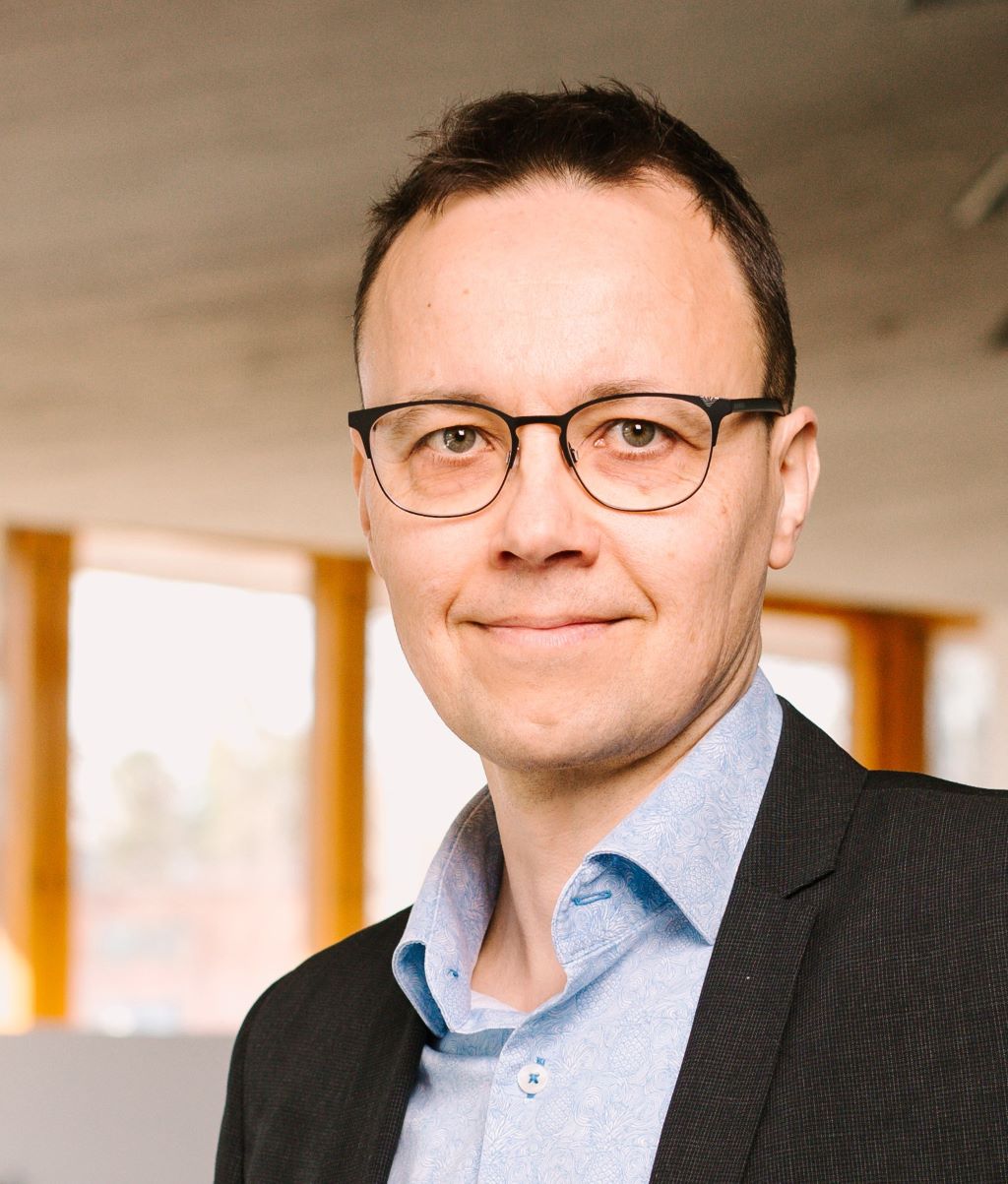
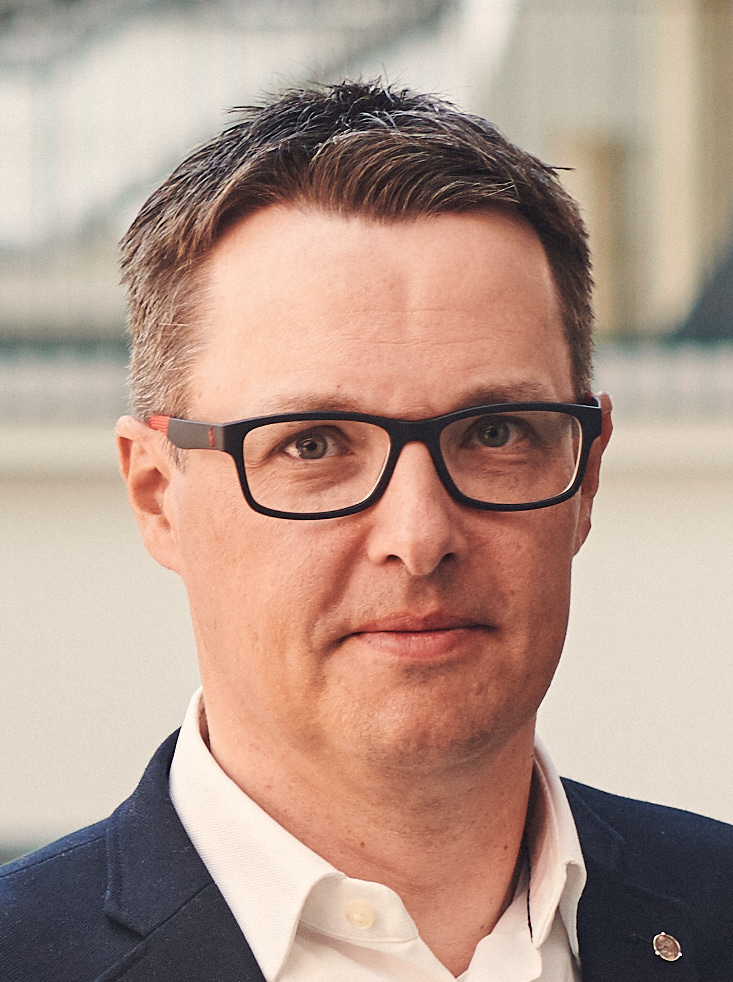
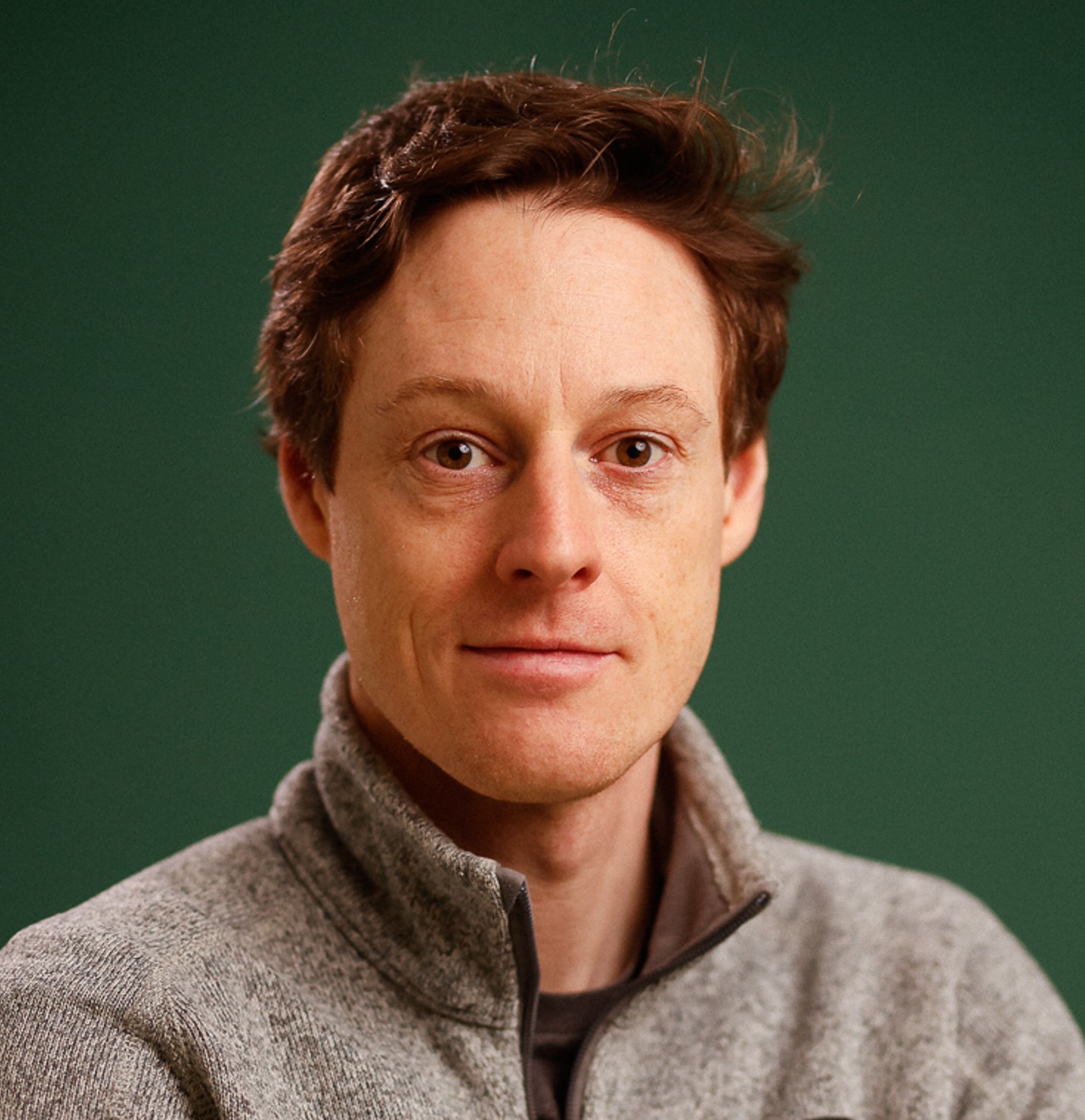
Mikko Valkama is a Professor at the Department of Communications Engineering , part of the Faculty of Information Technology and Communication Sciences at Tampere University . His research focuses on advanced wireless communication systems, positioning technologies, and integrated sensing and communication (ISAC). He holds an Orcid ID ( 0000-0003-0361-0800 ) and can be reached at mikko.valkama@tuni.fi . Research interests span 5G/6G networks , RF antenna design , deep learning for signal processing , and millimeter-wave systems . He leads projects on positioning algorithms (e.g., mmWave SLAM, NLOS mitigation), ISAC architectures, and hardware-efficient transmitter linearization. Notable contributions include works on DECT-2020 NR standards, phase-based localization, and RIS-assisted systems. In 2025 alone, his group published over 30 articles on topics such as: Antenna array design for Ka-band and wideband applications Machine learning for power amplifier predistortion Bistatic radio SLAM and mmWave mapping Covert transmission and physical-layer security His work bridges theoretical advancements with practical implementations, often validated through experimental setups (e.g., TUJI1 dataset for indoor localization). No scientific awards were explicitly listed in the provided texts.
Sanna Syri is a Professor at Aalto University's School of Engineering , specifically within the Department of Energy and Mechanical Engineering . Her research focuses on large-scale energy systems, emphasizing climate change mitigation through innovative electricity market strategies and sustainable district heating solutions. Research Interests : Climate-resilient energy systems Electrification of district heating Data center waste heat utilization Renewable energy integration Green hydrogen production Recent Work examines Nordic electricity market dynamics, cold climate energy challenges in Finland and Japan, and the economic implications of electrified district heating systems. Her publications address critical energy transition issues through experimental and modeling approaches. Contact : sanna.syri@aalto.fi
Simo Hostikka is a Professor in the Department of Civil Engineering at Aalto University's School of Engineering. His research focuses on fire safety engineering , utilizing numerical fire simulations to address critical challenges in building and infrastructure safety. Key Expertise: Fire Dynamics Simulator (FDS) development, thermal radiation heat transfer, pyrolysis modeling, fire toxicity calculations, and probabilistic risk analysis. Leadership: Supervises advanced fire safety research and contributes to international fire safety standards. Research Trends: Recent publications emphasize fire toxicity modeling , hydrogen fire safety , radiation heat transfer , and fire retardancy of polymeric materials . His work bridges computational methods with real-world fire safety applications. Scientific Awards: Philip Thomas Medal of Excellence (2008, 2005) Sjölin Award (2012) Interflam Trophy (2007) Harmathy Award (2020, 2019) Dean’s Award for Best MSc Thesis (2020) Best Paper in Rakenteiden Mekaniikka (2009) Advising: Supervised Topi Sikanen, who received the Young Talent Award from the International Water Mist Association.
Petri Mähönen is a Full Professor at the Department of Information and Communications Engineering , Aalto University. His research focuses on networked systems, machine learning applications in telecommunications, and smart grid technologies. University: Aalto University Department: Information and Communications Engineering Research Interests span networked systems, IoT security, UAV communication, and AI-driven network optimization. His work addresses predictive QoS in cellular-connected drones and generative adversarial networks for cybersecurity. Recent Publications include studies on GAN-based traffic augmentation, anomaly detection in mobile networks, and regulatory frameworks for data platforms. His articles reflect expertise in both theoretical and applied network science.
Shenyi Liu is a Doctoral Researcher at Aalto University's Department of Electrical Engineering and Automation , focusing on advanced semiconductor packaging and reliability engineering. Active in the Electronics Integration and Reliability research group, Liu contributes to developing innovative interconnect solutions for MEMS and power electronics. Email: shenyi.liu@aalto.fi Research Interests center on low-temperature bonding technologies , 3D packaging architectures , and failure mechanism analysis in electronic components. Key methodologies include solid-liquid interdiffusion (SLID) bonding and thermal-mechanical stress characterization. Publication Trends show expertise in MEMS integration , interconnect reliability , and power component packaging , with recent work addressing TSV interconnects, die-attach fatigue cracks, and Cu-Sn-In bonding systems. Collaborations span materials engineering and applied physics domains.
Mervi Paulasto-Kröckel is a Professor in the Department of Electrical Engineering and Automation at Aalto University, specializing in Electronics Integration and Reliability. With a doctoral degree in Engineering and Technology from Helsinki University of Technology (1995) and a Master's degree from the same institution (1990), her work focuses on microelectronics packaging, MEMS, and sustainable electronic manufacturing. Doctoral Degree: Engineering and Technology, Helsinki University of Technology (1995) Master's Degree: Engineering and Technology, Helsinki University of Technology (1990) Her research explores advanced packaging techniques like SLID bonding, reliability of microbumps, and thermally conductive materials. Recent work includes buried aluminum nitride for silicon-on-insulator and fatigue crack analysis in IGBT modules. Her publications emphasize low-temperature processes, interdiffusion, and MEMS reliability. Awards include the JVST A Best ALD Paper Award (2021) and a Best paper award (2000). She leads projects like PowerizeD and 3DPiezoMems, focusing on digitalization and 3D MEMS development. Best paper award (2000) JVST A Best ALD Paper Award (2021)
Jukka Manner is a Full Professor (tenured) of Networking Technology at Aalto University's Department of Communications and Networking (Comnet), School of Electrical Engineering. With a career spanning over two decades in internet technologies, he leads research in networking, wireless systems, and energy-efficient ICT solutions. Dr. Manner received his MSc (1999) and PhD (2004) degrees in computer science from the University of Helsinki. His academic journey has been marked by significant contributions to internet standardization through the IETF since 1999, where he served as co-chair of the NSIS working group. Professor Manner's research focuses on networking, software and distributed systems, with particular emphasis on wireless and mobile networks, transport protocols, energy efficient ICT and cyber security. His work bridges theoretical advancements with practical applications, addressing critical challenges in modern communication systems, sustainable networking practices, and security frameworks. His research group has made significant contributions to 5G technologies, UAV communications, and energy-efficient network design. His extensive publication record shows a clear evolution toward sustainability in networking technologies, with recent work focusing on energy efficiency in 5G systems, sustainable web technologies, and the environmental impact of digital infrastructure. The research demonstrates strong interdisciplinary connections between telecommunications engineering, computer science, and environmental science, with particular emphasis on reducing the carbon footprint of digital systems while maintaining performance. Cross of Merit, Signals (2014) Medal for Military Merits for contributions in national defence and C4 (2015) Professor Manner has supervised over 200 MSc theses and more than 20 doctoral dissertations, establishing himself as a dedicated mentor in the field. He has been principal investigator and project manager for over 15 national and international research projects, including serving as Academic Coordinator for the Finnish Future Internet research programme (2008-2012). His leadership extends to conference organization, having served as local co-chair of Sigcomm 2012 in Helsinki, and active participation as a peer reviewer and member of various Technical Program Committees. As an active contributor to internet standardization through the IETF, Professor Manner's work has practical impact on global networking technologies. His research group maintains strong connections with industry partners and participates in shaping future networking standards and practices, particularly in the areas of sustainable networking, 5G evolution, and security frameworks for emerging technologies.
Kari Lappalainen is an Assistant Professor in the Department of Electrical Engineering at Tampere University, affiliated with the Faculty of Information Technology and Communication Sciences. His research focuses on photovoltaic power systems, energy storage technologies, and renewable energy integration. He leads studies on photovoltaic module aging, parameter identification, and energy storage system optimization for power smoothing and ramp rate control. Key research interests include: Photovoltaic module diagnostics and performance analysis Energy storage system design for hybrid renewable plants Impact of environmental factors (e.g., temperature, cloud cover) on PV efficiency Advanced modeling techniques for photovoltaic systems Recent work emphasizes real-time monitoring of PV degradation via current-voltage curve analysis and optimization of energy storage configurations to mitigate power fluctuations. Over 50 peer-reviewed publications demonstrate sustained contributions to renewable energy systems research. Notably absent are awards or formal advisee listings, though collaboration with institutions like EU PVSEC and frequent conference participation indicate active academic engagement.
Olli Seppänen serves as Associate Professor in Civil Engineering at Aalto University's School of Engineering, specializing in operations management for construction productivity improvement. He coordinates the Vision 2030 consortium—comprising 13 Finnish construction and design firms—to develop industrialized building methods for 2030, while leading multiple Business Finland-funded research initiatives focused on digital construction workflows and real-time monitoring. His research centers on lean construction principles, location-based management systems, and digital transformation through IoT, AI, and robotic vision. Key focus areas include prefabrication optimization, construction logistics, and shifting work off-site to industrialize processes. He aims to solve industry-wide productivity challenges by creating real-time situational awareness and implementing takt production systems for workflow stability. Recent publications (2024-2025) reveal strong emphasis on digital twin frameworks, semantic modeling for quality assurance, and AI applications in risk management. His work bridges theoretical lean construction concepts with practical implementations, particularly in real-time resource tracking, waste reduction in MEP work, and cross-sector learning from high-performing teams. Seppänen has received significant recognition including: School of Engineering doctoral dissertation award (2024) Best paper at IEEE Wireless Sensors Conference (2019) Nordic Conference best paper award for PhD research (2019) DSc dissertation award (2010) As principal investigator, he manages: Vision 2030 consortium projects (2-3 annually; PI for two current projects) iCONS: Real-time resource flow monitoring via indoor positioning RECAP: Deep learning analysis of progress/quality from images/point clouds DiCtion: Integrated data systems for real-time stakeholder situation pictures He actively contributes to the "Performance in Building Design and Construction" research group and leverages the Vision 2030 consortium as a collaborative platform for industry transformation, driving adoption of digitalized, industrialized construction methods through academic-industry partnerships.
Yuqing Wang is a Postdoctoral Researcher in the Department of Computer Science at the University of Helsinki, Finland, actively contributing to software engineering research with expertise in anomaly detection for microservices and test automation maturity. Contactable via yuqing.wang@helsinki.fi and phone +358505934630/+358294151310, Wang participates in major EU and Academy of Finland projects including LUMI AI Factory (2025-2028) and MuFAno (2023-2026). Research focuses on two interconnected domains: anomaly detection in cloud-native systems using meta-learning for cross-system log analysis and trace categorization, and test automation maturity assessment frameworks. Recent work pioneers datasets like LO2 for microservice API anomalies and tools like LogLead for integrated log processing, while earlier studies establish quantitative links between test automation maturity and product quality in open-source ecosystems. Publications reveal an evolving trajectory from foundational test automation maturity models (2018-2020) toward advanced AI-driven anomaly detection (2024-2025), with 2022-2023 bridging both domains through empirical studies on agile practices and maturity impacts. Current work emphasizes cross-system generalization and multimodal fusion for microservice reliability. No scientific awards are documented in available sources. Wang contributes to two significant grants: the EU Horizon Europe LUMI AI Factory developing AI service infrastructure (2025-2028), and the Academy of Finland MuFAno project advancing multimodal anomaly detection for microservices (2023-2026). These projects drive collaboration with industry partners on real-world system reliability challenges.
Mikael Rinne is an Associate Professor in the Department of Civil Engineering at Aalto University's School of Engineering. His research focuses on rock fracture mechanics and its applications in various engineering contexts including nuclear waste repositories, geothermal energy systems, and underground construction. His expertise spans time-dependent rock failure mechanisms, fracture propagation models, and rock mechanics applications in energy storage and disposal systems. His work has direct applications in projects with Posiva Oy (nuclear waste repository), St1 Deepheat (geothermal energy), and mining operations with companies like First Quantum Minerals. Rinne's research integrates advanced numerical modeling with field applications, particularly in Finnish crystalline bedrock conditions. He has contributed significantly to understanding fracture initiation and propagation in rock masses under various stress conditions, with particular emphasis on long-term stability considerations for deep underground structures. His scholarly work demonstrates strong connections between theoretical fracture mechanics and practical engineering applications, with a focus on ensuring safety and reliability in rock engineering projects. His research has evolved from fundamental fracture mechanics studies to application-focused investigations addressing contemporary challenges in energy and waste management. Rinne has supervised doctoral research in rock mechanics and collaborates with researchers specializing in photogrammetry, virtual reality applications, and energy storage systems, creating a multidisciplinary approach to complex rock engineering problems.
Lauri Rautkari is an Associate Professor in the Department of Bioproducts and Biosystems at Aalto University, Finland. His research focuses on water interactions in biomaterials, particularly wood, with an emphasis on developing advanced analytical methods for water vapor sorption, creating novel low-sorption materials, and investigating hygroscopicity and fungal decay resistance in modified wood systems. Research Highlights: Gas-phase ozone treatment for improved wettability, thermal and chemical wood modification, hyperspectral imaging for moisture prediction, bioinspired coatings for fungal protection, and interlaboratory studies on sorption data quality. Recent Publications: Key contributions to understanding lignin's role in moisture interactions, acetylation reversibility, and the impact of fungal degradation on heat-treated wood. The trend in his publications reflects a strong focus on hygroscopicity, chemical modification techniques (acetylation, melamine-formaldehyde impregnation), advanced imaging methods (hyperspectral, neutron scattering), and the development of sustainable wood-based materials for construction and acoustic applications. Collaborative interlaboratory efforts dominate his work, ensuring standardized methodologies for moisture analysis.
Hamed Badihi is an Assistant Professor in Automation Technology and Dependable Systems at Tampere University , part of the Faculty of Engineering and Natural Sciences. He leads the Dependability and Automation Research in Cyber-Physical Systems (DARES) Group within the Dependable Systems Cyber Laboratories . His research focuses on critical aspects of condition monitoring, fault-tolerant control, and attack-resilient control to advance sustainable, dependable cyber-physical systems. Research Interests include: Cybersecurity for industrial control systems Fault-tolerant control mechanisms Resilient control strategies for renewable energy systems Condition monitoring of wind turbines and microgrids Recent Contributions emphasize hybrid approaches combining machine learning and control theory for cyber-attack detection and system resilience in wind farms and microgrids. His work addresses challenges like real-time fault diagnosis and adaptive control under adversarial or environmental perturbations. Awards & Roles : Senior Member of IEEE, editor for International Transactions on Electrical Energy Systems , Advances in Fuzzy Systems , and Processes journals. Active in EU projects like StreamSTEP . Labs & Teams : Directs the DARES Group, collaborating on initiatives like the Dependable Systems Cyber Laboratories to pioneer innovations in cyber-physical system dependability.
Mia Liljeström is a Staff Scientist at the Department of Neuroscience and Biomedical Engineering, Aalto University. She holds a Doctoral Degree in Engineering and Technology from Aalto University (2010) and a Master's Degree in Engineering and Technology from Helsinki University of Technology (2002). Doctoral Degree: Aalto University, 2010 Master's Degree: Helsinki University of Technology, 2002 Her research focuses on Magnetoencephalography (MEG) , Functional Connectivity , and Brain Networks . She explores Transcranial Magnetic Stimulation (TMS) , Functional MRI , and Neural Networks to map language-critical brain areas and study cortical dynamics. Recent work includes automated speech artefact removal from MEG data and test-retest reliability of brain connectivity metrics. Mia actively participates in conferences like MEG Nord and has presented invited talks on language processing and large-scale brain networks. Her publications emphasize MEG-informed TMS, cortical beta modulation, and brain stimulation precision. She contributes to the UN Sustainable Development Goal of Quality Education through neuroimaging research.
Steven Collins is a Professor of Practice in Civil Engineering at Aalto University , specializing in industrial wood construction. His work bridges scientific research and industry applications to enhance timber's role in sustainable structural engineering. Research Interests : Species-specific timber behavior (particularly birch), focusing on modeling, testing, and variance analysis. Non-destructive testing techniques like laser scattering, grain orientation analysis, and digital image correlation. Statistical and Bayesian approaches for probabilistic modeling of material properties and uncertainty quantification. Timber finger joint mechanics and wood processing techniques (e.g., densification, chemical treatment). Scientific Contributions : His recent publications (2022–2025) emphasize mechanical behavior of timber , predictive modeling , and innovative processing methods . Key trends include optimizing birch timber for structural applications, advancing Bayesian statistical models for wood mechanics, and improving non-destructive testing protocols using laser technologies and digital image correlation. Laboratory & Collaborations : Actively involved in experimental testing (destructive and non-destructive) and statistical analysis of wood properties. Collaborates with researchers like Gerhard Fink , Lauri Rautkari , and Farid Vafadar on timber mechanics and reliability studies. Part of the Structures – Structural Engineering, Mechanics and Computation research group at Aalto University.