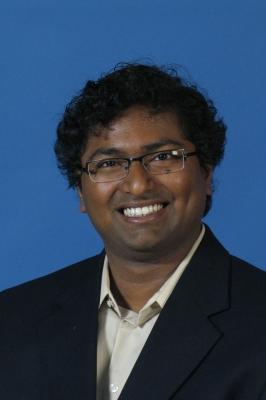
Professor Bill Watson is a Full Professor of Cancer Biology at the University College Dublin, School of Medicine , where he serves as Head of Pathology and Director of the Biomedical Health and Life Science BSc program. With a PhD in Biochemistry (University College Cork, 1995) and post-doctoral training at the University of Toronto, he has led translational research in prostate cancer since returning to UCD in 1997. His work focuses on biomarker discovery, therapy resistance mechanisms, and clinical decision tools through the Prostate Cancer Research Consortium and iPROSPECT collaborations. Education: BSc (University College Dublin), PhD (Royal College of Surgeons in Ireland), Post-Doctoral Research Fellow (Toronto General Hospital) His research integrates genomic, epigenetic, and proteomic biomarkers to improve prostate cancer stratification and treatment selection, as demonstrated in the Movember Global Action Plan and ToPCaP initiatives. Recent studies include validating a six-gene MCRS signature for biopsy-based prognostics (2025) and developing beta mixture models for DNA methylation analysis (2024). Scientific Awards include the Alton Prize (2000), Presidents Awards for Teaching (2000, 1998), and Young Investigator Award (1995). He has received grants such as the UCD Equip Scheme (2021) and Molecular Therapeutics for Cancer (2009-2015) . Professional Leadership: Irish Association for Cancer Research (President 2014-2017), Cancer Trials Ireland (Chair of Translational DSSG 2014-present), and Royal Academy of Medicine in Ireland (Fellow since 2006)
Bradley Hayes is an Associate Professor of Computer Science and Director of the Collaborative AI and Robotics (CAIRO) Laboratory at the University of Colorado Boulder. His work focuses on enabling autonomous agents and robots to collaborate safely and effectively with humans through techniques in human-robot interaction, explainable AI, and learning from demonstration. PhD in Computer Science, Yale University (2015) Postdoctoral Associate, MIT Interactive Robotics Group Research interests span collaborative robotics, dependable AI systems, and imitation learning for human-robot teaming, with applications in manufacturing, healthcare, and autonomous vehicles. His lab develops methods for task planning, motion prediction, and trust calibration in human-machine partnerships. Recent publications emphasize explainable sequential decision-making, neuromorphic learning architectures, and augmented reality interfaces for robotic training. Awards include Sustainability Recognition (2025) for motion planning efficiency Best Student Paper Runner-up (AAMAS 2022) Best Technical Paper Runner-up (HRI 2019) As lab director, he has mentored 12 PhD/Master students to completion, including Matthew Luebbers, Aaquib Tabrez, and Christine Chang. Funding sources include NSF grants and industry partnerships like Circadence, where he serves as Chief Technology Officer.
Dirk Thierens is an Associate Professor in the Department of Computer Science at Utrecht University's Faculty of Science, specializing in Intelligent Systems within AI & Data Science. His academic career spans over 25 years, with continuous publications from 1996 through 2025, demonstrating sustained research activity and leadership in his field. He maintains an active research program with numerous collaborations, most notably with Peter A.N. Bosman, indicating a long-standing productive research partnership. Thierens' research focuses on evolutionary computation, particularly model-based evolutionary algorithms, genetic algorithms, and optimization techniques. His work has evolved from foundational genetic algorithm research in the late 1990s and early 2000s to more specialized model-based approaches in recent years, including significant contributions to Gene-pool Optimal Mixing Evolutionary Algorithms (GOMEA). His expertise spans single-objective and multi-objective optimization, permutation problems, mixed-integer problems, and real-valued optimization. In recent years, his research has expanded into applications in machine learning, particularly semi-supervised learning and neural network optimization. His publication record shows a consistent output of high-quality research, with numerous papers in top conferences like GECCO and journals in evolutionary computation. His most recent work (2023-2025) demonstrates continued innovation in synthetic data generation, neural network combination techniques, and parameterless evolutionary algorithms. The breadth of his work spans theoretical algorithm development, benchmarking methodologies, and practical applications in healthcare and other domains. While no specific scientific awards are mentioned in the available information, his extensive publication record, tutorial contributions at major conferences, and sustained research productivity over multiple decades indicate recognition within the evolutionary computation community. His tutorial work at GECCO conferences suggests he is considered an authority on model-based evolutionary algorithms. Thierens maintains an active research laboratory focused on evolutionary algorithms and their applications, with recent work exploring the intersection of evolutionary computation and deep learning. His research continues to advance both theoretical understanding and practical applications of optimization techniques in complex problem domains.
Rachel Oliver is a Professor of Materials Science at the University of Cambridge and Director of the Cambridge Centre for Gallium Nitride. Her research focuses on characterisation techniques for gallium nitride materials used in LEDs and laser diodes, with an emphasis on nanostructure engineering and quantum technology. Awarded OBE (2025), Fellow of the Royal Academy of Engineering (FREng) (2021), and Fellow of the Institute of Materials, Minerals and Mining (FIMMM) (2019) Developed atom-probe tomography and scanning capacitance microscopy to study nitride devices Her work on quantum dots and single-photon emitters has advanced quantum crystallography and optoelectronics. Recent publications highlight trends in nitride semiconductors , solar cell efficiency , and quantum device fabrication . Scientific Awards Royal Society University Research Fellowship (2006-2011) Chair in Emerging Technologies (2023) Grants EPSRC grant for semi-polar nitride structures Oliver's lab at the Department of Materials Science and Metallurgy explores nanoscale nitride structures for future devices, while advocating for gender equality in STEM.
Professor Tova Milo is the Chair for Information Management at the School of Computer Science, Tel Aviv University, leading the prominent Databases Lab (DB Group). Her research spans databases, big data management, crowd-based data sourcing, and business process querying, with significant contributions to data integration and semi-structured data systems. Her research interests focus on innovative approaches to data management challenges through machine learning integration, crowd computing, and business process analysis. Key projects include Business Process Querying (BPQ) for analyzing BPEL specifications, MoDaS for crowd-based data management, and PROX for data provenance summarization. Her work bridges theoretical foundations with practical applications in fraud detection, recommendation systems, and data cleaning. Analysis of her recent publications reveals strong trends in human-in-the-loop data management systems, with growing emphasis on crowd integration for data cleaning and knowledge acquisition. Her research increasingly combines traditional database theory with machine learning techniques for scalable big data processing, while maintaining focus on business process modeling and provenance tracking. ACM PODS Alberto O. Mendelzon Test-of-Time Award (2010) ERC Advanced Investigators grant MoDaS (2011) The Weizmann Prize for Exact Sciences (2017) VLDB Women in Database Research award (2017) IEEE TCDE Impact award (2022) ISF Breakthrough Research Grant (2022) Doctorate Honoris Causa, University of Zurich (2023) ACM Fellow Member of Academia Europaea Professor Milo has advised over 30 graduate students including PhD candidates like Yael Amsterdamer and Ohad Greenshpan, and numerous MSc students working on projects including MoDaS, BPQ, and EDOS. Her research has been supported by major grants including the ERC Advanced Investigators grant and ISF Breakthrough Research Grant. She actively collaborates with industry partners including IBM and Microsoft, particularly in business process management standards. She directs Tel Aviv University's Databases Lab, which maintains the DB Group with multiple research streams including business process querying (BPQ), crowd-based data management (MoDaS), and self-adaptive data dissemination (EDOS/COLT). The lab operates from the Schreiber Building (M-20) and maintains strong international collaborations, particularly with European institutions through the ERC-funded MoDaS project.
Michael J. Larson is a Professor of Psychology in the College of Family, Home, and Social Sciences at Brigham Young University (BYU), where he directs the Clinical Cognitive Neuroscience and Neuropsychology (CCNN) Lab. His research integrates neuropsychology and cognitive neuroscience methodologies to investigate cognitive control mechanisms in healthy individuals and cognitive dysfunction following traumatic brain injury (TBI). He employs advanced techniques including event-related potentials (ERPs) and functional magnetic resonance imaging (fMRI) to examine neural correlates of cognitive processes. Dr. Larson's research program has four primary aims: (1) Investigating behavioral and neural reflections of cognitive control using ERP/fMRI; (2) Understanding lifespan developmental trajectories of cognitive control in neurologic insult or psychopathology (TBI, autism, depression); (3) Examining cognitive control's role in exercise and food-related behaviors including obesity; (4) Determining psychometric properties of biological measures for clinical application. His work spans traumatic brain injury recovery, exercise cognition, food inhibitory control, and psychopathology-neurocognition interactions. His publication trends reveal strong focus on methodological rigor in psychophysiology, with recent articles emphasizing ERP reliability across paradigms, preregistration practices, and multiverse analysis approaches. Key research domains include TBI rehabilitation (particularly via photobiomodulation and HRV biofeedback), sex differences in concussion mechanisms through the LIMBIC MATARS Consortium, and neural markers of food-related inhibitory control. Editor-in-Chief, International Journal of Psychophysiology (2016-Present) Top-Cited Scholar for Scientific Field (2019) Martin B. Hickman Innovation in Teaching Award (2018) University Young Scholar Award (2015) College Outstanding Young Alumnus, University of Florida (2014) Dr. Larson mentors students through the BYU Chapter of the Association of Neuropsychology Students and Trainees (ANST) and collaborates extensively with Dr. Tricia Merkely, Dr. Derin Cobia, and Dr. Shawn Gale on clinical neuropsychology training. His lab emphasizes rigorous methodology and psychometric validation, contributing significantly to standards in electrophysiological research through editorial leadership and methodological publications.
Dr. Yves Le Traon is a Full Professor of Computer Science at the University of Luxembourg, where he serves as Vice-Director of the Interdisciplinary Centre for Security, Reliability and Trust (SnT). He leads the 25-member SerVal research group (SEcurity, Reasoning and VALidation), focusing on software testing, security, and data-intensive systems. Previously, he chaired the CSC Research Unit (2013-2016) and pioneered model-driven engineering at INRIA. PhD and engineering degree in Computer Science from Institut National Polytechnique, Grenoble (1997) Former Associate Professor at University of Rennes (1998-2004) His research spans three main areas: innovative software testing and repair , Android security through static analysis and machine learning , and robust machine learning system design . Collaborations include industry leaders like PayPal, CREOS, and Cebi in fintech, smartgrid, and industry 4.0 domains. Awarded IEEE Fellow (2022) and Facebook Testing & Verification Research Award (2019) , he chairs editorial boards for STVR, SoSym, and IEEE Transactions on Reliability. His team has produced 20+ PhD graduates including Li Li (Monash University), Donia El Kateb (European Investment Bank), and Alexandre Bartel (SnT Research Associate). Commercial impact includes co-founding Datathings for runtime AI decision systems.
John H. Mace serves as Professor and Chair of the Psychology Department at Eastern Illinois University, concurrently holding a professorship in Aging Studies (Gerontology). Based in Klehm Hall, Charleston, his contact email is jhmace@eiu.edu. His research centers on autobiographical memory systems , specifically: Involuntary vs. voluntary memory recall mechanisms Organization principles of autobiographical memories Semantic-to-autobiographical priming under varied conditions (non-verbal cues, subliminal stimuli, cue repetition) Functional purpose of involuntary memories Methodological innovations in diary-based memory research Recent publications (2023-2024) demonstrate rigorous experimental approaches examining how semantic cues trigger autobiographical memories, revealing critical insights about memory accessibility thresholds and unconscious processing. His work bridges cognitive psychology with consciousness studies through innovative paradigms like vigilance tasks and subliminal stimulation protocols. Dr. Mace maintains active teaching responsibilities for Cognitive Psychology and Human Memory courses while leading departmental operations. His public profile includes media recognition as the 82-year-old Boston Marathon qualifier in 2020, featured across eight media outlets including The Boston Globe .
Philipp Weiss is a Researcher at the Technical University of Munich (TUM), affiliated with the Department of Electrical and Computer Engineering and the Chair of Embedded Systems and Internet of Things. Holding an M.Sc. degree, he actively contributes to research and teaching in embedded systems and IoT with a strong focus on automotive applications. His research spans Automotive Systems , Internet of Things (IoT) , Fail-Operational Systems , Reliability Analysis , Agent-Based Systems , and Distributed Systems . Weiss specializes in fail-operational automotive software design, dynamic agent-based mapping methods, and run-time reliability analysis, addressing critical challenges in autonomous vehicle safety and resilience through publications in DATE and DSD conferences. Analysis of his 2020-2021 publications reveals consistent focus on fail-operational architectures for automotive systems, with recurring themes in distributed agent-based modeling, timing analysis, and energy optimization within hybrid cloud environments. His work bridges theoretical reliability frameworks with practical automotive implementations. Weiss has supervised multiple Master's theses and final projects from 2019-2021 on topics including dynamic agent-based reliability analysis and fail-over timing for neural networks. As an educator, he serves as tutor for System Design for the Internet of Things and seminar manager for Advanced Seminar Embedded Systems and Internet of Things . Embedded within Prof. Sebastian Steinhorst's research team, Weiss contributes to major initiatives including Security for IoT and Autonomous Systems , Time-Sensitive Networking , and 6G Research Hub "6G-Life" , operating within TUM's IoT Remote Lab infrastructure for hands-on experimentation with industrial IoT systems.
PD Dr. habil. Thomas Wöhling serves as a Senior Research Scientist and Team Leader for Stochastic Modelling of Hydrosystems at the Chair of Hydrology, Dresden University of Technology's Faculty of Environmental Sciences. His research spans integrated environmental systems modeling with particular expertise in surface water-groundwater interactions, braided river systems, and vadose zone processes. Previously, he held research positions at Water and Earth System Sciences Competence Cluster in Tübingen (2010-2015) and Lincoln Environmental Research in New Zealand (2006-2010). Dr. Wöhling completed his Dipl.-Hydrol. (1999) and PhD in Hydrology (2005) at Dresden University of Technology, followed by habilitation in Stochastic Hydrology (2021). His educational background includes extensive research at the Institute of Hydrology and Meteorology at TU Dresden (1999-2005) where he developed foundational expertise in hydrological modeling. Wöhling's research focuses on integrated modeling of coupled environmental systems , particularly flow and contaminant transport in surface water-groundwater systems, nutrient and energy fluxes in soil-plant-atmosphere systems, and distributed hydrological modeling. His work emphasizes stochastic modeling and uncertainty analysis , with significant contributions to inverse modeling, model calibration, multiobjective optimization, and Bayesian model averaging techniques. He has pioneered methods for evaluating monitoring network worth and data utility for environmental models. His publication record demonstrates consistent contributions to hydrological science, with recent work (2023-2025) focusing on machine learning applications in hydrology, advanced statistical inversion techniques, and complex karst system modeling. Key trends include integration of physics-based and data-driven approaches, improved uncertainty quantification methods, and applications to climate change impacts on water resources. His work bridges theoretical advances with practical applications in New Zealand's braided rivers and European hydrological systems. STAHY Best Paper Award (2018) ASCE Journal of Irrigation and Drainage Engineering Best Reviewer Awards (2008, 2010, 2011, 2015, 2018) ASCE Journal of Irrigation and Drainage Engineering Best Paper Awards (2008, 2009) Dr. Wöhling leads the Stochastic Modelling of Hydrosystems team and has secured funding for numerous projects including Klimakonform, ISOSIM, VAMOS II, and the International Research Training Group 'Integrated Hydrosystem Modelling.' His work combines novel monitoring techniques with modeling and optimal sensor placement to improve prediction reliability for river-groundwater exchange fluxes. He collaborates extensively with international partners, particularly in New Zealand through the Lincoln Agritech's Braided Rivers program. His laboratory work focuses on combining traditional hydrological measurements with advanced computational techniques, including deep learning applications for soil surface hydrology and time-windowed Bayesian analysis for predictive modeling. The team maintains strong connections with field sites in Germany's Saxon region and New Zealand's Canterbury Plains, facilitating integrated theoretical and empirical research approaches.
Dr. Yasmine Abdin serves as an Assistant Professor in the Department of Materials Engineering within the Faculty of Applied Science at the University of British Columbia (UBC). Her research focuses on advancing polymer matrix composite materials through innovative digital simulation and probabilistic design methodologies. Her academic credentials include: B.Sc. from KU Leuven M.Sc. from KU Leuven Ph.D. from KU Leuven Dr. Abdin's research program centers on overcoming limitations in composite material durability through probabilistic design frameworks and multi-scale modeling. She integrates finite element analysis, machine learning, and Industry 4.0 technologies to predict structural reliability under stochastic service conditions, with emphasis on damage tolerance, manufacturing-process-structure relationships, and optimization of carbon fiber production from sustainable precursors like lignin and asphaltenes. Her recent publications (2023-2025) demonstrate strong focus on sustainable composite manufacturing, including carbon fiber production from renewable resources, 4D printing of shape memory polymers, flax fiber-reinforced composites, cellulose nanofibril modification, and fatigue behavior analysis. Key thematic trends include the convergence of digital twin technologies with composite manufacturing, sustainable precursor development, and the application of machine learning to enhance modeling efficiency in structural reliability prediction. Information regarding doctoral students, research grants, laboratory facilities, or scientific awards was not provided in available sources.
Maryam Imani is an Associate Professor of Water Systems Engineering at Anglia Ruskin University's School of Engineering and the Built Environment. As a Chartered Civil Engineer (CEng) and Fellow of the Higher Education Academy (FHEA), she specializes in water infrastructure resilience, sustainable drainage systems (SuDS), and computational modeling techniques. BEng (Hons) Civil Engineering, 2001 MEng Water Systems Engineering, 2006 PhD Water Systems Engineering, University of Exeter, 2012 PG Cert in Learning and Teaching in Higher Education, Anglia Ruskin University, 2016 Her research focuses on resilience modeling for water infrastructure, machine learning applications in water systems, and climate adaptation strategies . She leads projects addressing urban wastewater resilience, SuDS implementation in developing countries, and interdependent infrastructure systems. Maryam's work demonstrates a strong emphasis on multi-objective optimization and decision support systems for sustainable water management. Her recent publications explore challenges in Brazil, India, and the UK, integrating climate projections with urban planning. Exeter Research Scholarship (ERS) Fellow of the Higher Education Academy (FHEA) She contributes to major projects like Safe&SuRe water management and RESoURce@Brandia , securing grants from UKRI-GCRF, NERC, and EPSRC. Maryam collaborates with institutions across the UK, Brazil, and the US, including the University of Utah.
Dr. Saibal Mukhopadhyay is a Professor in the Department of Electrical and Computer Engineering at the Georgia Institute of Technology, where he joined in 2007. He holds the Joseph M. Pettit Professorship and is recognized as an IEEE Fellow for his contributions to low-power and reliable VLSI systems. Education: BEng (Jadavpur University, India), Ph.D. (Purdue University) Labs: Gigascale Reliable Energy Efficient Nanosystem (GREEN) Lab His research focuses on VLSI Systems , Nanotechnology , and Low-Power Electronics , with emphasis on technology-circuit co-design for energy-efficient computing. Recent work explores Compute-in-Memory (CIM) architectures and Spiking Neural Networks for edge AI. Key article themes include Transformer Model Acceleration , Quantum Computing Calibration , 3D Object Detection , and Device Aging Analysis , reflecting his interdisciplinary approach bridging hardware design and machine learning. Scientific Awards IEEE Fellow (2018) ONR Young Investigator (2012) NSF CAREER Award (2011) IBM Faculty Awards (2009, 2010) Best Paper Awards (IEEE-Nano 2003, ICCD 2004)
Domingo Savio Rodríguez Baena is a Professor at Pablo de Olavide University, affiliated with the Department of Computer Languages and Systems. His research focuses on data mining, bioinformatics, and computational biology, with a particular emphasis on biclustering algorithms, gene co-expression networks, and high-performance computing applications. PhD in Engineering, Data Science, and Bioinformatics (2012) from Pablo de Olavide University His work spans interdisciplinary domains, including recommender systems , livestock behavior analysis , and biological data interpretation . Recent articles highlight his contributions to multi-GPU optimization , ensemble learning , and historical database construction . Key collaborations include the DATAi Intelligent Data Analysis and DASE Data Analytics Science & Engineering research groups. He has developed tools like the CyEnGNet–App for gene network visualization and BIGO for gene enrichment analysis. Contact: dsrodbae@upo.es
Steven C. Grambow is an Associate Professor and Associate Chair of Education in the Department of Biostatistics & Bioinformatics at Duke University School of Medicine. He serves as Director of Duke’s Clinical Research Training Program (CRTP) and Co-Director of the Duke Clinical and Translational Science Institute (CTSI) Workforce Development Pillar. With over two decades of experience in graduate education, he has trained more than 1,000 physician-scientists in statistical methods while developing innovative programs for clinical research education across various delivery formats. His work focuses on creating pathways into clinical and translational research through partnerships with institutions like North Carolina Central University and Durham Technical Community College. Grambow actively explores AI integration into biostatistical workflows and leads initiatives in faculty development, active learning models, and cross-disciplinary collaboration frameworks. As a collaborative statistical scientist, his research spans observational studies, randomized trials, and epidemiologic investigations addressing public health challenges including amyotrophic lateral sclerosis (ALS), post-traumatic stress disorder (PTSD), and cardiovascular risk reduction. His recent publications highlight innovations in biostatistical education, AI applications, and community-engaged research models. Scientific Awards: American Statistical Association teaching honors Duke University teaching honors Grambow has secured significant grants from NIH, Department of Defense, and University of Colorado-Denver for projects spanning statistical methods in cardiovascular disease research, patient-focused drug development resources, and multi-component lifestyle interventions. He actively mentors through Duke’s educational programs and leads quantitative collaboration units in academic healthcare settings.