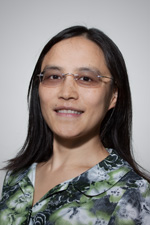
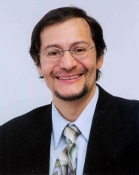
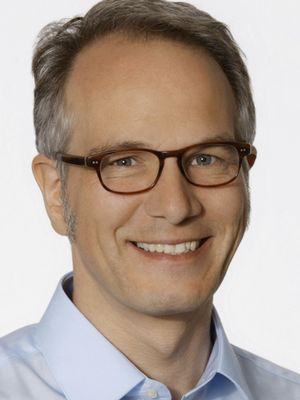
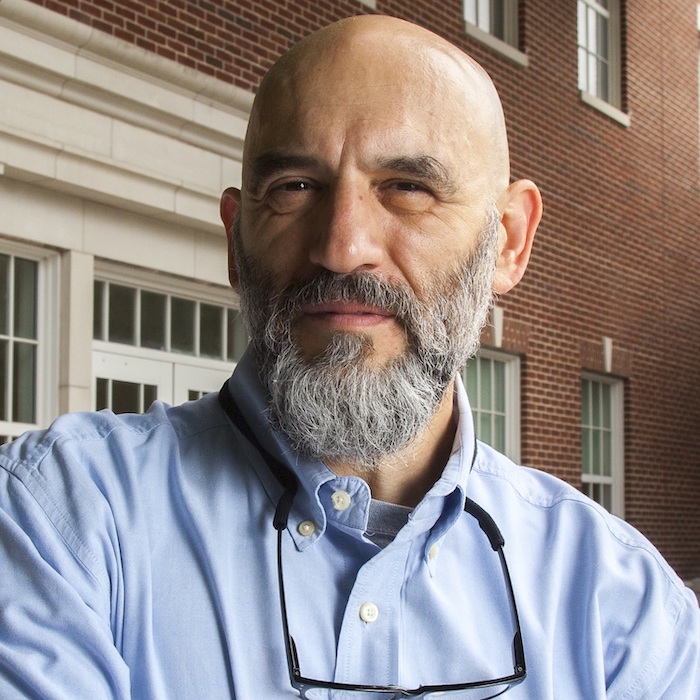
Daniel S. Berger is a Principal Researcher at Microsoft's Azure Systems Research Group in Redmond, focusing on the efficiency, sustainability, and reliability of cloud platforms . He is also an Affiliate Assistant Professor at the Paul G. Allen School of Computer Science at the University of Washington, where he teaches graduate classes. His research spans systems stack innovations for sustainability , including work on memory tiering , repair operations , and cooling systems (Zissou). He leverages system prototyping , simulation , and statistical modeling in his work, often collaborating with PhD students and postdocs from institutions like Columbia, University of Toronto, CMU, and Princeton. Recent publications highlight his leadership in CXL-based memory management , carbon-efficient cloud design , and latency-aware caching . His tools, such as Belatedly and FOO , have demonstrated significant improvements in cache performance and latency optimization. Best Paper Awards: USENIX OSDI 2023, HotCarbon 2023, ACM SOSP 2021. Distinguished Paper: ASPLOS 2023. His work has been integrated into Apache Traffic Server and Microsoft production systems , with open-source tools and datasets released for reproducibility. Collaborations include hardware and OS development teams within Azure and academia.
Jun Wu is a Professor in the Department of Public Health at the University of California, Irvine. Her research focuses on air pollution exposure assessment and air pollution epidemiology, particularly in reproductive health, aiming to improve exposure characterization and assess health impacts. Ph.D. in Environmental Health from University of California, Los Angeles Her exposure assessment work employs geographical information systems (GIS), atmospheric dispersion models, and statistical techniques to quantify population and individual air pollution exposures, including studies on vehicle-related pollution, naphthalene, wildfires, and traffic pollutants. Her epidemiology research links air pollution to adverse pregnancy outcomes like preeclampsia, preterm births, and early pregnancy loss. The Google Scholar articles reflect interdisciplinary work in photonics, semiconductor devices, and optical systems, featuring advancements in microwave photonic oscillators, photodiodes, and color-tunable organic light-emitting diodes. These studies emphasize low phase noise, thermal dissipation, and high-efficiency device design across microwave and optoelectronic domains. Health Effect Institute Walter A. Rosenblith New Investigator Award, 2010 International Society of Exposure Analysis Young Investigator Award, 2005 Samuel J. Tibbitts Fellowship, School of Public Health, UCLA, 2003 Chancellor’s Fellowship, UCLA, 2000, 2003 PWEA Student Research Award, Pennsylvania Water Environment Association, 2000 Jun Wu's laboratory (https://drwulab.net/) develops exposure models and investigates environmental health impacts, combining GIS with atmospheric modeling. Her research bridges environmental science and public health, targeting pollution-related health risks.
Peyman Afzali Gorouh is a Postdoctoral Researcher in the Applied Power Electronic Systems group within the Faculty of Engineering and Science at Aalborg University, Denmark. His research focuses on developing innovative models for energy communities, smart grids, and renewable energy integration. Dr. Afzali's research interests span power engineering, smart grid technologies, renewable energy systems, and energy communities. His work particularly emphasizes prosumer economics, peer-to-peer energy trading, risk modeling in power systems, and energy democracy frameworks. He has developed novel approaches for optimizing energy communities while considering socio-economic-environmental factors, demand response, and uncertainty management. His recent publications (2020-2024) demonstrate a consistent focus on energy community modeling, with particular emphasis on peer-to-peer trading mechanisms, risk-constrained optimization, and multi-objective planning. His work bridges technical power system challenges with socio-economic considerations, creating integrated models that address both engineering and human aspects of modern energy systems. Dr. Afzali maintains an active research profile with numerous publications in high-impact journals including IEEE Transactions on Engineering Management, Energy and Buildings, Applied Sciences, and Sustainable Cities and Society. His research shows strong international collaboration, particularly with researchers from Iranian institutions.
Dr Xiandong Ma is a Reader in Power and Energy Systems at Lancaster University's School of Engineering, where he has been a faculty member since December 2008. His research focuses on intelligent condition monitoring and fault diagnosis of power systems, with particular expertise in wind energy systems and smart grid technologies. His educational background includes: BEng in Electrical Engineering from Jiangsu University (1986) MSc in Power Systems and Automation from Nanjing Automation Research Institute (1989) PhD in Partial Discharge based High-voltage Plant Condition Monitoring from Glasgow Caledonian University (2002) Dr Ma's research spans intelligent condition monitoring and fault diagnosis/prognosis of wind power systems and electrical assets, condition-based operations and maintenance of power and energy systems, modeling, optimization, and control of smart/micro grids with renewable energy resources, power conversion and renewable energy integration, and associated machine learning and AI technologies and digital twin solutions. His work bridges theoretical advances with practical engineering applications in the renewable energy sector. His recent publications demonstrate a strong focus on quantum machine learning applications for wind turbine monitoring, electric vehicle-grid integration challenges, wave energy conversion systems, and nuclear fuel inspection technologies. The research shows a clear trajectory toward more sophisticated AI-driven solutions for energy systems, with increasing emphasis on multi-physics modeling and cross-domain applications. Dr Ma has received several prestigious recognitions: Chartered Engineer Fellow of the Institution of Engineering and Technology (FIET) Fellow of the Higher Education Academy (FHEA) Member of EPSRC Peer Review College KTP Fellowship awarded by University of Technology Sydney (2018) Ranked in the world's top 2% scientists by Stanford University He actively supervises numerous PhD students and postdoctoral researchers, with current projects including the Leverhulme Trust-funded "Self-Aware Power Networks: Autonomous Operation at Scale" and several EPSRC-funded initiatives. Dr Ma has secured significant research funding and collaborates extensively with industry partners to translate research into practical applications. Dr Ma leads research within Lancaster's Energy research group, focusing on the integration of advanced sensing, AI, and control techniques for next-generation power and energy systems. His team works closely with industrial partners including ALSTOM Power and various renewable energy companies to develop innovative solutions for real-world energy challenges.
Nikolaos Papaspyrou is a Professor at the School of Electrical and Computer Engineering of the National Technical University of Athens (NTUA) and a member of the Software Engineering Laboratory . His research focuses on the theory and implementation of programming languages, including semantics, type systems, compilers, static analysis, and formal verification. Since October 2021, he has been on leave from NTUA, working as a Software Engineer for Google in the memory management team for the V8 JavaScript and WebAssembly engine. He previously served as Director of the Division of Computer Science (2017-2019) and was on sabbatical with Google's compiler group in Munich (2015-2016). His work includes the RELEASE project (EU FP7 STREP) for reliable large-scale server software and uncertainty handling in distributed databases (European Social Fund). Ph.D. and Diploma in Electrical and Computer Engineering from NTUA M.Sc. in Computer Science from Cornell University His research interests span programming languages , software engineering , and formal verification , with recent publications on coinductive proofs in Liquid Haskell, concurrency semantics, and quantum compilation. He has supervised over 50 diploma projects and mentored numerous students now at institutions like MIT, Princeton, and UC Berkeley. Awards include conference organizing and program committee roles, though no formal scientific prizes are listed.
Professor Noah Linden is a faculty member in the School of Mathematics at the University of Bristol , holding the title of Professor of Theoretical Physics. His research focuses on Quantum Information Theory , Mathematical Physics , and related areas in quantum computing and thermodynamics. He has contributed to 105 research outputs and leads projects such as Reliable and Robust Quantum Computing and Compilation and Verification of Quantum Software . Key research themes include quantum scrambling, entanglement dynamics, and applications in biophysics. His work has been cited in studies on quantum dots, qubit manipulation, and nonlocality limits. He has also contributed datasets on exciton dynamics in purple bacteria and collaborated on projects analyzing decoherence and disorder effects in photosynthetic systems. Professor Linden serves as an editor for the Journal of Physics A: Mathematical and General and maintains active collaborations across quantum information, quantum computing, and interdisciplinary physics. His research output includes foundational studies on quantum error correction, measurement theory, and computational advantages.
Prof. Dr.-Ing. Sergio Montenegro is a Professor of Aerospace Information Technology at Julius-Maximilians-University Würzburg, where he leads the Chair of Computer Science VIII. His academic journey includes a Bachelor's in Computer Science from Universidad del Valle de Guatemala (1978-1982), a Diploma from Technische Universität Berlin (1983-1985), and a Dr.-Ing. from TU Berlin (1989). Prior to joining academia, he held positions as a software developer (1979-1982), research coordinator at Fraunhofer Gesellschaft (1985-2007), and Head of Department at DLR (2007-2010). His research focuses on dependable distributed systems for aerospace applications, including satellite networks, real-time operating systems (RODOS), UAV swarm control, fault-tolerant architectures, and space mission software. Key projects span satellite formation flight (TET, AsteroidFinder), solar sail missions, distributed avionics (VIDANA), and medical IoT systems. Recent publications (2018) demonstrate strong emphasis on distributed spacecraft systems, UAV navigation, fault tolerance, and software engineering for space applications. Trends include miniaturized satellite technologies, decentralized control algorithms, real-time OS verification, and Java-based space systems. He leads research in distributed computing networks and UAV laboratories, supervising projects like VaMEx-LaOLA (Mars exploration) and ultra-wideband positioning systems. Though no awards are documented, he has coordinated over 100 projects including ESA and DLR missions.
Kyun Ho Lee is an Associate Professor in the Department of Aerospace Engineering at Sejong University, specializing in space propulsion systems, satellite thermal engineering, and computational fluid dynamics (CFD). His career spans academic research and practical development in aerospace technologies. Ph.D., KAIST (2009) M.S., Yonsei University (2000) B.S., Yonsei University (1998) His research focuses on cutting-edge aerospace technologies, including Space Propulsion , Thermal Engineering , and Inverse Heat Analysis . Recent work explores CFD modeling of propulsion plumes, rarefied gas dynamics , and optimization of FEEP thrusters for small satellites. Applications extend to green propulsion systems, waste-to-fuel technologies, and advanced emitter designs. The latest publications highlight trends in ionic monopropellants , gallium-based FEEP systems , and thermal cracking of plastic waste for sustainable aviation fuels. Collaborations span computational modeling, propulsion system development, and environmental stress testing for spacecraft.
Matthias Baitsch serves as Professor of Construction Informatics and Numerical Methods in the Department of Civil and Environmental Engineering at Bochum University of Applied Sciences, where he concurrently heads the BIM Institute. His academic trajectory includes research assistant and senior engineer roles at Ruhr-University Bochum (2000-2009), academic coordination at the Vietnamese-German University (2009-2012), and an acting professorship at the University of Kassel (2012-2014). His educational foundation comprises: Civil Engineering studies at the University of Dortmund (1991-1997) under the interdisciplinary "Dortmund Model" Doctorate from Ruhr-University Bochum (2003) on geometric imperfection-based optimization of compressive beam structures Professor Baitsch's research integrates computational mechanics with civil engineering practice, specializing in construction informatics, numerical optimization, and high-order finite element methods. His work pioneers distributed optimization frameworks, structural health monitoring for wind energy infrastructure, and BIM-based construction informatics. Key methodological contributions include hp-FEM implementations, parallel optimization algorithms, and mobile structural analysis tools. Analysis of his recent publications reveals three dominant research trajectories: (1) Advanced numerical methods for structural optimization under uncertainty, (2) Health monitoring-driven lifetime prediction for wind turbine systems, and (3) Computational modeling of tunnel environments using viscoacoustic inversion techniques. These threads demonstrate consistent focus on robust numerical implementations and real-world civil engineering applications. As Head of the BIM Institute, he leads institutional efforts in digital construction technologies, fostering industry-academia collaboration on building information modeling standards and applications. His teaching portfolio spans foundational mathematics, numerical methods, and computer science for civil engineering students, emphasizing practical computational skills.
Tiago Manuel Ribeiro Gomes is an Assistant Professor at the Department of Industrial Electronics within the School of Engineering at the University of Minho, Portugal. He is also a Senior Researcher at Centro ALGORITMI and a member of both the IE R&D Group and the ESRG R&D Lab. Holding a Ph.D. in Electronics and Computers Engineering, his research focuses on embedded real-time systems, computer architectures, and hardware/software co-design for IoT devices. Academic Degree: Ph.D. in Electronics and Computers Engineering Current Position: Assistant Professor, School of Engineering, University of Minho Gomes has led extensive research in IoT systems over 15 years, particularly in hardware acceleration for automotive LiDAR sensors, secure embedded systems, and efficient OS frameworks for low-end devices. His work includes the EU-funded CROSSCON project and spans hardware-assisted security, dynamic binary translation, and wireless sensor networks. Recent publications highlight his expertise in automotive sensor technology, with articles like FOG-Zip for LiDAR compression, SecureQNN for TinyML security, and Hardware-Assisted Range Image Generation for LiDAR processing. His work bridges IoT, embedded systems, and cybersecurity, focusing on real-time performance and hardware-software co-design. Projects include the development of reliable/secure automotive sensor solutions and EU project CROSSCON. He contributes to open-source frameworks like UTango for IoT security and investigates heterogeneous fault tolerance architectures using Arm/RISC-V processors. Labs: IE R&D Group, ESRG R&D Lab Education: Ph.D. in Electronics and Computers Engineering, Master’s in Telecommunications Engineering (both from University of Minho)
Professor Tomoji Kishi is a distinguished faculty member at Waseda University's School of Creative Science and Engineering, where he has been serving since 2009. Previously, he held academic positions at Japan Advanced Institute of Science and Technology (2003-2009) following a 21-year career at NEC Corporation (1982-2003). He earned his Ph.D. in Information Science from Japan Advanced Institute of Science and Technology in 2002, building upon his earlier engineering graduate studies at Kyoto University. Professor Kishi's research focuses on software engineering, particularly in software product line development, model checking, formal verification, and aspect-oriented modeling. His work bridges theoretical formal methods with practical applications in embedded systems, automotive software, and IoT technologies. He has made significant contributions to scalability challenges in model checking for configurable systems and has pioneered approaches to variability management and approximate modeling techniques. His publication record demonstrates remarkable consistency and evolution, with 42 papers and 153 citations according to Scopus data (h-index: 7), spanning from foundational work in software architecture in the 1990s to cutting-edge research on AI-enhanced verification methods in 2025. His recent work shows increasing application of machine learning techniques to traditional formal methods problems, particularly in the context of highly configurable systems and IoT applications. ITS Standardization Activity Merit Prize (2022) from Society of Automotive Engineers of Japan IPSJ/ITSCJ Standardization Contribution Award (2017) IPSJ/ITSCJ Project Editor Award (2016 and 2013) Information Processing Society of Japan Society Activity Contribution Award (2010) IPA/SEC Journal Best Paper Award (2007) Information Processing Society of Japan Yamashita Memorial Research Award (1998) Professor Kishi has led multiple JSPS-funded research projects, including recent work on 'variability management methods prioritizing usability through variability mining' (2020-2023) and 'utility-first modeling method' (2017-2020). His industry collaborations, particularly with automotive systems developers, demonstrate the practical impact of his research. He maintains active membership in major professional societies including IEEE Computer Society, ACM, and the Information Processing Society of Japan.
Halit Uster is Professor of Operations Research & Engineering Management at SMU’s Lyle School of Engineering and Professor of Civil & Environmental Engineering (by courtesy). A 2025 IISE Fellow, he also serves as Fellow of SMU’s Hunt Institute for Engineering and Humanity, where he leads large-scale optimization research with strong societal impact. Education Ph.D. in Management Science/Systems – McMaster University, Canada M.A. in Business Administration (Production/Operations Management) – Hacettepe University, Turkey B.S. in Mechanical Engineering – Middle East Technical University, Turkey Research Interests Uster develops optimization models and efficient algorithms for the design and analysis of networked systems. His work spans: Electric-vehicle charging and wireless power-transfer networks Emergency logistics and disaster-preparedness planning Bio-energy and biomass supply-chain networks Closed-loop supply chains with recycling and remanufacturing Relay and multi-commodity transportation networks to mitigate driver shortages Wireless sensor networks for environmental monitoring Publication Trends Over the past decade Uster has published extensively in Transportation Science , IISE Transactions , Transportation Research Part E , and Annals of Operations Research . His recent articles collectively advance decomposition-based exact algorithms (notably Lagrangean and Benders schemes), bilevel and robust optimization, and stochastic modeling of supply and demand uncertainty, all applied to socially critical infrastructure systems. Scientific Awards & Honors IISE Fellow (2025) Caterpillar Teaching Excellence Award, Texas A&M University (2011) Eshbach Society Distinguished Visiting Scholar, Northwestern University (2009) Faculty Appreciation Awards, INFORMS Student Chapters (2004, 2009) Multiple research features in IE Magazine (2008, 2010, 2017) Daniel H. Wagner Prize Finalist (2008) Moving Spirit Award, INFORMS (2007) Outstanding Faculty Member – University of Alabama (1999-2000) NSERC Postgraduate Scholarship (1997-1999) Grants & Doctoral Advising Uster has secured over $2 million in funding from NSF, USDA and industry, including four NSF grants since 2015 focused on disaster-preparedness logistics, EV-charging infrastructure, and biomass supply chains. He has graduated 17 PhD students who now hold positions in academia (IIM Udaipur, ITESM Mexico, St. Mary’s University) and industry (ExxonMobil, Norfolk Southern, FedEx, Sabre, NetJets, JD.com, BNSF Railway, etc.). Professional Service & Editorial Roles He is Department Editor of IISE Transactions on Supply Chains and Logistics (2024–present) and Associate Editor of Transportation Science (2018–present), previously serving on the editorial boards of IISE Transactions on Scheduling and Logistics and Sustainability Analytics and Modelling . He has chaired or co-chaired numerous INFORMS committees and conferences, including the upcoming TSL 2026 meeting at MIT.
Dr. Min Yu is an Imperial College Research Fellow (ICRF) in the Department of Mechanical Engineering at Imperial College London . He leads an independent research program focused on in-situ multimodal sensing of mechanical interfaces , integrating advanced materials, intelligent control, multiphysics modeling, and data-driven technologies. His work bridges tribology, robotics, and sensing with applications in lubrication systems and robotic haptic interfaces. Education: PhD in Mechanical Engineering, Imperial College London (2014–2018) MSc in Engineering, Zhejiang University (2011–2014) BEng in Engineering, Xi’an Jiaotong University (2007–2011) Research Interests: Dr. Yu’s core research areas include tribology , ultrasonic sensing , robotic haptics , lubrication systems , and data-driven control . He develops novel sensing technologies for real-time monitoring of mechanical interfaces, with applications in engines, bearings, transmissions, and robotic systems. His work emphasizes closed-loop intelligent lubrication and bio-inspired robotic sensing . Publications & Trends: Dr. Yu has authored over 60 peer-reviewed papers and holds 6 patents . His recent work (2024–2025) focuses on ultrasonic-based oil film measurement, triboelectric sensors for robotics, and advanced control systems for automotive suspensions. These publications reflect a strong interdisciplinary approach combining mechanical engineering , AI-driven control , and sensor innovation . Awards & Grants: Imperial College Research Fellowship (ICRF 2022–2026) Royal Society International Exchanges – Cost Share Scheme State Key Laboratory of Fluid Power and Mechatronic Systems Open Foundation Taiho Kogyo Tribology Research Foundation Grant Dame Julia Higgins Engineering Postdoc Collaborative Research Fund (2019) Peter Jost Travel Fund (2022) Collaborations & Labs: Dr. Yu collaborates with multiple groups at Imperial College London including the Tribology Group , Non-Destructive Evaluation (NDE) Group , Control and Power Group , Optical & Semiconductor Devices Group , and Geotechnics Group . He also partners with international institutions such as Georgia Tech , Xi’an Jiaotong University , Zhejiang University , HUST , and Tsinghua University , as well as industry leaders like Shell , ExxonMobil , Toyota , and Jaguar Land Rover .
Julia Lawall is a Senior Research Scientist (Directrice de Recherche) at Inria-Paris, where she leads research in the Whisper group. She has made significant contributions to the fields of programming languages, operating systems, and software engineering, with a particular focus on program transformation and Linux kernel development. Her work bridges theoretical computer science with practical software engineering challenges. Dr. Lawall's research primarily centers on the design and implementation of domain-specific languages for operating system problems, program transformation techniques, and automated software evolution. Her most notable contribution is the Coccinelle framework, which has been instrumental in automating the evolution of Linux device drivers for over a decade. Her work spans from theoretical foundations in optimal reduction of the lambda calculus to practical tools that address real-world software maintenance challenges in large-scale systems like the Linux kernel. Her publication record demonstrates consistent contributions across multiple domains, with recent work focusing on Android API evolution, Linux kernel bug detection, and program transformation techniques. The trajectory of her research shows a progression from theoretical programming language concepts to increasingly practical applications in system software maintenance and evolution. EuroSys Test of time award for 'Documenting and Automating Collateral Evolutions in Linux Device Drivers' at EuroSys 2008 Best paper award for 'Diagnosys: Automatic Generation of a Debugging Interface to the Linux kernel' at ASE 2012 Most Influential ICFP Paper Award for foundational work on lambda calculus Best Reviewer at GPCE 2020 and Distinguished Reviewer at ASE 2020 Dr. Lawall has been actively involved in the academic community, serving as program co-chair for numerous prestigious conferences including ASE 2019, FSE 2026, and EuroSys 2025. She has also contributed to community initiatives as the Linux kernel coordinator for Outreachy (2015-2018) and as a member of the advisory board for Software Heritage. Her leadership extends to editorial roles, including associate editor for Higher-Order and Symbolic Computation and membership on the editorial board of Science of Computer Programming. She leads the Whisper research group at Inria-Paris, which focuses on program transformation techniques and their applications to system software. The group has developed several influential tools including Coccinelle, Coccinelle4J, LiLiput, Prequel, and JMake, which have had substantial impact on both academic research and industrial practice in software maintenance and evolution.
Ben Hermann is a Professor for Secure Software Engineering at Technische Universität Dortmund, Germany, with research focusing on the intersection of programming languages and security. His work primarily centers on vulnerability detection using static analysis, risk assessment of software libraries, security guarantees in type systems, and language-based security. His academic journey includes a doctoral degree from Technische Universität Darmstadt in 2016, followed by postdoctoral work in Eric Bodden's Secure Software Engineering Group at the Heinz Nixdorf Institute. Since 2020, he has held a tenure-track professorship at TU Dortmund, after serving as an interim Professor for IT Security at Paderborn University from October 2019 to September 2020. Hermann's research portfolio demonstrates consistent output in static program analysis frameworks, particularly with contributions to Soot and PhASAR. His work spans vulnerability detection, analysis reusability, and research quality in computer science, with emphasis on artifact evaluation. His recent publications show progression from framework development toward security applications and research methodology. Hermann has been actively involved in numerous conferences including ASE, ICSE, ECOOP, and SPLASH, often serving in program committees and as session chair. His research group at TU Dortmund includes students like Maximilian Krebs who presented work on energy consumption prediction of programs. He maintains an active presence in the academic community, advocating for research quality and reproducibility, and serves in various organizational roles including Doctoral Symposium Chair and Diversity & Inclusion Chair for conferences.