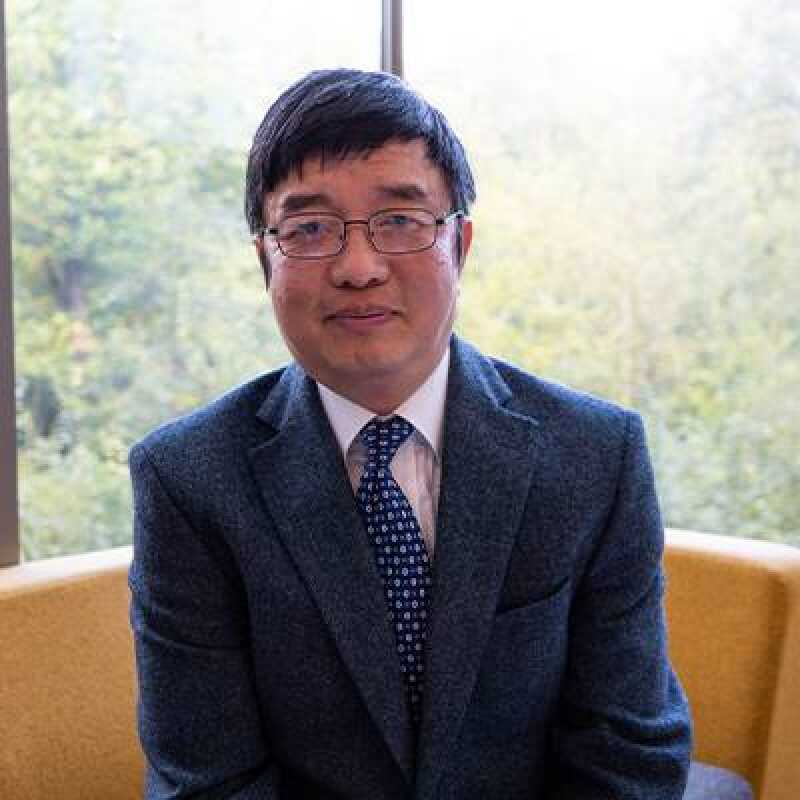
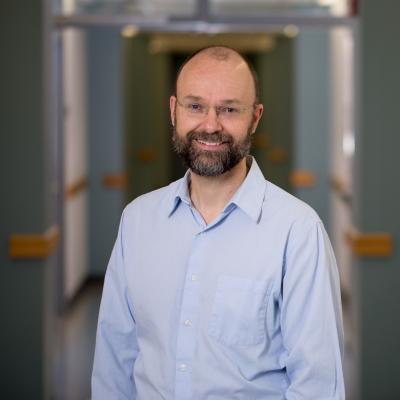
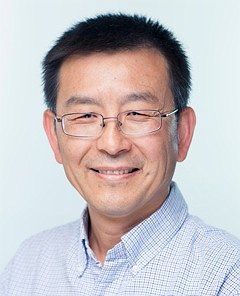
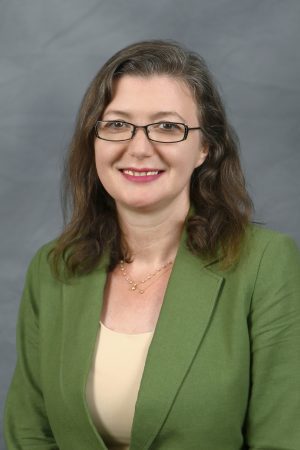
Professor Shaomin Wu is a faculty member at the University of Kent's Kent Business School, where he holds the academic rank of Professor of Business/Applied Statistics. He earned an MSc and PhD in applied statistics and has extensive industry experience, including a five-and-a-half-year stint at a global manufacturer in Shanghai before moving to the UK in 2001. He has held roles as a postdoctoral researcher and lecturer before joining Cranfield University and later the University of Kent. His research focuses on recurrent event data analysis, machine learning, and reliability mathematics, with funding from the EPSRC and ESRC. His research projects include managing risk in warranty servicing policies, smart data analytics for local government, and sustainable supply chain demand forecasting. He teaches modules such as risk analysis, reliability engineering, and machine learning. Currently supervising PhD students in time series forecasting, explainable AI, and recurrent event data analysis, he also serves as a co-chair of international conferences, editorial board member, and external examiner for doctoral degrees. Notably, he ranks among the top 2% of global scientists by Stanford University. His work integrates machine learning with business analytics, resilience engineering, and environmental sustainability. Key contributions include IoT-driven resilience methodologies for smart grids and unmanned systems, as well as frameworks for corporate carbon disclosure and maintenance optimization under uncertainty.
Andrew McCallum is a Distinguished Professor and Director of the Center for Data Science at the University of Massachusetts Amherst. He holds a PhD in Computer Science from the University of Rochester (1995) and a BS from Dartmouth College (1989). His research focuses on machine learning, natural language processing, and information extraction, with applications to scientific literature and knowledge base construction. He has pioneered work on conditional random fields and probabilistic databases, and led the development of systems like Rexa, an advanced research paper search engine. Affiliations: Center for Data Science, Center for Intelligent Information Retrieval, Computational Social Science Institute Key Projects: OpenReview.net, Unified Information Extraction, Automated Knowledge Base Construction His work emphasizes extracting actionable knowledge from unstructured text, with contributions to social network analysis, entity resolution, and semi-supervised learning. McCallum has over 300 publications and has received awards including the NSF ITR Grant, IBM Faculty Partnership Awards, and ACM/AAAI Fellowships. He has advised numerous students and served as ICML General Chair (2012). Recent Research Trends: Probabilistic box embeddings, case-based reasoning for knowledge bases, scalable clustering algorithms, and applications in biomedical informatics.
Laurie Williams serves as a Goodnight Distinguished University Professor in the Computer Science Department within the College of Engineering at North Carolina State University. She co-directs both the NCSU Secure Computing Institute and the NC State Science of Security Lablet, demonstrating deep institutional leadership in cybersecurity research. With over 260 refereed publications, her work establishes her as a prominent figure in software security academia. Her research spans critical areas including software security, agile development practices (particularly continuous deployment), software reliability, and software supply chain security. Williams focuses on practical security solutions addressing modern challenges like malicious dependencies in open-source ecosystems, AI-generated code vulnerabilities, and runtime protection mechanisms. Her work bridges theoretical security principles with industry-relevant applications. Recent publications reveal strong trends toward software supply chain security, with multiple 2024-2025 papers addressing vulnerability exploitability, malicious commit detection, and metrics-driven security control selection. Her research increasingly incorporates machine learning for threat detection while maintaining focus on human factors in secure development practices. IEEE Fellow (2018) National Science Foundation CAREER Award (2004) ACM SIGSOFT Influential Educator Award (2009) Multiple IBM Faculty Awards (2002-2012) NCSU Alumni Association Outstanding Research Award (2015-2016) Williams leads multiple major NSF-funded projects including the $5.7M SaTC Frontiers grant on secure software supply chains and the Science of Security Lablet with $3.6M in DoD funding. Her research emphasizes practical industry impact through collaborations with Cisco and Laboratory for Analytic Sciences. She actively mentors through the NCSU Research Leadership Academy and maintains significant educational outreach in software security. Her laboratory work centers on the Secure Computing Institute and Science of Security Lablet, where her team develops frameworks for vulnerability prediction, supply chain risk assessment, and secure development methodologies. Current projects focus on machine learning integrity, cognitive modeling for security decisions, and empirical analysis of build/deployment logs for anomaly detection.
Stefano Grivet-Talocia is a Full Professor at the Department of Electronics and Telecommunications at the Polytechnic University of Turin, where he also serves as Director of the Doctoral School and President of the Doctoral School Council. He is a member of the Interdepartmental Center SmartData@PoliTO - Big Data and Data Science Laboratory, the University Committee for Research, Technology Transfer and Services to the Territory, and the Commission for the Promotion of Library, Archive and Museum Heritage. His academic career spans over two decades at Politecnico di Torino, where he has established himself as a leading researcher in electromagnetic modeling and signal integrity. Grivet-Talocia earned his Laurea degree (summa cum laude) in Electronic Engineering in 1994 and his Ph.D. in Electronic and Communication Engineering in 1998, both from the Polytechnic University of Turin. Between 1994 and 1996, he conducted research at NASA/Goddard Space Flight Center in Greenbelt, Maryland. His educational background laid the foundation for his expertise in electromagnetic modeling, wavelet analysis, and signal processing. His research focuses on behavioral modeling, electromagnetic compatibility, macromodeling, model order reduction, numerical modeling, passivity, power integrity, signal integrity, transmission lines, and wavelets . Grivet-Talocia is particularly renowned for his work on passive macromodeling of interconnect structures, development of the TOPLine technique for transmission line simulation, and pioneering contributions to passivity enforcement algorithms. He has co-authored the first book entirely dedicated to Macromodeling (2016) and developed innovative approaches to waveform relaxation and wavelet-based signal processing. His recent publications (2024-2025) demonstrate continued leadership in model order reduction, with significant contributions to data-driven modeling of linear and nonlinear systems, power integrity analysis, and electromagnetic compatibility. His work spans both theoretical advances in numerical methods and practical applications in circuit design, with strong industry relevance particularly for semiconductor and electronic design automation companies. IEEE Fellow (2018-present) Three Intel SRS Grants (2022-2024) Three IBM SUR Grant Awards (2007-2009) Best Associate Editor Award - IEEE Transactions on Components, Packaging and Manufacturing Technology (2020) Multiple Best Conference Paper Awards (2006-2020) URSI Young Scientist Awards (1999) Ranked among the "top 2% worldwide researchers" (Stanford) since 2019 Grivet-Talocia actively supervises doctoral students including Michele Cusano, Sara Paknezhad Panahi, Antonio Carlucci, and Kun Zhao. He has secured numerous research grants from competitive national calls (PRIN) and commercial contracts with industry partners including Intel, IBM, Nokia, Hitachi, Infineon, and Cadence. His technology transfer activities include co-founding the spin-off IdemWorks (2007-2016), which was acquired by CST in 2016. He also developed the autoCircuits web service for automated circuit problem generation, widely used in electrical engineering education. He leads the EMC Group (Electromagnetic Compatibility) at DET and has been instrumental in establishing the Compact Dynamical Modeling research area. His work has practical applications in high-speed electronics design, with algorithms embedded in commercial tools like IBM PowerSPICE. Grivet-Talocia maintains strong industry connections through his research projects and serves as Associate Editor for IEEE Transactions on Components, Packaging and Manufacturing Technology.
Anthony TUNG Kum Hoe is a Professor in the Department of Computer Science at the National University of Singapore (NUS), where he has established himself as a leading researcher in database systems and data mining. He is also affiliated with the NUS Graduate School for Integrative Sciences and Engineering and serves as a SINGA supervisor. His educational background includes a Ph.D. in Computer Science from Simon Fraser University (2001), an M.Sc. in Information Systems & Computer Science from NUS (1998), and a B.Sc. with 2nd Class Upper Honours in Information Systems & Computer Science from NUS (1997). Professor Tung's research spans several interconnected areas within database systems and data mining. His primary focus is on developing efficient methods for indexing and searching complex data structures including time series, trajectories, trees, graphs, and high-dimensional objects. He has pioneered work in visual query processing, keyword search, and ranking systems. His GENIE (Generic Inverted Index) and LAMP (semi-Lazy Mining Paradigm) projects represent significant contributions to big data analytics, particularly in handling the 'variety' aspect of big data by providing unified frameworks for processing diverse data structures while preserving semantic meaning. His research bridges theoretical database concepts with practical applications in visual data mining, collaborative analytics, and just-in-time model construction. His recent publications reveal a clear evolution from traditional database research toward more complex analytics on diverse data types. While maintaining his core expertise in database indexing and query processing, his work has expanded to incorporate machine learning techniques, particularly in areas like nearest neighbor search, anomaly detection, and predictive analytics. There's a noticeable trend toward interdisciplinary applications, with publications spanning computer vision, natural language processing, transportation systems, and social computing. His research group consistently publishes in top-tier venues including SIGMOD, VLDB, ICDE, and KDD, demonstrating both theoretical rigor and practical relevance. 2005 Best Paper Award for 'Indexing DNA Sequences Using q-grams' 2007 Invited panel speaker on 'Advice for a successful database researcher career in Asia' at SIGMOD 2010 Guest Lecturer for VLDB Database School 2012 VLDB 2012 Research PC Co-chairs 2015 10 Years Best Paper Award, DASFAA 2015 Invited to SIGMOD 2008 and SIGKDD 2008 Program Committees Professor Tung has supervised numerous PhD students and research associates throughout his career, including notable researchers like Zhang Zhenjie (recipient of the 2007 President Graduate Fellowship) and Wang Nan (published in SIGMOD'08). His research group has been consistently productive, with students publishing in top conferences including SIGMOD, ICDE, and VLDB. His professional service is extensive, having served as PC Chair for COMAD'06, Research PC Co-chair for VLDB 2012, and on program committees for virtually all major database and data mining conferences over the past two decades. His research has been supported by various grants that have enabled significant contributions to database technology. His GENIE and LAMP projects represent a cohesive research direction focused on developing systematic approaches to big data analytics. GENIE provides a unified platform for storage and retrieval of big data with various structures, while LAMP introduces a novel paradigm for predictive analytics that combines the strengths of lazy and eager learning approaches. These projects have evolved to incorporate GPU acceleration and parallel processing capabilities, reflecting his commitment to addressing real-world scalability challenges in data-intensive applications.
Chen Zhou is a Full Professor of Mathematical Statistics and Risk Management at the Econometric Institute, Erasmus School of Economics, Erasmus University Rotterdam. He is a member of the Research Advisory Committee of Erasmus School of Economics and actively contributes to academic leadership and research governance. His research focuses on extreme value statistics and financial risk management , with significant contributions to the theoretical and applied understanding of extreme events in financial and statistical contexts. His work bridges mathematical rigor with practical applications in finance and econometrics. The recent publications highlight a strong trend in advancing methodologies for extreme value estimation, including bootstrapping techniques, tail copula modeling, dimension reduction for extremes, and semi-supervised frameworks. These works are published in high-impact journals such as the Journal of the American Statistical Association , Bernoulli , and the Journal of Finance , indicating broad disciplinary relevance across statistics, econometrics, and finance. Editorial work: Editor, Extremes (since 2015) He teaches in the Bachelor program of Econometrics and Management Science and the MSc program in Quantitative Finance, and is affiliated with the Tinbergen Institute. He has supervised multiple doctoral students, reflecting his active role in academic mentorship and research training. Chen Zhou leads a research network focused on extreme value theory, systemic risk, and statistical inference, collaborating with leading scholars in the field. His work continues to shape methodological developments in the analysis of rare and high-impact events.
Maarten de Rijke is a Professor at the University of Amsterdam's Informatics Institute, leading the Information Retrieval Lab (IRLab). He specializes in information retrieval, machine learning, and recommendation systems, focusing on neural ranking models, fairness, and conversational search. His work bridges theory and practice, addressing challenges in reproducibility, robustness, and ethical AI. He supervises numerous PhD students and postdocs, including recent defenses by Barrie Kersbergen, Antonis Krasakis, and Vera Provatorova. His lab collaborates internationally, organizing events like SIGIR workshops and the Search Engines Amsterdam (SEA) meetup. Key awards include the Best Reproducibility Paper Award (2025) and Best Paper at WSDM 2021. Research interests span generative retrieval, adversarial robustness, and fairness in ranking. Notable projects include the FULTR dataset, FairDiverse toolkit, and studies on empathetic conversational systems. He actively promotes open science through reproducible methodologies and community-driven benchmarks.
Jamie Callan is a Professor at Carnegie Mellon University's Language Technologies Institute (School of Computer Science), where he leads research in Information Retrieval and Neural Search Architectures . He teaches advanced courses on search engine design and mentors students in multiple programs. Research Focus: Federated retrieval, knowledge graph integration in search, ClueWeb dataset development, and neural approaches to document ranking Leadership: Past SIGIR Treasurer/Chair, Co-founding Editor of Foundations and Trends in IR, former TOIS Editor-in-Chief His recent work explores: Neural Retrieval: Latent vocabulary for sparse systems, hypothetical documents for dense vector retrieval Dataset Innovation: Maintenance and distribution of ClueWeb09, ClueWeb12, and ClueWeb22 datasets Search Efficiency: Selective search architectures with 90% reduced computational costs Scientific Recognition: International ACM SIGIR Conference Leadership Co-founding Editor-in-Chief, Foundations and Trends in IR Former Editor-in-Chief of ACM TOIS Dr. Callan's Lemur Project has produced Indri/Galago search engines and supported TREC evaluations through dataset contributions.
Martin Aumüller is a Lecturer in Theoretical Computer Science Algorithms at the IT University of Copenhagen . He serves as Head of Education and Master of Software Design , focusing on algorithm engineering, differential privacy, and similarity search. Research interests include: Algorithm engineering for high-dimensional data Locality-sensitive hashing and nearest neighbor search Privacy-preserving machine learning Fairness in approximate search algorithms Benchmarking and evaluation of similarity search tools Publications trends highlight his work on approximate nearest neighbor search , privacy-preserving techniques , clustering algorithms , and scalable outlier detection in high-dimensional spaces. His recent projects (2024-2025) focus on fairness, differential privacy, and efficient indexing. Grants and projects : DIREC (2020-2025): Digital Research Centre Denmark (Innovation Fund Denmark) DIREC: Bias and Benefit of Approximate Nearest Neighbor Search (2022-2025): Principal Investigator (Innovation Fund Denmark) BARC (2017-2024): Basic Algorithms Research Copenhagen (Villum Fonden) SSS (2014-2019): Scalable Similarity Search (European Commission)
Souran Manoochehri is a Professor and Chair of the Department of Mechanical Engineering at Stevens Institute of Technology, within the Charles V. Schaefer, Jr. School of Engineering and Science. He joined Stevens in 1989 as an Assistant Professor, advancing to Associate Dean for Research and Technology (2004-2009) and Director of the Design and Manufacturing Institute (1990-2004). He holds a PhD (1986), MS (1983), and BS (1981) in Mechanical Engineering from the University of Wisconsin-Madison and Illinois Institute of Technology, respectively. Education: PhD, MS, and BS in Mechanical Engineering Roles: Department Chair, former Associate Dean, and co-founder of the Design and Manufacturing Institute Research: Focuses on additive manufacturing, computer-integrated design, and intelligent optimization His research integrates mathematical modeling, machine learning, and experimental studies to ensure product and process quality in manufacturing. Over his career, he has secured $30M+ in grants, authored 130+ publications, and supervised 30+ graduate students and 12 postdoctoral fellows. He is an ASME Fellow and recipient of awards including the ASME Design Engineering Division Award. Key research trends in his articles include real-time monitoring of additive manufacturing processes (e.g., melt pool analysis, acoustic emission sensors), machine learning applications in quality control, and optimization of manufacturing systems. His work addresses challenges in precision, defect detection, and process automation across 3D printing and microfluidics. Scientific Awards: ASME Fellow, ASME IDETC Award, DMC Best Presentation Grants: Over 50 contracts totaling $30M+; advising over 30 graduate students Labs/Teams: Co-founded the Design and Manufacturing Institute (DMI) at Stevens His contributions span academic leadership and industry-relevant innovation, emphasizing interdisciplinary solutions in advanced manufacturing.
Dr. Sanne Meles is a researcher at the Faculty of Medical Sciences , part of the University of Groningen . Her work focuses on Neuroimaging and Neurodegenerative Disorders , particularly Parkinson's Disease and REM Sleep Behavior Disorder . She contributes to advanced imaging techniques like 18F-FDG PET and applies Machine Learning for data harmonization and disease classification. Email: s.k.meles@umcg.nl ORCID: https://orcid.org/0000-0002-5505-3527 Her research explores metabolic brain networks in neurodegenerative conditions, identifying patterns in essential tremor , Parkinson's prodromal stages , and REM sleep disorders . She has published extensively on neuroimaging biomarkers , machine learning applications , and longitudinal disease progression studies. Recent work includes machine learning harmonization of multicenter PET data, metabolic brain patterns in REM disorders, and validation of phenoconversion markers for Parkinson's. Her articles highlight cross-disciplinary collaborations with institutions like Seoul National University and Alzheimer's Disease Neuroimaging Initiative . Press/media coverage of her research includes public commentary on a Parkinson's detection test , which has been referenced in Wikipedia and picked up by news outlets and X (Twitter) users .
Habeeb Abbas is an Associate Professor in the Department of Civil Engineering at Southern Illinois University Carbondale, specializing in structural engineering and earthquake-related research. He contributes to both undergraduate and graduate education through a diverse range of courses. Ph.D. in Civil Engineering (2018), Southern Illinois University Carbondale, IL, USA M.Sc. in Civil Engineering (2004), Mustansiriyah University, Baghdad, Iraq B.Sc. in Civil Engineering (2000), Mustansiriyah University, Baghdad, Iraq His research focuses on ground motion modeling , structural earthquake engineering , and the application of machine learning to analyze seismic data. He also explores structural design methodologies for steel and reinforced concrete in bridges and buildings. Recent publications highlight his work on seismic coherency analysis using machine learning techniques, such as relevance vector machines. Key themes include structural dynamics , ground motion modeling , and seismic design of infrastructure. He teaches foundational and advanced courses in civil engineering, including Statics , Structural Analysis , and Seismic Design , covering both theoretical and practical aspects of the discipline.
Corinne Wallace is an Adjunct Assistant Professor in the Department of Civil Engineering at McMaster University , with research expertise at the intersection of water security, climate change, public health, and gender equity. Her work spans both technical engineering analysis and community-engaged studies, particularly focusing on marginalized populations in Canada, East Africa, and South America. Dr. Wallace's research interests include: Water-Health Nexus Climate Change Impacts on Disease Gender Equity in Water Access Indigenous Water Governance Mosquito-Borne Disease Modeling Rainwater Harvesting Systems Her publication trends show increasing focus on climate-health interactions (2025), gender-water linkages (2024), and machine learning applications for water quality analysis (2025). She employs mixed-methods approaches and works closely with First Nations communities and international development organizations. Dr. Wallace utilizes art-science communication strategies like the Virtual Water Gallery to transform water and climate knowledge dissemination. Her recent work explores EDI (Equity, Diversity, Inclusion) implementation in large research networks and conceptual frameworks for climate-water equity.
Jingling Xue is a Scientia Professor at the School of Computer Science and Engineering at the University of New South Wales (UNSW) in Sydney, Australia. As an IEEE Fellow of the Computer Society, he leads the Programming Languages and Compilers research group, focusing on practical applications of compiler optimization and program analysis techniques. His work bridges theoretical foundations with real-world software systems, particularly in developing open-source tools for large-scale program analysis. Professor Xue received his B.Eng and M.Eng degrees from Tsinghua University in 1984 and 1987, respectively, followed by a PhD from the University of Edinburgh in 1992. His academic journey has established him as a leading figure in programming languages and compiler technology. Xue's research spans programming languages, compiler technology, and program analysis with emphasis on practical relevance. His current projects include compiler techniques for improving parallelism and locality, pointer/alias analysis for million-line-scale programs, and static/dynamic analysis for detecting bugs and security vulnerabilities in real-world applications like web browsers and Android apps. His group actively develops open-source tools to support scientific replicability and reproducibility in these areas. His recent publications demonstrate a strong focus on applying program analysis techniques to modern challenges including AI compilers, homomorphic encryption, security vulnerability detection, and graph processing systems. The work shows evolution from traditional compiler optimization to addressing emerging domains like privacy-preserving computation and deep learning systems while maintaining rigorous theoretical foundations. Scientific Awards: Best Paper Award at CGO'13 Best Paper Award at CGO'16 Distinguished Paper Award at ECOOP'16 Distinguished Paper Award at ICSE'18 Distinguished Paper Award at ISSTA'19 Distinguished Paper Award at ASE'19 Distinguished Artifact Award at ISSTA'23 Best Artifact Award at FSE'23 Distinguished Paper Award at ASE'23 Test-of-Time Award at CGO'21 Professor Xue has successfully supervised 30 PhD students to completion, many of whom now work as professors or researchers in academia and industry. He has served as Program Chair for major conferences including LCTES'13, CC'18, CGO'20, and General Chair for LCTES'20. His group currently focuses on memory safety in Rust, smart contract analysis, AI compilers, compilation for privacy-preserving computation, and adversarial attacks in deep learning. The Programming Languages and Compilers group maintains strong connections with industry partners, translating theoretical advances into practical tools for real-world software development challenges. Their work on pointer analysis, memory safety, and compiler optimizations continues to influence both academic research and industrial practice.
Rrezarta Krasniqi is an Assistant Professor in the Department of Software and Information Systems at the University of North Carolina at Charlotte. She holds a Ph.D. in Computer Science and Engineering from the University of North Texas (2024) and has previously taught at multiple institutions while working as a senior Java developer in industry. Research Focus: Her work centers on improving software quality through automated detection of quality-related bugs, using AI-driven approaches and empirical methodologies to address challenges in code scattering, requirement vagueness, and system-wide reliability issues. She specializes in semantic analysis, classifier development, and 3D visualization tools for codebase monitoring. Key Contributions: Developed RetroRank for bug-fixing comment recommendation (2021-2023) Pioneered SoftQualDetector for semantic quality concern mapping (2023-2024) Co-authored surveys on quality concern management in open-source communities Publications: Her work spans leading venues like EMSE'23, ICSME'23, SANER'23, and SQJ'23, with earlier contributions at ICSE'2017 and FSE'2018 through the TraceLab reproducibility framework.