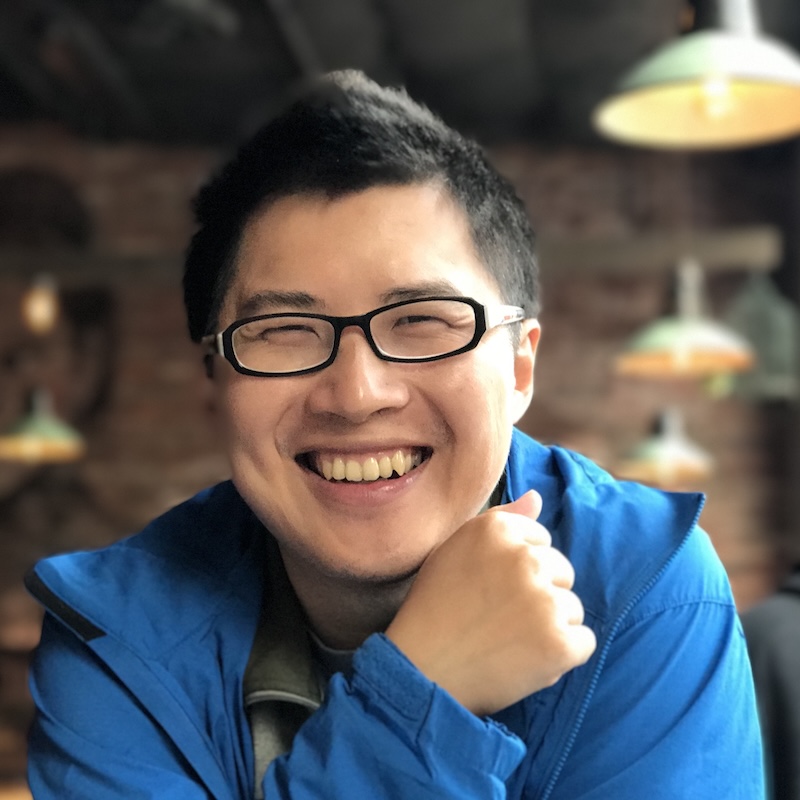
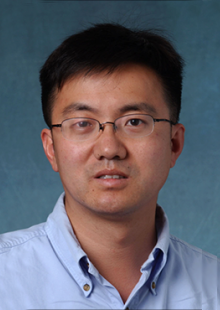
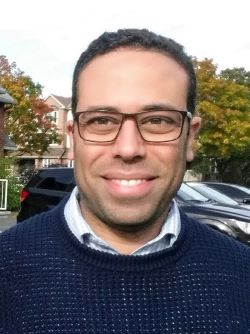
Tianqi Chen is an Assistant Professor at the Machine Learning Department and Computer Science Department of Carnegie Mellon University (CMU), with a courtesy appointment as a Professor in the Electrical and Computer Engineering Department within the College of Engineering. His research focuses on scalable machine learning systems, compiler optimization, and efficient deep learning frameworks. He holds a PhD from the Paul G. Allen School of Computer Science & Engineering at the University of Washington. Key contributions include the creation of XGBoost, Apache TVM, and MLC-LLM—widely adopted systems for machine learning and large language models. His work bridges algorithmic innovation with high-performance computing, emphasizing efficient deployment, quantization, and edge computing. Recent publications highlight advancements in LLM serving (e.g., WebLLM, Flashinfer), compiler-driven optimizations (e.g., TVM, Relax), and low-latency inference techniques (e.g., Magicdec, Tilus). These efforts address scalability, energy efficiency, and cross-platform compatibility in modern AI systems. Chen’s research has been applied to diverse domains, including music AI, browser-based inference, and microservice architectures for LLMs. His work underscores the importance of system-level thinking in advancing AI capabilities.
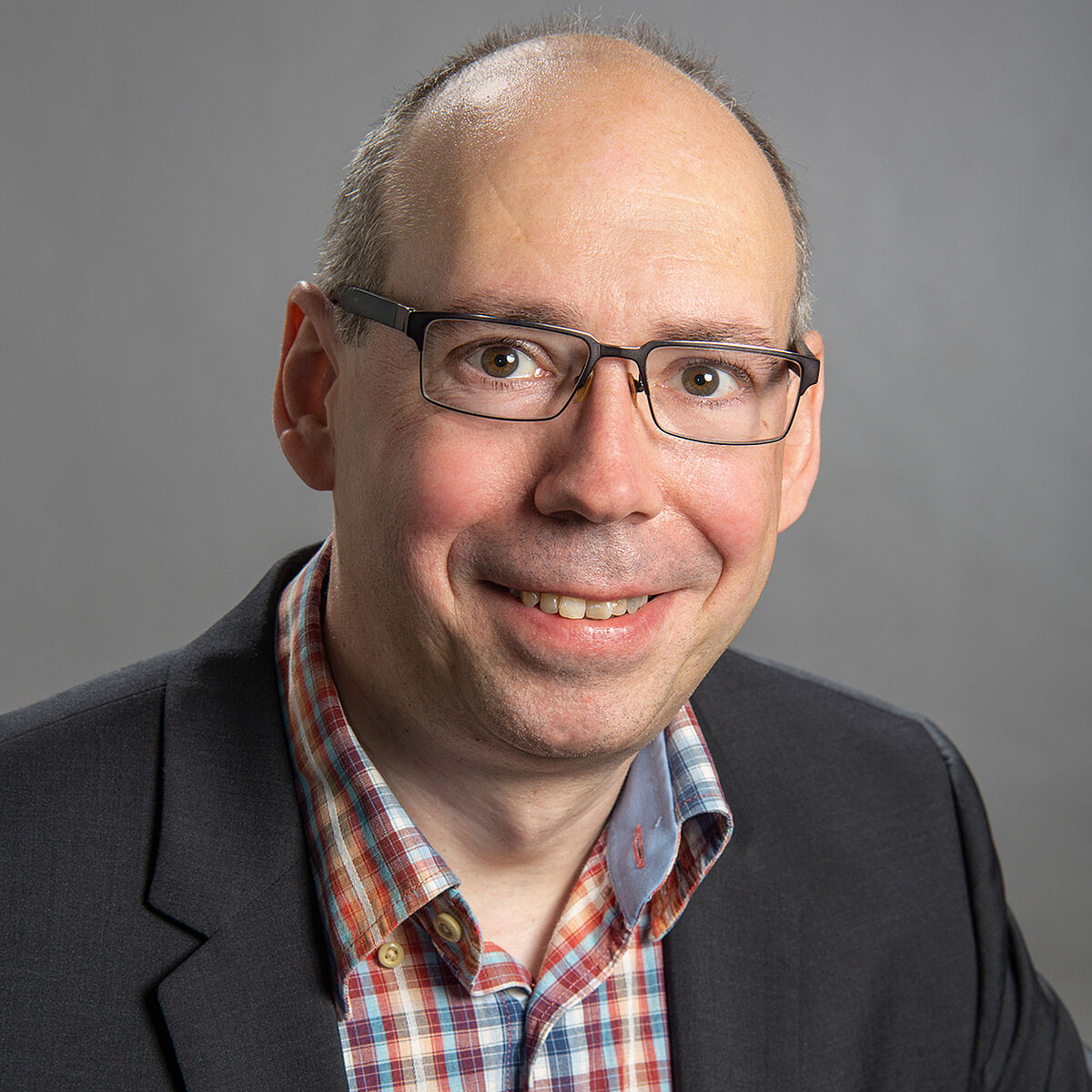
Prof. Dr. Björn Corzilius is a University Professor (W2) of Physical Chemistry at the University of Rostock, Germany, leading the Corzilius group. His research focuses on solid-state NMR spectroscopy, dynamic nuclear polarization (DNP), and applications in biomolecules and materials. He holds affiliations with the Leibniz Institute for Catalysis (LIKAT) and serves on multiple academic boards, including the transregional Collaborative Research Center TRR 386 and the journal Magnetic Resonance . Education: 1999: Studies of Chemistry, TU Darmstadt 2005: Diploma in Physical Chemistry (TU Darmstadt) 2008: Ph.D. in Physical Chemistry (TU Darmstadt) Research Interests: Solid-state NMR, DNP for sensitivity enhancement, paramagnetic metal ions, biomolecular dynamics, and method development. His work bridges theoretical and experimental approaches to advance structural and functional studies of complex systems like proteins, nucleic acids, and catalytic materials. Recent Article Trends: Focus on DNP applications in biomolecular interfaces, novel polarizing agents (e.g., Gd(III) complexes), and methodological advancements like serial polarization transfer and electron-decoupled DNP. Contributions span inorganic chemistry, materials science, and biophysical systems. Awards: Emmy Noether Fellowship (2012) Felix Bloch Lecture (2016) Regitze M. Vold Memorial Prize (2017) Best Ph.D. Supervision (2018) Grants & Labs: Principal Investigator of the Emmy Noether Group (2013–2019), now leading the DNP research team at the University of Rostock. Collaborates closely with LIKAT on catalytic and materials projects. His group actively develops open-access publishing platforms like Magnetic Resonance and hosts international conferences. Labs/Teams: The Corzilius group at the Institute of Chemistry (Rostock) specializes in NMR method development and applications. Associated with LIKAT for interdisciplinary catalysis research.
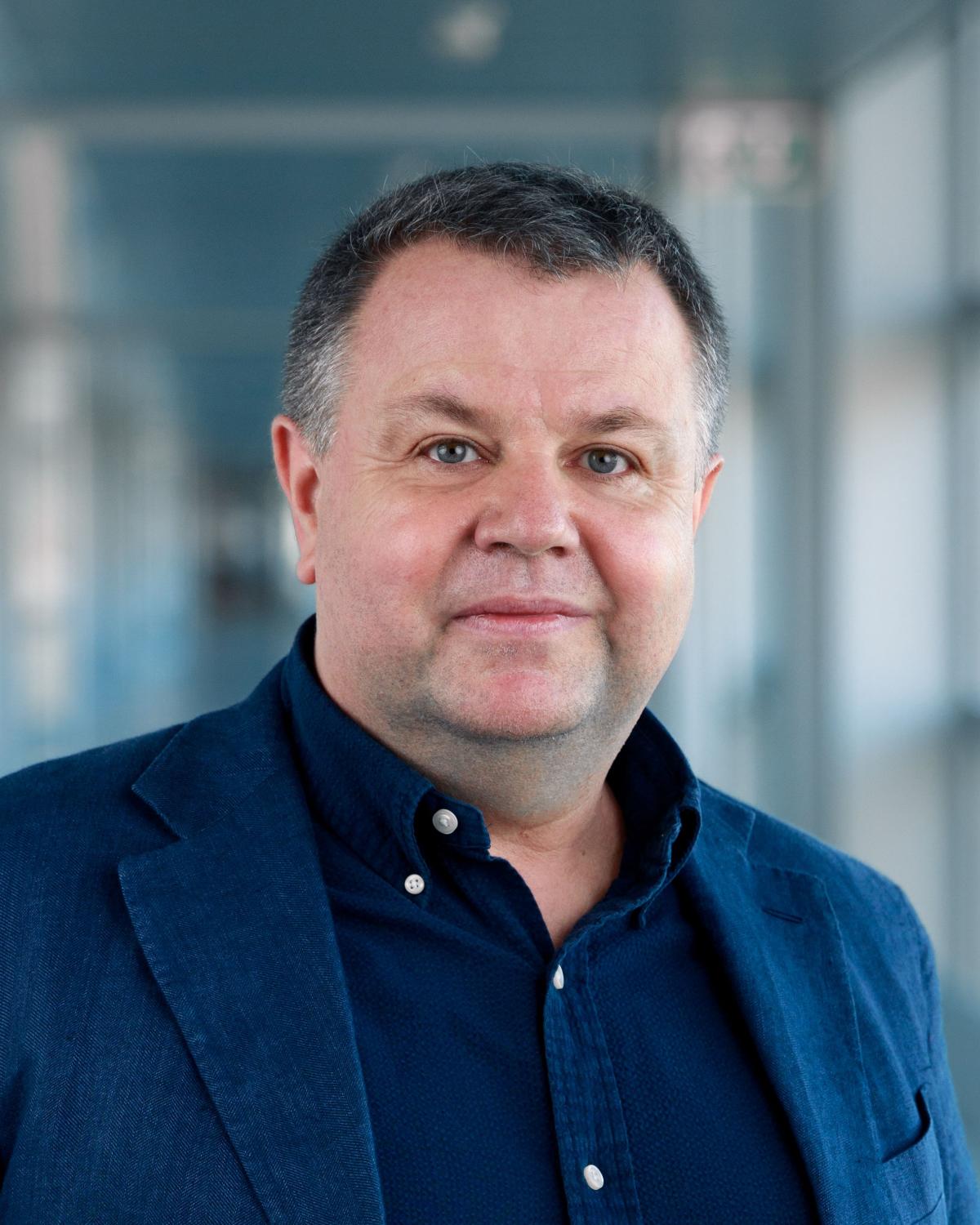
Jörg F. Löffler is a Full Professor of Metal Physics and Technology at the Department of Materials, ETH Zürich , where he has been since 2003. He previously served as Chairman of the Department (2010–2013) and holds Adjunct Professor positions at Tohoku University (Japan) and a Visiting Faculty role at Caltech. His research focuses on bulk metallic glasses , metallic biomaterials , and magnetic materials , combining synthesis, characterization, and applications in biomedical and structural contexts. Educations : Studied Physics and Materials Science at Saarland University (Germany), earned his doctorate at ETH Zurich and Paul Scherrer Institute on magnetism and neutron scattering (1997). Research Trends : Recent work explores additive manufacturing (e.g., laser powder bed fusion), biodegradable magnesium alloys for implants, and magneto-structural coupling in metallic glasses. Collaborative efforts integrate in situ analysis with computational modeling. Scientific Awards : International Magnesium Science and Technology Award (2023) MRS Fellow (2021) DGM 'Breakthrough' Prize (2016) Masing Memorial Prize (2005) ETH Zurich Medal (1998) Alexander von Humboldt Fellowship (1998-2001) Löffler advises the Department of Materials Science and Engineering at UC Davis and serves on editorial boards. His group at ETH Zürich investigates advanced metallic materials using synchrotron radiation and neutron scattering facilities.
Prof. Prita Pant is a faculty member in the Department of Metallurgical Engineering and Materials Science at the Indian Institute of Technology Bombay (IIT Bombay). She holds a Ph.D. and M.S. in Materials Science from Cornell University and a B.E. in Metallurgical Engineering from Roorkee University. Her research focuses on the mechanical behavior of advanced materials, particularly thin films and shape memory alloys. B.E., Metallurgical Engineering, Roorkee University (1997) M.S., Materials Science, Cornell University (2001) Ph.D., Materials Science, Cornell University (2004) Her research interests include mechanical behavior of thin films , dislocation dynamics , nanoindentation studies , simulation of deformation processes , and Ni-Ti based shape memory materials . She employs both experimental and computational techniques to investigate microstructural evolution and deformation mechanisms in metals. The available publications indicate a strong focus on thin film mechanics , dislocation behavior , and microstructure-property relationships , particularly under mechanical loading. Her work bridges computational modeling and experimental characterization, with applications in structural and functional materials. There are no scientific awards explicitly mentioned in the provided text. While no specific students are listed, Prof. Pant leads the Computational Mechanics and Experimental Group (CMEG@IITB) , indicating active supervision of graduate students and involvement in research grants. Her research group website suggests ongoing funded projects and collaborative work. She is affiliated with the Computational Mechanics and Experimental Group (CMEG@IITB) , which conducts research on multiscale mechanics of materials, combining simulation and experimentation to understand deformation phenomena.
Assoc Prof Ng Teng Yong is an Associate Professor at the School of Mechanical & Aerospace Engineering (NTU), specializing in numerical modeling and simulation. With a background as Research Manager at A*STAR Institute of High Performance Computing, his work spans materials science, nanotechnology, and aerospace engineering. Current focus on graphene-based desalination membranes Expertise in molecular dynamics simulations Investigates nanoscale fluid mechanics and structural dynamics Recent publications highlight advancements in energy-efficient electrodialysis, smart robotics, and nonlinear vibration analysis. His interdisciplinary approach integrates computational methods with experimental validation in additive manufacturing and soft material mechanics.
Anna Levina is an Assistant Professor for Computational Neuroscience at the University of Tübingen , affiliated with the Department of Computer Science under the Faculty of Science. Her research focuses on the self-organization of neuronal activity, critical dynamics in neural networks, and the excitation/inhibition balance in cortical circuits. Current positions: Assistant Professor (since 2018), Group Leader (2017-2018), Equality Officer (Computer Science) Previous roles: IST Fellow (2015-2017), Associated Researcher (2011-2015), Postdoc/PI (2011-2015), Postdoc (2008-2011) Her research integrates mathematical modeling , statistical physics , and computational neuroscience to study criticality phenomena, neural avalanches, and adaptive network dynamics. Key interests include: Self-organized criticality in neural systems Excitation/Inhibition balance mechanisms Network topology and dynamics Timescale analysis in neural processing Stochastic modeling of neural activity Recent publications reveal trends in understanding critical dynamics across biological and artificial networks, with applications to memory systems, sensorimotor integration, and disease modeling. She has received recognition as an IST Fellow .
Chris De Sa is an Associate Professor in the Department of Computer Science at Cornell University, affiliated with the Cornell Machine Learning Group and leading the Relax ML Lab. His research focuses on algorithmic, software, and hardware techniques for high-performance machine learning, particularly relaxed-consistency stochastic algorithms like asynchronous and low-precision stochastic gradient descent (SGD). He earned his Ph.D. from Stanford University under advisors Kunle Olukotun and Chris Ré. His work emphasizes constructing efficient, parallel, and distributed machine learning frameworks for deep learning and data analytics. Education: Ph.D. in Computer Science, Stanford University (2017) Research Interests: Algorithmic techniques for scalable ML, quantization, distributed optimization, hyperbolic geometry in ML, and reliable measurement of ML systems. His group develops frameworks for efficient inference/training and explores the intersection of ML with domains like agriculture and plant science through courses like PLSCI 7202. Recent Highlights: DARPA YFA Grant (2024), NSF CAREER Award, Google Research Scholar Award, and multiple best paper recognitions. Key contributions include QuIP quantization methods, Coneheads attention mechanisms, and theoretical advances in decentralized training. Awards: NSF CAREER Award DARPA YFA Grant (2024) Google Research Scholar Award Mr. & Mrs. Richard F. Tucker Teaching Award Grants & Advising: Advises 8 Ph.D. students (including Ruqi Zhang, Yucheng Lu, A. Feder Cooper) and holds leadership roles in MLSys conferences. Active in grant-funded research (e.g., NSF Robust Intelligence). Labs/Teams: Leads the Relax ML Lab and participates in Cornell’s Institute for Digital Agriculture (CIDA).
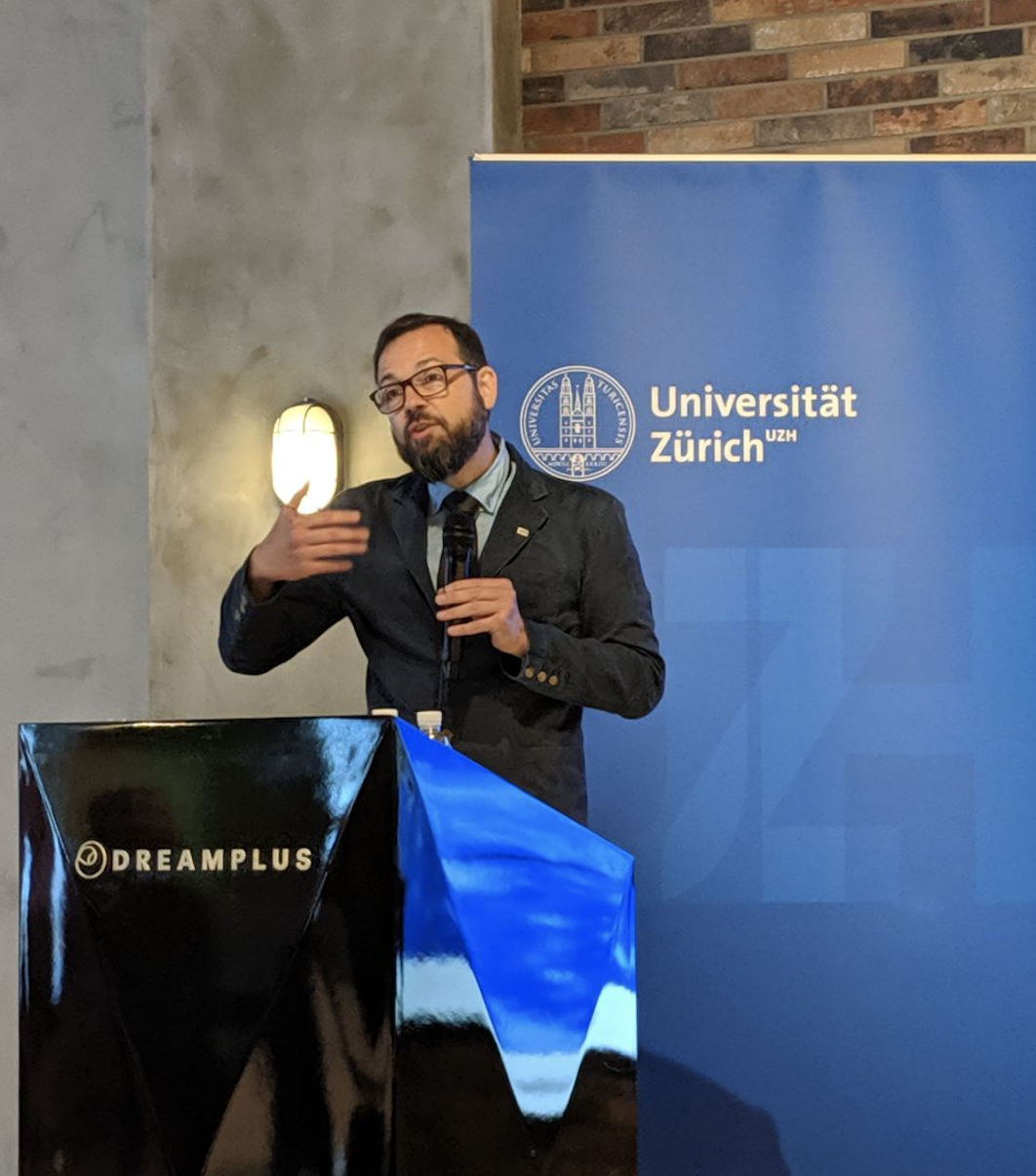
Prof. Claudio J. Tessone is a Professor of Blockchain and Distributed Ledger Technologies at the Department of Informatics, University of Zurich. He serves as Head of the Blockchain and Distributed Ledger Technologies group, Chairman of the UZH Blockchain Center, and is incharge of the NetSci Society. His academic background includes a PhD in Physics (Complex Systems) and an Habilitation in Complex Socio-Economic Systems from ETH Zurich. Education: PhD in Physics (2006): Thesis on synchronization in stochastic systems, Universitat de les Illes Balears, Spain Habilitation (2015): Thesis on agent-based modeling of socio-economic systems, ETH Zurich Master in Physics (1999): Thesis on stochastic resonance, Instituto Balseiro, Argentina Research Interests: Prof. Tessone specializes in modeling complex socio-economic and socio-technical systems, with a focus on blockchain-based systems. His work explores crypto-economics, blockchain scalability, decentralized finance (DeFi), and the interplay between micro-level agent behavior and macro-level emergent properties. Notable areas include transaction network analysis in Bitcoin/Ethereum, consensus mechanisms (Proof-of-Stake/Work), and blockchain governance models. Publications Trends: Recent articles emphasize empirical blockchain analysis (e.g., Ethereum microvelocity, Bitcoin mesoscopic structure), DeFi arbitrage strategies, and privacy-preserving blockchain applications in healthcare. His work bridges theoretical agent-based models with real-world blockchain datasets, addressing both technical and socio-economic dimensions of distributed ledger technologies. Grants & Labs: Director of the UZH Summer School on Blockchain and Certificate of Advanced Studies program. Active in interdisciplinary collaborations through the URPP Social Networks (2015–2021) and ETH Zurich’s Systems Design group (2007–2014). Labs/Initiatives: Leads the UZH Blockchain Center, a hub for academic-industry research on blockchain applications in finance, governance, and digital transformation.
H. Jerry Qi is a Professor in the Department of Mechanical Engineering at the Georgia Institute of Technology. He specializes in finite deformation multiphysics modeling of soft active materials, with a focus on shape memory polymers, 4D printing, and material recycling. His research integrates experimental and computational approaches to advance additive manufacturing technologies. Education: Sc.D., Massachusetts Institute of Technology, 2003 Ph.D., Tsinghua University, China, 1999 B.S., Tsinghua University, China, 1994 Research Interests: Dr. Qi's work spans 4D printing of active materials, mechanics in 3D printing, and sustainable polymer processing. His group develops hybrid printing methods and recyclable thermosetting polymers, collaborating with institutions like SUTD and AFRL. Key areas include smart material design, photomechanical experiments, and finite element modeling. Scientific Awards: ASME Fellow (2015) Woodruff Faculty Fellow (2015) J. T. Oden Faculty Fellowship (2012) NSF Career Award (2007) Advising & Grants: Dr. Qi actively seeks undergraduate, PhD, and postdoc researchers. His projects are funded by NSF, AFOSR, and industry partnerships. He leads a research group focused on advancing active materials and sustainable manufacturing. Labs & Teams: His lab integrates computational modeling, experimental mechanics, and additive manufacturing to create innovative materials and structures for applications in aerospace, biomedical, and environmental engineering.
Dr. Hilde Kuehne is a Professor at the University of Tuebingen and a key researcher at the Tuebingen AI Center. She holds affiliations with MIT-IBM Watson AI Lab and Goethe University Frankfurt, with a focus on computer vision, multimodal learning, and explainable AI. Her work bridges vision-language models, audio-visual alignment, and self-supervised methods. Co-organizer of the New Frontiers in Associative Memories workshop @ ICLR 2025 Member of the Scientific Advisory Board of the Carl-Zeiss-Foundation Contributor to CVPR 2025's UTD dataset for unbiased video benchmarks Her research addresses critical challenges in: Explainability for Vision Transformers (LeGrad) Fine-grained audio-visual alignment (CAV-MAE Sync) Zero-shot visual recognition automation (Meta-Prompting) Spatio-temporal grounding without annotations Recent collaborative work spans 15+ publications across CVPR, NeurIPS, ICCV, and ICLR, with emphasis on multimodal foundation models, dataset bias mitigation, and differentiable logic networks. She actively contributes to workshop organization and peer review as evidenced by her involvement in CVPR 2025 and ICLR 2025 program committees.
Ravid Shwartz-Ziv is an Assistant Professor and Faculty Fellow at NYU's Center for Data Science, with a dual role as Senior Research Scientist at Wand AI. His research bridges theoretical foundations and practical applications in artificial intelligence, focusing on Large Language Models (LLMs), information theory, and neural network interpretability. Ph.D. in Computational Neuroscience, Hebrew University of Jerusalem (2021) B.Sc. in Computer Science and Computational Biology, Hebrew University of Jerusalem (2014) His research spans: Developing min-p sampling for LLM text generation Preventing representation collapse in Transformers Creating contamination-free LLM benchmarks like LiveBench Advancing information-theoretic frameworks for neural networks Exploring representation learning and model adaptation Recent publications demonstrate expertise in LLM efficiency, self-supervised learning, and multi-agent systems. Notable awards include the Google PhD Fellowship, Moore-Sloan Fellowship, and multiple best paper recognitions. He has led research initiatives at Intel and Google AI, focusing on neural network compression, XGBoost comparisons for tabular data, and innovative benchmarking frameworks.
Conrad Watt is an Assistant Professor at Nanyang Technological University (NTU), Singapore , specializing in WebAssembly, formal verification, and concurrency. He previously served as a Research Fellow at Peterhouse, University of Cambridge, and earned his PhD under Peter Sewell. Co-chair of the W3C WebAssembly Community Group Active in WebAssembly standards development, including concurrency specifications Developed mechanizations in theorem provers like Isabelle/HOL Collaborator with industry (wasmtime engine) and academic teams on verification tools Research Focus: Formal verification of low-level languages, concurrency models, and security mechanisms for WebAssembly. His work bridges theoretical rigor with practical applications, including WasmRef-Isabelle and threads projects. Recent Trends: 2025 publications explore separation logic automation and concurrency experiments, while 2024-2023 work emphasizes specification toolchains (SpecTec), verified interpreters, and memory-safe execution techniques. Scientific Awards ACM Doctoral Dissertation Award Honorable Mention EAPLS Best Dissertation Award Advising: Supervises PhD students Qiyuan Xu and Antanas Kalkauskas. Collaborates with researchers like Philippa Gardner and Jean Pichon-Pharabod.
Ebrahim Bedeer Mohamed is an Assistant Professor in the Department of Electrical and Computer Engineering at the University of Saskatchewan. He joined in July 2019, following roles as an Assistant Professor (Lecturer) at Ulster University, UK, and postdoctoral fellowships at Carleton University and the University of British Columbia. He holds a Ph.D. (Distinction) from Memorial University of Newfoundland (2014), with expertise in signal processing and wireless communications. His research focuses on optimizing communication systems through advanced signal processing techniques, including faster-than-Nyquist signaling, IoT network design, AI integration, and energy-efficient protocols. Key areas include next-generation communication networks, non-orthogonal modulation, and MIMO systems. Notable contributions include work on channel estimation for FTN signaling, RIS-aided wireless systems, and LR-FHSS protocols in IoT. His publications span spectral efficiency, interference minimization, and energy management in 5G/6G contexts. He actively seeks Ph.D. students with strong backgrounds in signal processing fundamentals. Awards and grants are not explicitly listed in the provided texts. His work emphasizes practical applications, such as UAV trajectory optimization for IoT data collection and energy-efficient caching strategies in dynamic networks.
Gianni Dal Maso is a Professor of Mathematical Analysis at the International School for Advanced Studies (SISSA) in Trieste, Italy. He has been a faculty member at SISSA since 1985, first as Associate Professor and then as Full Professor since 1987. He has held several leadership positions at SISSA including Head of the Sector of Functional Analysis and Applications (1993-1998, 2001-2010), Deputy Director (2010-2015), and Coordinator of the Mathematics Area (2016-2020). His educational background includes: 1973-1977: Undergraduate student in Mathematics at the University of Pisa and Scuola Normale Superiore 1977: Degree in Mathematics with honors at the University of Pisa (thesis: "Gamma-limits of set functions," advised by Ennio De Giorgi) 1977: "Diploma" in Mathematics from the Scuola Normale Superiore 1977-1981: Post-graduate Research Fellowship in Mathematics ("Perfezionamento") at the Scuola Normale Superiore Dal Maso's research focuses on the Calculus of Variations, with particular emphasis on semicontinuity and relaxation problems, Gamma-convergence, and more recently, free discontinuity problems and their applications to mechanics. His work bridges pure mathematical analysis with practical applications in material science, particularly in plasticity and fracture mechanics. He has developed mathematical frameworks for understanding crack propagation, material failure, and the behavior of solids under stress, contributing significantly to both theoretical foundations and practical modeling approaches in these areas. His extensive publication record shows a clear evolution from foundational work in Gamma-convergence (culminating in his influential book "An Introduction to Gamma-Convergence" in 1993) toward increasingly sophisticated models of material behavior, particularly in fracture mechanics and plasticity. Recent work demonstrates continued innovation in handling complex discontinuities, non-local effects, and multi-scale phenomena in material science applications. Among his notable scientific recognitions: 1982: Stampacchia Prize, awarded by the Scuola Normale Superiore 1990: Caccioppoli Prize, awarded by the Italian Mathematical Union 1996: Medaglia dei XL per la Matematica, awarded by the Accademia Nazionale delle Scienze detta dei XL 2003: Prize of the Minister for the Cultural Heritage for Mathematics and Mechanics, awarded by the Accademia Nazionale dei Lincei 2005: Prize Luigi and Wanda Amerio, awarded by the Istituto Lombardo Accademia di Scienze e Lettere Dal Maso has supervised 42 PhD students at SISSA, demonstrating a strong commitment to academic mentorship. His research has been significantly supported by multiple National Research Projects (PRIN) in Italy, and notably by an ERC Advanced Grant "Quasistatic and Dynamic Evolution Problems in Plasticity and Fracture" (QuaDynEvoPro) from 2012-2017, where he served as Principal Investigator. This major project focused on nonlinear evolution problems in plasticity and fracture, with three main research directions: plasticity with hardening and softening, quasistatic crack growth, and dynamic fracture mechanics. His scholarly activities extend to editorial service, with membership on the boards of numerous prestigious journals including Archive for Rational Mechanics and Analysis, SIAM Journal on Mathematical Analysis, and Journal of Convex Analysis. He has also been active in the mathematical community through membership in scientific committees and academies, including the Accademia Nazionale dei Lincei since 2014.
Santiago Segarra is the W. M. Rice Trustee Associate Professor in the Department of Electrical and Computer Engineering at Rice University, with courtesy appointments in Computer Science and Statistics. He joined Rice in 2018 and collaborates with Microsoft Research since 2022. His expertise spans network theory, machine learning, graph signal processing, and optimization. Segarra earned his B.Sc. in Industrial Engineering from ITBA (2011), and M.S. and Ph.D. in Electrical and Systems Engineering from the University of Pennsylvania (2014-2016), followed by a postdoc at MIT (2016-2018). Research Focus: His work integrates algebraic topology, signal processing, and machine learning to analyze networked systems. Key areas include social/technological network clustering, graph-based data analysis, and applications in neuroscience and communication networks. Recent projects address fair graph learning, distributed GNN training, and network topology inference. Awards: Penn’s Wolf Award for Best Dissertation (2017), Argentine National Engineering Honors (2011), and ITBA’s Best Thesis Award (2011). Grants/Sponsors: Supported by NSF, ONR, and industry collaborations. Labs/Groups: Leads the Rice Wireless group and collaborates with Microsoft Research on applied network science. Advises students in interdisciplinary research combining theory and real-world applications.