Max Planck Institute for Gravitational PhysicsGermany
Aurore Betranhandy is a Researcher in the field of Numerical and Relativistic Astrophysics, based at an academic institution in Potsdam, Germany. She can be contacted via email at aurore.betranhandy@... . Research Focus: Her work centers on computational astrophysics and relativistic models, advancing the study of high-energy cosmic phenomena through numerical simulations. Contact Information: Located at Am Mühlenberg 1, 14476 Potsdam , she is reachable by phone at +49 331 567-7122 .
Max Planck Institute for Gravitational PhysicsGermany
Harald Pfeiffer is a Professor at the University of Potsdam and Group Leader in the Astrophysical and Cosmological Relativity department at the Max Planck Institute for Gravitational Physics (Albert Einstein Institute) in Potsdam. His research focuses on numerical relativity and gravitational wave astrophysics, particularly simulations of black hole and neutron star mergers to interpret observations from detectors like LIGO and Virgo. He holds a PhD from Cornell University and has held academic roles at the Canadian Institute for Theoretical Astrophysics (2009–2017). Notably, he was elected a Fellow of the American Physical Society in 2023 for his contributions to numerical relativity. His expertise includes developing computational tools to solve Einstein’s equations on supercomputers and analyzing gravitational wave data. Key interests include understanding spacetime behavior during mergers, improving waveform models, and preparing for future detectors like LISA. He collaborates extensively with international initiatives such as the LIGO Scientific Collaboration. Selected Awards: Fellow of the American Physical Society (2023) Research and Grants: His work bridges theoretical advances and observational data, contributing to waveform catalogs and detector sensitivity improvements. He leads a team advancing numerical relativity techniques for next-generation gravitational wave astronomy. Labs/Teams: Leads the Astrophysical and Cosmological Relativity group at the Max Planck Institute, fostering interdisciplinary research in gravitational wave science.
Prof. Jürgen Müller is a Full Professor at the Institute of Geodesy, Leibniz University Hannover, leading research in physical geodesy, satellite gravimetry, and relativistic geodesy. He holds positions as Executive Director of the Institute and contributes to global geodetic initiatives like the Global Geodetic Observing System (GGOS). His work focuses on advancing quantum technologies for Earth observation, including cold atom interferometry and optical clocks, to enhance gravity field measurements and test fundamental physics principles. Research Interests: Müller's expertise spans gravimetric Earth observation, lunar laser ranging (LLR), relativistic geodesy, and the application of quantum sensors in space missions. His team explores novel sensor concepts for future satellite gravimetry, such as hybrid accelerometers and gravity gradiometry systems, addressing challenges in climate monitoring and Earth system dynamics. Publications Overview: His recent work emphasizes quantum accelerometers for satellite missions, deployable solar panels for GRACE-like satellites, and LLR-based tests of general relativity. Key contributions include improving Earth rotation parameter estimation and exploring optical clock networks for height system unification. Grants & Collaborations: Müller collaborates on international projects like the CARIOQA quantum pathfinder mission and the GENESIS space observatory. He leads teams in simulating quantum sensor performance and analyzing LLR data for lunar and Earth dynamics studies. Labs/Teams: As head of the Institute of Geodesy, he oversees research groups working on quantum gravimetry, space geodesy, and geodetic reference systems, leveraging facilities like the 10-meter atom interferometer at Hannover.
Prof. Dr. Michael Kramer is a Professor of Astrophysics at the University of Manchester and a Scientific Member (Managing Director) at the Max Planck Institute for Radio Astronomy. He leads the COMPACT Research Group and specializes in radio astronomical fundamental physics. University of Manchester: Professor for Astrophysics Max Planck Institute for Radio Astronomy: Managing Director, Radio Astronomical Fundamental Physics Research Interests: Dr. Kramer focuses on pulsars , neutron stars , and gravitational physics , using these as tools to test general relativity , detect gravitational waves , and study transients in the Milky Way. Recent Research Trends: His 15 most recent publications emphasize fast radio bursts (FRBs) , axion dark matter searches , black hole imaging , and pulsar timing arrays for gravitational wave detection. Studies include the M87 jet, Galactic Center magnetars, and MeerKAT telescope optimizations.
Max Planck Institute for Gravitational PhysicsGermany
Prof. Masaru Shibata is a leading figure in computational relativistic astrophysics, currently serving as Director at the Max Planck Institute for Gravitational Physics (Albert Einstein Institute) since 2018 and Professor at Kyoto University's Yukawa Institute for Theoretical Physics since 2009. His career spans multiple prestigious institutions including University of Tokyo and Osaka University. PhD in Physics, Kyoto University (1994) Graduate studies in Physics, Kyoto University (1989-1993) Undergraduate in Science, Tokyo Institute of Technology (1985-1989) As a Professor with primary focus on Relativistic Astrophysics , Shibata's research investigates gravitational wave sources , neutron star mergers , black hole formation , and multimessenger astrophysics . His work combines general relativistic simulations , magnetohydrodynamic modeling , and neutrino radiation studies to understand high-energy cosmic phenomena. Recent publications (2024-2025) demonstrate expertise in supermassive star collapse , binary neutron star merger dynamics , and black hole-torus systems . These studies employ advanced numerical relativity techniques with applications to gravitational wave astronomy and gamma-ray burst modeling . 2025 Japan's Medal of Honor (Shiju-houshou) 2018 Nishina Memorial Prize 2013 International Society of General Relativity and Gravitation Fellow 2010 JSAP Excellent Young Researchers Prize 2008 Physical Society of Japan Outstanding Paper Award 2003 Nishinomiya-Yukawa Memorial Prize Shibata contributes to both theoretical frameworks and computational methodology in relativistic astrophysics, maintaining active collaborations with international research teams while leading computational projects at his dual institutions.
Rhenish Friedrich Wilhelm University of BonnGermany
Cristiano Porciani is Professor of Astrophysics at the University of Bonn's Argelander Institute for Astronomy, specializing in cosmological structure formation and galaxy evolution. He leads a research group working on numerical simulations of large-scale structure and theoretical cosmology. His research focuses on dark matter distribution, galaxy bias, and cosmological parameter estimation using perturbation theory and high-performance computing. Recent work examines relativistic effects in large-scale structure and intensity mapping techniques. Publications show strong emphasis on Euclid mission science, including instrument characterization, survey simulations, and cosmological tests. Article trends reveal consistent development of statistical methods for analyzing next-generation sky surveys. Supervises 9 graduate students working on cosmological simulations, galaxy clustering statistics, and radiative transfer modeling. Leads research projects within the Euclid Consortium and Transregional Collaborative Research Centre.
Zoltán Harman is a Leading Scientist at the Max Planck Institute for Nuclear Physics (MPIK) in Heidelberg, Germany, and is affiliated with Heidelberg University. He conducts cutting-edge research in atomic physics, quantum electrodynamics, and precision measurements, particularly using highly charged ions and Penning trap techniques. He holds a habilitation in physics from Heidelberg University and regularly lectures there on advanced topics such as quantum electrodynamics and theoretical physics. Research Interests: Quantum Electrodynamics (QED) in strong fields Precision spectroscopy of highly charged ions g-factor measurements and tests of fundamental physics Development of atomic clocks using highly charged ions Determination of fundamental constants (e.g., electron mass, fine-structure constant) Searches for new physics beyond the Standard Model, including fifth forces Neutrino mass determination via Penning trap measurements His recent publications (2024–2025) focus on high-precision g-factor measurements in ions like tin and beryllium, two-loop QED calculations, King plot analyses for new boson searches, and neutrino mass studies. These works appear in top journals such as Nature , Physical Review Letters , and Science , reflecting his leadership in precision atomic physics. Scientific Awards and Grants: Postdoctoral scholarship from the Max Planck Society (2005–2007) EMMI Visiting Professor Scholarship (2012, 2013) Erasmus student scholarship (1999–2000) Primary investigator of the ISOQUANT Collaborative Research Centre (SFB1225) Teaching and Advising: Harman has been a regular lecturer at Heidelberg University since 2008, teaching courses in quantum electrodynamics, theoretical physics, and experimental physics. He co-organizes advanced lecture series and supervises student research projects, including poster sessions and talks. He is also a lecturer in the International Max Planck Research School on Quantum Dynamics. Research Group and Collaborations: Harman is a key member of the quantum dynamics group at MPIK, led by Prof. Christoph H. Keitel. His work involves close collaboration with experimental teams at MPIK, GSI, and Heidelberg University, combining theoretical and experimental efforts in precision physics. He is actively involved in major projects such as PENTATRAP and ALPHATRAP, which aim to push the limits of atomic and nuclear measurements.
Matteo Tamburini is a Group Leader at the Max Planck Institute for Nuclear Physics (MPIK) in Heidelberg, leading the Extreme Field Quantum Plasma Dynamics and Relativistic Laboratory Astrophysics group. He also serves as a Lecturer at the International Max Planck Research School in Quantum Dynamics (IMPRS-QD). His academic journey includes a PhD in Physics from the University of Pisa, Italy, and postdoctoral research at MPIK. Research Interests: Tamburini specializes in quantum plasma dynamics, strong-field quantum electrodynamics (QED), and high-intensity laser-plasma interactions. He focuses on topics such as radiation reaction effects, relativistic astrophysical simulations, and the generation of ultra-high energy particles and gamma-ray bursts. His work bridges theoretical modeling with experimental validation at facilities like FACET-II (SLAC), Gemini (UK), and DESY. Experimental Contributions: Key projects include devising experiments to probe quantum radiation reaction (E-332, E-320, E-305), developing the SFQEDtoolkit for QED simulations, and advancing polarized laser-wakefield acceleration. His research often involves close collaboration with international teams and leverages cutting-edge facilities like the Gemini laser and FACET-II. Awards & Service: Tamburini is recognized as an IOP trusted reviewer for peer review excellence. He organizes the Seminar Theoretical Quantum Dynamics and contributes to reviewing for journals like Physical Review Letters and Nature Physics. He has secured significant funding, including a 4-year scholarship for student Michael Quin. Lab/Teams: Leads the Extreme Field Group at MPIK, focusing on advancing understanding of quantum plasma phenomena and relativistic astrophysical processes through theoretical and computational approaches.
Prof. Dr. Jan Nagler is an Associate Professor of Computer Science at Frankfurt School of Finance & Management and Director of the Center for Human and Machine Intelligence since 2023. His career spans institutions like Boston University, Max-Planck-Institute for Dynamics and Self-Organization, and ETH Zurich. PhD in Dynamical Systems (Chaos in Astrophysics) Postdoctoral research: Networks, Econophysics, and Risk Modeling Research interests: Networked Stochastic Systems, Game Theory, Phase Transitions, Ethically Aligned AI His work bridges physics, biology, and socio-economic systems, focusing on explanatory and predictive modeling of real-world dynamics. Recent publications analyze network disruption , percolation universality , and contagion dynamics . He leads the Deep Dynamics Group , which explores ethical AI design and cross-disciplinary system dynamics in finance, ecology, and socio-technological systems.
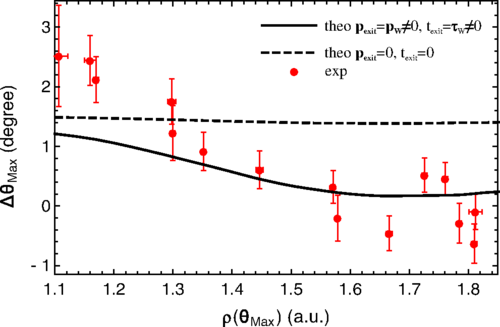
Karen Z. Hatsagortsyan is a Group Leader at the Max Planck Institute for Nuclear Physics in Heidelberg, Germany. Her research focuses on the interaction of ultrastrong laser fields with matter, spanning relativistic and nonperturbative quantum electrodynamics (QED), strong-field ionization dynamics, and plasma diagnostics using polarization properties of ejected particles. She collaborates with experimental facilities like DESY , SLAC , and the European Extreme-light-infrastructure (ELI) , and has contributed to proposals such as the LUXE experiment and FACET-II for testing nonlinear QED effects. Research Interests : Relativistic ionization and sub-barrier electron dynamics Spin polarization effects in high-energy laser interactions Gamma-ray and x-ray source development via nonlinear QED Plasma diagnostics through polarization measurements Recent Publications demonstrate advancements in ultrashort time delay measurements ( Phys. Rev. Lett. 2022 ), polarization transfer in positron beam generation ( Phys. Rev. Lett. 2019 ), and attosecond-resolved plasma field analysis ( Phys. Rev. Res. 2022 ). Her work bridges theoretical predictions with experimental validation, particularly in attoclock protocols, Coulomb focusing, and laser-based collider concepts.
Achim Schwenk is a Professor at Technische Universität Darmstadt specializing in theoretical nuclear physics, strongly-interacting many-body systems, ultracold quantum gases, and nuclear astrophysics. His research bridges fundamental nuclear interactions with astrophysical phenomena like neutron stars. His work focuses on ab initio calculations, effective field theory, and dense matter properties. Recent publications highlight applications to neutron star equations of state, neutrinoless double beta decay, and nuclear structure uncertainties. Scientific awards and honors are not explicitly mentioned in the provided text. His research group at TU Darmstadt utilizes advanced theoretical frameworks like chiral effective field theory and many-body perturbation theory.
Natalia S. Oreshkina is a researcher at the Max Planck Institute for Nuclear Physics (MPIK) in Heidelberg, Germany, with a focus on atomic and nuclear physics. She holds a Habilitation and Venia Legendi from Heidelberg University (2019) and a PhD from Saint-Petersburg State University (2008). Her research interests include heavy muonic atoms, relativistic atomic structure, QED effects, nuclear deformation in ions, and precision spectroscopy. She has been a PostDoc at MPIK since 2011 and previously held postdoctoral and fellow positions at Saint-Petersburg State University. Education: Habilitation in Physics, Heidelberg University (2019) PhD in Physics, Saint-Petersburg State University (2008) M.Sc. in Physics, Saint-Petersburg State University (2004) B.Sc. in Physics, Saint-Petersburg State University (2001) Research Interests: Spectra of heavy muonic atoms, variation of fundamental constants, relativistic atomic structure, electron correlation and QED effects, nuclear deformation in highly charged ions, time-dependent dynamics in laser fields, hyperfine splitting, g-factors, and kaonic atoms. Publications & Talks: Oreshkina has authored/co-authored over 50 peer-reviewed articles, including recent work on muonic atom spectroscopy, nuclear radii determinations, and QED corrections in unstable vacuum. She frequently presents at international conferences and workshops, such as the 45th EAS Meeting (2025) and the REHE Conference (2024), focusing on exotic atoms and precision measurements. Labs & Collaborations: She collaborates with teams at MPIK, the University of Groningen, and other institutions on projects involving trapped ions, laser spectroscopy, and nuclear physics. Her work contributes to experiments like the ALPHATRAP and collaborations on muonic X-ray measurements.
Max Planck Institute for Gravitational PhysicsGermany
Karsten Danzmann is a Professor at Leibniz Universität Hannover and Director of the Max Planck Institute for Gravitational Physics (Albert Einstein Institute) since 2002. He leads the Laser Interferometry and Gravitational Wave Astronomy department, focusing on advanced technologies for gravitational wave detection. Education : Diploma in Physics (1977), Universität Hannover PhD in Atomic and Molecular Physics (1980), Universität Hannover His research interests span gravitational wave astronomy, laser interferometry, quantum measurement, and space-based detector technology. He pioneered key innovations at the GEO600 detector, including squeezed light implementation and high-power lasers, now used in LIGO, Virgo, and KAGRA. He also leads the LISA space mission consortium for low-frequency gravitational wave detection in space. Scientific awards : Honorary Doctorate (RWTH Aachen, 2025) Edison Volta Prize (2018) Princess of Asturias Award (2017) Gruber Prize (2016) Hall of Fame der deutschen Forschung (2019)
Max Planck Institute for Gravitational PhysicsGermany
Aldo Javier Gamboa Castillo is a doctoral student at the International Max Planck Research School under the Astrophysical and Cosmological Relativity department, located in Potsdam, Germany. His research centers on eccentric compact binaries and the gravitational wave signals they emit using the Effective-One-Body formalism. Education: Bachelor of Science in Physics (2016-2020) from the National Autonomous University of Mexico (UNAM) Master of Science in Physics (2020-2022) from UNAM, focusing on general relativistic accretion of kinetic gases around black holes Research Focus: Aldo’s work addresses the critical need for accurate modeling of eccentric binary systems to enhance gravitational wave data analysis. His research leverages the Effective-One-Body framework to provide non-perturbative resummed estimates of two-body dynamics, ensuring robust waveform templates for parameter estimation. Collaborations & Affiliations: He is supervised by Prof. Dr. Alessandra Buonanno and contributes to advancing astrophysical relativity with the international research group.
Daniela Doneva, Ph.D., is a Lecturer at the Institute for Astronomy and Astrophysics (IAAT) , University of Tübingen. Her work spans theoretical and computational astrophysics, focusing on nonlinear gravitational phenomena in modified theories of gravity. Key affiliations: Institute for Astronomy and Astrophysics (IAAT), University of Tübingen Degree: Ph.D. in Physics Research interests include: Black Hole Scalarization : Spin-induced and curvature-induced scalarization mechanisms in black holes and neutron stars. Modified Gravity Theories : Einstein-Gauss-Bonnet, scalar-tensor theories, and teleparallel gravity extensions. Gravitational Wave Physics : Modeling waveforms, stability analysis, and LISA mission applications. Numerical Relativity : Simulations of compact object mergers and nonlinear evolutions. Her publications emphasize computational methods (e.g., neural network surrogates), stability analysis, and observational constraints from gravitational wave detectors like LISA. No scientific awards or student advisement details were found in the provided texts.