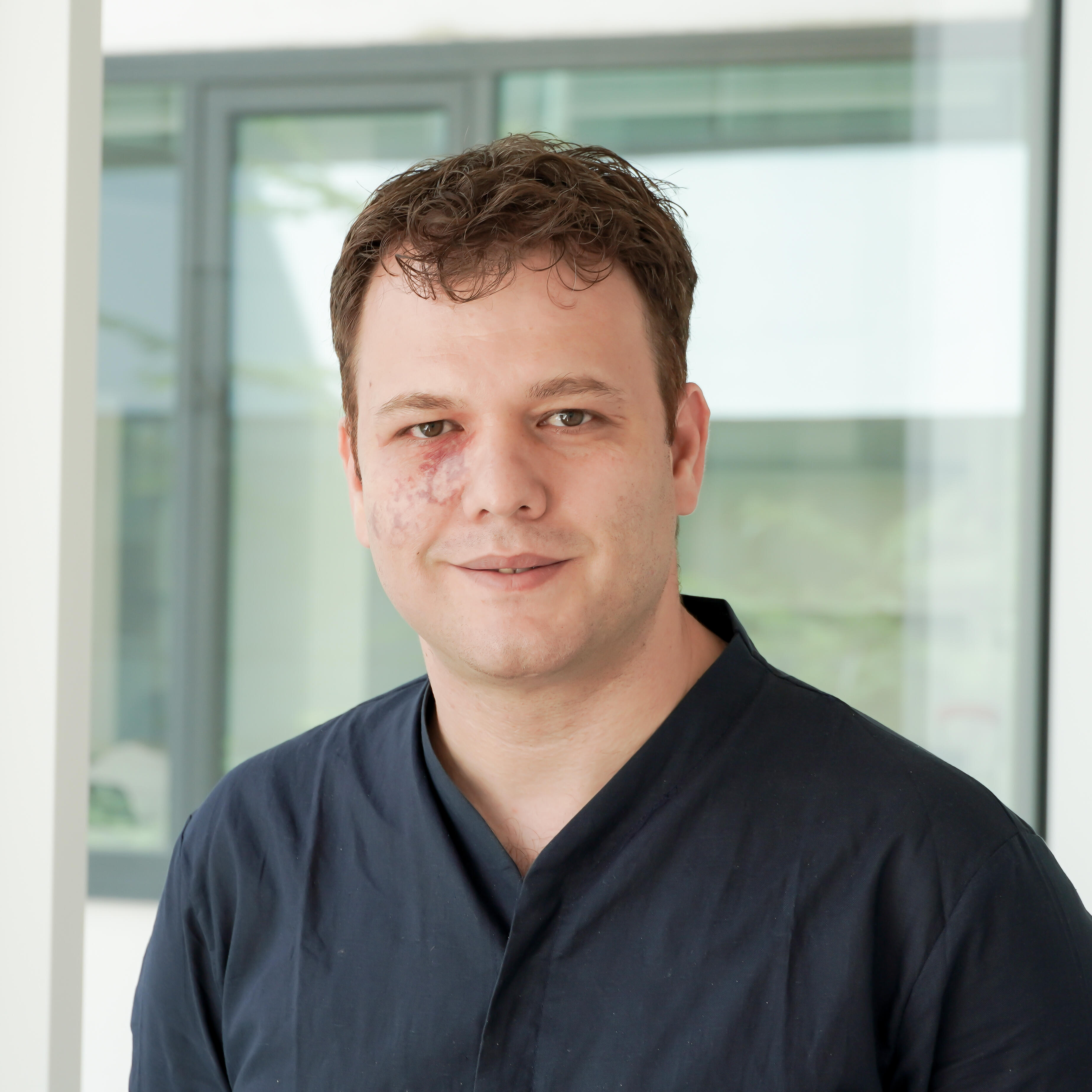
Gabriel Kalweit is a Researcher at the Neurorobotics Lab, University of Freiburg, where he has been affiliated since 2017. He completed his doctoral thesis in 2022 at the university's Technical Faculty on reinforcement learning under advisors Joschka Boedecker and Martin Riedmiller. His research focuses on interdisciplinary applications of artificial intelligence, particularly in oncology, reinforcement learning, and medical imaging. Research interests span: AI-optimized cancer therapy and treatment personalization Explainable AI methods for medical diagnostics Reinforcement learning for biological systems and robotics Computational pathology and cell analysis techniques His recent publications demonstrate strong focus on medical AI applications, with 80% of 2023-2025 works involving oncology-related machine learning. Research frequently combines reinforcement learning with biomedical challenges like antibody design, therapy dosing, and tumor detection. Awards/Honors: Nominated for IEEE ICRA Best Paper Award in Cognitive Robotics (2020) for work on affordance learning Kalweit collaborates extensively within the Neurorobotics Lab and BrainLinks-BrainTools research center, with frequent co-authorship with Maria Kalweit, Joschka Boedecker, and oncology specialists. Current work emphasizes real-time adaptive cancer therapy systems and foundation models for medical imaging.
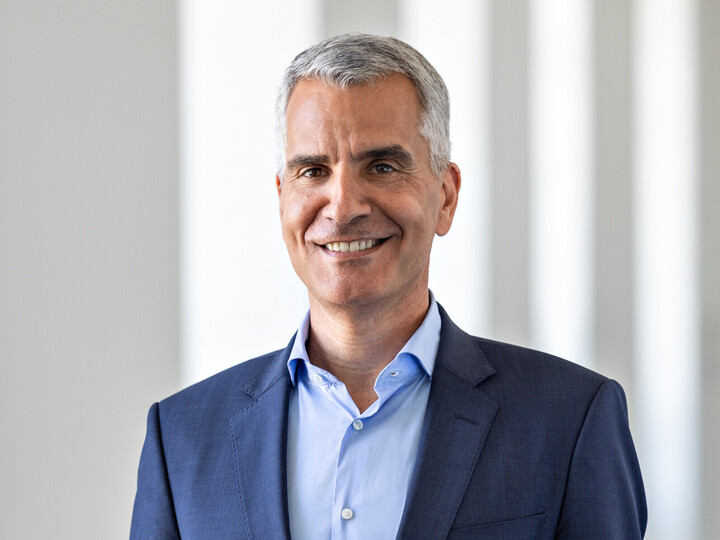
Professor Thomas Fetzer serves as President of the University of Mannheim and holds the Chair of Public Law, Regulatory Law and Tax Law since 2012. He concurrently serves as an adjunct professor at the University of Pennsylvania's Center for Technology, Innovation and Competition and previously held judicial office at Baden-Württemberg's administrative court (2020-2021) and served as the university's Vice-President for Strategic Planning (2021-2022). His educational background includes: Law studies at University of Mannheim and Vanderbilt University Habilitation at University of Mannheim (2009) on state competition in dynamic markets Fetzer's research critically examines regulatory frameworks through dual lenses of digital market evolution and political economy. His work on algorithmic collusion and telecommunications regulation confronts AI-driven market distortions, while his scholarship on nationalism in political economy deconstructs ideological intersections with economic systems. This interdisciplinary approach bridges legal theory with real-world regulatory challenges in rapidly evolving digital landscapes. Analysis of his recent publications reveals three dominant trajectories: (1) Technical regulatory mechanisms in telecommunications (40% of works), (2) Algorithmic market behavior and antitrust enforcement (30%), and (3) Nationalism's economic manifestations (30%). His German-language commentaries on the Telecommunications Act demonstrate deep engagement with EU regulatory harmonization. No scientific awards are documented in the provided materials. While specific advising roles remain unreported, his leadership positions indicate extensive institutional mentorship. His judicial experience and strategic planning portfolio suggest significant grant oversight responsibilities, particularly in digital infrastructure initiatives like Germany's RaGiga project. The absence of explicit lab affiliations contrasts with his focus on regulatory implementation frameworks.
Claudia Traidl-Hoffmann is a Professor of Environmental Medicine at the University of Augsburg and Director of the Institute of Environmental Medicine at Universitätsklinikum Augsburg. She also leads the Institute of Environmental Health at Helmholtz Munich and serves as Speaker of the Scientific Board of CK CARE, Europe’s largest privately funded allergy research initiative. Her work spans interdisciplinary collaborations across national and multinational networks. Research Interests include environmental drivers of allergic immune responses, climate change impacts on health, microbiome dynamics in disease prevention, personalized allergy prevention strategies, and planetary health integration into clinical practice. She emphasizes the role of aeroallergens, environmental biomarkers, and Big Data analysis in public health. 2024 Articles highlight her leadership in pollen forecasting models, skin microbiome interactions in radiodermatitis, and nocturnal heat-stroke risk correlations. 2023-2021 Articles cover tools like MicrobIEM for microbiome analysis, planetary health policy, climate change-allergy links, and cytokine-based precision treatments for COVID-19. Scientific Awards include EAACI Fellow (2020), ADF/ECARF Award (2019), DGAKI-Forschungspreis (2018), Oskar-Macher-Preis (2015), and Egon-Macher-Preis (2011). Her affiliations include the German Advisory Council on Global Change (WBGU), Robert Koch Institute’s Environmental Public Health Commission, and KLUG e.V., where she advocates for climate resilience education across diverse audiences.
Özgün Gökce is a Professor at the Medical Faculty of the University of Bonn and affiliated with the German Center for Neurodegenerative Diseases (DZNE) in Bonn, Germany. His research group operates at the intersection of quantitative genomics and neuroscience, developing cutting-edge methodologies to investigate age-related brain disorders. His research focuses on decoding cellular aging responses and molecular mechanisms underlying neurodevelopmental and neurodegenerative disorders. The lab integrates multi-disciplinary approaches including single-cell RNA sequencing, spatial transcriptomics, electron microscopy, and machine learning algorithms to achieve holistic understanding of complex biological processes in brain aging and disease. Recent publications reveal strong trends in applying multi-omics techniques to study lipid metabolism dysregulation in neurodegenerative contexts (particularly C9orf72-related ALS/FTD) and exploring cardiovascular-neurodegenerative disease connections through chemokine biology. The work bridges neuroscience, genomics, and computational biology to address fundamental questions in brain pathology. The Gökce Lab functions as a synergistic multi-disciplinary team at the forefront of quantitative neuroscience, utilizing advanced genomic technologies within the Bonn Center of Immunology ecosystem to tackle critical challenges in age-related brain disorders.
Prof. Dr. Alan Akbik is a Professor at the Humboldt University of Berlin , leading the Chair of Machine Learning within the Institute of Computer Science . His research focuses on Natural Language Processing (NLP) and the development of open-source tools like Flair NLP . Research Interests: LLM architecture, knowledge distillation, zero-shot evaluation, named entity recognition, synthetic data analysis, and model robustness. Articles Trends: Recent work spans NLP tasks (entity disambiguation, fact learning), LLM applications (code generation for 3D geometry), and benchmarking tools (MastermindEval, LM-Pub-Quiz). Grants: Funded by BMBF for industry collaboration, EXIST startup grant for FactorizeBio , and IBB Forschungstransfer project. Lab Members: New PhD student Piet Wagner (2025) and researcher Pieter Delobelle (2024), focusing on German/Dutch LLMs.
Prof. Johann-Christoph Freytag is a faculty member at the Institute of Computer Science within Humboldt University of Berlin's Faculty of Mathematics and Natural Sciences. His academic profile demonstrates a unique interdisciplinary approach bridging core computer science with environmental research, particularly focused on Arctic systems and climate change analysis. His research spans multiple domains: Advanced database systems and query optimization techniques Data privacy frameworks for cooperative systems and safety applications Big data analytics for environmental monitoring Graph theory applications in landscape analysis Age-depth modeling for paleoenvironmental studies Computer vision approaches to permafrost monitoring Analysis of Prof. Freytag's recent publications reveals a strategic research trajectory that increasingly integrates computational methods with environmental science. His work shows consistent contributions to database theory while expanding into climate-related applications, particularly through projects involving Arctic lake systems, permafrost dynamics, and tundra landscapes. This interdisciplinary approach demonstrates how database technologies can address complex environmental challenges. Prof. Freytag has been actively involved in the German database research community, including participation in organizing the BTW (Database Systems for Business, Technology and Web) conference series, which represents a significant contribution to academic community building in his field.
M.Sc. Fabian Lehmann is a scientific collaborator at the Humboldt University of Berlin , affiliated with the Faculty of Mathematics and Natural Sciences and the Institute of Computer Science . His research focuses on knowledge management in bioinformatics and scientific workflows, particularly in areas like resource management, workflow scheduling, and energy-efficient computing. His recent work includes: Carbon-aware execution strategies for scientific workflows (2025) Runtime prediction techniques for heterogeneous infrastructures (2024-2022) Performance prediction and resource recommendation systems (2025-2022) Community-driven workflow standardization initiatives (2024-2022) Applications in environmental data analysis and earth observation (2023-2021) Contact: fabian.lehmann@informatik.hu-berlin.de Phone: 030 2093-41285 Address: Unter den Linden 6, 10099 Berlin
Nicole Schweikardt is a Professor at the Institute of Computer Science within Humboldt University of Berlin . Her research focuses on Theoretical Computer Science , particularly in Database Theory , Formal Logic , and Algorithmic Meta-Theorems . Academic Rank: Professor Contact: schweikn@informatik.hu-berlin.de Research Interests : Nicole investigates logical characterizations of database query languages, algorithmic meta-theorems for sparse graphs, and efficient enumeration techniques. Her work bridges formal logic, computational complexity, and practical database systems. Scientific Awards : 2018 ACM PODS Alberto O. Mendelzon Test-of-Time Award Recent Article Trends : Nicole's recent publications emphasize schema matching , spanner evaluation , first-order logic extensions , and query enumeration . Her work spans theoretical foundations (e.g., counting quantifiers, Hanf normal forms) and practical applications (e.g., event stream analysis, document compression).
Professor Hanspeter A. Mallot is a distinguished academic in the Department of Biology within the Faculty of Mathematics and Natural Sciences at Eberhard Karls University Tübingen. Appointed Professor of Cognitive Neuroscience in 2000, he leads research in spatial cognition, computational neuroscience, and vision processing. His work bridges biological and artificial systems, exploring how humans and robots navigate and perceive spatial environments. Dr. Mallot received his PhD from the Faculty of Biology at the University of Mainz, Germany, in 1986. Following his doctoral studies, he held prestigious postdoctoral and research positions at the Massachusetts Institute of Technology, Ruhr-University Bochum, the Max Planck Institute for Biological Cybernetics in Tübingen, and the Institute for Advanced Study in Berlin. Professor Mallot's research primarily focuses on spatial cognition in humans and robots. His laboratory employs behavioral experiments in virtual reality, eye-movement recordings, and simulated agents in both hardware and software environments. His work spans computational neuroscience, cognitive science, and robotics, with particular emphasis on how visual information is processed for navigation and spatial orientation. His research has significant implications for both understanding human cognition and developing more sophisticated artificial navigation systems. His publication record demonstrates consistent contributions to the fields of spatial cognition and computational neuroscience. Over the past decade, his research has increasingly integrated neuroscientific approaches with computational modeling, exploring topics such as path integration, visual homing, spatial memory systems, and the neural basis of navigation. His work often bridges multiple disciplines, combining insights from psychology, neuroscience, computer science, and robotics to develop comprehensive models of spatial cognition. Professor Mallot serves on the editorial board of "Spatial Cognition and Computation" and the "Neuroscientific Society" (NWG). He has previously held leadership positions as president of the European Neural Network Society (ENNS) and the German Society for Cognitive Science (GK), and served on the Neuroscience review panel of the German Research Foundation. He currently leads several major research initiatives including EU Strep CURVACE, the DFG Research Training Group Bioethics, the Center for Integrative Neuroscience (CIN), and the Bernstein Center for Computational Neuroscience Tübingen (BCCN). These projects reflect his interdisciplinary approach, combining neuroscience, cognitive science, and computational modeling to address fundamental questions about spatial cognition. Professor Mallot has established several notable research laboratories and teams focused on spatial cognition and computational neuroscience. His work has been supported by prestigious funding bodies including the European Union and the German Research Foundation (DFG). His research group collaborates extensively with other institutions across Europe, particularly on projects related to robot navigation and spatial cognition in virtual environments.
Cees Snoek is a researcher at the University of Amsterdam specializing in AI foundation models, multimodal learning, and video analysis. His work focuses on advancing self-supervised learning, generalized category discovery, and multimodal interaction. Research Highlights: Developing revolutionary self-coding models for test-time category discovery Creating methods for generalized multimodal learning with unseen modality combinations Pioneering Bayesian approaches to improve prompt learning in vision-language models Innovating end-to-end graph refinement for object detection Advancing motion-focused video representations through tubelet-contrastive learning His recent work at NeurIPS 2023 and ICCV 2023 demonstrates leadership in solving fundamental challenges in category delineation, multimodal generalization, and 3D point cloud processing. All publications emphasize practical implementation with theoretical foundations. Scientific Awards: Recipient of the Netherlands Prize for ICT research (2012), recognizing innovative contributions to semantic video search technology
Prof. Frank Schultmann is a Professor at the Karlsruhe Institute of Technology (KIT), holding a position at the Institute for Industrial Production - Chair of Business Administration, Production and Operations Management. He serves as Deputy Spokesperson for the KIT Climate and Environment Center, focusing on Circular Economy and Environmental Technologies. His research integrates operations research, environmental engineering, and AI-driven solutions to address challenges in sustainable supply chains, disaster logistics, and resource management. Key research areas include: circular economy strategies, stochastic network optimization, AI applications in production systems, and life cycle assessment of industrial processes. He has extensively published on topics such as battery recycling economics, federated learning for urban thermal analysis, and crisis collaboration frameworks for essential goods. Educational background: While specific degree details are not explicitly provided, his academic role implies a doctoral qualification in industrial engineering or related field. Professional affiliations include the KIT Climate and Environment Center and the Institute for Industrial Production. Grant and advisory activities are not explicitly listed in the provided text, though his publications suggest ongoing projects in EU-funded initiatives related to circular economy and disaster resilience. His work often collaborates with industry partners to bridge academic research with practical industrial applications.
Dayasri Ravi is a researcher affiliated with the Department of Statistics at the Technical University of Dortmund, Germany. They are part of the working group led by Prof. Dr. Andreas Groll, focusing on Statistical Methods for Big Data . Their academic profile includes a Master of Science (M.Sc.) degree, and they contribute to the department's research initiatives related to modern statistical techniques applied to large-scale datasets. Contact can be established via email at dayasri.ravi@tu-dortmund.de .
Francesco Shankar is a Professor of Astrophysics at the University of Southampton's School of Physics and Astronomy, serving as CHEP professional development lead. He leads the H2020 Marie Skłodowska-Curie Innovative Training Network (BID4BEST), focusing on supermassive black holes in a cosmological context. His research interests include galaxy evolution, active galactic nuclei, and cosmology. He has received prestigious fellowships including Humboldt and Marie Curie, and awards like the Pietro Tacchini Prize. Education: PhD from SISSA, postdoctoral fellowships at Ohio State University, Max Planck Institute, and Observatoire de Paris. Research Projects: Principal Investigator of Euclid-related studies and medical science projects on blood pressure strategies. His recent publications emphasize Euclid mission instruments (VIS/NISP), semi-empirical galaxy models (DECODE), and black hole co-evolution with galaxies. He actively engages in outreach via the Astera 3D cosmological visualizer project. Teaching: Module leader for Cosmology, recognized with VLE awards for exceptional teaching resources. External Roles: Editor for Universe , reviewer for major journals, and advisor to international science boards (Polish NSF, Chilean CONICYT).
Daniel D. Garcia is a Professor in the Department of Computer Science at the University of California, Berkeley. He specializes in computer science education, focusing on innovative teaching methods, mastery learning, and the development of educational technology tools. His work includes contributions to platforms like Snap!, Prairielearn, and GradeSync, which aim to enhance student engagement and learning outcomes through adaptive and automated systems. Research Interests Computer Science Education: Developing curricula and tools for K-12 and university-level instruction. Educational Technology: Designing interactive tools like Snap! and automated assessment systems. Mastery Learning: Implementing policies and systems to improve student success in computing courses. Cybersecurity Education: Integrating security concepts into introductory computing courses. Articles Trends Recent work emphasizes tools for automated assessment (e.g., Checkpoint, GradeSync), mastery learning systems, and interactive programming environments. He also explores the impact of course policies on student performance and sentiment. Awards No specific awards listed in the provided texts. Advising & Grants Collaborates with teams on grants related to educational technology and curriculum development, though specific grants are not detailed here. Advises students on projects related to the Beauty and Joy of Computing (BJC) curriculum and Snap! development. Labs/Teams Part of the BJC curriculum development team and leads initiatives at UC Berkeley for improving computing education through technology and pedagogy innovation.
Jae Kyu Lee is a distinguished Professor in the Department of Information Systems at Korea University's College of Business, with an extensive publication record spanning over three decades from 1987 to 2023. He earned his PhD from Massachusetts Institute of Technology in 2009 with research on semiconductor technology, demonstrating his strong technical foundation before transitioning to information systems research. Lee's research interests center on Information Systems, Electronic Commerce, and Cybersecurity, with a notable recent focus on the 'Bright Internet' concept he developed as a framework for reconciling privacy with security. His scholarly work demonstrates evolution from early research in decision support systems and AI applications in business to contemporary work on deepfake detection, state-led cyberattacks, and preventive cybersecurity approaches. His research methodology often combines theoretical development with practical applications, particularly in electronic commerce systems and knowledge management. Analysis of his 15 most recent publications reveals a clear trajectory toward cybersecurity and internet architecture, with the 'Bright Internet' concept emerging as his signature contribution to the field. His work spans both theoretical foundations (axiomatic theories in IS research) and applied security solutions (deepfake detection, malware analysis), demonstrating versatility across the research spectrum. The interdisciplinary nature of his work connects computer science, business administration, and policy studies. Lee has held significant editorial responsibilities, serving as editor for journals including Electronic Commerce Research and Applications and Decision Support Systems. He has also played leadership roles in major conferences, including PACIS 2019 in X'ian, China, and ICIS 2017 in Seoul, South Korea. His collaborative network includes prominent scholars across the Pacific Asia region and internationally. His research has practical implications for businesses implementing secure e-commerce systems, policymakers developing internet governance frameworks, and technology developers creating next-generation security solutions. The Bright Internet concept represents a potentially transformative approach to internet architecture that addresses fundamental tensions between privacy and security in the digital age.