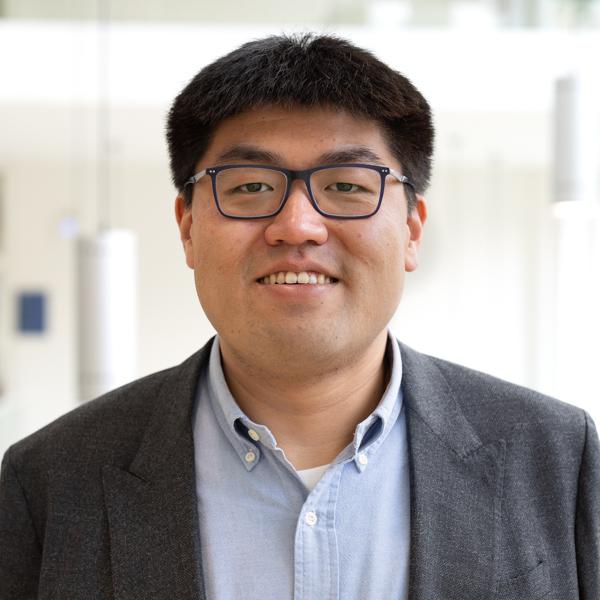
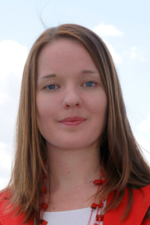
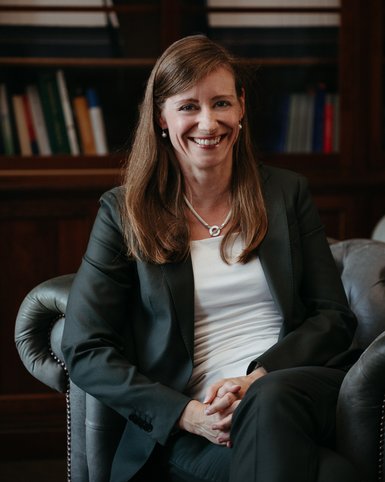
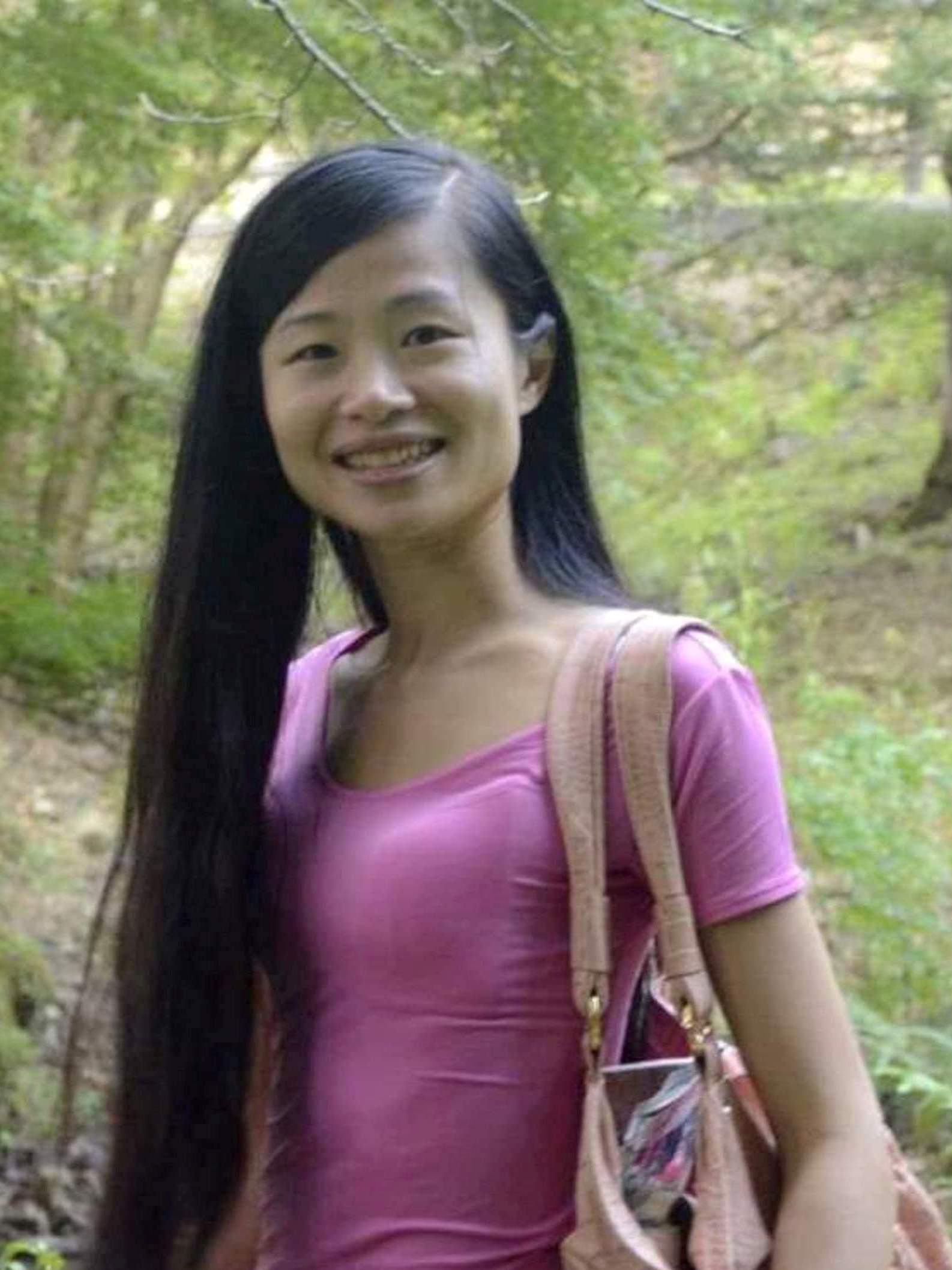
Dr. Yang Zhang is a tenured Professor at the CISPA Helmholtz Center for Information Security . His research focuses on Trustworthy Machine Learning , emphasizing privacy, safety, and security , with additional work on measuring misinformation and unsafe online content like hateful memes. He has published extensively at top conferences (CCS, NDSS, Oakland, USENIX Security) and received multiple awards including the Busy Beaver Award (2022) and NDSS Distinguished Paper Award (2019) . Research Interests : Trustworthy Machine Learning LLM Security, Privacy, and Safety Misinformation and Hate Speech Detection Social Network Analysis Recent Publications examine synthetic data auditing, hate speech detection in LLM-generated content, and privacy risks in curriculum learning, spanning conferences like USENIX Security , IEEE S&P , and ACM CCS . His work often intersects AI security with ethical considerations . Scientific Awards : Busy Beaver Award for “Privacy of Machine Learning” (2022) NDSS Distinguished Paper Award (2019) CCS Best Paper Runner-Up (2022) Best Machine Learning and Security Paper in Cybersecurity Award (2025) Best Paper Finalist at CSAW Europe (2023, 2024) Students in his group include Yixin Wu , Xinyue Shen , and Yiting Qu , the latter recently completing their Ph.D. defense. He actively recruits MSc and PhD students and has contributed to iDRAMA Lab for meme-related research.
Prof. Hansjörg Kutterer is a Professor and Dean at the KIT-Department of Civil Engineering, Geo and Environmental Sciences at Karlsruhe Institute of Technology (KIT). His primary affiliation is with KIT's Department of Civil Engineering, Geo and Environmental Sciences. He leads geodetic research initiatives focusing on Earth observation systems, atmospheric modeling, and geophysical data analysis. His research emphasizes advanced applications of GNSS, InSAR, and satellite gravimetry for monitoring climate-related phenomena such as water vapor dynamics, terrestrial water storage changes, and ground motion patterns. Key projects include developing machine learning-enhanced models for tropospheric delay corrections and integrated water vapor estimation in the Upper Rhine Graben region. Prof. Kutterer actively contributes to international geodetic frameworks like the Global Geodetic Observing System (GGOS), particularly through DA-CH regional collaborations. His work bridges geodetic methodologies with interdisciplinary challenges in climate science and environmental engineering. He oversees departmental operations as Dean, fostering innovation in geospatial education and infrastructure. His technical expertise spans geodetic deformation analysis, statistical robust estimation, and the integration of geophysical models with observational data.
Prof. Dr. Markus Strohmaier holds the Chair of Data Science in Economics and Social Sciences at the University of Mannheim's Business School. His research focuses on applying machine learning and data science to understand socio-economic systems and human behavior, leveraging text, relational, and emerging data types. He teaches graduate courses and supervises theses in these areas. Research interests include algorithmic fairness, behavioral analysis via computational methods, and the societal implications of AI. Notable work addresses demographic representativeness in large language models, bias mitigation in rankings, and gender gaps in blockchain adoption. His team is located at L15, 3rd floor – Room 307 in Mannheim, adjacent to the central station. Collaborations span interdisciplinary topics like social media analysis, network dynamics, and computational social science. Key contributions include developing benchmarks for neural network similarity (Resi) and frameworks for measuring algorithmic fairness perceptions (FairCeptron). Research often bridges technical innovation with societal impact, addressing ethical challenges in AI and data-driven decision-making.
Ruben Martins is an Assistant Professor at Carnegie Mellon University's School of Computer Science and serves as the program director of the Master of Science in Computer Science (MSCS) . His research focuses on the intersection of constraint programming, program synthesis, analysis, and verification, with recent work aiming to make formal methods tools more accessible through automated reasoning. Ruben earned his Ph.D. with honors from the Technical University of Lisbon, Portugal (2013) , followed by postdoctoral research at the University of Oxford (2014-2015) and UT Austin (2015-2017) . Research Interests : Ruben's work bridges constraint programming and program synthesis , with applications in software verification , optimization , and automated reasoning . He has developed award-winning tools like Open-WBO , a modular MaxSAT solver that has won gold medals in international competitions. His publications span top-tier venues such as POPL , PLDI , FSE , SAT , and CP , often addressing real-world challenges from program analysis to network security. Scientific Awards include: Distinguished Paper Award at PLDI 2018 Distinguished Paper Award at FSE 2021 Distinguished Paper Award at SAT 2022 Gold medals for Open-WBO in MaxSAT competitions Teaching & Advising : Ruben mentors Ph.D., Master’s, and undergraduate students in research projects related to program synthesis, formal methods, and constraint solving. He teaches courses such as Bug Catching: Automated Program Verification and Advanced Topics in Logic: Automated Reasoning and Satisfiability , emphasizing hands-on experience with tools like Why3. His advising spans topics from AI-driven program repair to network protocol verification , fostering collaboration across disciplines.
Ingo Grevemeyer is a Scientist at GEOMAR Helmholtz Centre for Marine Research and an apl-Professor at Christian-Albrechts University in Kiel. He specializes in marine geodynamics , focusing on the seismotectonics of plate boundary zones, particularly transform faults, subduction zones, and mid-ocean ridges. His research involves ocean-bottom seismometer (OBS) deployments and geophysical data analysis to study seismicity, source mechanisms, crustal structure, and tectonics. He has participated in 37 marine geophysical cruises, serving as chief scientist 18 times. His research interests span seismotectonics , marine geophysics , crustal seismology , and heat flow surveys of mid-ocean ridges, hotspot provinces, and subduction zones. His recent work, funded by an Advanced Grant of the European Research Council , explores the seismotectonics of transform faults. Over the past decade, Grevemeyer has published extensively on topics such as subduction zone dynamics , transform fault earthquakes , mantle serpentinization , and crustal accretion . His peer-reviewed output includes 154 publications, with 37 as first author, reflecting a strong h-index of 41 (Web of Science) and 49 (Google Scholar). Scientific Awards: Advanced Grant of the European Research Council
Prof. Dr. Claus Schnabel is a Chair of Economics (Labor Market and Regional Policy) at the Department of Business, Economics and Social Sciences , Friedrich-Alexander University Erlangen-Nuremberg (FAU) , since 2000. He is also a Research Fellow at the Institute for the Study of Labor (IZA) since 2006, Research Professor at the Halle Institute for Economic Research (IWH) since 2014, and Spokesperson for the Interdisciplinary Center for Labor Market and Working World (LASER) since 2007. His academic career includes a private lectureship at Ruhr University Bochum (1997–2000) and roles at the German Economic Institute in Cologne. Education: MA in Economics (1985), University of Kent; PhD (1998), University of Hohenheim. Rank: Full Professor. Research Interests: Schnabel’s work focuses on trade unions, employers’ associations, collective bargaining, employee participation, wage formation, self-employment, monopsony, and business dynamics. He examines labor market institutions, including their interaction with digitalization and regional policy. Article Trends: His recent publications (2025–2020) cover collective bargaining coverage, pandemic labor adjustments, electronic monitoring, gender pay gaps, and unionization of retirees. These span Labor Economics , Industrial Relations , and Workplace Technology , with subfields like wage differentials, pandemic resilience, and gender dynamics. Leadership Roles: Co-editor of the Journal for Labor Market Research (since 2008) and organizer of LASER’s interdisciplinary initiatives.
Roles & Affiliations: Dagmar Gromann is an Associate Professor for Terminology Science and Translation Technology at the University of Vienna's Centre for Translation Studies. Previously, she served as a Research Associate at TU Dresden's International Center for Computational Logic (ICCL) and held postdoctoral roles in Barcelona within the ESSENCE Marie Curie Training Network. She completed her PhD at the University of Vienna under Prof. Gerhard Budin, focusing on ontology-terminology integration. Education: PhD in Computer Science and Linguistics, University of Vienna (2015) Postdoctoral Research, Artificial Intelligence Research Institute (IIIA), Barcelona (2015–2017) Research Assistant, Vienna University of Economics and Business (until 2015) Research Interests: Her work bridges computational linguistics, cognitive science, and terminology science. Key areas include: Ontology learning and neurosymbolic AI Image schemas in natural language processing Machine translation ethics and genderfair language Multilingual knowledge extraction and linked data Terminology modeling and semantic web applications Publications & Awards: Over 60 peer-reviewed papers in journals such as Future Generation Computer Systems and Journal of Lexicography . Notable awards include the Best Paper Award at MuC 2021 (GenderFairMT team) and the ISWC 2019 Best PC Award. Her research has pioneered methods for extracting embodied cognition concepts like image schemas from text. Grants & Leadership: PI of the European Language Grid (ELG) pilot project Text2TCS, member of the COST Action NexusLinguarum, and organizer of conferences like LDK 2023. Editorial board roles include the Semantic Web Journal and Applied Ontology . Labs & Teams: Former member of TU Dresden's ICCL and currently part of the University of Vienna’s translation technology initiatives. Active in interdisciplinary collaborations spanning computational linguistics, AI ethics, and multilingual systems.
Professor Julia Hartmann serves as the Chair of Sustainability Management at EBS Business School, part of EBS Universität für Wirtschaft und Recht in Oestrich-Winkel, Germany. Her research focuses on climate change mitigation, energy transition strategies, sustainable supply chain resilience, and ESG compliance. She leads a team supported by industry partners like Procter & Gamble and Tetra Pak, emphasizing practical applications of sustainability theory. Her work bridges data analytics (machine learning, natural language processing) with business strategies, published in top journals such as Journal of International Business Studies and Journal of Business Ethics . Hartmann teaches courses on strategic CSR, environmental management, and empirical data techniques, advising companies on ESG leadership and future readiness. Her recent work examines oil and gas industry transitions, supply chain liability, and pandemic resilience. She actively engages with media (TV, podcasts) to discuss sustainability challenges, contributing to public discourse on energy policy and corporate responsibility. Education & Career: While formal academic qualifications are not explicitly listed, her extensive publication record and professorial role indicate advanced doctoral training in business administration or related fields. She has held leadership roles at EBS since assuming the chair position. Research Interests: Her work spans three core areas: 1) Sustainable supply chain design and resilience, 2) Energy transition pathways for industries, and 3) Quantitative methods for measuring ESG impacts. She explores how media attention, legal frameworks, and consumer behavior shape corporate sustainability outcomes. Awards & Recognition: While no specific awards are cited, her peer-reviewed publications and industry partnerships reflect scholarly and practical impact. She was an invited speaker at major conferences like EurOMA 2024 and Arthur D Little CEO Insights Conference. Grants & Collaboration: Partnerships with Procter & Gamble and Tetra Pak support applied research initiatives. Her lab focuses on bridging academic insights with industry implementation through joint projects and executive education programs. Labs/Teams: The Chair of Sustainability Management serves as her primary research hub, hosting interdisciplinary projects on supply chain governance, climate policy, and digital sustainability tools.
Dr. Mariusz Chrostowski is a Researcher at the Chair of Didactics of Religious Education, Catechetics, and Religious Pedagogy at the Catholic University of Eichstätt-Ingolstadt. He holds dual doctorates (Dr. theol. and Dr. phil.) and is pursuing a habilitation in religious education. His primary roles include research assistantship (100% since 2023), teaching courses on liturgy, pastoral practice, and intercultural learning, and organizing interdisciplinary conferences on artificial intelligence and religious education. Chrostowski has extensive experience in Polish and German educational systems, including teaching high school religion and pastoral work in dioceses. He is actively involved in research projects funded by the Fritz Thyssen Foundation and the German-Polish Science Foundation, focusing on AI in religious education and religious contributions to civil society. Education: PhD in Theology (2021) and Philosophy (2022) from Eichstätt-Ingolstadt Master’s in Theology from Cardinal Stefan Wyszynski University (2014) Postgraduate studies in pedagogy, special education, and social work in Poland and Germany Research Interests: Religious education challenges, populism’s impact on education, AI ethics in theology, intercultural pedagogy, and the role of religion in civil society. Publications: Over 30 peer-reviewed articles on AI in education, religious didactics, and populism’s sociopolitical effects, with a focus on Germany and Poland. Key works include exploring AI’s ethical implications and strategies for integrating technology into religious instruction. Chrostowski’s academic leadership includes organizing international conferences (e.g., „Minding the Gap“ on AI and religious education) and serving on editorial boards (e.g., Paedagogia Christiana). He is a voting member of the Faculty Council of Eichstätt’s Theology Faculty and spokesperson for Bavarian religious educators. His habilitation project examines the relationship between religious education and alternative subjects like ethics, emphasizing theological and philosophical reflections on schooling.
Dr. Frances Yung is a Postdoctoral Researcher at Saarland University's Department of Language Science and Technology within the Department of Computer Science. She has been affiliated with Prof. Vera Demberg's research group since April 2017 and is currently working on the DFG-funded SFB-1102 project "Information Density and Linguistic Encoding," specifically on project B2 "Cognitive modelling of information density for discourse relations." She is pursuing her habilitation, indicating career progression toward a higher academic position in the German university system. Dr. Yung's research focuses on discourse relations at the intersection of NLP, corpus linguistics, and experimental psycholinguistics. Her work explores how information density affects discourse relation marking through cognitive modeling approaches. She has developed expertise in discourse parsing, resource construction, annotation aggregation, and experimental pragmatics, with particular attention to multilingual aspects of discourse phenomena. Her research combines computational modeling with experimental methods to understand how speakers produce and comprehend discourse relations. Analysis of Dr. Yung's recent publications reveals a strong focus on discourse relation resources, particularly multilingual corpora like DiscoGeM 2.0 covering English, German, French, and Czech. Her work increasingly incorporates crowdsourcing methodologies and examines how large language models can be leveraged for discourse annotation tasks. She has made significant contributions to understanding the challenges of implicit discourse relation annotation and the biases introduced by different task designs in crowdsourcing environments. Active reviewer for major computational linguistics conferences (ACL, EMNLP, NAACL, EACL, COLING, IJCNLP) and workshops since 2016 Served as area chair for Sigdial 2024 Regular service on program committees for discourse-related workshops Dr. Yung has supervised multiple Master's theses on topics related to discourse relations, implicit relation identification, and domain adaptation. Her teaching portfolio includes courses on crowdsourcing linguistic annotations, discourse relations from cognitive and NLP perspectives, and recent advances in discourse processing. She has also served as a teaching assistant for data science and AI courses, demonstrating her commitment to interdisciplinary education at the intersection of computer science and linguistics.
Prof. Dr.-Ing. Marc Reichenbach serves as the Chair of Integrated Systems at the Institute for Applied Microelectronics and Data Technology at the University of Rostock. His office is located at Albert-Einstein-Straße 26, 18059 Rostock, Room 102 (1st floor), with contact information including telephone (0381) 498 7270 and email marc.reichenbach@uni-rostock.de. Professor Reichenbach's research focuses on the intersection of hardware design and artificial intelligence, with particular expertise in memory technologies and computing architectures. His work spans several key areas: Development of specialized computer architectures for deep learning applications Advanced VLSI design and CPU architecture Emerging memory technologies, particularly RRAM (Resistive Random-Access Memory) FPGA-based acceleration systems Hardware implementations for neural networks and AI applications Analysis of Professor Reichenbach's recent publications (2023-2025) reveals a strong focus on memory computing technologies, particularly RRAM-based systems. His work demonstrates expertise across multiple dimensions of computer architecture including ASIC design, FPGA acceleration, and novel memory systems. The publications show a clear trajectory toward implementing AI and machine learning capabilities directly in hardware, with applications ranging from edge computing to satellite systems. A significant portion of his recent work addresses the challenges of implementing neural networks using emerging memory technologies, focusing on efficiency, reliability, and performance optimization. Professor Reichenbach teaches several advanced courses including: Computer architectures for deep learning applications Project seminar Embedded Systems Advanced VLSI Design (Advanced CPU Design) His research group appears to be actively engaged in several cutting-edge projects related to hardware acceleration for AI applications, memory computing, and embedded systems design. The group collaborates on projects involving digital twins for hardware systems, real-time operating systems for heterogeneous architectures, and specialized computing systems for various applications from medical devices to drone technology.
Atreyee Banerjee is a Researcher and Early Career Fellow at Albert-Ludwigs-Universität (Oct 2024–Jun 2025) and a Postdoctoral Researcher at the Max Planck Institute for Polymer Research (MPIP), Mainz, Germany, under Prof. Kurt Kremer. She completed her PhD in Chemical Science at CSIR-National Chemical Laboratory (2017) and postdocs at Cambridge University (2017–2019) and MPIP (2019–present). Education PhD (2017): CSIR-NCL, Pune, India (Supervisor: Dr. Sarika Maitra Bhattacharyya) MSc (2011): Visva Bharati, Santiniketan (Physical Chemistry) BSc (2009): Visva Bharati, Santiniketan Research Interests Focused on data-driven analysis of complex systems, including supercooled liquids, polymers, and organic crystals. Specializes in combining theory, simulations, and machine learning to study structural/dynamical properties. Key areas include glass transition, free energy landscapes, and polymer dynamics. Publications Overview Recent work includes machine learning approaches to glass transition in acrylic polymers (J. Chem. Phys., 2023), data-driven analysis of polymer dynamics (ACS Macro. Lett., 2023), and thermodynamic studies of supercooled liquids (Soft Matter, 2022). Research emphasizes methodological innovations like PCA clustering and basin-hopping optimization. Awards Recipient of DST-India Travel Award (2017), Best Research Scholar Award (CSIR-NCL, 2017), Shell-India Computational Talent Prize Bronze (2015), and multiple best poster awards (2014–2015). Grants & Labs Collaborates with Dr. Oleksandra Kukharenko in the Polymer Theory Group at MPIP. Active in computational initiatives like the ENGAGE Summer School (2023). Research involves datasets from GROMACS trajectories and open-source tools (e.g., scikit-learn).
Prof. Dr. Melanie Krüger is a faculty member at Leibniz University Hannover , where she serves as Head of the Research Unit Sports and Cognition within the Institute of Sports Science. Her academic career spans institutions including the Technical University of Munich, University of Tasmania, and Ludwig Maximilian University. She leads research initiatives in embodiment, cognitive aging, motor decision-making, and the impact of physical activity on neurocognitive and motor functioning. Current Position: Professor, Institute of Sports Science, Leibniz University Hannover Prior Appointments: Post-doctoral roles at Technical University of Munich, University of Tasmania, and Pennsylvania State University Education: PhD in Systemic Neurosciences, Ludwig Maximilian University; Diploma in Sports Science, University of Leipzig Krüger's research focuses on: Embodiment Research: Systemic interactions between cognitive and motor development Cognitive Aging: Age-related changes in motor decision-making and coordination Human Locomotion: Collision avoidance, mixed reality interactions, and real-world movement studies Open Science: Advocacy for research data management in sports science Her recent publications explore mixed reality applications ( 2024 ), stress effects on motor function ( 2023 ), and methodological innovations in locomotion studies ( 2021-2025 ). Current projects include Moving Forward (2021-2022) and two Innovation Plus initiatives (2022-2024) developing experimental frameworks for human movement analysis. Krüger actively participates in academic governance: Spokesperson, German Society of Sport Science's Ad Hoc Committee on Research Data Management (since 2022) Board member, DVS Section 'Sports Motor Skills' (since 2022) Doctoral Committee, Faculty of Humanities Examination Board, MSc Sustainable Health Promotion in Sports Science
Kai Gehring is a Professor for Political Economy and Sustainable Development at the Department of Economics, University of Bern, and a member of the interdisciplinary Wyss Academy for Nature in Bern. He is also a research professor associated with the ifo Institute in Munich. His academic affiliations include CESifo, the European Development Network (EUDN), the Development Economics Committee of the German Economic Association, and the Globalization and Development (GlaD) group. His educational background includes a Ph.D. in Economics from the University of Göttingen (with co-supervision from Heidelberg University), where his supervisors were Axel Dreher and Stephan Klasen, and he graduated summa cum laude . He earned his Diplom (equivalent to M.Sc.) in Business Administration with electives in Economics from the University of Mannheim, and previously studied at the University of Canterbury in New Zealand. Kai Gehring’s research focuses on political economy, development, and public economics. He develops theoretical frameworks grounded in economics and related disciplines and tests them using modern econometric methods, often leveraging novel administrative, geographical, and historical data. His work emphasizes the role of culture, norms, and history in shaping institutional outcomes in both developed and developing countries. Key research themes include development cooperation and aid effectiveness, the political economy of international organizations (such as the IMF, World Bank, and EU), and the origins and consequences of group identities and horizontal inequalities in conflict and power distribution. His current research projects explore narratives on nature, climate change, and migration using natural language processing and media data; analyze resource extraction and pollution through satellite imagery and machine learning; and investigate propaganda and conflict. Although no recent publications are listed in the provided text, his methodological approach combines theory, rigorous empirical analysis, and innovative data sources across political economy and development. Ambizione Grant from the Swiss National Science Foundation Kai Gehring has supervised various research initiatives, including the "Minister Project," a citizen-science effort to compile comprehensive data on African government members’ regional and linguistic origins to study governance and development. He has received research funding through the Ambizione Grant and leads interdisciplinary collaborations with institutions such as the Wyss Academy and ifo Institute. His teaching experience spans the University of Mannheim, Heidelberg University, University of Applied Sciences Kaiserslautern, and the University of Zurich. He leads the "Minister Project," which engages global contributors to collect data on African ministers’ birth regions and native languages. This initiative aims to build a robust dataset to analyze how ethnic and linguistic diversity affects government formation and policy outcomes. The project promotes open, collaborative research and acknowledges contributors on its website, offering incentives such as Amazon vouchers and an iPad.
Stefan Decker is a full University Professor (Universitätsprofessor) at RWTH Aachen University, Germany, where he heads the Chair of Information Systems and Databases (Informatik 5) within the Faculty of Mathematics, Computer Science and Natural Sciences. He is actively involved in teaching, research, and the supervision of numerous ongoing and completed doctoral, master’s, and bachelor theses. Education & Academic Background Doctorate (Dr. rer. pol.) – field of Information Systems or related (exact institution/year not stated in text). Appointed as University Professor and Chair of Information Systems and Databases at RWTH Aachen University. Research Interests Prof. Decker’s work lies at the intersection of databases, knowledge graphs, semantic web technologies, data science, and cybersecurity . He investigates architectures and algorithms for large-scale, privacy-preserving, decentralized data analytics , develops ontology-driven information systems , and explores the use of large language models (LLMs) for educational technology, anomaly detection, and incident-response playbooks. Additional focal areas include smart energy systems, mixed-reality learning environments, FAIR data principles, and federated machine learning . Scientific Contributions & Trends His recent publications (2022-2025) demonstrate a clear trend toward explainable AI, LLM-enhanced systems, secure data spaces, and semantic interoperability . Key contributions include novel anomaly-detection frameworks for encrypted power-grid communications, knowledge-graph-driven chatbots for higher-education support, and methodological advances in decentralized analytics and FAIR data sharing. These works are disseminated in top-tier venues such as AAAI, IEEE ISGT Europe, ESWC, IDEAL, and various Springer LNCS and IEEE Transactions. Supervision & Grants Doctoral Theses Advised: A. T. Neumann – “Chatbots as professional companions in large-scale community information systems” (2024) S. M. Welten – “Methods for practical data sharing and decentralized analytics” (2025) Master’s Theses Co-Advised: A. R. Küsters – “Object-centric process constraints using variable bindings” (2025) Additionally supervising more than 30 ongoing bachelor, master, and doctoral projects covering topics such as LLM-driven cybersecurity playbooks, knowledge-graph construction for German law, privacy-preserving analytics in smart grids, and mixed-reality learning agents. Principal investigator or senior researcher in large collaborative projects including NFDI4DS, WestAI, champI4.0ns and several EU/national initiatives on sovereign data spaces and AI services. Labs & Teams Prof. Decker leads the Information Systems & Databases (DBIS) Research Group . The group operates well-equipped laboratories for knowledge-graph engineering, mixed-reality applications, privacy-enhancing technologies, and secure distributed analytics . Current team size exceeds 30 researchers including PhD candidates, postdocs, and scientific programmers, supported by national and EU funding streams.