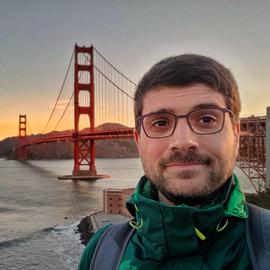
Antonio Pio SbernaView profile
Research Fellow
Antonio Pio Sberna is a Research Fellow at the Department of Structural, Building and Geotechnical Engineering (DISEG) at the Polytechnic University of Turin, Italy. He also serves as an external lecturer and teaching assistant in the Master's Degree Course on Safety Assessment and Retrofitting of Existing Structures and Infrastructures. He completed his PhD in Civil and Environmental Engineering at the same institution in 2024 and was a visiting researcher at the University of California, San Diego from December 2022 to December 2023. Education: PhD in Civil and Environmental Engineering, Polytechnic University of Turin (2020–2024) Visiting Researcher, University of California, San Diego (2022–2023) M.Eng. in Civil Engineering (Structures), Polytechnic University of Turin (2017–2020) B.Sc. in Civil and Environmental Engineering, University of Catania (2013–2017) His research interests lie at the intersection of structural engineering and computational intelligence, with a strong focus on seismic retrofitting of existing structures , structural optimization , and artificial intelligence applications in civil engineering. His work emphasizes performance-based earthquake engineering, cost-effective retrofitting, and sustainability. He has contributed extensively to the development of genetic algorithm-based frameworks for optimizing retrofitting interventions in both reinforced concrete and masonry structures. The 15 most recent publications reflect a consistent trend toward AI-driven optimization in seismic design, particularly using genetic algorithms and Expected Annual Loss (EAL) as performance metrics. His research spans nonlinear structural analysis , frame-infill interactions , structural health monitoring , and soil-structure interaction , often implemented using the OpenSees platform. A significant portion of his work involves developing analytical models and data-driven approaches for masonry and RC structures. Scientific Service: Peer-reviewer for multiple international journals including Engineering Structures , Natural Hazards , Structures and Buildings , and Algorithms . He actively advises Master’s and PhD students and is involved in teaching and organizing international courses and conferences, particularly those related to OpenSees-based seismic analysis. He has served on the scientific and organizing committees of multiple international events, including the Eurasian Conference on OpenSees and the International Course on Seismic Analysis using OpenSees. His work demonstrates a strong commitment to advancing both the theoretical and practical aspects of sustainable and intelligent structural engineering solutions.