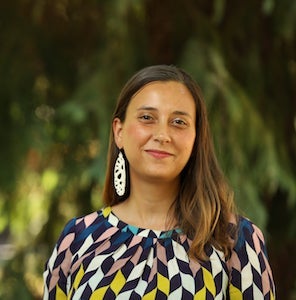
Devdatta Kulkarni is an Assistant Professor in the Department of Computer Science at The University of Texas at Austin. He received his PhD in Distributed Systems from the University of Minnesota, Minneapolis, and has extensive industry experience in cloud computing. Research Interests: Multi-tenancy on Kubernetes CI/CD on OpenStack Provenance in Platform-as-a-Service (PaaS) and NoSQL systems Access control in non-relational key-value stores Teaching: Courses such as Modern Web Applications, Cloud Computing, and Elements of Web Programming. Education: PhD in Distributed Systems, University of Minnesota, Minneapolis MS in Computer Science, University of Minnesota, Duluth BE in Computer Engineering, College of Engineering, Pune, India Professional Experience: Founder of CloudARK (2017–present), former Rackspace employee (2009–2016). He leads the OpenStack Solum project and mentors for Outreachy and UT Austin's Bridging Disciplines Program.
Lecturer Dr. Horea Adrian Grebla is affiliated with the Department of Computer Science at Babeș-Bolyai University, Faculty of Mathematics and Computer Science. He teaches courses including Cloud Applications Architecture , Advanced Database Chapters , and Data Collection and Modeling for master's programs in computer science. His instructional responsibilities include both lectures and labs, with grading components combining quizzes, projects, and exams. He utilizes platforms like PostgreSQL and Oracle for database-related coursework. Research interests include: Temporal data modeling and implementation Database schema design for cloud applications Advanced database operations (CRUD with history tracking) Historical data analysis and reporting Database transaction management Temporal attribute modeling in relational DBMS Courses emphasize practical implementations of temporal databases, with projects requiring: Design of entities with transaction/valid time attributes Scripting for data population and modification Complex temporal query operations Team-based project execution Contact: horea.grebla@ubbcluj.ro
Yasemin Altintop is a Researcher at the Chair of Political Science with a focus on International Relations at Justus Liebig University Giessen . She holds an MA in Peace and Conflict Research and a BA in Political Science and Psychology from University Heidelberg. Current affiliation: Institute of Political Science, Justus Liebig University Giessen Key research areas: UN conflict management, Kurdish-Turkish ethnic conflicts, authoritarian regime challenges Her research employs Grounded Theory to analyze UN strategies toward Türkiye’s Kurdish conflict (2002-2018) during democratic backsliding. She specializes in hate speech monitoring , MENA region security , and conflict data analysis . Recent publications focus on ISIS expansion patterns , Lebanese political alliances , and resource-driven conflicts . She also teaches courses on international relations theories and UN peacekeeping mechanisms . Professional experience includes roles at the International Institute for Counter-Terrorism (Herzliya) and Hessian Foundation for Peace and Conflict Research , with expertise in empirical social research and conflict monitoring .
Prof. Dr. Christian Schwarz is a Professor at Hochschule Düsseldorf in the Faculty of Business Studies. His academic work focuses on transfer pricing, business model analysis, and empirical economic research with a particular emphasis on digital transformation and sustainability implications. He teaches courses in quantitative methods, financial modeling, and business model development at both bachelor's and master's levels. His research interests include transfer pricing methodologies, particularly examining how digitalization, sustainability, and new business models impact international taxation practices. He applies quantitative methods and AI techniques to analyze business model structures and their tax implications. His work often bridges theoretical frameworks with practical applications in multinational business environments. Prof. Schwarz has published extensively on transfer pricing topics, with numerous articles in leading journals such as Der Betrieb , Internationales Steuerrecht , and Transfer Pricing International . His recent work explores the intersection of digital transformation, ESG factors, and transfer pricing methodologies, reflecting the evolving challenges in international taxation. He actively supervises bachelor's and master's theses in areas related to transfer pricing, business model analysis, and empirical economic research. His supervision topics include digital business models, transfer pricing in Industry 4.0 contexts, sustainability implications for transfer pricing, and quantitative analysis of business model performance.
Rui Silva Moreira is an Associate Professor at Universidade Fernando Pessoa with a PhD in Computer Science (Distributed Systems) from Lancaster University (2003). His research focuses on middleware for dynamic adaptation, mobile computing, and digital libraries. Academic Qualifications PhD, Computer Science (Distributed Systems), Lancaster University (2003) MSc, Electrical and Computer Engineering, FEUP (1995) BSc, Electrical and Computer Engineering, FEUP (1992) Research positions include: at INESC - Telecommunications Unit (1996-present) and CMUP - Multimedia Center (1993-1997). He has supervised numerous Master's and PhD students in topics related to smart healthcare spaces, usability for elderly users, and mobile systems. His publications focus on distributed systems architecture, reflective components, middleware solutions, and multimedia adaptation. Teaching areas include Distributed Systems, Mobile Computing, Programming Languages, and Multimedia. Email contacts: rmoreira@ufp.pt rjm@inescporto.pt
Arman Arghami, M.D., M.P.H., is an Associate Professor of Surgery at Mayo Clinic in Rochester, Minnesota. He serves as a Consultant in the Department of Cardiovascular Surgery within the Mayo Clinic College of Medicine and Science. Dr. Arghami specializes in robotic cardiac surgery and minimally invasive techniques , with a focus on treating structural heart diseases and arrhythmias. Education Highlights: MD from Mashhad University of Medical Sciences (2004) Preliminary General Surgery Residency at Mayo Clinic (2011) General Surgery Residency at Mayo Clinic (2016) Cardiothoracic Fellowship (4+3) at Mayo Clinic (2018) MPH in Epidemiology from Harvard T.H. Chan School of Public Health (2021) Dr. Arghami's research bridges artificial intelligence and clinical cardiology , emphasizing AI-driven risk stratification and outcomes analysis. His work also investigates preventive strategies for renal failure after cardiac surgery and pharmacological trials for postoperative care. Recent publications highlight his expertise in robotic mitral valve repair, transcatheter interventions, and valvular disease management. Scientific Contributions: Editorial Board Member, The Journal of Thoracic and Cardiovascular Surgery (2022-present) Ad hoc Reviewer, Journal of Cardiothoracic and Vascular Anesthesia (2021-present) Editorial Board Member, The Annals of Thoracic Surgery (2020-present) Co-Chair, Society of Thoracic Surgery Taskforce on Robotic Cardiac Surgery (2025-present) He actively participates in clinical trials evaluating novel cardiac devices and surgical techniques, and serves on committees including the AI Project Strategy Committee and Cardiovascular Surgery Quality & Safety Committee . Dr. Arghami is certified by the American Board of Thoracic Surgery (2019) and American Board of Surgery (2016).
Dr. Alison Carter is an Associate Professor in the Department of Anthropology at the University of Oregon, specializing in Southeast Asian Archaeology with a focus on Cambodia's Angkorian civilization. She serves as Director of Undergraduate Studies and leads the Southeast Asian Archaeology Lab in Condon Hall. PhD in Anthropology from University of Wisconsin-Madison (2013) Her research explores political economy , household archaeology , and climate change impacts on ancient societies. She co-directs the ProjecT Excavating Ancient Households (Pteah Cambodia) , analyzing residential spaces from Pre-Angkorian to Post-Angkorian periods. Recent publications emphasize glass and stone bead analysis (2025), Angkorian urbanism (2024), and protohistoric trade networks (2023). Key methodologies include LA-ICP-MS for material sourcing and LIDAR surveys for landscape analysis. Scientific recognition includes: NSF grant for Battambang Province research Featured in IMAX film Angkor: The Lost Empire of Cambodia As advisor to PhD candidate Tiyas Bhattacharyya, she advances collaborative research with Cambodian institutions like the APSARA Authority. Her work bridges traditional archaeology with modern climate change policy lessons through the Greater Angkor Project .
Ihab Francis Ilyas is a Professor at the University of Waterloo , affiliated with the Cheriton School of Computer Science . He currently holds the Thomson Reuters Research Chair in Data Quality and is on leave while serving as a Distinguished Engineer, Proactive Intelligence at Apple Inc. . He has co-founded two successful startups— Inductiv (acquired by Apple) and Tamr —and is a Fellow of the Royal Society of Canada , IEEE Fellow , and ACM Fellow . Research Interests : AI for Data Quality and Curation Knowledge Graphs Large-Scale Data Integration Information Extraction Managing Uncertain Data Data Cleaning Error Detection and Repair Probabilistic and Uncertain Data Management Scientific Awards and Recognitions : C.C. Gotlieb Computer Award, 2024 IEEE Fellow, 2021 ACM Fellow, 2020 NSERC-Thomson Reuters Industrial Research Chair, 2018 Google Faculty Award, 2014 Ontario Early Researcher Award, 2008 IBM CAS Faculty Fellow, 2006–2010 Taha Hussein Medal (Egyptian Ministry of Education), 1990 Leadership and Service : Board of Trustees, VLDB Endowment (2016–2021) Vice Chair, ACM SIGMOD (2016–2021) Co-founder, Inductiv (acquired by Apple) and Tamr Co-author of the leading text Data Cleaning (ACM Books) Lead developer of the HoloClean open-source data repair system Contributor to Saga , a next-generation knowledge construction platform at Apple Publications and Trends : His recent research focuses on AI-driven data cleaning, knowledge graph construction, and scalable data integration systems. Collaborative works span probabilistic inference, differentially private data synthesis, error detection, and HTAP workloads. His publications appear in top venues like SIGMOD , VLDB , and ICDE .
Veronique Benzaken is a Full Professor (Professeur de classe exceptionnelle) at University of Paris Sud 11, where she is a member of the LRI (Laboratoire de Recherche en Informatique), UMR 8623 - CNRS. She is currently a member of the VALS (Verification of Algorithms Languages and Systems) research group, a joint team between LRI and the Toccata group at INRIA - Saclay. Her research focuses on data-centric programming languages and systems, with particular expertise in XML processing, type systems, and formal verification of database systems. Her academic background includes: Dec 1996: Habilitation à diriger des recherches, University Paris Sud 11 (UFR des Sciences - Orsay) Jan 1990: PhD in Computer Science, University Paris Sud 11 (UFR des Sciences - Orsay) Sep 1986: DEA d'Informatique fondamentale, University Denis Diderot Paris 7 (Master in Theoretical Computer Science) June 1983: Diplomée de Chant et d'Art-Lyrique, Conservatoire National de Région de Grenoble Professor Benzaken's primary research interests lie at the intersection of database systems, programming languages, and formal methods. She has made significant contributions to XML-centric programming through the design and development of ℂDuce, an XML-centric general purpose functional programming language developed under an MIT license. Her work emphasizes type-safe and fast query and transformation of XML documents. More recently, she has focused on the formalization of data intensive management systems using the Coq proof assistant, particularly in the context of the Datacert project (2016-2021) which aims to certify and verify data intensive systems such as RDBMS's and XML processing engines. Her research spans several interconnected areas including type systems for data languages, formal semantics of query languages, verification of database systems, and language-integrated query processing. She has led significant research projects such as the ANR project Blanc SIMI2 Typex (Typeful certified XML) and has collaborated with Oracle Labs on developing intermediate representations for multi-lingual querying interfaces. Her publication record shows a clear trajectory from XML processing and type systems toward increasingly rigorous formal verification of database technologies. Professor Benzaken has been actively involved in the academic community through service on program committees for major conferences including ESOP, ICDE, VLDB, and others. She has also been an invited speaker at workshops such as the Coq workshop (CoqWS@FLOC) in 2018. Her research is supported by significant grants including the ANR project Datacert (2016-2021) and the ANR project Blanc SIMI2 Typex. She has collaborated extensively with researchers such as Évelyne Contejean, Chantal Keller, and Stefania Dumbrava on formal verification projects, producing notable publications at ITP 2017 and ITP 2018 on Datalog and SQL formalization. Professor Benzaken is a member of the PCRI research group within LRI, focusing on programming, systems, and their applications. Her work bridges theoretical computer science with practical database system implementation, contributing to both the academic understanding and industrial application of data management technologies, particularly in the areas of XML processing, query languages, and formal verification of database systems.
Allison O'Neill is a Clinical Associate Professor of Pediatrics at Harvard Medical School and a Pediatric Oncology physician-scientist at Dana-Farber Cancer Institute/Boston Children's Hospital. She serves as Clinical Director of the Solid Tumor Center and Director of Medical Therapies at the Liver Tumor Center , while also holding the Vice President for Clinical Performance Management role at Dana-Farber Cancer Institute. Education: MD, Albert Einstein College of Medicine (2005) Internship, Residency, and Fellowship at Boston Children's Hospital/Dana-Farber Cancer Institute Her research focuses on translational approaches to pediatric solid tumors , particularly Ewing sarcoma and liver tumors , integrating imaging and immunotherapy for diagnostic and therapeutic innovation. Her 15 most recent publications span hepatoblastoma , fibrolamellar carcinoma , immunotherapeutic targets , and clinical trial designs . She chairs the Children's Oncology Group Liver Tumor Committee and collaborates internationally through the PHITT and SIOP Liver Tumor Working Group . Her clinical and research efforts emphasize multidisciplinary care , rare tumor studies , and training future medical professionals in translational research. She leads the Dana-Farber/Boston Children’s Liver Tumor Center and contributes to global rare tumor research initiatives , aiming to apply innovative imaging and immunotherapy to improve outcomes for pediatric solid tumor patients.
Karl E. Minges is an Associate Professor and Associate Dean for Research at the University of New Haven's School of Health Sciences . As a health services researcher , he focuses on health systems improvement , quality measurement , organizational behavior change , and medical device intervention evaluation . With over 60 publications in journals like JAMA and Journal of the American College of Cardiology , he has been cited over 2500 times. He received the University of New Haven's first NIH grant , the Faculty Recognition Award (2021) , and was named a University Research Scholar (2023–2026) . Ph.D., Yale University (2016) M.P.H., Columbia University (2010) B.S., Marist College (2007) Fulbright Scholar, Baker IDI Heart & Diabetes Institute (2010) Research Interests span health systems evaluation , cardiovascular epidemiology , public health policy , and behavioral medicine . His work addresses medical device utilization , health disparities , and transitional care quality . Improving hospital readmission protocols Analyzing cardiovascular device outcomes Evaluating public health responses to pandemics Studying health behavior interventions Scientific Awards include Faculty Recognition Award (2021) Research Excellence Award (2023) University Research Scholar (2023–2026) Fulbright Scholar (2010) Media Engagement highlights his expertise in public health policy , pandemic response , and health behavior analysis . He has commented on topics ranging from telehealth to vaccine hesitancy , mask effectiveness , and medical device regulation .
Nancy Johnson serves as a Clinical Assistant Professor and Medical Director of the SART (Sexual Assault Response Team) Program in the Department of Emergency Medicine at SUNY Downstate Medical Center. She completed her medical education in 2003 and completed her residency training at Kings County Hospital Center/SUNY Downstate. Dr. Johnson's research interests span Women's Health, Sexual Assault medicine, and Inner City Healthcare. Her work addresses critical issues in emergency medicine with a focus on vulnerable populations, particularly in urban settings. She has published on topics ranging from violence-related injuries in inner city populations to women's health issues, demonstrating her commitment to addressing health disparities. Analysis of her publication record shows significant contributions across multiple medical disciplines including emergency medicine, women's health, infectious diseases, and gastroenterology. Her recent work includes publications on gastric organoid modeling (2024), tick-borne encephalitis (2023), surgical approaches to hysterectomy (2023), and fertility preservation for transgender men (2022), indicating a broad research portfolio that extends beyond emergency medicine into women's health and related fields. Dr. Johnson has contributed to high-impact journals including Molecular Cell, Fertility and Sterility, and the Cochrane Database of Systematic Reviews. Her research demonstrates interdisciplinary collaboration across medical specialties. As Medical Director of the SART Program, Dr. Johnson oversees clinical services related to sexual assault response, combining her academic role with direct patient care and program leadership in this specialized area of emergency medicine.
Michelangelo Ceci is a full professor at the Department of Computer Science, University of Bari, Italy. His academic career spans over two decades with significant contributions to data mining and machine learning research. He has established himself as a leading figure in the European data mining community through his extensive publication record and leadership roles in major conferences. Dr. Ceci's primary research interests focus on data mining and machine learning, with particular emphasis on multi-relational data mining, text mining, spatial data mining, spatio-temporal data mining, and semi-supervised/transductive learning. His work bridges theoretical foundations with practical applications across diverse domains including social network analysis, financial technology, healthcare informatics, and environmental monitoring. His research demonstrates a consistent trajectory toward increasingly complex data structures and more sophisticated modeling techniques. The most recent publications reveal several key trends: a growing focus on explainable AI systems, increased application of graph-based methods for spatio-temporal data, expansion into biomedical applications particularly in microbiome analysis, and development of robust methods for anomaly detection in cryptocurrency and social networks. His work increasingly integrates multiple data sources and perspectives through multi-view learning approaches. Dr. Ceci has served on the program committees of major international conferences including IEEE ICDM, IJCAI, ECMLPKDD, SIAM SDM, ECAI, ISMIS, PAKDD, DEXA, and ACM SAC. He has held editorial positions with journals such as IJSNM, IJDATS, and Journal on Advances in Intelligent Systems, and has been actively involved in organizing conference tracks and workshops. His research has been supported through significant projects including serving as national coordinator of FP7612944 MAESTRA and coordinator of a research unit in the PONREC project Vi-POC. He has participated in numerous national (PRIN-COFIN 2001, 2009) and international research projects (IST-1999-20882: COLLATE). Dr. Ceci has also contributed to the academic community through mentoring PhD students and early-career researchers, though specific names of advisees are not documented in the available information.
Jacob Wynes, DPM, FACFAS serves as Associate Professor in Orthopaedics at the University of Maryland, holding dual leadership roles as Chief of Podiatric Services and Co-Director of the University of Maryland Medical Center Limb Preservation Clinic. His academic appointment within the Department of Orthopaedics focuses on advancing complex foot and ankle reconstruction, while his clinical program directs comprehensive limb salvage initiatives for high-risk patients through the Limb Preservation and Deformity Correction Fellowship he directs. Dr. Wynes' educational foundation includes podiatric training at Temple University School of Podiatric Medicine, surgical residency at Penn Presbyterian Medical Center, and specialized fellowship in Foot and Ankle Deformity at Sinai Hospital of Baltimore. This trajectory established his expertise in managing intricate reconstructive challenges. Temple University School of Podiatric Medicine, DPM Penn Presbyterian Medical Center, Residency in Podiatric Surgery Sinai Hospital of Baltimore, Fellowship in Foot and Ankle Deformity His research program targets critical gaps in neuropathic foot reconstruction, emphasizing Charcot arthropathy management, deformity correction biomechanics, and diabetic limb preservation. Current investigations explore radiation safety during Charcot surgery, biodegradable infection control systems, and geriatric-specific surgical outcomes to optimize limb salvage protocols for complex diabetic foot conditions. Analysis of Dr. Wynes' 15 most recent publications (2022-2025) reveals a concentrated focus on Charcot reconstruction safety parameters, with 60% addressing intraoperative challenges like radiation exposure and pin site complications. His work increasingly incorporates geriatric outcomes research and evidence-based comparisons of surgical techniques, demonstrating evolution toward data-driven protocols for high-risk foot reconstruction while maintaining emphasis on biomechanical innovation. Professional recognition highlights Dr. Wynes' clinical excellence through sustained accolades: Top Doctor in Podiatry by Baltimore Magazine (2016, 2018-2022) Physician of the Year, University of Maryland Midtown Campus (2021) Fellow of the American College of Foot and Ankle Surgeons (FACFAS) Diplomate, American Board of Foot and Ankle Surgery (Foot & Rearfoot Surgery) As Program Director for the Limb Preservation Fellowship, Dr. Wynes mentors future specialists in advanced reconstructive techniques while directing clinical training across the University of Maryland Rehabilitation & Orthopaedic Institute. His academic leadership extends to developing evidence-based protocols that integrate vascular surgery, endocrinology, and wound care for comprehensive limb salvage. The Limb Preservation Clinic he co-directs operates as a multidisciplinary nerve center for diabetic foot management, combining vascular interventions, metabolic control, and innovative reconstruction to prevent amputations. This model supports his research on biodegradable antibiotic systems and outpatient transmetatarsal amputation protocols, creating a synergistic clinical-academic environment focused on preserving mobility in neuropathic patients.
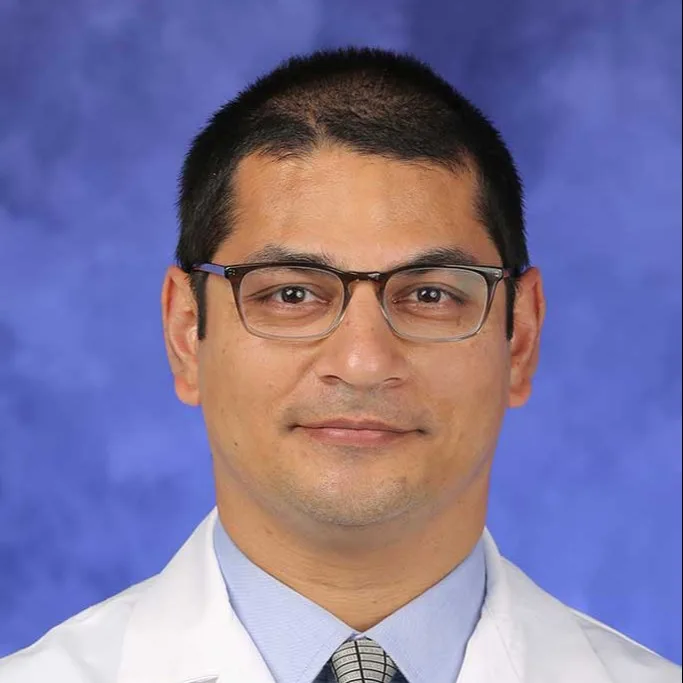
Moses Mathur, MD, MSc is an Assistant Professor in the Department of Medicine at the Penn State College of Medicine, specializing in the Division of Cardiology. He practices interventional cardiology at Penn State Health, performing Transcatheter Aortic Valve Replacement (TAVR), MitraClip, Watchman procedures, and coronary artery stenting across Hershey and Lancaster campuses. Education Medical School: Sidney Kimmel Medical College at Thomas Jefferson University (2009) Residency: Internal Medicine, Temple University Hospital (2012) Fellowship: Cardiovascular Disease, Temple University Hospital (2015) Fellowship: Interventional Cardiology, University of Washington Medical Center (2017) Research Interests Dr. Mathur's work centers on transcatheter structural heart interventions with emphasis on: TAVR outcomes in complex anatomies (bicuspid valves, paravalvular leaks) Device safety and complication management (cutting balloons, Impella systems) Echocardiographic guidance for valve procedures Innovations in percutaneous coronary interventions His research integrates clinical data analysis with systematic reviews to optimize procedural safety in high-risk patients. Publication Trends Recent publications (2022-2025) reveal a concentrated focus on device-related complications and anatomical challenges in structural heart interventions. Key patterns include: Analysis of TAVR outcomes in non-standard valve morphologies Safety profiling of novel interventional devices using MAUDE databases Technical refinements for device repositioning and complication mitigation This work consistently addresses real-world procedural challenges in major cardiology journals. Clinical Teams Dr. Mathur is a core member of the Penn State Heart and Vascular Institute's structural heart program, collaborating with cardiac surgeons, imaging specialists, and heart failure teams to deliver TAVR, MitraClip, and Watchman procedures. His clinical work supports the institute's mission to advance minimally invasive cardiovascular care in central Pennsylvania.