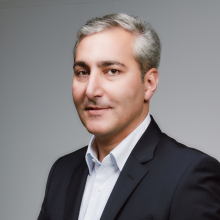
Dr. Fatih Nayebi is a Faculty Lecturer in Information Systems at McGill University while also serving as Vice President of Data & AI at the ALDO Group. He bridges academic research with enterprise innovation, focusing on data science, machine learning, and AI systems. Academic Background: Ph.D. in Computer Engineering from École de technologie supérieure M.Sc. in Software Engineering from Boğaziçi University B.Sc. in Computer Engineering from Boğaziçi University Dr. Nayebi's research interests include: Information Systems Data Science Machine Learning Engineering & MLOps Deep Learning Agentic AI Human-Computer Interaction AI in Retail His recent publications focus on AI for retail, mathematical foundations of AI, information integrity in democratic systems, and best practices for technical documentation. Dr. Nayebi also teaches graduate courses at McGill University including: Enterprise Data Science Machine Learning in Production Introduction to AI and Deep Learning Applications and Architectures of Deep Learning Designing and Developing Agentic AI Systems As an active speaker and thought leader, Dr. Nayebi has participated in events such as: World Summit AI Americas RETHINK Retail NRF Nexus 2025 Supply Chain Research Forum JOPT2025 - Annual Conference of Optimization Days He is also the founder of Gradient Divergence, an advisory studio focused on advanced AI solutions for retail and consumer brands.
Maryam Imani is an Associate Professor of Water Systems Engineering at Anglia Ruskin University's School of Engineering and the Built Environment. As a Chartered Civil Engineer (CEng) and Fellow of the Higher Education Academy (FHEA), she specializes in water infrastructure resilience, sustainable drainage systems (SuDS), and computational modeling techniques. BEng (Hons) Civil Engineering, 2001 MEng Water Systems Engineering, 2006 PhD Water Systems Engineering, University of Exeter, 2012 PG Cert in Learning and Teaching in Higher Education, Anglia Ruskin University, 2016 Her research focuses on resilience modeling for water infrastructure, machine learning applications in water systems, and climate adaptation strategies . She leads projects addressing urban wastewater resilience, SuDS implementation in developing countries, and interdependent infrastructure systems. Maryam's work demonstrates a strong emphasis on multi-objective optimization and decision support systems for sustainable water management. Her recent publications explore challenges in Brazil, India, and the UK, integrating climate projections with urban planning. Exeter Research Scholarship (ERS) Fellow of the Higher Education Academy (FHEA) She contributes to major projects like Safe&SuRe water management and RESoURce@Brandia , securing grants from UKRI-GCRF, NERC, and EPSRC. Maryam collaborates with institutions across the UK, Brazil, and the US, including the University of Utah.
Stefanos Nikolaidis is a tenured Associate Professor in the Department of Computer Science at the University of Southern California (USC), where he directs the Interactive and Collaborative Autonomous Robotic Systems (ICAROS) Lab. His research focuses on enabling robots to interact robustly with humans in dynamic environments through advancements in artificial intelligence, human-robot interaction, procedural content generation, and quality diversity optimization. Education: PhD in Robotics from Carnegie Mellon University (CMU) and MS in Computer Science from MIT. The ICAROS Lab develops interactive agents for real-world tasks while creating diverse testing scenarios to enhance system robustness. Research integrates AI techniques with human-centric design principles across applications like rehabilitation robotics, collaborative manufacturing, and socially interactive embodiments. Recent publications demonstrate trends in quality diversity optimization, human-aware planning, and policy adaptation. Notable works include AutoQD for behavior discovery, CMA-MA for multi-objective optimization, and applications in hair manipulation, rehabilitation personalization, and large language model integration. Scientific Awards: NSF CAREER Award (2022). He actively shares research updates via Twitter and has contributed software tools like pyribs for quality diversity optimization. His work spans theoretical advancements in optimization algorithms and practical implementations in assistive robotics.
Ramavarapu S Sreenivas is a Professor in the Industrial and Enterprise Systems Engineering department at the University of Illinois at Urbana-Champaign , with research appointments at the Coordinated Science Laboratory (CSL) and the Information Trust Institute (ITI ). He holds a joint affiliation with the Electrical and Computer Engineering department and serves as the Arthur Davis Faculty Scholar since 2016. Ph.D. , Electrical and Computer Engineering, Carnegie Mellon University (1990) M.S.E.E. , Carnegie Mellon University (1987) B.Tech , Electrical Engineering, Indian Institute of Technology Madras (1985) His research focuses on Discrete-Event/Discrete-State (DEDS) systems , applying Coding Theory, Machine Learning, and Information Theory to develop near-optimal supervisory policies for applications in wireless networks, automated manufacturing, and healthcare systems . He leads the Center for Autonomous Construction and Manufacturing at Scale (CACMS) , established in 2023. Recent publications highlight advancements in liveness enforcement in Petri nets , fault-tolerant control , and IoT-based load scheduling . His work bridges theoretical rigor with practical implementations in Distributed Control, Network Coding , and Reinforcement Learning . UIUC Campus Award for Excellence in Graduate and Professional Teaching (2023) Arthur Davis Faculty Scholar (2016) Senior Member, IEEE (2002) James Franklin Sharp Outstanding Teaching Award in Industrial Engineering (2017, 2012) Sreenivas has taught graduate and undergraduate courses in Control Systems, Integer Programming, and Financial Computing since 1992. He co-instructed courses in Health Technology and contributed to the Master of Science in Financial Engineering (MSFE) program, which ranks 4th nationally.
Prof. Dr. Andreas Herkersdorf is a Full Professor and Chair of Integrated Systems at the Technical University of Munich (TUM) School of Computation, Information and Technology. His research focuses on application-specific multicore processors (MPSoC), FPGA-based prototyping, fault-tolerant systems, and energy-efficient architectures, with applications in IP packet processing, automotive systems, and visual computing. He has received multiple IBM innovation awards and serves on editorial boards including the DFG Review Board for computer architecture. Education: Dipl.-Ing. Electrical Engineering (TUM, 1987), Dr. techn. Electrical Engineering (ETH Zurich, 1991) Research: MPSoC architectures, autonomic computing, NoC resilience, FPGA acceleration, and self-optimizing systems. Awards: IBM Master Inventor (1998), IBM Outstanding Technical Achievement Award (2001), multiple IBM Innovation Achievement Awards (1996-2003) His recent publications emphasize hardware/software co-design, machine learning integration for runtime optimization, and network-on-chip innovations. He collaborates on projects involving 6G systems, smartNICs, and automotive communication protocols.
Gerhard Schwabe is a Professor in the Department of Informatics at the University of Zurich, Faculty of Business, Economics and Informatics. His research spans collaborative technologies, information management, E-government, blockchain applications, and digital health. He leads the Information Management Research Group and contributes to the university's Digital Society Initiative (DSI). Research Focus: Human-AI collaboration, blockchain systems, crisis informatics, persuasive technologies Key Projects: RefuGPT (refugee support chatbots), Scripted Medicine (health worker assistance), PROMISE (AI prompt orchestration) Technical Expertise: Design Science Research, conversational agents, data-driven governance His recent publications emphasize AI integration in collaborative workflows, blockchain applications for data markets, and digital solutions for crisis management. He explores how generative AI impacts freelance development practices and transforms advisory services through automated systems. Contact: schwabe@ifi.uzh.ch
Prof. Dr. Haris Gačanin is a faculty member at RWTH Aachen University, affiliated with the Institute for Distributed Signal Processing under the College of Electrical Engineering. His research focuses on integrating machine learning with wireless communication systems, particularly in industrial IoT, edge computing, and network optimization. Current academic rank: Professor Contact: harisg@dsp.rwth-aachen.de Research Interests: Wireless systems, machine learning, signal processing, and network optimization. Key contributions include: Adaptive resource allocation in IIoT and vehicular networks AI-driven channel estimation and feedback mechanisms Security-oriented emitter identification via metric learning Federated/transfer learning for edge environments Hardware-efficient deep learning models for mmWave and THz communications Methodological Focus: Combines reinforcement learning, attention mechanisms, and robust neural architectures with practical implementations on FPGA and vehicular systems.
Jonathan Voersaa Wenshøj is an academic researcher at the Department of Computer Science, University of Copenhagen. He contributes to the Machine Learning section's activities spanning theoretical foundations and applications in diverse domains like information retrieval, medical data analysis, remote sensing, sustainability, and biological modeling. The section participates in the SCIENCE AI Centre and collaborates with initiatives like TreeSense for global tree resource analysis. His research intersects machine learning with quantum computing, medical informatics, and sustainability. Recent publications highlight applications in environmental monitoring, healthcare diagnostics, and energy-efficient AI systems. The department provides advanced compute resources including a powerful cluster for intensive machine learning tasks. This researcher's work appears in diverse machine learning domains, with recent publications addressing quantum-inspired architectures, explainable AI in medical imaging, and sustainable computing practices. The section actively hosts events including seminars, conferences, and PhD defences related to machine learning advancements.
Professor Ai-Chun Pang is affiliated with the National Taiwan University , serving in both the Department of Computer Science and Information Engineering and the Graduate Institute of Networking and Multimedia . He held leadership roles including Associate Dean (2018-2022) and Director (2013-2016) within the College of Electrical Engineering and Computer Science. His research spans Fog/Edge Computing , Wireless Networking , Mobile Computing , and AIoT Systems , with recent advancements in federated learning security, energy-efficient network design, and 5G/6G optimization. Collaborative work includes applications in vehicular networks, industrial control systems, and non-terrestrial connectivity. Key publication themes: Edge Intelligence and Privacy (2024) Federated Learning for Heterogeneous Devices (2023-2024) 5G Backhaul Optimization (2017-2021) Wireless Energy Transfer (2022) Awarded IEEE Fellow 2021 for contributions to mobile edge networks, he has received multiple IEEE Vehicular Technology Society awards, the CES 2019 Innovation Award , and teaching accolades including National Taiwan University Distinguished Teaching Award (2010) . His lab has produced 16 PhD students now in academia and industry. As Editor-in-Chief of IEEE Wireless Communications Letters and active in conference organization, he shapes global research directions. Current projects focus on GenAI for Networking and Non-Terrestrial Networks , with recent 2024 admissions for new students.
Lingjia Liu is a Professor and Bradley Senior Faculty Fellow at Virginia Tech's Bradley Department of Electrical and Computer Engineering. Her research focuses on enabling technologies for 5G/6G networks, including massive MIMO systems, dynamic spectrum access, and AI-driven communication networks. She holds a Ph.D. from Texas A&M University (2008). Research Interests : 5G/6G Network Architectures (3D MIMO, cloud-RAN, ultra-low latency) AI in Communications (Reservoir Computing, federated learning) IoT & Cyber-Physical Systems (energy harvesting, privacy protection) Non-Terrestrial Networks (satellite-based connectivity) Recent work emphasizes generative AI for network simulation, explainable AI in communication systems, and secure dynamic spectrum sharing. Her research spans theoretical foundations (e.g., OTFS modulation analysis) and practical implementations (e.g., FPGA-based reservoir computing). Awards : Bradley Senior Faculty Fellow (Virginia Tech). Her contributions bridge communication theory and AI, addressing 6G challenges through innovative algorithmic and architectural solutions. Current projects explore agentic protocol learning, federated multi-agent RL for spectrum access, and resilient ML under adversarial conditions.
Jayson Boubin is an Assistant Professor of Computer Science at Binghamton University's School of Computing. He joined in 2022 and focuses on autonomous systems, particularly UAVs, edge computing, and machine learning applications in agriculture and infrastructure. His work emphasizes solving real-world challenges through innovative engineering and software solutions. Education: PhD in Computer Science (Ohio State University), BA (Miami University) Research Interests: Autonomous systems, UAVs, edge computing, robotics, and machine learning. Projects include SoftwarePilot (an open-source UAV testing platform), Fleet Computer (Kubernetes-based edge architecture), and PROWESS (a testbed for constrained edge workloads). Key Achievements: NSF Graduate Research Fellowship Developed open-source tools like SoftwarePilot and PROWESS Focus on UAV applications in precision agriculture, search-and-rescue, and infrastructure inspection Labs/Teams: Active in edge computing and UAV research groups, contributing to both academic and open-source communities.
Sreenath Chalil Madathil is an Assistant Professor in the Department of Systems Science and Industrial Engineering at Binghamton University. His academic journey includes previous roles as Assistant Professor at the University of Texas at El Paso (2019–2021) and Research Scientist at the Watson Institute of Systems Excellence (WISE) at Binghamton University's Research Foundation (2017–2019). He holds a PhD and MS in Industrial Engineering from Clemson University, an MS in Data Science from the University of Texas at Austin, and a Bachelor of Technology in Electrical and Electronics Engineering from Mahatma Gandhi University, India. Dr. Madathil's research focuses on applying operations research, simulation modeling, and data science to address healthcare challenges such as patient-centered care and healthcare disparities. His work bridges theoretical methodologies with practical applications, including maternal healthcare equity, healthcare facility design, and supply chain resilience. He has secured funding from the National Science Foundation and the U.S. Department of Commerce. Prior to academia, he gained industry experience as a software consultant and client-side analyst at Cognizant Technology Solutions (2006–2011), alongside collaborations with Los Alamos National Lab and BMW Manufacturing. His research has been published in high-impact journals like Healthcare Management Science and Computers and Industrial Engineering . His professional expertise spans interdisciplinary projects, including optimizing healthcare workflows, analyzing social media data for public health interventions, and developing resilient microgrid systems. Current research trends include leveraging AI/ML techniques for healthcare analytics and improving operational efficiency in healthcare systems.
Dr. Weilu Gao is an Assistant Professor in the Department of Electrical & Computer Engineering at the University of Utah. He holds a B.S. from Shanghai Jiao Tong University (2011) and a Ph.D. from Rice University (2016), followed by postdoctoral research there until 2019. Before joining Utah, he worked as a Photonics Designer at Lightmatter Inc. (2019–2020). His research focuses on photonics/optoelectronics of nanomaterials, including carbon nanotubes and 2D materials, with applications in computing, sensing, and energy. He has over 90 publications and 5,800+ citations. Research interests include reconfigurable photonics for machine learning, chiral photonic materials, and scientific computing using optical neural networks. Key projects involve developing diffractive optical neural networks (DONNs) for PDE-solving and energy-efficient computing, programmable chiral heterostructures, and wafer-scale aligned carbon nanotube architectures. His work bridges nanomaterial science with optical engineering, emphasizing scalable fabrication and cross-disciplinary applications. Notable achievements include publishing in Nature Communications , Advanced Photonics Research , and ACS Photonics . He leads the Weilu Gao Lab, which actively collaborates on NSF-funded projects (e.g., 2022 NSF award for carbon nanotube-based semiconductors). Professional activities include organizing workshops on chiral photonics and presenting at conferences like ECS Meetings. Grants include NSF funding for semiconductor research and collaborations with institutions like the University at Buffalo and Tokyo Metropolitan University. His lab recruits students and postdocs in scientific computing, photonics, and nanomaterials.
Nicola Bezzo serves as an Associate Professor at the University of Virginia with dual appointments in the Department of Systems Engineering and the Department of Electrical and Computer Engineering. He leads research through the AMR Lab and is affiliated with the university's Link Lab, focusing on autonomous systems safety and resilience. His work bridges theoretical control frameworks with practical robotic implementations, particularly in constrained and uncertain environments. Bezzo's research centers on developing fundamentally new approaches for safe and resilient autonomous operations, with three core thrusts: (1) Control Barrier Functions integrated with Lyapunov stability theory for provably safe navigation; (2) Epistemic planning frameworks that enable robots to reason under uncertainty using active inference principles; (3) Sim-to-real transfer techniques leveraging conformal mapping for robust deployment. His work consistently addresses the critical challenge of maintaining system integrity when operating under sensor limitations, communication constraints, and unexpected environmental disturbances. Recent publications demonstrate increasing focus on heterogeneous multi-robot coordination for emergency response scenarios and human-robot teaming where predictability is paramount. Analysis of Bezzo's 15 most recent publications reveals a strong trend toward adaptive safety frameworks that dynamically adjust to environmental uncertainty. Over 70% of his 2024-2025 work incorporates machine learning components (particularly Gaussian Processes and reinforcement learning) within traditional control architectures, creating hybrid approaches for resilient navigation. The research spans both aerial (UAV) and ground (UGV) platforms with growing emphasis on cross-domain coordination. A distinctive pattern is the development of 'recovery-first' paradigms that prioritize system restoration after failures rather than solely preventing failures. Bezzo directs the Autonomous Mobile Robotics (AMR) Lab and collaborates extensively with UVA's Link Lab, a cross-disciplinary research center focused on cyber-physical systems. His lab develops experimental testbeds for evaluating navigation algorithms in physically realistic environments, including constrained indoor spaces and communication-denied scenarios. Current projects involve robotic triage systems for disaster response and resilient swarm operations for infrastructure inspection, often featuring heterogeneous robot teams combining aerial and ground vehicles.
Professor Herbert Ho Ching Iu is a distinguished academic at The University of Western Australia, serving in the School of Engineering within the Department of Electrical, Electronic and Computer Engineering. With an impressive research portfolio of over 500 publications and an h-index of 61, Prof. Iu has established himself as a leading authority in power electronics and nonlinear systems research. Prof. Iu received his BEng(Hons) in Electrical and Electronic Engineering from The University of Hong Kong in 1997, followed by a PhD in Electronic and Information Engineering from The Hong Kong Polytechnic University in 2000. After a brief research fellowship at HKPU, he joined The University of Western Australia in 2002 as a Lecturer and has since risen to the rank of full Professor. His primary research focuses on power electronics , renewable energy systems , nonlinear dynamics and chaos , current sensing techniques , and memristive systems . Prof. Iu's work uniquely bridges theoretical exploration with practical implementations, particularly in energy conversion, secure communications, and neuromorphic computing. His research has significant implications for DC microgrids, advanced encryption techniques, and next-generation computing paradigms. Analysis of Prof. Iu's recent publications reveals a strong interdisciplinary trajectory combining memristive systems with chaotic dynamics for applications in image encryption and secure communications . There's a notable emphasis on machine learning techniques applied to power electronics and energy systems , particularly for DC microgrids and battery management. His work demonstrates consistent progression from fundamental research in nonlinear systems to practical engineering solutions with real-world impact. Prof. Iu's significant contributions have been recognized with several prestigious awards: Vice-Chancellor's Award for HDR Supervision (2024) School of Engineering Award for Research Mentorship (2023) Vice Chancellor's Award in Research Mentorship (2023) With 18 supervised research students and leadership on 16 research grants, Prof. Iu has built a robust research program at the forefront of power systems innovation. His grant portfolio includes major projects like 'Mine Electrification' and 'Microgrid Battery Deployment' through the CRC for Future Battery Industry, as well as collaborations with Western Power on 'Project Symphony.' These initiatives demonstrate his ability to secure substantial funding and translate theoretical concepts into practical engineering solutions for industry. Prof. Iu leads a dynamic research team that specializes in hardware implementation of advanced theoretical concepts, particularly in memristive systems and chaotic circuits. The laboratory maintains strong industry connections, especially with energy and mining sectors, ensuring research has tangible real-world applications. Current work emphasizes DC microgrid technologies, advanced battery systems for electrified transportation, and novel applications of chaotic systems in security contexts, positioning the team at the cutting edge of power electronics research.