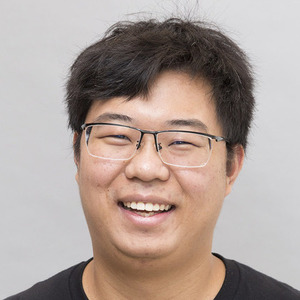
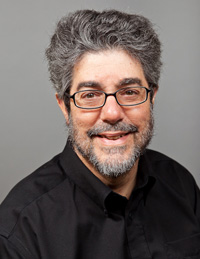
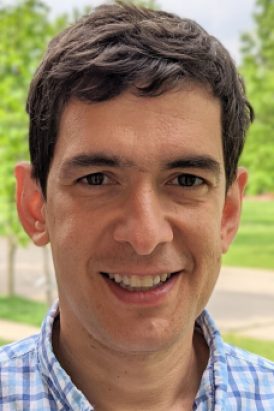
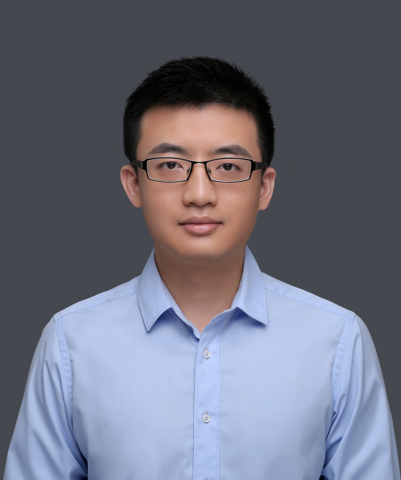
Zhen Liu is an Assistant Professor at the School of Data Science, CUHK-Shenzhen. His research focuses on generative models, 3D representations, and the synergy of spatial and semantic understanding in AI systems. With a PhD from Mila and Université de Montréal, he develops foundational methods for physics simulation, 3D assembly, and semantic reasoning in neural networks. His work bridges machine learning with applications in computer vision and graphics, emphasizing: Generative architectures for 3D content creation Diffusion model alignment techniques Efficient parameter finetuning strategies Dr. Liu mentors students in AI research and contributes to advancing 3D generative modeling paradigms.
Dr. Muhammad Najib is an Assistant Professor (Lecturer in the UK system) at Heriot-Watt University's School of Mathematical and Computer Sciences in Edinburgh. He is also an Associate Member of the University of Oxford's Department of Computer Science. His research focuses on ensuring AI safety through formal verification methods, particularly in multi-agent systems. Najib holds a DPhil/PhD from the University of Oxford, supervised by Julian Gutierrez and Mike Wooldridge, and has industry experience at Samsung Electronics. Education: BSc from Sepuluh Nopember Institute of Technology, MSc from the University of Liverpool, DPhil/PhD from the University of Oxford. He previously worked as a postdoctoral researcher at TU Kaiserslautern under Anthony Lin. Research Interests: Logic and game theory in AI foundations, equilibrium verification in multi-agent systems, temporal logics, and formal verification techniques. He developed the EVE tool for rational verification. Najib actively supervises PhD students and collaborates on projects like the UKRI AI CDT-D2AIR. Key Contributions: Published 17+ research outputs since 2018. Areas include equilibrium design, probabilistic multi-agent systems, and computational complexity analysis. His work bridges formal methods with AI safety, emphasizing automated synthesis and model checking.
Melih Kandemir is an Associate Professor at the Department of Mathematics and Computer Science, Southern Denmark University. He also serves as Research Group Leader at the Bosch Center for Artificial Intelligence (2018–2021) and held a previous role as Assistant Professor at Ozyegin University (2017–2018). His research focuses on machine learning, Bayesian methods, reinforcement learning, and uncertainty quantification. **Education**: PhD in Computer Science from Aalto University (2013), specializing in 'Learning Mental States from Biosignals'. **Research Interests**: Machine Learning, Bayesian Inference, Reinforcement Learning, Deep Neural Networks, Stochastic Processes. His work emphasizes theoretical foundations and practical applications in domains like medical imaging, control systems, and robotics. **Awards**: Two Best Paper Awards (2017). **Grants & Projects**: Includes the Carlsberg Young Researcher Fellowship (2022–2026), Novo Nordisk Foundation grants (2021–2024), and DFF-funded research on PAC-Bayesian reinforcement learning (2025–2027). **Labs/Teams**: Leads research on Bayesian deep learning and reinforcement learning within the Bosch Center for AI and SDU's interdisciplinary groups.
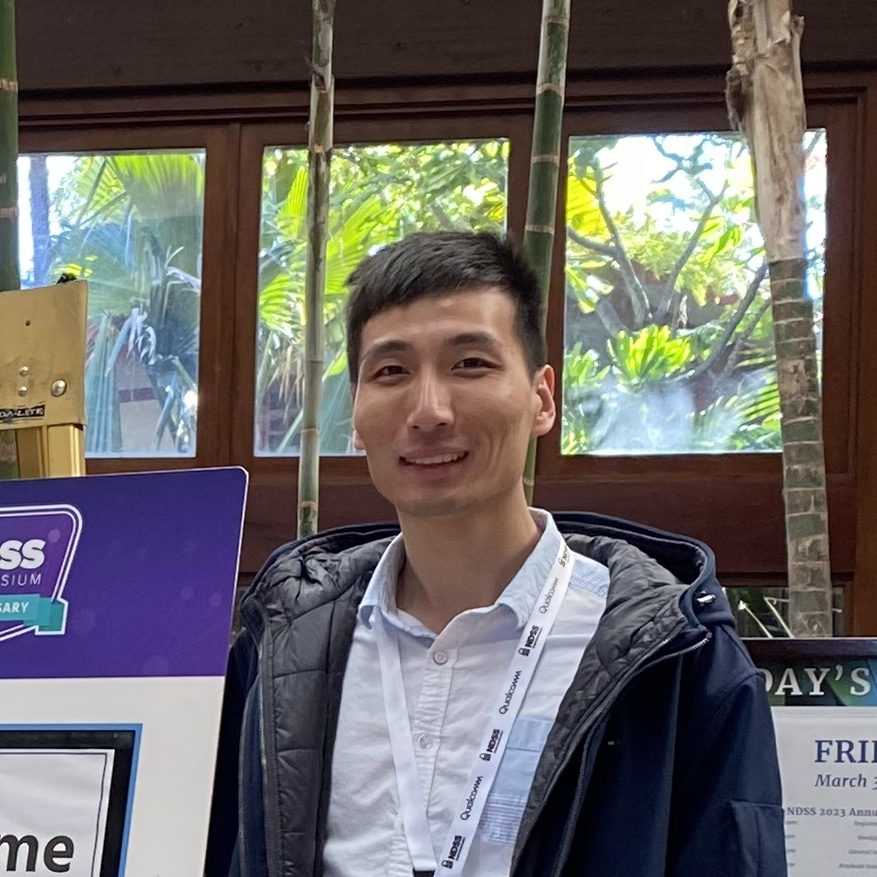
Guanhong Tao is an Assistant Professor at the Kahlert School of Computing, University of Utah. His research focuses on the security and safety of AI-enabled systems, particularly addressing adversarial attacks on machine learning models and large language models (LLMs). He has received notable awards, including the NVIDIA Academic Grant Award (2025) and the Maurice H. Halstead Memorial Award (2023). Educational Background: He earned his Ph.D. in Computer Science from Purdue University under Dr. Xiangyu Zhang’s supervision. His work spans adversarial generative AI, LLM agent security, and machine learning for security applications. Research Interests: Tao’s research emphasizes securing AI systems against adversarial threats, including backdoor attacks, alignment loss in LLMs, and privacy-preserving techniques. His projects have been published in top venues like IEEE S&P, USENIX Security, and NeurIPS. Recent Contributions: Key publications include 'Alleviating the Fear of Losing Alignment in LLM Fine-tuning' (S&P 2025) and 'BAIT: Large Language Model Backdoor Scanning' (S&P 2025). His work often bridges cybersecurity and machine learning, addressing real-world vulnerabilities in AI systems. Grants & Awards: In addition to his NVIDIA grant, Tao has received the ACM SIGPLAN Distinguished Paper Award (2019) and multiple best-paper recognitions. His research is funded by leading industry and academic partnerships. Advising & Teaching: He advises students like Shih-Chieh Dai and co-advises Kang Yang (with Dr. Jun Xu). He teaches courses such as 'Machine Learning Security' at the University of Utah and has guest-lectured at institutions like Purdue and Rutgers. Professional Service: Tao serves on program committees for top conferences, including IEEE S&P, ACM CCS, NeurIPS, and CVPR. He chairs workshops like BANDS (ICLR) and AISCC (NDSS), fostering collaborative research in AI security.
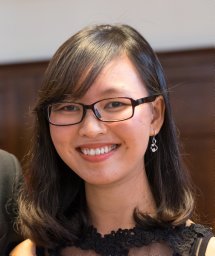
Nargiz Humbatova is a postdoctoral researcher at the Testing Automated (TAU) research group within the Software Institute (SI) at Università della Svizzera italiana (USI). She holds a PhD from USI (2023), an MSc in Advanced Computing from the University of Bristol, and a BSc in Mathematics from Moscow State University. Her research focuses on mutation testing of deep learning systems, fault localization, and program repair, with a particular emphasis on real-world fault analysis and testing methodologies for AI systems. Education: PhD in Informatics, Università della Svizzera italiana (2023) MSc in Advanced Computing, University of Bristol BSc in Mathematics, Moscow State University Research interests include mutation testing techniques, test input prioritization, deep learning fault benchmarks, and the application of large language models (LLMs) to fault localization and repair. She has contributed to the ERC-AdG project PRECRIME, dedicated to testing AI-based systems. Her work emphasizes practical validation through empirical studies and real-world fault injection. Her publications span topics such as mutation testing pipelines (e.g., muPRL), spectral analysis of neural activation values, and the development of tools like DeepCrime for deep learning testing. These articles highlight advancements in evaluating and improving the robustness of AI systems through rigorous testing frameworks. Labs/Teams: Member of the TAU (Testing Automated) research group at USI’s Software Institute, collaborating on interdisciplinary projects at the intersection of software engineering and artificial intelligence.
Dr. Edward Johns is an Associate Professor in the Department of Computing at Imperial College London and Director of the Robot Learning Lab. He specializes in robot learning, focusing on enabling robots to learn tasks through imitation and language-based reasoning. His expertise spans robotics, machine learning, and computer vision, with a particular emphasis on manipulation tasks requiring physical interaction with objects. He holds a BA and MEng from the University of Cambridge and a PhD from Imperial College London. Prior to his current role, he was a postdoc at UCL, a founding member of the Dyson Robotics Lab, and led the robot manipulation team there. He also served as Head of Robot Learning at Dyson (part-time, 2021–2022). His research has produced state-of-the-art capabilities such as one-shot imitation learning and language-driven task execution. Key areas of interest include sim-to-real transfer, self-supervised learning, and adaptive robotic systems. His work bridges foundational AI research with practical robotics applications, emphasizing real-world deployment and human-robot collaboration. Dr. Johns has published over 60 peer-reviewed papers, with over 4,000 citations, and has received prestigious awards including the UK-RAS Early Career Award (2023) and the Best Conference Paper Award at ICRA (2024). He is also actively involved in industry through advisory roles for robotics and AI startups. His teaching includes graduate courses on reinforcement learning and robot learning, and he collaborates extensively with labs such as the Robotics Forum and the Artificial Intelligence Network at Imperial College.
Nguyen Dang is a Lecturer at the School of Computer Science, University of St Andrews, actively supervising PhD students and teaching AI-related modules including Artificial Intelligence (CS3105), Artificial Intelligence Practice (CS5011), Machine Learning (CS5014), and Uncertainty in Artificial Intelligence (CS5016). He leads the Centre for Interdisciplinary Research in Computational Algebra and maintains an active research profile with numerous publications in top conferences. University of St Andrews, School of Computer Science Lecturer (equivalent to assistant professor) Supervising PhD students including Tai Nguyen Teaching multiple AI and Machine Learning courses Dr. Dang's research focuses on the intersection of machine learning and optimization, particularly automated algorithm configuration and design. His work centers on leveraging machine learning techniques to automate the development of optimization algorithms, with special emphasis on deep reinforcement learning for Dynamic Algorithm Configuration and integrating machine learning into constraint programming. His research has significant applications across various domains, especially in automated constraint modeling. The publications reflect strong activity in combinatorial optimization, algorithm selection, and benchmark instance generation. His recent publications demonstrate consistent output in top venues including Artificial Intelligence Journal, GECCO, FOGA, and CP conferences, with notable achievements including Best Paper Awards at GECCO'2025 and GECCO'2022. The research spans theoretical foundations of parameter control, practical applications in constraint programming, and innovative approaches to algorithm configuration. Best paper award at GECCO'2025 Best paper award at GECCO'2022 Nomination for best paper award at FOGA'2023 Best paper award at GECCO'2017 Dr. Dang holds a Leverhulme Early Career Fellowship (2020-2023) worth £90,000 for his project on constraint-based automated generation of synthetic benchmark instances. He has secured additional funding including EPSRC High Performance Computing grants totaling over 2.2 million CPU hours and a COST Action grant. His research group actively develops tools and frameworks for automated algorithm configuration and benchmark instance generation, with several open-source datasets available on GitHub. He is involved with multiple research groups including the Centre for Interdisciplinary Research in Computational Algebra and collaborates extensively with researchers at University of St Andrews and internationally, including at Université de Paris I Panthéon-Sorbonne where he conducted visiting research.
Aidong Zhang is the Thomas M. Linville Professor of Computer Science at the University of Virginia, with joint appointments in Biomedical Engineering and the School of Data Science. Her research focuses on machine learning, interpretable AI, federated learning, and generative AI applications in healthcare and bioinformatics. She holds a Ph.D. in Computer Science from Purdue University. Dr. Zhang has been honored with prestigious awards including the ACM Fellow (2017), IEEE Fellow (2009), and the 2025 Distinguished Researcher Award from UVA. Her work bridges computational methods with biomedical challenges, emphasizing fairness, robustness, and explainability in AI systems. Key research areas include federated learning frameworks, concept-based models, and large language models for scientific hypothesis generation. Dr. Zhang leads a lab offering PhD positions in machine learning, bioinformatics, and health informatics. Notable grants include NSF projects on explainable AI platforms and hardware-software co-design for extreme-scale machine learning. Education: Ph.D., Computer Science, Purdue University Affiliations: School of Engineering and Applied Science, School of Data Science Grants: NSF-funded projects on federated learning, multimodal analysis, and biomedical AI Labs/Teams: Zhang's Research Group focusing on interpretable machine learning and healthcare applications
Robert J.K. Jacob is a Professor of Computer Science at Tufts University, affiliated with the School of Engineering's Department of Computer Science. His research focuses on Human-Computer Interaction (HCI), particularly implicit brain-computer interfaces (BCI) using fNIRS and EEG technologies. He has held visiting positions at University College London, Université Paris-Sud, and MIT Media Lab. Education: Ph.D. in Computer Science from Johns Hopkins University. Research Interests : Jacob's work explores novel interaction techniques, adaptive interfaces, and BCI applications. Current projects emphasize real-time fNIRS-based systems for effortless user input, cognitive workload assessment, and neuroadaptive technologies. His lab investigates how brain signals can enhance user interfaces in domains like music learning, gaming, and urban design. Recent Trends in Articles : Recent publications highlight advancements in BCI design, neuroadaptive systems, and interdisciplinary applications of fNIRS. Work spans theoretical frameworks (e.g., NeuroCHI ethics) to practical tools like the Tufts fNIRS dataset. Key themes include improving BCI calibration, exploring AI's role in urban environments, and integrating affective computing into artistic interfaces. Awards : ACM Fellow (2016) ACM CHI Academy Membership (2007) Best Paper Award at CHI 2016 Advising & Grants : Supervised 15+ Ph.D. alumni in HCI and BCI. Served as Vice-President of ACM SIGCHI and co-chair of UIST/CHI conferences. Active in editorial roles for Human-Computer Interaction and ACM Transactions on Computer-Human Interaction . Labs & Teams : Directs the Tufts HCI Lab in the Joyce Cummings Center. Collaborates with interdisciplinary teams on projects like the Marble Track Audio Manipulator and Reality-Based Interaction Framework.
Soumaya Cherkaoui is a Full Professor in the Department of Computer Engineering and Software Engineering at Polytechnique Montréal. Previously, she served as a Full Professor at Université de Sherbrooke and held industrial roles as an aerospace project manager. Her research integrates artificial intelligence with telecommunications, focusing on quantum computing, frugal edge intelligence, and applications in connected vehicles and IoT. Current Position: Full Professor, Polytechnique Montréal Prior Academic Role: Full Professor, Université de Sherbrooke Industry Experience: Aerospace Project Manager Research Interests: Convergence of AI and communications, quantum computing for networking, frugal intelligence at the edge, and applications in autonomous vehicles, industrial IoT, and smart grids. She leads government and industry-funded projects, including a $6 million quantum initiative in 2025. Recent Publication Trends: Her 2025–2024 work emphasizes quantum-enhanced anomaly detection (via QGANs), Open RAN slicing with quantum optimization, and reinforcement learning for secure cognitive radio networks. Topics span 5G/6G, vehicular networks, and zero-trust architectures. Scientific Awards: IEEE Communication Society Distinguished Lecturer (2020) ACM Mirela Notare Award (2023) IEEE Bio-Inspired Computing STC Leadership Award (2023) N2Women: Stars in Networking and Communications (2023) Best Paper Awards at IEEE ICC 2017, IEEE LCN 2021, ICCSPA 2024 Advising and Grants: Supervised 3 Master's students in 2024, with research on quantum GANs and federated learning for vehicular networks. Secured grants like the $6 million quantum project (2025) and participated in CFI-QC government funding (2022). Editorial and Leadership: Served as Associate Editor for IEEE, Wiley, and Elsevier journals. Chaired conferences like IEEE LCN 2019 and IEEE ICC2025, and held leadership roles in IEEE Communications Society committees.
Erhan Bayraktar is a Professor of Mathematics at the University of Michigan, holding the Susan Smith Chair. He serves as Director of the Quantitative Finance and Risk Management Masters Program, which he established in 2015. His academic career at the University of Michigan spans since 2004, progressing from T. H. Hildebrandt Research Assistant Professor to his current full professorship. Professor Bayraktar earned his Ph.D. from Princeton University in 2004, following dual Bachelor's degrees in Electrical Engineering and Mathematics from Middle East Technical University in Turkey. His academic journey reflects a strong foundation in both theoretical and applied mathematical disciplines. Bayraktar's research focuses on mathematical finance, applied probability, machine learning, mean field games, stochastic analysis, stochastic control, and optimal stopping. His work bridges theoretical mathematics with practical applications in finance and risk management. He has developed sophisticated mathematical frameworks for analyzing complex financial systems, market behaviors, and optimal decision-making under uncertainty. His contributions to mean field games have provided new insights into large-scale interacting systems, while his work on stochastic control has advanced methodologies for optimal decision processes. His publication record demonstrates a consistent trajectory of high-impact research, with recent work focusing on Wasserstein space analysis, graphon particle systems, and applications of machine learning to financial mathematics. His research shows increasing interdisciplinary connections between traditional mathematical finance and modern computational approaches. Susan M. Smith Professorship (2010-present) National Science Foundation CAREER Grant (2010-2016) SIAM Activity Group on Financial Mathematics and Engineering Early Career Prize (2010) Professor Bayraktar has mentored 14 Ph.D. students (13 graduated) and approximately 40 post-doctoral researchers. His students hold prestigious positions in academia and industry, including tenure-track positions at Boston University, University of Colorado, University of Sydney, and University of Toronto. He has secured continuous funding from the National Science Foundation, including the current grant DMS-2507940 (2025-2028) and previous grants totaling over 15 years of continuous NSF support. As Director of the Quantitative Finance and Risk Management Masters Program, Bayraktar has built a robust academic community through the Financial/Actuarial Math seminar series, which hosts about 10 outside speakers annually, and by organizing international workshops in stochastic analysis for finance and insurance in Ann Arbor.
Kede Ma is an Associate Professor in the Department of Computer Science at City University of Hong Kong (CityUHK). He received his B.E. from the University of Science and Technology of China (USTC) in 2012, and MASc and Ph.D. degrees from the University of Waterloo in 2014 and 2017, respectively. From 2018 to 2019, he was a Research Associate with the Howard Hughes Medical Institute and New York University. Prof. Ma has been named to the Highly Cited Researchers list by Clarivate Analytics in 2024 and currently serves on the editorial boards of IEEE Transactions on Image Processing, IEEE Transactions on Information Forensics and Security, and IEEE Signal Processing Letters. Prof. Ma leads the Multimedia Analytics (MA) Laboratory, an interdisciplinary research group focused on computational vision, computational modeling of human visual perception, perceptual multimedia signal processing, quality assessment, and multimedia forensics. His research spans computational photography, high dynamic range imaging and rendering, omnidirectional video analysis, camera processing pipeline design, and artificial intelligence safety in multimedia systems. His work integrates machine learning techniques including reinforcement learning, generative modeling, self-supervised learning, and continual learning for multimedia signal processing applications. His recent publications demonstrate a strong focus on image quality assessment, deep learning for multimedia processing, and multimedia forensics. His work bridges theoretical computer vision principles with practical applications in multimedia systems. The research trends show increasing integration of foundation models with specialized multimedia processing tasks, particularly in quality assessment and security applications. Highly Cited Researchers list by Clarivate Analytics (2024) Best Paper Award at IEEE International Conference on Virtual Reality and Visualization (2021) Best Paper Runner-Up at International Joint Conference on Artificial Intelligence Workshop (2021) Top 10% Award at IEEE International Conference on Image Processing (2015) Finalist for the Governor General's Gold Medal, University of Waterloo (2017) Spotlight presentation at NeurIPS (2022) Highlight paper at ICCV (2025) Oral presentation at ICLR (2025) Prof. Ma advises numerous PhD students and postdoctoral fellows in the MA Laboratory. His research is supported by various grants enabling work in multimedia analytics, image processing, and computer vision. The laboratory maintains active collaborations with researchers at institutions including SUSTech, ZJU, and HIT. Current projects focus on advancing image quality assessment methodologies, developing more robust deep learning techniques for multimedia forensics, and exploring new approaches to HDR imaging and omnidirectional video processing. The Multimedia Analytics Laboratory maintains a strong focus on both theoretical foundations and practical applications of multimedia processing. Current research directions include integrating large language models with image quality assessment, developing more robust deepfake detection methods, and advancing techniques for continual learning in multimedia applications. The lab emphasizes rigorous evaluation methodologies and maintains multiple datasets for multimedia quality assessment research.
Georges Gielen is Full Professor in the Department of Electrical Engineering (ESAT) at KU Leuven, Belgium, and part-time Research Director at imec. He has held multiple leadership roles including Chair of ESAT Department (2012-2013, 2020-2024) and Vice-Rector for Science, Engineering & Technology (2013-2017). His academic career spans over 30 years at KU Leuven, progressing from Assistant to Full Professor. His research focuses on analog and mixed-signal integrated circuit design automation , with expertise in CAD tools, design optimization, sensor interfaces, and neuromorphic systems. His work bridges hardware design with machine learning, particularly in hardware-efficient AI implementations and biomedical applications. He has pioneered techniques for automated analog circuit sizing, topology synthesis, and reliability-aware design in nanometer CMOS. Gielen has received numerous accolades including the IEEE CAS Mac Van Valkenburg Award (2015), IEEE CAS Charles Desoer Award (2020), and EDAA Achievement Award (2021). He holds an ERC Advanced Grant AnalogCreate and is an IEEE Fellow since 2002. As a prolific scholar, he has chaired major conferences including DATE (2006), ICCAD (2007), and ESSCIRC (2017). He has graduated over 55 PhD students through the MICAS research group at KU Leuven, currently supervising 13 doctoral candidates. His research team collaborates extensively with imec and industry partners on cutting-edge projects in carbon-aware AI accelerators, uncertainty-aware design, and neuromorphic sensor interfaces.
Farinaz Koushanfar is a Professor in the Department of Electrical and Computer Engineering at the Jacobs School of Engineering, University of California San Diego (UCSD) . She holds the Siavouche Nemat-Nasser Endowed Chair and serves as Founding Co-Director of the Center for Machine-Intelligence, Computing and Security . Her affiliations include NSF Trust-Hub (Co-PI) and NSF TILOS AI Institute . She also serves on the Editorial Board of The Proceedings of the IEEE . Research Focus: Prof. Koushanfar leads research in secure and efficient computing , including robust/safe AI , hardware/system security , AI-based optimization , and cryptographically secure privacy-preserving computing . Her work pioneered logic obfuscation/locking for chip security, automated co-design of AI systems , watermarking/tracing of deep learning models , and physical proofs of provenance . She explores co-design with cryptographic constructs for privacy preservation and manages nonlinearities in ciphertext domains. Article Trends: Recent publications show expertise in neural watermarking (deepfakes, media authentication), zero-knowledge proof frameworks , Trojan attack defenses in ML models, secure federated learning , and hardware acceleration of cryptographic protocols . Her work combines machine learning , cryptography , and physical design security across 2022-2025 publications. Scientific Awards: Fellow of ACM Fellow of IEEE Fellow of National Academy of Inventors (NAI) Fellow of Kavli Foundation of NAS Inducted to NAI 2024 Fellows Advising & Leadership: She has advised multiple PhD students who became faculty at top universities (e.g., Stanford, Purdue). She chairs conferences like ACM WiSec 2024 and co-led the NSF SaTC decadal review. Her lab ( ACES Lab ) produces award-winning graduates like Bita Rouhani (DAC Under-40 Innovators) and Shehzeen Hussain (UCSD Best Dissertation Award).
Professor Rafal Bogacz is a leading academic at the University of Oxford, affiliated with St Edmund Hall and the MRC Brain Network Dynamics Unit . He teaches computational neuroscience and statistics at both undergraduate and postgraduate levels, including the MSc in Neuroscience and BSc in Biomedical Science programs. MSc: Wroclaw University of Technology PhD: University of Bristol Postdoctoral Researcher: Princeton University His research focuses on computational neuroscience , particularly modeling brain networks involved in action selection , decision making , and Parkinson's disease pathophysiology. Key themes include: Developing predictive coding models of cortical computations Understanding basal ganglia neural circuits in healthy and diseased states Designing closed-loop deep brain stimulation paradigms Recent publications highlight work in neural plasticity , dopamine signaling , and computational psychiatry , with a notable Wellcome Discovery Award supporting research on learning in neurons . The Bogacz Group maintains strong collaborations with experimental neuroscientists and shares open datasets through the MRC BNDU Data Sharing Platform . Wellcome Discovery Award (2025): For learning in neurons Europe PMC Open Access (multiple): For numerous PLoS, Nat Neurosci, and J Neural Eng publications As a computational neuroscientist, Professor Bogacz supervises D.Phil. students and leads research programs that bridge theoretical neuroscience with clinical applications . The group actively participates in MRC BNDU training initiatives and public engagement activities like Schools Open Day demonstrations.