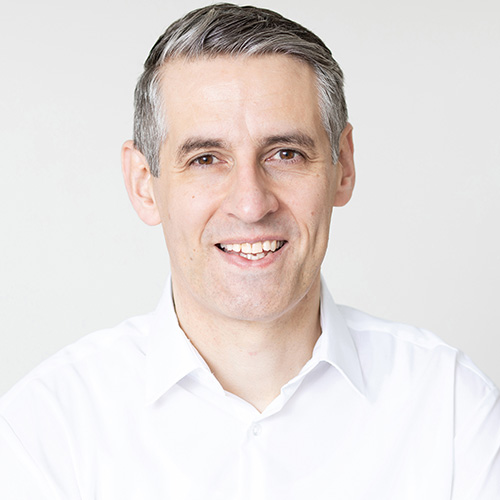
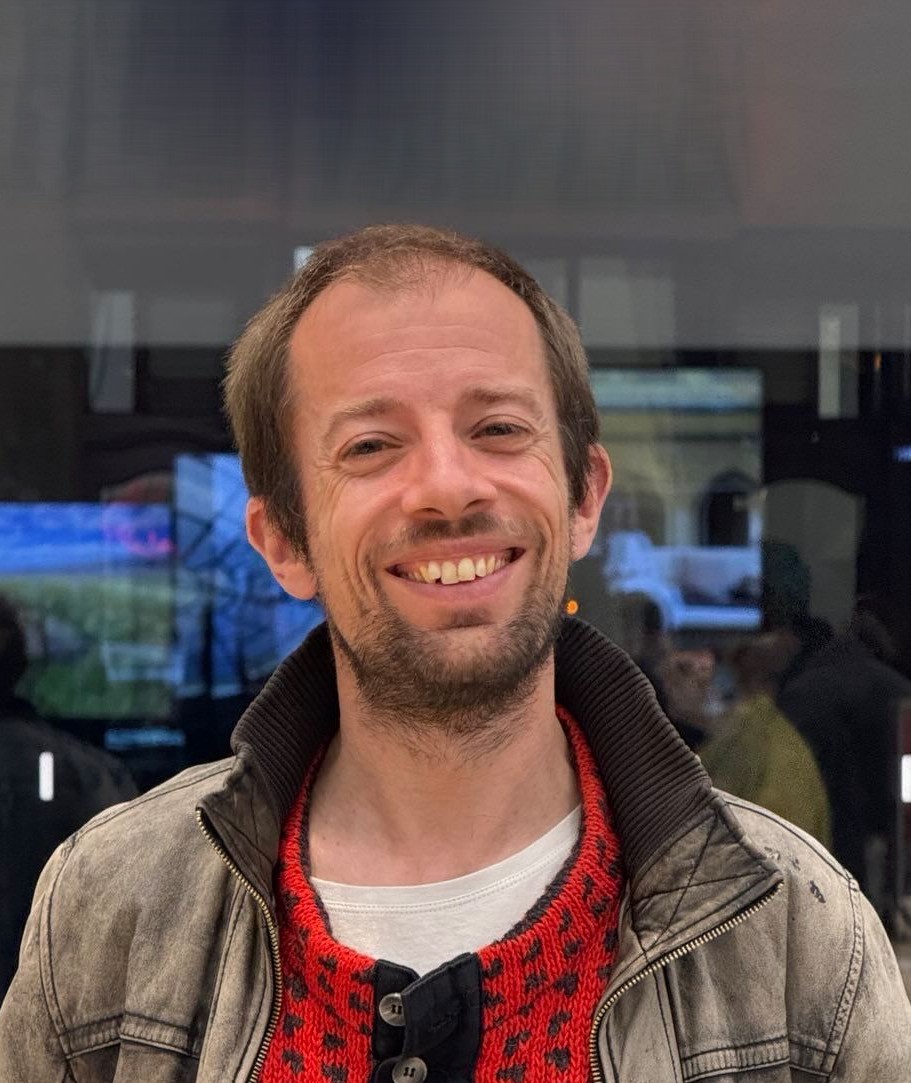
Peer Christian Kunstmann is an Adjunct Professor at the Institute of Analysis, Karlsruhe Institute of Technology (KIT). He teaches advanced mathematics courses for physics, electrical engineering, and mathematics students, including Analysis 4 (2025) and Höhere Mathematik II (2025). His research focuses on functional analysis, partial differential equations, and harmonic analysis. Key topics: Spectral theory, Navier-Stokes equations, and nonlinear Schrödinger equations Co-organized conferences: Parabolic Evolution Equations (2019), Evolution Equations (2010) Recent work explores maximal regularity for parabolic equations, modulation spaces in NLS analysis, and seismic imaging via Radon transforms. Publications span 2015-2023, with collaborations on topics like Banach algebras and inverse problems.
Prof. Dr.-Ing. Christoph Stiller is a full professor at the Karlsruher Institut für Technologie (KIT) and serves as the director of the Institute of Measurement and Control Technology (Institut für Mess- und Regelungstechnik, MRT). His work focuses on autonomous driving, sensor fusion, probabilistic estimation, HD mapping, motion planning, and intelligent transportation systems. Education: Details on his academic degrees are not provided in the text, but he holds the title of Dr.-Ing. indicating a doctoral degree in engineering. Research Interests: Prof. Stiller's research spans a wide array of topics critical to the development of autonomous vehicles. His work includes: Sensor Fusion: Integrating data from LiDAR, cameras, and radar to create robust perception systems. HD Mapping & Localization: Developing high-definition maps and precise localization techniques for urban and highway environments. Motion Planning & Decision Making: Creating algorithms for safe and efficient trajectory planning under uncertainty. Machine Learning & AI: Applying deep learning and reinforcement learning to perception, prediction, and control tasks. Publication Trends: His recent publications (2023–2025) emphasize robust traffic light detection, image stitching for panoramic views, motion prediction using redundancy reduction, and safety-enhanced model predictive control. The work increasingly integrates learning-based methods with classical control and estimation theory. Scientific Awards: No specific awards are listed in the provided text. Teaching & Supervision: Prof. Stiller teaches foundational and advanced courses in measurement and control systems, probabilistic estimation, and autonomous driving. He holds regular office hours during both summer and winter semesters and is actively involved in advising students and researchers. Labs & Teams: He leads the Institute of Measurement and Control Technology (MRT) at KIT, which is engaged in cutting-edge research in autonomous systems. The institute collaborates with industry and academia on large-scale projects such as UNICARagil and various European initiatives.
Prof. Dr. Martin Burger is a leading scientist at DESY and a Full Professor in the Department of Mathematics at Universität Hamburg, where he leads the Computational Imaging Group. His research bridges applied mathematics, imaging sciences, and machine learning, with a focus on inverse problems, mathematical modeling, and partial differential equations. He has held professorial positions at Universität Münster and FAU Erlangen-Nürnberg prior to his current dual appointment. Full Professor, Universität Hamburg (2023–present) Leading Scientist, DESY, Hamburg (2023–present) Full Professor, FAU Erlangen-Nürnberg (2018–2023) Full Professor, Universität Münster (2006–2018) His research interests include inverse problems, variational regularization, optimal transport, kinetic models, and mathematical modeling in biology and social sciences. He has made significant contributions to imaging reconstruction, sparse neural networks, and the analysis of transformer architectures. His work often integrates theoretical analysis with computational methods, influencing both pure and applied mathematics. The most recent articles reflect a strong trend toward interdisciplinary applications, combining deep learning with PDE-based modeling, analyzing social and biological systems via kinetic and mean-field models, and advancing mathematical imaging through graph-based and optimal transport methods. His publications span high-impact venues in applied mathematics and computational science. Calderon Prize, Inverse Problems International Association (IPIA) ERC Consolidator Grant (2014) Invited speaker at ECM (2021), ICM (2022), and ICIAM (2023) Editor-in-Chief, European Journal of Applied Mathematics (since 2017) Prof. Burger has supervised numerous PhD students and postdoctoral researchers, many of whom appear as co-authors in his publications. His research is supported by major grants, including funding from the German Federal Ministry of Education and Research (BMBF). He is actively involved in collaborative projects across mathematics, physics, and engineering disciplines. He leads the Computational Imaging Group at DESY, fostering a collaborative environment for developing novel mathematical tools in imaging science. The group works on both theoretical foundations and practical implementations, contributing to advancements in tomography, machine learning, and data analysis.
Christian List is Professor of Philosophy and Decision Theory at Ludwig Maximilian University of Munich, where he serves as Co-Director of the Munich Center for Mathematical Philosophy (MCMP). Previously, he was Professor of Philosophy and Political Science at the London School of Economics until 2020. His work bridges philosophy, economics, and political science with a particular focus on individual and collective decision-making and the nature of intentional agency. Professor List's research spans multiple interconnected domains: theories of individual and collective choice (particularly social choice theory and judgment aggregation), free will and consciousness, the philosophy of mind and action, and the foundations of the social sciences. His work on group agency, developed in his influential book Group Agency with Philip Pettit, has reshaped debates about corporate entities and collective intentionality. His more recent work on free will, culminating in his book Why Free Will is Real , presents a scientifically grounded defense of free will against reductionist skepticism. His recent publications reveal a sophisticated integration of formal methods with deep philosophical questions, particularly regarding consciousness, probability aggregation, and the relationship between different levels of explanation. List's work consistently demonstrates how mathematical precision can illuminate fundamental philosophical problems while maintaining relevance to broader social and scientific contexts. Scientific Awards and Recognition: Elected Fellow of the British Academy (2014) Member of Academia Europaea (2023) Member of the Bavarian Academy of Sciences and Humanities (2022) Joseph B. Gittler Award from the American Philosophical Association (2020) Philip Leverhulme Prize in Philosophy (2007) 5th Social Choice and Welfare Prize (2010) List has supervised numerous PhD students and early-career researchers, many of whom have gone on to prominent positions in philosophy and related fields. His collaborative work with Franz Dietrich on judgment aggregation has been particularly influential. As Co-Director of the Munich Center for Mathematical Philosophy, he has secured substantial research funding and established MCMP as a leading international hub for formal and mathematical approaches to philosophical problems. Through the Munich Center for Mathematical Philosophy, List leads a vibrant research community that brings together philosophers, economists, political scientists, and mathematicians to tackle foundational questions using rigorous formal methods. The center hosts regular workshops, seminars, and visiting scholars, creating a dynamic intellectual environment that bridges disciplinary boundaries.
Christian Wald is a Post-doctoral researcher at Technical University Berlin working under Professor Gabriele Steidl, focusing on generative modeling, flow matching, and stochastic processes in machine learning. His research bridges theoretical probability with practical medical imaging applications, particularly in MRI reconstruction and analysis. He completed his PhD at Humboldt University of Berlin in 2017 with a thesis on p-adic quantum groups. His academic journey transitioned from pure mathematics to interdisciplinary machine learning research, reflecting his versatile expertise. Wald's primary research explores generative models through the lens of optimal transport and flow matching, with significant contributions to Wasserstein geometry and conditional distance metrics. His work frequently integrates stochastic processes to enhance medical image reconstruction, demonstrating strong cross-disciplinary impact in both theoretical machine learning and clinical applications. Recent publications highlight innovations in sliced MMD flows, Bayesian OT methods, and uncertainty-aware medical image analysis. Analysis of his 15 most recent publications (2019-2025) reveals a consistent trajectory toward unifying geometric probability with deep learning. Key themes include flow-based generative modeling for medical time-series data, optimal transport applications in image reconstruction, and novel kernel methods for distribution matching. His work spans both foundational theory (e.g., Fisher-Rao curves) and high-impact medical applications (e.g., coronary calcium scoring). No specific scientific awards are documented in the provided text, though his publications appear in prestigious venues including ICLR, IEEE TMI, and Physics in Medicine & Biology. Wald maintains extensive collaborations with the medical imaging group at Technical University Berlin, particularly with Andreas Kofler and Gabriele Steidl. His co-authored works demonstrate consistent contributions to MRI reconstruction pipelines and segmentation frameworks, though no formal advising roles or grant leadership are indicated. Current projects focus on uncertainty quantification in active learning for medical image segmentation. He operates within Gabriele Steidl's research group at Technical University Berlin, which specializes in mathematical imaging and machine learning. The team combines expertise in optimization, probability theory, and deep learning to solve medical imaging challenges, with Wald contributing core algorithmic innovations in generative modeling and stochastic reconstruction.
Professor Asaf Shapira is a faculty member in the Department of Theoretical Mathematics at Tel Aviv University's School of Mathematical Sciences. He has been actively contributing to combinatorics and graph theory research for over a decade, with numerous publications in top journals including Journal of the ACM, Advances in Mathematics, and Geometric and Functional Analysis. Professor Shapira's research focuses on extremal combinatorics, graph theory, and property testing. His work explores fundamental questions in Ramsey theory, hypergraph theory, and probabilistic methods in combinatorics. He has made significant contributions to the study of graph regularity, removal lemmas, and extremal problems in dense and sparse graphs. His recent publications demonstrate a consistent focus on theoretical aspects of combinatorics with connections to theoretical computer science. A notable trend is his work on developing polynomial bounds for various combinatorial theorems and exploring connections between combinatorial structures and computational complexity. His research often bridges pure mathematics with theoretical computer science applications. Professor Shapira teaches advanced courses at Tel Aviv University including Extremal Graph Theory, Basic Combinatorics, and seminars on specialized topics in combinatorics. His teaching spans undergraduate and graduate levels, reflecting his commitment to educating the next generation of mathematicians.
Philipp Otto is a Professor of Statistics and Data Science at the University of Glasgow. Previously, he was a Reader in Statistics and Data Analytics (2023–2024) and held a Junior Professorship in Big Geospatial Data at Leibniz University Hannover (2018–2023). He earned his PhD in Statistics (summa cum laude) from European University Viadrina in 2016 and a B.Sc. in International Economics, with study visits to Saint Petersburg State University. His research focuses on spatial and spatiotemporal statistics, environmetrics, network modeling, and machine learning applications. Education: PhD in Statistics (2016), European University Viadrina, Frankfurt (Oder) B.Sc. in International Economics (with study visits to Saint Petersburg) Research Interests: Philipp’s work centers on spatial statistics, spatiotemporal volatility modeling, environmental data analysis, and network processes. He develops statistical methods for geo-referenced and network data, with applications in climatology, finance, and environmental risk assessment. His contributions include advancements in GARCH models, spatiotemporal clustering detection, and statistical process monitoring for AI systems. Grants & Projects: He has secured €1,038,847 in research grants, leading projects on historical map time series analysis, agricultural air quality impacts, and high-dimensional spatial dependence structures. Industry collaborations include survival analysis for building information models. Awards: 2017 Fellowship to attend the Lindau Nobel Laureate Meeting (Economic Sciences) 2017 Best Presentation Award (Data Science, Statistics, and Visualisation) Teaching: He teaches statistics and data science across disciplines, including economics, engineering, and mathematics, at both undergraduate and postgraduate levels. Professional Activities: Editorial Boards: Environmetrics (2021), AStA Advances in Statistical Analysis (2020) Member of German Statistical Society (Treasurer, 2013)
Marco Cuturi is a Research Scientist at Apple ML Research in Paris and Professor of Statistics at CREST-ENSAE, Institut Polytechnique de Paris. His work bridges machine learning , optimal transport , and optimization , with applications in time-series analysis , kernels , and multiresolution methods . He has held academic roles at Kyoto University and Princeton University, and previously worked in the financial industry. Research Interests: Optimal transport theory and computational methods Kernel design for structured data and histograms Time-series alignment and soft-DTW Entropic regularization in optimization Applications to computer vision and genomics Teaching: Cuturi has taught courses on linear optimization at Princeton, geometric methods in machine learning at Kyoto, and scientific English. He has also organized machine learning summer schools in Kyoto, Les Houches, and other international venues. Recent Trends: His 2024-2025 publications focus on entropic optimal transport solvers, disentangled representation learning via Gromov-Monge gaps, and applications to text-to-image diffusion models. Collaborative work with institutions like Google Research, MIT, and University of Tokyo highlights his interdisciplinary impact.
Prof. Dr. Helen Baykara-Krumme is a full-time Professor of Sociology with a focus on Migration and Participation at the Institute of Sociology, University of Duisburg-Essen since March 2019. She serves as Managing Director of the Institute of Sociology (2020-2022), Chair of the Faculty of Humanities Ethics Committee since 2020, and Chair of the InZentIM Board since 2024. Her research spans migration, transnationalization, integration, and participation, with specialized focus on family processes in migration contexts, life course analysis, aging in migration contexts, migration-related organizational change, migration-disability intersections, and urban research methodologies. Education: Sociology, Statistics, and Agricultural Sciences (1995-2002, Free University & Humboldt University Berlin); PhD in Philosophy (2007, Free University Berlin); Habilitation (2017, Chemnitz University of Technology) Research Leadership: Coordinated BMBF-funded ZOMiDi project on civil society responses to migration diversity; edited Organisationaler Wandel durch Migration? (2022); contributed to the Ninth Family Report of the Federal Government (2016-2021) Methodological Expertise: Quantitative survey methods, intergenerational solidarity analysis, urban ethnography, and intersectional frameworks Awards: Fellow of the International Max Planck Research School LIFE (2002-2006) Teaching: Supervises final theses, leads courses on migration and globalization, and maintains regular consultation hours
Prof. Dr. Matthias Weidlich is a faculty member at Humboldt University of Berlin within the Institute of Computer Science under the Faculty of Mathematics and Natural Sciences . His research focuses on Process Mining , Complex Event Processing , and Data Privacy with applications in Business Process Management and Scientific Workflows . Research Interests: Business Process Management and Process Mining Complex Event Processing and Stream Data Analysis Data Privacy and Security in Process Systems Scientific Workflow Systems and User Behavior Heterogeneous Network Embeddings Algorithm Design and Optimization Recent Publications (2023-2025) demonstrate expertise in: Efficient stream processing techniques Privacy-preserving process mining frameworks Scientific workflow analysis tools Graph neural network applications Multi-modal data integration Adaptive querying systems Contact: Office: Unter den Linden 6, 10099 Berlin Phone: 030 2093-41277 Email: matthias.weidlich@hu-berlin.de Web: hu.berlin/data
James C. Davis is an Assistant Professor in the Elmore Family School of Electrical and Computer Engineering at Purdue University. He leads the Duality Lab, which focuses on the engineering of software-intensive computing systems with particular interest in how these systems fail and how those failures can be mitigated. His research takes a socio-technical approach, considering both human and technical perspectives in system engineering. Dr. Davis received his PhD in Computer Science from Virginia Tech, where he was advised by Dongyoon Lee. His research interests span empirical software engineering, security, safety, testing, and web technologies, with a strong emphasis on practical impact and measurement. He applies a socio-technical philosophy to his work, believing high-quality systems must be engineered considering both human and technical perspectives. His recent research focuses on software supply chain security, regular expression vulnerabilities (particularly ReDoS), pre-trained model security, and failure analysis in software systems. His work often involves empirical studies of real-world software systems and security practices, with a strong emphasis on practical impact and measurable results. Dr. Davis has received significant funding from the National Science Foundation, Google, Cisco, and Rolls Royce for his research. His publications appear in top-tier venues including ICSE, FSE, ASE, and USENIX Security. He has served on program committees for many major software engineering and security conferences. Among his notable achievements are being elevated to IEEE Senior Member in 2022, receiving the Ruth and Joel Spira Outstanding Teacher Award from ECE@Purdue in 2022, and multiple Best Paper and Best Poster awards. He has successfully mentored numerous PhD and Master's students, with several completing their theses on topics related to software security and engineering. Dr. Davis actively recruits graduate and undergraduate research assistants for his Duality Lab, which has produced influential work on software failure analysis, regular expression security, and machine learning supply chain security. His lab is supported by multiple federal and industry grants focused on improving the security and reliability of software systems.
Prof. Dr. Barbara Praetorius is a leading scholar in sustainability economics at HTW Berlin since 2017. She co-chaired Germany's Coal Commission ("Kommission Wachstum, Strukturwandel und Beschäftigung") and serves on advisory boards for Berliner Wasserbetriebe and VERBUND AG. Her work bridges climate policy, energy economics, and social equity, with a focus on Germany and the Global South. Research Themes: Climate economics, decarbonization pathways, renewable energy integration, and sustainable development in emerging economies. Policy Influence: Regular contributor to national climate policy debates, particularly on carbon pricing and coal phase-out strategies. Academic Roles: Professor at HTW Berlin's Department 3: Economics and Law since 2017, previously Deputy Director of Agora Energiewende (2014-2017). Recent Publications emphasize plug-in solar systems' socio-economic impacts, just coal transitions in Hesse, and ecological industrial policy frameworks. Her 2024 work on energy market transformation highlights the need for policy innovation and market redesign. Scientific Recognition : Ranked among Germany's most influential female economists by FAZ Active in EU energy policy advisory roles Recipient of BMBF research funding for international projects
Dr. Farzaneh Derakhshan is an Assistant Professor in the Computer Science Department at Illinois Institute of Technology (Illinois Tech), where she explores logical foundations of concurrency and develops formal methods for program verification. She earned her Ph.D. in Pure and Applied Logic from Carnegie Mellon University in 2021 under Frank Pfenning, followed by a postdoctoral fellowship at CMU with Limin Jia and Stephanie Balzer. Current affiliation: Illinois Tech (since ~2021) Previous affiliation: Carnegie Mellon University (Ph.D. and postdoc) Research focus: Type theory, logical verification, and security for concurrent systems Teaching: Courses on programming languages, type systems, and security Her research addresses fundamental challenges in concurrent programming, including: Developing modal logic frameworks for system verification Designing type systems for intermittent computing Creating behavioral type systems for security guarantees Applying relational logic to GPU security and secure compilation Investigating logical foundations of session-typed processes Formal verification of cyclic process networks Current research trends include: Hybrid dynamic verification for parallel systems Logical approaches to side-channel security Formal methods for cyber-physical systems Crash-resilient computing models Security verification in decentralized applications Noninterference proofs in session-typed concurrency Scientific recognition: NSF SaTC CORE Collaborative Award #2350217 Organizing committee member at Dagstuhl Seminar 26071 Professional leadership: Program committee co-chair for PLACES 2025 Committee roles at LICS 2026, ESOP 2026, ICFP 2025, and ECOOP 2025 Regular reviewer for ACM Transactions journals Laboratory involvement: Co-director of behavioral types research at Illinois Tech Collaboration with Carnegie Mellon's formal verification group Key participant in the FACCT workshop
Matthew K. Tam is an Associate Professor at the School of Mathematics and Statistics, The University of Melbourne, specializing in Operations Research. He is also an investigator at the Melbourne Centre for Data Science and an associate investigator in the ARC Training Centre OPTIMA. PhD in Mathematics (2016) from University of Newcastle under Jonathan Borwein Postdoctoral research at University of Göttingen with RTG-2088 and Alexander von Humboldt Foundation Junior Professor at University of Göttingen (2017-2020) His research focuses on continuous optimization, monotone operator theory, and variational analysis, with applications in wavelet construction and inverse problems. Key trends include distributed algorithms, resolvent splitting, and convergence analysis for feasibility problems. Discovery Early Career Researcher Award (DECRA) Alexander von Humboldt Fellowship He collaborates with institutions like ANZIAM, Springer, and IEEE, with publications spanning mathematical optimization, harmonic analysis, and computational mathematics. His work emphasizes algorithmic design for complex data systems and real-world applications in imaging and industrial modeling.
Angkana Rüland is a Professor at the University of Bonn's Mathematical Institute and holder of the Hausdorff Chair at the Hausdorff Center for Mathematics (HCM), a Cluster of Excellence. She is a member of the Transdisciplinary Research Area ‘Modelling’ and a recipient of the prestigious Leibniz Prize (2025). Her research focuses on inverse problems, fractional PDEs, and phase transformations in materials science, with contributions to the Calderón problem and microstructure analysis. She has held positions at Oxford, the Max Planck Institute in Leipzig, and Heidelberg University before returning to Bonn in 2023. Education: She completed her Abitur, bachelor's/masters, and PhD (2014, Hausdorff Memorial Prize) at the University of Bonn, where she also co-founded the Bonn Math Club. Her academic journey includes postdoctoral research at Oxford and leadership roles in Leipzig and Heidelberg. Research interests span inverse problems (e.g., fractional Calderón problem), material microstructures (shape-memory alloys), and mathematical physics. Her work bridges pure and applied mathematics, addressing questions in elasticity, nonlocal operators, and energy scaling laws. Scientific awards include the Leibniz Prize (2025) for her groundbreaking research and the Hausdorff Memorial Prize for her doctoral thesis. She aims to use Leibniz Prize funds to strengthen her research group at HCM, furthering interdisciplinary collaborations. Her contributions have positioned Bonn as a global leader in mathematical research, with 20 Leibniz laureates since 1986.