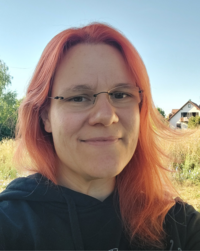
Armeen Taeb is an Assistant Professor in the Department of Statistics at the University of Washington . Previously, he was a postdoctoral fellow at ETH Zürich under the ETH Foundations of Data Science, mentored by Peter Bühlmann. He earned his PhD in Electrical Engineering at Caltech under Venkat Chandrasekaran's supervision. Research Interests : His work bridges optimization and statistics , focusing on Graphical and latent-variable modeling Provably optimal causal model learning False positive error control in non-traditional settings Domain adaptation Applications in physical sciences Article Trends : His publications span causal inference (2022-2025), graphical models (2017-2025), convex optimization (2018-2025), and statistical robustness (2020). Recent work (2025) addresses extremal graphical modeling and selective inference challenges. Scientific Awards : ETH Zürich Foundations of Data Science Postdoctoral Fellowship (2019-2021) Caltech Resnick Institute Fellowship (2016-2018) W. P. Carey & Co. Prize for Applied Mathematics (2020) Caltech Graduate Fellowship (2013-2014) Grants : National Science Foundation DMS-2413074 (PI), University of Washington Royalty Research Fund (PI). Service : President of the Institute of Mathematical Statistics New Researcher Group; co-organized IMS New Researchers Conferences (2024-2025).
Dr.-Ing. Anna Krause is a researcher at the Chair of Data Science (Informatik X) within the Faculty of Mathematics and Computer Science at the University of Würzburg. She leads the Deep Learning for Dynamical Systems Group and has been actively involved in teaching at the university since 2019, including courses on Machine Learning for Time Series Analysis and Data Mining. Doctoral degree in Electrical Engineering (2019), University of Hannover Diploma in Electrical Engineering (2009), Technical University Dresden Her research focuses on Environmental Sensing and Time Series Analysis , particularly on enhancing physics-based models using machine learning techniques for meteorological applications and sparse sensor networks. She has made significant contributions to explainable AI, climate modeling, and fraud detection systems. Anna's recent publications demonstrate expertise in climate modeling (ConvMOS, ICLR 2024-2025), physics-informed neural networks (TaylorPDENet, ECMLPKDD 2023), and fraud detection (MIDAS workshops, ECMLPKDD 2020-2023). She actively contributes to conferences as organizer and PC member, including ECMLPKDD and ICLR workshops. Scientific Awards Best ML Innovation Award (2020) for Deep Learning in Climate Modeling Best Student Paper Award (2020) for Multi-Task Land Use Regression Best Paper Award (2020) for Financial Fraud Detection with INALU The DynaBench dataset introduced in 2023 provides benchmark tools for learning dynamical systems from low-resolution data. Her work combines theoretical advancements with practical implementations, including edge computing applications for beekeeping monitoring systems.
Prof. Dr. Karsten Borgwardt is Director of the Research Department of Machine Learning and Systems Biology at the Max Planck Institute of Biochemistry in Martinsried, Germany. A leading figure in the intersection of machine learning, bioinformatics, and systems biology, he heads a multidisciplinary team that develops novel computational methods to extract knowledge from large biomedical data sets. Research Mission: The Borgwardt lab converges big data analytics and biomedical research . Two overarching goals drive their work: (1) Automatically generating new biological and medical knowledge from massive data via state-of-the-art machine-learning algorithms. (2) Understanding the molecular underpinnings of biological system function, with emphasis on personalized medicine and biomarker discovery. Their methodological toolbox spans graph neural networks, kernel methods, conformal prediction, deep learning on sequences and structures, and topological data analysis . Application domains include antimicrobial resistance prediction, protease engineering, acute-kidney-injury forecasting, coronary-artery-disease diagnostics, single-cell spatial proteomics, and Long-COVID immune profiling. Recent Publication Landscape (2023-2025): The group’s latest articles demonstrate a clear trend toward translationally relevant machine learning . High-impact venues such as Nature Communications , Science , ICLR , and RECOMB feature their work on: Data-driven protein engineering using DNA-recorded deep mutational scanning. Guaranteed antimicrobial resistance detection from MALDI-TOF spectra via conformal prediction. Graph-based biomarker discovery with theoretical guarantees. Deep phenotyping of human iPSC-derived neuronal networks to study disease mutations. Multi-modal learning that fuses genomics, proteomics, and clinical data for patient stratification. These contributions collectively advance both the theoretical foundations and real-world deployment of machine learning in medicine. Scientific Awards & Honors: While no explicit award list is provided, the breadth and impact of publications, invited book chapters, and keynote-level conference presentations (ICLR, RECOMB, ISMB/ECCB) testify to sustained international recognition. Laboratory & Collaboration Ecosystem: The Borgwardt lab operates at the Max Planck Institute of Biochemistry —a world-leading biomedical research campus. Collaborations span multiple Max Planck centers, university hospitals across Europe, and international consortia such as the EyeConic study on optogenetics therapy. The lab’s open-source footprint includes the Multi-SConES R package for multi-task network-regularized feature selection, fostering reproducible science across the community.
Martin Kindt is a Lecturer in Mathematics Education at the Freudenthal Institute, Faculty of Science, Utrecht University. He has maintained an active presence in mathematics education research and practice since at least 2001, with particular focus on geometry, algebra, and historical perspectives in mathematics teaching. His research interests include: Geometry and spatial reasoning, particularly symmetry and regularity in plane and space Algebraic thinking and conceptual understanding pathways History of mathematics and its application to modern educational practices Integration of geometry and algebra in teaching frameworks Real-world mathematical applications, especially in engineering contexts Curriculum development for secondary mathematics education Kindt's scholarly work demonstrates a distinctive approach that connects historical mathematical developments with contemporary educational challenges. His presentations on figures like Albrecht Dürer and ancient systems like Babylonian mathematics reveal a consistent theme of using historical context to illuminate modern teaching practices. The progression of his work shows increasing sophistication in connecting geometric visualization with algebraic structures, as evidenced by titles like 'Geometry and Algebra, a Happy Marriage' and 'Regularity in Plane and Space.' His international engagement is notable, with presentations delivered across multiple continents including Asia, South America, and Europe. This global perspective informs his contributions to the field of mathematics education, particularly through the lens of Realistic Mathematics Education, which originated in the Netherlands.
Tina Eliassi-Rad is the Inaugural Joseph E. Aoun Professor at Northeastern University . She is also an external faculty member at the Santa Fe Institute and the Vermont Complex Systems Center . Her research lies at the intersection of Artificial Intelligence , Network Science , and their societal implications . Research Interests Data Mining & Machine Learning Network Science & Complex Systems Artificial Intelligence & Society Trustworthy Network Science Just Machine Learning Recent Article Trends Her recent work focuses on Graph Neural Networks , Hypergraph Mining , Adversarial Attacks , Algorithmic Fairness , and Human-AI Coevolution . Publications explore topics like Information Inequality , Network Resilience , and Explainable AI . Scientific Awards Inaugural Joseph E. Aoun Professor at Northeastern University Advising & Grants Current Students : Wan He (Network Science PhD), David Liu (CS PhD), Zohair Shafi (CS PhD), Samantha Dies (CS PhD) Major Funders : Defense Advanced Research Projects Agency (DARPA), National Science Foundation (NSF), Army Research Lab (ARL), Defense Threat Reduction Agency (DTRA), Lawrence Livermore National Laboratory (LLNL), MIT Lincoln Laboratory (MITLL), Volkswagen Foundation, PricewaterhouseCoopers (PwC), Washington Post Labs Labs & Teams She leads the RADLAB at Northeastern University and collaborates with the Network Science Institute . Her team includes postdoctoral researchers and PhD candidates working on AI, network science, and cybersecurity.
Nick Hagar is a postdoctoral scholar at Northwestern University working on the Generative AI in the Newsroom Initiative and an incoming assistant professor at the University of Minnesota. His research focuses on collective attention dynamics in digital ecosystems, particularly examining how AI impacts journalism and media landscapes. Current Position: Postdoctoral Scholar at Northwestern University Upcoming Position: Assistant Professor at University of Minnesota Previous Experience: New York Times, Meta, Patreon Education: PhD from Northwestern University, Medill School of Journalism Hagar's research explores how people discover information online, why certain content becomes popular, and how AI systems affect news distribution. His work combines computational methods, data science, and network analysis to study platform dynamics in social media and news ecosystems. He has particular expertise in analyzing TikTok, Reddit, Facebook, and Substack as attention markets. His recent publications demonstrate a strong focus on the intersection of AI and journalism, with particular attention to local news systems, news recommendation algorithms, and how generative AI is transforming newsroom practices. His research shows how platform algorithms often demonstrate 'algorithmic indifference' toward news content, particularly on platforms like TikTok. Featured in Business Insider, The New Yorker, and Nieman Lab Regular contributor to media discussions on AI and journalism Active participant in academic conferences including ICWSM and ICA Hagar has developed several open-source tools including a Substack API, Common Crawl Genealogy project, and Archive Check CLI for collecting website data from various archives. His work bridges academic research with practical journalism applications, focusing on how computational methods can enhance news production and distribution.
Jan Benda , PhD, is a Professor at the University of Tübingen within the Faculty of Mathematics and Natural Sciences , specifically affiliated with the Department of Biology and the Institute of Neurobiology , leading the Neuroethology working group. His research focuses on neuroethology, computational neuroscience, and sensory processing mechanisms in weakly electric fish and other species. Research Interests: Jan Benda investigates how sensory systems encode natural signals, emphasizing neural adaptation, burst spiking, and synchronization in weakly electric fish. His work bridges biological experiments with computational modeling to understand the interplay between stochastic and deterministic neural processes. Article Trends: His recent publications (2025-2022) explore statistical regularities in sensory processing across species, nonlinear signal transmission in spiking neurons, neural synchronization in electrosensory systems, genotype-phenotype correlations in ion channel mutations, and advanced methodologies for sensory system analysis. These studies highlight his integrative approach combining experimental neuroethology with computational frameworks. Academic Roles: As a full professor, Benda oversees teaching modules like Weakly Electric Fish (BIO3146) and Introduction to Scientific Computing and Statistics (BIO4201) . He contributes to the Neuroethology working group seminar and Integrative Neurobiology tutorials, reflecting his commitment to interdisciplinary education.
Junior Professor Dr. Julia Westermayr leads the Theoretical Chemistry of Materials Design group at the Wilhelm-Ostwald-Institute for Physical and Theoretical Chemistry (Leipzig University). Her interdisciplinary research bridges machine learning , quantum chemistry , and materials science to advance molecular simulations and reaction mechanism discovery. Academic rank: Assistant Professor (Junior Professor) Research focus: AI-driven excited-state dynamics, interatomic potentials, CO₂ conversion, and photocatalysis Key collaborators: Bell Flavors & Fragrances GmbH, ScaDS.AI, TU Berlin, University of Vienna Her team develops transferable ML models for nonadiabatic molecular dynamics , enabling long-timescale simulations of photodriven processes at metal surfaces and solvent environments . Recent work includes equivariant neural networks for UV absorption spectra and generative AI for molecular design . The group actively trains PhD students like Daniel Bitterlich, Peter Fichtelmann, and Robin Curth, while hosting international researchers from institutions like Bologna and Vienna. Research trends span Computational Chemistry (15/15 articles), with subfields including Excited-State Nonadiabatic Dynamics , Interatomic Potential Modeling , Photochemistry , Semiconductor Design , Reaction Mechanism Discovery , and ML-Augmented Quantum Simulations . The group participates in major scientific collaborations (DFG Cluster of Excellence, ScaDS.AI) and industry partnerships (Bell Flavors & Fragrances GmbH). They host regular research stays (e.g., Sascha Mausenberger from Vienna) and student internships , while maintaining active presence at conferences like PsiK2025 .
Lars A. Buchhave serves as an Affiliate Professor at the Niels Bohr Institute, University of Copenhagen, specializing in Astrophysics and Planetary Science. His research focuses on exoplanet discovery and characterization using data from missions like Kepler and K2, with significant contributions to understanding planetary system architectures and detection methodologies. Dr. Buchhave's research spans exoplanet demographics, spectroscopic analysis, and machine learning applications in astronomy. His work has revealed critical patterns in planetary systems, including the 'peas in a pod' phenomenon where planets in multi-planet systems show similar sizes and regular spacing. He has made substantial contributions to understanding how stellar metallicity influences planet formation across different planetary types. His publication record shows a clear evolution from early exoplanet detection work to sophisticated statistical analyses of planetary systems and innovative computational approaches. Recent work demonstrates increasing integration of machine learning techniques for telluric correction and spectral analysis, reflecting broader trends in astronomical data processing. With 166 research outputs documented, including high-impact papers in the Astronomical Journal and Astronomy & Astrophysics, Dr. Buchhave has established himself as a significant contributor to exoplanet research. His work on the ANDES spectrograph project represents current cutting-edge instrumentation development for future exoplanet characterization. Dr. Buchhave maintains active research collaborations across international teams, as evidenced by his participation in large consortium papers with hundreds of co-authors. His work has received significant attention, with several papers accumulating over 100 citations and substantial media coverage, including features in major news outlets and references in Wikipedia pages.
Dr. Linghua Wang is a tenured Associate Professor in the Department of Genomic Medicine, Division of Cancer Medicine at The University of Texas MD Anderson Cancer Center. She also holds a dual appointment as a Regular Member at the MD Anderson UTHealth Houston Graduate School of Biomedical Sciences. Dr. Wang leads the Computational Biology Laboratory, which has grown to 17 members since its inception in 2017. Dr. Wang specializes in computational biology, cancer genomics, and immuno-informatics, with expertise in deep profiling of the tumor ecosystem at single-cell resolution. Her research focuses on three primary areas: the transition from premalignant lesions to invasive cancer, the evolution of metastasis, and the dynamic response to anti-cancer therapies and development of therapeutic resistance. She leverages cutting-edge single-cell and spatial multi-omics technologies combined with advanced bioinformatics tools for novel discovery. Dr. Wang's publication portfolio demonstrates significant impact in cancer research, with over 120 publications including high-profile papers in Nature, Nature Medicine, Cancer Cell, and Cancer Discovery. Her work spans computational biology, tumor microenvironment analysis, and translational applications for cancer detection and treatment. Emil Frei, III Award for Excellence in Translational Research David M. Livingston Collaboration Award Sabin Fellow Award Dr. Wang maintains an active research program with substantial funding from the National Cancer Institute (R01, U01), Cancer Prevention and Research Institute of Texas (CPRIT IIRA), Break Through Cancer Foundation, Andy Sabin Family Foundation, and MD Anderson Cancer Center Moon Shots Program. Her lab follows a collaborative, team-based strategy to tackle cancer research challenges, fostering a supportive environment for trainees and researchers. The Computational Biology Laboratory is actively seeking highly motivated graduate students interested in computational approaches to cancer research. Dr. Wang serves as a Scientific Editor for 'Cancer Discovery' and participates in NIH/NCI grant review panels, demonstrating her leadership and recognition in the field.
Dr. Dragomir Milovanovic is a Researcher and Group Leader at the German Center for Neurodegenerative Diseases (DZNE) in Berlin, with laboratory space at Charitéplatz 1/Virchowweg 6. His research focuses on understanding the spatial organization of organelles and macromolecules within the crowded environment of neuronal cytosol, particularly at nerve terminals. Dr. Milovanovic's research interests center on intrinsically disordered regions (IDRs) and biomolecular condensates in neuronal function and disease. His lab investigates how proteins with IDRs balance solubility with spatial patterning in nerve terminals, with particular focus on synapsin 1's role in forming liquid phases that sequester synaptic vesicles. This work has direct implications for understanding neurodegenerative diseases including Parkinson's, Alzheimer's, ALS, and Frontotemporal Dementia, where proteins with IDRs form pathological aggregates. His recent publications reveal groundbreaking discoveries about condensate biology, including electric potential at condensate interfaces, single-molecule dynamics of synapsin-1, and novel paradigms for condensate-membrane interactions. These findings establish phase separation as a fundamental mechanism in synaptic function and neurodegenerative disease pathology. Dr. Milovanovic founded the MemPhaseClinic (MPC) think-tank to foster interdisciplinary collaboration across biochemistry, physics, engineering, and medicine for developing new diagnostic and therapeutic strategies against neurodegenerative diseases. The MPC organizes regular seminars featuring leading researchers from institutions worldwide including Harvard Medical School, Duke University, and the University of Tokyo.