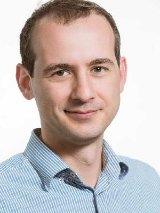
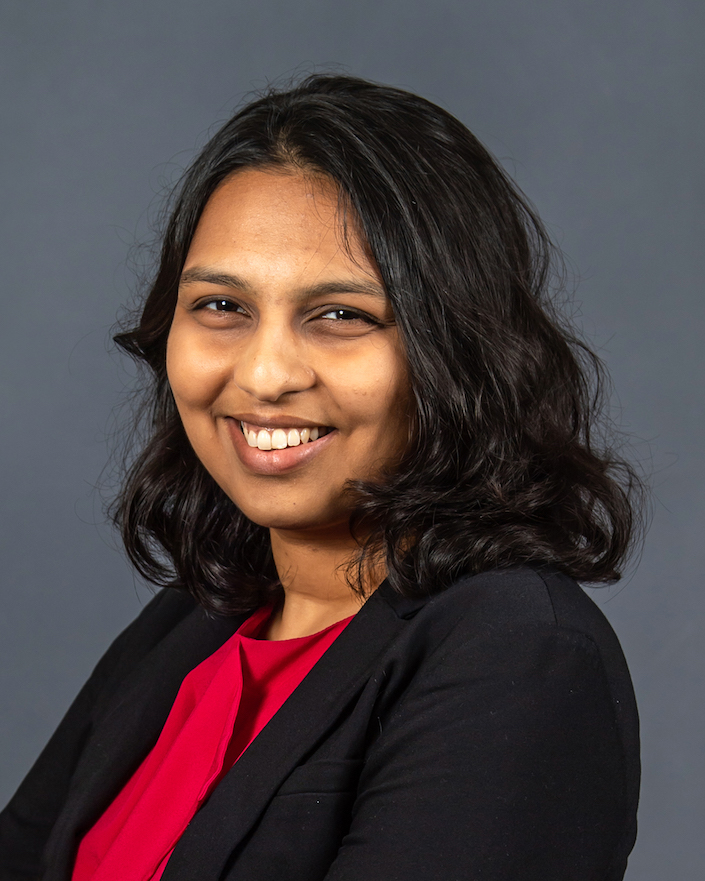
Prof. Vito Michele Rosario Muggeo is a Full Professor in the Department of Economics, Business and Statistics at the University of Palermo. His research focuses on statistical modeling, biostatistics, environmental data analysis, and regression techniques. He teaches courses such as Statistical Inference/Statistics 2 and Statistical Methods. Active in academic evaluations, his work spans over two decades with publications in statistical methodologies, public health, and environmental science. Notable contributions include advancements in segmented regression, quantile regression, and applications in healthcare and ecology. His research often involves collaboration with international journals and conferences, addressing topics like cardiovascular health in cancer survivors and pandemic modeling. He is also involved in software development for statistical analysis, contributing R packages like 'segmented' and 'quantregGrowth'. Education & Professional Experience: - Full Professor at University of Palermo (STAT-01/A) - Active in teaching and research since at least 2000, evidenced by publications from 2000s onward. Research Interests: - Development of statistical methodologies for complex data structures. - Applications in public health, oncology, and environmental studies. - Quantile regression, penalized regression, and segmented modeling techniques. Recent Article Trends: - Focus on pandemic analysis (Covid-19 monitoring), cardiovascular outcomes in leukemia survivors, and innovative statistical tools for predictive modeling. Grants & Advising: - No explicit grants listed, but extensive collaboration in research projects across disciplines. - Advises on statistical methodologies via software development (R packages).
Dr. Shu Ren is a Lecturer in the School of Biomedical Sciences and Pharmacy at the University of Newcastle, Australia. He also serves as a Clinical Trials Research Associate in the School of Medicine and Public Health. He joined the pharmacy academic team in 2022, contributing to the successful re-accreditation of the B.Pharm(Hons) program. His teaching focuses on Year 3 and 4 PHAR courses, emphasizing student engagement in workshops and dispensing labs. His research centers on clinical pharmacology, cardiovascular diseases, and stroke treatment, with significant contributions to the AUSPICE trial investigating pneumococcal polysaccharide vaccine effects on cardiovascular outcomes. He coordinates clinical trials at John Hunter Hospital’s Stroke team, focusing on acute stroke therapies. He holds a PhD in Clinical Pharmacology from the University of Newcastle (2021) and a Bachelor of Pharmacy with Honours from the University of Sydney. Dr. Ren has published extensively on vaccine-cardiovascular links, stroke treatment protocols, and drug repurposing strategies. His work bridges clinical practice and academia, with over 10 years of experience in NSW public hospital clinical pharmacy roles, including oncology/hematology at Calvary Mater Newcastle.
G. Gousios is an Assistant Professor in the Department of Software Technology at the Faculty of Electrical Engineering, Mathematics and Computer Science, Delft University of Technology. He previously held an assistant professor position at Radboud Universiteit Nijmegen from January 2015 to July 2016. His research focuses on empirical software engineering, software analytics, and big data applications in software development. His research interests include: Empirical analysis of software development practices Software analytics and data-driven development Agile methodologies and sprint planning automation Code review and pull request dynamics Dependency and build system analysis Predictive modeling for project delays The recent publications of G. Gousios reflect a strong trend in applying data science and machine learning techniques to real-world software engineering problems. His work spans automated sprint planning, call graph generation, delay prediction using Bayesian models, and empirical studies on pull request decisions. These contributions highlight a focus on improving software development efficiency, reliability, and maintainability through empirical and analytical methods. His research bridges the gap between theoretical models and practical tooling in software engineering. Scientific awards received: ASE 2024 ACM SIGSOFT Distinguished Paper Award He has supervised four academic works, indicating active involvement in student mentoring and research guidance. Although specific grant details are not mentioned, his consistent publication record in top venues and dataset creation suggest successful engagement in research funding and collaborative projects. He collaborates extensively with prominent researchers such as Arie van Deursen and Emad Shihab. G. Gousios contributes to the software engineering research community through dataset sharing, such as the 'Catcher' dataset for API misuse detection, promoting reproducibility and open science. His work is integrated into both academic and industrial software development contexts, emphasizing practical impact.
Zhiwei Xu, Ph.D., is an Associate Professor at the University of Michigan-Dearborn, affiliated with the College of Engineering and Computer Science and the Department of Computer and Information Science. He chairs the Master of Software Engineering program and teaches courses like CIS 285 - Software Engineering Tools. His research spans Machine Learning, Optimization, Intelligent Systems, Software Engineering, Time Series Analysis, and Data Mining. Ph.D., Florida Atlantic University M.S., Guangxi University His scholarly work focuses on integrating computational intelligence techniques with practical software engineering challenges, including outlier analysis, dynamic neural network structures, and fuzzy expert systems. Earlier work involved network traffic prediction using quantile regression and robust modeling approaches. Xu previously served as a Senior Staff Engineer and Research Scientist at Motorola Software and System Research Lab from 2001-2007. He joined the University of Michigan-Dearborn in September 2006 and holds the ORCID identifier 0000-0002-0401-8481. Contact: zwxu@umich.edu
Hamsa Sridhar Bastani is an Associate Professor of Operations, Information, and Decisions (OID) as well as Statistics and Data Science at the Wharton School of the University of Pennsylvania, where she co-directs the Wharton Healthcare Analytics Lab. Her academic journey includes graduating summa cum laude from Harvard in 2012 with an A.M. in physics and an A.B. in physics and mathematics, completing her PhD in Stanford's Electrical Engineering department under Mohsen Bayati, and spending a year as a Herman Goldstine postdoctoral fellow at IBM Research. Dr. Bastani's research focuses on developing novel machine learning algorithms for learning and optimization, including methods for sequential decision-making (bandits, reinforcement learning, active learning), learning from auxiliary data sources (transfer learning, meta-learning, surrogates), and designing effective human-AI interfaces (interpretability, fairness). She is passionate about applying machine learning and AI to tackle high-impact societal problems across domains like healthcare, public policy, and education. Her recent work explores how AI systems affect and augment human behavior, with the goal of designing AI tools that help humans thrive. She has collaborated with national governments to deploy algorithms at country scale for improving public health outcomes, including working with the Government of Greece to nearly double the efficacy of their national border COVID-19 screening via reinforcement learning, and with the Government of Sierra Leone to improve patient access to essential medicines by nearly 20% via decision-aware learning. She also co-led the first large field study deploying generative AI tutors in high school math classes, demonstrating critical risks for human overreliance and deskilling. Dr. Bastani's publications reveal trends in applying advanced machine learning techniques to real-world problems, particularly in healthcare and social impact domains. Her work often combines theoretical rigor with practical implementation through randomized controlled trials and field evidence. Recent publications show increasing focus on the human-AI interface, especially examining risks of generative AI in educational contexts and developing frameworks for responsible human-AI collaboration. Her research has been published in leading outlets including Nature, Management Science, Operations Research, and PNAS. Scientific Awards Wagner Prize for Excellence in Operations Research Practice (2021) INFORMS Pierskalla Award for Best Paper in Healthcare (2021, 2019, 2016) Public Sector in OR Best Paper Award (2024) INFORMS Data Mining Best Paper Award (2022) Wharton Teaching Excellence Awards (2021, 2020, 2019) George Nicholson Best Student Paper Competition (2016) MSOM Best Student Paper Competition (2016, 2020) National Science Foundation Fellow (2012-2017) As an advisor, Dr. Bastani has mentored numerous PhD students who have gone on to prestigious positions including Assistant Professors at Cornell Johnson, ASU Carey, and UC Berkeley Haas, as well as Director of Responsible AI at PwC. She has secured significant research funding through collaborations with government entities and has served as an Associate Editor for Operations Research, M&SOM, and OR Letters. Her work has been supported by partnerships with national governments and organizations like the Penn Center for Health Incentives and Behavioral Economics. She primarily teaches OIDD 321: Introduction to Management Science, for which she received multiple Wharton Teaching Excellence Awards. Dr. Bastani co-directs the Wharton Healthcare Analytics Lab, which focuses on applying data science and machine learning to healthcare challenges. She also serves on the Steering Committee for the Penn Center for Health Incentives and Behavioral Economics and on the statistics advisory committee for the AHA Food is Medicine Initiative. Outside academia, she serves on the Workday AI Advisory Board, connecting her research with industry applications.
Venkat Chandrasekaran is the Kiyo and Eiko Tomiyasu Professor at the Computing and Mathematical Sciences and Electrical Engineering divisions within the Division of Engineering and Applied Science at the California Institute of Technology . B.A., Rice University, 2005 B.S., Rice University, 2005 M.S., Massachusetts Institute of Technology, 2007 Ph.D., Massachusetts Institute of Technology, 2011 As an applied mathematician, Chandrasekaran's work focuses on optimization and the information sciences . His group develops mathematical foundations for applications in science and engineering, spanning convex optimization , statistical inference , inverse problems , graphs and combinatorial optimization , and applied algebra and geometry . His publications from 2024–2004 demonstrate expertise in mathematical optimization , statistical modeling , and graphical representation . Themes include convex geometry , high-dimensional data analysis , and environmental systems modeling , with applications in hydrology , machine learning , and signal processing . INFORMS Optimization Society Prize Sloan Research Fellow AFOSR Young Investigator Award NSF CAREER Award Okawa Research Grant Young Researcher Prize Chandrasekaran has advised students and postdocs including Armeen Taeb (University of Washington), Yong Sheng Soh (National University of Singapore), and Kevin Shu (Caltech Postdoc). His courses include Mathematical Optimization, Mathematics of Electrical Engineering, and Great Ideas in Data Science.
M. Schulz is a prolific researcher in Computer Science and Engineering, with over 350 publications and an h-index of 53. His work focuses on High Performance Computing (HPC), energy efficiency, and performance analysis. His research spans critical areas such as: High Performance Computing Energy-efficient Computing Parallel and Distributed Systems Software Engineering Runtime Optimization Monte Carlo Methods The trends in his publications include predictive modeling for architectural design spaces (2006), energy savings in HPC applications (2009–2016), and innovative tools like IPAS and ARCHER for error detection and runtime optimization. While no explicit scientific awards are mentioned in the scraped text, his work has garnered over 8,991 citations, reflecting significant impact.
Samrendra Singh is an Adjunct Lecturer in the Department of Computing, Information, Mathematical Sciences, and Technology (CIMST) within the College of Arts & Sciences at Chicago State University. He holds a Ph.D. and M.S. in Biological and Agricultural Engineering from the University of California, Davis, and a B.E. in Agricultural Engineering from Tamil Nadu Agricultural University, India. Education: Ph.D., Biological and Agricultural Engineering, University of California, Davis M.Sc., Biological and Agricultural Engineering, University of California, Davis B.E., Agricultural Engineering, Tamil Nadu Agricultural University, Trichy, India His research integrates computational modeling, machine learning, and engineering principles to solve complex problems in materials science, food processing, and thermal systems. He specializes in coarse-grained molecular dynamics, polymer physics, and AI-driven analysis of engineering systems. His work spans from nanomaterials like graphene and MOFs to agricultural product quality assessment using deep learning. The recent publications (2018–2023) reveal a strong trend in combining machine learning with molecular simulations and food engineering applications. Keywords include computational materials, polymer dynamics, and food process automation, with sub-fields such as thermoresponsive polymers, gas adsorption in MOFs, and neural network-based food grading. His collaborative work emphasizes data-driven discovery and hybrid simulation-AI frameworks. While no formal scientific awards are listed, his contributions appear in high-impact journals such as The Journal of Physical Chemistry Letters , Macromolecules , Carbon , and Journal of Food Engineering . He has advised or collaborated on research involving molecular modeling, food quality automation, and thermal system optimization. Though specific grants are not mentioned, his work suggests involvement in interdisciplinary projects at the intersection of computational science and engineering. He has co-authored multiple publications with S.A. Deshmukh and others, indicating strong research team integration. His research activities involve computational labs focused on molecular dynamics simulations, machine learning model development, and food engineering applications. The use of advanced techniques like convolutional neural networks, particle swarm optimization, and coarse-grained modeling indicates a sophisticated computational research environment.
Avi Feller is an Associate Professor at the Goldman School of Public Policy and holds a joint appointment in Statistics at the University of California, Berkeley. His research operates at the intersection of public policy, data science, and statistics, focusing on developing methodological approaches to improve social policy evaluations and collaborating with governments to design and implement data-driven policies. Education: Ph.D. in Statistics, Harvard University M.Sc. in Applied Statistics, University of Oxford (as Rhodes Scholar) B.A. in Political Science and Applied Mathematics, Yale University Research focuses on quantitative methods for policy evaluation, including causal inference techniques, synthetic control methods, and balancing weights for observational studies. His work spans education, public health, and social policy domains, with particular emphasis on developing robust statistical approaches for real-world policy analysis. Methodological innovations include the Augmented Synthetic Control Method and applications of machine learning to causal inference problems. Publications demonstrate consistent focus on causal inference methodology with applications to policy-relevant domains including education, gun violence prevention, and COVID-19 interventions. Recent work shows increasing emphasis on machine learning integration and complex observational study designs with temporal and spatial components. Awards and Honors: Rhodes Scholarship Prior professional experience includes serving as Special Assistant to the Director at the White House Office of Management and Budget and working at the Center on Budget and Policy Priorities. No information is available regarding current graduate students, research grants, or laboratory affiliations.
Edgar Dobriban is an Associate Professor of Statistics and Data Science at the University of Pennsylvania's Wharton School, with a secondary appointment in Computer and Information Science. He leads a research group focused on problems at the interface of statistics, machine learning, and AI. Education PhD in Statistics, Stanford University (2017) BA in Mathematics, Princeton University (2012, Summa cum Laude/with Highest Honors) Research Focus His work spans uncertainty quantification, AI safety, robustness, high-dimensional asymptotic statistics, distributed learning, fairness, and COVID-19 testing methodologies. Current projects include developing conformal prediction methods, jailbreaking robustness benchmarks (JailbreakBench), and safety alignment techniques for large language models. Publication Trends Recent papers predominantly address AI safety and reliability, featuring novel methods for uncertainty quantification in language models (calibration, conformal prediction), adversarial robustness (jailbreaking defenses), and distribution shift adaptation. Theoretical foundations blend with practical applications in high-dimensional statistics. Awards and Honors Peter Gavin Hall IMS Early Career Prize (2024) Sloan Research Fellowship (2023) ICSA Outstanding Young Researcher Award (2023) NSF CAREER Award (2021) AFOSR/Army Research Office YIP Awards (2024, 2023) COPSS Emerging Leader Award (2023) Research Leadership He leads the Wharton Statistics and Data Science research group, recruiting PhD students through Statistics & Data Science, CIS, and AMCS programs. Current projects involve collaborations with Penn Medicine and the NSF-Simons Mathematical and Scientific Foundations of Deep Learning initiative. He co-founded the ASA StatsUpAI Special Interest Group and co-organized the Shenzhen Conference on Random Matrix Theory (2023).
Prof. Dr. Okan Örsan Özener is a Professor in the Department of Industrial Engineering at Özyeğin University, where he currently serves as Dean of the Faculty of Engineering and Director of the Graduate School of Science and Engineering. Previously, he was Head of the Industrial Engineering Department (2012-2022) and Vice Dean of Engineering (2022-2024). He holds a BS and MS in Industrial Engineering from Middle East Technical University, and an MS in Operations Research and PhD in Industrial and Systems Engineering from Georgia Institute of Technology. His research focuses on combinatorial optimization, data-driven decision-making, and applications in supply chain systems. Key areas include: Integer programming and combinatorial optimization Machine learning applications in operations Cooperative/non-cooperative game theory Transportation and logistics network design Inventory control systems Healthcare and humanitarian logistics His publications demonstrate strong focus on practical optimization applications across logistics, healthcare, manufacturing, and software systems, with recent emphasis on sustainable logistics and machine learning integration. Honors include: Most outstanding faculty member of the University (2014) University-wide Teaching Excellence Award (2016) He actively advises graduate students and leads major research initiatives: Supervises 5 PhD and 3 MSc students in optimization and machine learning Principal Investigator for TUBITAK grants on crew planning, blood supply management, and game theory applications Industry collaborations with DHL, Turkish Airlines, and Vestel Electronics He directs research in logistics and optimization, recruiting students for projects in city logistics and ML applications.
Kristóf Gábor Bándy serves as a Lecturer at the Budapest University of Technology and Economics (BME), specifically within the Faculty of Electrical Engineering and Informatics and the Department of Automation and Applied Informatics . His work focuses on advanced control strategies for electrical drives and power conversion systems. Research Interests : Dr. Bándy's research centers on Model Predictive Control (MPC) in electrical engineering contexts, including optimization of permanent magnet synchronous motors (PMSM), grid-side converters, and power electronic topologies. He explores dynamic weighting factor assignment, LC/LCL filter compensation, and real-time implementation challenges. Publication Trends : His recent work emphasizes predictive control algorithms for renewable energy systems, electric vehicles, and industrial drives. Key themes include sorting networks for computational efficiency , quadratic regression models , and overmodulation techniques in multiphase drives.
Mohammad Saleem is a Senior Lecturer at the Budapest University of Technology and Economics , working within the Department of Automation and Applied Informatics. His research focuses on biometric security systems and machine learning applications in online signature verification. His work emphasizes techniques like Dynamic Time Warping, LightGBM, and Logistic Regression, with numerous publications in these areas. He actively contributes to the field through participation in international signature verification competitions and systematic algorithm evaluations. Contact: Mohammad.Saleem@aut.bme.hu
Stefan Lüdtke is an Assistant Professor (Juniorprofessor) for Marine Data Science at the University of Rostock (since July 2023) and concurrently serves as a junior research group leader at ScaDS.AI Leipzig . Previously, he was a postdoctoral researcher at the Institute for Enterprise Systems, University of Mannheim (2021-2023) and completed his PhD at the University of Rostock (2016-2021). Education & Career Timeline: 2023 – present: Juniorprofessor (Assistant Professor) for Marine Data Science, University of Rostock 2023 – present: Junior research group leader, ScaDS.AI Leipzig 2021 – 2023: Postdoc, Institute for Enterprise Systems, University of Mannheim 2016 – 2021: PhD studies, University of Rostock Research Interests: Dr. Lüdtke’s research integrates neuro-symbolic machine learning with practical applications spanning heterogeneous tabular data , marine ecology , and underwater technology . His work bridges symbolic reasoning and modern gradient-based learning to tackle complex real-world problems such as hyperspectral imaging for environmental monitoring, knowledge-graph completion, and robust human-activity recognition. Key focus areas include: Design of memory-augmented decision-tree ensembles and gradient-based tree learning. Data-centric evaluation and quality assessment of machine-learning models on tabular and sensor data. Domain adaptation and self-training techniques for activity recognition in changing environments. Application of AI to marine robotics and glacier-dynamics mapping. Publication Trends: Across 40+ peer-reviewed works (2017-2025), Lüdtke demonstrates a steady shift from foundational probabilistic-filtering and lifted-inference methods toward cutting-edge neural-symbolic hybrids and tabular-data-centric learning. Recent high-impact venues show contributions in machine-learning theory , computer vision , and environmental informatics , with a notable uptick in interdisciplinary projects combining AI and marine science. Scientific Awards & Honors: No specific awards are listed in the provided material. Advising & Funding: No named students or explicit grant details are disclosed in the text. Laboratories & Teams: He leads the Marine Data Science junior research group at the University of Rostock and the ScaDS.AI Leipzig junior research group, fostering cross-institutional collaboration in AI and data science.
Khuong An Nguyen is a Senior Lecturer in Computer Science at the Department of Computer Science, Royal Holloway University. He holds a Ph.D. in Computer Science from the University of London, an M.Phil from the University of Cambridge, and a B.Sc (Hons) from the University of London. He is a Senior Fellow of Advance HE, Fellow of the Royal Institute of Navigation and Royal Statistical Society, and a member of the EPSRC peer review college. His research focuses on Machine Learning with applications in Mobile Computing and Smart Healthcare . Key subfields include WiFi fingerprinting , Bluetooth positioning , contact tracing , indoor navigation , and conformal prediction . He has over 15 publications spanning journals, conference contributions, and patents, with a recent emphasis on large language models and smart transport systems . Notable scientific awards include the Golden Globe Computer Science Award (2006) and recognition as The Most Outstanding Vietnamese Student in the UK (2014). He has secured over £612,000 in research grants as Principal Investigator, including projects with Innovate UK and the Department for Transport . His supervised students include 9 Ph.D. advisees, with completions like Ajibola Obayemi and Xu (Sean) Feng . Collaborations with Prof. Zhiyuan Luo are a recurring theme in his research output.