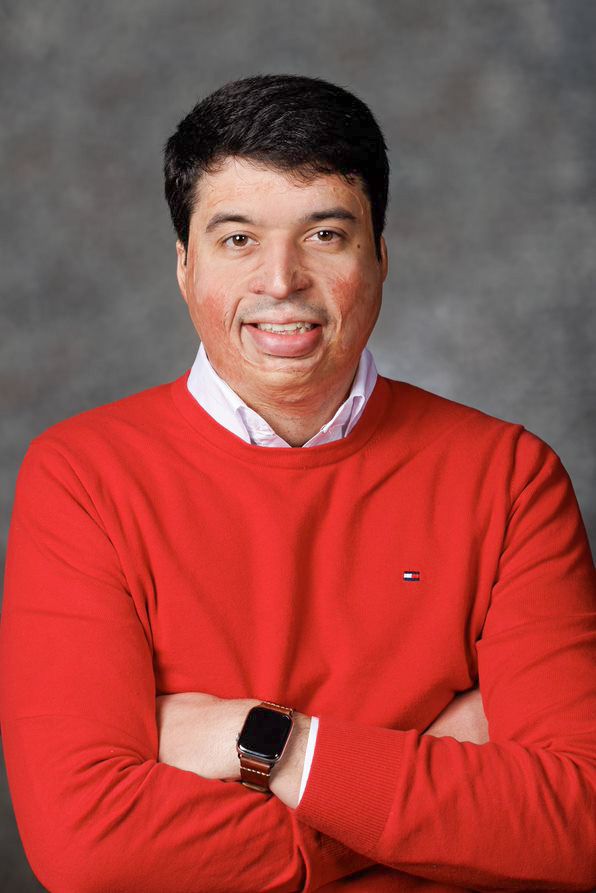
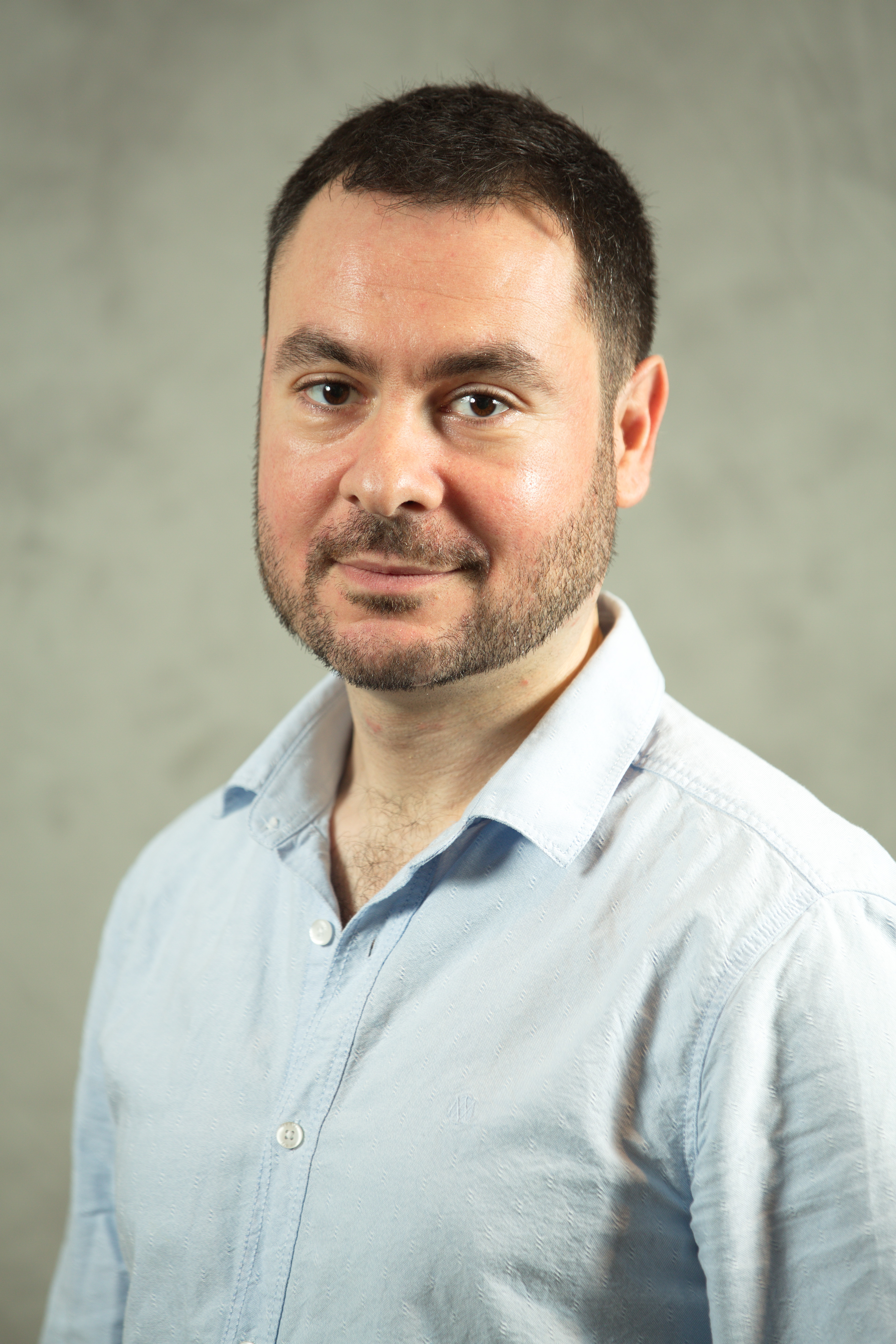
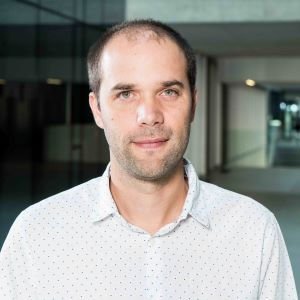
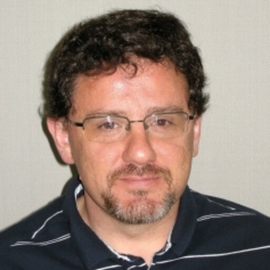
Zheng Li is an Assistant Professor in the Department of Agricultural and Resource Economics at North Carolina State University. His research focuses on econometric methodologies with applications in agricultural economics, resource management, and policy analysis. He holds expertise in nonparametric estimation, quantile regression, and structural econometric modeling. Key research interests include analyzing agricultural production risks, evaluating policy impacts on housing markets, and developing advanced statistical techniques for mixed data types. His work bridges econometric theory with practical applications in environmental, urban, and transportation sectors. Recent publications explore topics such as lung cancer detection via biomedical sensing technologies, ridesharing platform incentives, and pandemic effects on real estate markets. Methodologically, his contributions span kernel-based specification tests, bootstrap methods for heavy-tailed data, and monotonicity-constrained estimation techniques. No scientific awards or formal advisees are listed. His research often intersects with interdisciplinary challenges, reflecting a commitment to innovative solutions in applied economics and data science.
Dr. Luan Oliveira is an Assistant Professor and Precision Agriculture Extension Specialist at the University of Georgia's College of Agricultural & Environmental Sciences (CAES), Department of Horticulture. His roles are distributed as 75% Extension, 20% Research, and 5% Service. He holds a Ph.D. in Agronomy (Crop Production) from São Paulo State University and a B.Sc. in Agronomic Engineering from Federal University of Paraíba, Brazil. His research focuses on precision agriculture tools, agricultural machinery optimization for vegetables and specialty crops, and mechanized operations like planting, spraying, and harvesting. He leads the Precision Horticulture Team, aiming to improve crop quality through innovative technologies. Dr. Oliveira has received the 2021 Gerald O. Mott Award for Meritorious Graduate Student in Science. He has authored/co-authored 9 refereed articles, 7 Extension Publications, 40 conference papers, and 13 book chapters, securing ~$220,000 in grants as PI/Co-PI. His work emphasizes practical applications in precision agriculture, including drone spraying, robotic systems, and mechanized sugarcane planting. Key grants and awards highlight his contributions to agricultural technology and crop management. His research spans diverse crops like peanuts, corn, cotton, and sugarcane, addressing challenges in seeding depth, soil compaction, and equipment wear. He collaborates with the Institute for Integrative Precision Agriculture and UGA's Precision Agriculture initiatives.
Dr. David Ubilava is an Associate Professor in the School of Economics at the University of Sydney, affiliated with the Faculty of Arts and Social Sciences. He holds a PhD in Agricultural Economics from Purdue University (2010) with research focusing on agricultural markets, commodity prices, and the socioeconomic impacts of climate variability and political conflict. His work examines how environmental factors and market dynamics influence food security and social stability in developing regions. Research interests center on: Price analysis and forecasting in commodity markets Climate shocks and agricultural adaptation strategies Political violence and conflict economics Economic development in vulnerable regions Publications demonstrate consistent focus on climate-economy interactions, with recent work examining El Niño impacts on global commodity markets and post-harvest conflict dynamics. Research consistently integrates econometric modeling with development policy applications. Awards & Honors: Quality of Research Discovery Award (2025) Research Collaboration Award, Faculty of Arts and Social Sciences (2024) Teaching Excellence Award, Faculty of Arts and Social Sciences (2017) Currently advises doctoral candidate Gilliane Angela on emerging Asian economies and serves as associate editor for the American Journal of Agricultural Economics (since 2022) and co-editor of Food Policy (since 2018). Research funding includes ARC Discovery Projects on political conflict and food security.
Sheheeda Mariam Manakkadu is an Associate Professor in the Department of Computer Science at Southern Illinois University Carbondale. She teaches graduate courses in Data Structures, Object-Oriented Programming, Data Mining, Text Mining, and Cloud Architecture, along with undergraduate courses in Operating Systems and Data Analytics. Ph.D., Computer Engineering M.E., Biomedical Engineering Her research spans robotics, data analytics, and parallel computing. Key areas include adaptive control of robotic manipulators, big data processing via MapReduce, IoT resource allocation, and computational bioinformatics for protein networks. Recent publications focus on neuro-sliding mode control, cloud architecture, and scalable recommender systems. She actively participates in academic service as a committee member for graduate courses and the IEEE Erie Section. Her work integrates machine learning, optimization algorithms, and distributed systems across diverse domains.
Professor Roger Flanagan is a distinguished academic specializing in construction management with over two decades of research contributions. His work primarily focuses on international construction business, risk management, sustainable building practices, and whole life cost appraisal. Affiliated with the Chartered Institute of Building, London, he has authored numerous technical guides and publications that shape construction industry practices globally. Specializes in international construction business dynamics Expert in risk management and sustainable building practices Author of influential technical guides for the construction industry Research spans construction economics and supply chain management Flanagan's research interests center on the complexities of international construction projects, with particular emphasis on risk management, sustainable building practices, and whole life cost considerations. His work examines how contractors navigate international markets, manage project complexity, and implement sustainable practices. Recent publications address materials procurement in MSMEs, pre-construction planning complexity, and the integration of renewable energy in building projects, reflecting evolving industry challenges. Analysis of his 15 most recent publications reveals a consistent focus on construction management challenges with increasing emphasis on sustainability and international business dynamics. His work spans construction economics, risk management, sustainable building practices, and supply chain management, with particular attention to Korean and Middle Eastern construction markets. The research demonstrates methodological diversity, employing panel threshold regression, system dynamics, and empirical case studies to address complex construction industry problems. Professor Flanagan has made significant contributions through his authored guides for the Chartered Institute of Building, including the Guide to Quality Management in Construction (2021), Site Management and Production Guide (2020), and Code of Quality Management (2019). These practical resources translate academic research into industry applications, demonstrating his commitment to bridging theory and practice in construction management. His collaborative research extends across international boundaries, working with academics from institutions in Asia, Europe, and the Middle East. This global perspective enriches his understanding of diverse construction markets and practices, informing his research on international competitiveness, cross-cultural project management, and global supply chain dynamics. Professor Flanagan's work on construction sector futures, particularly his contributions to Vision 2020 initiatives, demonstrates leadership in anticipating industry trends and challenges. His research on information complexity, system dynamics applications, and decision support systems positions him at the forefront of addressing emerging challenges in digital construction and project management.
Guillaume COQUERET is a Professor of Finance and Data Science at emlyon business school since 2018 and Director of the AIM Institute, which coordinates research and teaching in artificial intelligence applied to management. His academic qualifications include an HDR (2022) from Université Lumière Lyon 2 and a PhD in Business Administration from ESSEC Business School (2012). His research focuses on quantitative finance, machine learning in capital markets, sustainable finance, and heterogeneous agent models. He previously served as a Quantitative Researcher at EDHEC-Risk Institute (2013–2015). Education : 2022: HDR, Université Lumière Lyon 2 2012: PhD in Business Administration, ESSEC Business School 2008: Master in Probability and Finance, Université Pierre et Marie Curie (Paris 6) 2007: Master in Management, ESSEC Business School Research Interests : Machine learning applications in finance, factor investing, climate risk modeling, ESG integration, and algorithmic portfolio strategies. Publications : Over 30 peer-reviewed articles in journals such as The Journal of Portfolio Management , European Journal of Operational Research , and Quantitative Finance . Notable works include studies on climate betas, biodiversity premiums, and supervised learning in equity investing. Books : Machine Learning for Factor Investing: Python Version (2023) Perspectives in Sustainable Equity Investing (2022) Awards : None explicitly mentioned, but recognized for contributions to quantitative finance and AI in management. Labs/Teams : Leads the AIM Institute, fostering AI-driven research in management and finance.
Roy Brouwer is a Professor in the Department of Economics at the University of Waterloo and holds the University Research Chair in Water Resource Economics (2018). As Executive Director of Waterloo's Water Institute since 2016, he leads the Water Economics Research Group while teaching Climate Change Economics and Water Resource Economics courses. His research bridges environmental economics with practical water policy solutions across Canada, Europe, and South Asia. MSc in Agricultural Economics (Wageningen Agricultural University) PhD in Environmental Economics (University of East Anglia) Specializing in water economics , Brouwer's work spans valuation methods, hydro-economic modeling, and policy instruments for sustainable resource management. Recent research trends focus on: Multi-regional water allocation optimization Behavioral economics in water governance Green infrastructure-water security nexus Climate change adaptation strategies Risk attitudes in flood protection decisions Policy learning through BMP adoption His publications (2019-2025) demonstrate methodological innovation in discrete choice experiments, input-output modeling, and spatial econometrics applied to water systems. Notable achievements include: 2024 IWA Best Scientific Book Prize 2021 Faculty of Arts Research Excellence Award Founding Editor of Water Resources and Economics journal Advisory roles for Chinese Research Academy of Environmental Sciences and Great Lakes Science Advisory Board
Dr. Saumen Mandal is a Professor in the Department of Statistics at the University of Manitoba, Faculty of Science. He holds a PhD from the University of Glasgow, UK, and MSc/BSc (Gold Medal) from the University of Calcutta, India. His research focuses on optimal experimental design, biostatistics, data science, shrinkage estimation, and constrained optimization. He has received numerous teaching awards including the Dr. and Mrs. H.H. Saunderson Award for Excellence in Teaching, Students Choice Best Professor Award, and multiple Merit Awards. He is also a P.Stat. designee from the Statistical Society of Canada. Education: PhD (Statistics), University of Glasgow, UK MSc (Statistics), University of Calcutta, India (First Class First, Gold Medal) BSc Honours (Statistics), University of Calcutta, India Research Interests: Optimal design theory and applications Biostatistical methods for clinical trials and healthcare data Data science and machine learning techniques Shrinkage estimation and model selection Linear models and goodness-of-fit testing Publications span topics like optimal regression designs, response-adaptive clinical trial methods, and statistical models for healthcare data. His work emphasizes practical applications in medicine and data-driven decision making. Awards include: Teaching Excellence Awards (2005-2007) Merit Awards for Teaching and Research (2010-2019) Faculty of Science Innovation in Teaching Award (2020) He advises graduate students in statistics and contributes to research teams in biostatistics and data science. His office is temporarily located at 256 Parker Building during construction.
Liqun Wang is a Professor of Statistics at the University of Manitoba, within the Faculty of Science. His research focuses on statistical inference in complex models, measurement error correction, boundary crossing problems in stochastic processes, and Monte Carlo simulation methods. He holds a prominent role in advancing methodologies for nonlinear time series analysis and Bayesian inference. His work integrates theoretical rigor with practical applications, addressing challenges in econometrics, environmental science, and public health. Notable contributions include advancements in instrumental variable estimation, second-order least squares methods, and high-dimensional covariance estimation. He actively mentors graduate students in these areas and has published extensively in top-tier statistical journals. Recent research highlights include Bayesian bias correction techniques, sparse covariance matrix estimation, and modeling SARS-CoV-2 dynamics via wastewater data. His methodologies often bridge computational efficiency with statistical accuracy, making them applicable to diverse fields such as finance, biostatistics, and environmental monitoring. Despite prolific output (over 70 publications since 1990), Dr. Wang has yet to be explicitly noted for formal scientific awards. His academic profile emphasizes methodological innovation, with a strong focus on real-world data challenges and interdisciplinary collaboration.
Hyune-Ju Kim is a Professor of Mathematics at Syracuse University's College of Arts & Sciences, affiliated with the Applied Statistics program. Her research focuses on change-point problems, resampling tests, regression model selection, sequential analysis, and statistical applications in genetics. She holds a Ph.D. in Statistics from Stanford University (1988) and a B.S. in Mathematics from Seoul National University (1983). Recent work emphasizes advancements in Joinpoint regression software, including model selection methodologies for health data analysis. Her contributions address complex survey data challenges and longitudinal medical trend studies. She has served on multiple departmental committees, including executive roles in faculty search committees and graduate programs. Teaching responsibilities include advanced statistics courses such as MAT 652 Probability & Statistics II, MAT 654 Linear Models, and MAT 750 Statistical Consulting. Her service roles include statistics liaison for Syracuse University Project Advance and leadership in curriculum development.
Dr. Zihang Lu is an Assistant Professor in the Department of Public Health Sciences at Queen’s University, affiliated with the School of Medicine and Faculty of Health Sciences. He holds a PhD and MSc in Biostatistics from the University of Toronto (2020 and 2013) and a BSc in Biostatistics from Southern Medical University (2012). His research focuses on developing novel statistical and machine learning methods for complex data analysis, with applications in clinical and epidemiological studies, particularly in asthma, obesity, sleep, pain, and cancer research. He collaborates with clinicians to address statistical challenges in longitudinal and functional data analysis, Bayesian modeling, and integrative clustering. Education : PhD in Biostatistics, University of Toronto (2020) MSc in Biostatistics, University of Toronto (2013) BSc in Biostatistics, Southern Medical University (2012) Research Interests : Bayesian data analysis and variable selection Longitudinal and functional data clustering High-dimensional data integration Statistical methods for disease subtyping Design and analysis of observational studies Advising & Grants : Current advisees: Caroline Lee (MSc 2022), Veronique Rowley (2021), Zhiwen Tan (PhD 2022), Mojtaba Ahmadiankalati (MSc 2021) Recruiting CANSSI Distinguished Post-Doctoral Fellow for Bayesian methods in longitudinal health data analysis Accepting MSc/PhD students for 2023 Labs & Teams : His team focuses on statistical methodology development and clinical collaborations, with active projects in pediatric lung function (e.g., the CHILD Cohort Study) and chronic disease management.
Mai Dao is an Assistant Professor in the Department of Mathematics, Statistics, and Physics at Wichita State University's Fairmount College of Liberal Arts and Sciences. She earned her Ph.D. from Texas Tech University under the mentorship of Professors Min Wang and Souparno Ghosh. Research Focus: Bayesian statistics, high-dimensional inference, and statistical machine learning Contact: mai.dao@wichita.edu | Jabara Hall 319 | Office hours: Tue & Thu 3:30-4:30 p.m. Research Interests include: Bayesian quantile regression High-dimensional data analysis Statistical machine learning algorithms Variable selection techniques Computational statistics Econometric modeling Recent Article Trends : Mai Dao's publications (2021-2025) emphasize Bayesian quantile regression methods, focusing on variable selection, high-dimensional inference, and computational approaches. Key themes include handling non-ignorable missing data, macroeconomic stress testing, and bridge-randomized regression techniques. Academic Expertise spans: Bayesian statistical modeling High-dimensional inference Machine learning applications Quantile regression methodologies Statistical computing
Thomas Le Barbanchon is a Full Professor of Economics at Bocconi University since 2025 and holds the Rodolfo Debenedetti Chair in Labor Economics. He received his PhD from Ecole Polytechnique (CREST-ENSAE) in 2012 and has been affiliated with institutions like CEPR, CREST, J-PAL, LEAP, BIDSA, IGIER, IZA, and IFS. His research focuses on labor economics, particularly job search mechanisms, unemployment insurance effects, gender disparities, and labor market policy evaluation. Educational background: PhD in Economics (Ecole Polytechnique), MSc in Economics (Universitat Pompeu Fabra), Diplôme d'ingénieur statisticien-économiste (ENSAE), and Diplôme d'ingénieur (Ecole Polytechnique) Research highlights include: Quantifying the impact of unemployment insurance reforms in France Analyzing gender differences in job search behavior Studying the effectiveness of hiring credits during economic crises Investigating how traditional AI improves job matching Examining migrant-native job search segregation patterns Scientific contributions appear in top journals like American Economic Journal: Applied Economics , Quarterly Journal of Economics , and Review of Economic Studies . Awards include two ERC grants (2017 & 2024) and the Bocconi Impact Award (2022). He mentors PhD students in economics and labor policy, currently serves as Director of IGIER research center, and maintains active editorial roles at Review of Economic Studies and Journal of the European Economic Association .
Pedro Galeano is an Associate Professor in the Department of Statistics at Universidad Carlos III de Madrid (UC3M) since 2009. He holds a PhD in Statistics (2004) under Prof. Daniel Peña, focusing on multiple time series. Previously, he served as Visiting Assistant Professor of Statistics and Econometrics at the University of Chicago’s Graduate School of Business and as a Postdoctoral Fellow at the Department of Statistics and Operations Research at Universidade de Santiago de Compostela. His research focuses on time series analysis, outlier detection, Bayesian inference in financial models, and functional data analysis with applications to missing data. He is an Associate Editor of the Journal of Time Series Analysis and advises the Heliyon journal. Key contributions include developing methodologies for detecting structural breaks, modeling systemic risk via copula approaches, and advancing robust statistical techniques for high-dimensional data. Active in academic leadership, Galeano co-organized the NICDA Workshop 2025 and has published extensively on topics like dynamic factor models, sequential parameter change detection, and functional data applications in energy markets. His work bridges theoretical statistics with practical applications in finance, economics, and environmental science.
Robert A Cribbie is a Professor in the Department of Psychology at the Faculty of Health, York University. His work focuses on quantitative methods for psychological data analysis, particularly equivalence testing, multiplicity control, and robust statistical procedures. Current research emphasizes negligible effect testing, Bayesian statistics, and longitudinal data modeling Active in teaching graduate/undergraduate courses: Statistical Methods, ANOVA, Regression, Multivariate Analysis PI of multiple SSHRC grants (2020-2026) for equivalence testing and statistical modeling research Advisor to 12+ graduate students including Victoria Celio, Naomi Martinez Gutierrez, and Udi Alter Leads Robust Statistics Lab which developed the 'negligible' R package for equivalence analysis Recent publications address: • Equivalence testing in structural equation modeling (2024-2025) • Methodological improvements for Bayesian statistical guides (2025) • Multiplicity control practices in psychological research (2025) • Effect size interpretation standards (2023)