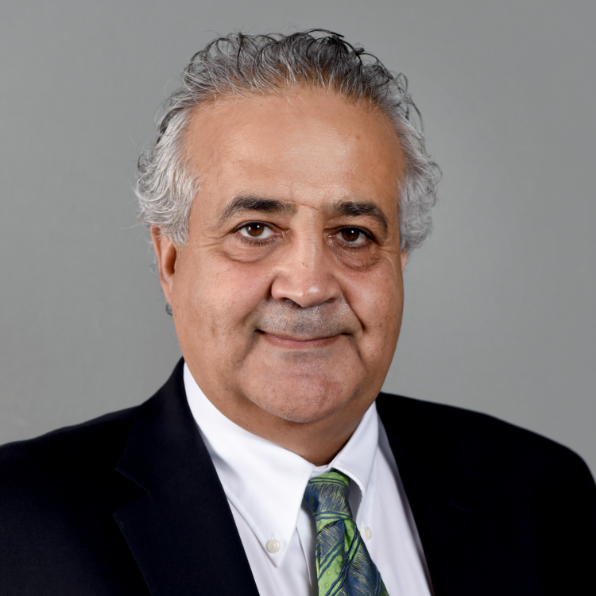
Liang DongView profile
Professor
Liang Dong is a Professor of Electrical and Computer Engineering at Clemson University's College of Engineering, Computing and Applied Sciences, with over 30 years of pioneering work in photonics and optical fiber technology. His research spans materials science, laser physics, and system integration for telecommunications, industrial machining, and medical applications. His academic foundation includes: Ph.D. in Optical Fibers from University of Southampton (1992) M.Sc. in Communication Engineering and Digital Electronics from University of Manchester Institute of Science and Technology (1987) B.Sc. in Electronics from Harbin Institute of Technology (1985) Dr. Dong's research explores fundamental and applied aspects of fiber lasers and optical amplifiers, with emphasis on power scaling, beam quality preservation, and novel materials. His work addresses critical challenges like transverse mode instability, thermal management, and quantum defect minimization through innovative fiber designs including single-crystal fibers and photonic bandgap structures. Current investigations focus on breaking power barriers while maintaining diffraction-limited output for industrial and scientific applications. Analysis of his recent publications reveals a strategic shift toward ultra-high-power fiber lasers with quantum-defect engineering, single-crystal fiber amplifiers, and sophisticated modeling of thermal instabilities. His work consistently targets practical solutions for power scaling limitations while exploring new material systems like lutetium oxide and borogermanosilicate compositions for specialized applications. His distinguished recognition includes: Fellow of IEEE for contributions to high-power fiber lasers Fellow of The Optical Society (OSA) for advancements in fiber amplifier technology Fellow of SPIE for innovations in optical fiber design Dr. Dong has authored approximately 300 publications, 27 patents, and the authoritative book "Fiber Lasers: Basics, Technology and Applications." His editorial leadership as associate editor for Optica and IEEE journals, along with committee roles in major photonics conferences, demonstrates significant influence in the field. Research funding has supported extensive experimental work in fiber fabrication and laser development. At Clemson University, he leads advanced photonics research focusing on next-generation fiber laser architectures, with current projects targeting kilowatt-level diffraction-limited systems through novel thermal management and fiber design strategies.