Alexander Key is an Associate Professor of Comparative Literature at Stanford University, specializing in Classical Arabic literature and the intellectual history of Arabic and Persian-speaking worlds from the 7th century onwards. His scholarship focuses on the philosophy of language, literary theory, and cross-cultural translation. Ph.D. in Arabic and Islamic Studies from Harvard University (2012) Current research: Arabo-Persian linguistic intersections, poetics in translation, and pre-modern theories of syntax and affect His articles span diverse eras and topics, including: Medieval Arabic language philosophy (5th–11th century) Modern Arabic political poetry analysis (20th–21st century) Comparative methodologies bridging Islamic and Western traditions A key editorial role includes: Board Member of Stanford University Press Advisory roles at Habib University and Stanford’s Markaz Resource Center His work bridges academic publication with public discourse through: Contributions to Arcade Colloquy Interviews on poetics, religion, and contemporary politics Podcasts and literary salon discussions
Sherry B. Ortner is a Distinguished Research Professor of Anthropology at UCLA, specializing in cultural and social theory, feminist theory, and media studies. She holds degrees from Bryn Mawr College (A.B.), University of Chicago (M.A., Ph.D.). Her research spans Sherpa ethnography in Nepal, U.S. social class dynamics, and independent film critique. She has been awarded the J.I. Staley Prize, Retzius Medal, and MacArthur Fellowship. Ortner’s work interrogates late capitalism, neoliberalism, and cultural production, particularly through independent film movements. Her shift from Himalayan studies to U.S. cultural analysis reflects a focus on global and local power structures. She has held academic positions at Berkeley, Columbia, and the University of Michigan before joining UCLA in 2004. Key Research Themes : Feminist theory, media anthropology, class and capitalism, cultural critique. Awards : American Academy of Arts and Sciences membership, Guggenheim and NEH fellowships. Her publications include Not Hollywood (2013), New Jersey Dreaming (2003), and Life and Death on Mt. Everest (2000). Ortner’s recent work critiques patriarchal structures and neoliberalism’s cultural impacts. She is a foundational voice in contemporary anthropological theory.
Mark de Rond is Professor of Organisational Ethnography at Cambridge Judge Business School and Fellow of Darwin College, University of Cambridge. His work focuses on immersive ethnographic studies of human behavior in extreme contexts including war zones, high-stakes sports, and controversial social movements, revealing how individuals navigate challenging circumstances through compromise and sensemaking. His educational background includes a DPhil from the University of Oxford alongside advanced degrees in management and economics, photojournalism, documentary photography, biography, creative nonfiction, and prose fiction. This multidisciplinary training informs his unconventional methodological approach. De Rond's research centers on extreme context ethnography, examining how pressure-cooker environments expose fundamental organizational dynamics. His work spans military medicine (Camp Bastion fieldwork), elite sports (Cambridge Boat Race), Amazon river expeditions, and controversial practices like paedophile hunting. Key contributions explore negotiation, conflict resolution, serendipity, institutional persistence, and the emotional toll of fieldwork, often employing innovative methods like enactive ethnography and linguistic analysis of digital communities. His recent publications reveal a growing focus on digital vigilantism and the societal implications of extreme practices, with increasing interdisciplinary reach across organizational studies, criminology, medical anthropology, and sociology. The work demonstrates methodological creativity through linguistic analysis of Facebook groups, embodiment studies in extreme environments, and dream-based reflexive techniques. Scientific recognition includes: BEST ARTICLE AWARD FOR 2016 Favorite MBA Professor honors from Poets & Quants (2021, 2022) Guinness World Record for first unsupported Amazon row De Rond advises MBA students and delivers executive education to top law firms (Slaughter and May, Allen & Overy), professional services (McKinsey, KPMG), corporations (Sky, BT, Diageo), and NGOs (UNICEF, NHS). His negotiation training from Harvard Law School informs both academic work and university mediation practice. Current research involves collaborative teams studying paedophile hunting (featured in Sundance-nominated documentary Predators ) and high-performance sports organizations, with fieldwork requiring deep immersion in challenging environments. His research methodology involves embedded collaboration with diverse teams including medical personnel in conflict zones, elite rowers, and controversial activist groups, often pushing methodological boundaries through photojournalism and creative nonfiction approaches.
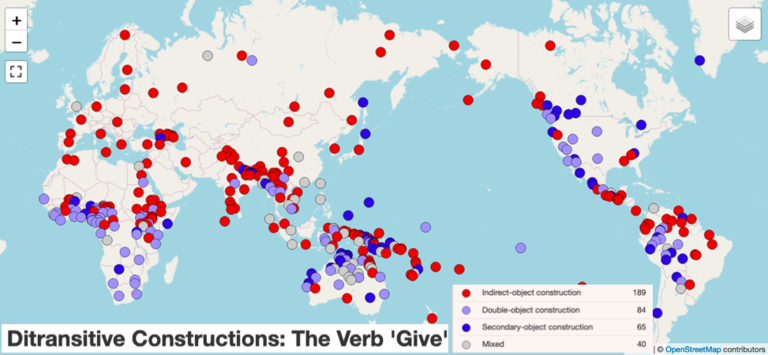
Martin Haspelmath is a Senior Research Scientist at the Department of Linguistic and Cultural Evolution at the Max Planck Institute for Evolutionary Anthropology (MPI-EVA), Leipzig, and an honorary (adjunct) professor at Leipzig University. His research focuses on comparative linguistics, language universals, and typology, particularly in syntactic and morphological systems. He co-edited the World Atlas of Language Structures (2005/2013) and co-founded Language Science Press . Education: PhD in Linguistics, Freie Universität Berlin (1990–1993) MA in Linguistics, University of Cologne and University at Buffalo (1985–1989) Undergraduate studies in Linguistics, University of Vienna (1983–1985) Research Interests: Haspelmath investigates global grammatical diversity, form-function correspondences, and universals in syntax, morphology, and lexical systems. His work emphasizes comparative concepts for cross-linguistic analysis and critiques traditional grammatical categories. Grants & Projects: ERC project leader at Leipzig University (2015–2020) Co-creator of Grambank , an open-access database of grammatical structures Leading initiatives for open-access publication and linguistic data sharing Labs/Teams: Active in the MPI's Department of Linguistic and Cultural Evolution, collaborating on projects like APICS (Atlas of Pidgin and Creole Language Structures) and ValPal (Valency Patterns Leipzig).
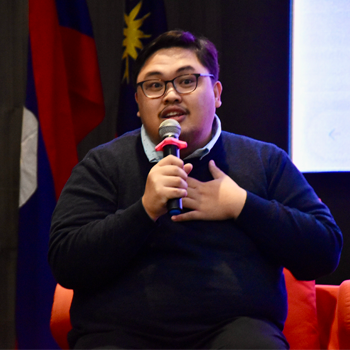
Chris Millora is a Lecturer in the Department of Educational Studies at Goldsmiths, University of London. He serves as Head of Programme for the MA Social Justice in Education and leads critical modules such as Introduction to Social Justice in Education and Global Education: Power, Practice and Policy . His work bridges youth learning, social justice, and international development, with a focus on grassroots activism. Education: PhD in Education and Development (2021), MA in Lifelong Learning Policy and Management (2016) Research Focus: Youth activism, volunteerism, and educational equity in Global South contexts Key Research Areas: Millora investigates youth-led social movements as informal learning spaces, employing ethnographic and participatory methods. His work examines how volunteering, activism, and dissent intersect with development agendas, SDGs, and systemic inequalities. Article Trends: Recent publications analyze bureaucratic literacies in Philippine volunteering, pandemic-era youth organizing, and criminalization of dissent in Southeast Asia. These works emphasize power structures, policy implications, and transformative learning. Scientific Awards: Leverhulme Trust Early Career Fellowship Grants & Collaborations: He has secured funding from UKRI/GCRF and collaborated with organizations like UN Volunteers, International Association for Volunteer Effort, and Global Campaign for Education. His research engages with UNESCO Chairs and BALID associations.
Mats Alvesson is a Professor in Organizational Studies at the Department of Business Administration, School of Economics and Management, Lund University. He is actively engaged in research, teaching, and supervision at the PhD and master's levels, with a focus on critical perspectives in management and organization theory. University: Lund University School: School of Economics and Management Department: Department of Business Administration Academic Rank: Professor Email: mats.alvesson@fek.lu.se His research centers on leadership, organizational culture, identity, power, gender, knowledge-intensive firms, qualitative methods, and the philosophy of science. He is known for co-developing the concept of 'functional stupidity' and for his critical analyses of symbolic management and leadership. His recent work explores the paradoxes of meaning and emptiness in modern organizations. The 15 most recent articles and books reflect a sustained engagement with critical management studies, strategy as practice, organizational change, and reflexive methodologies. His publications span qualitative theory development, leadership critique, cultural analysis, and methodological innovation, often published with leading academic presses like Oxford University Press, Sage, and Cambridge University Press. While no specific scientific awards are listed in the provided material, his extensive publication record, high research output (231 items), and international collaborations indicate significant scholarly recognition. Mats Alvesson supervises PhD students, including Rachel Waldo, and has been involved in teaching qualitative methods, knowledge work, and organizational change. He has participated in external academic activities, such as visiting Hanken School of Economics and hosting scholars like Yiannis Gabriel. His work contributes to the UN Sustainable Development Goals in the domain of social sciences and business administration. He is currently leading a dissertation project titled 'The enchanted sense making: An exploration of employee-brand love relationships in the luxury-brand sector,' reflecting his ongoing interest in symbolic and affective dimensions of organizational life.
Uwe Flick is a Seniorprofessor in the Department of Education and Psychology at Freie Universität Berlin, specializing in Qualitative Social and Education Research. He has held professorships at Alice Salomon University and Hannover Medical School and is internationally recognized for his contributions to qualitative methodology. Education: Dr. phil. from Freie Universität Berlin (1988), Habilitation in Psychology from Technical University of Berlin (1994). Professional Affiliations: Freie Universität Berlin (2013–present, Seniorprofessor since 2022), Alice Salomon University (2004–2013), Hannover Medical School (1996–1997). His research centers on qualitative methods , social representations of health and illness , chronic illness , migration , and vulnerability . He investigates the lived experiences of marginalized groups, including chronically ill youth, homeless adolescents, and refugees, often employing triangulation and mixed methods to deepen understanding. The 15 most recent publications highlight his sustained focus on advancing qualitative research methodology—editing handbooks, writing foundational texts, and refining concepts of research quality, triangulation, and design. Simultaneously, his empirical work explores health communication, peer relationships, and integration challenges among vulnerable populations, demonstrating a powerful integration of methodological innovation with socially relevant inquiry. Scientific Awards: Lifetime Achievement Award in Qualitative Inquiry, ICQI (2019) Flick actively advises doctoral students through his Promotionskolloquium and has secured substantial research funding for projects on refugee integration, sleep disorders, and chronic illness. His editorial roles in journals like Qualitative Research , Journal of Health Psychology , and Sozialer Sinn , and his leadership in book series such as Qualitative Sozialforschung , underscore his influence in shaping the field. He is a central figure in qualitative research communities, frequently engaging as a visiting scholar and professor across Europe and globally. He leads a research team at Freie Universität Berlin, supervising master’s and doctoral projects on topics like peer relations, health concepts, and migration, fostering the next generation of qualitative researchers.
Dr. James Gilmore is an Associate Professor and Graduate Coordinator in the Department of Communication at Clemson University's College of Behavioral, Social and Health Sciences. He joined Clemson in 2018 after earning his Ph.D. in Communication and Culture from Indiana University. His academic foundation includes an M.A. in Film and Television from UCLA and a B.A. in Film and Media Studies from the University of South Carolina. Research Focus Dr. Gilmore's research examines the cultural politics of media and communication technologies, with emphasis on datafication (how human behavior is converted into data), wearable technologies (e.g., smartwatches, fitness trackers), and infrastructural systems . His work critiques surveillance norms, accessibility design, and solutionist approaches in tech. He authored Bringers of Order: Wearable Technologies and the Manufacturing of Everyday Life (UC Press, 2025) and co-edited anthologies on Orson Welles and superhero digital convergence. Publication Trends His recent articles (2020-2025) cluster around three themes: wearable tech ethics (e.g., forensic uses of Fitbit/GoPro data), streaming/platform infrastructures (e.g., Disney’s data reflexivity, Capitol Riot documentation), and surveillance politics (e.g., geofencing, CAD systems). Methodologically, he blends critical-cultural analysis with industry ethnography, often highlighting tensions between technological promise and social consequence. Awards and Honors Top Paper Award, Southern States Communication Association (2024) Outstanding Teaching Award, Clemson University (2022-2023) Outstanding Research Publication, Clemson University (2022) Ray Camp Research Award, Carolinas Communication Association (2018) Graduate Writing Prizes, Indiana University (2016) Advising and Service Dr. Gilmore mentors graduate/undergraduate researchers, co-authoring with 17+ students on topics like VR accessibility, mental health platforms, and AI negotiations. As Graduate Coordinator, he oversees program development and student progression. He serves as an expert source for media outlets (Wired, The Verge) on technology culture and maintains an active public scholarship profile.
Professor Eero Vaara, currently at Saïd Business School, University of Oxford, is a globally recognized expert in organizational theory, strategic change, and institutional dynamics. With 39 publications in Financial Times top 50 journals between 2008-2022, his work explores historical perspectives, discursive processes, and paradoxes in organizational transformations. Affiliation: Saïd Business School, University of Oxford Research Focus: Strategic change, institutional work, narrative theory, and historical embeddedness Eero’s research bridges macro-institutional and micro-practice approaches, emphasizing how unmaterialized decisions, discursive struggles, and temporal dynamics shape organizational trajectories. His work spans multinational corporations, public sector governance, and extreme contexts, with a growing interest in historical analysis and critical discourse studies. His recent publications highlight themes such as strategy-as-practice , national identity , and temporal intentionality . Articles like Near-histories and strategy emergence and Discursive legitimation demonstrate his interdisciplinary approach combining institutional theory, paradox theory, and narrative analysis. Scientific Awards: Academy of Management fellowship Ranked 11th most published management scholar in FT top 50 journals (2008-2022) Eero’s collaborative research style and resilience in the publication process have led to influential contributions in strategic management and organizational studies. His colleague Eric Zhao notes that his work “opens up new ways of thinking about organizations, strategy, and change,” reflecting Oxford Saïd’s commitment to research excellence.
Don Kulick is a Professor and Research Director at the Department of Cultural Anthropology and Ethnology, Uppsala University, Sweden. His academic career spans decades of anthropological fieldwork in Papua New Guinea, Brazil, and Scandinavia, with a focus on linguistic anthropology, sexuality studies, and disability studies. Dr. Kulick's research interests encompass linguistic anthropology, sexuality studies, disability studies, language death, vulnerability studies, and human-animal communication. His work challenges conventional views on vulnerability, arguing that it can be a resource rather than a lack. His fieldwork with adults with significant disabilities in Denmark and Sweden informed his influential book "Loneliness and its Opposite: sex, disability, and the ethics of engagement". Kulick has also made significant contributions to the understanding of transgender communities, particularly through his early ethnographic work with Brazilian travesti prostitutes documented in "Travesti: Sex, Gender and Culture among Brazilian Transgendered Prostitutes". His recent scholarly output demonstrates a trajectory from linguistic anthropology and sexuality studies toward broader questions of vulnerability, ethics, and human-animal relations. Kulick's work consistently engages with marginalized communities and challenges disciplinary boundaries, connecting linguistic anthropology with disability studies, queer theory, and ethical frameworks for engagement with vulnerable others. ERC Advanced Grant for a 5-year research project on people who are treated as though they aren't really there Dr. Kulick has received significant research funding, most notably an ERC Advanced Grant for a 5-year project examining people who are treated as though they aren't really there, including courtroom interpreters and peer reviewers. His mentorship extends through his extensive publications and edited volumes that have shaped multiple generations of anthropological scholarship, particularly in the areas of linguistic anthropology and sexuality studies. While specific lab structures aren't mentioned in the provided text, Kulick's research program on vulnerability appears to be an organized research initiative (referred to as the "EV program" in the text), suggesting a research team or collaborative network focused on vulnerability as a productive resource.
Pieter Desmet serves as Professor of Design for Experience at Delft University of Technology's Faculty of Industrial Design Engineering, specifically within the Department of Human-Centered Design. He directs the Delft Institute of Positive Design, focusing on advancing knowledge for designing human flourishing. His research centers on emotional design mechanisms, particularly how product design evokes emotions and contributes to individual and community well-being. Key interests include Positive Design frameworks, mood-regulation interventions, AI-emotion alignment, and multisensory experiences in packaging and museum contexts. Recent work explores liminal spaces in exhibits, autoethnography ethics, and group mood dynamics in workplaces. Analysis of his 275+ publications reveals consistent focus on emotional design theory with expanding applications in AI, healthcare, and sustainability. His work bridges academic research with practical design tools for emotional well-being. No scientific awards are documented in the provided materials. Desmet actively supervises doctoral candidates (evidenced by PhD thesis datasets) and secures research grants through institutional collaborations. His leadership in organizing major conferences like IASDR 2023 and Design & Emotion events demonstrates significant academic influence. He leads the Delft Institute of Positive Design research group, which investigates user experience aspects through interdisciplinary projects integrating psychology, design, and technology.
Dr. Ali Kassem is a Lecturer in Sociology and Anthropology at the National University of Singapore (NUS), Faculty of Arts and Social Sciences. His academic work spans multiple disciplines, focusing on decolonial approaches to understanding power dynamics, knowledge production, and social formations across the Arab-majority world and beyond. Dr. Kassem received his PhD from the School of Law, Politics, and Sociology at the University of Sussex. He completed postdoctoral research at the Institute for Advanced Studies at the University of Edinburgh and was an early career fellow with the Arab Council for Social Sciences funded by the Carnegie Corporation of New York. His academic journey includes teaching and research positions at Ludwig-Maximillian University in Munich, EHESS in Paris, American University of Beirut, and Lebanese American University. Dr. Kassem's research examines contemporary coloniality across questions of power and knowledge. His work spans anti-Muslim racism within Arab-majority contexts, transformations in Islamic educational institutions, dehumanization of Syrian refugees, and urban transformations in Lebanon. His transdisciplinary approach engages ethnic and racial studies, sociology of religion, social psychology, migration studies, and urban studies, working alongside anticolonial thinkers including Frantz Fanon, Ali Shariati, and James Baldwin. His recent publications reveal a strong focus on decolonial theory applied to education, urban studies, and Islamic contexts. Dr. Kassem's work consistently challenges Eurocentric frameworks while exploring alternatives emerging from the Global South. His research demonstrates particular attention to Lebanon and the eastern Mediterranean region as sites for theorizing global coloniality. Dr. Kassem has authored the book "Islamophobia and Global Coloniality: the Lived Erasure of Visibly Muslim Women in Lebanon" (Bloomsbury Academic, February 2023) and is currently editing "Decoloniality and Arabo-Islamicate Worlds" (Bristol University Press, 2025). His scholarly contributions appear in journals including Ethnic and Racial Studies, Globalizations, Contemporary Religion, and Review of Middle East Studies.
Professor Holly Thorpe is a Professor of Sociology in Te Huataki Waiora / School of Health at the University of Waikato, specializing in Sport and Human Movement. She serves as Associate Dean Research in the Division of Health PVC Office and is an internationally recognized sociologist of sport, physical culture and gender whose work has earned prestigious fellowships and awards including Fulbright, Leverhulme, and Royal Society honors. Her educational background includes a PhD from the University of Waikato and Papa Reo Level 1 certification from Te Wananga o Aotearoa, reflecting both academic excellence and cultural engagement with Māori language and knowledge systems. Professor Thorpe's research centers on equity and inclusion in sporting cultures, with particular attention to women's health and wellbeing, sport and gender, and the impact of social media on athletic experiences. She employs critical and feminist theoretical frameworks with expertise in qualitative methods to examine how sport, physical activity, and health intersect in rapidly changing social landscapes. Her work spans gender studies, feminist methodologies, sports science, sociology of health, and digital media studies within sporting contexts, with a strong commitment to community-engaged research. Her extensive publication record reveals consistent thematic focus on contemporary issues including menstruation in sport, digital technologies and athlete experiences, pandemic impacts on wellbeing, and the gendered dimensions of mega-sport events. Her work frequently employs intersectional analysis and collaborates across disciplines to address complex questions about embodiment, identity, and social change in sporting cultures, particularly as they relate to women and marginalized communities. Professor Thorpe's significant scholarly recognition includes: Royal Society Early Career Research Excellence Award for Social Sciences (2018) Fellow of the North American Society for the Sociology of Sport (2018) Royal Society James Cook Fellowship for a two-year project focused on women's wellbeing through and beyond pandemic (2021) She actively supervises students and has secured substantial research funding including the Te Punaha Matatini CORE Research Institute project 'Youth Wellbeing in Uncertain Times: The Voices of Rangatahi from Flood-Effected Tairāwhiti Gisborne' (2023-2025). Professor Thorpe collaborates extensively with international and national sports organizations including the International Olympic Committee, High Performance New Zealand, Sport New Zealand, Skateistan, and Voice in Sport to ensure her research has real-world impact on policy and practice. She serves as Series co-editor for 'New Femininities in Digital, Physical and Sporting Cultures' and maintains active media engagement through The Conversation and other outlets. Professor Thorpe leads several significant research initiatives including 'Reimagining Fields of Play' (2023) and co-organized the 'Gender, Health and Wellbeing Symposium' (2022), demonstrating her commitment to creating spaces for critical dialogue about sport, gender, and health while advancing culturally responsive methodologies that center Indigenous and diverse perspectives.
Dr. Anna Bagnoli is a Tutor and Director of Studies for Human Social and Political Sciences (HSPS) at Wolfson College, University of Cambridge. She is affiliated with the Department of Sociology and contributes to methodological training in qualitative and visual research methods. Her research bridges social sciences and arts, focusing on identity processes, migration, and gender. Alma Mater: PhD from University of Cambridge (2001) Research: Methodological innovation, narrative analysis, migration of Southern Europeans Her methodological expertise includes creative arts-based methods , visual research , and autobiographical narratives . She has led projects like Picturing Identities and Wolfson’s Worlds , exploring migration, belonging, and cultural capital reconstruction. Anna’s recent publications emphasize gendered migration experiences , arts-based research , and identity construction through visual methods . Key topics include the interplay of migration with science career aspirations, narrative ethics, and longitudinal youth studies. Scientific Awards EC Marie Curie TMR Fellowship (1998-2000) ESRC Postdoctoral Fellowship (2002-2003) Nuffield Foundation Grant (2010) She supervises doctoral students in migration, gender, and narrative research, with a focus on participatory and arts-driven approaches. Anna is also involved in the Cambridge Migration Research Network (Cammigres).
Janice McGregor is an Associate Professor of German Studies at the University of Arizona, affiliated with the College of Humanities and the Interdisciplinary PhD program in Second Language Acquisition and Teaching (SLAT). She holds a PhD in German Applied Linguistics from Penn State and previously served as Assistant Professor of German at Kansas State University (2012–2018). Her research focuses on three core areas: ideologies in language learning/teaching, discourses around intercultural learning in study abroad, and reflexive qualitative research methods in applied linguistics. She emphasizes the importance of examining social interactions and authentic language use patterns across communities. Her work critiques traditional methodologies in study abroad research, advocating for more reflexive and decolonized approaches. Notable contributions include analyzing interactions in study abroad contexts, the role of authenticity in language learning, and the ethical dimensions of global mobility programs. Current courses include GER 244 (Real Talk: Why Language Matters) and GER 508 (Approaches to German Studies). Her research methodologies often integrate autoethnography and critical discourse analysis. McGregor’s articles consistently address themes of agency, authenticity, and methodological innovation. Recent work explores ungrading practices and the use of technology in L2 learning. She actively participates in academic discourse through her contributions to conferences like the Tucson Humanities Festival and her involvement in curricular decolonization initiatives.