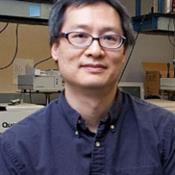
Marek FlaskaView profile
Associate Professor
Marek Flaska is an Associate Professor in the Ken and Mary Alice Lindquist Department of Nuclear Engineering at Pennsylvania State University, College of Engineering. His research focuses on nuclear detection systems, neutron and gamma-ray spectroscopy, and radiation measurement technologies. He is affiliated with the Institutes of Energy and the Environment and contributes to integrated energy systems research. His research interests include neutron and gamma radiation detection, pulse shape discrimination, scintillation counters, liquid and organic scintillators, silicon photomultipliers (SiPM), Monte Carlo simulations, and nuclear non-proliferation. His work aims to improve the accuracy, efficiency, and portability of radiation detection systems for both civilian and security applications. The recent publications highlight a strong trend in digital signal processing for radiation detection, with significant emphasis on machine learning applications for pulse shape discrimination, multiplexing schemes for compact neutron cameras, and characterization of new-generation silicon photomultipliers. His work bridges fundamental detector physics with practical engineering solutions for reactor instrumentation and nuclear security. Scientific Awards and Recognition: $3.6M in grants awarded to nuclear engineering projects Dr. Flaska advises research projects and leads efforts in detector development and reactor-based experiments. He has secured major funding for nuclear engineering research and collaborates with national laboratories and institutions on reactor instrumentation and nuclear security. His team works on advanced scintillation systems, fast neutron detection, and real-time radiation monitoring. He is involved in the operation and characterization of irradiation facilities at the Penn State Breazeale Reactor, including the Fast-Neutron Irradiator and epithermal neutron beam systems. His lab focuses on developing and testing novel radiation detection systems using organic and inorganic scintillators, composite materials, and digital readout electronics.