Anatolii Siminel is an Associate Professor and Leading Scientific Researcher at the Laboratory of Physics of Semiconductor Compounds 'Sergiu Radautsan' within the Institute of Applied Physics (IAP) in Chișinău, Moldova. His research focuses on semiconductor physics, coordination polymers, photoluminescence, and materials science, with particular emphasis on crystal engineering, nanomaterials, and luminescent materials. His work includes the synthesis and characterization of coordination compounds, doped semiconductor crystals, and advanced materials for optoelectronics. Notable projects involve studies on CdSe, ZnSe, MoSe₂, and other layered materials, as well as luminescent properties of rare earth complexes (e.g., Eu, Ni, Cd). He has contributed to understanding exciton dynamics, photoluminescence quenching, and doping effects in semiconductors. Key research themes include the design of luminescent materials with tailored properties, crystal structure optimization, and applications in optoelectronics and nanotechnology. Siminel has published extensively on topics ranging from coordination polymers to semiconductor doping, reflecting his interdisciplinary approach to materials science.
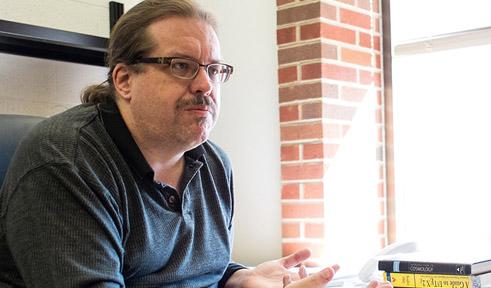
Douglas Clowe is a Professor in the Department of Physics and Astronomy at Ohio University, affiliated with the College of Arts and Sciences and the Astrophysical Institute. His research focuses on observational cosmology, particularly gravitational lensing and the study of galaxy clusters to understand dark matter and dark energy. Ph.D., University of Hawaii Postdoctoral positions: Max Planck Institute for Astrophysics, University of Bonn, University of Arizona Joined Ohio University faculty in 2006 Clowe's research centers on observational cosmology, with a strong emphasis on gravitational lensing as a tool to probe the mass distribution in galaxy clusters. His work aims to determine the nature of dark matter and dark energy, measure cosmological parameters, and study the structural evolution of massive cosmic structures. He is particularly known for his groundbreaking research on the Bullet Cluster, which provided direct evidence for dark matter. His current projects include the European Distant Cluster Survey (EDisCS), the Local Volume Complete Cluster Survey (LoVoCCS), and contributions to major initiatives like LSST and DESTiny. His research integrates optical, infrared, and X-ray data to understand cluster mergers, shock heating, and star formation. His recent publications reflect a strong focus on weak lensing mass distributions, merging clusters, and cosmological surveys. Themes across his work include the alignment of mass and light in clusters, calibration of shear measurements, and the use of clusters as gravitational telescopes. He is deeply involved in large collaborations such as the LSST Dark Energy Science Collaboration. Notable scientific contributions and affiliations include: Lead investigator on the imaging side of the EDisCS survey Member of the LSST weak lensing science working group Proposed research for the Dark Energy Space Telescope (DESTiny) Key role in studies of the Bullet Cluster and Abell 2146/3827 mergers Clowe advises students and collaborators in advanced data analysis and observational techniques. He has secured collaborative research grants, including NSF funding for LoVoCCS. He is involved in major observational campaigns using Hubble, Chandra, and ground-based telescopes. His lab and team focus on weak lensing analysis, multi-wavelength data integration, and cosmological simulations. Future work includes expanding weak lensing surveys to lower redshifts and preparing for data from next-generation telescopes like LSST and JWST.
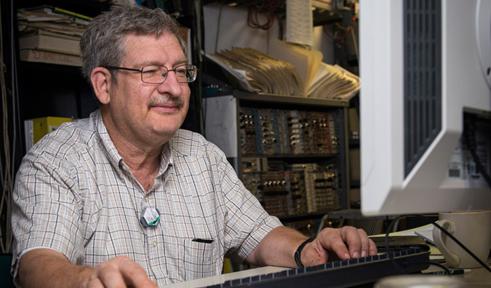
Thomas N. Massey is a Research Professor in the Department of Physics and Astronomy within the College of Arts and Sciences at Ohio University. He is a member of the Institute of Nuclear and Particle Physics (INPP) and conducts his research at the Edwards Accelerator Lab on the Athens campus. His work is centered on experimental nuclear physics, with significant contributions to nuclear structure, neutron interactions, and reaction modeling. Dr. Massey earned his Ph.D. from the University of California in 1988, following an M.S. and B.S. from the same institution. His academic career at Ohio University has spanned from Research Scientist (1989–1994), to Research Assistant Professor (1994–2007), and currently Research Associate Professor (2007–present), reflecting a long-standing and active role in the department. His research interests are focused on Experimental Nuclear Physics , particularly Nuclear Structure Studies using gamma-ray spectroscopy, Measurement of (z,n) Reactions , and Neutron Elastic and Inelastic Cross Sections via time-of-flight techniques. He has pioneered methods for calculating reaction cross sections using a combined shell-model and R-matrix approach and has developed advanced techniques for calculating nuclear level densities. His work has direct applications in nuclear data, medical physics (e.g., BNCT), and reactor shielding. The 15 most recent publications reflect a consistent research trajectory in nuclear data and structure. His work spans from fundamental studies of exotic nuclei like 8 He and 11 Li to practical applications such as neutron source characterization for detector calibration and cancer therapy. A strong theme is the precise measurement and theoretical modeling of neutron interactions, with a focus on light nuclei and practical nuclear data needs. Research Professor, Ohio University (2007–present) Research Assistant Professor, Ohio University (1994–2007) Research Scientist, Ohio University (1989–1994) Dr. Massey has been involved in significant projects, including the NERI Iron Sphere Experiments for neutron transport validation and detector calibration work at Lawrence Livermore National Laboratory. He has also developed a suite of data analysis programs for nuclear experiments, including codes for Rutherford backscattering, kinematics, and time-of-flight data replay. His extensive publication record and ongoing research activities indicate a sustained and impactful career in nuclear physics.
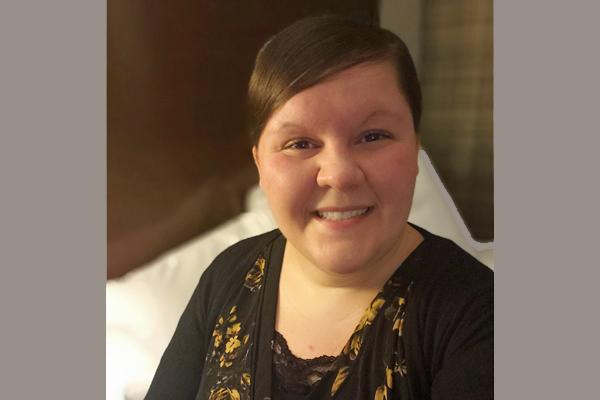
Andrea Richard serves as Assistant Professor in the Department of Physics and Astronomy at Ohio University's College of Arts and Sciences, based at the Edwards Accelerator Laboratory on the Athens Campus. Her experimental research focuses on low-energy nuclear physics phenomena critical to understanding cosmic element formation and medical applications. Her academic credentials include: Ph.D. in Physics from Ohio University (2018) M.Sc. in Physics from Ohio University (2014) B.Sc. in Physics and Mathematics from Muskingum University (2011) Dr. Richard's research program investigates statistical nuclear properties, nuclear astrophysics processes including heavy-element synthesis, and applied medical physics. She conducts neutron-capture cross-section measurements for unstable nuclei using advanced accelerator facilities, with particular emphasis on how nuclear structure influences nucleosynthesis in stellar environments and neutron star mergers. Her experimental approach bridges theoretical models with empirical data from rare-isotope beam facilities. Analysis of her recent publications reveals three interconnected research thrusts: fundamental nuclear structure studies of exotic nuclei (particularly level densities and rotational bands), nuclear astrophysics applications for cosmic element production, and translational medical physics work in particle therapy. The 2022-2023 publications demonstrate increasing interdisciplinary collaboration, with medical physics applications emerging as a significant new direction alongside her core nuclear structure research. Her scientific recognition includes: Diversity, Equity, and Inclusion Directorate Award from Lawrence Livermore National Laboratory (2023) American Physical Society Five Sigma Physicist Award (2021) Nuclear Science and Security Consortium Postdoctoral Fellowship (2018-2021) DOE SCGSR Fellowship (2016) While current documentation does not specify doctoral advisees or active grant funding, Dr. Richard maintains significant research leadership through her Facility for Rare Isotope Beams User Executive Committee membership and Nuclear Science and Security Consortium fellowship legacy. She operates within Ohio University's Edwards Accelerator Laboratory ecosystem while maintaining active research partnerships with Michigan State University's Facility for Rare Isotope Beams and Lawrence Livermore National Laboratory. Her collaborative networks include the GeMSS (Gender Minorities in Science Social) initiative and the American Physical Society's Forum on Diversity and Inclusion, reflecting her commitment to inclusive scientific communities.
Christopher J. Falzone is an Associate Research Professor in the Department of Chemistry at Johns Hopkins University, with a long-standing secondary affiliation at The Pennsylvania State University, where he has served as Lecturer and Assistant Director of the NMR Facility since 1992. His academic home is within the Krieger School of Arts and Sciences at Johns Hopkins, where his research focuses on structural and dynamic properties of metalloproteins using NMR spectroscopy. Education: A.B. in Chemistry, Washington University (St. Louis) Ph.D. in Chemistry, 1984, Clarkson University (Potsdam, NY) Post-Doctoral Associate, University of Akron Post-Doctoral Associate, The Pennsylvania State University Dr. Falzone's research lies at the intersection of biochemistry and biophysics, with a strong emphasis on understanding protein structure, dynamics, and function—particularly in hemoproteins such as hemoglobins, cytochromes, and photosystem components. His work frequently explores how heme binding, covalent modifications, and metal coordination influence protein conformation and activity. He employs advanced NMR techniques to probe molecular interactions, folding pathways, and dynamic behavior in solution. His studies span diverse systems including cyanobacterial globins, Escherichia coli enzymes, and iron-sulfur clusters in photosynthetic complexes. Analysis of his recent publications reveals a sustained focus on metalloprotein structure and mechanism. The articles consistently apply NMR to characterize heme proteins, enzyme dynamics, and protein-ligand interactions. Key themes include heme pocket architecture, covalent cross-linking, hexacoordination, and the structural basis of electron transfer in photosystems. His work bridges structural biology with functional biochemistry, contributing to fundamental understanding of protein behavior in both prokaryotic and model eukaryotic systems. Although no formal scientific awards are listed in the provided text, Dr. Falzone's extensive publication record in high-impact journals such as Biochemistry , Journal of Molecular Biology , and Nature Structural Biology reflects significant scholarly contributions. His collaborative work with Dr. Julio Lecomte has produced influential insights into protein dynamics and metalloprotein function. Dr. Falzone has played a vital role in academic mentoring and education. At Penn State, he has served as Chemistry Undergraduate Advising Coordinator and Co-op Coordinator since 1997, guiding student development and academic planning. While no formal advisees are listed, his leadership in advising suggests a strong commitment to student mentorship. His research has likely been supported by federal grants, particularly from NIH or NSF, given the nature of his instrumentation (NMR) and collaborative, hypothesis-driven projects. He is an active member of the Lecomte Research Group, a team dedicated to biomolecular NMR and the study of protein structure and dynamics. The group utilizes advanced spectroscopic methods to investigate folding, stability, and functional mechanisms in metalloproteins. Their work integrates biochemical, biophysical, and computational approaches to unravel complex biological questions at the molecular level.
Giuseppe Meneghini is a Research Fellow at the University of Marburg within the Department of Theoretical Semiconductor Physics, part of the Faculty of Physics (Fb13). His work is embedded in the Ultrafast Quantum Dynamics group (AG Malic), focusing on advanced research in condensed matter physics and quantum materials. His research emphasizes ultrafast dynamics of excitons in van der Waals heterostructures, including twisted systems and moiré potentials. He explores topics such as dark exciton formation, Coulomb correlations, and hybrid exciton behavior using techniques like ultrafast spectroscopy and ARPES. His research interests span semiconductor physics, quantum optics, and nanotechnology. Key themes include the thermalization of excitons, polaron effects in twisted interfaces, and the visualization of excitonic signatures in novel materials. He contributes to understanding energy transfer mechanisms, electronic properties of atomically-thin systems, and the interplay between structure and dynamics in moiré-engineered materials. His publications highlight interdisciplinary approaches, linking theoretical models with experimental observations in ultrafast quantum phenomena. The lab’s focus on twisted heterostructures and moiré physics underscores his role in advancing quantum material science. No awards or grants are listed here, though his active publication record reflects ongoing research excellence. Giuseppe Meneghini’s affiliations include the Philipps-Universität Marburg, with contact details at the Institutsgebäude (Room 106) in Marburg. His work bridges theoretical and applied aspects of quantum materials, contributing to foundational knowledge with applications in nanotechnology and optoelectronics.
Kishan Menghrajani is a Research Fellow in the Department of Chemical & Biological Engineering at Monash University, Faculty of Engineering. He holds a Ph.D. in Physics from the University of Exeter, awarded in 2020, with research on strong coupling of molecular vibrational resonances. He is currently accepting PhD students and actively contributing to cutting-edge research in nanophotonics and sustainable energy technologies. Education: Ph.D. in Physics, University of Exeter (2015–2019), awarded February 10, 2020. Thesis: Strong Coupling of Molecular Vibrational Resonances . His research focuses on quantum nanophotonics, plasmonics, and strong light-matter coupling, with applications in energy conversion and advanced manufacturing. Recent work explores ultrastrong coupling phenomena in vibrational plasmon polaritons, all-optical control of topological phase singularities, and CO2 electroreduction using nanomaterials. He also contributes to two-photon polymerization for micro-optics fabrication. The recent article trends indicate a strong interdisciplinary focus bridging physics, materials science, and chemical engineering. Key domains include quantum optics, sustainable energy (especially CO2 utilization), and advanced nanofabrication techniques. His publications appear in leading journals such as Nature Communications , Physical Review Letters , and Nano Energy , reflecting high-impact contributions. Scientific Awards: Royal Society International Exchange Grant (awarded April 1, 2022) He has served in academic service roles including peer reviewer for ACS Photonics and editorial responsibility for Advanced Optical Materials . While no formal grants are listed beyond the Royal Society award, his ongoing research output suggests active project involvement. He has not advised any named students yet but is accepting PhD candidates. There is no mention of a specific lab or research team, but his collaborations span institutions in the UK and Australia, particularly with experts in plasmonics and quantum optics.
Martin Given is a Senior Lecturer in the Department of Electronic and Electrical Engineering at the University of Strathclyde, Faculty of Engineering, where he has been actively involved in research and teaching since 1982. He serves as First Year Advisor of Studies and the undergraduate academic selector for his department, contributing significantly to student guidance and program development. His research centers on the properties and performance of electrical insulation systems, with a focus on ageing, breakdown mechanisms, and diagnostic techniques. Key areas include multifactorial stress testing (including radiation and space simulation), dielectric spectroscopy, space charge effects, and high-power ultrasound generation. His work has applications in high-voltage engineering, power systems, and advanced materials. The recent publications highlight a strong trend in understanding spark discharges in water, surface flashover on polymers, and acoustic signal propagation from partial discharges. These studies reflect a multidisciplinary approach combining high-voltage engineering, plasma physics, acoustics, and materials science, often in collaboration with researchers like Igor Timoshkin and Scott MacGregor. The research emphasizes energy characterization, impulse dynamics, and material response under extreme electrical stress. Martin Given has served as a referee for IEEE Transactions on Dielectrics and Electrical Insulation and as an External Examiner for PhD theses, demonstrating active engagement in academic peer review and quality assurance. He has participated in multiple externally funded research projects, primarily with EPSRC and the Royal Academy of Engineering. He is involved in research supervision, as indicated by his role in doctoral training programs and records of supervised work. His projects include Breakdown Mechanisms in Dielectric Fluids , EPSRC CDT in Future Power Networks , and studies on non-thermal plasmas and magnetization modeling. These efforts support graduate training and innovation in power engineering and insulation technology. Martin Given's laboratory and research group focus on high-voltage testing, dielectric characterization, and pulse power systems. His team conducts experiments on breakdown in gases, liquids, and solids, utilizing advanced diagnostics for condition monitoring and failure prediction in electrical insulation. The integration of nano-particles and ultrasound for material modification represents an innovative direction in his research.
Antonella Casoli is a Full Professor in the Department of Chemical Sciences, Life and Environmental Sustainability at the University of Parma since 2011. She has held academic positions since 1983, including Researcher (1983-1998) and Associate Professor (1998-2011) in Analytical Chemistry. Her primary affiliations include the University of Parma and ANVUR System evaluation experts. Current teaching: Chemistry of Cultural Heritage and Laboratory (Master's in Sciences for Conservation and Restoration) Research focus: Chemistry applied to Cultural Heritage Key collaborations: International teams in Europe, Asia, and the Americas Research Interests: Her work spans four main areas: development of analytical methods for art conservation (e.g., binding media/pigment identification), testing of artistic cleaning techniques, archaeometric studies of ceramics/glass, and anthropological DNA analysis of ancient remains (Etruscans, Neanderthals, Cro-Magnons). She specializes in pigment-binder interactions and minimally invasive restoration. Scientific Contributions: With over 200 publications, her 2025-2024 studies on varnish removal from oil paintings using gelled emulsions represent cutting-edge conservation chemistry. Earlier work includes mtDNA analysis of prehistoric specimens and archaeometric investigations of Roman glass and medieval sculptures.
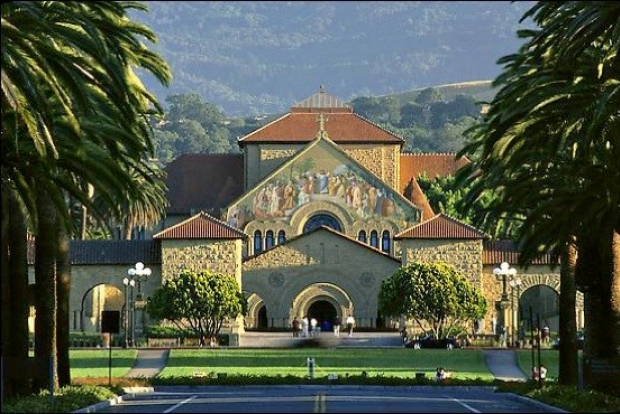
Chris Garcia is the Younger Family Professor and Professor of Molecular and Cellular Physiology and Structural Biology at Stanford University School of Medicine. He is also an Investigator at the Howard Hughes Medical Institute, reflecting his leadership in biomedical research. His lab is a member of several interdisciplinary institutes including Bio-X, Stanford Cancer Institute, and Wu Tsai Neurosciences Institute. His research focuses on the structural and functional mechanisms of receptor-ligand interactions, especially in immune and nervous systems. Using structural biology, protein engineering, and molecular biology, his team investigates T cell receptors, cytokines, host-pathogen interfaces, and neural guidance molecules, with therapeutic applications in immunotherapy and regenerative medicine. Recent publications highlight innovative approaches such as de novo TCR mimics, cytokine adaptors that reprogram immune signals, and deep learning-based design of pMHC binders. His work bridges structural insights with functional outcomes, enabling the development of novel therapeutics. Dr. Garcia mentors a large group of postdoctoral fellows and graduate students and teaches across multiple PhD programs at Stanford, including Immunology, Biophysics, and Structural Biology. He has received no explicitly mentioned scientific awards in the provided text, but his HHMI Investigator status is a major honor. He leads multiple research grants and clinical trials, including studies on influenza immunity and immune receptor engineering. The Garcia Lab operates at the Beckman Center at Stanford, with a strong focus on interdisciplinary collaboration and training the next generation of scientists.
Keith J. Stine is a Professor and Department Chair in the Department of Chemistry and Biochemistry at the University of Missouri–St. Louis (UMSL), within the College of Arts and Sciences. He has been a faculty member since 1990 and plays a significant leadership role in the university, having previously served as Chair of the Faculty Senate and University Assembly. His educational background includes a BS from Fairleigh Dickinson University and a PhD from MIT, followed by postdoctoral training at UCLA. Dr. Stine's research is centered on modified surfaces and nanostructures, particularly nanoporous gold, with applications in bioanalytical chemistry, sensors, immunoassays, and separations. He investigates surface immobilization of proteins, lipid monolayers as cell membrane models, and carbohydrate-protein interactions. His work integrates electrochemical methods such as impedance spectroscopy and cyclic voltammetry with advanced characterization techniques like SEM, TEM, AFM, and gas adsorption analysis. The 15 most recent publications highlight a strong trend in the development and application of nanostructured materials, especially nanoporous gold, for drug delivery, biosensing, and glycan synthesis. There is a clear interdisciplinary focus spanning materials science, electrochemistry, glycochemistry, and biomedical applications, often in collaboration with the Demchenko lab at Saint Louis University. While no formal scientific awards are listed in the provided text, his extensive publication record in high-impact journals reflects significant scholarly contributions. Dr. Stine actively mentors students and researchers, with numerous co-authors on recent papers indicating a vibrant research group. He has been involved in projects related to grants in nanomaterials, bioanalytical chemistry, and carbohydrate synthesis, though specific grant details are not provided. His research contributes to both fundamental science and translational applications in diagnostics and therapy. His laboratory focuses on the synthesis and characterization of functional nanostructures, particularly for biomedical applications. The team explores hierarchical architectures in nanoporous metals, electrochemical biosensors, and automated carbohydrate synthesis, working at the intersection of chemistry, materials science, and biology.
Mònica Iglesias Juncà is an Associate Professor in the Department of Chemistry at the University of Girona, where she has been serving since 2008. She is an active researcher in the Research Group in Analytical and Environmental Chemistry, a recognized Consolidated Research Group by the Catalan government. Educational Background: Licentiate in Chemical Sciences, Universitat Autònoma de Barcelona (UAB), 1993 PhD in Chemistry, University of Girona (UdG), 2000 Her research focuses on analytical and environmental chemistry, particularly in the development and validation of analytical methods for environmental monitoring and quality control. She has contributed to over 40 peer-reviewed research articles and more than 30 national and international conference presentations. Her work often involves trace analysis, chromatography, and spectroscopy applied to environmental samples. The body of her recent publications reflects a strong trend in environmental analytical chemistry, with emphasis on method optimization, detection of pollutants, and laboratory quality assurance. Her interdisciplinary approach bridges chemical analysis with environmental protection. Scientific Contributions and Recognition: Active researcher in 8 competitive research projects Member of a Consolidated Research Group recognized by Generalitat de Catalunya ORCID: 0000-0002-1408-1257 She has co-supervised four doctoral theses and continues to mentor students within her research group. She has not received any explicitly mentioned awards, but her sustained research output and project participation indicate significant academic contribution. She is involved in both undergraduate and graduate teaching, though specific courses are not detailed in the text. She leads and collaborates within the Research Group in Analytical and Environmental Chemistry, contributing to its ongoing projects in environmental monitoring and analytical method development. The group's work supports regulatory compliance and scientific advancement in environmental chemistry.
Patrick Mayor serves as Head of Faculty Affairs for the School of Engineering (STI) at École Polytechnique Fédérale de Lausanne (EPFL), while concurrently holding roles as Coordinator of the STI Academic Evaluation Committee and Scientist in the PRN-MARVEL (NCCR MARVEL) administration. His institutional presence spans administrative leadership and research coordination within EPFL's engineering ecosystem. Research interests demonstrate a clear evolution from fundamental granular physics (2003-2008) to complex systems engineering (2010-2018). Early work established foundational insights into vibration-fluidized granular matter, Brownian motion analogies, jamming transitions, and impact cratering mechanics. Later contributions pivoted toward the Nano-Tera.ch initiative, focusing on engineering integrated systems for health monitoring, environmental sustainability, and energy infrastructure through nanotechnology applications. This trajectory reflects a strategic shift from theoretical physics toward applied transdisciplinary engineering solutions. Publication analysis reveals distinct thematic clusters: granular media studies predominantly appear in high-impact physics journals ( Nature , Physical Review Letters ), characterized by experimental investigations of non-equilibrium statistical mechanics. The Nano-Tera.ch series features in engineering and information technology venues, emphasizing system integration, sensor networks, and cyber-physical architectures. Both phases maintain rigorous methodological approaches while addressing increasingly complex real-world challenges. Administrative leadership positions indicate significant institutional responsibility, with Faculty Affairs oversight encompassing academic evaluations, strategic planning, and faculty development across EPFL's engineering school. PRN-MARVEL involvement connects to Switzerland's National Centre of Competence in Research, positioning Mayor at the intersection of academic governance and cutting-edge materials science initiatives. Research infrastructure engagement includes the PRN-MARVEL administration and Nano-Tera.ch consortium, facilitating cross-disciplinary collaboration between physicists, engineers, and computer scientists. These frameworks support large-scale projects addressing societal challenges through technological innovation, with Mayor contributing to both conceptual development and operational execution.
Didem Dede is a researcher at the École polytechnique fédérale de Lausanne (EPFL), affiliated with the School of Engineering and the Institute of Materials, specifically within the Laboratory of Molecular Simulation and Catalysis (LMSC). Her work focuses on the synthesis, characterization, and application of two-dimensional materials for advanced technological applications. Research Interests: Dr. Dede's research spans materials science and nanotechnology, with a strong emphasis on 2D materials such as transition metal dichalcogenides, black phosphorus, and hexagonal boron nitride. Her work integrates experimental synthesis with atomic-scale characterization and computational modeling to explore electronic, optical, and catalytic properties. Her investigations into strain engineering, defect dynamics, phase transitions, and heterostructure interfaces contribute to fundamental understanding and practical development in nanoelectronics, energy conversion, and quantum materials. Publication Trends: Her recent publications (2019–2024) reveal a consistent focus on the electronic and structural properties of 2D semiconductors. Themes include carrier mobility modulation, excitonic behavior, interfacial engineering, and scalable synthesis methods. The work is frequently published in high-impact journals such as Nano Letters and ACS Applied Nano Materials , reflecting strong contributions to the nanomaterials community. Scientific Funding: Her research has been supported by major funding bodies, including: Swiss National Science Foundation NCCR QSIT (National Centre of Competence in Research Quantum Science and Technology) CIME (Interdisciplinary Center for Electron Microscopy) EPSRC European Cooperation in Science and Technology Advising and Collaboration: While formal advisees are not listed, her co-authorship on a doctoral thesis and frequent collaboration with leading scientists such as Anna Fontcuberta i Morral and Nicholas Morgan suggests active mentorship and integration within EPFL’s research ecosystem. She contributes to collaborative projects involving advanced microscopy, quantum materials, and energy applications. Laboratories and Facilities: Dr. Dede operates within the LMSC at EPFL, leveraging state-of-the-art facilities such as CIME-GE for electron microscopy and materials characterization. Her access to cleanroom environments and computational resources enables a multidisciplinary approach combining synthesis, experimentation, and simulation.
Dr. Alexander Tagg is a postdoctoral researcher at the Leibniz Institute for Baltic Sea Research (IOW) , focusing on microplastic pollution and its impacts on marine microbial communities . As principal investigator for the DFG-funded project PaintSed , he investigates how paint particles alter sediment microbiota and employs machine learning to model pollution levels from microbial data. Ph.D. in Nanotechnology (Swansea University, 2017) B.Sc. Hons in Zoology (Royal Holloway, 2013) His research spans microplastic-biofilm interactions , electrostatic separation techniques , and environmental impact assessments . Key methodologies include reflectance micro-FTIR imaging and microplastic spiking experiments . Recent publications address: Mechanisms of microplastic contamination in marine sediments Role of paint particles in microbial community shifts Advancements in microplastic extraction from complex matrices He contributes to BMBF-funded MicroCatch_Balt and collaborates on marine pollution dynamics in the Baltic Sea region.