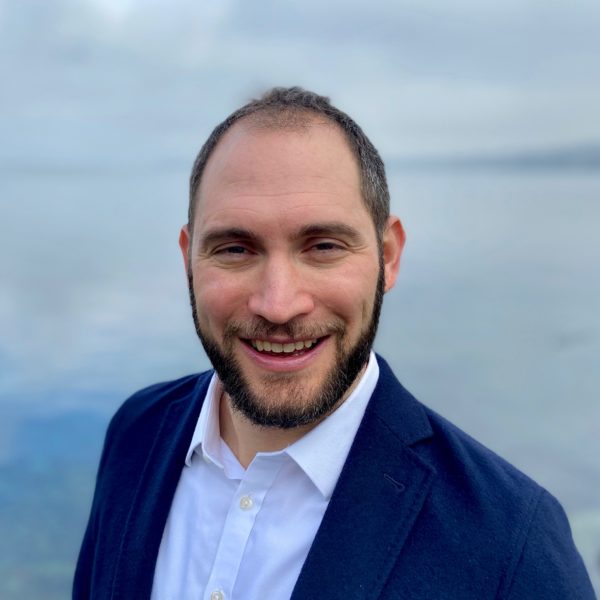
Shuvendu K. Lahiri is a researcher at Microsoft Research, focusing on formal verification, program synthesis, and software testing. His work bridges artificial intelligence with formal methods, particularly in blockchain security and automated code generation. 2025 : Published LLM-Vectorizer (verified loop vectorizer) and neural synthesis for SMT-assisted proof-oriented programming 2024 : Explored LLM-based test-driven code generation and natural precondition inference 2023 : Developed resource management specifications and contributed to test generation with pre-trained models 2022 : Advanced Solidity type systems and merge conflict resolution using language models His research combines large language models with formal verification tools to improve software correctness. He actively contributes to conferences like ICSE, PLDI, and ISSTA as author and committee member.
G. Petur Nielsen, MD is a Professor of Pathology at Harvard Medical School and serves as Subspecialty Head, Bone and Soft Tissue Pathology at Massachusetts General Hospital . With a clinical focus on bone and soft tissue tumors, his expertise spans diagnostic pathology, molecular genetics of neoplasms, and ancillary testing applications. Research interests center on Pathology and biology of bone/soft tissue tumors Molecular genetics of bone and soft tissue neoplasms Chordoma and sarcoma research Epithelioid vascular tumor differentiation Mesenchymal tumors of the female genital tract His work includes landmark studies on tumor misdiagnosis rates, immunohistochemical profiling, and genomic analysis of chordomas. Scientific contributions appear in leading journals like Nature and American Journal of Surgical Pathology , with major emphasis on Molecular tumor classification Mutational signature analysis Translational oncology Diagnostic accuracy improvement Genomic instability mechanisms
Éric Tanter is a Full Professor in the Computer Science Department (DCC) at the University of Chile, where he also leads the PLEIAD Lab. He holds an Inria International Chair (2025–2029) and is an Associate Researcher at the Millenium Institute for Foundational Research on Data (IMFD). His academic leadership includes prior roles as Director and Deputy Director of the DCC, and Coordinator of the PhD Program in Computer Science. His research centers on programming languages and software engineering, with a strong focus on gradual typing, type systems, program verification, and secure programming. He explores both theoretical foundations and empirical practices, aiming to bridge the gap between static and dynamic language paradigms. His recent work emphasizes gradual verification, refinement types, and applications in proof assistants and security. The trends in his recent publications show a deep engagement with foundational aspects of gradual and dependent typing, often aiming to enhance the reliability and security of software systems. These works frequently involve formalization in proof assistants like Coq and explore applications in differential privacy, secure interoperability, and symbolic execution. Inria International Chair (2025–2030) Best Paper Awards at POPL 2019, OOPSLA 2018, ICFP 2018, MSR 2011, AOSD 2010, SBLP 2008, DAIS 2006 Most Influential/Most Notable Paper Awards at DLS, Programming, DLS Facebook Research Testing and Verification Award (2018) Google Faculty Research Awards (2015, 2016) Best Professor Award, University of Chile (2011) Éric Tanter has advised numerous PhD and Master’s students, many of whom have gone on to publish influential work in top venues. He has led multiple research projects funded by FONDECYT, ANID, INRIA, and other national and international agencies. His service includes editorial roles in journals such as the Journal of Functional Programming and Science of Computer Programming, and extensive participation in program committees of major conferences like POPL, ICFP, and OOPSLA. He leads the PLEIAD Lab at the University of Chile, a research group focused on programming languages, software engineering, and formal methods. The lab fosters collaboration with international institutions and emphasizes both theoretical rigor and practical impact.
Professor Annette Byrne is a leading academic at RCSI University of Medicine and Health Sciences , where she serves as Professor of Physiology and Head of the Precision Cancer Medicine (PCM) Group. She has held this position since 2019 after progressing through roles as Lecturer (2008), Senior Lecturer (2013), and Associate Professor (2017). Her research focuses on precision medicine approaches for colorectal and brain cancers , integrating multi-modality molecular imaging , Next Generation Sequencing , and patient-derived xenograft models . PhD in Cell Biology (University of York, 1999) John Kerner Fellowship in Gynaecologic Oncology (UCSF, 1999-2001) Scientist at Pharmacyclics Inc. (2001-2003) Senior Scientist at Angion Biomedica Corp. (2003-2005) Principal Investigator at UCD Conway Institute (2005-2008) Her research interest lies in precision cancer medicine , particularly elucidating predictive biomarkers (genomic, transcriptomic, proteomic) and identifying novel therapeutic targets . Key methodologies include radiomics , fluorescence-guided surgery , and systems modeling of apoptosis pathways. She has pioneered Ireland's first Tumour Xenograft Facility and Translational In Vivo Imaging Centre . Recent publications highlight her work on cross-species radiomics , cell-free DNA analysis , and glioblastoma microenvironment subtyping . Her Marie Curie networks (Gliotrain, Glioresolve) and COLOSSUS project have trained 25+ PhD researchers in brain cancer therapeutics. Over €45M in national/international grants Member of Royal Irish Academy (2025) Highly cited in Cancer Discovery , Annals of Oncology , and Nature journals She supervises multiple PhD candidates and leads the RCSI Precision Cancer Medicine Group , which utilizes computational approaches and molecular imaging to improve cancer treatment outcomes. Her GLIORESOLVE and EDIReX projects focus on tumor microenvironment manipulation and distributed PDX infrastructure.
Andreas Maier is a Researcher at the University of Hamburg's Faculty of Mathematics, Informatics and Natural Sciences, affiliated with the Computational Systems Biology department. He began his PhD in May 2021 with Cosy.Bio (Center for Systems Biology) at UHH, focusing on drug repurposing projects such as REPO-TRIAL. Previously, he completed a Bioinformatics master's thesis at TUM (Technical University of Munich), developing a web application for analyzing molecular disease networks. His research interests emphasize network medicine, drug repurposing, and computational tools for biomedical discovery. He has contributed to platforms like NeDRex-Web, Drugst.One, and BioCypher, which democratize access to systems medicine workflows. His work bridges heterogeneous data integration, federated learning for rare diseases, and quantum computing applications in genetics. Maier's publications highlight innovations in knowledge graph-based drug discovery, privacy-preserving federated learning, and single-cell network analysis. He actively develops open-source bioinformatics tools to address challenges in disease module identification and patient stratification. His projects align with the REPO4EU consortium and other collaborative initiatives in translational bioinformatics.
Elliot A. Asare, MD, MS, CMQ, FACS serves as Assistant Professor in the Section of Surgical Oncology within the Division of General Surgery at the University of Utah. He specializes in cutaneous malignancies and sarcomas of the retroperitoneum and soft tissues, practicing clinically at both Huntsman Cancer Institute and Intermountain Healthcare Center in Murray. His educational trajectory includes: Phi Beta Kappa graduate with B.S. in Biology and Chemistry (double major) from Randolph-Macon College M.D. from Howard University College of Medicine (Alpha Omega Alpha inductee) General Surgery residency at Medical College of Wisconsin Affiliated Hospitals M.S. in Health Services and Outcomes Research from Northwestern University Complex General Surgical Oncology fellowship at University of Texas MD Anderson Cancer Center Dr. Asare's research program centers on cancer staging methodology, data quality enhancement, prognostication frameworks, and outcomes research with emphasis on health disparities. His work integrates large-scale database analyses (SEER, National Cancer Data Base) to refine AJCC staging systems while addressing inequities in melanoma and sarcoma care across elderly, minority, and rural populations. Recent investigations explore sentinel lymph node biopsy efficacy in aging patients and viral infection impacts on melanoma mortality. His 2023-2025 publications reveal three dominant themes: (1) AJCC Version 9 implementation across multiple cancer types (anal, appendiceal, neuroendocrine), (2) persistent disparities in skin cancer outcomes linked to demographic and geographic factors, and (3) telehealth applications for expanding surgical oncology access. These studies consistently leverage national datasets to validate staging systems while identifying structural barriers to equitable care. Professional recognition includes: Phi Beta Kappa honor society membership Alpha Omega Alpha Medical Honor Society induction Fellowship in the American College of Surgeons (FACS) Dr. Asare actively contributes to surgical oncology education through The SCORE Portal as item writer for soft tissue neoplasm assessments and via publications on medical education frameworks. His institutional affiliations with Huntsman Cancer Institute and Intermountain Healthcare provide platforms for multidisciplinary sarcoma and melanoma management, where he integrates evidence-based staging protocols with patient-centered surgical approaches as evidenced by consistently high patient satisfaction scores (4.9/5 from 166 reviews).
Sanat K. Sarkar serves as a Professor in the Department of Statistics, Operations, and Data Science at Temple University's Fox School of Business and Management. An internationally renowned expert, he has pioneered foundational work in multiple testing theory with applications spanning genomics, neuroimaging, and high-dimensional data analysis. His methodological innovations address critical challenges in false discovery rate control under complex dependency structures. Research Interests: Dr. Sarkar specializes in Multiple Testing, Statistical Methodologies, High-Dimensional Statistical Inference, and Multivariate Statistics. His work develops rigorous frameworks for hypothesis testing in modern scientific contexts where thousands of simultaneous tests are performed, ensuring reliable discoveries in fields like genetic association studies and brain connectivity mapping. Key contributions include adaptive FDR procedures and methods for structured hypothesis groups. Publication Trends: Over 2020-2025, his 11 publications demonstrate sustained leadership in refining false discovery rate methodologies. Recent work tackles correlated data (2025), knockoff variable selection (2022), and hierarchical hypothesis structures (2021-2024), reflecting his focus on real-world applicability in biomedical big data. His research bridges theoretical statistics with practical computational solutions. Honors and Awards: Fellow, Institute of Mathematical Statistics Fellow, American Statistical Association Elected Member, International Statistical Institute Musser Award for Research Excellence (Fox School) Multiple Dean's Research Honor Roll Inductions Research Support and Service: Funded continuously by NSF and NSA grants, Dr. Sarkar co-organized the NSF-CBMS conference on Multiple Comparisons and serves on editorial boards of Annals of Statistics , American Statistician , and Sankhya . He regularly delivers invited talks at international venues and mentors junior researchers in statistical methodology development.
Deian Stefan is an Associate Professor in the Department of Computer Science and Engineering at the University of California at San Diego. His research focuses on secure systems spanning security, programming languages, and systems. He is particularly interested in WebAssembly, JavaScript JITs, language-based security (constant-time programming, memory safety, information flow control), verification for security, and program analysis tools. Co-founder and Chief Scientist at Intrinsic (acquired by VMWare) Contributor to W3C WebAppSec and Node.js Security Working Groups Research Interests: His work addresses secure systems through principled approaches, including: Web frameworks security Browser design security Sandboxing techniques Runtime systems security Constant-time programming WebAssembly and JavaScript JITs Scientific Awards: Distinguished paper award at POPL 2023 IEEE Cybersecurity Award for Practice 2022 Best paper award at CollaborateCom 2010 Most Influential Paper Award at ICFP 2022 First place at CSAW 2020 for applied research Advising: Deian has mentored students including Shravan Narayan, Evan Johnson, Sunjay Cauligi, and Fraser Brown, focusing on security, systems, and programming languages.
Peter Sewell is Professor of Computer Science at the University of Cambridge Computer Laboratory, where he builds rigorous foundations for real-world computer systems to enhance robustness, security, and formal verification of hardware-software interactions. His educational background includes undergraduate studies at the University of Cambridge and University of Oxford, followed by a PhD from the University of Edinburgh in 1995 under Robin Milner's supervision. Professor Sewell's research focuses on concurrency models (x86, ARM, Power, C/C++11), verified compilation, formal semantics for C/linking/filesystems/TLS, and applied semantics tools. He pioneers executable ISA specifications through projects like Sail and Cerberus, addressing relaxed-memory concurrency and capability-based security architectures. His 2020-2026 publications reveal a clear trajectory toward formal verification of hardware security properties, with increasing emphasis on capability systems (Arm Morello, CHERI) and real-world applicability of concurrency models across ARM, RISC-V, and MIPS architectures. Scientific recognition: Royal Society University Research Fellowship (1999-2007) He leads major research initiatives in systems security formalization, supported by Cambridge positions and collaborative projects with industry partners. His work bridges theoretical formal methods and practical systems engineering through executable semantics frameworks. As a core member of Cambridge's Systems Research Group, he directs projects including Sail (ISA semantics), Cerberus (C semantics), and verification frameworks for capability architectures, fostering interdisciplinary collaboration across hardware and software security domains.
Michael Sammler is an Assistant Professor leading the Programming Languages and Verification Group at the Institute of Science and Technology Austria (ISTA). He holds a PhD from the Max Planck Institute for Software Systems (MPI-SWS) and was a postdoctoral researcher at ETH Zürich. His research focuses on formal verification of low-level systems code, combining foundational proofs with automation. Key projects include RefinedC (C verification), Islaris (assembly code verification), and DimSum (multi-language interoperability). Education: PhD at MPI-SWS/Saarland Informatics Campus, postdoc at ETH Zürich. Research interests emphasize tool development for safety-critical systems, including Rust verification (RefinedRust), OCaml/C interoperability (Melocoton), and decentralized multi-language semantics (DimSum). Awards: Runner-Up for Informatics Europe 2024 Best Dissertation Award, Dr. Eduard Martin Prize, Distinguished Paper Awards at PLDI/POPL/USENIX, and Google PhD Fellowship. Labs/Teams: Programming Languages and Verification Group at ISTA, collaborations with MPI-SWS and international researchers. His work bridges foundational theory with practical tools for industry-relevant verification challenges.
Özlem Gumus is a Professor in the Department of Leadership Studies at Louisiana State University-Shreveport's College of Education and Human Development, where she has been affiliated since 2018. She holds a PhD from the University of Ankara, an MA from Ludwig Maximilians University, and completed post-doctoral training at the University of Central Florida. Research Focus: Her work spans operational-code analysis, cross-cultural psychology, political leadership, social values, personality, and emotion. She employs quantitative and qualitative methodologies to examine leadership dynamics across educational, political, and organizational contexts. Publication Trends: Her 15 most recent articles (2009-2021) reveal strong emphasis on cross-cultural comparisons of leadership styles and value systems, political behavior analysis, and organizational psychology. Recurring themes include justice perceptions, gender differences in values, and psychological underpinnings of political decisions. Student Advising: Dr. Gumus has supervised 7 master's theses and chaired 3 doctoral dissertations, while serving as methodologist for 24 additional doctoral dissertations. Student research topics include educational leadership, criminal profiling, nonprofit management, and healthcare administration.
Ingeborg Schmidt-Krey is an Associate Professor in the Department of Biology at Georgia Institute of Technology. Her research focuses on the structure and function of eukaryotic membrane proteins, which are critical drug targets in biomedical research. She utilizes electron crystallography, cryo-EM, and 2D crystallization techniques to advance structural studies of these proteins. Education: B.S. in Biochemistry from Mississippi State University (1991) Ph.D. in Biophysics and Structural Biology from Karolinska Institute (1999) Research Interests: Ingeborg Schmidt-Krey investigates eukaryotic membrane proteins, particularly their structural determination via electron crystallography. Her work includes developing screening methods for 2D crystallization and improving cryo-EM data collection. Recent articles highlight advancements in nanodisc-reconstitution, lipid-dependent oligomerization studies, and refined sample preparation techniques like the Peel-Blot method. Scientific Awards: German Research Foundation Young Investigator Class of 1969 Teaching Fellow EMBO/EMBL/CERN Women in Science Ambassador EMBO long-term fellow Her laboratory’s efforts are directed toward understanding the biophysics of membrane proteins and their role in diseases such as inflammation and cancer.
Jonathan Blazek is an Assistant Professor of Physics at Northeastern University's College of Science, specializing in observational and theoretical cosmology. His research focuses on large-scale astronomical surveys to understand cosmic structure and dark energy, particularly through galaxy clustering and weak gravitational lensing. He is a key member of the Dark Energy Survey and Vera C. Rubin Observatory collaborations, leading efforts to combine multi-wavelength datasets for cosmological insights. Blazek earned his Ph.D. from UC Berkeley and completed postdoctoral fellowships at EPFL (Switzerland) and Ohio State University. Education: Ph.D. in Physics, University of California, Berkeley Postdoctoral Fellowships: EPFL (Switzerland), Ohio State University Research Interests: His work centers on cosmological modeling using galaxy surveys, particularly refining analytic and numerical methods to connect observations with theoretical frameworks. Key areas include: Weak gravitational lensing and galaxy clustering Combined-probe cosmology (integrating datasets across wavelengths) Dark matter and dark energy dynamics Large-scale structure formation Publications & Grants: Blazek has authored over 50 peer-reviewed articles, including foundational work on intrinsic alignment modeling and cosmic shear analysis. He leads the NSF CAREER grant project exploring dark sector physics with galaxy surveys. His recent publications address baryonic feedback effects, CMB lensing cross-correlations, and next-generation survey methodologies. Labs & Collaborations: He contributes to the Northeastern Cosmology Group and the Dark Energy Science Collaboration, advancing projects like the Legacy Survey of Space and Time (LSST) at Vera Rubin Observatory.
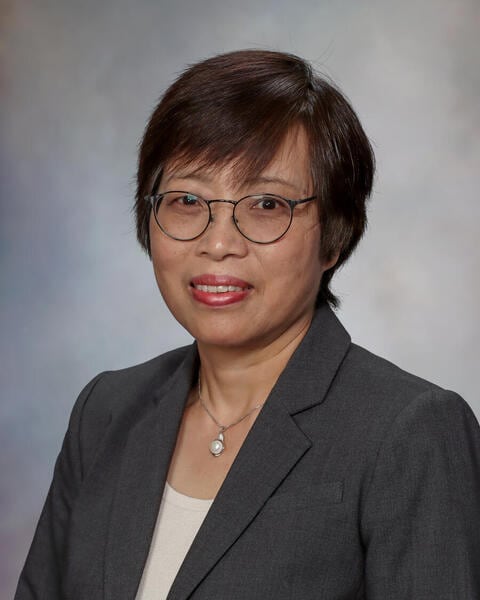
Zeying Du, M.D., Ph.D. is a Laboratory Immunologist and Associate Director of Histocompatibility Laboratory at the Mayo Clinic in Jacksonville, Florida . She previously served as Director of Clinical Histocompatibility Laboratory and Assistant/Associate Professor in the Department of Pathology and Laboratory Medicine at Loyola University Medical Center , Illinois. Education: MD (1986), MS (1989), PhD (1998), Postdoctoral Fellow in Immunogenetics (2008), Director-in-training Fellowship in Transplant Immunology (2010) Professional Memberships: Member of American Society of Transplantation and Cellular Therapy (ASTCT), International Society of Heart and Lung Transplantation (ISHLT), American Society of Histocompatibility and Immunogenetics (ASHI) Dr. Du’s clinical and research interests focus on identifying pre- and post-transplant biomarkers of immunological risk to improve solid organ transplant outcomes and using genetic markers for hematopoietic cell transplant donor selection to reduce graft-versus-host disease. Her work has emphasized HLA typing , next-generation sequencing , and transplant immunogenetics . Her 15 most recent publications (2015–2025) center on HLA allele discovery , antibody-mediated rejection in organ transplant recipients, and immunogenetic risk factors in transplantation. These studies leverage advanced sequencing technologies to refine histocompatibility testing and improve donor-recipient matching. Scientific Awards: Paul E. Strandjord Young Investigator Award (2010) Extraordinary Young Investigator Award (2000) Second-place Award for Progress in Natural Sciences (1998) Servier Young Investigator Award (1998) Presidential Scholarship (1998) Dr. Du actively participates in HLA laboratory inspections (College of American Pathologists, ASHI), contributes to scientific review panels (ISHLT, ACHI), and leads histocompatibility testing at Mayo Clinic’s laboratory. Her research integrates clinical immunology with genetic analysis to advance precision medicine in transplantation.
Yan Zhang is an Associate Professor in the Department of Biological Chemistry at the University of Michigan Medical School, where they lead pioneering research on CRISPR gene editing systems. Their laboratory focuses on developing and refining CRISPR-based genome editing tools, with particular emphasis on Type I CRISPR systems and the Cas3 nuclease. Dr. Zhang's research interests center on molecular mechanisms of CRISPR systems, particularly the development of compact CRISPR-Cas3 platforms for therapeutic applications. Their work has significantly advanced the understanding of how CRISPR systems can be engineered for precise genome editing, with implications for treating genetic diseases, cancer, and developing novel biotechnological tools. They have made key contributions to understanding off-switch mechanisms for CRISPR-Cas3, enabling safer and more controlled genome editing applications. Analysis of Dr. Zhang's publication record reveals a strong focus on translating basic CRISPR research into practical applications. Their work spans from fundamental molecular mechanisms of CRISPR systems to therapeutic applications in human cells, with particular emphasis on developing compact CRISPR systems that can make large DNA deletions. This research trajectory demonstrates a clear progression from basic science to translational applications, with increasing focus on therapeutic relevance in recent years. Significant media coverage across 29+ news outlets for CRISPR-Cas3 research Highlighted in Faculty Opinions Research Multiple high-impact publications in Molecular Cell, Frontiers in Microbiology, and other prestigious journals Dr. Zhang actively mentors graduate students and postdoctoral researchers, with notable advisees including Renke Tan (who completed PhD work on CRISPR-Cas3 systems) and Zhonggang Hou. Their research has been supported by multiple grants at the University of Michigan, resulting in 34 publications and 10 patents. The Zhang laboratory collaborates extensively with researchers across disciplines, including microbiologists, biochemists, and medical researchers, to advance CRISPR technology for biomedical applications. The Zhang laboratory is at the forefront of CRISPR-Cas3 research, working to develop safer and more efficient genome editing tools. Their current work focuses on refining off-switch mechanisms for CRISPR systems and developing applications for cancer treatment and genetic disease correction. The lab maintains strong collaborations with other research groups at the University of Michigan and beyond, forming a vibrant research community focused on advancing genome editing technology.