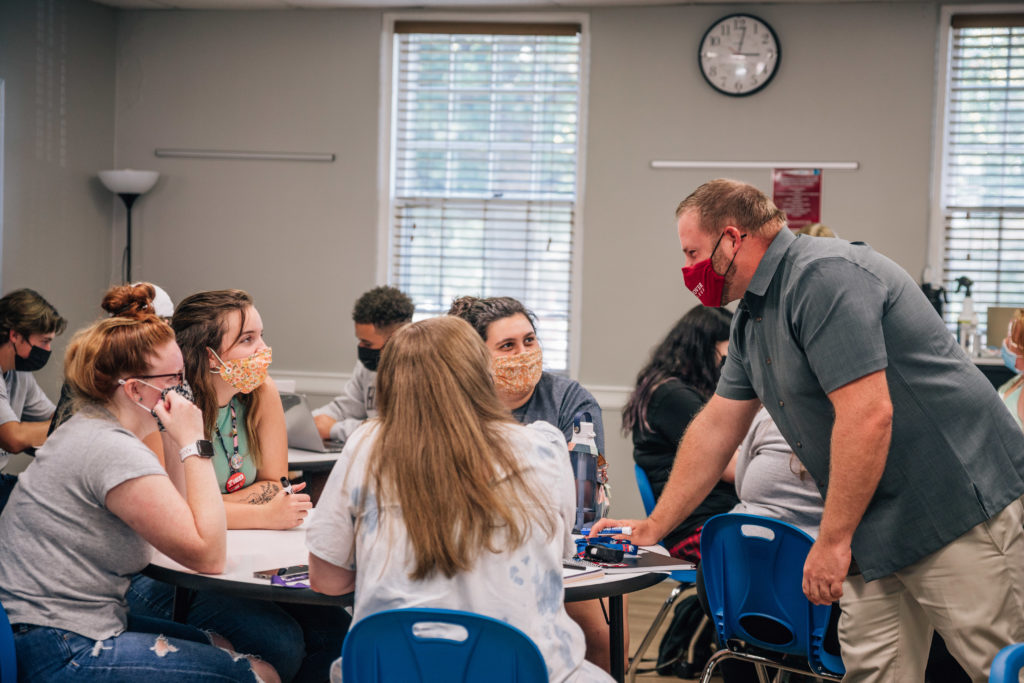
Professor Heinz Cornel is a lecturer at the Center for Continuing Education at ASH Berlin, specializing in social work within criminal justice contexts. His academic degree status is listed as 'external,' indicating a potentially adjunct or visiting role while maintaining primary affiliation elsewhere. His research interests focus on social work in delinquency contexts , juvenile justice systems , offender rehabilitation , and resocialization processes . Professor Cornel advocates for community-based approaches to offender support, particularly emphasizing alternatives to traditional punishment models for young offenders. His publications from 2011 reveal a consistent focus on practical applications of social work principles in criminal justice settings, with particular attention to outpatient support systems, transitional facilities, and youth justice alternatives. These works demonstrate his commitment to developing effective rehabilitation frameworks that prioritize social integration over punitive measures. Professor Cornel's teaching responsibilities for Winter Semester 2025/26 include two specialized courses examining life worlds and intervention methods in social work related to delinquency, reflecting his practical approach to preparing social work professionals for this challenging field.
Dr. hab. Aldona Nawój-Śleszyński is a Professor at the University of Lodz, serving as Head of the Department of Criminal Executive Law within the Faculty of Law and Administration. With over two decades of academic experience, she has established herself as a leading expert in penitentiary science and criminal executive law in Poland. Her leadership extends beyond academia as she previously served as President of the Polish Penitentiary Society from 2017-2025 and maintains editorial roles in key journals including 'Law Education Security' and 'Probacja'. Completed law studies at University of Lodz (1998) Received PhD in legal sciences (2005) Awarded habilitation (dr hab.) based on dissertation about prison overcrowding (2015) Appointed university professor (2016) Head of Department of Criminal Executive Law (2019-present) Professor Nawój-Śleszyński's research primarily focuses on Criminal Executive Law , Penitentiary Science , and related fields including prison overcrowding, alternative sentencing, and rehabilitation programs. Her work critically examines the Polish prison system's historical development and contemporary challenges, with particular attention to electronic monitoring, semi-open prison facilities, and the treatment of specific inmate populations. She has pioneered research on prison population management during the COVID-19 pandemic and continues to influence policy through her extensive publications and leadership roles in professional organizations. Her recent publications demonstrate a clear trajectory toward more individualized, rehabilitation-focused correctional approaches, moving from traditional punitive models toward evidence-based practices that emphasize risk assessment, personalized treatment plans, and alternative sentencing options. This evolution reflects broader European trends while addressing specifically Polish institutional contexts and legal frameworks. Individual first-degree award from University of Lodz Rector for scientific achievements (2015) Individual second-degree award for organizational achievements (2017) Individual second-degree award for scientific achievements (2021) Individual second-degree award for organizational achievements (2023) Individual award for scientific achievements (2024) As Head of Department and scientific supervisor of the Student Scientific Penitentiary Circle since 2007, Professor Nawój-Śleszyński has mentored numerous students while maintaining active collaboration with the Polish Prison Service. Her leadership extends to editorial boards of major penitentiary journals and membership in national disciplinary commissions, demonstrating comprehensive engagement across academic, professional, and policy domains. She maintains strong connections between theoretical research and practical prison administration through ongoing partnerships with correctional institutions. Professor Nawój-Śleszyński's work is deeply integrated with the Polish Penitentiary Society, which she led for eight years, and through which she organized major academic events including the VI Penitentiary Congress. Her department serves as a crucial bridge between academic research and practical prison administration, facilitating knowledge exchange between scholars, correctional staff, and policymakers in the Polish criminal justice system.
Nandini Sikand is an Assistant Professor in the interdisciplinary film and media studies program at Lafayette College, a liberal arts institution in Pennsylvania. She is a multi-disciplinary academic and artist whose work spans film studies, media studies, anthropology, and performance studies, with recognition at over 100 domestic and international film festivals and broadcasts on PBS. Her research interests focus on the intersections of documentary filmmaking, experimental cinema, and performance studies, with particular emphasis on postcolonial perspectives, Indian dance traditions (especially Odissi), gender studies, and social justice issues. Sikand's scholarly and artistic practice consistently examines cultural representation, identity formation, migration, and power dynamics through both academic research and creative production. Dr. Sikand has received numerous prestigious awards and fellowships for her work, including: Guggenheim Foundation grants (including one in 2018 for Inside/Outside ) Jerome Foundation grants Center for Asian American Media grants Two-time recipient of New York State Council on the Arts (NYSCA) awards American Association of University Women (AAUW) postdoctoral fellowship (2013-14) Her filmography demonstrates a sustained engagement with pressing social issues through innovative cinematic approaches. Her works span from early explorations of diaspora culture in The Bhangra Wrap (1995) to contemporary examinations of the criminal justice system in Inside/Outside (2019), which documents incarcerated women's reentry challenges in the Lehigh Valley. Her films consistently blend documentary realism with experimental techniques to address themes of identity, displacement, and social transformation. Dr. Sikand maintains an active presence in multiple creative and academic communities. She serves as a faculty coach at the National Center for Faculty Development and Diversity (NCFDD) and sits on the Advisory Board of Mono No Aware, a cinema-arts non-profit organization. As a performer, she is the co-founder and co-director of Sakshi Productions, a neo-classical Odissi dance company, and serves as Associate Director/Choreographer of Harmattan Theater, which focuses on environmentally and socially engaged theater productions.
Dustin Bailey is an Associate Professor of Education and Head of Educator Preparation at Hanover College, concurrently serving as Associate Provost for Assessment. He teaches courses including Educational Technology, Education Law & Ethics, Professional Collaboration, Classroom Management & PBIS, Secondary Methods for Social Studies, and Special Education. Dr. Bailey's educational background: B.S., M.S., Indiana University – Indianapolis Ed.D., Indiana University – Bloomington His research focuses on bullying and harassment in schools, legal aspects of special education for marginalized youth, multicultural education, LGBTQ+ issues, student achievement/GRIT development, and teacher capacity building. He has extensively published on LGBTQ+ student experiences, cyberbullying via social media platforms, and mentorship programs for juvenile offenders. Dr. Bailey's scholarly work demonstrates sustained commitment to educational equity and social justice, particularly regarding safe school environments for LGBTQ+ students and support systems for disadvantaged youth. His publications consistently intersect legal frameworks, ethical considerations, and policy implementation within P-16 educational settings. No scientific awards were documented in the provided materials. Professional engagement includes: Faculty advisor for Hanover College Chapter of Indiana State Teacher’s Association Aspiring Educators (HCEA) Higher education representative to Indiana State Teachers Association No grant funding details were provided. Personal interests include weightlifting, classic automobile restoration (1962 Buick convertible and 1950 Chevy truck), farming, and travel with his son and two dogs (Stella the pug and Windsor the Corgi).
Rodney Walker serves as a Visiting Assistant Professor of Leadership Studies in the Andrew Young Center for Global Leadership at Morehouse College and instructs within Morehouse's Higher Education in Prisons Program at Atlanta's Metro Reentry Facility. He earned his bachelor's degree from Morehouse College and graduate degrees from Harvard University and Yale University, overcoming significant adversity including foster care, autism diagnosis, and homelessness during his youth. Walker's research and professional work centers on trauma-informed educational approaches, mentorship strategies for at-risk youth, and social justice initiatives targeting criminal justice reform. His expertise culminated in the 2020 publication Wounds You Can Not See: An Educator's Guide to Cultivating Resilience and Leadership in At-Risk Youth , establishing him as a thought leader in youth resilience development. Walker founded Forever Life Productions to create custom event videos and partnered with former U.S. Secretary of Education Arne Duncan to develop Chicago's comprehensive employment pipeline for disconnected youth. He actively volunteers at Atlanta's Federal Correctional Institution to advance educational opportunities within the prison system.
Dr. Kelly Lockwood is a Lecturer and Head of Social Policy, Sociology and Criminology at the University of Salford's School of Health & Society. She joined the university in 2015 as a Research Assistant, became a criminology lecturer in 2016, and assumed her leadership role in 2023. With prior experience as a manager for a women's centre working with criminal justice agencies, Dr. Lockwood brings practical insight to her academic work focusing on women and the criminal justice system. Her research centers on mothering and imprisonment, examining how women maintain maternal identities during incarceration. Key interests include: Mothering and Imprisonment Disrupted Mothering Women and the Criminal Justice System Families Impacted by Imprisonment Feminist Narrative Methodologies Dr. Lockwood teaches Gender, Crime and Criminal Justice; Prisons and Punishment; and Victims and Victimisation. Her recent scholarship addresses critical issues including menopause in prison, domestic violence interventions for incarcerated women, and pandemic impacts on mother-child relationships during incarceration. She has published extensively across multiple formats including books, journal articles, and reports, with notable works such as 'Mothering from the inside: research on motherhood and imprisonment' (2020). Her research demonstrates consistent focus on gendered dimensions of criminal justice involvement and has been supported by the Internal Funding Award QR Innovation Strategy Fund. As a member of the Centre for Research on Inclusive Society, Dr. Lockwood's work contributes to understanding marginalized populations within the criminal justice system and informs policy development regarding family-centered approaches for women offenders.
Keith Coleman serves as a Lecturer in the Department of Criminal Justice at North Carolina Agricultural and Technical State University, where he has maintained active teaching and scholarship since at least 2013. His work focuses on critical contemporary issues within the criminal justice system, particularly police-community dynamics and educational practices. His academic credentials include: Ph.D. in Criminology from Indiana University of Pennsylvania (1993) M.A. in Criminal Justice from University of Massachusetts Lowell (1990) B.A. in History from University of South Florida (1987) Dr. Coleman's research centers on police-community relations, specifically examining "The Talk"—discussions Black families have with youth about police encounters—and collateral consequences of incarceration. He also investigates challenges in criminal justice pedagogy during politically polarized eras, as reflected in his publication "Teaching Criminal Justice in the Age of Trump". His scholarship demonstrates consistent engagement with societal tensions within the justice system. His recent publications reveal a clear trajectory toward addressing systemic barriers in reentry processes and pedagogical adaptations to sociopolitical climates. The concentration on community-police interactions and educational impacts indicates sustained focus on practical, real-world applications of criminal justice theory. Scientific awards: None documented in available materials. Dr. Coleman actively mentors students through the Criminal Justice Internship program and contributes to curriculum development across courses including Applied Methods, Drugs and Crime, and Honors Seminars. His service includes chairing professional task forces, as evidenced by his 2015-2016 Task Force Chair position.
Dr. Leslie Ramos Salazar is a Professor and the Abdullat Professor of Business Communication and Decision Management at West Texas A&M University's Paul and Virginia Engler College of Business. She joined WTAMU in 2015 after earning her Ph.D. in Human Communications from Arizona State University. Dr. Ramos Salazar holds the distinguished position of Abdullat Professor of Business, recognizing her excellence in teaching, research, and service across the academic triad. Dr. Ramos Salazar's educational background includes: Ph.D. in Human Communications, Arizona State University (2013) M.A. in Intercultural Communication, California State University, Long Beach (2009) B.A. in Interpersonal and Organizational Communication, California State University, Long Beach (2007) Her research spans health communication, compassion, conflict management, cyberbullying, interpersonal communication, business communication pedagogy, and statistical education. Dr. Ramos Salazar has published extensively in top journals including Health Communication, Business and Professional Communication Quarterly, and Journal of Interpersonal Violence. Recent work examines mindfulness and self-compassion effects on faculty well-being, cyberbullying in academic settings, financial literacy among young adults, and AI integration in education. Her publication record shows consistent productivity with multiple articles appearing in 2024-2025 across diverse research areas. Dr. Ramos Salazar has received significant recognition including: Decision Sciences Journal of Innovative Education Best Research Paper Award (2018) Paul & Virginia Engler College of Business Professional Service Award (2019) Paul & Virginia Engler College of Business Research Excellence Award (2022) Abdullat Professor of Business designation (2018) As an educator, Dr. Ramos Salazar teaches Statistics for Business and Economics, Business Communication for Health Care Managers, Healthcare Communication for the Business Environment, and Contemporary Issues in Management Communication. She maintains an active advising load of 12-18 students per term and mentors numerous research projects through the McNair Scholars Program and other initiatives. Her commitment to student success extends to her role as faculty advisor for ALPFA (Association of Latino Professionals for America). Dr. Ramos Salazar serves on editorial boards, reviews manuscripts for multiple journals, and presents regularly at academic conferences. Her work demonstrates a strong commitment to advancing knowledge in communication studies while supporting student development and contributing to the academic community through meaningful service.