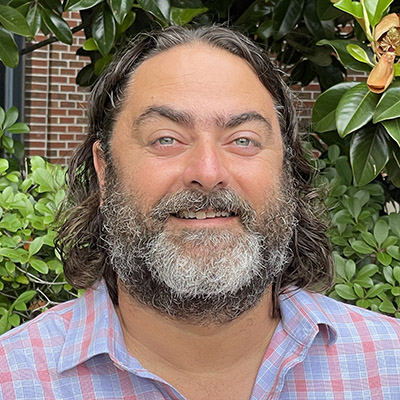
Dr. Kathleen Gradel is Professor in the College of Education at the State University of New York at Fredonia . With more than four decades of experience, she teaches graduate and undergraduate courses in special education, literacy, technology, and action research, while also serving as Interim Director of Sponsored Programs. Education Ed.D., University of Virginia Research & Teaching Interests Dr. Gradel’s scholarship centers on inclusive classroom practices that foster success for P-12 students with learning needs, technology-enhanced instruction for both K-12 and higher-education faculty, and early-college success strategies . Her teaching portfolio spans educational foundations, differentiated instruction, classroom motivation, digital productivity, and action research. Grants & Initiatives She has directed multiple externally funded professional-development grants in partnership with regional school districts, co-developed two Master’s preparation programs for Buffalo State College, and pioneered blended/online AP course offerings via Erie2 BOCES. Recently, she designed a suite of on-demand micro-courses for online faculty, complete with a micro-credentialing (digital badging) infrastructure. Awards & Honors SUNY Chancellor’s Award for Excellence in Teaching SUNY FACT2 Award for Excellence in Instruction (2016) Service & Leadership Dr. Gradel is a long-standing co-advisor for the Kappa Delta Pi International Education Honor Society, former Chair of Fredonia’s Planning & Budget Committee, and OpenSUNY Online Learning Ambassador. She co-moderates the Western New York Google Educator Group, serves on statewide technology initiatives, and acts as an external evaluator for emerging SUNY online programs.
Mikko Aaltonen is Professor of Criminology at the Department of Law, University of Eastern Finland's Faculty of Social Sciences and Business Administration. He leads multiple research initiatives including the Criminology Research Group and Empirical Legal Research Unit. His work focuses on register-based studies of crime patterns, juvenile delinquency, and criminal justice outcomes. Research interests span quantitative criminology, adverse childhood experiences, recidivism prevention, neurodegenerative disease impacts on criminal behavior, and cross-national crime comparisons. His projects investigate societal determinants of crime through large-scale data analysis. Recent publications (2021-2025) demonstrate methodological diversity including longitudinal cohort studies, registry linkages, and cross-national comparisons. Dominant themes include juvenile violence trajectories, prison population dynamics, neurocriminology, digital forensics, and reentry program effectiveness. Active projects include: ACElife - Adverse childhood experiences and prevention methods (2022-2028) Finnish Infrastructure for Register Research (FIRE) (2025-2029) Access to justice for marginalized groups in aging societies (2023-2027) He collaborates with the Neuroethics and Rights Research Group and House of Influence research collective.
Megan Hicks is an Assistant Professor at Wayne State University's School of Social Work, conducting critical research on health disparities and juvenile justice outcomes among Black youth in Detroit. Her work examines adverse childhood experiences (ACEs), community risk factors, and relational protective mechanisms influencing healthy development, with leadership roles in evaluating the Wayne County juvenile justice system and studying social determinants of health in Black families. Her academic credentials include a PhD in Human Development and Family Science from The University of Georgia (2017), an MS in the same field (2014), and a BA in Sociology from The Ohio State University (2011). Dr. Hicks' research program centers on structural and interpersonal determinants of health in Black communities, employing complex quantitative methods to investigate juvenile justice involvement, mental health disparities, and protective factors. Her expertise spans program evaluation, prevention science, and community-based intervention development for Black youth and families, with methodological rigor in longitudinal analysis and large urban datasets. Her 15 most recent publications (2021-2025) reveal consistent thematic focus on racial discrimination, trauma exposure, and systemic inequities affecting Black populations. Key methodological strengths include advanced statistical modeling of ACEs impacts, intersectional analysis of gender/race effects, and evaluation of criminal legal system interventions, demonstrating translational potential for policy reform. Notable recognitions include: Society for Prevention Research 2018 Minority Travel Award Student and New Profession Best Paper Award (2017) Sloboda and Bukoski SPR Cup Winner for rapid data analysis (2017) Dr. Hicks currently directs two major externally funded initiatives: a comprehensive evaluation of Wayne County's juvenile justice system and a community-engaged study of social determinants of health among Detroit's Black families. She mentors graduate students in research methods and evaluation, with grant-writing expertise supporting community-partnered projects aimed at reducing health disparities through evidence-based interventions.
Dan Richard is a Professor of Psychology at the University of North Florida and Co-Director of the Florida Data Science for Social Good program. His work bridges lay epistemology, research methodology, data science , and community engagement , with a focus on understanding terrorism and fostering transformational learning in educational settings. His research spans diverse fields, including social psychology, public health, political science , and STEM education . Recent publications highlight trends in community-based transformational learning , data-driven tools for health assessment , and conspiracy theories in radicalization . He employs interdisciplinary approaches to study student engagement, civic identity , and GIS applications for social impact. As Co-Director of the Florida Data Science for Social Good program, he drives initiatives that combine data science and community involvement , while mentoring students in service-learning and applied research . His work emphasizes practical solutions for societal challenges through academic collaboration.
Margaret Shippen is a Professor in the Department of Special Education, Rehabilitation, and Counseling at Auburn University's College of Education, with over 30 years of combined experience in public school classrooms and higher education. Her work critically addresses systemic inequities at the intersection of special education and criminal justice, focusing on vulnerable populations affected by the school-to-prison pipeline and incarcerated individuals with disabilities. Dr. Shippen's research centers on career assessment for incarcerated adults with disabilities and mental health challenges, alongside evidence-based literacy interventions tailored for correctional settings. She investigates Prison Rape Elimination Act implementation, transition planning for reentry, and teacher professional development in juvenile justice education. Her scholarship combines quantitative analysis of educational outcomes with qualitative insights from incarcerated populations to develop practical rehabilitation frameworks. Analysis of her 75+ publications reveals consistent focus on correctional education across literacy development, career counseling, and mental health service delivery. Her work employs mixed-methods approaches to evaluate interventions for incarcerated youth and adults, emphasizing adaptations of cognitive theory and evidence-based practices within correctional constraints. Key trends include validating assessment tools like the Career Thoughts Inventory and examining generational differences in vocational rehabilitation. Dr. Shippen has received Auburn University's Excellence in Undergraduate Teaching and Excellence in Outreach awards for her impactful contributions. Excellence in Undergraduate Teaching Excellence in Outreach She has mentored countless undergraduate and graduate students while securing over $2 million in external grant funding with colleagues. Her funded projects develop professional development models for juvenile justice teachers and evidence-based interventions targeting recidivism reduction through improved educational access. Current initiatives focus on translating research into classroom-ready strategies for educators working in correctional facilities.
Kevin Robert White is an Associate Professor in the School of Social Work at East Carolina University, within the College of Health and Human Performance. His academic career builds upon over thirteen years of direct practice experience as a child welfare caseworker and school social worker, which directly informs his research focus on improving outcomes for at-risk youth and families. Dr. White earned his educational credentials from prestigious institutions: B.S. in Psychology from the University of North Carolina - Chapel Hill M.S.W. in Social Work from the University of North Carolina - Chapel Hill Ph.D. in Social Work from the University of North Carolina - Chapel Hill M.S. in Data Science from Eastern University Dr. White's research program centers on understanding and improving safety, permanency, and well-being for at-risk youth and families within the child welfare system. His work particularly addresses evidence-based solutions for youth adopted from foster care, examining post-adoption outcomes, family stability, and interventions to support adoptive and guardianship families. With his background in data science, he applies advanced analytical methods including machine learning and sophisticated statistical approaches to child welfare research questions. His interdisciplinary approach bridges social work practice with quantitative methodology to generate actionable insights for improving child welfare systems. Analysis of Dr. White's publication record reveals a consistent focus on adoption and guardianship outcomes, family stability, and interventions for at-risk youth. His work demonstrates increasing integration of data science methodologies with traditional social work research, particularly in using machine learning with linked administrative and survey data. The research spans multiple dimensions of child welfare including prevention, intervention, and long-term outcomes, with particular attention to understanding factors that contribute to family stability after adoption or guardianship. Dr. White's scholarly achievements include: Sam and Betsy Reeves Doctoral Fellow at UNC-Chapel Hill (2014) Service on the editorial board of Adoption Quarterly (2023-2024) Active peer reviewer for multiple journals including Journal of Public Child Welfare and Children and Youth Services Review As a funded researcher, Dr. White has secured significant external funding for child welfare research. He currently serves as Principal Investigator on multiple projects including "Risk factors and outcomes associated with out-of-county placements for high-needs youth" and "Understanding and Improving Foster Parent and Kinship Care Recruitment and Retention in North Carolina" (both 2025-2026). His research portfolio includes participation in three major federally-funded projects: the Permanency Innovations Initiative, the National Quality Improvement Center for Adoption and Guardianship Support and Preservation, and Understanding Post Adoption and Guardianship Instability. Dr. White has demonstrated success in securing funding from diverse sources including state agencies, federal programs, and research institutes. Dr. White is actively engaged in the social work research community through leadership roles including School Social Work Cluster Co-Chair for the Society for Social Work Research and participation in the Data Science and AI Special Interest Group. His interdisciplinary approach combining social work practice with data science methodology positions him at the forefront of innovative child welfare research.
Joshua S. Long is an Assistant Professor in the School of Criminology and Justice Studies at the University of Massachusetts Lowell, housed within the College of Fine Arts, Humanities and Social Sciences. Based in the Health and Social Sciences Building (Room 467), he teaches correctional policy and criminological theory while maintaining an active research agenda. Recognized with the 2025 Award for Excellence in Undergraduate Teaching, Dr. Long bridges academic rigor with practical correctional applications through collaborations with MIT's Educational Justice Initiative and the Global Community Corrections Initiative. Dr. Long's educational foundation includes comprehensive training from the University of Cincinnati: Ph.D. in Criminal Justice Graduate Certificate in Applied Behavioral Analysis M.S. in Criminal Justice B.S. in Criminal Justice His research program centers on violence prevention and risk management within correctional systems. Dr. Long investigates prison classification efficacy, restrictive housing impacts, and sex offender management through both quantitative analysis of large datasets and qualitative case studies. His work on vigilantism and prison homicides reveals complex social dynamics within carceral environments, while his evaluation of in-prison educational programs demonstrates tangible pathways for rehabilitation. Current projects examine historical prison homicide trends and biographical studies of lifers, contributing to evidence-based correctional reforms. Dr. Long's publication trajectory shows consistent high-impact contributions, including his 2025 book Prison Homicide: Killing and Dying in Prison Today and the co-authored Avenging Child Sex Abuse (2024). His research spans prison violence mechanisms, risk assessment validity, and educational interventions, with recent work increasingly incorporating technology-based solutions for rehabilitation. The meta-analysis on HOPE programs (2024) exemplifies his policy-relevant scholarship that directly informs correctional practice. Dr. Long's scholarly excellence is recognized through: 2025 Award for Excellence in Undergraduate Teaching (UMass Lowell) 2024 Wiley Top Cited Article recognition for correctional meta-analysis He maintains active research funding through collaborations with MIT's Educational Justice Initiative and the Global Community Corrections Initiative. Current projects include longitudinal studies of prison homicides, evaluations of educational programming in correctional facilities, and biographical analyses of long-term incarcerated populations. Dr. Long regularly presents findings at national conferences including the American Society of Criminology and has contributed to Nordic correctional research through the 30th Nordic Sociological Association. Through the Educational Justice Initiative at MIT, Dr. Long expands his impact beyond traditional academia into practical correctional reform. His work with the Global Community Corrections Initiative connects UMass Lowell to international best practices in community-based supervision, creating unique opportunities for student involvement in cross-cultural correctional research.
Stephen Tripodi is a Professor and Doctoral Program Director at Florida State University's College of Social Work, where he also serves as Faculty Director of Academic Dissemination at the Institute for Justice Research and Development. He holds a PhD in Social Work from the University of Texas and a BA in Psychology from Michigan State University. His research examines: Trauma histories of incarcerated populations Mental health and substance use interventions in correctional settings Recidivism pathways for women and youth Reentry program efficacy Quality of life in prison healthcare systems Dr. Tripodi's publications (2013-2019) demonstrate strong focus on gender-specific trauma interventions, recidivism correlates, and randomized trials of prison-based therapies. Key thematic clusters include: Trauma-informed care adaptations for incarcerated women Intersections of mental health, substance use, and reoffending Health disparities in correctional settings Methodological rigor through RCTs and latent variable modeling He leads significant grants including: A $1.2M NIJ trial on trauma reentry services for youth $480K Arnold Ventures project on therapeutic communities $250K jail-based trauma care evaluation Co-PI on $7.5M multistate reentry initiative Through the Institute for Justice Research and Development, he advances translational research on evidence-based criminal justice reforms.
Christophe Laux is a Professor (Exceptional Class 2) at CentraleSupélec, Paris-Saclay University, where he leads the Nonequilibrium Plasma Group at the EM2C Laboratory. His academic leadership includes roles as Co-president of the Franco-American PUF Foundation jury and membership in the High Scientific Council of 3AF (Association Aéronautique & Astronautique France). Education: Engineer, Ecole Centrale Paris (1988) DEA Heat Transfer, Ecole Centrale Paris (1988) Ph.D. Mechanical Engineering, Stanford University (1993) Research Focus: Dr. Laux specializes in plasma-assisted combustion, nanosecond pulsed discharges for aerodynamic flow control, and advanced laser diagnostics for high-temperature gases. His work on reentry flow radiation modeling supported ESA missions like Huygens and Stardust. Current projects explore ultrafast plasma heating and nanosecond discharges in water vapor for energy applications. Publication Trends: His recent articles (2010-2013) emphasize plasma-flame interactions, nanosecond discharge regimes, and spectroscopic diagnostics, with applications in aerospace propulsion and emission reduction. Research consistently bridges experimental plasma physics and computational kinetics. Awards: Luigi Crocco Lectureship, Princeton (2010) Most Cited Paper Award, Plasma Sources Science & Technology (2009) Chaire d’Excellence, French Ministry of Research (2004) AIAA Associate Fellow (2003) AIAA Best Paper Award (1998) Advising & Leadership: He has supervised 19+ PhD students in plasma dynamics and combustion. Administrative roles include presidency of the ECP-Graduates Association (6,000+ alumni) and coordination of international academic exchanges with U.S. universities. Manages the M2 Electrification et Propulsion Automobile program. Laboratories: Heads the Nonequilibrium Plasma Group at EM2C Laboratory (CNRS), focusing on experimental plasma diagnostics and kinetics. Collaborates with NASA Ames, Stanford University, and ONERA on aerospace plasma projects.
Nancy Crawford serves as Associate Professor and Director of Clinical Training at Biola University's Rosemead School of Psychology. With extensive clinical experience at institutions including Tumaini Counseling Center (Nairobi), Alongside Incorporated (Michigan), and Advocate BroMenn Medical Center (Illinois), she also taught at multiple Kenyan universities. Her academic credentials: B.A. Ed., University of Michigan M.A., Wheaton College Psy.D., Wheaton College Crawford's research centers on Member Care for Missionaries and Mental Health in Missions , with specific interests in resilience of mission personnel, cognitive assessments, and clinical training. She investigates psychological well-being among missionary women and single personnel, and reentry challenges for missionary kids. Her publication record (2000-2016) reveals a consistent focus on psychology-missions integration, particularly resilience strategies, mental health support systems, and cross-cultural adaptation. Key studies include longitudinal research on missionary kids' stress and analyses of role perception among female missionaries. Professional affiliations include APA, CAPS, and NCSPP. Crawford co-chairs the Mental Health & Missions Conference Program Committee and consults for CPA Division II. No scientific awards were documented in the source material. In her role as Director of Clinical Training, Crawford supervises student clinicians and develops training curricula. She regularly presents at conferences on topics including member care, missionary mental health, and cross-cultural counseling.
Allison Timbs serves as an Assistant Professor in the Department of Criminal Justice and Criminology within Kentucky Wesleyan College's School of Social Sciences, focusing on academic and research contributions to criminal justice systems. Her expertise spans critical domains of criminological inquiry, structured as follows: Criminology (theoretical frameworks and crime causation) Criminal Justice (system operations and policy) Policing (strategies, ethics, and community relations) Juvenile Justice (youth interventions and rehabilitation) Corrections (prison systems and reentry programs) Victimology (trauma support and legal advocacy) This foundation drives her pedagogical approach and scholarly engagement in contemporary justice challenges.
Stéphanie Chouinard-Thivierge serves as an Assistant Professor at the School of Criminology, Faculty of Arts and Sciences, University of Montreal, where she contributes to undergraduate education across Criminology, Social Sciences, and Intervention programs. As a member of the International Centre for Comparative Criminology (CICC), she engages in collaborative research examining developmental pathways in criminal behavior with particular emphasis on juvenile sexual offending. Her research expertise spans Developmental Criminology , Sexual Offending in adolescent and child populations, Adversity and its intergenerational transmission, Antisocial Behaviors , and Life Trajectory analysis. She employs longitudinal methodologies and meta-analytic techniques to investigate recidivism patterns, therapeutic efficacy for problematic sexual behaviors, and desistance processes during emerging adulthood, with recent publications demonstrating strong international research collaborations. Professor Chouinard-Thivierge maintains active scholarly engagement through regular presentations at premier international conferences including the American Society of Criminology and Association for the Treatment of Sexual Abusers. Her teaching portfolio includes Psychocriminology (CRI1100) across multiple undergraduate streams, reflecting her commitment to foundational criminological education at the University of Montreal.
Michelle R. Broaddus, PhD is an Associate Professor in the Department of Psychiatry and Behavioral Medicine at the Medical College of Wisconsin. She is a member of both the Center for AIDS Intervention Research (CAIR) and the Wisconsin Institute of NeuroScience (WINS), demonstrating her interdisciplinary research approach across mental health, neuroscience, and infectious disease domains. Dr. Broaddus's research focuses on HIV/AIDS prevention and intervention, particularly with vulnerable populations including Latino migrants, Black men who have sex with men, and transgender individuals. Her work examines how misconceptions about immigration laws impact healthcare access, develops text message-delivered sexual health interventions, and investigates social media use in relation to sexual risk behaviors. She has made significant contributions to understanding how linkage to care specialists foster social support for people living with HIV. Her 15 most recent publications (2015-2025) demonstrate consistent productivity across multiple domains including child psychiatry consultation programs, HIV testing barriers among migrant populations, mobile health interventions for sexual health, and mental health service delivery models. These works show an increasing focus on practical implementation of interventions in real-world settings. Among her notable recognitions: Heyer Award and Dozier Award from University of Colorado Department of Psychology Cyber Mentor Program, American Psychological Association Office on AIDS (2010-2012) Mobile Health Summer Training Institute, National Institutes of Health (2011) HIV Prevention Research Ethics Training Institute Fellowship, Fordham University (2011-2013) Dr. Broaddus has secured multiple research grants from NIH (NIMH, NIDA) and state funding sources. Her current work includes the Charles E. Kubly Child Psychiatry Consultation Program ($1,000,000 from Wisconsin Department of Health Services) and several NIH-funded projects examining HIV prevention and care models. She mentors medical students and has taught numerous courses on psychometrics, mobile health technology, and ethical research practices with vulnerable populations, demonstrating a strong commitment to training the next generation of researchers.
Dr. Katie Hail-Jares is a Senior Lecturer in the School of Criminology and Criminal Justice at Griffith University and a member of the Griffith Criminology Institute since 2016. Her academic career spans institutions in both Australia and the United States, with previous appointments at American University and Georgetown University. She holds a PhD from American University (2010-2015) and brings practical experience from her time as a Project Coordinator with the Iowa Coalition Against Domestic Violence. Dr. Hail-Jares' research focuses on understanding how criminalizing behavior impacts individual and community health, with particular emphasis on sex work, homelessness, and drug use. Her work examines wrongful convictions, incarceration consequences, and parole processes, often through the lens of marginalized populations. She employs community-involved research methods and has published extensively on couchsurfing among youth, queer homelessness, and the effects of gentrification on outdoor sex work. Her recent publications (2021-2023) show a strong focus on vulnerable populations, particularly youth experiencing homelessness and LGBTQ+ individuals within the criminal justice system. She has published in journals including International Journal on Homelessness, Youth, Journal of Interpersonal Violence, and Social Problems, with recurring themes of social justice, policy implications, and health outcomes for marginalized communities. Her notable awards include: The Fund for the Advancement of the Discipline from the American Sociological Association (2020) Ian Potter Foundation Travel Grant (2018) Dr. Hail-Jares actively supervises doctoral students on topics related to imprisonment trends, homelessness pathways, and mental health of incarcerated populations. She has secured research funding from the Queensland Mental Health Commission, Department of Children, Youth Justice and Multicultural Affairs, and Brisbane Youth Service Inc. Her teaching responsibilities include convening the third-year capstone course and serving as Program Director for the Criminology and Criminal Justice (Honours) program.
Professor John Rynne is a distinguished academic at Griffith University's School of Criminology and Criminal Justice, where he has served as Senior Lecturer since 2012 and currently holds the rank of Professor. He is a member of the Griffith Criminology Institute and maintains significant international connections as an associate member of the University of Cambridge's Institute of Criminology Prison Research Centre. With extensive theoretical and applied knowledge of Australian and international criminal justice systems, Professor Rynne brings over 20 years of practical experience to his academic work, including 15 years in management and operational roles within the Queensland criminal justice system prior to his academic career. Professor Rynne's educational background includes a PhD from Griffith University (2005) on private prisons' impacts on the Australian custodial system, an MPhil in Psychology from University of Southern Queensland (1999), a BSc(Hons) in Psychology from University of Tasmania (1997), and a BAppSc in Psychology from University of Southern Queensland (1995). His academic journey reflects a consistent focus on psychology and criminal justice applications. His research interests center on forensic psychology with particular emphasis on youth involvement in offending (especially sexual offenses), Indigenous well-being following criminal justice system contact, and prison environments. Over the past decade, his work has increasingly focused on reducing harm in custodial settings for Aboriginal and Torres Strait Islander peoples. His research demonstrates a clear evolution from broader criminal justice system analysis toward specialized focus on vulnerable populations within correctional environments, particularly Indigenous Australians and youth offenders. Analysis of Professor Rynne's recent publications (2019-2025) reveals a strong thematic concentration on Adverse Childhood Experiences (ACEs) among youth sexual offenders, Indigenous incarceration issues, and program evaluation for youth forensic services. His work frequently employs mixed methods approaches, combining quantitative analysis of recidivism patterns with qualitative exploration of trauma experiences. The research shows increasing collaboration with Indigenous researchers and organizations, reflecting a commitment to culturally appropriate methodologies in studying Indigenous justice issues. Develop a Neurodevelopmental Framework for Practice and Practice Standards for the Queensland Youth Justice System (Department of Youth Justice, 2023-2025) Differentiating ACE profiles of male youths who exhibit harmful sexual behaviours (National Centre for Action on Child Sexual Abuse, 2023-2025) Examining the impact of childhood sexual abuse victimisation on adolescent offending outcomes (Australian Institute of Criminology, 2022-2024) Understanding wellbeing and desistance in young people treated for sexual offending (Westpac Banking Corporation, 2021-2024) Professor Rynne has supervised numerous doctoral students, serving as Principal Supervisor for six completed theses and currently advising two doctoral candidates. His supervision focuses on topics related to youth sexual offending, Indigenous justice, and correctional practices. He previously directed the Griffith Youth Forensic Service until mid-2024, overseeing clinical approaches for young people with harmful sexual behaviors. His research program demonstrates strong alignment between theoretical work, practical application, and policy impact, particularly evident in his contributions to the Royal Commission into the Protection and Detention of Children in the Northern Territory.