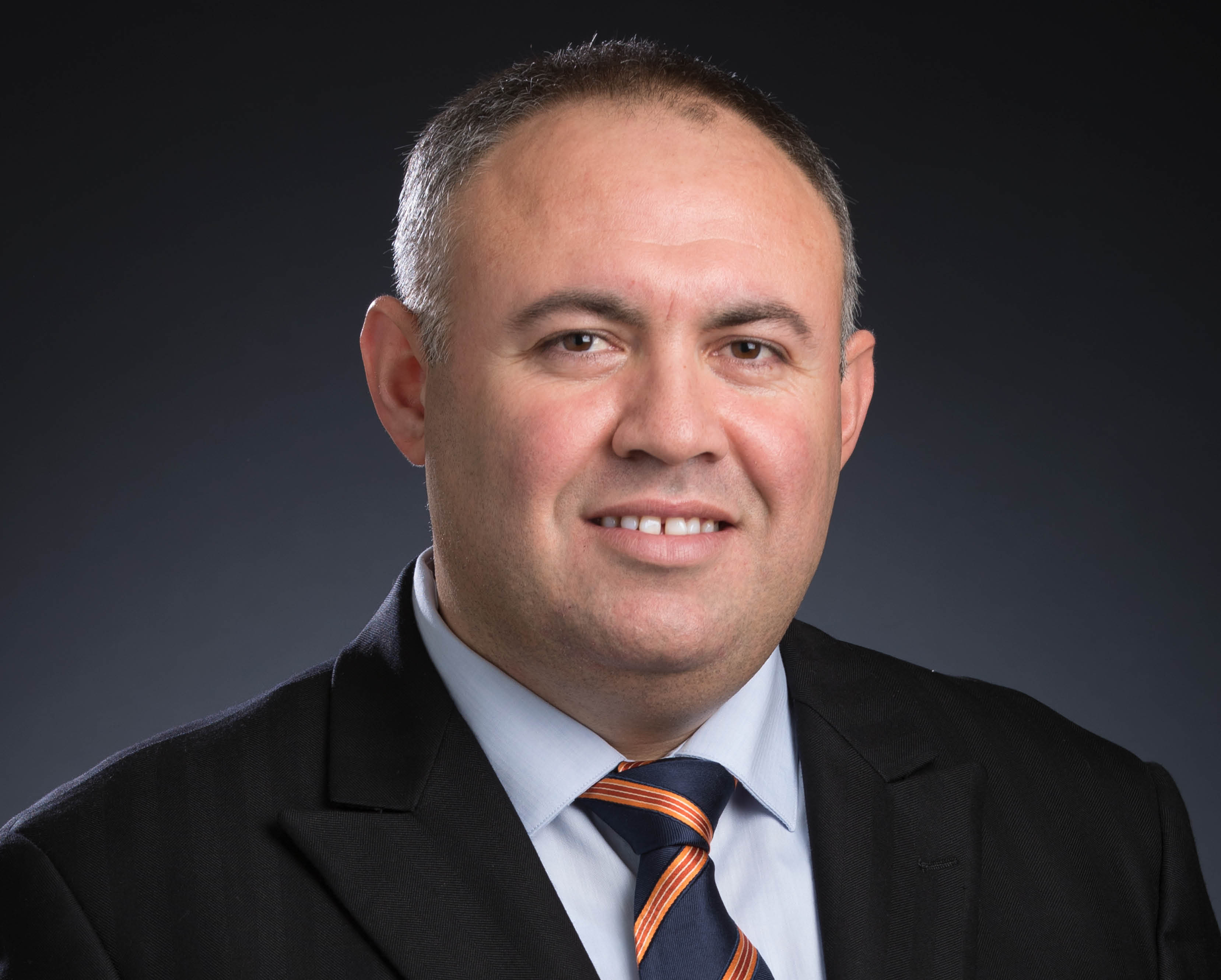
Josh Seim is an Assistant Professor of Sociology at Boston College, affiliated with the Morrissey College of Arts and Sciences. His work focuses on the sociologies of work, medicine, welfare, punishment, pedagogy, and ethnographic methods. He holds a Ph.D. from the University of California, Berkeley, and has published widely in top journals including *American Sociological Review* and *Social Problems*. Education: B.A., Gonzaga University M.S., Portland State University Ph.D., University of California, Berkeley Research Interests: His research explores how institutions like healthcare systems, welfare offices, and penal institutions interact with urban poverty. Recent projects include studies on ambulance crews’ labor processes, welfare bureaucracy, and post-prison labor. His writing also emphasizes pedagogical innovation in sociology teaching and ethnographic methodological rigor. Key themes include the governance of suffering, medical labor, and carceral systems. Publications & Books: Bandage, Sort, and Hustle: Ambulance Crews on the Front Lines of Urban Suffering (UC Press, 2020) The Welfare Assembly Line: Public Servants in the Suffering City (forthcoming UC Press, 2026) Teaching: Sociology 7715: Classical Sociological Theory (graduate) Sociology 7716: Contemporary Sociological Theory (graduate)
Dr. Janet Garcia-Hallett is an Associate Professor of Criminal Justice in the Henry C. Lee College of Criminal Justice and Forensic Sciences at the University of New Haven. She earned her Ph.D. in Criminal Justice from Rutgers University School of Criminal Justice and specializes in research examining the intersection of race, gender, and the criminal legal system, with particular focus on formerly incarcerated mothers of color. Dr. Garcia-Hallett's educational background includes: Ph.D., Criminal Justice, Rutgers University School of Criminal Justice M.A., Criminal Justice, Rutgers University School of Criminal Justice B.A., Cum Laude, Honors in Sociology and Psychology, CUNY Macaulay Honors College: Hunter College Her research interests focus on the detrimental impact of incarceration on communities of color and the intersectional obstacles women of color face throughout the criminal legal process. She examines how formerly incarcerated mothers navigate motherhood while confronting systemic barriers related to gender, race, and criminal record. Her work challenges traditional narratives about mass incarceration that have historically centered on men, instead highlighting the unique experiences of women of color who must perform motherwork under oppressive conditions of surveillance and marginalization. Analysis of Dr. Garcia-Hallett's publications reveals consistent themes across criminal justice, gender studies, and race theory. Her work demonstrates a strong focus on qualitative methodologies to center the voices of marginalized populations, particularly examining the intersection of motherhood and incarceration. Recent publications increasingly address public health issues within correctional settings and community reentry challenges. Her research consistently applies critical race and feminist frameworks to challenge systemic oppression within the criminal legal system. Dr. Garcia-Hallett has received significant recognition for her scholarship: 2023 ASA Ida B. Wells-Barnett Distinguished Book Award Multiple 2023 finalists and honorable mentions for book awards 2019 SAGE Junior Faculty Professional Development Teaching Award University of Missouri President's Award for Intercampus Collaboration Her grant funding demonstrates substantial research impact, including the Prison Research and Innovation Network ($200,000) and collaboration on a $2.8 million Arnold Ventures grant for the Missouri Prison Transformation Project. Dr. Garcia-Hallett actively engages in community partnerships, such as her work with Winning Ways Inc. to empower women in the community. Her media presence shows significant public engagement through op-eds in Ms. Magazine and Hartford Courant addressing critical issues like abortion rights for incarcerated women.
Molly Maleckar is a Research Professor at the Computational Physiology Department of Simula Research Laboratory , Oslo, Norway. Her work bridges computational modeling, cardiac electrophysiology, and biomedical applications, with a focus on arrhythmia mechanisms, fibrosis modeling, and machine learning integration in cardiac risk prediction. Research Interests include: Computational Cardiology Ion Channel Dynamics Machine Learning in Medicine Excitable Tissue Modeling Cardiac Fibrosis Analysis Biomedical Simulation Scientific Contributions span 15+ publications (2018-2024) addressing atrial fibrillation, calcium handling, and AI-driven ECG analysis. Key collaborative projects involve patient-specific ventricular modeling and educational initiatives like the Simula Summer School in Computational Physiology .
Ayorkor Gaba, PsyD, serves as an Adjunct Assistant Professor in the Department of Psychiatry and Behavioral Sciences at the University of Massachusetts Chan Medical School (UMass Chan). She directs the Behavioral Health Equity Advancement Lab (B-HEAL) and leads the Equity Division at the Massachusetts Center of Excellence in Specialty Court. Dr. Gaba's academic affiliations include the T.H. Chan School of Medicine at UMass Chan where she conducts research at the intersection of behavioral health and social justice. Dr. Gaba earned her BS in Psychology and PsyD in Clinical Psychology from Rutgers University. Her educational background provided the foundation for her specialized work in clinical psychology with a focus on marginalized populations. Her research program centers on reducing health disparities and advancing health equity through implementation science approaches. Dr. Gaba specifically investigates how to improve behavioral health services for historically marginalized populations including African American/Black and Latino/a/x individuals and families, people involved in the criminal legal system, and women. She examines co-occurring mental health and substance use disorders within specialty court settings, with particular attention to racial/ethnic disparities in service delivery and outcomes. Her work integrates social justice principles with systems thinking to address social determinants of health that contribute to inequities in behavioral healthcare. An analysis of her recent publications (2019-2024) reveals a strong emphasis on implementation science within criminal justice settings, particularly specialty courts. Her research consistently examines racial and ethnic disparities in behavioral health services, with growing attention to digital health interventions and gender-specific considerations in treatment. The publications demonstrate methodological diversity including clinical trials, implementation studies, qualitative analyses, and systematic reviews focused on equity-oriented interventions. Dr. Gaba actively contributes to advancing discourse around race, ethnicity, and culture in psychiatric research and practice, as evidenced by her co-authorship on methodological guidance for reporting on these critical dimensions in research. As Director of the Behavioral Health Equity Advancement Lab (B-HEAL), Dr. Gaba leads a research team focused on developing and testing interventions that address health inequities. Her lab works closely with the Massachusetts Center of Excellence in Specialty Courts, particularly on initiatives related to the Equity Division which she directs. This collaborative structure enables her team to implement and evaluate evidence-based practices in real-world criminal justice settings while centering equity considerations throughout the research process.
Kyle Hanquist is an Assistant Professor in the Department of Aerospace and Mechanical Engineering at the University of Arizona, where he is also a member of the Graduate Faculty. He directs the Computational Hypersonics and Nonequilibrium Laboratory (CHANL), focusing on advanced simulation techniques for high-speed flows. His academic journey includes a PhD and MSE in Aerospace Engineering from the University of Michigan and a BSE in Mechanical Engineering from the University of Nebraska. PhD, Aerospace Engineering, University of Michigan, Ann Arbor MSE, Aerospace Engineering, University of Michigan, Ann Arbor BSE, Mechanical Engineering, University of Nebraska, Lincoln Dr. Hanquist's research centers on hypersonics, aerothermodynamics, and nonequilibrium flows , with strong emphasis on computational fluid dynamics , low-temperature plasmas , and thermal management systems . His work involves modeling complex physical phenomena such as electron transpiration cooling, plasma-assisted flow control, and high-temperature gas effects in reentry environments. He also investigates molecular gas dynamics and finite-rate chemistry in extreme conditions. His recent publications reveal a strong trend in computational modeling of hypersonic boundary layers , plasma sheaths , and shock-tube validation of thermochemical models . The interdisciplinary nature of his work spans aerospace engineering, plasma physics, and materials response under extreme thermal loads. Much of his research integrates multi-physics simulations to address fluid-thermal-structural interactions critical for next-generation hypersonic vehicles. Dr. Hanquist has received several scientific honors, including: 2020 AIAA Plasmadynamics and Lasers Best Paper Award Editor's Choice, AIP Publishing - Physics of Fluids (Summer I 2020) Featured Article, AIP Publishing - Physics of Fluids (Summer I 2021) Frontiers in Physics – Plasma Physics (Spring 2020) As an advisor and lab director, he mentors graduate students in computational hypersonics and collaborates with institutions like NASA and the University of Michigan. His research is supported by grants from aerospace and defense agencies, though specific funding sources are not listed. He teaches courses in fluid mechanics, numerical methods, and nonequilibrium flows, contributing to both undergraduate and graduate education. He leads the Computational Hypersonics and Nonequilibrium Laboratory (CHANL) , which develops and applies high-fidelity simulation tools for hypersonic applications. The lab focuses on kinetic modeling, plasma interactions, and optimization of thermal protection systems, often using massively parallel CFD codes and multi-fidelity surrogate models.
Dr. Kristin Valentino is a Professor of Psychology and Director of the Veldman Family Psychology Clinic at the University of Notre Dame, holding the William J. Shaw Center for Children and Families Collegiate Chair. She is also a Faculty Fellow at the Eck Institute for Global Health and the Institute for Educational Initiatives. Her research focuses on how adversity, particularly child maltreatment, impacts development and resilience, emphasizing caregiver-child interactions and intervention design. She evaluates strategies to improve caregiving quality and mitigate developmental risks in high-risk families. Education: Ph.D. in Psychology from the University of Rochester and A.B. in Psychology from Georgetown University. Research Interests: Child maltreatment prevention and intervention Developmental psychopathology Parent-child dynamics Autobiographical memory specificity Racial discrimination impact Professional Roles: President-Elect of the APA Division 37 Section on Child Maltreatment, Associate Editor for Child Maltreatment , and NIH Study Section member. Her work integrates developmental psychopathology perspectives and multi-level analysis to address child psychopathology and adversity. Labs/Teams: Leads the Development & Psychopathology Laboratory, focusing on translational research to bridge clinical practice and scientific inquiry. Collaborates on projects addressing trauma-informed interventions and intergenerational adversity.
Jared F. Edgerton is an Assistant Professor at the University of Texas at Dallas, affiliated with the School of Economic, Political and Policy Sciences. His research focuses on how social relations and networks influence conflict dynamics, employing methodologies from network science and machine learning. He holds a Ph.D. (2021) and M.A. (2018) in Political Science from The Ohio State University. Key research interests include terrorism, international security, civil war, and data-driven approaches to conflict analysis. His work spans topics like media effects on violence (e.g., Rwanda's radio impact), extremist recruitment networks (Islamic State), and elite polarization in crises like the COVID-19 pandemic. Methodologically, he combines experimental designs, bipartite network analysis, and geospatial techniques. Notable contributions include analyzing genocide participation in Rwanda, resilience in cooperative state networks, and the socio-technical dimensions of conflict mobilization. His interdisciplinary approach bridges political science, computer science, and security studies. While no scientific awards are explicitly listed, his prolific output reflects sustained scholarly impact. Edgerton has advised no listed students but has engaged in quasi-experimental policy evaluations (e.g., prisoner recidivism programs) and applied geospatial analysis to post-conflict land safety in Cambodia. His research portfolio demonstrates a commitment to both theoretical innovation and real-world conflict mitigation strategies.
Jacob Schuman is an Associate Professor at Temple University’s Beasley School of Law, specializing in Constitutional Law, Criminal Law, and Evidence. He teaches courses on the Law of the Police and supervises community supervision (probation, parole, and supervised release). Previously, he served as an Assistant Professor at Penn State Law School, where he earned the Student Bar Association Faculty Equity Award. Before academia, he worked in the Federal Community Defender Office, representing criminal defendants in appellate proceedings. His scholarship has appeared in top-tier journals like the Stanford Law Review and New York University Law Review, focusing on legal frameworks governing supervised release and reentry. His work bridges historical jurisprudence and contemporary criminal justice reform, often cited by courts, scholars, and advocates across ideological spectrums. Education: Graduated magna cum laude from Harvard Law School, followed by clerkships for Judge Michael Boudin (U.S. Court of Appeals for the First Circuit) and Judge James Boasberg (U.S. District Court for the District of Columbia). He served as Notes Chair of the Harvard Law Review. Research emphasizes the law of community supervision, judicial roles in reentry processes, and sentencing philosophy. His recent articles explore topics like Indian Country supervision, revocation procedures at the Founding era, and probation’s intersection with constitutional principles. His amicus curiae briefs in federal circuit cases highlight practical applications of legal theory. Awards include recognition for equity-focused teaching and impactful scholarship. Professional engagement includes appellate advocacy training and contributions to legal policy debates. His work often critiques systemic inequities in criminal supervision and proposes evidence-based reforms to improve sentencing transparency and judicial accountability.
Professor Jana Grekul is a Professor of Sociology at the University of Alberta specializing in criminology, gender studies, and Indigenous justice. She directs the Bachelor of Arts in Criminology Program and has received multiple teaching awards including the Rutherford Award for Excellence in Undergraduate Teaching (2018). Her research examines: Gendered pathways into/out of criminal justice systems Indigenous incarceration experiences Gang desistance processes Intersection of victimization and criminalization Pedagogical innovations in criminology Recent publications focus on prisoner reentry, Indigenous gang involvement, and adapting criminology education during the pandemic. Her work demonstrates strong commitment to community-engaged research and experiential learning. Scientific Awards: McCalla Professorship (2018) Rutherford Award for Teaching Excellence (2018) Faculty of Arts Undergraduate Teaching Award (2017) Professor Grekul collaborates with community organizations including REACH Edmonton and develops project-based learning initiatives that bridge classroom instruction with real-world justice challenges.
Dr. Leanne F. Alarid is a Professor in the Department of Criminal Justice at The University of Texas at El Paso, College of Liberal Arts. She earned her Ph.D. in Criminal Justice from Sam Houston State University and focuses on gender and crime, corrections policy, and mental health intersections with the justice system. Research Focus: Gender-specific analysis of criminal behavior, correctional treatment strategies, and mental health policy Current Project: Lead Evaluator for Bureau of Justice Assistance grant on jail-based reentry programs Editorial Roles: Member, Corrections: Policy, Practice and Research , Women and Criminal Justice , and Criminal Justice Policy Review Her recent publications emphasize community corrections , prison reentry , and gender dynamics in criminal justice , with a focus on implementation science and policy evaluation. She has contributed to journals like Justice Quarterly and The Prison Journal , alongside authoring major textbooks such as Community-Based Corrections and Corrections . Scientific Awards: 2011 Founder’s Award, Academy of Criminal Justice Sciences Dr. Alarid teaches courses including Correctional Systems, Community Corrections, Criminology, and Study Abroad programs in London. She actively evaluates correctional interventions and contributes to public policy discussions on decarceration and mental health diversion.
Yasser Arafat Payne is a Professor of Sociology & Criminal Justice at the University of Delaware's College of Arts & Sciences, with a joint appointment as an associate professor in the Department of Africana Studies. His academic work focuses on street ethnographic research examining policing and reentry, economic well-being and educational inequality, and gun violence with street-identified Black Americans through the innovative Street Participatory Action Research (Street PAR) framework. Payne earned his Ph.D. and M.Phil. from the City University of New York Graduate Center, an M.A. from Seton Hall University, and a B.A. from Wagner College. His educational background has informed his distinctive approach to studying marginalized communities through the lens of those who live within them. Payne's research program challenges dominant arguments in the literature by asserting that all of the streets of Black and Brown America are resilient. His work focuses on racial identity, street identity, school violence, physical violence, Gangster Rap music and culture, and the methodology of street participatory action research. He has developed Street PAR as a framework that includes three essential features: research orientation, intervention for Street PAR members, and a vehicle for action and activism in local communities. His recent publications reveal a consistent focus on violence exposure, police-community relations, reentry challenges, and resilience among street-identified Black populations. Payne's work spans multiple disciplines including criminology, sociology, public health, and urban studies, with particular attention to the intersection of structural inequality and individual experience. Payne actively engages with media on issues of policing and structural violence, as evidenced by his July 2024 commentary on stop-and-frisk policies for NBC News and his August 2023 presentation to the Wilmington Reparations Task Force. He co-authored the book 'Murder Town, USA: Homicide, Structural Violence and Activism in Wilmington' (Rutgers University Press, 2023), which has become a key resource for understanding gun violence in urban communities. As an educator, Payne teaches specialized courses on street ethnography, Gangster Rap Music and Culture, Racial Stratification, and core courses on Race, Class & Gender and Race, Gender & Poverty. His teaching philosophy centers on bringing the lived experiences of street-identified populations into academic discourse through innovative pedagogical approaches. Payne leads a research lab focused on Street PAR methodology, training community members to document experiences of street-identified Black populations through surveys, interviews, and dual interviews. His approach emphasizes community ownership of research and the transformative potential of participatory methodologies in addressing structural violence.
Kursat Kara is an Assistant Professor in the Department of Mechanical and Aerospace Engineering at Oklahoma State University (OSU), leading the Kara Aerodynamics Research Laboratory. He holds a Ph.D. in Aerospace Engineering from Old Dominion University (2008), and has held academic positions including Assistant Professor at Khalifa University (2010–2018), where he received the President’s Faculty Excellence Award for Teaching (2015). His research focuses on fluid dynamics, computational aerodynamics, hypersonic flows, quantum computing, and flow separation control using techniques like CFD and miniPIV. He has advised numerous graduate and undergraduate students, and collaborates on projects such as hypersonic boundary-layer stability, quantum computing for fluid dynamics, and urban wind field modeling for UAS navigation. Dr. Kara’s expertise spans experimental and numerical fluid dynamics, including work on sweeping jet actuators, boundary-layer transition, and aerodynamic design optimization. He is a member of AIAA (Senior), APS, and ASME, and has contributed to facilities like the $3.5M Khalifa University Low-Speed Wind Tunnel. His teaching includes courses on computational fluid dynamics, quantum computing, and unsteady aerodynamics. Recent research highlights include applications of machine learning in wind field prediction and interdisciplinary projects like interface learning for multiphysics systems. Scientific achievements include publications on hypersonic flow stabilization, quantum solvers for Burgers’ equation, and reduced-order models for urban wind simulation. His lab engages students from high school to PhD levels, emphasizing project-based learning and computational tools. Key collaborations involve NASA, the DOD, and industry partners like Sikorsky Aircraft Corp.
Elsa Y. Chen is Professor and Chair of the Political Science Department at Santa Clara University, where she teaches and conducts research on criminal justice policy, sentencing reform, and prisoner reintegration. Research Interests Professor Chen’s scholarship centers on the intersection of law, politics, and public policy, with particular attention to criminal sentencing, racial/ethnic disparities, and the implementation of reform legislation such as California’s Three-Strikes Law and Proposition 36. Her recent work explores innovative measures of reentry success beyond simple recidivism, the role of courtroom workgroups in shaping sentencing outcomes, and the lived experiences of individuals seeking record clearance. Publication Trends Across more than three dozen publications from 1998 to 2025, Professor Chen has consistently examined how structural and procedural factors in the criminal legal system affect outcomes for defendants and returning citizens. Her 2020 edited volume Beyond Recidivism epitomizes this trajectory, offering new conceptual frameworks and methodological tools for evaluating reentry programs. Recent articles (2024–2025) extend this agenda with mixed-methods studies on online recruitment of justice-impacted interviewees and coalition-building behind automatic expungement laws. Advising & Grants No specific funded grants or named student advisees appear in the provided text; further details may be accessible via SCU’s internal systems. Laboratory & Research Teams No dedicated research lab is mentioned; however, as Department Chair, Professor Chen likely oversees collaborative projects within the Political Science Department and across the university’s interdisciplinary centers focusing on justice and policy studies.
Jean Lachaud is a researcher at the Institute of Mechanics and Engineering (I2M) affiliated with the TREFLE - Transfers, Fluids and Energy department at the University of Bordeaux. His work focuses on thermal and mechanical behavior of porous and reactive materials, particularly in high-temperature environments. Research Interests : Porous media physics, pyrolysis modeling, thermal protection systems, acoustic wave propagation, multiscale simulations. Projects : Involved in ANR, PEPR, and European initiatives related to energy efficiency, material durability, and environmental engineering. His recent publications emphasize thermal non-equilibrium models , biomass pyrolysis , and ablative material response for aerospace applications. He develops computational tools like PATO and integrates experimental data with numerical simulations to study gasification, oxidation, and heat transfer phenomena. Contact : jean.lachaud@u-bordeaux.fr
Timothy C. Brown is an Associate Professor in the Department of Sociology at San Diego State University's College of Arts and Letters. He holds a PhD in Sociology from Louisiana State University. His research examines how social, individual, and environmental inequalities influence criminality, victimization, and criminal justice experiences, with a focus on marginalized communities. Key research areas include rural Southern gangs, female law enforcement experiences, and racial disparities in justice systems. Dr. Brown's research explores: Crime impacts on minority groups Contextual inequality's role in violence Community-gang dynamics in rural settings His publications frequently analyze violence patterns, correctional system challenges, and policing environments. He has received awards including the UALR Bright Spot Award and Outstanding Graduate Student Award. Advising includes supervision of 15+ graduate students on topics ranging from bumblebee habitats to prison financial literacy. Grant funding exceeds $120,000 from agencies including FINRA and the Bureau of Justice Assistance. Dr. Brown leads research collaborations on rural gang dynamics and correctional education, serving on editorial boards for Deviant Behavior and American Journal of Criminal Justice .