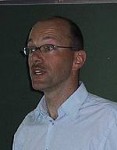
Panagiotis Rondogiannis is a Professor in the Department of Informatics and Telecommunications at the National and Kapodistrian University of Athens. He holds degrees from the University of Patras (B.Sc., 1989) and the University of Victoria, Canada (M.Sc. 1991, Ph.D. 1994). His research focuses on Logic Programming, Nonmonotonic Reasoning, Functional/Dataflow Programming, and Semantics of Programming Languages, with a particular emphasis on higher-order extensions and fixpoint theory. His work spans foundational aspects of logic programming semantics, including stable model semantics, categorical fixpoint theory, and non-monotonic reasoning frameworks. Key contributions include advancements in higher-order Datalog, lexicographic preference modeling, and the application of game semantics to logic programs. He has published extensively in top venues like Theory and Practice of Logic Programming (TPLP), ACM Transactions on Computational Logic (TOCL), and International Conference on Logic Programming (ICLP). Rondogiannis has collaborated with leading researchers such as Angelos Charalambidis and William W. Wadge, exploring topics like bilattice-based fixpoint theory and the implementation of recursive dataflow graphs in TensorFlow. His research bridges theoretical foundations with practical applications in areas like knowledge representation and programming language design.
Eric Gottlieb is an Associate Professor of Mathematics in the Department of Mathematics and Statistics at Rhodes College, where he teaches a wide range of courses from Calculus to Abstract Algebra with equal passion for math majors and math-phobic students. His traditional lecture style emphasizes both mathematical content and appreciation for the subject's inherent beauty. His academic credentials include: B.S. in Environmental Science/Geology from Antioch College M.S. in Mathematics from the University of Washington Ph.D. in Mathematics from the University of Miami Gottlieb specializes in enumerative and algebraic combinatorics with deep expertise in partially ordered sets, extending to graph theory, voting theory, Ramsey theory, and combinatorial game theory. His current research explores fair division through partial orders and combinatorial game theory applications, while maintaining interest in mathematical programming for practical problem-solving. Analysis of his 14 most recent publications reveals a consistent evolution from foundational combinatorial structures (partition lattices, Dowling lattices) toward contemporary applications in game theory (LCTR, Column-Row games) and social choice. This trajectory demonstrates his ability to bridge abstract combinatorial frameworks with tangible real-world problems in fair allocation and voting systems. He actively mentors undergraduate researchers through senior projects across diverse mathematical topics and facilitates internships with Memphis-area organizations, reflecting his commitment to experiential learning beyond the classroom.
Harjoat Bhamra is a Professor of Finance at the Imperial College Business School, Imperial College London. He holds a PhD from London Business School (2003) and degrees from the University of Cambridge (BA 1996, MMath 1998) with a Year Abroad at Heidelberg University (1994–1995). Prior to his current role, he was Associate Professor at Imperial College (2011–2024) and held academic positions at the Sauder School of Business, University of British Columbia (2003–2013). His research focuses on finance, financial economics, macroeconomics, investment strategies, and behavioral finance. Notable works include studies on behavioral biases in financial markets, inflation dynamics, corporate default risk, and household financial decision-making. His research has been published in top journals such as the Review of Financial Studies, American Economic Review, and Journal of Economic Theory. Bhamra’s work bridges theoretical models with real-world applications, exploring how psychological biases and market inefficiencies impact aggregate economic outcomes. He also contributes to policy discussions on financial stability and household finance. His professional experience includes roles as a structured products trader at First National Bank of Chicago (1996–1997). Education: PhD in Finance, London Business School (1998–2003) MMath in Mathematics, University of Cambridge (1997–1998) BA in Mathematics, University of Cambridge (1992–1996) Year Abroad in Mathematics and Theoretical Physics, Heidelberg University (1994–1995) Research interests include analyzing the effects of individual behavioral biases on financial markets and macroeconomic aggregates, the interplay between monetary policy and corporate finance, and the implications of household financial decisions on social costs. His work often employs dynamic equilibrium models to study investor heterogeneity and market inefficiencies. Recent contributions explore how psychological distance influences investors’ beliefs and portfolio choices, with implications for asset pricing and economic growth. Professional activities include editorial roles, keynote speaking, and collaborations with institutions like CEPR, NIESR, and the Centre for Macroeconomics at LSE. His research has been cited extensively and recognized for bridging behavioral finance with macroeconomic theory. Bhamra’s outreach efforts aim to translate academic insights into practical policy and market strategies.
Daniel Barczyk is an Associate Professor of Economics at McGill University, specializing in Macroeconomics, Public Finance, and Family Economics. He received his Ph.D. from New York University and holds undergraduate and master's degrees from the University of Toronto. Dr. Barczyk's research examines intergenerational transfers, long-term care policies, and lifecycle savings behavior. His work combines dynamic macroeconomic modeling with empirical analysis to study household decision-making across generations. Current projects investigate housing wealth as old-age insurance mechanisms and family risk-sharing arrangements in different cultural contexts. Dr. Barczyk's publications consistently focus on modeling family dynamics in macroeconomic frameworks, with recent expansion into Asian economies. His methodological approach integrates quantitative theory with policy evaluation. Awards & Grants: Best Paper Award in Economics (LBS 2010) SSHRC Insight Grant (2018-2021) FQRSC Young Scholar Research Grant Professional Service: MA Program Director at McGill Co-organizer of CIREQ Macro Conferences Referee for leading economics journals
Joost-Pieter Katoen is a Professor at RWTH Aachen University's Department of Computer Science, part of the School of Computer Science. He leads the MOVES group and focuses on formal methods, probabilistic systems, and program verification. His research includes probabilistic programming, Markov models, Bayesian networks, and stochastic systems. He has co-authored over 200 publications in top venues like AAAI, CAV, and CONCUR, and developed tools like AMBER and SAFEST for probabilistic analysis. Notably, his student Kevin Batz received the ETAPS Dissertation Award in 2025 for work on deductive verification of probabilistic programs. He serves as an editor for Formal Methods and has advised PhD students such as Kevin Batz and Bahare Salmani Barzoki. His work bridges theoretical foundations with practical tools for analyzing complex systems.
Stanley Zin is the William R. Berkley Professor of Economics and Business at NYU Stern, specializing in asset pricing and macroeconomic theory. His work integrates decision theory with dynamic asset valuation. Research developed the influential Epstein-Zin utility function for non-expected utility preferences. Current work examines monetary policy rules and their impact on asset markets. Publications have transformed structural economic modeling through incorporation of behavioral aspects, with recent focus on policy discretion and yield curve dynamics. Awards include the Econometric Society's Frisch Medal and Goldman Sachs Asset Management prize for investments research.
David Hobson is a Professor at the Department of Statistics, University of Warwick. His research focuses on stochastic finance, probability theory, and mathematical finance, with notable contributions to optimal stopping, Skorokhod embeddings, and martingale optimal transport. He was awarded the Adams Prize in 2003 for his work in Financial Mathematics. Hobson has organized several workshops and programs, including the 2013 IMA Conference on Mathematics in Finance and the 2005 Isaac Newton Institute program on Quantitative Finance. His work bridges theoretical probability with practical financial applications, addressing topics like transaction costs, liquidity constraints, and model-independent pricing. He advises students interested in probability and mathematical finance and has collaborated extensively with global institutions. His research also explores utility theory, optimal consumption, and investment strategies under various market conditions. Key research interests include robust pricing of derivatives, stochastic control problems, and the application of probabilistic methods to financial markets. He has published widely in top journals such as Finance and Stochastics and Mathematical Finance . His current projects address optimal stopping under Poisson constraints, Epstein-Zin utility, and multi-asset investment models with transaction costs. David Hobson has held leadership roles in academic committees, including the Scientific Committee for the European Summer School in Financial Mathematics. His work emphasizes rigor and applicability, often involving collaborations with economists, mathematicians, and finance professionals.
Derek Lemoine is a Professor of Economics and Director of Graduate Studies at the Department of Economics, Eller College of Management, University of Arizona. He is also a Research Associate at the National Bureau of Economic Research and an Associate Fellow at the Centre for Economic Policy Research (CEPR) in the Climate Change Research and Policy Network. He co-edits the Journal of the Association of Environmental and Resource Economists and serves as Co-Director of the Consortium for Environmentally Resilient Business, highlighting his leadership in interdisciplinary environmental research and policy engagement. PhD in Energy and Resources, University of California, Berkeley, 2011 Derek Lemoine's research centers on the economics of climate change, environmental and energy policy, and decision-making under uncertainty. His work spans theoretical modeling and empirical analysis, addressing topics such as optimal carbon pricing, energy transitions, climate tipping points, and the economic value of weather forecasts. He develops and applies integrated assessment models to evaluate climate policy under uncertainty, with a strong emphasis on dynamic optimization and general equilibrium effects. His research has been published in leading journals including American Economic Review , Nature Communications , and Journal of the Association of Environmental and Resource Economists . His recent publications reveal a consistent focus on the interplay between climate uncertainty and policy design. He has shown how uncertainty increases the social cost of carbon, how financial markets value seasonal climate forecasts, and how inertia in the climate system can be leveraged to reduce policy costs. His work on dynamic subsidies for technology adoption and the welfare implications of emission intensity standards demonstrates deep engagement with practical policy instruments. Selected as 2022's Outstanding Publication in Journal of the Association of Environmental and Resource Economists (JAERE) Lemoine advises graduate students and teaches courses such as Environmental and Energy Economics: Applied Theory and Energy and Environmental Challenges . He has received external funding and recognition for his work, including policy-relevant research on climate damage estimation and adaptation equity. He maintains active research collaborations with leading scholars and institutions and contributes to public discourse through media outlets such as The Conversation , LA Times , and VoxEU . His research code and teaching modules are publicly available, reflecting a commitment to open science. He leads research projects on climate risk, energy innovation, and environmental justice, often involving interdisciplinary teams. His lab and research group focus on recursive integrated assessment modeling and the economic implications of climate tipping points. Future work includes refining estimates of climate damages, analyzing the distributional impacts of infrastructure policy, and improving the design of carbon markets under uncertainty.
Jack Y Favilukis is a Professor at the University of British Columbia (UBC) , affiliated with the Division of Finance under the Sauder School of Business. His research spans international finance, asset pricing, housing markets, and macroeconomics. Key areas include risk sharing, wage rigidity, and spatial equilibrium models. Co-authored works address the carry trade, housing affordability, and labor market dynamics. His recent publications examine the impact of remote work on asset prices, portfolio mandates, and real estate policies. He has no listed scientific awards or student advising details in the provided data.
David Evans is an Associate Professor of Economics in the College of Arts and Sciences at the University of Oregon . He conducts research on computational macroeconomics, dynamic stochastic general-equilibrium (DSGE) modelling, and optimal fiscal and monetary policy, with a particular emphasis on economies populated by heterogeneous agents. Research Focus Professor Evans’s current agenda centres on developing numerical methods to approximate equilibria in DSGE models that feature large numbers of heterogeneous households or firms. His early applications address pressing questions in optimal fiscal policy—namely, how debt levels, labour-tax rates, and capital-tax rates should evolve over the business cycle and in the long run when inequality is explicitly taken into account. Additional collaborative work explores how fiscal-hedging motives should influence long-term debt structure and tax design. Publications Overview Between 2014 and 2023, Evans has produced a steady stream of articles that advance both theoretical and computational frontiers. Collectively, these works span four broad themes: (1) optimal taxation and public debt management under incomplete markets; (2) the macroeconomic implications of household heterogeneity and inequality; (3) bounded rationality and learning in macroeconomic settings; and (4) novel solution techniques—especially perturbation methods—for high-dimensional heterogeneous-agent models. Scientific Recognition No specific awards or honours are mentioned in the supplied text. Contact & Resources Office: 538 PLC, 1285 University of Oregon, Eugene OR 97103-1285 Phone: 541-346-3431 Email: devans@uoregon.edu Website: http://econevans.com/
Sydney C. Ludvigson is a Julius Silver, Roslyn S. Silver, and Enid Silver Winslow Professor of Economics and Finance at New York University. She is affiliated with the Department of Economics within NYU's College of Arts & Science and serves as Co-Director of the NBER Program on Asset Pricing and Vice President of the American Finance Association. Education: Ph.D., Princeton University, Economics (1996) M.A., Princeton University, Economics (1995) B.A., University of California at Los Angeles, Economics (1991) Ludvigson's research focuses on the interplay between asset markets and macroeconomic activity, including the role of monetary policy in market fluctuations, systematic errors in macroeconomic expectations, machine learning applications to human judgment, risk premia in stock/bond/housing markets, wealth inequality effects on valuations, and dynamic causal effects of uncertainty in business cycles. Scientific Awards: Edward Mills Best Paper Award in Real Estate Economics (2021) Best Paper Prize, Utah Winter Finance Conference (2010) Her work has been supported by collaborations with institutions like the NBER and contributions to journals such as the Journal of Political Economy , American Economic Review , and The Journal of Finance . She has developed uncertainty indexes and bias-tracking tools using machine learning, with applications in inflation and GDP growth forecasting.
Mariano Massimiliano Croce serves as Full Professor in the Department of Finance at Bocconi University, holding significant academic appointments including Director of the PhD in Economics and Finance program since 2019. His institutional affiliations extend to CEPR, IGIER, and Baffi-Carefin research centers, reflecting his standing in the international academic community. Professor Croce teaches an extensive curriculum including Capital Markets, Understanding Investments, Empirical Methods for Finance, and advanced topics in Asset Pricing across undergraduate, Master's, MBA, and PhD programs at Bocconi and other leading institutions worldwide. His educational foundation includes: PhD in Economics from New York University Master's and Bachelor's degrees in Economics from Bocconi University, Milan Professor Croce's research program centers on asset pricing within general equilibrium frameworks where uncertainty about long-horizon economic perspectives (growth news shocks) plays a critical role. His work systematically explores international asset prices and exchange rate dynamics, the global interplay between asset prices and investment decisions, connections between investor information processing and market outcomes, and the growth implications of fiscal policy risks. As a pioneer in MacroFinTech, his theoretical contributions have reshaped understanding of how long-term economic uncertainty manifests in financial markets across international boundaries. His methodological approach combines sophisticated theoretical modeling with rigorous empirical analysis, particularly focusing on high-frequency data applications in contemporary financial research. Analysis of his recent publications reveals a clear progression from foundational theoretical work on recursive preferences and long-run risk toward increasingly applied research examining real-world phenomena including climate-related financial risks, pandemic market reactions, and innovative applications of text analysis to financial markets. The interdisciplinary nature of his work bridges traditional finance with macroeconomics, environmental economics, and policy analysis, demonstrating growing relevance to contemporary global challenges. Professor Croce's scholarly achievements have been recognized through: CEPR Research Fellowship (awarded September 2017) NBER Research Associate appointment (April 2018) Teaching Award in PhD Program Co-Editorship of Economics Letters (since 2021) Appointment to the American Economic Review Editorial Board (2025) As academic leader of Bocconi's PhD program since 2019, Professor Croce shapes the next generation of financial economists while maintaining an active research agenda. His teaching portfolio spans institutions including Wharton, STERN, ISB, and Kenan-Flagler, demonstrating global recognition of his expertise. Research support for his work comes through prestigious affiliations including prior research internships at the Federal Reserve Board of Governors and European Central Bank, and ongoing collaborations through CEPR and NBER networks that facilitate international scholarly exchange. Professor Croce maintains active research leadership through his editorial role at Economics Letters and as Co-Editor of the Reading Group in Asset Pricing at Bocconi. His research team focuses on developing new methodologies for analyzing long-term economic risks and their financial market implications, with recent expansion into climate finance and text-based analysis of market reactions to emerging global challenges.
Michael Monoyios is an Associate Professor in Financial Mathematics at the University of Oxford's Mathematical Institute and a Tutorial Fellow in Applied Mathematics at Lady Margaret Hall. His academic journey includes a BSc and PhD in Theoretical Physics from Imperial College London and postdoctoral work at the Niels Bohr Institute. Prior to academia, he worked as a derivatives trader in London. His research centers on stochastic control and optimization in financial contexts, including portfolio management under transaction costs, hedging in incomplete markets, and dual methods for pricing. He also explores insider information, asymptotic expansions, and machine learning applications in finance. His publications predominantly focus on mathematical finance , with recurring themes of duality theory, optimal consumption, and dynamic programming. Recent work integrates neural networks for portfolio generation and investigates stability in recursive utility models. Awards and honors: Leverhulme Research Fellowship (2004-2005) University of Oxford Teaching Award (2007) Departmental Teaching Award (2014) He tutors undergraduates in Applied Mathematics and has organized workshops at the Isaac Newton Institute and London Mathematical Society.
Han Hong is a Professor of Economics at Stanford University's Department of Economics. He holds a Ph.D. in Economics (1998), M.S. in Computer Science (1998), and M.S. in Statistics (1997) from Stanford University, and a B.A. in International Trade from Zhongshan University (1993). His research focuses on econometric methodology, health econometrics, statistical modeling, and computational economics. He has developed innovative approaches for panel data analysis, structural estimation, and decision-making algorithms. Professor Hong has received numerous honors including the Willard G. Manning Memorial Award (2017), Arrow Award Honorable Mention (2015), and multiple NSF grants. He serves as Co-Editor of the Journal of Econometrics and is a Fellow of the Econometric Society. He teaches courses in Advanced Econometrics, Data Science, and Econometric Methods, and mentors students through honors thesis research and directed reading programs.
Martin K. Schneider is a Professor of Economics at Stanford University (School of Humanities and Sciences) with a courtesy appointment as Professor of Finance at Stanford Graduate School of Business. He holds a PhD in Economics from Stanford University (1999) and a Diplom in Economics from the University of Bonn, Germany (1993). His research focuses on macroeconomics, financial economics, and the interplay between uncertainty and market behavior. Key research areas include ambiguity in decision-making, credit markets, housing economics, and business cycle theory. Notable contributions include models of uncertainty shocks driving asset prices and employment dynamics, as well as analyses of housing market segmentation and inflation redistributions. He has held roles as Senior Fellow at the Stanford Institute for Economic Policy Research and Research Associate at the National Bureau of Economic Research. Schneider’s work has been published in top journals such as the American Economic Review , Journal of Political Economy , and Review of Economic Studies . His awards include NSF grants and the Bradley Foundation Fellowship. He advises numerous PhD students and teaches advanced courses in macroeconomics and finance.