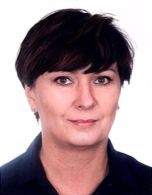
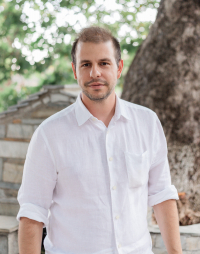
Francisco Tugores Martorell is a full-time faculty member in the Department of Mathematics at the Faculty of Business Sciences and Tourism , Universidade de Vigo. He earned his doctorate from Universitat Autònoma de Barcelona in 1991 with a thesis titled Estimates for the delta equation and the Bergman projector . His research focuses on Mathematical Analysis , particularly in Functions of a Complex Variable and interpolation theory. His work includes studies on interpolation by derivatives , zero-interpolating sequences , and weak interpolation in spaces like H∞ and Lipschitz classes. Publications span 1983–2022, with recent collaborations with Laia Tugores and Benxamín Macía. Key trends in his research involve Interpolation in Hardy spaces Boundary regularity of holomorphic functions Applications to complex variable theory Structural properties of interpolating sequences Connections to functional analysis Operator-theoretic approaches Collaborations include co-authoring with Laia Tugores and Benxamín Macía , with affiliations to the BiotecnIA research group focused on industrial biotechnology and environmental engineering.
Sotiris Nikoletseas is a Full Professor and Founding Director of the Internet of Things Laboratory (IoT-Lab) at the Computer Engineering and Informatics Department of Patras University, Greece. He also serves as a Senior Researcher of the Algorithms Group at the Computer Technology Institute and Press "Diophantus" (CTI), Greece, with previous Visiting Professor appointments at the Universities of Geneva, Ottawa and Southern California (USC). His research spans five major domains: algorithmic aspects of wireless sensor networks and IoT; AIoT applications in digital health and smart manufacturing; wireless energy transfer protocols and electromagnetic radiation control; probabilistic algorithms and random graphs; and psychoanalysis driven computing applied to social networks. His work bridges theoretical foundations with practical implementations, particularly evident in recent publications focusing on indoor air quality monitoring, temporal graph theory, and AI-driven health diagnostics. His most recent publications (2023-2025) demonstrate strong trends toward practical AIoT applications in healthcare, with multiple papers on respiratory disease diagnosis, indoor air quality monitoring, and gesture recognition for health monitoring. Theoretical work continues on temporal graph properties and random intersection graphs, showing his dual commitment to both theoretical foundations and practical applications. His significant scientific recognition includes: Best Paper award at the 18th International Conference on Distributed Computing and Networking (ICDCN), Hyderabad, India, 2017 Best Paper Award at the 6th IEEE International Conference on Distributed Computing in Sensor Networks (DCOSS), Santa Barbara, USA, 2010 Inclusion in the list of highly cited computer scientists based on Google Scholar metrics Professor Nikoletseas has supervised over 50 Diploma Theses and numerous graduate students, including 10 PhD students who have gone on to academic and industry positions worldwide. His externally funded research portfolio includes multiple EU projects (SynAir-G, zPasteurAIzer, SAINT), industry collaborations (Pfizer), and national innovation projects (PAT, Smart Photovoltaic Plants), demonstrating strong connections between academic research and real-world applications. He leads the IoT-Lab at Patras University, which focuses on cutting-edge research in wireless networks, energy transfer, and AIoT applications. Current team members include Prof. Christoforos Raptopoulos (random graphs), Dr. Gavrilis Filios (energy-efficient buildings), and Dr. Pantelis Tzamalis (AIoT in digital health), working on projects ranging from industrial IoT to physiological data analysis.
Dr. hab. Elżbieta Sidorowicz is a full-time Professor at the Department of Numerical Methods and Programming (NŚP) within the Institute of Mathematics at the University of Zielona Góra. Her academic career spans interdisciplinary research bridging mathematics, computer science, and economics. Research interests: Graph theory: edge colorings, rainbow colorings, dominating sets, iterative methods Combinatorial geometry: partitions of Euclidean space, packings Game theory: stochastic games, multigenerational conflicts, recursive utility Nonlinear analysis: fixed point theorems, Volterra equations Applications: sustainable energy, industrial optimization Teaching activities include linear algebra, discrete mathematics, Boolean methods in computer science, and matroid theory. Projects include EU-funded research (POWR.03.05.0-00-00-Z014/18) focused on modern teaching methodologies and practical collaboration with entrepreneurs.
Kent Sun, PhD is a Professor in the Department of Mathematics at Ferris State University , affiliated with the College of Arts, Sciences and Education . His work spans applied mathematics, biostatistics, and mathematical education. Education: PhD in Applied Math-Statistics from SUNY Stony Brook, MS in Electrical Engineering from Polytechnic University, BS in Electrical Engineering from Cornell. Research interests include: Numerical analysis and differential equations Biostatistical modeling Statistical learning methods Mathematical education innovations Recent publications reflect his focus on computational methods, mathematical constants, and educational technologies. His 2002 presentation on recursive partitioning anticipated modern machine learning applications.
Aida Pliuškevičienė serves as an Associate Professor and Affiliated Scientist at Vilnius University's Institute of Data Science and Digital Technologies within the Cybersocial Systems Engineering Group. Her research is centered at the intersection of mathematical logic and theoretical computer science. Her primary research interests include Temporal Logic , Modal Logic , and Proof Theory , with significant contributions to sequent calculi, loop-check elimination, and termination methods in automated deduction. Her work demonstrates consistent focus on formal verification systems and computational logic frameworks. Analysis of her 25+ publications reveals sustained expertise in developing decision procedures for temporal and modal logics, with recent work advancing cyclic sequent calculus strategies (2025) and loop-check specifications (2022). Her research trajectory shows evolution from foundational work on Gentzen-type calculi (1992) to contemporary applications in distributed knowledge systems. As an active researcher at Vilnius University's Akademijos St. 4 campus, she collaborates extensively with Romas Alonderis, Regimantas Pliuškevičius, and Haroldas Giedra on temporal logic frameworks. Her publication record in journals like Lithuanian Mathematical Journal and Journal of Automated Reasoning demonstrates sustained scholarly output over three decades.
Anna Sasak-Okoń is a Lecturer at the Department of Information Systems Software within the Institute of Informatics and Mathematics , Maria Curie-Skłodowska University (UMCS). Her academic work focuses on database systems, speculative query execution, and distributed computing, with a particular emphasis on graph-based modeling techniques.
Bozikas Apostolos is an Assistant Professor in Actuarial Science at the Department of Statistics and Actuarial Science within the School of Finance and Statistics at the University of Piraeus. He has been in this position since 2023, following previous roles as Lecturer with academic fellowship (2020-2023) and Lecturer with academic scholarship at the National and Kapodistrian University of Athens (2019-2020). His academic career reflects a strong focus on actuarial science, particularly in mortality modeling and risk assessment. PhD in Actuarial Science, University of Piraeus (2019) Master's Degree in Actuarial Science and Risk Management, University of Piraeus (2013) Bachelor's degree in Mathematics, National and Kapodistrian University of Athens (2009) Dr. Bozikas specializes in Portfolio Reliability Theory, Actuarial Methods of Pension, Estimation of Reserves and Damage Insurance Premiums, Longevity Risk Management, and Stochastic Mortality Modeling. His research integrates credibility theory with demographic forecasting, focusing particularly on multi-population mortality modeling and insurance applications. His work addresses critical challenges in actuarial science including longevity risk assessment for pension systems and insurance pricing under data limitations. His recent publications demonstrate a strong trajectory in advancing credibility-based approaches to mortality modeling, with applications to insurance pricing and longevity risk management. The research shows increasing sophistication in handling multi-population data and developing methods for populations with limited historical data. His work bridges theoretical actuarial science with practical applications in insurance and pension systems. Best New Statistician Award, 32nd Panhellenic Statistics Conference, Ioannina Guest Editor for Special Issue in 'Risks' journal Guest Editor for Special Issue in 'Journal of Risk and Financial Management' Research funding from Hellenic Foundation for Research and Innovation Dr. Bozikas actively contributes to the academic community as a reviewer for leading journals including 'Annals of Actuarial Science' and 'Insurance: Mathematics and Economics.' His teaching portfolio spans undergraduate courses in Health Insurance, Pricing Theory and Practice of Reinsurance, and Portfolio Reliability Theory, as well as postgraduate courses in Actuarial Methods of Pension and Generalized Linear Models. His research program focuses on developing innovative credibility-based approaches to mortality modeling with applications to insurance and pension systems.
Paul Downen is an Assistant Professor in the Miner School of Computer & Information Sciences at the University of Massachusetts Lowell, where he has been teaching since Fall 2021. His academic journey began with dual Bachelor's degrees in Computer Science and Computer Engineering from Lawrence Technological University in 2010, followed by a Ph.D. in Computer Science from the University of Oregon in 2017. He has also been a visiting researcher at INRIA and Microsoft Research. His educational background includes: Ph.D. in Computer Science (2017), University of Oregon - Eugene, OR Dissertation Title: Sequent Calculus: A Logic and a Language for Computation and Duality B.S. Computer Science (2010), Lawrence Technological University - Southfield, MI B.S. Computer Engineering (2010), Lawrence Technological University - Southfield, MI Dr. Downen's research centers on the intersection of logic and programming languages, with a focus on using logical foundations to improve the efficiency, correctness, and safety of programs and their compilation. His primary research lies in the Curry-Howard correspondence or proofs-as-programs paradigm, exploring how logical principles can inform both program design and compiler optimization. He is particularly interested in duality principles in computation, where he investigates how concepts like functional and object-oriented programming paradigms represent dual perspectives on the same underlying computational processes. His publication record shows a consistent focus on foundational aspects of programming languages, with recent work exploring copatterns, macro systems, evaluation strategies, and the relationship between type systems and machine representation. His research often bridges theoretical concepts with practical implementation, particularly through contributions to the Glasgow Haskell Compiler (GHC). Among his notable achievements are: Best Paper Award (2017) at Programming Languages Design and Implementation (PLDI) Oregon Doctoral Research Fellowship (2017) from the University of Oregon Best Paper Award nomination (2012) at European Joint Conferences on Theory and Practice of Software Best Paper Award nominee (2025) at Trends in Functional Programming Dr. Downen has been instrumental in organizing the Oregon Programming Languages Summer School, expanding its reach to diverse audiences through a "Foundations" lecture series. His teaching portfolio includes courses on Organization of Programming Languages, Assembly Language Programming, and Effective Functional Programming. His research has resulted in practical implementations within GHC, including Sequent Core (an alternative intermediate language based on sequent calculus) and Join Points (an optimization for control flow).
Professor Philip D Welch is a Professor of Pure Mathematics at the School of Mathematics, University of Bristol . His work resides at the intersection of Set Theory, Determinacy, Inner Models, Philosophy of Mathematics, Theories of Truth, and Transfinite Computational Models . External Positions : President of the European Set Theory Society (since 2022), Vice-President (2018-2022), and President of the British Logic Colloquium (2017-2022). Education : B.Sc. (London), M.Sc., D.Phil. (Oxford). Research Interests revolve around advanced set theory, determinacy principles, inner model construction, and philosophical implications of mathematical truth. He also explores computational models that extend beyond classical Turing machines into transfinite time domains. Scientific Awards include leadership roles in prestigious societies like the European Set Theory Society and British Logic Colloquium , reflecting his influence in the field. Recent Research Trends focus on asymmetric games, stationarity generalizations, and transfinite computational frameworks. His work bridges abstract set theory with philosophical and computational applications, including Härtig quantifier logic and infinite time Turing machines . Welch's academic contributions are further highlighted by his editorial work at the Journal of Symbolic Logic and active participation in international workshops and conferences.
Rihuan Ke serves as a Lecturer within the School of Mathematics at the University of Bristol, United Kingdom. With expertise spanning mathematical theory and computational applications, Dr. Ke actively contributes to interdisciplinary research that bridges abstract mathematics with real-world imaging challenges across scientific domains. Education: BSc MSc PhD Research Interests: Dr. Ke's work centers on developing mathematical frameworks integrated with data-driven methodologies for large-scale imaging analysis. Their research pioneers hybrid approaches combining variational methods, tensor algebra, and deep learning architectures to solve complex inverse problems. Key application areas include medical diagnostics (MRI/CT enhancement), materials science (microscopy segmentation), environmental monitoring (satellite imagery), and astronomical observations (telescope data processing). The research emphasizes creating interpretable models that maintain mathematical rigor while leveraging modern machine learning techniques. Publication Trends: Analysis of 15 recent publications (2016-2024) reveals a strong trajectory from foundational tensor mathematics toward applied deep learning for imaging. The 2020-2024 period shows concentrated innovation in semi-supervised segmentation frameworks, invertible neural architectures for inverse problems, and unsupervised denoising methods. A consistent theme involves developing mathematically grounded solutions for data-scarce scenarios, with growing emphasis on real-world deployment in traffic monitoring, medical imaging, and astronomical systems. Scientific Awards: No scientific awards or honors were documented in the provided materials. Advising and Grants: The available information does not specify any doctoral students, postdoctoral researchers, or research funding sources. Dr. Ke's collaborative network includes prominent figures in mathematical imaging such as Carola-Bibiane Schönlieb, indicating active participation in interdisciplinary research consortia. Laboratory Affiliations: While specific lab assignments aren't detailed, Dr. Ke's work aligns with computational imaging groups at Bristol, particularly those focused on inverse problems and machine learning applications in scientific imaging domains.
Antar Bandyopadhyay is a Professor at the Theoretical Statistics and Mathematics Division of the Indian Statistical Institute (ISI), currently serving as Head of the Delhi Centre (May 01, 2023 - present). He has previously served as Professor-in-Charge of the Theoretical Statistics and Mathematics Division (September 18, 2020 - September 17, 2022). His academic journey includes a Ph.D. in Statistics from the University of California, Berkeley (2003), postdoctoral studies at the Institute for Mathematics and Its Applications (University of Minnesota) and Chalmers University of Technology (Sweden). Professor Bandyopadhyay's research focuses on theoretical and applied probability, with emphasis on discrete problems arising from combinatorics, statistical physics, and computer science. His specific interests include random graphs, probability on trees, combinatorial optimization, recursive distributional equations, branching random walks, percolation theory, interacting particle systems, Markov chains, random walks in random environments, and urn models. His work demonstrates a strong connection between theoretical developments and applications in various scientific domains. Analysis of his recent publications reveals a consistent focus on probability theory with particular emphasis on urn models, branching random walks, and random processes on graphs and trees. His research shows a progression from foundational work on recursive distributional equations to more complex applications in network theory and statistical physics. The publications demonstrate significant contributions to theoretical probability with practical implications in fields such as epidemiology, combinatorial optimization, and stochastic geometry. Outstanding Graduate Student Instructor Award from UC Berkeley (2002) Teaching Effectiveness Award from UC Berkeley (2002) Professor Bandyopadhyay has supervised multiple Ph.D. students including Deborshi Das (expected 2026), Partha Pratim Ghosh (2022), Gursharn Kaur (2018), Debleena Thacker (2015), and Farkhondeh Sajadi (2013). He has also guided M.Stat. dissertation students including Somak Laha (2021-2022) and Subhabrata Sen (2012-2013). His collaborative work spans numerous institutions including UC Berkeley, Chalmers University, and various Indian Statistical Institute centers.
Professor Mingsheng Ying (University of Technology Sydney) is a Distinguished Professor specializing in quantum programming , quantum verification , and the foundations of artificial intelligence . He leads the Centre for Quantum Software and Information and co-founded the Quantum Lab . His work bridges quantum computation with formal methods and reasoning under uncertainty. Education : Mathematics, Fuzhou Teachers College (1981) Research Interests His research spans: Quantum programming languages and verification techniques Model checking quantum systems and cryptographic protocols Quantum machine learning robustness Entanglement theory and distributed quantum computation Recent Publications Key contributions include: Quantum error correction verification frameworks Quantum register machine architecture Hamiltonian simulation parallelization Symbolic execution for quantum debugging Robustness tools like VeriQR Awards & Editorial Roles NSF China Distinguished Young Scholar Award (1997) China National Science Award (2008) Co-Editor-in-Chief, ACM Transactions on Quantum Computing Vice President, International Fuzzy Systems Association (2005) Leadership & Grants He oversees 14 active grants (2010–2029) from: Australian Research Council (ARC Discovery Projects) National Natural Science Foundation of China Sydney Quantum Academy Baidu Contract Research His grants fund research in quantum program verification, entanglement classification, and distributed quantum protocols.
Yves Lepage is a Professor at Waseda University's Faculty of Science and Engineering, specifically within the Graduate School of Information, Production, and Systems. He maintains an active research laboratory (lepage-lab.ips.waseda.ac.jp) and teaches courses including Example-based machine translation/NLP, Natural language processing, and Master's/Doctoral thesis supervision for the 2025 academic year. His research focuses on the application of analogical reasoning to natural language processing problems, particularly machine translation. Lepage's work spans formal analogy between strings, sentence-level analogies, morphological analysis, and multilingual systems. His research interests include machine translation, analogy, multilingual alignment, multilingual large language models, and foreign language aids. He has made significant contributions to understanding analogical density in corpora and developing methods to leverage analogies for translation, especially in low-resource scenarios. His publication record shows consistent output through 2024, with research evolving from foundational work on proportional analogy to sophisticated applications with neural networks. Recent work explores masked prompt learning for analogies, fuzzy analogies for translation, and organizing lexica into analogical grids for morphological generation across languages. Waseda University Teaching Award (Spring semester 2016) Lepage has successfully led multiple research projects funded by the Japan Society for the Promotion of Science, including "Theoretically founded algorithms for the automatic production of analogy tests in NLP" (2021-2024) and "Self-explainable and fast-to-train example-based machine translation using neural networks" (2018-2021). His work has involved international collaboration, including a 2023-2024 research period at the University of Montreal. He serves as Concurrent Researcher at the Waseda Research Institute for Science and Engineering (2024-2026) and has been active in professional organizations including the Information Processing Society of Japan and the Japanese Natural Language Processing Association.
Yuta Nakahara is an Assistant Professor (tenure-track) at Waseda University's Center for Data Science, where he has been working since 2019. His research focuses on the intersection of information theory, machine learning, and data science, with particular emphasis on Bayesian decision theory and its applications to image compression and decision tree modeling. Dr. Nakahara received his Doctorate from Waseda University's Graduate School of Fundamental Science and Engineering, Department of Pure and Applied Mathematics (2016-2019), following a Master's degree from the same institution (2014-2016) and a Bachelor's degree from Waseda University's School of Fundamental Science and Engineering, Department of Applied Mathematics (2010-2014). His research interests span image coding, machine learning, data science, lossless image compression, error correcting codes, and information theory. Nakahara's work particularly focuses on developing probabilistic models for image generation and compression, with an emphasis on Bayesian approaches that provide theoretical guarantees for optimal performance. His recent work extends these principles to decision tree models for improved uncertainty quantification and interpretability. Analysis of Nakahara's 15 most recent publications reveals a consistent focus on Bayesian methods for modeling hierarchical structures, particularly tree-based models. His work bridges theoretical information theory with practical machine learning applications, especially in image processing and decision systems. A significant thread throughout his research is the development of computationally efficient algorithms that maintain theoretical optimality. Top Reviewers of NeurIPS 2024 (8.6%, 1,304 of 15,160 reviewers) Dean's Award for Fundamental Science and Engineering, Grand Prize (2014) Dr. Nakahara leads the development of BayesML, an open-source Python library implementing Bayesian machine learning models with a unified API based on decision theory. His teaching portfolio includes numerous data science and statistics courses across Waseda University's Global Education Center, reflecting his commitment to data science education. His research is supported by multiple Waseda University Specific Research Grants focused on lossless image compression through probabilistic modeling, with projects running from 2019 to present.
Sayan Banerjee is an Associate Professor in the Department of Statistics and Operations Research at the University of North Carolina at Chapel Hill, within the College of Arts and Sciences. His research lies at the intersection of probability theory, stochastic processes, and network science, with applications in operations research and statistical physics. Research Interests: His work focuses on interacting particle systems, ergodicity of diffusions, stochastic networks, probabilistic couplings, and dynamic random graphs. He also investigates random walks in random environments, random matrices, and network sampling and ranking algorithms. These areas reflect a deep engagement with both theoretical probability and its real-world applications in complex systems. Recent Publication Trends: His recent articles (2023–2025) reveal a strong focus on the analysis of infinite particle systems (e.g., Atlas models), dynamic network evolution under various delay regimes, convergence properties of machine learning algorithms like Stein Variational Gradient Descent, and structural properties of random graphs. The keywords span probability, operations research, network science, and computational statistics, indicating interdisciplinary impact. Subfields include rank-based diffusions, local weak convergence, load balancing, flocking dynamics, and network centrality. Scientific Awards: NSF CAREER Award (DMS-2141621) Grants and Advising: He is the principal investigator on the NSF CAREER award DMS-2141621 and a co-PI on the NSF RTG grant DMS-2134107, supporting research training in probability and stochastic processes. While no formal list of students is provided, his role as a Ph.D.-granting faculty member in a top statistics department implies active graduate student mentorship. His prior postdoctoral fellowship at the University of Warwick under Prof. Wilfrid Kendall highlights strong international collaboration. Laboratories and Research Teams: Though no named lab is mentioned, his extensive collaborative network—including researchers like A. Budhiraja, S. Bhamidi, P. Dey, and M. Olvera-Cravioto—indicates leadership in a vibrant research group focused on stochastic modeling and network analysis at UNC.