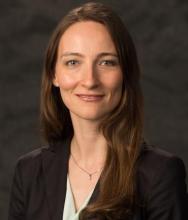
Dr. PELİN ÇİRİŞ is an Assistant Professor in the Department of Biomedical Engineering at the Faculty of Engineering, Akdeniz University, Antalya, Turkey. She also serves as the Director of the Biomedical Technologies Application and Research Center and Deputy Director of the Science and Technology Application and Research Center at Akdeniz University. Previously, she served as Head of Department for Biomedical Engineering from 2014-2020 and continues as Deputy Head since 2016. Her academic career includes significant postdoctoral training at Harvard Medical School and Yale University. Education: Post Doctorate, Harvard University, Harvard Medical School, Brigham And Women's Hospital, Radiology (2013-2015) Post Doctorate, Yale University, School Of Medicine, Diagnostic Radiology (2012-2013) Doctorate, Yale University, School Of Engineering And Applied Science, Biomedical Engineering (2008-2012) Masters (Non-Thesis), Yale University, School Of Engineering & Applied Science, Engineering And Applied Science (2008-2010) Postgraduate, Johns Hopkins University, School Of Engineering, Biomedical Engineering (1998-2000) Undergraduate, Purdue University, School Of Electrical And Computer Engineering, Electrical Engineering (1994-1998) Dr. Çiriş's research spans multiple domains of biomedical imaging and engineering, with a strong focus on magnetic resonance imaging (MRI) techniques and applications. Her work encompasses advanced MRI physics, quantitative imaging methods, and clinical applications across various medical fields. She has made significant contributions to signal modeling in MRI, particularly in cancer imaging contexts including prostate and cervical cancers. Her research also extends to neuroimaging for brain tumor visualization and white matter tractography, as well as cardiac imaging applications for tissue characterization and functional assessment. She has developed innovative approaches like the GAME (Gaussian Augmentation of the Monoexponential) model for analyzing MRI signal decays in cancer tissues. The trajectory of Dr. Çiriş's publication record reveals a progression from fundamental MRI techniques to sophisticated clinical applications. Her early work focused on image reconstruction, parallel imaging, and real-time interventional guidance. Over time, her research evolved to emphasize quantitative approaches for tissue characterization in oncology, particularly in gynecologic and prostate cancers. Recent publications demonstrate expertise in advanced modeling techniques for MRI signal decays, thermometry applications, and image processing methods for clinical decision support. This progression reflects a career dedicated to bridging engineering innovation with practical clinical applications across multiple medical specialties. Scientific Awards: Magna Cum Laude Award (Gynecological cancers), International Society for Magnetic Resonance in Medicine (2015) Magna Cum Laude Award (Prostate cancer), International Society for Magnetic Resonance in Medicine (2015) PhD Candidacy Awarded With Distinction, Yale University (2012) Travel Grant for Top 25 Papers, IEEE International Symposium on Biomedical Imaging (2007) Melvin Judkins Young Investigator Award, American Heart Association (2007) Academic Honors and Dean's Lists, Purdue University (1998) Dr. Çiriş has secured research funding including the project 'Assessing validity of MRI T2* hypoxia measurement in cervical cancer' (2014-2015). She serves as an Editor for the Journal of Magnetic Resonance Imaging since 2015, demonstrating her standing in the MRI research community. She has contributed to academic governance as a jury member for Assistant Professorship Appointment Committee at Akdeniz University. Her leadership extends to directing research centers focused on biomedical technologies at Akdeniz University, where she oversees interdisciplinary teams working on medical imaging technologies. As Director of the Biomedical Technologies Application and Research Center and Deputy Director of the Science and Technology Application and Research Center, Dr. Çiriş leads interdisciplinary teams focused on advancing medical imaging technologies and their clinical translation. Her centers foster collaboration between engineers, physicists, clinicians, and computer scientists to develop innovative solutions for diagnostic and therapeutic challenges in medicine, particularly in the areas of cancer imaging, neuroimaging, and cardiac applications.