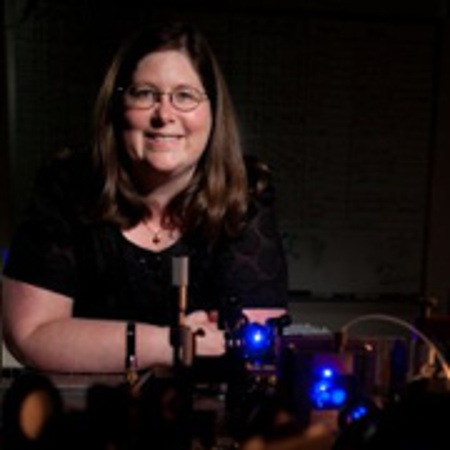
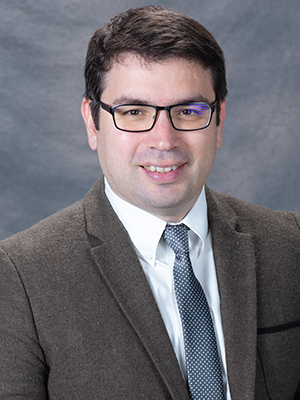
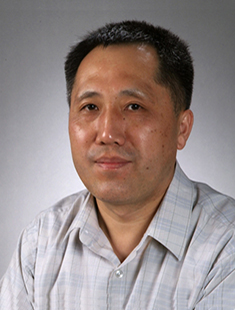
Francisco Cuesta is a Postdoctoral Researcher at Aalto University's Department of Electronics and Nanoengineering. His work focuses on advanced electromagnetic systems and metasurface applications. Research Interests Metasurface design and wave manipulation Coherent illumination systems Wireless power transfer optimization Light localization in nanophotonic structures Scientific Achievements Sergei A. Schelkunoff Transactions Prize Paper Award (2019) for outstanding contributions to the IEEE Transactions on Antennas and Propagation
Donglei Emma Fan is a Professor in the Department of Mechanical Engineering at The University of Texas at Austin, with affiliations in the Materials Science and Engineering Program, Texas Materials Institute, and Electrical and Computer Engineering. Her research focuses on micro/nanoscale materials and devices for robotics, sensing, biomedicine, and water treatment. NSF CAREER Award (2012) NSF Mid-Career Advancement Award (2022) Fellow, Royal Society of Chemistry (2021) Fellow, American Institute for Medical and Biological Engineering (2024) Senior Member, National Academy of Inventors (2025) Her work includes the invention of Electric Tweezers for 20 nm precision nanomanipulation, discovery of light-semiconductor-electric-field interactions for nanodevices, and scalable fabrication of 3D hierarchical materials. Publications in Nature Nanotechnology , Science Advances , and Advanced Materials highlight her contributions to nanomotors, biomedical delivery, and clean energy solutions. She holds 9 granted and 8 pending patents, with 4 licensed to startups, and actively mentors through roles like the Ilene Busch-Vishniac Lectureship.
Sobhi Barg serves as an Assistant Senior Lecturer in Power Electronics at Mälardalen University's Department of Computer and Electrical Engineering (DET) in Sundsvall, Sweden. His position within the STC Research Centre focuses on advanced power conversion systems and magnetic component design for electric vehicles and renewable energy applications. Education: PhD in Electrical Engineering from National Engineering School of Sfax (2018) Erasmus Master in Sustainable Transportation and Electrical Power Systems (University of Oviedo, University of Nottingham, Polytechnic Institute of Coimbra) (2015) Master in Electrical Systems from National Engineering School of Tunis (2010) Engineering Degree from National Engineering School of Tunis (2008) His research centers on multi-objective optimization of power electronic systems , with expertise in core loss modeling for high-frequency magnetics, wireless power transfer, and EV power conversion. Recent work demonstrates innovative approaches to planar magnetics using unbalanced-flux techniques and precise core loss calculation for non-sinusoidal waveforms, significantly advancing efficiency in power converter design. Publications since 2019 reveal strong focus on magnetic component optimization and loss modeling , with 50% appearing in IEEE Transactions journals. Key trends include development of empirical core loss models for complex waveforms (2025), novel unbalanced-flux approaches for planar magnetics (2023-2024), and multi-objective GA optimization techniques for flyback transformers (2019). Scientific Recognition: Erasmus Mundus Scholarship-Category A (48,000 Euro) for Master studies in Sustainable Transportation and Electrical Power Systems (2013-2015) Dr. Barg teaches Analog Electronics and Electric Circuits laboratory courses while contributing to the STORE (Electrical Energy Storage) and MDOBC research projects. His work at the STC Research Centre bridges theoretical modeling with practical applications in renewable energy systems and electric vehicle powertrains, emphasizing experimental validation through Seebeck effect measurements and FEA simulations. Current research activities include DC inductor design based on Ampere's Law (2024) and continued refinement of core loss models for next-generation power converters, with significant implications for high-efficiency energy conversion in sustainable transportation systems.
Lisa Jill Lapidus is a Professor in the Department of Physics & Astronomy at Michigan State University, with dual appointments in Physics & Astronomy and the BioMolecular Science Gateway. Her research bridges physics, biology, and medicine through investigations of protein dynamics and educational innovation. Her primary research focuses on protein folding dynamics , neurodegenerative disease mechanisms , and biomolecular condensates . The Lapidus Lab employs specialized optical techniques including Trp-Cys quenching and microfluidic mixing to study intramolecular diffusion rates in disordered proteins like α-synuclein and amyloid-β. Key findings demonstrate how monomer reconfiguration kinetics control aggregation pathways in Parkinson's and Alzheimer's diseases. Current work explores protein behavior in crowded cellular environments and liquid-liquid phase separation phenomena. Lapidus pioneered the P@MCL (Physics at the Molecular and Cellular Level) curriculum, revolutionizing introductory physics for life science majors through biology-integrated examples and computational approaches. This NSF-supported initiative addresses the disconnect between traditional physics curricula and modern biological research. Active laboratory directing multiple research projects Principal investigator for NIH/NSF-funded studies Developed novel microfluidic mixing techniques Established MSU's life science physics curriculum Her educational leadership includes developing PHY 221/222 courses housed in MSU's STEM Teaching and Learning building, with materials publicly available under Creative Commons licensing. The Lapidus Group maintains active collaborations with Michael Feig's computational team and clinical researchers studying neurodegenerative disease mechanisms.
D. (Dimka) Karastoyanova is a Professor of Information Systems at the University of Groningen , Faculty of Science and Engineering, Computer Science Department. She leads the Information Systems Group and serves as vice-chair of the Bernoulli Institute Board since 2024. Previously, she was Head of the Computer Science Department (2020-2024) and a member of the Informatics Europe Board since 2023. Dimka's research focuses on data-driven, service-based process automation for cross-organizational collaboration, emphasizing runtime adaptability, security, and sustainability . Her work spans applications in manufacturing, logistics, healthcare, and eScience , integrating Scientific Workflows, Cloud Computing, and Middleware Systems to enhance process flexibility. Her scientific contributions include 15+ publications on topics like Choreography Lifecycle Management, BPEL Adaptation, and Cloud Migration Frameworks , reflecting her expertise in Service-Oriented Computing, Workflow Technologies, and Distributed Systems . She received the Rosalind Franklin Fellowship and has served on program committees for IEEE, ICWS, and BPM conferences . Dimka holds a PhD in Computer Science (TU Darmstadt, 2006), an MSc in Computational Engineering (University of Erlangen-Nuremberg), and MSc/BSc in Industrial Engineering (Technical University of Sofia). She previously held roles as Associate Professor of Data Science at KLU Hamburg and Senior Researcher at Hasso Plattner Institute, University of Potsdam.
Aamir Mahmood is an Associate Professor at the Department of Computer and Electrical Engineering at Mid Sweden University and an Adjunct Professor at NUST, Pakistan. His research focuses on 5G/6G wireless communication , Industrial IoT , RF interference management , and time synchronization . Education: B.Sc. NUST (2002), M.Sc. and Ph.D. Aalto University (2008, 2014) Collaborations: Nokia Research Center, IEEE Sweden VT-COM-IT His recent work explores STAR-RIS for 6G IoT, NOMA for industrial networks, and deep reinforcement learning in MEC systems. Key trends include ultra-reliable communication for industrial automation and interference management in heterogeneous networks. Awards : IEEE WCNC’13 Best Paper Ericsson Research Foundation Grant Nokia Foundation grant STINT grants IEEE Sweden VT-COM-IT Best Student Journal Paper Award Swedish Institute funding Interreg Aurora funding Awarded 80+ peer-reviewed publications and active in IEEE leadership roles.
Georgios Keramidas is an Assistant Professor in Computer Architecture at the Department of Informatics, Aristotle University of Thessaloniki . He also holds an Adjunct Professor position at the Hellenic Open University and collaborates with institutions like the University of Peloponnese and University of Patras . Research Interests : Computer Architecture, Memory Systems, Multicore/GPU Design, Low-Power Techniques, Fault-Tolerant Systems His work focuses on cache optimization , energy-efficient computing , and security-aware memory design . Key contributions include DVFS frameworks , reuse-distance prediction , and non-deterministic cache mechanisms . Recent article trends highlight innovations in computation-in-memory , IoT platform components , and security/low-power co-design . Patents on image compression and GPU optimization reflect practical applications of his research. Academic Network : Collaborates with institutions including University of Patras , University of Manchester , and TU Dresden
Prof. Dr. Özgür Özdemir is a faculty member at Istanbul Technical University , where he serves in the Department of Electronics and Communication Engineering within the College of Engineering. He earned his PhD from the New Jersey Institute of Technology in 2000. Research Interests : Signal Processing, Electromagnetics, Microwave & Antenna Technologies, Biomedical Imaging Technical Expertise : Photoacoustic Imaging, Microwave Imaging, Antenna Design, Terahertz Engineering His recent publications demonstrate a strong focus on photoacoustic imaging (4 out of 15) with applications in immune cell characterization , drug treatment analysis , and medical imaging physics . He also contributes to antenna engineering with 3 publications on Vivaldi antennas , patch arrays , and reconfigurable surfaces . His work spans microwave imaging (3 publications) and acoustic modeling (2 publications). Active Research Projects : Gold Nanoparticles in Photoacoustic Tomography (2025-2026, BAP) Photoacoustic-Guided Photothermal Therapy for Solid Tumors (2025-2028, BAP) Oxygen Saturation Detection via Photoacoustic Tomography (2024-2025, BAP) In vitro Effects of Therapeutic Agents on Eosinophils (2024-2026, BAP) Phantom Development for Photoacoustic Tomography (2024-2025, TUSEB) Photoacoustic Systems for Skin Cancer Diagnosis (2020-2023, TUBITAK) Drone-based SAR for Environmental Imaging (2020-2021, BAP) Collaboration Network : International cooperation in biomedical imaging and microwave engineering, with recent work in layered media acoustics , spiral actuators for endomicroscopy , and sparsity regularization techniques .
Keivan Navaie is a Professor of Intelligent Networks at Lancaster University’s School of Computing and Communications. He serves as a member of the Independent Scientific Advisory Committee at the Alan Turing Institute, overseeing the £100 million BridgeAI programme, and previously as Principal AI Technology Advisor to the UK Information Commissioner’s Office (ICO). He is recognized with Fellowships from the Institution of Engineering and Technology (IET), Chartered Engineer status in the UK, Senior Fellowship of the Higher Education Academy (HEA), and the IEEE Young Investigator Award. Research Focus: Wireless communications, mathematics, artificial intelligence, 6G networks, blockchain technology, edge computing, cognitive radio networks, and non-orthogonal multiple access (NOMA). Supervision: Actively supervises PhD students in areas like wireless communications and mathematical modeling. Projects: Involved in distributed learning, blockchain integration, 6G research, and spectrum sharing systems. Awards: IEEE Young Investigator Award, Fellow of IET, Chartered Engineer, Senior Fellow of HEA.
Lena Wosinska is a Research Professor at Chalmers University of Technology, specifically in the field of Optical Networks since June 2019. Prior to her current position, she served as a Professor of Telecommunications at KTH Royal Institute of Technology, where she established and directed the Optical Networks Lab.
Claire Hargreaves is a Research Fellow at the Department of Sociology, School of Social Sciences, Lancaster University . Her work bridges social justice, inequalities, and data science, focusing on vulnerable communities in farming, criminal justice, family law, and health/social care . Current ESRC-funded fellowship: Analyzing farming households in England/Wales via AD|ARC data Co-Investigator on NIHR grants: Women’s social care in prison, social care post-release Previous roles: Home Office placement, visiting fellowship at Statistics Norway Research Themes : Social Justice & Inequalities : Focus on farming households, imprisoned women, and family court participants Data Linkage : Integrating datasets like FDAC, Cafcass, and Police National Computer Policy Impact : Highlighting gaps in agricultural, criminal, and prison care policies Grants & Awards : ESRC Fellowship (2024, £189k) NIHR Grants (2015–2024, £346k–£438k) Seedcorn Funding (2021, £5k) Key Contributions : Exposed socio-economic/health vulnerabilities in family courts Evaluated recidivism via Norwegian population data Advocated for inclusive agricultural policies via ADR UK blog
Kadri Can Atli serves as an Instructional Associate Professor and Assistant Undergraduate Program Director in the Department of Materials Science & Engineering at Texas A&M University, with office location RDMC 228 and contact email catli@tamu.edu. His research focuses on advanced metallic materials , specializing in Shape Memory Alloys (particularly NiTi-based systems and high-temperature variants) and Additive Manufacturing techniques including laser powder bed fusion and directed energy deposition. His work spans alloy design, microstructural engineering, and thermomechanical characterization for applications in thermal energy storage, actuation systems, and structural components. He integrates experimental methods with computational approaches such as Bayesian optimization and artificial intelligence to optimize material performance and discover novel alloys. Analysis of his recent publications reveals a dominant trend in leveraging additive manufacturing for creating defect-free and functionally graded shape memory alloys, with significant emphasis on NiTiHf systems for high-temperature applications. His work increasingly incorporates data-driven methodologies for alloy design while addressing critical challenges in phase transformation control, thermal hysteresis reduction, and cyclic stability for energy and aerospace systems.
Qi Zheng is a Professor at Texas A&M University's Department of Epidemiology & Biostatistics, with research interests in Mathematical Modeling of Biological Processes, Applied Stochastic Processes, Application of Computer Algebra, and Estimation of Microbial Mutation Rates. He holds a PhD in Statistics (1993) and a BA in Mathematics (1982) from Zhejiang University. Education: PhD in Statistics from Texas A&M University (1993), BA in Mathematics from Zhejiang University (1982) Research Interests: Mathematical Modeling of Biological Processes, Applied Stochastic Processes, Application of Computer Algebra, Estimation of Microbial Mutation Rates Teaching Interests: Biostatistics, Categorical and Longitudinal Data Analysis, Statistical Computing Contact: qzheng@tamu.edu | Phone: 979.436.9398 Recent publications focus on swarm robotics, mixed-reality interfaces, and reconfigurable robotic mechanisms. Key themes include entropy-based consensus algorithms for artificial swarms, adaptable sensorimotor systems for human-swarm interaction, and innovative designs for multiterrain locomotion and robotic grasping. These works bridge theoretical stochastic modeling with practical applications in robotics and computational systems.
Oana AMĂRICĂI-BONCALO is a Professor at the Computer and Information Technology Department of University Politehnica Timisoara. She holds a Dr. Habil. Eng. degree and has served as Assistant Professor, Lecturer, and Associate Professor since 2009. Her research focuses on reconfigurable systems, system reliability, embedded systems, and forward error correction with FPGA applications. Education: Engineering Degree (2006) and PhD in Computer Engineering (2009), both from University Politehnica Timisoara. She was an invited researcher at University College Cork (2012) and University of Cergy-Pontoise (2016). Since 2017, she has been an Editor for Microprocessor and Microsystems (Elsevier). Research projects include GEMSCLAIM (green energy management in mobile systems). She supervises PhD student Andrei-Bogdan MIHĂILESCU. Recent publications emphasize LDPC decoding architectures, FPGA-based solutions, and reliability assessment in quantum circuits. Notable contributions include innovations in layered decoding algorithms, memory optimization for LDPC decoders, and one-hot data representation techniques. Her work intersects VLSI design, digital signal processing, and embedded systems reliability. Event organization includes a 2024 workshop on audio-video technical solutions and participation in IEEE symposiums. She contributes to academic events like the Mobile Applications Student Contest (SCMUPT).
Radmehr Monfared is a Senior Lecturer in Intelligent Automation at Loughborough University, affiliated with the EPSRC Centre for Innovative Manufacturing in Intelligent Automation. His work focuses on robotics, virtual engineering, and smart manufacturing systems. BSc in Mechanical Engineering (1988, Amirkabir University) MSc in Computer Integrated Manufacturing (1994, Loughborough University) PhD in Modelling of Cell Control Systems (2000, Loughborough University) Research interests center on manufacturing automation , virtual engineering , production control , and business analysis , with recent work spanning smart manufacturing , ontology-based systems , and blockchain integration in supply chains. Articles highlight neural networks , energy optimization , and human-centered robotics . Scientific recognition includes FIMechE (Fellow of the Institution of Mechanical Engineers) and CEng (Chartered Engineer) certifications.