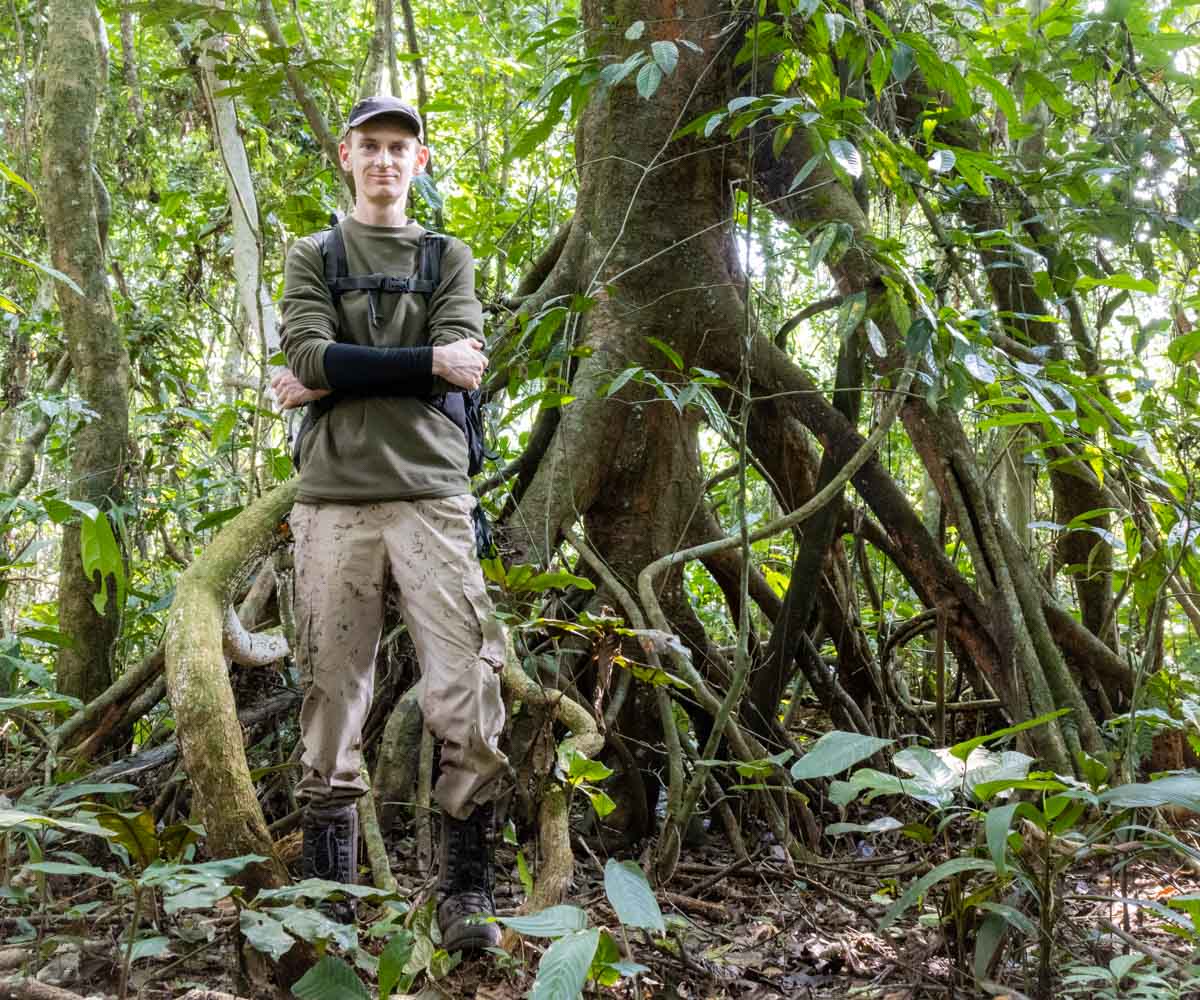
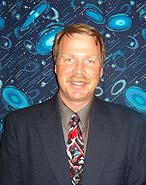
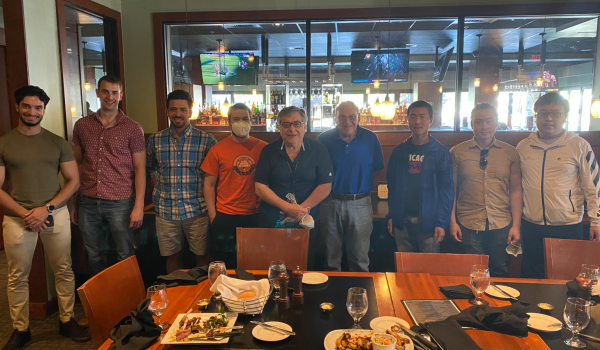
Cody Ross is a Researcher at the Max Planck Institute for Evolutionary Anthropology's Department of Human Behavior, Ecology and Culture. His research applies quantitative models to human behavior, focusing on ecological and cultural interactions. He is developing a longitudinal field site in Colombia to study social networks, wealth inequality, and ecological change. His work integrates pure and applied research, emphasizing mathematical approaches to cooperation, reciprocity, and inequality. Recent publications analyze social networks in rural Colombia, cross-cultural fertility patterns, and parochial altruism. Methodologically, he develops R packages like STRAND and IPDToolkit for Bayesian analysis of network data and game-theoretic simulations. Collaborative projects span global populations including BaYaka foragers (Congo Basin), Tsimane horticulturalists (Bolivia), and rural Colombian communities. Key findings challenge assumptions about nonmonogamous family structures and reveal how women's subsistence networks facilitate cultural transmission. Research has been published in PNAS , Science Advances , and Evolutionary Human Sciences , demonstrating expertise in statistical modeling of social dynamics across diverse societies.
Prof. Dr. Carsten Sauer is a Full Professor of Social Inequality and Social Structural Analysis at Bielefeld University's Faculty of Sociology. He leads the Sauer Group within the Department of Social Structure and Social Inequality. His research focuses on labor market wage inequalities, empirical justice research, and survey experiments. Sauer has held academic positions at Zeppelin University and Radboud University, and coordinates Erasmus programs for sociology. He is also a member of the Institute for Interdisciplinary Conflict and Violence Research. Education: Dr. phil., Bielefeld University (2014) MA in Sociology, University of Konstanz (2007) Undergraduate studies in Sociology, Economics, and Philosophy (2001–2007) Research Interests: Labor market inequalities, distributive justice, cognitive enhancement ethics, and experimental methods. His work combines quantitative surveys with theoretical frameworks like Situational Action Theory. Key Contributions: Pioneered factorial survey methodologies to study justice perceptions in earnings and healthcare decisions. Explored gender pay gaps, neoliberalism's impact on public-sector jobs, and cognitive enhancement drug use among academics. Professional Roles: Editor for Soziale Welt , DFG grant holder for the ENHANCE project, and member of Bielefeld's BiSEd research network. Active in academic ethics committees, including the Commission of Inquiry into Scientific Misconduct. Teaching: Responsible for modules on social structure and inequality, including advanced research methods courses. Supervises doctoral and postdoctoral researchers in his group.
Liang Liang is a prominent academic affiliated with the University of Science and Technology of China, School of Management, where they have been actively contributing to research in operations research and management science. With over 180 publications spanning two decades from 2004 to 2024, their scholarly output demonstrates significant expertise and sustained contribution to the field. Liang Liang frequently collaborates with researchers across China and internationally, with notable co-authors including Yongjun Li, Jie Wu, Feng Yang, and Joe Zhu. Liang Liang's research interests center around Data Envelopment Analysis (DEA) and its numerous applications across various domains. Their work demonstrates exceptional versatility in applying operations research methodologies to solve complex problems in supply chain management, environmental performance evaluation, financial systems, and information technology. The researcher has made significant contributions to methodological advancements in DEA, including network DEA, two-stage systems, cross-efficiency evaluation, and handling undesirable outputs. Their research often addresses practical challenges in Chinese contexts while making theoretical contributions with global relevance. Analysis of Liang Liang's recent publications reveals a clear trend toward increasingly sophisticated applications of DEA methodologies across diverse fields. The work shows progression from basic DEA applications to complex multi-stage, network-based, and game-theoretic approaches that address real-world constraints. Recent research demonstrates growing interest in digital platforms, social media analytics, environmental sustainability, and post-pandemic workplace dynamics, reflecting adaptability to emerging research areas while maintaining methodological rigor. The publications appear in top-tier journals including European Journal of Operational Research, Annals of Operations Research, and Journal of the Operational Research Society, indicating high scholarly impact. Liang Liang's collaborative network spans numerous institutions across China, with frequent partnerships with researchers from the University of Science and Technology of China, Chongqing University, and other leading Chinese academic institutions. The extensive publication record suggests active mentorship of junior researchers, though specific student names aren't documented in the available information. The research portfolio demonstrates consistent funding support, likely from Chinese national and provincial research agencies, though specific grant details aren't provided in the source material.
Edward McLester is a Conservation Biology Lecturer at Marwell Wildlife and the University of Southampton, with affiliations at the University of Konstanz's Centre for the Advanced Study of Collective Behaviour. His work focuses on primate behavioral ecology and conservation, particularly cercopithecine monkeys in Africa and UK wildlife conservation. He holds a PhD in Animal Behaviour from Liverpool John Moores University and a BSc Zoology from the University of Nottingham and National University of Singapore. Research priorities include golden-bellied mangabey conservation, group movement dynamics in red-tailed monkeys, and primate community ecology. His studies have documented novel behaviors such as mangabey carnivory and interspecific competition with bonobos. Ongoing projects combine GPS tracking, acoustic analysis, and remote sensing to assess primate habitat use in African biodiversity hotspots. Teaching responsibilities include the MRes Wildlife Conservation program, emphasizing fieldwork in Kenya and South Downs National Park. He supervises research on UK wildlife connectivity and advises students integrating conservation strategy with academic rigor. Collaborations include the Max Planck Institute of Animal Behavior and IUCN primate conservation initiatives. Publications highlight mangabey endangerment status, vocal communication mechanisms, and primate dietary adaptations. Recent work emphasizes golden-bellied mangabeys' critical conservation needs, with 2025 IUCN listings and field-based population monitoring efforts.
Eliana La Ferrara is a Professor of Public Policy at Harvard Kennedy School, with affiliations at the Center for International Development. She holds a PhD in Economics from Harvard University (1999) and previously served as the Invernizzi Chair in Development Economics at Bocconi University, where she founded the Laboratory for Effective Anti-poverty Policies (LEAP). Her research bridges Development Economics and Political Economics, focusing on social factors in development, including ethnic diversity, kinship structures, social norms, and the impact of media and conflict. Her work spans methodologies combining fieldwork, empirical analysis, and microeconomic theory. Notable projects include analyzing child trafficking, educational disparities among immigrant children, and the effects of online tutoring during the pandemic. She collaborates with governments and international organizations to evaluate development policies. Education: PhD in Economics, Harvard University, 1999. Awards: 2020 Birgit Grodal Award, Foreign Honorary Membership in the American Economic Association, and International Honorary Membership in the American Academy of Arts and Sciences. Her articles highlight trends in education policy, conflict analysis, and media's role in societal outcomes. Recent work emphasizes the pandemic's impact on learning and the importance of social norms in shaping economic behavior. Grants include projects on refugee integration in Jordan and leveraging reality TV for development initiatives. Eliana is an active member of professional organizations like the Econometric Society and CEPR, contributing to policy discussions through her scholarly output and advisory roles.
Gerardo Iñiguez is an Associate Professor in Complex Systems at Tampere University's Faculty of Information Technology and Communication Sciences. He holds visiting positions at Central European University (Department of Network and Data Science), Aalto University (Computer Science), and UNAM (Center of Complexity Science). His research focuses on network science, computational social science, and data science, particularly studying social dynamics, contagion processes, and urban mobility. He co-founded the data science startup Predify (Mexico) and is involved in initiatives like the European Humane AI Net project. Iñiguez also contributes to interdisciplinary fields through game development and science communication. Education: PhD in Computational Science from Aalto University (Finland), MSc and BSc in Physical Sciences and Physics from UNAM (Mexico). His work bridges academia and industry, with a focus on applying network theory to real-world problems. Notable achievements include studies on rank dynamics, social network evolution, and the impact of deception in social systems. He actively publishes in top journals like Nature Communications and Science Advances. Research themes include complex contagion models, opinion dynamics, and the interplay between social structure and behavior. He explores how generic mechanisms shape hierarchy formation and uses statistical inference to validate models against empirical data. Current projects aim to optimize urban policies and understand polarization in digital societies.
Morgan Ellithorpe is an Associate Professor in the Department of Communication at the University of Delaware since 2020. Her research focuses on media psychology, investigating how media use impacts mental and physical health. She examines strategic media engagement for well-being, as well as problematic outcomes when such strategies fail. Key areas include media enjoyment, character involvement, and the role of media in health behaviors. Her work has been funded by the National Institutes of Health and published in journals like Journal of Communication and Media Psychology . Education: Ph.D. and M.A. from The Ohio State University, B.S. from Cornell University. Research interests emphasize media's dual roles in promoting health and causing harm, with recent studies on sleep patterns, social media addiction, and racial stereotypes in media. Awards: None explicitly listed. Grants: NIH-funded projects on media effects. Advising: No students listed. Professional activities: Active in qualitative content analysis methodologies and media health communication.
Prof. Michi Knecht is a Professor of Social and Cultural Anthropology at the University of Bremen. As a co-spokesperson of the DFG Research Training Group 2686 (Contradiction Studies) and the interdisciplinary platform Worlds of Contradiction , they bridge humanities, social sciences, and law to explore contradictions in globalized contexts. Their work emphasizes decolonization, cosmopolitization, and critical re-examination of disciplinary knowledge histories. A passionate ethnographer, Knecht’s research focuses on connections between knowledge practices and social/political structures, addressing topics like reproductive technologies, poverty, anonymity regimes, and colonialism’s impact on Pacific gift societies. Co-founder of the Bremen NatureCultures Labs (BNCL) and co-editor of the DCNtR blog, they advocate for experimental, collaborative methodologies to confront contradictions in contemporary societal challenges. Research priorities include unrequited reciprocity, object-extractivism, and museum debates, with a commitment to interdisciplinary approaches that transcend disciplinary boundaries. Their platforms aim to foster critical dialogue between academia and public spheres, emphasizing the role of contradiction as a motor for knowledge production rather than a problem to resolve.
Juanjuan Ren is a Postdoctoral Researcher in the Department of Physics, Engineering Physics & Astronomy at Queen's University, affiliated with the School of Arts & Science. Her research focuses on nanophotonics, particularly exploring plasmonic systems, quantum emitter interactions, and cavity quantum electrodynamics (QED). She is supervised by Prof. S. Hughes and contributes to cutting-edge studies in chiral photonics, resonator physics, and quantum light-matter interfaces. Her work addresses topics such as quasinormal mode theory, Purcell factor optimization, and nonlinear optical phenomena in nanoscale systems. Recent studies involve designing novel photonic devices for single-photon sources and squeezed light generation, leveraging dispersive materials and exceptional-point-based systems to control photon behavior. Publications emphasize theoretical frameworks for loss-gain resonators, plasmon linewidth narrowing, and quantum state modulation in coupled systems. Ren's research bridges quantum optics and nanotechnology, with applications in quantum sensing, optoelectronics, and quantum information processing. She collaborates on topics like evanescent field modulation, photon-exciton coupling enhancement, and topological effects in nanophotonic structures. Despite her postdoctoral role, her work demonstrates significant contributions to advancing fundamental and applied photonics research.
Warner A. Miller is a Professor of Physics at Florida Atlantic University (FAU), specializing in theoretical physics with a focus on general relativity, quantum gravity, and discrete geometry. He holds a BS in Physics and Mathematics from the University of Maryland (1981) and a Ph.D. in Physics from the University of Texas at Austin (1986). His research explores the interplay between quantum information geometry, spacetime structure, and gravitational phenomena, with applications in quantum communication, black hole physics, and cosmological models. Affiliations: Department of Physics at FAU, Center for Biomedical & Materials Physics (CBAMP), and Spacetime/FAUST Complex Systems research group. Key Research Themes: Simplicial Ricci flow, Regge calculus, quantum entanglement in curved spacetime, and gravitational effects on photon polarization. Dr. Miller has contributed to over 50 peer-reviewed articles, advancing topics such as quantum reactivity, discrete geometric models of spacetime, and experimental validations of information-theoretic Bell inequalities in relativistic settings. His work bridges quantum information science with gravitational physics, addressing foundational questions in quantum gravity and cosmology. His publications span journals like Physical Review D , Classical and Quantum Gravity , and Entropy , reflecting interdisciplinary collaborations with researchers in quantum optics, cosmology, and differential geometry. A notable contribution is the development of simplicial Ricci flow techniques for studying spacetime singularities.
Joel Gersten is a Professor in the Department of Physics at the City College of New York (CCNY). His research focuses on quantum physics, surface plasmonics, molecular interactions with metallic surfaces, and optical phenomena in condensed matter systems. He has contributed significantly to understanding electron transport, surface-enhanced spectroscopy, and nanostructured materials through theoretical and computational approaches. His work spans over four decades, with notable contributions to topics like spintronics, fluorophore-metal interactions, and sonoluminescence. While the text does not explicitly list awards or advisees, his publications reflect a deep engagement with fundamental questions in physics and materials science. His office is located in Room 311C of the Marshak Science Building at CCNY. Key research trends in his articles include: (1) Exploring quantum effects in molecular-scale systems, (2) Investigating light-matter interactions at interfaces, and (3) Developing theoretical frameworks for nanostructured materials. His early work (e.g., 1980s) emphasized laser-matter interactions and surface plasmons, while later contributions (2000s–2010s) address spin dynamics and high-temperature superconductors.
Dr. Tim Waring is an Associate Professor of Social-Ecological Systems Modeling at the University of Maine's School of Economics and a core faculty member of the Mitchell Center for Sustainability Solutions. His research focuses on how social norms, institutions, and cooperative behaviors evolve in response to ecological and social pressures to create sustainable systems. He leads an international research network applying cultural evolution and cooperation science to sustainability challenges, particularly in local food economies and agricultural institutions. Waring's work integrates evolutionary theory, behavioral experiments, and agent-based modeling to explore connections between cooperation and sustainable resource management. Key projects include studying Maine's lobstering communities, blueberry industry institutions, and food buying clubs. He teaches courses like Evolutionary Economics and Agent-Based Modeling, emphasizing interdisciplinary approaches to complex systems. His research highlights cooperative dynamics in social-ecological systems, showing how institutions like co-operatives stabilize cooperation through design principles such as clear boundaries and graduated sanctions. Ongoing projects include analyzing network structures in food buying clubs and developing tools to measure prosocial behaviors in sustainability contexts. Waring collaborates with organizations like Buying Club Software and the National Cooperative Grocers Association, translating academic findings into practical strategies for strengthening local food systems. His work bridges theory and practice, aiming to create actionable frameworks for building resilient and just societies.
Alex Vakakis is the Donald Biggar Willett Professor of Engineering at the University of Illinois at Urbana-Champaign (UIUC), Department of Mechanical Science and Engineering. He holds affiliations at the University of Stuttgart (Co-affiliated Professor) and has served in various academic roles at UIUC since 1990, including W. Grafton and Lillian B. Wilkins Professor and Affiliate Professor in Aerospace Engineering. His research focuses on nonlinear dynamics, vibration control, and energy management through intentional nonlinearity. Vakakis earned his PhD in Applied Mechanics from the California Institute of Technology (1990) and MSc from Imperial College London (1985). Key research interests include nonlinear targeted energy transfer (TET), granular media dynamics, acoustic non-reciprocity, and nonlinear system identification. He co-leads the Linear and Nonlinear Dynamics and Vibrations Laboratory (LNDVL), exploring applications in structural health monitoring, blast protection, and nanomechanical resonators. His work bridges theoretical mechanics with engineering applications, emphasizing practical solutions for energy dissipation and vibration mitigation. Recipient of prestigious awards such as the Tau Beta Pi Eminent Faculty Award (2023) and the Alexander von Humboldt Research Award (2019), Vakakis has authored/co-authored over 400 journal articles and multiple books. Notable publications include Passive Nonlinear Targeted Energy Transfer in Mechanical and Structural Systems (Springer, 2008) and recent contributions on machine learning-enhanced acoustic non-reciprocity and seismic mitigation strategies. Awarded numerous patents for devices like nonlinear energy sinks and microresonators, he collaborates internationally, including with the Air Force Research Laboratory and European institutions. His teaching excellence is recognized through multiple student ratings as 'outstanding' across decades.
Jonathan Culpeper is a Professor of English Language and Linguistics at Lancaster University’s Department of Linguistics and English Language, part of the Faculty of Arts and Social Sciences. His research spans pragmatics, historical linguistics, stylistics, and corpus-based methods. He is renowned for pioneering work in linguistic (im)politeness theory, historical pragmatics, and Shakespearean language studies. Education: Culpeper’s academic journey includes a PhD focusing on Shakespeare, foundational to his enduring research on the playwright’s language. His work integrates theoretical frameworks with empirical corpus analysis, evident in projects like the Corpus of English Dialogues 1560-1760 and the Encyclopedia of Shakespeare’s Language . Research Interests: Central to his work are interpersonal pragmatics, (im)politeness dynamics, Early Modern English, and cognitive stylistics. He explores how language shapes social interactions, historical language change, and literary characterization in drama. Key methodologies include corpus linguistics and computational stylistics. Grants & Projects: Culpeper led the £1 million AHRC-funded Encyclopedia of Shakespeare’s Language Project , culminating in The Arden Encyclopedia of Shakespeare’s Language . He also collaborated on the Corpus of English Dialogues , funded by the British Academy and AHRB. His work on impoliteness reciprocity reflects current research trends in digital communication. Labs/Teams: Collaborations include partnerships with Merja Kytö (Uppsala University) on historical corpora and Daniel Van Olmen on linguistic theory. He co-leads the Lancaster-based English Language textbook series and co-created a MOOC on Shakespeare’s language.
Tanja van der Lippe is a full Professor of Sociology of Households and Labour Relations at Utrecht University's Department of Sociology, part of the Faculty of Social and Behavioural Sciences. She serves as Head of the Department of Sociology and chairs the research school ICS (Interuniversity Center for Social Science Theory and Methodology). Her work focuses on the interdependency of work and private life, organizational sociology, family dynamics, and gender studies. Van der Lippe holds a PhD in Sociology (1993, Utrecht University) and has held academic roles since 1993, including post-doctoral research and faculty positions. Her ERC Advanced Grant (2013) supported research on sustainable workforce investments in Europe. She is a member of prestigious academies like KNAW and KHMW. Her research explores work-family balance, flexible work policies, and gender inequalities. Key themes include organizational impacts on work-life conflict, employee well-being, and cross-national comparisons. Notable publications address flexible work arrangements, gender wage gaps, and the effects of unemployment on household labor. Van der Lippe leads the Future of Work Hub and has authored/co-authored influential books like A Sustainable Workforce in Europe (2019) and Waar blijft mijn tijd? (2021). Her recent work addresses pandemic impacts, workplace flexibility, and informal helping networks. Grants and recognitions include ERC funding and KNAW/KHMW memberships. She advises on policy reforms and collaborates internationally, emphasizing evidence-based approaches to labor market challenges.