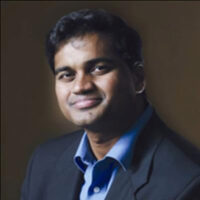
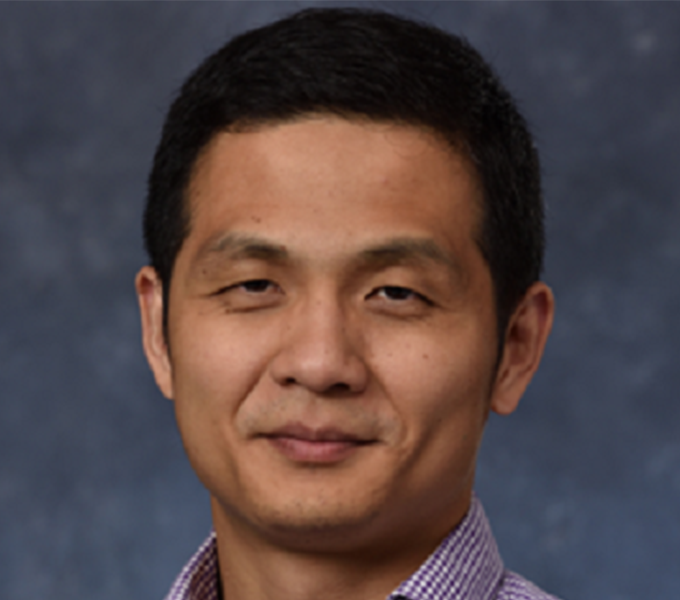
Dr. Thia Kirubarajan is a Professor and Distinguished Engineering Professor in the Electrical and Computer Engineering Department at McMaster University. He holds the NSERC/General Dynamics Mission Systems-Canada Industrial Research Chair in Target Tracking and Information Fusion. His expertise spans Estimation Theory, Multisensor-Multitarget Tracking, Information Fusion, and Signal Processing. He has led the Estimation, Tracking and Fusion Research Laboratory (ETFLab) with over 50 students and researchers, including PhD candidates and postdoctoral fellows. His academic journey includes degrees from Cambridge University (B.A., M.A.) and the University of Connecticut (M.S., Ph.D.). Education: B.A./M.A. (Cambridge, UK), M.S./Ph.D. (University of Connecticut, USA) Research Interests: Multisensor tracking, sensor fusion, fault diagnosis, and autonomous systems Dr. Kirubarajan has received notable awards including the Barry Carlton Award and Ontario Premier's Research Excellence Award. He teaches advanced courses like Algorithms for Parameter and State Estimation (ECE 771) and has advised numerous students across PhD, M.A.Sc., and undergraduate levels. His research lab collaborates internationally, hosting visiting scholars and fostering innovation in smart systems and transportation.
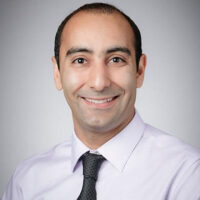
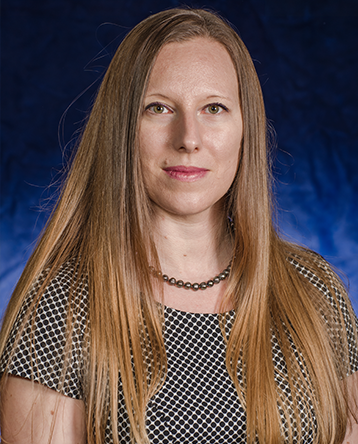
Dr. Jennifer Bauman is an Associate Professor in the Department of Electrical & Computer Engineering at McMaster University. Her research focuses on the electrification of transportation, power electronic converters, vehicle design and control, and smart-grid integration of electric vehicles (EVs). She holds a B.Sc. and Ph.D. from the University of Waterloo and has 8 years of industry experience as Director of Research at CrossChasm Technologies. Her work spans three levels: low-level power electronics optimization, mid-level vehicle system design, and high-level EV-grid interaction analysis. Education: B.A.Sc. and Ph.D. in Engineering from the University of Waterloo (2004, 2008). Professional registration: P.Eng. (Professional Engineer). Teaching: Instructors for ECE 724/MECHENG 721 on Modeling, Control, and Design of Electrified Vehicles. Research Interests: Development of efficient power electronic converters (e.g., using wide-bandgap devices), optimization of hybrid/electric powertrains, and analyzing EV impacts on smart grids. Notable contributions include a 65kW boost converter for fuel cell vehicles and studies on solar-charged EV architectures. Grants & Awards: Received $1.9M in CFI infrastructure funding (2017) as part of a team. Lab: Located in ITB A220, focusing on advanced vehicle electrification and grid-integrated systems.
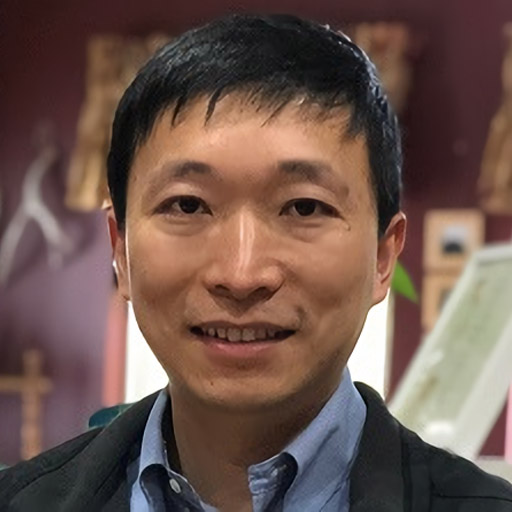
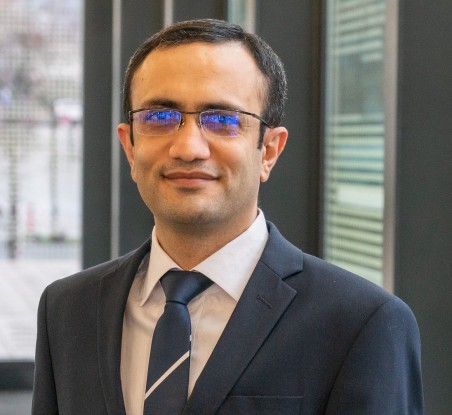
Dr. Amin Reza Rajabzadeh is an Associate Professor at the W Booth School of Engineering Practice and Technology, McMaster University, with affiliate roles in the McMaster School of Biomedical Engineering and Mechanical Engineering. He specializes in biochemical engineering, focusing on biosensors, bioseparation processes, and bioprocess monitoring. His research includes developing biosensors for biological process monitoring and nanotechnology-based cancer therapies. He holds a Professional Engineer license (P.Eng.) and is a member of the Canadian and American Engineering Education Associations. Dr. Rajabzadeh's teaching spans core biochemical engineering courses like Bioreactor Design and Bioprocess Control. He has received the McMaster President’s Award for Teaching and a MacPherson Leadership in Teaching Fellowship. His research clusters span Energy, Environment, Health & Bio-innovation, and Micro-Nano Systems. Recent work includes nanoplatforms for photothermal cancer therapy (ACS Applied Materials & Interfaces, 2021) and innovations in sustainable protein enrichment via tribo-electrostatic separation. Collaborations span biomaterials, environmental engineering, and nanotechnology. Awards: Teaching Excellence Awards, Leadership Fellowships Research Themes: Biosensors, Nanomedicine, Bioseparation Technologies Labs/Teams: Biomedical Engineering Research Group, Nanotechnology Applications Lab
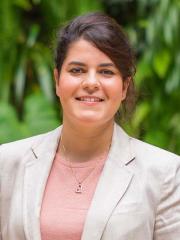
John Preskill is the Richard P. Feynman Professor of Theoretical Physics at Caltech, specializing in quantum information science, quantum computing, and the physics of quantum error correction. He directs the Institute for Quantum Information and Matter. His pioneering work bridges quantum computing, gravitational physics, and quantum field theory, with recent focus on fault tolerance and quantum supremacy. He has authored over 500 publications and received the John Stewart Bell Prize (2024).
Diego Riveros-Iregui is a Professor in the Department of Geography at the University of North Carolina at Chapel Hill, recognized for pioneering research in ecohydrology and biogeochemistry. His work focuses on water-carbon-nitrogen interactions in tropical ecosystems, urban-rural gradients, and climate-impacted watersheds, employing high-frequency monitoring and advanced modeling techniques to address critical environmental challenges. His research interests center on tropical ecohydrology, particularly in Andean páramos and Galápagos Islands, examining carbon cycling in peatlands, nitrogen dynamics across land-use gradients, and stormwater impacts on urban streams. He integrates stable isotope analysis, machine learning, and field observations to study how geomorphology and climate variability regulate biogeochemical fluxes, with emphasis on vulnerable ecosystems facing anthropogenic pressures. Analysis of his 15 most recent publications (2021-2025) reveals dominant trends in high-resolution watershed monitoring, tropical carbon emissions, and urban hydrology. Key methodological innovations include machine learning for water use estimation, isotope-based tempestology, and bias correction in contaminant plume mapping, demonstrating interdisciplinary approaches spanning environmental engineering, climatology, and ecosystem science. Professor Riveros-Iregui has received the following scientific awards: Presidential Early Career Award for Scientists and Engineers (PECASE), the U.S. government's highest honor for early-career scientists, nominated by the National Science Foundation As a PECASE awardee, he leads NSF-funded research programs examining watershed processes across tropical and temperate regions. His collaborative work includes contributions to the EU-funded WELL CARE consortium on water security, though specific grant details and student mentorship records aren't documented in the source material. Current research priorities involve scaling point observations to watershed-level fluxes and assessing climate change impacts on island hydrology. While no dedicated laboratory is specified, his field studies leverage international partnerships in Ecuador's páramos and the Galápagos archipelago, focusing on microclimate-soil microbiome interactions and sustainable water resource management in high-elevation ecosystems.
Jiafeng (Harvest) Xie is an Assistant Professor in the Department of Electrical and Computer Engineering at Villanova University, where he directs the Security and Cryptography (SAC) Lab. He holds a Ph.D. in Electrical Engineering from the University of Pittsburgh and has prior faculty experience at Wright State University. His research focuses on cryptographic engineering, post-quantum cryptography, hardware security, and digital design for telemetry systems. Education includes a Ph.D. from University of Pittsburgh (2013-2014), M.E. from Central South University (2007-2010), and B.E. from Yanshan University (2002-2006). He has received prestigious awards like the 2024 IEEE Philadelphia Engineer of the Year Award and the 2023 Art Ryan Award. His work spans over 66 peer-reviewed publications, with a focus on hardware acceleration for post-quantum cryptographic systems. Research interests include post-quantum cryptographic engineering, fully homomorphic encryption, fault detection methodologies, and digitalization of aeronautical telemetry systems. His grants include NSF SaTC and NIST-funded projects. Teaching includes courses like Embedded Systems and Post-Quantum Computing . Current advisees include Ph.D. students Pengzhou He, Tianyou Bao, and Yazheng Tu, along with several M.S. and undergraduate researchers. The SAC Lab collaborates with AFRL and explores novel cryptographic hardware designs, with recent breakthroughs in compact accelerators for lattice-based cryptography and approximate homomorphic encryption. His work emphasizes algorithm-architecture co-design for security and efficiency in emerging computing systems.
Associate Professor Ida Asadi Someh is affiliated with the UQ Business School at The University of Queensland and serves as a research affiliate at the Centre for Information Systems Research (CISR) , MIT Sloan School of Management. She completed her PhD at The University of Melbourne in 2015, receiving the best PhD thesis award from the Melbourne School of Engineering and the Vice Chancellor’s PhD Prize . Her research spans business analytics , artificial intelligence , and data governance , focusing on the organizational and societal impacts of data and AI. Key areas include ethics of AI , privacy , accountability , and synergy in analytics systems . Recent publications highlight generative AI in business transformation, algorithmic fairness in public welfare systems, and data governance frameworks for ethical AI. Her work addresses digital transformation in both corporate and public sectors. Scientific awards include the best PhD thesis and Vice Chancellor’s PhD Prize at The University of Melbourne. She supervises PhD and Master’s students in data-driven organizations , privacy-preserving AI , and sepsis management through data .
Noa Marom is an Associate Professor in the Department of Materials Science and Engineering at Carnegie Mellon University (CMU), holding courtesy appointments in Chemistry and Physics. She is a member of the Pittsburgh Quantum Institute (PQI) and an affiliate of the Wilton E. Scott Institute for Energy Innovation. Her research focuses on computational materials science, energy security, and quantum materials. Marom earned a B.A. in Physics and B.S. in Materials Engineering (cum laude) from the Technion-Israel Institute of Technology (2003) and a Ph.D. in Chemistry from the Weizmann Institute of Science (2010). She held postdoctoral positions at the University of Texas at Austin’s Institute for Computational Engineering and Sciences (ICES) before joining Tulane University as an Assistant Professor (2013–2016) and CMU in 2016. Her research interests include computational design of semiconductor materials, topological quantum computing, and crystal structure prediction. Key projects involve machine learning for materials discovery and quantum computing applications, such as optimizing semiconductor interfaces for stable qubits. Marom has received numerous awards, including the NSF CAREER Award (2016), DOE INCITE Awards (2017–2019), and the IUPAP Young Scientist Prize (2018). She serves as Associate Editor of npj Computational Materials. Her work spans collaborations with institutions like the Paul Scherrer Institute (Switzerland) and the Pittsburgh Supercomputing Center. Research highlights include computational studies of InAs/InSb semiconductors for quantum bits and machine learning-driven discovery of organic semiconductors.
Dr hab. Krzysztof Węcel serves as Professor and current Head of the Department of Economic Informatics at Poznan University of Economics and Business (UEP), appointed on October 4, 2024. His primary affiliation spans over 25 years with UEP's Department of Economic Informatics, which maintains one of Poland's longest-running academic websites since 1998. He holds dual recognition through habilitation from University of Potsdam (2020) and professorship conferred by UEP (June 24, 2020). His academic milestones: Habilitation degree in Economic Informatics, University of Potsdam (2020) Professor title, Poznan University of Economics and Business (2020) Węcel's research centers on Semantic Technologies and data quality assessment across multilingual Wikipedia, with emphasis on company information verification, citation analysis, and open data applications. His work bridges Big Data analytics with practical business solutions, particularly in maritime logistics where he pioneered evolutionary algorithm-based AIS data processing. Current investigations focus on generative AI's dual role in creating and combating disinformation, including ChatGPT's impact on academic writing and fake news propagation. Recent publications (2022-2025) reveal three dominant trends: First, systematic analysis of Wikipedia's reliability across languages during crises like the pandemic and Ukraine war. Second, development of AI-driven fact-checking frameworks (e.g., OpenFact project's CLEF 2023 victory). Third, exploration of generative AI's societal impact ranging from student creativity to disinformation campaigns. Scientific awards received: Best Paper Award at ICIST 2017 Conference Award for most innovative article at NATCON 2018 conference Microsoft Azure for Research Award (2016) As academic advisor, he leads the 'Semantic Technologies' diploma seminar attracting high-achieving students, with participants winning the 29th UEP Foundation Competition (2025) and Eurostat's Web Intelligence Challenge (2024). His grant portfolio includes the 'Maritime Big Brother' project (2017) for ship voyage prediction using AIS data and Microsoft Azure funding for Wikipedia quality enhancement. Ongoing initiatives include OpenFact (fake news detection) and GOBLIN projects. He actively collaborates with SKN Data Science student circle (evidenced by 2024/2025 inaugural meeting) and international consortia like CLEF and QOD workshops. Departmental leadership involves managing the OpenFact research team that achieved top results in CheckThat! Lab competitions, alongside maritime data analytics groups applying evolutionary algorithms to shipping networks.
Payam Barnaghi is a Professor and Chair in Machine Intelligence Applied to Medicine at Imperial College London's Department of Brain Sciences, part of the Faculty of Medicine. He holds multiple leadership roles, including Co-Director of the School of Convergence Science in Human and Artificial Intelligence and Deputy Head of Neurology. His research focuses on AI-driven healthcare solutions, particularly in neurosciences and dementia care. He leads the Translational Machine Intelligence group at the UK Dementia Research Institute (UK DRI) and is a Visiting Professor at University College London's Institute of Child Health. His affiliations include the NVIDIA Deep Learning Institute, the British Heart Foundation Centre for Research Excellence, and the UK DRI Care and Research Technology Centre. He has received awards such as the Wellcome Trust Mental Health Ideathon Award (2023) and the IEEE Outstanding Leadership Award (2017). His work emphasizes remote patient monitoring, digital biomarkers, and explainable AI for early health event detection. Key projects include the TIHM (Technology Integrated Health Management) initiative for dementia care, leveraging wearable sensors and machine learning. He contributes to interdisciplinary efforts in smart care ethics and has published extensively on topics like neural network applications, healthcare data analysis, and clinical decision support systems.
Rainald Loehner is a Distinguished Professor of Fluid Dynamics at George Mason University's Center for Computational Fluid Dynamics. Since 2003, he has led the Center for Computational Fluid Dynamics at George Mason University. He is currently a Hans Fischer Senior Fellow at the Technical University of Munich's Institute for Advanced Study (TUM-IAS) for 2023, hosted by Professors Kai-Uwe Bletzinger and Roland Wüchner in the 'Adjoint-Based System Identification of Large-Scale Structures' Focus Group. Loehner received his Diplom Ingenieur (Maschinenbau) degree from the Technical University of Braunschweig, and his PhD and a DSc in civil engineering from the University College of Swansea, Wales. After teaching at Swansea for a year, he worked at the Naval Research Laboratory in Washington, DC, followed by a research professorship at George Washington University. He joined George Mason University as an associate professor and was promoted to full professor in 1995 and distinguished professor in 2004. With over 35 years of experience, Professor Loehner's research spans the complete pipeline of numerical solvers and simulation tools. His expertise includes pre-processing, grid generation, numerical methods, field solvers, parallel computing, adaptive mesh refinement, fluid-structure interaction, shape optimization, system identification, and computational crowd dynamics. His current work focuses on developing advanced field solvers for compressible and incompressible flows, acoustics, electromagnetic wave propagation, heat and mass transfer, structural mechanics, and fluid-structure interaction. Key application areas include blast mitigation, ship hydrodynamics, blood flow, contaminant transport, and pedestrian safety. Loehner's recent research output (2020-2024) shows a strong trend toward digital twin technology and adjoint-based methods for structural analysis and optimization. His publications focus on high-fidelity digital twins for detecting structural weaknesses, risk assessment in engineering systems, and optimization of sensor placement. His work bridges computational mechanics with machine learning approaches, particularly in system identification and inverse problems, demonstrating how computational methods can solve complex real-world engineering challenges. 2020: Ranked #15119 in the Stanford List of Most Influential Scientists of the World; #8 in Aerospace and Aeronautics 2010: Distinguished International Career Award, Argentine Association of Computational Mechanics 2008: Fellow, International Association for Computational Mechanics 2006: Associate Fellow, AIAA 2005: Honorary Professor, University of Wales Swansea 2005: Advisory Professor, Shanghai Jiao Tong University 2004: Distinguished Professor of Fluid Dynamics, George Mason University 1999: Computational Mechanics Achievements Award, Japan Society of Mechanical Engineering 1993: Doctor of Science in Civil Engineering, University College of Swansea 1979-1983: Studienstiftung des Deutschen Volkes (Top 1% of German Students) Professor Loehner has mentored numerous students through his work at George Mason University and has supervised research in computational fluid dynamics, structural mechanics, and related fields. His research has been supported by various grants from government agencies and industry partners, enabling the development of advanced simulation tools applied in aerodynamics, hydrodynamics, shock-structure interaction, and medical applications. His codes and methods have been widely adopted in industry and academia for applications ranging from aircraft and ship design to medical simulations and urban pathogen transmission modeling. Loehner leads the Center for Computational Fluid Dynamics at George Mason University, which focuses on developing cutting-edge computational methods for fluid dynamics and related multiphysics problems. The center works on strategic application areas including blast mitigation, ship hydrodynamics, blood flow simulation, and pedestrian movement modeling. As a TUM-IAS Fellow, he collaborates with the Chair of Computational Modeling and Simulation at TUM on adjoint-based system identification of large-scale structures, bringing together expertise in computational mechanics and digital twin technology to address complex engineering challenges.
Prof. Vahid Jamali is an Assistant Professor and Head of the Resilient Communication Systems Group at the Technical University of Darmstadt, Germany. His research focuses on resilient communications, 6G wireless systems, bio-inspired molecular communication, and reconfigurable intelligent surfaces (RIS). He holds a Doctoral Degree from Friedrich-Alexander-Universität Erlangen-Nürnberg (FAU), Germany, and has served as a postdoctoral researcher at Princeton University and FAU. Education PhD in Communication Systems, FAU (2019) Visiting Researcher at Stanford University (2017) Research Assistant at FAU's Institute for Digital Communications (2013-2019) Research Interests Resilient Networks : Emergency networks, RIS-based systems, and resilience-by-design architectures. Wireless Innovations : 6G technologies, holographic MIMO, and joint communication-sensing systems. Bio-inspired Systems : Molecular communication modeling using biological principles like diffusion and chemical reactions. Recent Work Trends His 2024-2025 publications emphasize RIS optimization (e.g., temperature-aware phase shifts, fast beam switching) and molecular communication (e.g., Poisson channel identification, bio-inspired receiver designs). Emerging themes include AoI-based RIS reconfiguration and integrated sensing-communication-powering (ISCAP) for IoT. Lab Activities He leads the Resilient Communication Systems Group, exploring cutting-edge RIS hardware (e.g., liquid crystal implementations) and theoretical foundations for future wireless systems.
Xiaoning Ding is an Associate Professor in the Department of Computer Science at New Jersey Institute of Technology (NJIT). His research focuses on virtualization, multicore computing, cloud infrastructure optimization, and mobile systems. He leads projects addressing challenges in nested virtualization, memory management, and cache conflicts in distributed and cloud environments. Key research interests include optimizing task scheduling in cloud VMs, reducing TLB misses through huge page strategies, and mitigating interference in multi-tenant GPU clouds. His work on page placement mechanisms and dynamic page coalescing aims to enhance virtualized cloud performance. Ding has received federal funding, including an NSF grant for virtualization research in heterogeneous memory hierarchies (2016–2019). His research outputs span over 74 publications, with notable contributions in EuroSys, IEEE Transactions, and conferences like PACT. Media coverage highlights his studies on cloud computing and collaborative mobile systems, such as parking assignment algorithms. Beyond technical contributions, Ding advises students in interdisciplinary projects, exemplified by collaborations with Applied Math majors on cloud computing challenges.
Eakta Jain is an Associate Professor in the Department of Computer & Information Science & Engineering at the University of Florida's College of Engineering. Her research centers on human-computer interaction with a specialized focus on eye-tracking technologies, virtual reality, and privacy-preserving techniques in immersive environments. With over 15 years of sustained academic contributions, she has established herself as a leading researcher in gaze analysis and its applications across multiple domains. Dr. Jain's research interests span eye-tracking, virtual reality, extended reality (XR), privacy in immersive technologies, human-computer interaction, computer vision, and animation. Her work demonstrates a consistent trajectory from fundamental gaze analysis techniques to practical applications addressing critical privacy concerns in emerging technologies. She has made significant contributions to understanding how gaze data can be used to enhance user experience while simultaneously developing methods to protect user privacy in these systems. Analysis of her recent publications reveals a strong focus on privacy challenges in XR environments, with particular attention to gaze data protection, face-swapping technologies, and the psychological impacts of continuous monitoring. Her research bridges theoretical insights with practical implementations, often resulting in novel algorithms and frameworks that address real-world problems in immersive technologies. The interdisciplinary nature of her work connects computer science with cognitive psychology and human factors research. Dr. Jain has received recognition through publications in top-tier venues including IEEE Transactions on Visualization and Computer Graphics, ACM Transactions on Applied Perception, and the Symposium on Eye Tracking Research and Applications. Her work has been influential in shaping the discourse around privacy in immersive environments and has practical implications for the development of ethical XR systems. She actively mentors students and collaborators, with several junior researchers appearing as co-authors on her publications. Her research group appears to focus on the intersection of computer vision, graphics, and human-centered computing, with projects spanning from fundamental gaze analysis to applied privacy-preserving techniques in commercial VR systems. Current projects suggest strong industry connections and potential grant funding supporting her privacy-focused XR research.
Wei Gao is an Associate Professor at the Swanson School of Engineering, University of Pittsburgh. His research focuses on the design, deployment, analysis and measurement of on-device AI architectures and algorithms on mobile, embedded and networked systems. He has strong interests in unveiling analytical principles underneath practical AI deployment problems, and designing systems based on these principles. The developed AI and system solutions are widely applied to various application scenarios, including Internet of Things, edge computing and smart health. Dr. Gao received his PhD from Pennsylvania State University in 2012 and his B.E. from the University of Science and Technology of China in 2005. Dr. Gao's research spans across Cyber-Physical Systems , Infrastructure Security , High Performance Computing , and the Distributed Governance of Information . His work particularly emphasizes on-device AI architectures and algorithms for mobile and embedded systems. He explores how to deploy AI efficiently on resource-constrained devices, with applications in Internet of Things, edge computing, and smart health. His research aims to bridge theoretical principles with practical system implementations, focusing on creating efficient, secure, and reliable AI solutions for real-world deployment scenarios. His recent work has increasingly focused on bringing Large Language Models to edge devices while maintaining performance and security. Analysis of Dr. Gao's recent publications (2021-2025) reveals a strong focus on on-device AI, particularly around Large Language Models for resource-constrained environments. His work addresses critical challenges including model personalization, security against illegal adaptation, sparse activation techniques, and physics-grounded generation. Much of his research targets making AI more efficient, secure, and practical for deployment on edge devices with limited computational resources, while also exploring applications in health monitoring and power systems. Dr. Gao has received significant recognition for his research, including: NSF Faculty Early Career Development (CAREER) Award (2016) Dr. Gao mentors numerous graduate students who contribute to his research in mobile computing, embedded systems, and on-device AI. His research has been supported by various grants, most notably the NSF CAREER award, enabling his team to explore innovative approaches to mobile and embedded AI systems. His lab investigates how to optimize AI for resource-constrained environments while maintaining performance and security, with particular focus on balancing computational efficiency with model accuracy. Dr. Gao leads a research group focused on mobile and embedded AI systems, with particular emphasis on making AI practical for deployment on everyday devices. His team explores novel techniques for model compression, efficient inference, and secure deployment of AI models on edge devices, with applications ranging from health monitoring to smart infrastructure.