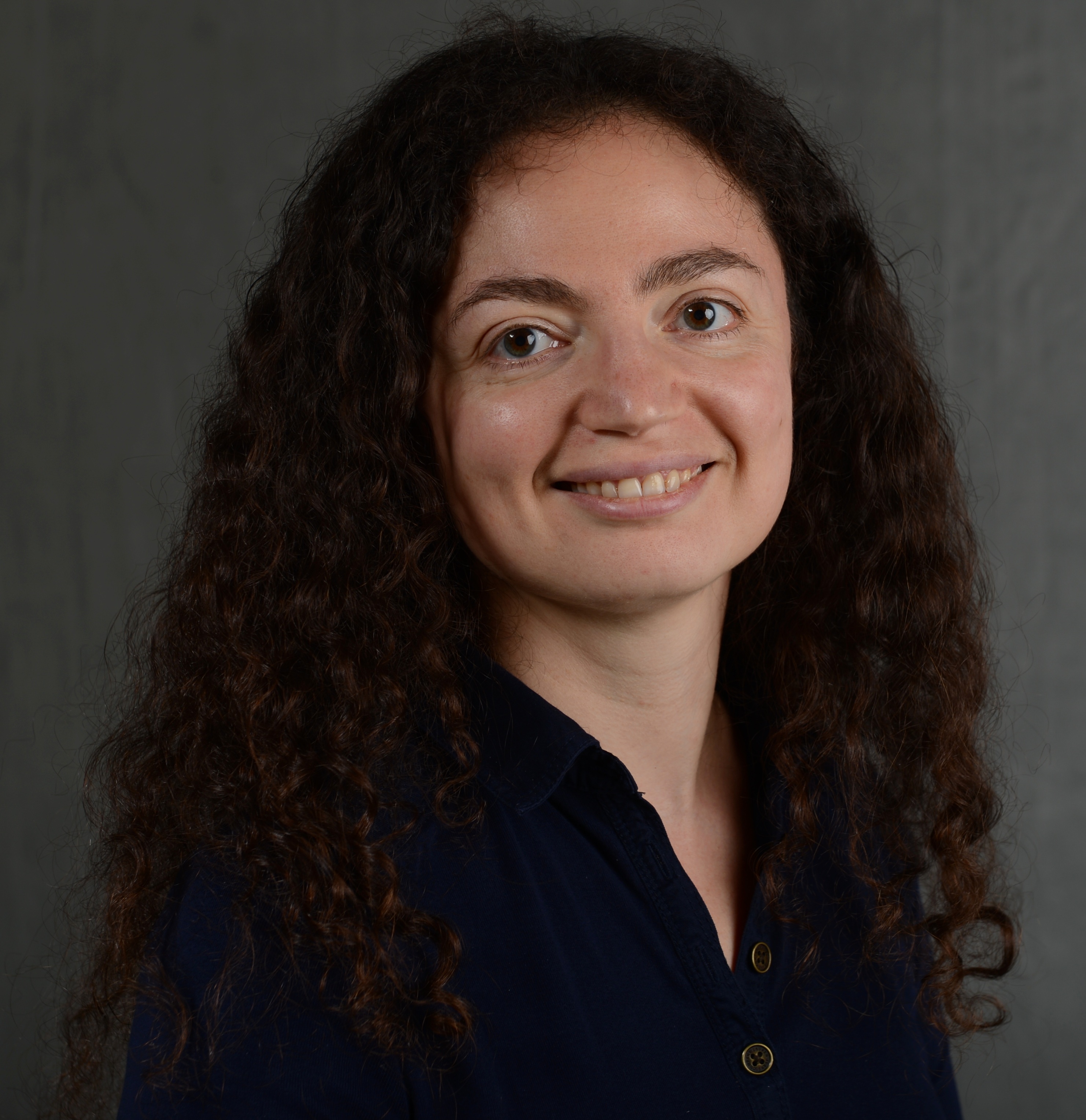
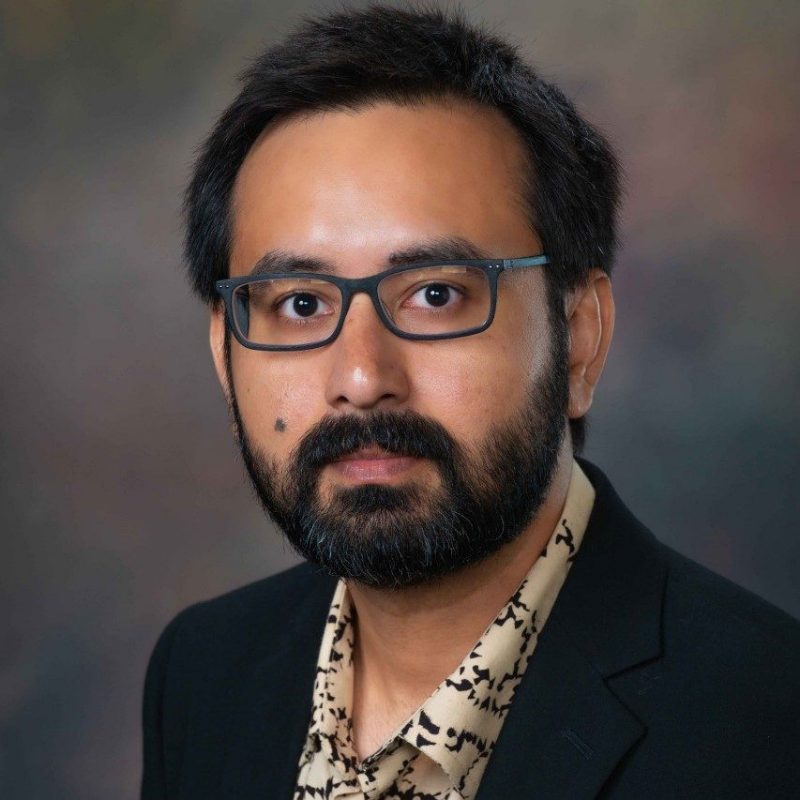
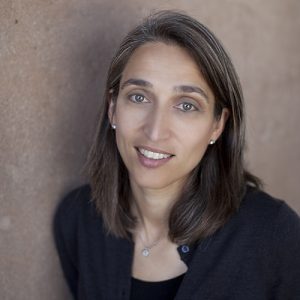
Julia Chuzhoy is the Manuel Blum Professor at the Toyota Technological Institute at Chicago (TTIC) and holds a part-time Professor appointment in the Department of Computer Science at the University of Chicago . She completed her Ph.D. at the Technion under the supervision of Seffi Naor , followed by postdoctoral positions at MIT , University of Pennsylvania , and the Institute for Advanced Study . She also served as a Weizmann Institute Weston Visiting Professor in 2018-2019. Her research in theoretical computer science focuses on graph-related optimization problems , including approximation algorithms, dynamic algorithms, fast graph algorithms, and hardness of approximation. She has received major funding through NSF grants (CCF-1318242, CCF-1616584, CCF-2006464, CCF-2402283) and the NSF HDR TRIPODS award (2216899). Her recent publications highlight advancements in approximation algorithms (e.g., maximum bipartite matching), dynamic graph algorithms (e.g., decremental shortest paths), and structural graph theory (e.g., excluded grid theorem). These works span both algorithmic improvements and theoretical lower bounds. Scientific recognition includes NSF Career Award (2013) Alfred P. Sloan Research Fellowship (2011) She has advised numerous TTIC and University of Chicago Ph.D. students, including Rachit Nimavat , Zihan Tan , and Parinya Chalermsook (now faculty at Aalto University ).
Katy Ilonka Gero is a Lecturer at the University of Sydney's School of Computer Science, with a PhD in Computer Science from Columbia University (2022). She holds a BSc in Mechanical Engineering from MIT, where she received the Carl G. Sontheimer Prize for Excellence in Innovation and Creativity. Education : BSc (MIT), PhD (Columbia) Her research focuses on Human-Computer Interaction , Creative Writing , and AI Ethics , particularly examining how language models impact writing processes, ownership, and agency. She advocates for community-driven language models trained on consensual data and explores technical innovations for personalized AI tools. Recent publications span language model ethics (Nature Machine Intelligence 2023), generative AI (CHI 2025 Best Paper), and creative collaboration (CHI 2023). Key trends include user-centered AI design , creative ownership , and data ethics . Scientific Awards : NSF Graduate Research Fellowship, Brown Institute for Media Innovation, Amazon Research Award, CHI Best Paper (2025), CHI Honorable Mention (2024) As co-founder of Ensemble Park and former taper editor, she bridges computational poetry and traditional literary practices. Her work at startups Rest Devices and Soofa demonstrates technical innovation in consumer and urban tech.
Professor Mauricio Villarroel is an Associate Professor of Biomedical Engineering at the University of Oxford's Institute of Biomedical Engineering and a Fellow of Magdalen College. He leads the Laboratory for Computational Medicine and Technology (LCMT), which focuses on improving clinical decision-making through digital health innovations for both high-income and low- or middle-income countries. Villarroel was born in Bolivia where he completed his undergraduate engineering degree before obtaining his doctoral degree in Engineering Science from the University of Oxford. He previously worked as a research scientist at the Health Sciences and Technology department at MIT and Harvard University, collaborating with multidisciplinary teams from academia, hospitals, and industry to develop advanced monitoring algorithms for intensive care. He returned to Oxford as a post-doctoral research assistant in Data Fusion & Telehealth and later served as a Senior Researcher in Next Generation of Digital Health. His research focuses on developing non-contact video-based physiological monitoring technologies to create personalized biomarkers of health. He has founded the spinout company OxeHealth based on his early work. Currently, his laboratory develops AI models to identify meaningful physiological changes using multimodal sensing technologies including video cameras, wearable devices, wireless technologies, smartphones, and body-worn sensors. His primary research areas include cardiovascular disease and neurodegenerative diseases, spanning from early detection of chronic conditions to in-hospital monitoring and remote management in community settings. He is also the first academic appointment of The Podium Institute for Sports Medicine and Technology, where he develops technologies to monitor factors leading to sports injuries in young athletes aged 11-18 years. Analysis of his recent publications reveals a strong focus on non-contact physiological monitoring, particularly using photoplethysmography and video-based technologies. His work spans cardiovascular monitoring (blood pressure estimation, circadian rhythms), neurological applications (movement disorders), respiratory monitoring (particularly in infants), and sports medicine (athlete screening). A consistent theme across his research is the development of AI-driven, multimodal approaches to extract meaningful clinical information from non-invasive or contactless monitoring systems. Villarroel has received significant recognition for his work, with multiple publications referenced in patents and clinical guidelines. His research has been picked up by news outlets and widely shared on social media platforms, indicating substantial impact in both academic and practical domains. His work on non-contact monitoring has particularly gained attention for its potential applications in resource-limited settings. As a research leader, Villarroel collaborates extensively with clinicians, engineers, and industry partners. His laboratory offers DPhil opportunities at the intersection of medicine, engineering, and technology. His research has led to practical applications including technologies for monitoring post-operative patients, detecting apnea in infants, and screening athletes for cardiac conditions that could lead to sudden death. The Laboratory for Computational Medicine and Technology maintains strong connections with Oxford's Medical Sciences campus, adjacent to the Churchill Hospital, facilitating direct translation of engineering innovations into clinical practice. The lab's work bridges multiple domains including computer vision, signal processing, AI, and clinical medicine to address significant healthcare challenges.
Dr. Hermann Cuntz is an Independent Group Leader at the Ernst Strüngmann Institute (ESI) for Neuroscience in cooperation with the Max Planck Society. He is also a Research Fellow at the Frankfurt Institute for Advanced Studies (FIAS) since 2014 and affiliated with the Goethe University Frankfurt via the Institute of Clinical Neuroanatomy . His email address is hermann.neuro@gmail.com , and he is based in Frankfurt am Main, Germany. Research Focus: Dr. Cuntz investigates principles of neuronal wiring, aiming to decode the "connection code" of the brain. His work bridges morphology and function using computational tools, mathematical laws, and morphological modeling. Key areas include dendritic constancy , structural plasticity , connectomics , and neuroinformatics , with applications in understanding neurodegenerative diseases like Alzheimer’s. Education: PhD from the University of California at Berkeley and Max Planck Institute of Neurobiology (2000-2004). Diploma in biology from Eberhard Karls Universität Tübingen (1994-2000). Recent Publications highlight research trends in dendritic structure, pattern separation, synaptic spine distribution, and cortical folding. His lab develops the TREES Toolbox , a MATLAB-based framework for neuronal morphology analysis. Scientific Awards: Bernstein Award (2013-2019) DFG Eigene Stelle (2014-2016) Feodor Lynen Fellowship (Alexander von Humboldt, 2006-2008) Minerva Fellowship (2004-2005) Wellcome Image Award (2011) 1st Prize Poster Competition, UCL Neuroscience Symposium (2010) Advising and Grants: Dr. Cuntz mentors numerous PhD and Master’s students, including Marcel Beining , Mariuss Schneider , and Marvin Weigand . His lab receives funding from the DFG , Bernstein Award , and collaborations with institutions like the 3R-Center Giessen and Interdisciplinary Centre for 3Rs (ICAR3R) . Labs and Collaborations: The Cuntz Lab specializes in computational neuroanatomy, with alumni working globally in academia and industry. Key collaborators include Prof. Peter Jedlicka (Justus Liebig University), Prof. Gaia Tavosanis (DZNE Bonn), and Prof. Alexander Borst (MPI Neurobiology).
Sylvain Lefebvre is a permanent researcher at INRIA (Institut National de Recherche en Informatique et en Automatique) in France, where he leads the MFX research team since 2018. Previously, he was part of the ALICE group at INRIA Nancy (2009-2018) and the REVES team in Sophia Antipolis (2006-2009). His career includes a postdoctoral position at Microsoft Research Seattle (2005) following his PhD at INRIA Rhones-Alpes under Fabrice Neyret. His educational background includes a PhD in Computer Graphics from Université Joseph Fourier (Grenoble) in 2005, preceded by a Master in Computer Graphics from INP Grenoble in 2001. His habilitation thesis focused on Runtime Texture Synthesis. Lefebvre's research centers on simplifying content creation for highly detailed patterns, structures, and shapes with applications spanning Computer Graphics to additive manufacturing. He develops fast, controllable by-example synthesis approaches that generate content while enforcing user-specified constraints. His work addresses computational challenges through novel data structures and algorithms optimized for GPUs and FPGAs, including his Silice programming language. The ERC-funded ShapeForge project (2012-2017) advanced shape generation for 3D printing, leading to the IceSL software for digital modeling and fabrication. Analysis of his 15 most recent publications reveals a strong focus on additive manufacturing optimization, with recurring themes in structural integrity, material efficiency, and geometric algorithms. His work bridges computer graphics theory with practical fabrication constraints, particularly in microstructure design, slicing techniques, and mechanical metamaterials. The interdisciplinary nature spans computer science, materials engineering, and robotics. EUROGRAPHICS Young Researcher Award (2010) ERC Starting Grant for ShapeForge project (2012) Lefebvre has advised over 25 PhD students and interns including Marco Freire, Thibault Tricard, and Jimmy Etienne. His ShapeForge project received significant ERC funding, supporting research in computational fabrication. He serves on numerous program committees including SIGGRAPH, Eurographics, and SIGGRAPH Asia, reflecting his leadership in the computer graphics community. As leader of the MFX team since 2018, Lefebvre directs research in computational fabrication, focusing on IceSL software development for 3D printing workflows. The team integrates computer graphics techniques with manufacturing constraints, developing tools that simplify complex object design and fabrication while addressing real-world challenges in material usage and structural integrity.
Daniel Fremont is an Associate Professor of Computer Science and Engineering at the University of California, Santa Cruz, where he conducts research at the intersection of formal methods and autonomous systems. His work focuses on developing mathematical techniques to improve the reliability of software, hardware, and cyber-physical systems through precise specification, formal verification, automatic synthesis, and principled testing approaches. Dr. Fremont's research interests center on applications of logic in computer science, particularly using automated reasoning to enhance system reliability. His work spans formal methods for cyber-physical systems (CPS), especially autonomous systems that incorporate machine learning. Key research areas include algorithmic improvisation for creating systems with controlled randomness, probabilistic programming through the Scenic language for environment modeling, and formal verification techniques applicable to safety-critical autonomous systems. His group has successfully applied these methods to autonomous vehicles, aircraft systems, and robotics, with significant contributions to both theoretical foundations and practical implementations. The publication record reveals a strong trajectory from theoretical foundations of control improvisation toward practical applications in autonomous systems verification. Early work established the theoretical framework of control improvisation, while recent publications focus on applying these techniques to real-world challenges in autonomous driving, aircraft systems, and AI-based autonomy. A consistent theme across his research is the integration of formal methods with machine learning to address the verification challenges posed by complex, learning-based systems operating in uncertain environments. Best Paper Award at IoTDI 2016 for 'Control Improvisation with Probabilistic Temporal Specifications' Dr. Fremont leads a research group focused on formal methods for autonomous systems, with significant contributions to the development of tools like Scenic (a probabilistic programming language for scenario specification) and VerifAI (a toolkit for formal design and analysis of AI-based systems). His work bridges theoretical computer science with practical engineering challenges in safety-critical autonomous systems, receiving funding from various sources supporting research at the intersection of formal methods and artificial intelligence. The group's approach combines theoretical algorithm development with practical implementation and testing, often collaborating with industry partners working on autonomous vehicle technology. The research group maintains active development of several open-source tools, including the Scenic language for scenario specification and VerifAI for formal analysis of AI systems. They have demonstrated applications across multiple domains including autonomous vehicles, aircraft systems, and robotics, with particular emphasis on simulation-based testing and verification approaches that can provide formal guarantees about system behavior.
Naren Ramakrishnan is the Thomas L. Phillips Professor of Engineering in the Department of Computer Science at Virginia Tech, where he directs the Sanghani Center for AI and Data Analytics. He also serves as AI and Machine Learning Lead for the Virginia Tech Innovation Campus. His research spans data science, machine learning, urban analytics, forecasting, and computational epidemiology. Recent publications (2024-2025) focus on language model optimization, AI applications in government and environmental conservation, and spatiotemporal data analysis. Work demonstrates strong emphasis on real-world AI deployments in regulatory compliance, supply chain verification, and network optimization. Methodological innovations include prompt engineering techniques, world models for reinforcement learning, and specialized embedding methods. Dr. Ramakrishnan has received prestigious fellowships from ACM, AAAS, and IEEE. His research has been supported by numerous agencies including DARPA, NSF, NIH, and industry partners like Amazon and Boeing, with 36 PhD students mentored to completion.
Debswapna Bhattacharya is an Associate Professor in the Department of Computer Science at Virginia Tech. Her research focuses on computational biology, bioinformatics, and machine learning with applications in structural biology. She holds a Ph.D. from the University of Missouri-Columbia (2016) and previously served as an Assistant Professor at Auburn University (2017–2021). Her work develops AI-driven methods for biomolecular modeling, including RNA and protein structure prediction, quality assessment, and refinement. Notable contributions include software tools like lociPARSE, RNAbpFlow, and EquiPNAS. She has received prestigious awards such as the NSF CAREER Award (2020) and NIH MIRA Award (2020). Teaching includes courses on machine learning and AI in molecular modeling. Her lab collaborates on NIH-funded projects (R35GM138146) and NSF initiatives (DBI2208679). Recent work emphasizes equivariant neural networks and transformer-based models for biomolecular analysis.
Haibo Yang is an Assistant Professor in the Department of Computing and Information Sciences at Rochester Institute of Technology's Golisano College of Computing and Information Sciences. He earned his Ph.D. in Electrical and Computer Engineering from The Ohio State University under the supervision of Prof. Jia (Kevin) Liu. Rochester Institute of Technology , Golisano College of Computing and Information Sciences Ohio State University , Ph.D. in Electrical and Computer Engineering His research focuses on distributed and federated learning systems, examining how statistical and system variability affect algorithm performance under constraints like privacy and communication limitations. Key areas include optimization algorithms, communication-efficient frameworks, Byzantine robustness, and multi-modal adversarial attacks. He is actively involved in developing theoretically grounded solutions for scalable and intelligent distributed learning. Recent publications highlight advancements in multi-objective reinforcement learning, zeroth-order federated optimization, and robustness against heterogeneous client participation. His work has appeared in top venues like UAI, IJCAI, ICLR, AAAI, NDSS, ACM CCS-LAMPS, and ACM MobiHoc, with notable acceptance rates (e.g., 19.3% for IJCAI 2025). Current projects investigate exact convergence mechanisms and adaptive weighting strategies. Dr. Yang received the RIT AI Seed Funding and GWBC Award in February 2024. He supervises funded Ph.D. students and teaches advanced machine learning topics, including CSCI-635: Introduction to Machine Learning.
Yu Nie is a Professor in the Department of Civil and Environmental Engineering at Northwestern University, affiliated with the NU-TREND research group within the McCormick School of Engineering. His work focuses on optimizing transportation networks, integrating human behavior, infrastructure design, and network topology to enhance mobility, reliability, and sustainability. He holds a Ph.D. from the University of California, Davis, an M.S. from the National University of Singapore, and a B.S. (cum laude) from Tsinghua University. His research interests span interdisciplinary approaches combining optimization, network science, traffic flow theory, economics, and statistics. Key areas include congestion pricing strategies, ride-hailing market dynamics, autonomous vehicle integration, and transit system design. He has contributed to studies on dockless bike-sharing systems, ethics-aware transit design, and traffic management in autonomous vehicle zones. Nie’s recent publications (2024–2025) highlight advancements in modular autonomous vehicle systems, co-modal freight solutions, and policy frameworks for sustainable urban mobility. His work often bridges theoretical insights with practical applications, addressing challenges like EV charging chaos and ride-pooling impacts. He received the 2021 Transportation Science Meritorious Service Award for his editorial contributions. His research also explores freight exchange platforms, taxi market resilience during pandemics, and the role of route choice models in transit design. Labs/Teams: Yu Nie is associated with the NU-TREND research group, specializing in innovative transportation solutions through interdisciplinary collaboration.
Sandy Irani is a Full Professor at the University of California, Irvine (UCI) in the Department of Computer Science within the Donald Bren School of Information and Computer Sciences. She received her Ph.D. from UC Berkeley in 1991 and has been at UCI since 1992. Her research focuses on algorithm design, computational complexity theory, and quantum computing, with notable contributions to online algorithms and quantum complexity theory. She currently serves as Associate Director of the Simons Institute for the Theory of Computing at UC Berkeley, a role she has held since 2022. This position allows her to collaborate with researchers across theoretical computer science and related disciplines. Irani’s teaching excellence is recognized through the UCI Distinguished Faculty Award for Teaching (2021), and she has contributed to education through her zyBook on Discrete Mathematics, used by over 94,000 students globally. Her work bridges foundational computer science with practical applications, including power management strategies and distributed computing algorithms. Notably, she has collaborated with industry leaders like Mike Luby on optimizing distributed systems. Her research in quantum computing explores computational problems inspired by condensed matter physics, aiming to understand quantum advantage over classical systems. She has also authored influential papers on topics like cache hierarchy design, scheduling algorithms, and the theoretical limits of electronic structure calculations. Awards: ACM Fellow (2022), UCI Distinguished Faculty Award for Teaching (2021). Key Roles: Associate Director, Simons Institute; Vice Chair, Computing Division at UCI. Recent Projects: Quantum algorithms for condensed matter systems, maximal independent set algorithms in distributed networks.
Joaquin Vanschoren is an Associate Professor of Machine Learning at Eindhoven University of Technology (TU/e), affiliated with the Faculty of Mathematics and Computer Science. He leads the Automated Machine Learning group and serves as Education Director for the Data Science program. His research focuses on democratizing AI, algorithm selection, and open science platforms like OpenML. He has received awards including the Dutch Data Prize and Amazon Research Award. Education: PhD in Engineering (KU Leuven, Belgium), MSc in Computer Science (KU Leuven). Research visits included IBM, Amazon Research, and universities globally. Research Interests: Machine Learning, Automated ML, Meta-learning, AI Safety, Data-centric AI. He co-founded OpenML and chairs MLCommons' AI Safety working group. Key Projects: NeurIPS Datasets and Benchmarks track, MLCommons initiatives, OpenML platform. Supervised 78 research works and authored 200+ papers. Awards: Dutch Data Prize (2016), Amazon Research Award (2019), Microsoft Azure Research Awards (2016–2017). Labs/Teams: OpenML open source team, MLCommons collaborations, Automated Machine Learning group at TU/e.
Pawel Ladosz is a Lecturer in Engineering Systems for Robotics at the Department of Mechanical and Aerospace Engineering, The University of Manchester. His research focuses on applying machine learning and computer vision to mobile robots, particularly in extreme environments such as total darkness or cluttered spaces. He is actively involved in developing autonomous navigation systems, wireless signal mapping, and high-level decision-making for robotic swarms. He teaches courses including Robotic Systems Design Project and Autonomous Mobile Robots. Education: PhD in Establishing and Optimising Unmanned Airborne Relay Networks (Loughborough University, 2014–2019) MEng in Aerospace Engineering (The University of Manchester, 2010–2014) Research Interests: Ladosz’s work emphasizes reinforcement learning for robotics, vision-based autonomous systems, and exploration in challenging environments. His projects often intersect with UN Sustainable Development Goals, contributing to innovations in robotic autonomy and sensor networks. Awards: He received the 2nd Autonomous Flying Technology Competition award in 2021, recognizing his contributions to autonomous flight systems. His research has also led to the establishment of the Centre for Robotic Autonomy in Demanding and Long-Lasting Environments (CRADLE), fostering cross-disciplinary collaborations. Grants & Projects: As Principal Investigator in the Aerospace Engineering initiative (2010–2035), he explores UAV communication networks and trajectory planning. His work addresses urban environment challenges, including relay positioning and signal prediction. Labs/Teams: Ladosz contributes to CRADLE, advancing robotic autonomy in extreme scenarios. His lab focuses on integrating AI and robotics for real-world applications.
Dr. Wibowo Hardjawana is a Senior Lecturer in Telecommunications Engineering at the School of Electrical & Computer Engineering , University of Sydney. He holds a PhD from the University of Sydney and serves as an ARC DECRA Research Fellow. His research focuses on wireless network softwarisation, enabling programmable radio interfaces to address traffic elasticity in 5G/6G systems. Education : PhD (University of Sydney) Grants : ARC DP210100744 (2021), ARC DECRA DE140101114 (2014) His work spans 5G/6G network architectures , machine learning for wireless systems , and open radio interfaces . Key contributions include graph representation learning for interference management, Bayesian neural network detectors for OTFS modulation, and NOMA decoding techniques . Recent publications analyze ultra-reliable low-latency communications , UAV-enabled networks , and stochastic geometry in wireless systems . He has collaborated with institutions in China, Indonesia, and UAE, and engaged with industry partners like Telstra and Ausgrid.
Young Ho Song is an Associate Professor in the Department of Management at the Odette School of Business, University of Windsor. He holds a Ph.D. in Human Resources and Organizational Behaviour from McGill University (2018), an M.I.L.R. from Cornell University (2011), an M.B.A. from the University of British Columbia (2010), and a B.S. in Mechanical Engineering from Yonsei University (1999). His research focuses on organizational behavior, human resources management, and the psychological and behavioral responses of employees to workplace challenges such as customer mistreatment and AI integration. He has received notable awards including the 2024 Professor of the Year and the Odette New Researcher Award (2021). Education: Ph.D., McGill University (2018) M.I.L.R., Cornell University (2011) M.B.A., University of British Columbia (2010) B.S., Yonsei University (1999) Research Interests: Employee behavior under customer mistreatment, AI adoption in workplaces, negotiation strategies in cross-cultural contexts, and the psychological mechanisms behind workplace deviance and conformity. Grants: SSHRC Insight Development Grant ($67,332) Odette Research Innovation Fund grants totaling $22,000 His recent articles explore themes such as AI tool impacts on employee learning, customer satisfaction in mobile app usage, and ethical negotiation strategies in South Asia. He has presented widely at conferences like the Academy of Management and Society for Industrial and Organizational Psychology.