Woo-Chan Park is a Professor in the Department of Computer Science and Engineering at Sejong University, specializing in high-performance GPU hardware/software, VR/AR technologies, and AI-driven mobile systems. He leads the eXtended Reality Research Center and actively contributes to computational hardware innovation. Education Ph.D. (2000), M.S. (1995), B.S. (1993) from Yonsei University His research focuses on real-time graphics processing, embedded systems for VR/AR, and energy-efficient AI hardware. Recent work includes advancements in mobile GPU architectures and sound propagation algorithms for immersive environments. Key publication trends highlight expertise in GPU design, ray tracing optimization, and FPGA/ASIC implementations for VR/AR applications, with a strong emphasis on latency reduction and power efficiency. Scientific Awards Recognized in 'Hot start-up to watch: silicon 60' by EE Times Park founded SiliconArts Inc. in 2001 and maintains an active research laboratory at Sejong University, accessible via his personal website . His work spans 28 years (1996-2024) with 70+ research outputs.
J. Guo is a Researcher in the Computer Graphics and Visualisation Department at Delft University of Technology , affiliated with the Electrical Engineering Mathematics and Computer Science Faculty . Their work bridges computational graphics and realistic image synthesis with a strong focus on Monte Carlo methods and sampling techniques. Research Interests Computer Graphics Image Synthesis Monte Carlo Integration Light Transport Simulation Optical Coherence Tomography Texture Filtering Research Output Trends J. Guo’s publications since 2020 emphasize efficient light transport simulation , realistic image synthesis , and advanced sampling techniques . Notable contributions include geometric sample reweighting for Monte Carlo integration and multi-scale imaging of historical artworks like Vermeer’s Girl with a Pearl Earring . Their 2024 conference paper on sheared polygonal texture filtering highlights ongoing innovation in graphics hardware optimization. Conference Activities Guo actively presents at leading graphics conferences such as Graphics Interface (2024) and EGSR (2018), and has organized events like Eurographics 2018 . Their work has been cited across optics and computer science domains, with significant downloads and open-access engagement. Collaborations Guo collaborates with institutions and researchers in optics , art conservation , and rendering algorithms , as evidenced by co-authorships with experts like Eisemann and Kalkman in both computational graphics and interdisciplinary projects.
Darren Cosker is a Professor in the Department of Computer Science at the University of Bath, where he holds multiple significant affiliations including the Centre for the Analysis of Motion, Entertainment Research & Applications (CAMERA), the UKRI Centre for Doctoral Training in Accountable, Responsible and Transparent AI, Visual Computing research group, and the Bath Institute for the Augmented Human. His office is located at 1 WEST 4.04 and he maintains an active research profile with over 100 research outputs and 20 supervised works. Professor Cosker's research interests focus on the convergence of Computer Graphics, Animation, Computer Vision and Psychology . He is particularly interested in applying these fields to the development of virtual humans, human realistic facial animation, motion planning, and behavioural modelling. His work spans both theoretical and applied domains, with strong connections to UN Sustainable Development Goals. His research fingerprint shows significant activity in Motion Capture (100%), Computer Vision (77%), Facial Animation (52%), and related fields including Biomechanics and Deep Learning. His recent publications demonstrate a clear trend toward markerless motion capture systems, virtual human representation, and the intersection of AI with human behavior analysis. The research spans applications from canine motion analysis to facial emotion recognition, with increasing focus on practical implementations in virtual reality and clinical settings. His work shows strong interdisciplinary connections between computer science, psychology, and biomechanics. Professor Cosker has secured substantial research funding as Principal Investigator on multiple projects including the My World Strength in Places Fund (2021-2027), CAMERA 2.0 (2020-2025), CAMERA MC2 Award (2019-2023), and several others focused on facial emotion perception and medical applications like the Rheumatoid Arthritis Flare Up Profiler. These projects demonstrate his ability to secure funding from diverse sources including Innovate UK, EPSRC, EU Horizon 2020, and the Medical Research Council. He leads several major research initiatives, most notably as co-director of CAMERA (Centre for the Analysis of Motion, Entertainment Research & Applications), which serves as a hub for interdisciplinary research connecting computer vision, graphics, and biomechanics with applications in entertainment, healthcare, and sports science. His work bridges the gap between theoretical computer science and practical applications in multiple domains.
Prof. Ahmet Denker is a full Professor in the Department of Electrical-Electronics Engineering at Istanbul Bilgi University , where he has been serving since 2010. He also holds a Courtesy Professor position at the University of South Florida , USA, since 2021. Previously, he served as Professor at Girne American University, Cyprus International University, Eastern Mediterranean University, and Ankara University, and as Associate and Assistant Professor at Bogazici University. His academic background includes a PhD (1981) and MS (1978) in Computer-Control Engineering from the University of Sussex , and a BS in Electrical and Electronics Engineering from Bogazici University (1977). His research lies at the intersection of engineering and digital humanities, with a strong focus on Computer Graphics, Volumetric Visualization, Robotics, Virtual Archaeology, and Archaeogaming . He specializes in the 3D digital reconstruction of cultural heritage sites, particularly the ancient city of Palmyra. His recent publications demonstrate a consistent trend in using advanced visualization and photogrammetry techniques to preserve and revive historical monuments. The works emphasize virtual reconstruction, cultural memory, digital preservation, and photo-realistic modeling , especially of the Great Temple of Bel in Palmyra. Virtual Archaeology Review (2017) Whittles Academic Publishing (2018) İstanbul Bilgi Üniversitesi Publications (2020) Austrian Academy of Sciences Press (2022) Prof. Denker has advised multiple research projects and publications in the domain of digital cultural heritage. While specific grant details are not listed, his international collaborations (e.g., with Italian scholar G. Fangi) and publications with academic presses suggest funded research activity. He is actively involved in interdisciplinary teams combining engineering and archaeology. He leads research efforts in virtual archaeology at Istanbul Bilgi University, working with digital modeling labs and interdisciplinary teams focused on heritage preservation through technology.
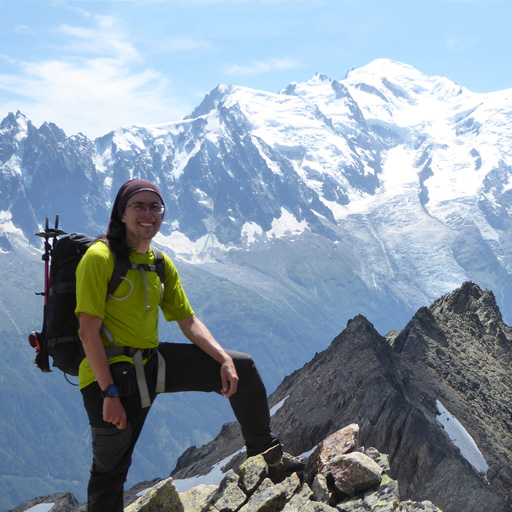
Oscar Argudo serves as Assistant Professor in the Department of Computer Science at the Barcelona School of Informatics, Universitat Politecnica de Catalunya (UPC), focusing on computer graphics and virtual reality applications for environmental simulation. His expertise bridges computational techniques with real-world ecological concerns, particularly human impact on natural landscapes through recreational activities like hiking. Education: PhD in Computer Science, Universitat Politecnica de Catalunya (2018). Thesis: "Realistic reconstruction and rendering of detailed 3D scenarios from multiple data sources". Advisors: Carlos Andujar and Antoni Chica. His research pioneers terrain modeling methodologies that simulate erosion, vegetation decay, and trail formation through procedural algorithms and crowd behavior modeling. Current work integrates pathfinding optimization for uneven terrains with anthropogenic degradation effects, creating immersive VR experiences that visualize environmental consequences of human activity. This approach uniquely combines his mountaineering passion with computational rigor to address ecological awareness through technology. Recent publications demonstrate consistent innovation in terrain analysis, digital nature rendering, and environmental simulation across top venues like SIGGRAPH and Eurographics, with emerging focus on open-sourcing tools for broader scientific impact. Scientific Awards: Maria Zambrano research fellowship (2022) R3 accreditation by Agencia Estatal de Investigación (2025) Accreditation of research by AQU (2025) He actively supervises students evidenced by the 2025 Eurographics Spanish Chapter Best BSc Thesis award for "Interactive viewer of natural scenes with hiking trails in Unity" and multiple master's theses converted to conference papers. As co-Principal Investigator of the SENDA project (funded by Ministerio de Ciencia e Innovación), he leads a team developing novel algorithms for virtual human simulation and terrain degradation modeling, with two postdoc positions recently advertised to expand this research. His work operates within UPC's Barcelona School of Informatics research ecosystem and the SENDA project team, which develops both VR applications for immersive environmental education and web-based tools for public engagement with terrain degradation phenomena.
Carry Renders is a Full Professor at Vrije Universiteit Amsterdam’s Faculty of Science, Department of Health Sciences. She holds additional roles as Full Professor in APH - Health Behaviors & Chronic Diseases and APH - Societal Participation & Health. She was seconded to Windesheim University of Applied Sciences (2005-2022) as research coordinator and associate lector. She obtained her MSc from Radboud University (1995) and her PhD from VU Medical Center (2001). Her research focuses on integrated community-based approaches to prevent childhood overweight and obesity, leveraging epidemiological methods, systems approaches, and qualitative techniques like focus groups. Key projects include evaluating interventions in schools, neighborhoods, and workplaces. Recent work addresses socioeconomic health inequalities and policy implementation. Her publications emphasize realist evaluation, community capacity building, and systems thinking in public health. Notable projects include the 'Integrated Neighborhood Approach' and 'Charge your Brainzzz 2.0' sleep intervention. She collaborates on SDGs related to health and well-being.
Prof. Dr. Fabian DI FIORE is a Lecturer and Research Coordinator at the Department of Computer Science, Faculty of Sciences, Hasselt University. He is affiliated with the Expertise Center for Digital Media (EDM) and leads research in Computer Graphics, Virtual Reality, and Extended Reality (XR). His roles include coordinating research projects and teaching courses such as Operating Systems, Computer Animation & Simulation, and Computer Graphics & Visual Computing. His research focuses on modeling and simulation, computer vision, and digital media applications. Notable projects include XR innovations for manufacturing, digital support for industrial processes, and collaborative virtual environments for education. He coordinates 16 active research projects, emphasizing XR infrastructure and applied technologies in industry and healthcare. Prof. DI FIORE supervises PhD candidates in Extended Reality applications, such as Psychomotor Task Assistance and Training using XR. He is involved in education initiatives like the International interdisciplinary project and the International School program. His work bridges academic research and practical applications, with a focus on innovation in digital media and educational technology. His teaching responsibilities include coordinating courses on operating systems, computer animation, and project management. He is a co-owner of key training components such as Computer Architecture and International interdisciplinary projects, reflecting his dual role in education and research leadership.
Professor Jian Chang is a leading academic at Bournemouth University with over 15 years of research experience in computer animation. He works at the National Centre for Computer Animation (NCCA), recognized as the UK's No.1 educational and research base for computer animation. His affiliation spans multiple research projects and collaborations with international institutions, NHS surgeons, and organizations like RNLI. His research interests focus on physics based modelling (deformation & fluid), motion synthesis, virtual reality (surgery simulation), and novel HCI (eye tracking, gesture control and haptic). He actively exploits computer animation techniques for cross-disciplinary applications, resulting in significant international research collaborations. His work bridges computer science, engineering, and medical fields through innovative virtual reality applications. Professor Chang's recent publications (2021-2024) demonstrate a strong focus on physics-based fluid simulation, facial animation techniques, surgical instruction generation, and advanced rendering methods. His work shows a consistent trajectory toward more sophisticated physics modeling, particularly in fluid dynamics using SPH methods, and expanding applications in medical training and virtual reality environments. International Travel Grant (TG091783) from The Royal Society (2009) FP7 MC-IIF project 'AniM' - 623883 (Principal Investigator) FP7 MC-IRSES project 'AniNex' - 612627 (Chief Scientist) FP7 funded 'Dr Inventor' project - 611383 (€2.65M) InterReg VA France (Channel) England investment of €5.3M Professor Chang has secured substantial funding from diverse sources including the Royal Society, EU FP7, InterReg VA France (Channel) England, and HEIF. He has taken project management and supervision roles in prestigious EU-funded research projects. His research has directly contributed to innovative developments like the 'virtual surgery theatre' with NHS surgeons and 'virtual lifeboat launching' with RNLI, demonstrating significant cross-sectoral impact potential. His work bridges academic research with practical applications in healthcare, heritage preservation, and maritime safety.
Margarita Vinnikov is an Assistant Professor in the Department of Informatics at the New Jersey Institute of Technology (NJIT), part of the College of Computing Sciences. Her research focuses on immersive technologies such as Virtual Reality (VR) and Augmented Reality (AR), with applications in medical assistance, education, and human-computer interaction. She explores topics including gaze-contingent displays, visual fatigue mitigation, and the integration of VR into surgical training and K-12 education. Her work emphasizes user-centered design principles and interdisciplinary collaboration. Notable collaborations include studies on AR surgery assistance using HoloLens and VR-based ontology systems for biomedical education. Her research has been featured in media coverage related to VR crime scene technology, forensic conferences, and AI in education. Key research interests include improving spatial attention through multimodal displays, optimizing visual comfort in head-mounted devices, and leveraging VR for cognitive learning efficiency. Recent projects highlight the application of VR in teaching binary counting to middle school students and analyzing urban devotion through gaze-tracking studies. Vinnikov has advised undergraduate projects on interdisciplinary VR development and contributed to courses like IT 485: Cross Reality (XR) Design. Her work frequently intersects with medical technology, such as AR anatomical visualization for surgical support, and human factors engineering, including studies on quadcopter piloting latency effects.
Mark Dring is a Senior Lecturer in Electronics and Mathematics at the College of Science and Engineering. His research focuses on acoustics, audio engineering, and the integration of advanced sound technologies with digital platforms. He specializes in ambisonics, speaker array design, and spatial audio processing, with particular attention to real-time applications and virtual environments. Dring's work explores the interplay between sound propagation, material science, and computational methods. He has contributed to advancements in binaural auralization, high-order harmonics, and head-tracked ambisonics systems. His recent projects include the development of WHAM (Webcam Head-Tracked Ambisonics), which enhances immersive audio experiences in browser-based environments. His publications span from 2016 to 2023, reflecting a trajectory toward innovative audio solutions for domestic and virtual spaces. Notable research areas include spatial audio quality, speaker array performance modeling, and the transparency of binaural systems. Dring has also explored room acoustics in VR contexts, merging sound design with 360-degree imaging techniques to create realistic virtual environments. No scientific awards or grants are explicitly mentioned in the provided texts. His advising record and lab affiliations remain unspecified. The summary highlights his technical contributions to audio engineering and immersive technologies without direct mention of collaborative projects or institutional support details.
Axel Ahrens is an Assistant Professor in the Department of Health Technology at the Technical University of Denmark (DTU), specializing in Hearing Systems. His research focuses on audiovisual perception, virtual reality environments, and speech perception in complex acoustic scenes. He holds a PhD in audiology from DTU, completed between 2014 and 2019, under the supervision of Professor Torsten Dau. Key research areas include: Audio-visual scene analysis in virtual reality Spatial audio and sound localization Effects of noise on decision-making in group interactions Speech perception in multitalker environments Human behavior in reverberant acoustic settings Applications of beamformer technology in hearing aids Recent work emphasizes the interplay between auditory and visual cues in complex environments, with notable studies on how noise impacts triadic conversations and decision-making outcomes. He currently supervises PhD students in projects like 'Speech Intelligibility in Realistic Listening Environments' (2024-2027) and 'Interpersonal Temporal Dynamics of Group Interaction' (2023-2026). Ahrens actively contributes to academic activities, including peer reviewing for journals like Hearing Research and Journal of the Acoustical Society of America , and organizing workshops on communication dynamics. His work aligns with UN Sustainable Development Goals related to health and innovation. Labs/Teams: Hearing Systems Section at DTU Health Tech.
Prof. Stelian Coros is an Associate Professor at the Department of Computer Science, ETH Zürich, and Head of the Institute for Intelligent Interactive Systems. His research focuses on robotics, computational design, and control systems, with applications in robotic manipulation, simulation, and autonomous systems. His work integrates principles from computer science, mechanical engineering, and artificial intelligence to advance the capabilities of robots in real-world environments.
Imanol Munoz-Pandiella is an assistant professor in the Computer Science Department at Universitat Politècnica de Catalunya – BarcelonaTech (UPC) and a core member of the ViRVIG research center . His work bridges computer graphics and cultural-heritage science, with a focus on 3-D reconstruction, appearance modeling, and interactive visualization of historical artefacts. Education Ph.D. in Computer Graphics (2017) – joint programme between Université de Limoges and Universitat de Girona (supervisors: Stéphane Mérillou, Xavier Pueyo, Carles Bosch, Nicolas Mérillou) Pre-doctoral stay – Yale University (supervisor: Holly Rushmeier) Research Interests Dr Munoz-Pandiella investigates the intersection of Computer Graphics and Cultural Heritage . Current themes include: Appearance change and weathering analysis in architectural heritage High-fidelity 3-D reconstruction from sparse data Interactive narrative frameworks for 4-D (time-varying) heritage models Physically-based rendering and differentiable inverse rendering Color constancy and illumination-robust imaging for conservation science Publication Landscape His 2024–2025 output is dominated by 4-D cultural-heritage visualization , digital restitution of lost or weathered artworks , and real-time rendering techniques . Earlier work (2021–2022) concentrated on LiDAR intensity correction and neural colorization . Collectively, these publications map onto broad disciplines of Computer Graphics , Computer Vision , and Digital Heritage , with sub-fields spanning differentiable rendering, mural-painting restoration, and interactive 3-D exploration. Scientific Awards & Grants Assistant Professor position award – UPC, 2023 Post-doctoral fellow award – DTIC, Universitat Pompeu Fabra, 2023 Participant and grantee – European Cloud for Heritage OpEn Science (ECHOS), 2024 Service & Leadership Program Chair, CEIG 2026 (with Elena Garces) Program Co-Chair, Web3D 2023 Guest Editor, Computers & Graphics special issue on Web3D 2023 Program Committee member, CEIG 2023 Laboratory & Collaborations Dr Munoz-Pandiella conducts his research within the ViRVIG research center at UPC, collaborating closely with cultural-heritage stakeholders across Europe. His interdisciplinary teams integrate art historians, conservation scientists, and graphics engineers to deliver open-source tools and datasets for heritage documentation and dissemination.
Steve Marschner is a Professor of Computer Science at Cornell University and Director of Graduate Studies for the Computer Science department. He is also a part-time Distinguished Graphics Researcher at NVIDIA Research. His research focuses on computer graphics and vision, particularly on how optics and mechanics determine the appearance of materials. Marschner received his Ph.D. in Computer Science from Cornell University in 1998. His thesis was titled "Inverse Rendering for Computer Graphics" and was advised by Donald P. Greenberg, Charles Van Loan, and Leonard Gross. He also holds a Sc.B. in Mathematics-Computer Science from Brown University (1993). His research spans realistic rendering, material models (both optical and mechanical), appearance capture, simulation, and computational photography. Marschner's work addresses fundamental questions about how to make objects appear to be made from specific materials and how to use cameras to measure information needed for creating realistic images. His research has applications in film production, virtual reality, and manufacturing. Marschner's recent publications demonstrate a strong focus on advanced rendering techniques, particularly in differentiable rendering, wave optics, and the appearance modeling of complex materials like hair, fur, and woven fabrics. His work increasingly integrates machine learning approaches with traditional graphics techniques, while maintaining a strong foundation in physical optics and material science. Marschner has received numerous prestigious awards recognizing his contributions to computer graphics: ACM Fellow (2021) SIGGRAPH Academy member (2018) SIGGRAPH Computer Graphics Achievement Award (2015) Sloan Research Fellowship (2006) NSF CAREER Award (2004-2009) Academy of Motion Picture Arts and Sciences Technical Achievement Award (2003) Marschner has advised numerous Ph.D. and Master's students, many of whom have gone on to successful careers in academia and industry. His research has been supported by the National Science Foundation, Autodesk, Google, and Adobe. He has served in leadership roles for major conferences including as Technical Papers Chair for SIGGRAPH Asia 2015 and Papers Committee Member for multiple SIGGRAPH conferences. His work is conducted through the Program of Computer Graphics at Cornell University, where he collaborates with researchers working on various aspects of computer graphics, vision, and appearance modeling. Marschner also maintains a strong industry connection through his part-time role at NVIDIA Research, focusing on real-time graphics applications.
Xavier Pueyo is a Professor at the Universitat de Girona (UdG) in the Department of Computer Science, Applied Mathematics and Statistics. He has held academic positions since 1980, including Associate Professor at Universitat Politècnica de Catalunya (1988-1993). His research focuses on Computer Graphics , particularly Visibility Algorithms , Realistic Rendering , Lighting Simulation , and Cultural Heritage applications. Enginyer Industrial (Universitat Politècnica de Catalunya, 1980) Docteur Ingénieur in Informatique (Université de Rennes I, 1984) Doctor Enginyer Industrial (Universitat Politècnica de Catalunya, 1986) His work includes advanced Radiosity algorithms , Monte Carlo methods for Global Illumination, and Weathering simulations for urban environments. He has supervised 11 PhD students and co-authored 15+ significant publications, emphasizing interactive rendering and parallel computing applications. Scientific awards : Fellow of the EUROGRAPHICS Association (2004) Active in grants : Design and Implementation of a Lighting Simulation System (1993-1995) Interactive graphic system for rendering complex images using supercomputers (1993-1994) Computer Graphics Network (1993-1997) Realistic Lighting Simulation (1996-1998) Virtual Reality for Cooperative Design (1999-2001) Lighting Simulation (2005-2007) Energy Efficient Lighting (2008-2010) Advanced Modeling (2014) 3D Geometric Models (2015-2017) Life Sciences Visualization (2018-2021) Digital Heritage Models (2020-2023) He leads the ViRVIG research group and collaborates with institutions across Europe, focusing on Geometry and Graphics Group (GGG) projects.