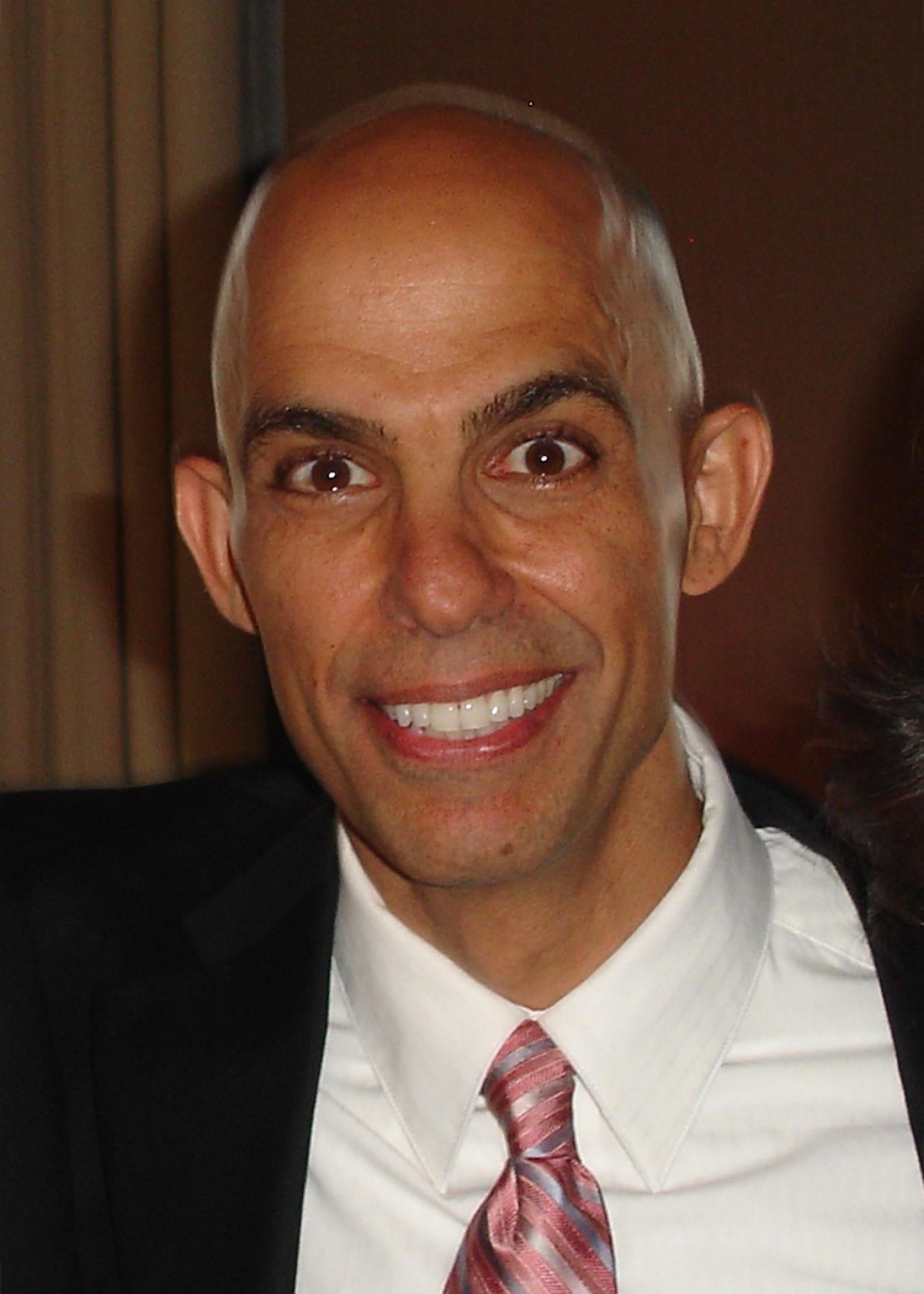
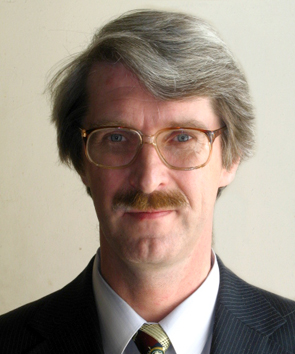
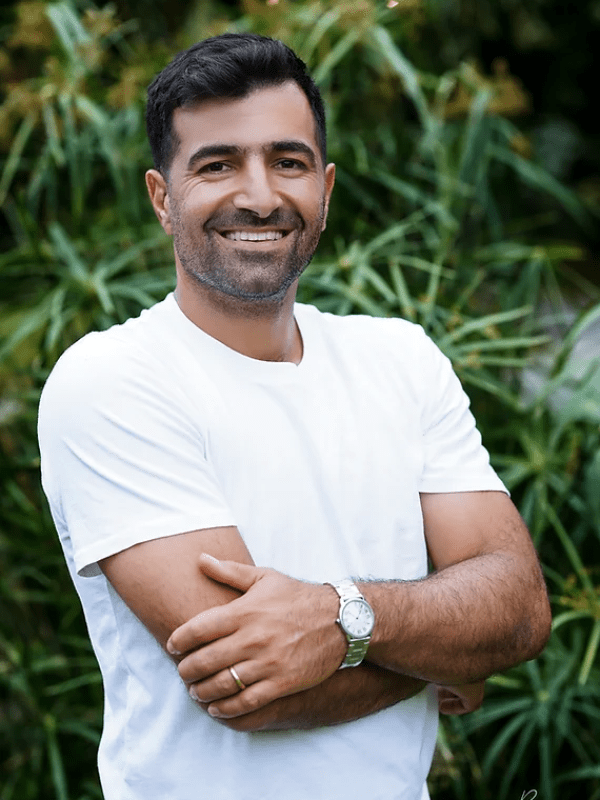
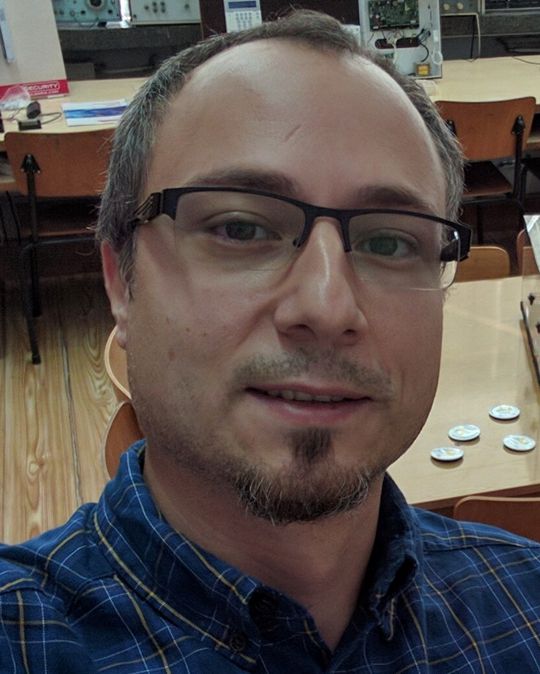
Rémi Cozot is a Professor at the University of Littoral Côte d'Opale, affiliated with the MAP Research Group and LISIC Laboratory. His research focuses on Image Aesthetics , High Dynamic Range (HDR) Imaging , and Image Editing , with an emphasis on preserving artistic intent during media retargeting. He has pioneered methods to reduce Temporal Artifacts in HDR video tone mapping, including the Zonal Brightness Coherency operator, and developed Style Aware Tone Expansion for HDR displays, which won the NAB 2017 Innovation Award . Key contributions include computational distances for aesthetic similarity and models for Brightness Comfort in HDR displays. He has supervised 9 PhD students, including Mathieu Chambe (HDR aesthetics) and Dmitry Kuzovkin (photo album assessment). His scientific accolades include best paper awards at VISIGRAPP/GRAPP 2018 and Computer Graphics International 2017.
Ali Hassan Sodhro is a Senior Lecturer in Computer Science at Kristianstad University's Faculty of Natural Science, Department of Computer Science. With over 80 publications in top-tier journals and conferences, Dr. Sodhro has established himself as a prominent researcher in healthcare technology and networking systems. His educational background includes a PhD in Computer Applications Technology from Shenzhen Institutes of Advanced Technology, Chinese Academy of Sciences and University of Chinese Academy of Sciences (2016), an M.E in Communication Systems and Networks (2011), and a B.E in Telecommunication (2008) from Mehran University of Engineering and Technology in Pakistan. Dr. Sodhro's research focuses on the intersection of AI, healthcare technology, and networking systems. His primary areas include AI/ML for Edge/Cloud Computing, Smart Healthcare IoT, Physical Layer Security in 5G applications, and Energy Harvesting for Healthcare Systems. His work bridges theoretical computer science with practical healthcare applications, particularly in wireless sensor networks and medical data transmission. Analysis of his recent publications reveals a strong trend toward healthcare-focused IoT systems, particularly Internet of Medical Things (IoMT) applications. His research spans from foundational networking technologies like 5G and digital twins to practical implementations in medical equipment and patient monitoring systems, with increasing emphasis on AI integration for cybersecurity and efficiency. IEEE Senior Member Dr. Sodhro serves as Associate Editor for several prestigious journals including IEEE Transactions on Intelligent Transportation Systems (T-ITS) and IEEE Transactions on Industrial Informatics (TII). His research has secured multiple projects including the EU COST Action Project on Physical layer security for 6G systems (6G-PHYSEC), Smart and Pervasive Healthcare for Elderly Patients, and Energy-efficient Video Transmission in Wireless Body Sensor Networks. His collaborative network spans multiple institutions including Luleå University of Technology, Mid Sweden University, Linköping University, Chinese Academy of Sciences, and University of Glasgow, reflecting the international scope of his research in healthcare technology and networking systems.
Luxi Zhao is a Research Fellow at Technische Universität München's Embedded Systems and Internet of Things department, specializing in Time-Sensitive Networking (TSN) and real-time network calculus. Working under the supervision of Prof. Sebastian Steinhorst, Zhao contributes to projects like ReMiX and 6G-Life, focusing on security, performance analysis, and configuration optimization of deterministic networks. Research Focus: Worst-case latency analysis in TSN networks Runtime configuration and reconfiguration problems Hybrid scheduling of processing and communication Network calculus modeling for heterogeneous systems Security challenges in industrial IoT and autonomous systems Interoperability of IoT systems in Industry 4.0 Teaching Activities: Secure Autonomous Systems (2025) Software Architecture for Distributed Embedded Systems (2025) IoT Security (2025) IoT Remote Lab practical courses across multiple semesters Advanced Seminar series (2020-2025)
Federico Bumbaca serves as an Assistant Professor of Marketing at the Leeds School of Business, University of Colorado Boulder. His academic journey spans engineering, operations research, and business disciplines. Education Highlights: PhD in Marketing - Paul Merage School of Business, University of California Irvine MBA - Sloan School of Management, Massachusetts Institute of Technology MS in Operations Research - Virginia Tech MS & BS in Electrical Engineering - University of Toronto Bumbaca's research pioneers big data methodologies in marketing, specializing in Bayesian hierarchical models and distributed computing techniques for target marketing optimization. His work bridges complex statistical modeling with practical marketing applications, particularly in loyalty programs and customer segmentation. The evolution from his early computer vision research to contemporary marketing analytics demonstrates interdisciplinary expertise. His publication portfolio reveals a distinct transition from 1980s engineering research (laser rangefinders, color vision systems) to modern marketing analytics, with recent focus on scalable algorithms for Bayesian modeling. This trajectory reflects his unique ability to apply computational rigor to marketing challenges. Bumbaca teaches Marketing Research and Analytics in undergraduate programs and Data and Decisions in MBA courses, leveraging his industry experience from technology startups in the San Francisco Bay Area where he developed expertise in marketing, business development, and sales.
Andrey I. Lyakhov is a Professor and Doctor of Computer Science at the Institute for Information Transmission Problems of the Russian Academy of Sciences. He serves as the Head of Laboratory №18 and has been active since 1959. His research focuses on wireless networks, particularly IEEE 802.11 and 802.16 protocols. Position: Laboratory Chief Affiliation: Institute for Information Transmission Problems, Russian Academy of Sciences Research Interests: Wireless Networks, MAC Protocol Analysis, Network Performance, Distributed Control, Multicast QoS, Channel Assignment His work includes analytical modeling of data transmission, beaconing in mesh networks, and studies on network unfairness and congestion. He has contributed to patents in wireless sensor networks and piconet beacon management. Notable publications span wireless LANs, WiMAX, and sensor network optimization. Lyakhov's research has involved collaborations with international conferences and journals, focusing on throughput estimation, channel contention, and quality of service in wireless systems. Recent publications include studies on bandwidth piggybacking (2010), intra-flow interference in mesh networks (2010), and multicast QoS support in WLANs (2007). Earlier works from 1983-2008 cover foundational topics in queueing theory, cache efficiency, and distributed control systems.
Larry P. Heck is a Professor at the Georgia Institute of Technology with joint appointments in the Schools of Electrical and Computer Engineering and Interactive Computing. He holds the Rhesa S. Farmer Distinguished Chair of Advanced Computing Concepts and is a Georgia Research Alliance Eminent Scholar. His career spans academia, industry, and research leadership, with notable roles at Microsoft, Google, Samsung, and SRI International. BSEE, Texas Tech University (1986) MSEE, Georgia Institute of Technology (1989) PhD in Electrical Engineering, Georgia Institute of Technology (1991) His research focuses on Artificial Intelligence , particularly in Conversational Systems , Machine Learning , and Natural Language Processing . Key subfields include dialogue systems, speech/speaker recognition, multimodal interaction, and large language model (LLM) governance. Recent publications emphasize dataset creation, intent modeling, reinforcement learning, and ethical AI practices. Scientific awards include IEEE Fellow , National Academy of Inventors Fellow (2025) , and multiple accolades from Texas Tech and Georgia Tech. He has led groundbreaking work in deep learning for speech processing and holds over 50 U.S. patents.
Roger Lewis is a Professor of Mechanical Engineering at the University of Sheffield , affiliated with the School of Mechanical, Aerospace and Civil Engineering . He graduated from Sheffield in 1996 with an MEng and completed his PhD in the Tribology Research Group . His academic career progressed from Lecturer (2002) to Senior Lecturer (2006), Reader (2011), and finally a personal chair in 2013. In 2019, he was appointed a Royal Academy of Engineering Research Chair , co-funded by the Rail Safety and Standards Board , focusing on low adhesion management in wheel/rail interfaces. PhD in Tribology (University of Sheffield) MEng in Mechanical Engineering (University of Sheffield) His research spans two domains: industrial wear solutions (railway wheel/rail tribology, friction modifiers, condition monitoring) and human tissue interactions (skin friction modeling, medical device interface analysis, slip/fall mechanics). He pioneered ultrasonic techniques for contact analysis and edited The Wheel/Rail Interface Handbook . Awards include the Tribology Trust Bronze Medal (2001), Brian Mercer Innovation Award (2003), and Donald Julius Groen Prize (2020). Roger's recent publications (2025-2024) focus on railway wear mechanisms (corrosion interactions, Mn13/CrB1400 rail steels), particle entrainment modeling , and adhesion optimization via sanding. His work integrates experimental twin-disc testing , DEM/CFD simulations , and real-time monitoring of wheel/rail contacts. Scientific Honors: Tribology Trust Bronze Medal (2001) Brian Mercer Award for Innovation (2003) Institute of Physics Innovation Prize (2008) Donald Julius Groen Prize (2020) Chartered Engineer and IMechE Fellow Roger leads the Leonardo Tribology Centre and has developed laser cladding techniques for rail repair. His work on friction modifiers and adhesion management has direct applications in railway safety and efficiency.
Dr. Andrey Alenin serves as a Senior Lecturer at UNSW Canberra within the School of Engineering and Technology. His extensive academic contributions focus on advanced optical systems, particularly in polarimetry and imaging technologies. With numerous publications spanning over a decade, his work has established him as a significant contributor to the field of optical science and engineering. Dr. Alenin's research interests center on optical polarimetry, Mueller matrix systems, and advanced imaging techniques. His work spans theoretical foundations of linear systems in optics to practical implementations of polarimetric imaging systems. He has made significant contributions to channeled spectropolarimetry, photoelastic modulator systems, and polarization visualization methods. His research bridges fundamental optical theory with real-world applications in remote sensing, satellite imaging, and quantum communications. The extensive list of book chapters he co-authored demonstrates his deep understanding of Fourier optics and linear systems theory. Analysis of Dr. Alenin's recent publications reveals a strong trajectory from fundamental polarimetric theory toward practical implementations. His work increasingly incorporates machine learning techniques for polarization data processing, particularly deep learning for spectral-temporal analysis. The research shows progression toward applications in remote sensing and satellite systems, including tropical cyclone monitoring and intersatellite quantum communications. His co-authorship of the comprehensive reference 'Field Guide to Linear Systems in Optics' with J.S. Tyo has provided valuable educational resources for students and researchers in the field. Dr. Alenin maintains active collaborations with researchers across multiple institutions, as evidenced by his extensive co-authorship network. His work appears in leading optics journals including Applied Optics, Optics Express, and the Journal of the Optical Society of America. His research has practical applications in defense, remote sensing, and quantum communications technologies.
Thierry Artières is a University Professor at Aix-Marseille University, primarily affiliated with École Centrale Marseille (ECM), where he holds multiple leadership positions including Head of the Computer Science teaching unit, Head of the IAAA course of the Computer Science Master's degree, and Head of the IAM course of the 3rd year Computer Science option. He is a key member of the QARMA (Machine Learning) research team within the LIS (Laboratoire d'Informatique et Systèmes) and collaborates with several research institutes including the READ laboratory, Institut de Neurosciences de la Timone (INT), and the ILCB (Institute of Language, Communication and the Brain). His research interests span Machine Learning, Deep Learning, and Artificial Intelligence with applications to neuroscience, medical imaging, and computational biology. His work focuses on understanding brain representations of voice and sound, optimizing MRI acquisition through deep learning, and developing novel machine learning techniques for multi-label classification and generative modeling. He has supervised numerous PhD students including Loris Berthelot, Hamed Benazha, Malek Senoussi, Swetali Nimje, and Charly Lamothe. His recent publications reveal a strong focus on applying deep learning to neuroscience problems, particularly in understanding how the brain processes sound and voice. His work combines theoretical machine learning advances with practical applications in medical imaging and cognitive neuroscience, often through collaborations between computer science and neuroscience laboratories. His research demonstrates a consistent trend toward interdisciplinary work that bridges AI with biological and medical domains. Member of QARMA Machine Learning team at LIS Collaborator with Institut de Neurosciences de la Timone Involved with ILCB Institute (Institute of Language, Communication and the Brain) Supervisor of multiple PhD students and Master's interns Regularly posts about internship opportunities in Machine Learning and AI Professor Artières actively mentors students through PhD positions, Master's internships, and engineering student projects. He has secured funding for multiple research projects, including ANR-funded collaborations with neuroscience institutes. His lab regularly offers 5-6 month internships on cutting-edge topics in machine learning, and he has facilitated numerous research opportunities for students interested in AI and data science careers. He also contributes to understanding the French job market for AI and data science professionals.
Mehdi Khazaeli serves as Associate Professor in the Engineering Management Program within the School of Engineering and Computer Science at University of the Pacific, concurrently holding the position of Assistant Dean for Innovation and Professional Development. In this administrative capacity, he directs the corporate affiliates program encompassing CO-OP initiatives, sponsored research partnerships, and career services for engineering students. His instructional portfolio includes advanced courses in Design and Innovation, Decision Making, and Data Analytics. His academic credentials include: Ph.D. in Engineering Science (Information Technology Engineering concentration), Louisiana State University, 2013 M.S. in Product Design and Management, University of Liverpool, 2009 B.S. in Industrial Engineering, Isfahan University of Technology, 2005 Dr. Khazaeli maintains active professional certifications as a California-licensed Professional Engineer (Industrial Engineering) and Project Management Professional (PMP). His research program demonstrates exceptional interdisciplinary range: Sport Analytics Core : Pioneering AI-driven performance analysis across golf, soccer, and basketball through biomechanics and video processing Technical Integration : Merging Building Information Modeling with wireless network analysis for construction innovation Educational Engineering : Developing entrepreneurial frameworks for bioengineering curriculum design Recent publications (2021-2024) reveal a dominant research trajectory applying deep learning to athletic performance optimization, with secondary streams in construction informatics and engineering education reform. His work consistently bridges theoretical AI advances with practical sports and industrial applications. Professional recognition includes: Outstanding Innovation Product Award in Product Design and Development Project Expo (University of Liverpool) As Assistant Dean, he architects industry-academia partnerships through corporate affiliations and CO-OP programs, while his consulting engagements span R&D sectors, venture capital firms, and research institutions. His leadership directly shapes professional development pipelines connecting student talent with industry innovation demands. Administrative initiatives under his direction cultivate cross-sector collaboration networks that accelerate technology transfer from academic research to industrial implementation, with particular emphasis on data-driven decision systems across sports and construction domains.
Edirlei Everson Soares de Lima is an Assistant Professor at Universidade Europeia – IADE, where he coordinates the Games Development course. His research intersects Artificial Intelligence , Interactive Storytelling , and Game Design , focusing on adaptive narratives and player modeling. Ph.D. in Computer Science, Pontifical Catholic University of Rio de Janeiro (PUC-Rio) M.Sc. in Computer Science, Federal University of Santa Maria (UFSM) B.Sc. in Computer Science, Contestado University (UnC) His research explores Interactive Narratives in digital entertainment, spanning from game AI to virtual reality horror mechanics. Recent work emphasizes Machine Learning for fear modeling and Procedural Content Generation in quests. Publications and teaching roles since 2011 reflect expertise in Game Programming , Player Experience , and Computer Graphics , with notable awards including multiple SBGames Best Paper accolades and ITU honors. Best paper awards at SBGames (2016–2020), ICEC (2015), WebMedia (2014) ITU Honorable Mentions: 'Innovation' (2011), 'Interactivity' (2012) SBGames 2010: Best game and honorable mentions for 'Krimson' He has supervised multiple Master’s students in projects related to Interactive Design , Game Technology , and Narrative Systems , with over a decade of teaching experience across institutions like PUC-Rio and UERJ/IPRJ.
Krassen Kirov Angelov is a full professor at the Department of Communication Equipment and Technologies within the Faculty of Electrical Engineering and Electronics at Technical University - Gabrovo . He has led and participated in 15 research projects, focusing on wireless communication platforms, IoT systems, and optical network optimization. Head, Department of Communication Equipment and Technologies Project Manager for 5G/IoT research (2022) Co-author of 3 textbooks on communication circuits Research Interests include: 5G network design and optimization IoT communication protocols Optical network modeling Secure data transmission Satellite broadcasting systems Smart infrastructure development His recent publications (2021-2025) demonstrate expertise in: Chaotic encryption techniques Neural network applications LoRaWAN coverage planning DVB-S2 signal transmission Passive optical network modeling Radio frequency optimization PhD Students : Plamen Tashev (Radio Channel Monitoring) Mikhail Angelakis (Wireless Resource Management) Victor Krustev (Security Identification) Ivan Zlatev (Network Resource Allocation) Evelina Vaseva (Beekeeping Monitoring)
Raza Ul Mustafa is an Assistant Professor in the Department of Mathematics and Computer Science at Loyola University New Orleans . Prior to this, he was a Postdoctoral Fellow in Large Language Models (LLMs) at American University in Washington, DC. Education: Ph.D. in Computer Engineering (2018-2022), University of Campinas Research Interests span Natural Language Processing , Large Language Models , Machine Learning , and Quality of Experience (QoE) in multimedia systems. His work combines 5G networks and deep learning to optimize video streaming performance, while also exploring hate speech detection in online platforms using advanced NLP techniques. Publications focus on two primary areas: (1) 5G network optimization for video QoE, including ML-based stall prediction and QoS-to-QoE mapping, and (2) hate speech analysis using LLMs to detect coded terms in extremist social media. These studies demonstrate his dual expertise in telecommunications and social media NLP . Industry Experience includes six years as a full-stack developer, which enriches his teaching with practical insights. His research is reproducible and has been published in top-tier venues like IEEE WCNC , DSAA , and ACM QoSS conferences.
Dr. Ali Abbasi is a tenure-track faculty member at the CISPA Helmholtz Center for Information Security in Saarbrücken, Germany. He leads the Embedded Systems Security (EMSEC) research group, focusing on hardware-software co-design for security, including fuzzing techniques , side-channel analysis , and mission-critical real-time systems . His work bridges cybersecurity , space systems , and automotive security through innovative research. PhD , Eindhoven University of Technology (2017–2018) Postdoctoral Researcher , Ruhr-University Bochum (2019–2021) His research integrates hardware security and systems security , with recent publications addressing firmware vulnerabilities , satellite communication security , and PLC defense mechanisms . Key article trends include: 2025 : Differential testing of video hardware stacks 2024 : Memory safety in bootloaders, space system sandboxing, and industrial control system security 2023 : Standardized metrics for PLC defenses and experimental satellite security analysis Scientific Awards : Distinguished Paper Award, IEEE Symposium on Security and Privacy (2023) He has taught advanced courses on Foundations of Firmware Security (2025), Systems Security (2022–2024), and Reverse Engineering (2023), with practical outcomes including student-led 0-day vulnerability discovery in real-time operating systems.
Prof. Dr. Thorsten Thormählen is a University Professor for Computer Graphics and Multimedia Programming in the Department of Mathematics and Computer Science at Philipps University Marburg, Germany, a position he has held since October 2012. Prior to this, he served as Substitute Professor for Interactive Graphics Systems at the University of Tübingen (2011-2012) and led the independent research group "Image-based 3D Scene Analysis" at the Max Planck Center for Visual Computing and Communication (2007-2012). His academic background includes a PhD (Dr.-Ing.) from the University of Hannover (2000-2005), where he also worked as a full-time scientific assistant, and a Diploma in Electrical Engineering from the University of Duisburg (1994-1999). Prof. Thormählen's research centers on Visual Computing , spanning Computer Graphics , Computer Vision , Video Processing , and Human-Computer Interaction . His work pioneers tools for 3D reconstruction (e.g., Multi-View Photometric Stereo), video manipulation (e.g., MovieReshape), and multimedia processing (e.g., GSN Composer), with groundbreaking contributions to accessibility through haptic and auditory interfaces for blind 3D modelers. His lab develops practical systems that bridge theoretical computer vision with real-world applications. Analysis of his 15 most recent publications reveals a consistent focus on photometric stereo techniques for 3D reconstruction, video processing innovations, and accessibility-driven interfaces. His work increasingly emphasizes inclusive design, particularly for visually impaired users, while maintaining technical rigor in camera calibration, surface modeling, and multi-sensor fusion. At the Max Planck Center, he established and led the "Image-based 3D Scene Analysis" research group, which advanced methods for reconstructing 3D environments from video sequences. His current work at Marburg continues this trajectory, integrating computer vision, graphics, and human-centered design to solve complex problems in digital content creation and accessibility.