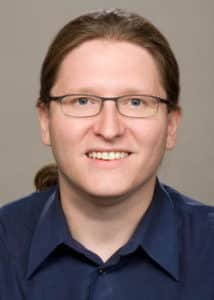
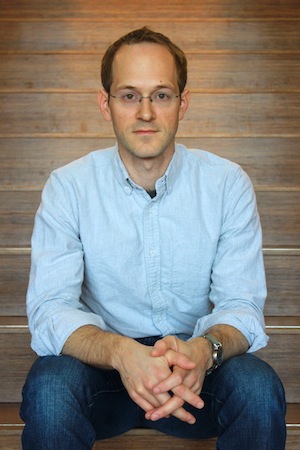
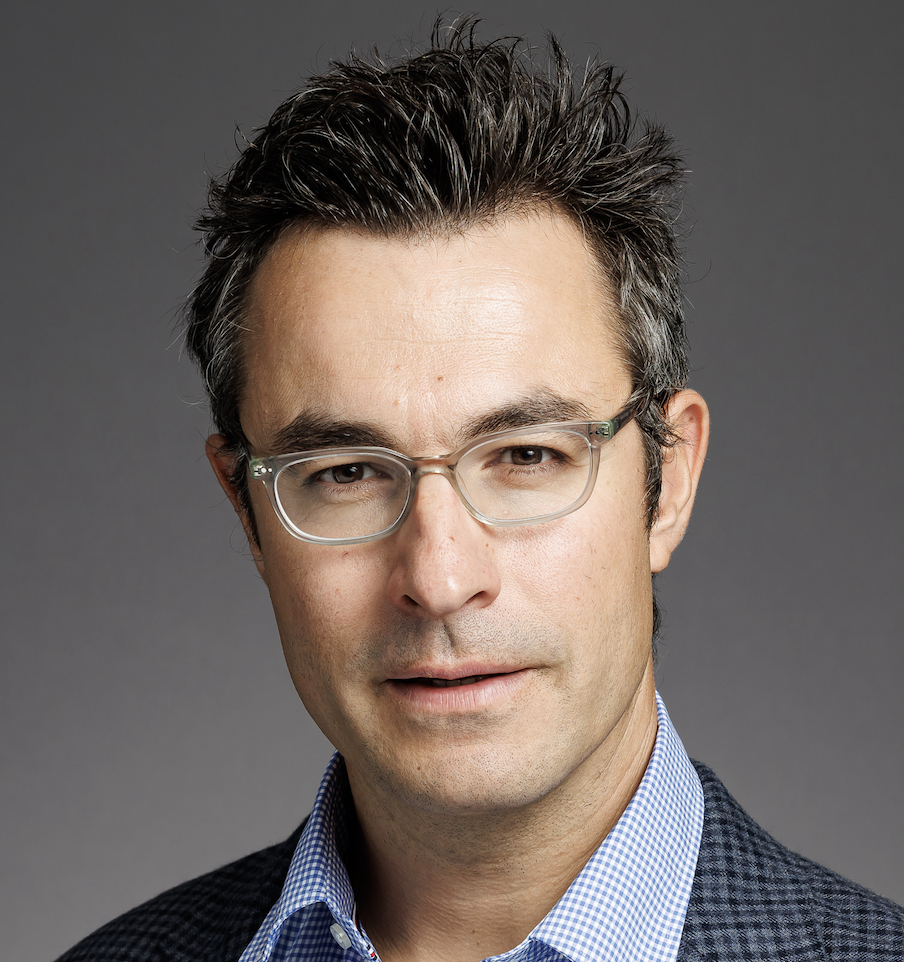
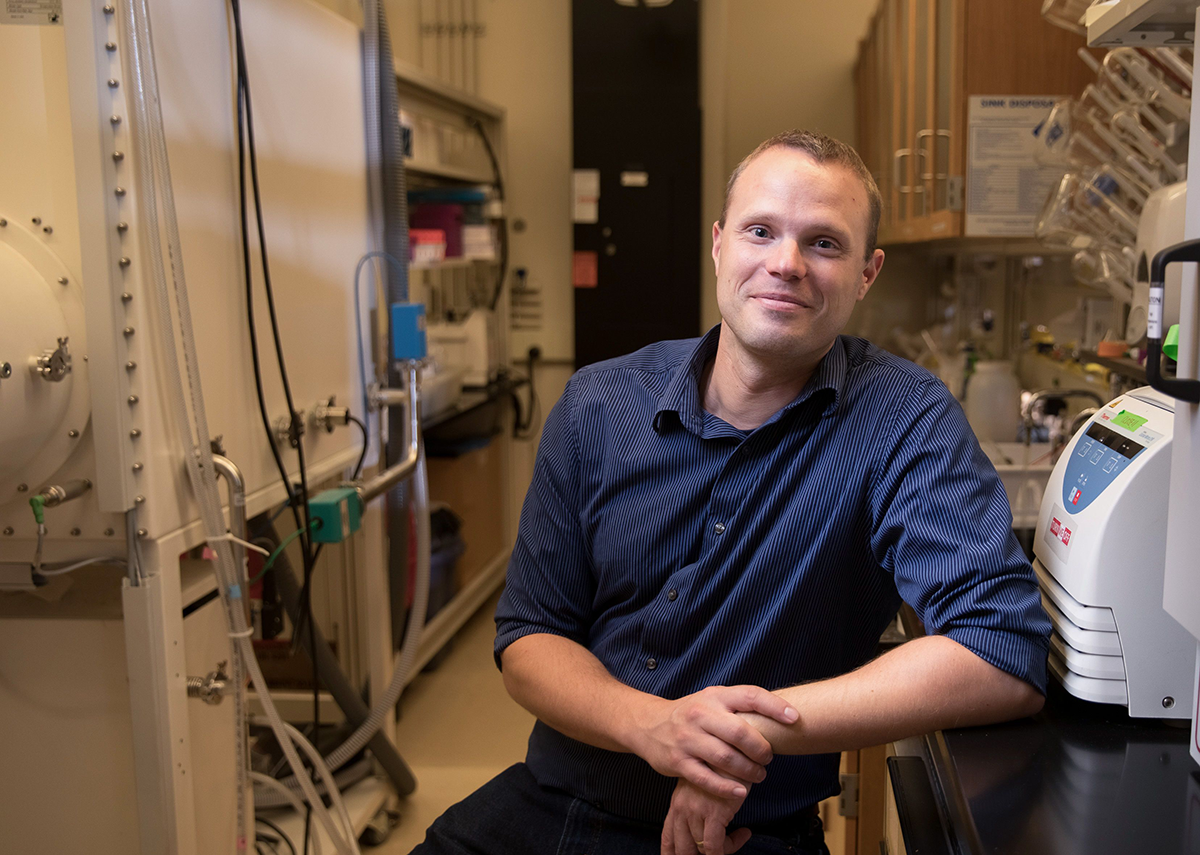
Professor Carlo Harvey is a creative technologist at the School of Digital Arts (SODA), Manchester Metropolitan University. His interdisciplinary research merges games , machine learning , virtual production , and cultural heritage reinterpretation . He leads industry collaborations with entities like Jaguar Land Rover and Epic Games, focusing on AI-driven interactive audio, real-time visualization, and accessibility solutions. Award-winning projects : TIGA, Innovate UK, and Epic Games MegaGrant for Accession Industry partnerships : Automotive sector, cultural institutions His research spans human-computer interaction , multisensory virtual environments , and acoustic-visual cross-modal perception . Recent publications address robotic simulations, motion alignment, and haptic feedback systems. Scientific recognition : TIGA Award, Innovate UK Funding, Epic Games MegaGrant Advocacy : Digital inclusion, creative collaboration, social impact of technology
Judy Hoffman is an Associate Professor in the College of Computing at Georgia Institute of Technology, with a joint appointment in the School of Interactive Computing and affiliation to the Machine Learning Center . She received tenure in April 2025 after joining Georgia Tech as an Assistant Professor. Her research focuses on enabling AI systems that are reliable, fair, and resource-efficient. PhD in Electrical Engineering and Computer Science (2016, UC Berkeley) Postdoctoral Fellowships at Stanford (2017) and UC Berkeley (2018) Former Research Scientist at Facebook AI Research Her work intersects computer vision and machine learning , with specialization in domain adaptation , adversarial robustness , and algorithmic fairness . She has published over 40 peer-reviewed articles, including the award-winning DeCAF (ICML 2024 Test of Time Award) and co-founded Women in Computer Vision (2015), which has sponsored ~40 women annually to premier conferences. ICML Test of Time Award (2024) NSF CAREER Award (2022) PAMI Distinguished Young Researcher (2023) Samsung AI Researcher of the Year (2021) Dr. Hoffman has served as Program Chair for CVPR 2023, Associate Editor for T-PAMI (2021-2023), and co-organizer of workshops at major AI conferences. She has delivered over 70 invited talks and contributes to open-source projects like cycada_release (567 stars) and lsda (47 stars).
James R. Eagan is an Associate Professor in the Computer Science and Networks Department (Infres) at Télécom Paris , part of the Institut Polytechnique de Paris. He is also a Visiting Professor at the University of Colorado, Boulder for the 2024–25 academic year. His research focuses on making computers more expressive tools for human interaction, emphasizing malleable software, collaborative dynamic media, and multi-surface environments. His work spans Human-Computer Interaction , Data Visualization , and User Interface Programming . A key theme involves adapting software for user-driven customization, exemplified by projects like Webstrates (shareable dynamic media) and SchemeLens (semantic zoom for technical diagrams). He also explores uncertainty in data analytics and gesture-based interfaces for experts. Recent publications from 2020–2024 address Explainable AI (XAI) , Financial Crime Detection , and Interactive Data Analysis . His tools Tarantula and SchemeLens have received acclaim, including the 2015 ACM SIGSOFT Impact Award and Best Paper at UIST 2015. Scientific accolades include: Prix de l’Impact 2015 d’ACM SIGSOFT Best Paper Award at UIST 2015 Honorable Mention at CHI 2017 He teaches courses in Mobile Application Development , Human-Computer Interaction , and Data Visualization . His lab, DIVA (Design, Interaction, Visualization & Applications), operates within the Information Processing and Communication Laboratory (LTCI). He actively recruits PhD candidates and postdocs for research in these domains.
Mario Berges is an Associate Professor in the Department of Civil and Environmental Engineering at Carnegie Mellon University (CMU), with a courtesy appointment in Electrical and Computer Engineering. He holds leadership roles as Co-Director of the IBM Smart Infrastructure Analytics Lab and Director of the Intelligent Infrastructure Research Lab (INFERLab). His work focuses on applying information/communication technologies to enhance the operational efficiency and resilience of built environments amid evolving resource constraints and climate changes. Education: PhD in Civil & Environmental Engineering from CMU (2010). Research Interests: Berges' research integrates smart infrastructure systems, energy efficiency, and machine learning. Key areas include non-intrusive load monitoring (NILM), structural health monitoring of pipelines, building automation systems, and urban heat risk modeling. He develops data-driven frameworks for energy disaggregation, sensor placement optimization, and real-time infrastructure diagnostics. Awards: Recognized with the 2010 FIATECH Outstanding Early Career Researcher Award and 2015 Dean’s Early Career Fellowship from CMU. Grants & Labs: Leads INFERLab, collaborating with IBM on smart infrastructure projects. His work spans academic-industry partnerships focused on building analytics, smart grid technologies, and sensor networks. Future Directions: Expanding research into AI-driven energy systems, resilient urban infrastructure, and cross-disciplinary solutions for climate adaptation.
Najim Dehak is an Associate Professor in the Department of Electrical and Computer Engineering at Johns Hopkins University, part of the Whiting School of Engineering. His research focuses on machine learning applied to speech processing, audio classification, and health applications. He is renowned for developing the I-vector representation for speaker recognition, introduced in 2008 during a workshop at Johns Hopkins’ Center for Language and Speech Processing. Prior to this role, he was a research scientist at MIT’s Computer Science and Artificial Intelligence Laboratory. Dehak holds a PhD from the School of Advanced Technology in Montreal (2009). He is a Senior Member of IEEE and contributes to the IEEE Speech and Language Technical Committee. His work bridges AI, healthcare, and signal processing, with notable contributions to neurodegenerative disease detection via speech and handwriting analysis. Research interests include adversarial attacks on speech systems, multimodal biomarker discovery, and robust speech processing across demographics. His lab’s tools, like the Hermespeech Recorder, enable scalable data collection for clinical and research applications. Education: PhD in Advanced Technology (2009), Montreal Affiliations: Johns Hopkins University, IEEE Labs/Teams: Center for Language and Speech Processing (CLSP) His recent work explores AI’s role in aging research, including Alzheimer’s and Parkinson’s disease detection through speech, eye tracking, and handwriting analysis. Ongoing projects address fairness in speaker verification and robustness against adversarial attacks in ASR systems.
Rakesh Kumar is a Professor and John Bardeen Faculty Scholar in the Electrical and Computer Engineering Department at the University of Illinois at Urbana-Champaign. His work focuses on computer architecture, system-level design automation, and low-power computing. PhD in Computer Engineering from University of California, San Diego BS in Electrical Engineering from IIT Kharagpur His research spans all layers of the computing stack, with key contributions to flexible computer systems , waferscale computing , error-resilient architectures , and approximate computing . He has pioneered work on voltage-reliability tradeoffs and peak power management techniques. Recent publications highlight trends in space microdatacenters , printed microprocessors , and neural graph accelerators . His work on plastic chips was recognized as one of the three biggest semiconductor headlines of 2022 by IEEE Spectrum. IEEE Fellow (2024) ISCA Influential Paper Award MICRO Test-of-Time Award ICCAD Ten Year Retrospective Most Influential Paper Award Best Paper Awards at CASES, SELSE, HPCA He has received teaching accolades including the Stanley H. Pierce Faculty Award and Ronald W. Pratt Outstanding Teaching Award . His research group explores hardware-software co-design for emerging applications in AI, IoT, and sustainable computing.
Nate Foster is a Professor of Computer Science at Cornell University and currently serves as the Associate Dean for Research in the Ann S. Bowers College of Computing and Information Science. He is also a Visiting Researcher at Jane Street and served as a Visiting Professor at École Polytechnique Fédérale de Lausanne during the 2023-24 academic year. His research uses ideas from programming languages to solve problems in networking, databases, and security. BA in Computer Science, Williams College (2001) MPhil in History and Philosophy of Science, University of Cambridge (2008, all work completed in 2003) PhD in Computer and Information Science, University of Pennsylvania (2009) Foster's research focuses on developing languages and tools that make it easy for programmers to build secure and reliable systems. His current work centers on the design and implementation of languages and tools for programmable networks, particularly using the P4 language. His past work includes bidirectional languages (also known as 'lenses'), database query languages, data provenance, type systems, mechanized proof, and formal semantics. His research group at Cornell has made significant contributions to network verification, software-defined networking, and formal foundations for programmable data planes. Analysis of Foster's recent publications reveals a strong focus on network verification and programming language foundations for networking. His work consistently applies formal methods to practical networking problems, with a particular emphasis on the NetKAT and P4 languages. Over the past five years, his research has evolved toward more complex network verification techniques, including infinite state verification, active learning of network models, and dependently-typed approaches to network programming. His work bridges theoretical computer science with practical networking systems, making formal methods accessible to network engineers. ACM Fellow (2025) ACM SIGPLAN Robin Milner Award (2023) ACM SIGCOMM Rising Star Award (2018) NSF CAREER Award (2013) Alfred P. Sloan Fellowship (2012) Multiple distinguished paper awards across top conferences including POPL, PLDI, and SIGCOMM Foster has advised numerous PhD and Master's students who have gone on to prominent positions in both industry and academia, with many continuing work in programming languages and networking. He has led multiple significant research grants including an NSF CAREER Award and has been involved in the P4 Language Consortium, serving as Chair of the P4 Language Governing Board. His work has been supported by various organizations including NSF, DARPA, and industry partners like Intel and Jane Street. Foster is also active in the programming languages research community, serving on numerous program committees and as Vice Chair of DARPA's Information Science and Technology (ISAT) study group. Foster leads a vibrant research group at Cornell focused on programming languages for networks, with collaborators from academia and industry. His group has developed several influential tools and frameworks including NetKAT, Petr4, and KATch. They maintain strong connections with the P4 community and work closely with industry partners to ensure their research has practical impact on real-world networking systems.
Jose Apesteguia is an ICREA Research Professor at the Department of Economics and Business, Universitat Pompeu Fabra, Barcelona, Spain. His research focuses on behavioral economics, decision theory, experimental economics, and game theory, with particular emphasis on topics such as behavioral heterogeneity, rationality measures, stochastic choice models, and social preferences. Apesteguia has collaborated extensively with scholars like Miguel A. Ballester and Jörg Oechssler, producing influential work on topics ranging from imitation dynamics to the impact of language on moral decisions. His research integrates theoretical frameworks with experimental methods, exploring how individuals make decisions under uncertainty, time preferences, and social contexts. Key contributions include the development of measures of rationality and welfare, as well as analyses of behavioral adaptation and the role of information in competitive environments. His work frequently bridges economic theory with empirical validation, addressing real-world issues such as rule compliance in public institutions and team performance in organizations. Apesteguia’s publications span top journals including the American Economic Journal: Microeconomics , Journal of Economic Theory , and Econometrica . He teaches advanced courses on bounded rationality and behavioral decision theory at the undergraduate and graduate levels. His research has been applied to fields like finance (e.g., copy trading behavior) and public policy (e.g., promoting compliance in libraries).
Joe Kable, PhD, serves as the Baird Term Associate Professor of Psychology at the University of Pennsylvania, where his research investigates the neurophysiological basis of human decision-making through integrative approaches from experimental economics, cognitive neuroscience, and judgment psychology. His laboratory specializes in fMRI studies examining how subjective value representations guide choices involving immediate versus delayed rewards. Education: B.S. in Chemistry, Emory University PhD in Neuroscience, University of Pennsylvania Dr. Kable's research program centers on neural mechanisms of temporal discounting, risk assessment, and individual differences in choice behavior. His work demonstrates how socioeconomic status, aging, and clinical conditions modulate decision processes, with particular emphasis on hippocampal-prefrontal interactions during value computation. Recent studies reveal how time perception alterations affect neural activity in reward circuits and how social factors influence trust decisions across the lifespan. Analysis of his 15 most recent publications shows a strong methodological focus on fMRI and lesion studies, with growing clinical translation in depression, addiction, and dementia. Key thematic trends include the neural encoding of effort costs in social contexts, structural brain markers for impulsivity, and the dissociable roles of frontal subregions in persistence behaviors. His work consistently bridges basic decision neuroscience with real-world applications in mental health. Scientific Awards: No scientific awards mentioned in source material Dr. Kable leads an active research laboratory at Penn but the source text provides no details about graduate student advising or specific grant funding. His publications indicate collaboration with clinical researchers at the Penn Memory Center, particularly in aging-related decision studies. The laboratory employs multimodal neuroimaging techniques including resting-state fMRI, TMS, and lesion mapping to investigate decision circuits, with recent work extending to computational modeling of value representation and social cognition mechanisms.
Ming Hu is a Professor and University of Toronto Distinguished Professor of Business Operations and Analytics at Rotman School of Management, University of Toronto. He serves as Area Coordinator for the Operations Management & Statistics Area and holds editorial leadership roles including Editor-in-Chief of Naval Research Logistics and Associate Editor for multiple top journals. MS in Applied Mathematics, Brown University (2003) PhD in Operations Research, Columbia University (2009) His research focuses on sharing economy , social operations , and platform economics , examining how operational decisions can maximize societal benefit. Key areas include crowdfunding , two-sided markets , crowdsourcing , and group buying , with applications to DEI , sustainability , and AI-empowered operations . Recent work analyzes spatial operations in delivery systems, algorithmic fairness , and climate change adaptation in agricultural supply chains. His publications span top journals like Management Science and Operations Research , covering topics from blockchain traceability to quantum-inspired optimization . Scientific recognitions include: Wickham Skinner Early-Career Research Award (2016) Best Operations Management Paper in Management Science (2017) 2018 Poets & Quants Best 40 Under 40 MBA Professors As an Amazon Scholar (2022–) and Chair of Chain Analytics Institute (2023–), he bridges academic research with industry applications in AI-driven logistics and sustainable operations.
Dr Andrew Rhead is a Senior Lecturer in the Department of Mechanical Engineering at the University of Bath, specializing in aerospace composites and damage tolerance analysis. His research focuses on impact damage detection, failure mechanism modeling, and Non-Destructive Evaluation (NDE) techniques for composite structures. MSci in Mathematical Sciences (Dynamical Systems) - University of Bristol (2006) PhD in Composite Damage Tolerance - University of Bath (2009) His work develops computationally efficient analytical models for compression after impact (CAI) strength prediction in composite laminates, surpassing traditional finite element methods. Key projects include hydrogen storage systems for aircraft, cryogenic composite testing, and steered fiber manufacturing optimization. Active in 10 projects including ASPIRE and HyFIVE Collaborates with Airbus, GKN Aerospace, and EPSRC Research trends show emphasis on sustainable aviation materials, structural battery integration, and advanced testing methodologies. Current affiliations include the Institute for Mathematical Innovation (IMI) and Centre for Integrated Materials, Processes & Structures (IMPS).
Andrew Childs is a Professor at the University of Maryland, affiliated with the Department of Computer Science and the Institute for Advanced Computer Studies (UMIACS). He serves as Director of the NSF Quantum Leap Challenge Institute for Robust Quantum Simulation (RQS) and is a Fellow at the Joint Center for Quantum Information and Computer Science (QuICS). His research focuses on quantum algorithms for simulating physical systems, algebraic problems, and quantum walk protocols, with applications in quantum computing and computational complexity. University of Maryland Institute for Advanced Computer Studies (UMIACS) Joint Center for Quantum Information and Computer Science (QuICS) NSF Quantum Leap Challenge Institute for Robust Quantum Simulation Childs' research spans quantum simulation, quantum Fourier transform, phase estimation, and Hamiltonian dynamics. He has developed techniques to reduce quantum computational resources for simulating quantum systems and explored limitations of quantum computers through hidden subgroup problems and non-unitary dynamics. His publications cover diverse areas including quantum walk optimization, Hamiltonian simulation methods, and applications to cryptography and condensed matter physics. Recent works address spatial search algorithms, product formulas for commutators, and quantum routing protocols. As an educator, Childs has taught courses on quantum algorithms and information processing at both the University of Maryland and University of Waterloo, with lecture notes and materials spanning multiple years. Contact: amchilds@umd.edu | Office: ATL 3359 | Affiliated with University of Maryland's quantum research institutes.
Charalampos Papamanthou is an Associate Professor of Computer Science at Yale University, where he also serves as Co-director of the Yale Applied Cryptography Laboratory and a member of the Yale Institute for Foundations of Data Science. He holds affiliations with the Yale Center for Algorithms, Data, and Market Design. Additionally, he is Chief Scientist at Lagrange Labs. His research focuses on computer security and applied cryptography, particularly verifiable and privacy-preserving computations, leakage-abuse attacks on searchable encryption, and scalable blockchains/cryptocurrencies. He has advised numerous students and postdocs, and his work is supported by NSF, Protocol Labs, and JP Morgan. Research Interests: His primary areas include cryptographic protocols, privacy-preserving systems, blockchain infrastructure, secure cloud computing, and distributed consensus mechanisms. He has pioneered advancements in zero-knowledge proofs, private information retrieval, and dynamic searchable encryption. Awards: He has received prestigious awards such as the CCS Test-of-Time Award (2022), JP Morgan Faculty Research Award (2022), and NSF CAREER Award (2017). His contributions span over 140 publications in top venues like CRYPTO, CCS, and SODA. Teaching: He has taught advanced courses in cryptography, algorithms, and computer systems security at Yale and previously at the University of Maryland and Brown University. Recently, he chairs Yale’s PhD admissions in Computer Science. Labs & Teams: Leads the Yale Applied Cryptography Lab, focusing on real-world applications of cryptographic research. Collaborates with industry partners like Lagrange Labs to develop privacy-preserving technologies.
Bradley D. Olsen is a full professor in the Department of Chemical Engineering at the Massachusetts Institute of Technology (MIT), where he leads research at the intersection of polymer science, soft matter physics, and bioengineering. His work focuses on designing materials for critical applications in biotechnology, hemostasis, and sustainable polymer development while advancing fundamental understanding of polymer network mechanics and self-assembly. Education: Ph.D. in Chemical Engineering, University of California Berkeley (2007) S.B. in Chemical Engineering, Massachusetts Institute of Technology (2003) Olsen's research spans protein-based materials, block copolymer phase behavior, and mechanochemical hydrogels. He has pioneered methods for quantifying polymer network topology, developing hemostatic nanoparticles, and creating bio-inspired materials for selective biomolecular transport and medical applications. His recent publications emphasize data-driven approaches to polymer characterization and educational outreach in materials science. Scientific Awards: American Physical Society (APS) Fellow (2023) Fulbright Amazonia Scholar (2023) Alexander and I. Michael Kasser Chair in Chemical Engineering (2021) ACS Macro Letters Young Investigator Award (2021) MIT Committed to Caring Honor (2019) AIChE Owens Corning Early Career Award (2019) APS Dillon Medal (2018) Kavli Emerging Leader in Chemistry (2017) ACS Polymer Division Fellow (2016) Camille Dreyfus-Teacher Scholar (2015) Alfred P. Sloan Research Fellow (2014) NSF Career Grant (2013) NIH Postdoctoral Fellowship (2008-2009) Hertz Fellow (2003-2007) Barry M. Goldwater Scholarship (2002) Olsen has received significant grant support including NSF Career (2013) and AFOSR (2012) awards. His teaching activities include innovative international outreach like the 2025 soccer-themed science camp in Brazil. The Olsen Group at MIT explores advanced materials with applications ranging from trauma care to sustainable polymers.
Prof. Dr. Timothy Roscoe is a Full Professor in the Department of Computer Science at ETH Zurich. His research focuses on operating systems, networking, and distributed systems. He was inducted as an ACM Fellow in 2014 for contributions to these fields. Previously, he worked at Intel Research Berkeley, UC Berkeley (Adjunct Professor), and Sprint Labs. His work includes foundational contributions to systems like PlanetLab, P2 Declarative Networking, and the Nemesis OS. Roscoe holds a PhD from the University of Cambridge and has led projects in cloud computing, wide-area network measurement, and secure systems design. His current research emphasizes hardware-software co-design, formal verification of systems, and scalable memory architectures. Education: PhD in Computer Science, University of Cambridge (1995) Key Roles: Principal Researcher at Intel Berkeley Lab, Visiting Researcher at National ICT Australia Research Highlights: Contributions to distributed systems (PlanetLab), declarative networking (P2), and secure microkernels (seL4 integration). Current projects address challenges in disaggregated memory systems, coherent interconnects, and trustworthy embedded systems. Awards: ACM Fellow (2014), numerous grants and industry collaborations. Labs/Teams: Systems Group at ETH Zurich, focusing on OS design, hardware architectures, and formal methods.