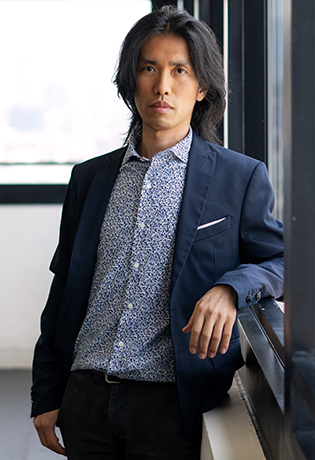
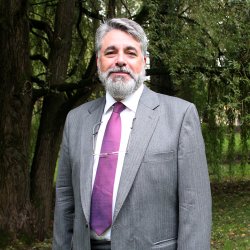
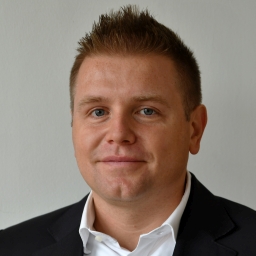
Professor Stefan Bleeck is a Professor of Hearing Science and Technology at the University of Southampton, leading the Hearing and Balance Centre and directing the Institute of Sound and Vibration Research (ISVR). His research focuses on the intersection of hearing science, audiology, and signal processing, with specialties in bio-inspired auditory modeling, speech intelligibility in noise, cochlear implants, and auditory evoked potentials. He holds a PhD in computational neuroscience and has held roles including Head of the Hearing and Balance Centre. Awards include Vice-Chancellor's Teaching Awards (2009) and Google Research Awards (2012). Education: Diploma in Physics (University of Darmstadt, 1995), PhD in Computational Neuroscience (University of Darmstadt, 2000). Research spans experimental, computational, and clinical approaches to improve hearing aids and cochlear implants. Active projects include developing speech enhancement algorithms, antiphasic speech tests for hidden hearing loss, and neural-space speech processing. Supervises multiple PhD students in engineering and computer science. Publications highlight advancements in speech enhancement, bio-inspired models, and cross-linguistic hearing tests. Collaborates with institutions like Google and the European Union on projects funded by EPSRC, Cancer Research UK, and others. His work aims to enhance speech understanding for hearing-impaired individuals through innovative signal processing and auditory modeling.
Ming Li is a Professor of Electrical and Computer Engineering at Duke Kunshan University's Division of Natural and Applied Science, and a Principal Research Scientist at the Digital Innovation Research Center. He holds an adjunct position as a Professor at Wuhan University's School of Computer Science. His research focuses on audio/speech processing, multimodal behavior signal analysis, and applications in autism spectrum disorder diagnosis. Li has over 200 publications and serves on editorial boards of journals like IEEE Transactions on Audio, Speech and Language Processing. Education: Ph.D. in Electrical Engineering from the University of Southern California (2013). Awards include the IBM Faculty Award (2016), ISCA 5-Year Best Paper Award (2018), and Youth Achievement Award (2020). He leads initiatives in anti-spoofing countermeasures, voice conversion, and speech synthesis. Recent Courses: Random Signals and Noise Speech Recognition Data Science Key Research Contributions: Development of datasets like KunquDB, TMCSpeech, and systems for speaker verification, deepfake detection, and autism diagnosis tools. His work bridges signal processing with clinical applications, leveraging AI for social interaction improvement in neurodiverse populations.
Andrea Morichetta is an Associate Professor at the University of Camerino (UNICAM). His research focuses on blockchain technology, smart contracts, and business process management. He explores the integration of blockchain with choreography-based systems, model-driven engineering, and process mining. His work addresses challenges in smart contract testing, distributed systems coordination, and auditability in decentralized applications. Key research areas include: Blockchain-based execution frameworks for BPMN choreographies Mutation testing strategies for Solidity smart contracts Decentralized identity systems using blockchain Event log analysis for Ethereum applications His publications highlight advancements in: Smart contract security and testing methodologies Choreography-driven architectures for IoT and MLOps Formal analysis of business process collaborations He contributes to international conferences and workshops on blockchain, enterprise modeling, and business informatics research. His work bridges theoretical foundations with practical implementations in distributed systems and process automation.
Eleonora Oreggia is a Lecturer in Electronic Music, Computing and Technology at Goldsmiths, University of London. She holds a PhD in Media & Arts Technology from Queen Mary University of London (2020), an MPhil in Cultural Studies from Goldsmiths (2013), and a Laurea (Summa Cum Laude) in Semiotics of Art, Drama, Art and Music Studies (DAMS) from the University of Bologna (2003). Her interdisciplinary work bridges science, humanities, and creative arts, focusing on electromagnetic sensing systems, expressive interaction in electronic music, and the intersection of identity with technology. Teaching roles include convening the BMus/BSc in Electronic Music, Computing and Technology, and courses like Music Computing 1, 2, and Advanced Audiovisual Processing. Her research explores invisible interfaces and electromagnetic fields as artistic tools, blending performance, installation, and live electronic music. She has exhibited globally in museums, festivals, and digital platforms, with notable projects like REBUS - Electromagnetic Interactions and Bamboo Ring Live . Key themes in her work include human-machine relations, perception of reality, and technomagical interfaces. She has collaborated with institutions such as BBC R&D, Jan van Eyck Academie, and founded Nebularosa Records to support experimental music. Her articles and books address topics like instrument design, digital creativity, and the philosophical implications of technology.
Diogo Almeida is an Associate Professor of Psychology and Global Network Associate Professor of Psychology at New York University Abu Dhabi. His research focuses on neurolinguistics and language processing, employing methodologies such as MEG/EEG, fMRI, and cross-linguistic studies. He holds an MSc in Cognitive Science from the Ecole des Hautes Etudes en Sciences Sociales and an PhD in Linguistics from the University of Maryland, College Park. Prior to NYU Abu Dhabi, he held positions at the University of California, Irvine, and Michigan State University. Almeida’s research explores perceptual processes underlying language understanding, including syntactic structure processing, agreement phenomena, and the neural bases of lexical access. His work integrates behavioral experiments with neuroimaging techniques to investigate how linguistic structures are represented in the brain. Key areas include sentence processing selectivity in Broca’s area, cross-linguistic differences in agreement encoding, and the role of phonological and morphological features in real-time language comprehension. His publications span topics like masked priming effects, sociolinguistic influences on speech perception, and the reliability of experimental syntax methods. He leads the Language, Mind and Brain research group at NYU Abu Dhabi, focusing on interdisciplinary approaches to language cognition. Almeida has contributed to debates on empirical rigor in syntax, advocating for robust experimental designs and large-scale data collection to validate theoretical claims.
Agnieszka Roginska is a Professor of Music Technology at the Steinhardt School, New York University, specializing in immersive audio, spatial sound, and auditory displays. Her work integrates acoustic science with virtual reality and medical applications, including postural stability studies for vestibular rehabilitation. She holds leadership roles as AES President-Elect and co-edited the authoritative book 'Immersive Sound'. Education: B.A. in Piano Performance and Computer Applications in Music (McGill University, 1996); M.M. in Music Technology (NYU, 1998); Ph.D. in Music Technology (Northwestern University, 2004). Research focuses on 3D audio technologies, auditory displays for virtual environments, and sensory integration studies. She leads NYU's Music and Audio Research Lab (MARL) and advises the Society for Women in TeCHnology (SWiTCH) at NYU. Awards include AES Fellowship and leadership in international audio engineering societies. Recent publications emphasize audio's role in postural control, distributed music performance frameworks (Holodeck), and VR sound design. Her work bridges technical innovation with artistic applications, including collaborative music systems in mixed reality.
Ryo Ikeshiro is an Assistant Professor at the School of Creative Media, City University of Hong Kong, and co-director of the spatial audio art/research unit SoundLab. His work bridges sound art, computational creativity, and cultural studies through immersive installations, algorithmic audio-visual systems, and sonification techniques. PhD in Creative Practice (Goldsmiths, University of London) MPhil in Music (University of Cambridge) BMus (King's College London) Ikeshiro's research interrogates the materiality of sound through: Multichannel Ambisonics and directional audio Neural network-driven temporal dislocation Sonification of climate data and historical soundscapes Machine learning for artistic interpretation Interplay of identity and technology East Asian ideophonic traditions His 2010-2024 publications and installations reveal cross-disciplinary engagement with: Fractal mathematics in audiovisual art Algorithmic composition systems Interactive installation technologies Sonic cartography Historical memory in sound Collaborative research frameworks SoundLab, which he co-directs, develops spatial audio research at the intersection of: Technical innovation Cultural representation Experimental pedagogy Public engagement International artistic exchange Practice-based research
Wil van der Aalst is a full professor at RWTH Aachen University since 2018, leading the Process and Data Science (PADS) group. He serves as Chief Scientist at Celonis and is part-time affiliated with Fraunhofer FIT . Additional roles include deputy CEO of the Internet of Production Cluster of Excellence , co-director of the RWTH Center for Artificial Intelligence , and speaker of the RWTH ICT Profile Area . Previously, he led the Architecture of Information Systems group at Eindhoven University of Technology (TU/e) until 2017 and was a member of Tilburg University's Board of Governors (2015–2023). Research interests focus on process mining , business process management , Petri nets , and model-based analysis . His work bridges formal methods with real-world applications, influencing software development, standardization committees, and commercial tools like Celonis, SAP, and YAWL. Developed foundational WorkFlow nets (WF-nets) and soundness criteria for workflow modeling Pioneered the Workflow Patterns initiative (with Arthur ter Hofstede and Nick Russell), impacting process modeling standards Founded the YAWL open-source workflow system and ProM process mining framework Chaired steering committees for major conferences (Business Process Management, IEEE Task Force on Process Mining) Scientific honors include IEEE, ACM, and IFIP fellowships, the Alexander von Humboldt Award (2018), and memberships in prestigious academies such as Academia Europaea and the German Academy of Science and Engineering. He has an H-index of 182 (Google Scholar) and over 155,000 citations. He has served on the editorial boards of journals including Business & Information Systems Engineering , IEEE Transactions on Services Computing , and Transactions on Petri Nets and Other Models of Concurrency . He also co-founded the BPM User Group Foundation and led the Data Science Center Eindhoven (DSC/e) until 2017.
Associate Professor Darrin Verhagen is an award-winning sound designer and composer at RMIT University's School of Design, where he teaches in the Sound Design specialization within the Digital Media Program and directs the Audiokinetic Experiments (AkE) Lab. His academic work bridges creative practice with scientific inquiry into multisensory perception. Verhagen's research centers on the neurobiology of aesthetic experience, particularly exploring how sound interacts with vision, movement, and vibration. His work in the AkE Lab utilizes motion simulators, 4D cinema seating, and light to create installations that investigate the relationship between hearing, vision, movement and vibration. His academic background includes postgraduate research on musical extremes - lowercase sound for his Masters and Noise for his Doctorate. His creative output spans sound design for contemporary dance, theatre, installation, film, television and computer games. Verhagen has released over 20 albums internationally and performs audiovisual live shows globally. He was founder and curator of Dorobo records, which showcased Australian sound art for 15 years. Industry collaborations include work with Melbourne Theatre Company, Malthouse, Chunky Move, Australian Dance Theatre, and others. Notable awards include multiple Green Room Awards for Sound Design, Australian Academy of Cinema & Television Arts award finalist status, APRA Art Music awards finalist for experimental music, RMIT Research Award for technical innovation, and RMIT Teaching Award for excellence in teaching practice. Verhagen's supervision projects reveal a trajectory toward increasingly sophisticated explorations of sound in relation to space, perception, and human experience, with recent work focusing on transdisciplinary design, spatial sound applications, distributed audio systems, and vocal ecology. His work consistently bridges artistic practice with technological innovation and scientific inquiry into perceptual phenomena.
Herbert Buchner is a researcher affiliated with the University of Cambridge in the Information Engineering Division , focusing on Machine Learning for Signal Processing and Human-Machine Interfaces . Research Interests : Acoustic scene analysis, biomedical interfaces, haptic systems, wave-domain adaptive filtering, and sensor networks. Applications : Speech recognition, wavefield synthesis, active noise control, and full-duplex communication systems. His work explores TRINICON (a framework for broadband adaptive MIMO filtering), blind source separation, and wave-domain filtering, emphasizing theoretical rigor and real-time implementation. Key Awards : Best Paper Award at ITG Conference on Speech Communication (2008) Best Student Paper Award at IEEE Intl. Workshop on Acoustic Echo and Noise Control (2001) Publications highlight 15 recent articles in areas like: Wave-Domain Adaptive Filtering Blind Source Separation for Convolutive Mixtures Robust Extended Multidelay Filters Multichannel Acoustic Echo Cancellation Active Room Compensation Biomedical Signal Processing
Angela Viora is a Lecturer in European Languages at Monash University, Faculty of Arts, within the School of Languages, Literatures, Cultures and Linguistics. She specializes in Italian Studies, integrating language education with interdisciplinary research in performance, migration, and art. Her teaching spans Italian language, culture, and European studies, and she actively contributes to curriculum innovation, particularly in decolonizing language education. She is based in Melbourne, Australia, and holds a PhD from Monash University in Theatre and Performance. PhD in Theatre and Performance, Monash University (2019) MA in Visual and Performing Arts, Accademia Albertina di Belle Arti di Torino (2012) Academic Diploma (Hons) in Fine Arts and Art History, Accademia Albertina di Belle Arti di Torino (2007) Her research centers on performance studies, migration, embodiment, and space, with a strong emphasis on practice-as-research. She explores identity, belonging, and the socio-political dimensions of art through site-specific and socially engaged performances. Her creative work often addresses the Italian diaspora, domestic space during lockdowns, and the body as a political and emotional site. Her recent publications and artistic outputs show a consistent focus on interdisciplinary performance, pedagogical innovation, and migration narratives. The 2025 monograph The Ecology of the Performance Art Process synthesizes years of practice-led inquiry into fragmentation, union, and reconfiguration in art. Other works like The P.R.omised Land and B.O.D.Y. The Bureau of Domestic Yearning reflect on migration and domesticity through embodied performance. ACIS Publishing Grants Scheme Award (2024) Decolonising and Indigenising European Languages at Monash University: Professional Development of Educators (2024) LLCL Education Funding - Recruiting and retaining students in European Languages (2024) Angela Viora supervises PhD students and is an active researcher in multiple collaborative projects, including the PhotoVOICE initiative with Monash and the University of Padua. She is a member of the Brimbank Arts Advisory Committee and participates in working groups focused on student engagement and decolonizing curricula. Her artistic projects often involve community collaboration and public engagement, reflecting her commitment to socially responsive scholarship.
Cecilio Angulo Bahón is a full Professor at the Polytechnic University of Catalonia (UPC), affiliated with the Barcelona School of Industrial Engineering (ETSEIB) and the Department of Systems, Automatics and Industrial Informatics Engineering . He leads research in Artificial Intelligence and Robotics , with significant contributions to healthcare data analytics, digital twins, and human-robot collaboration. His research spans machine learning for medical data harmonization, generative adversarial networks in health informatics, and evolutionary algorithms for control systems. Recent publications focus on synthetic healthcare data generation, climate-resilient agriculture , and UMAP-based data analysis . His work bridges AI theory with practical applications in industrial and healthcare domains. Scientific awards include the Sant Jordi 2023 Digital Polytechnic Initiative Award . He has supervised doctoral candidates like Carlos Flores-Vázquez and N. Raya, with key collaborations at the IDEAI-UPC Intelligent Data Science and AI Research Group and the Institute of Robotics and Industrial Informatics (CSIC-UPC).
Professor Alan Woodward is a renowned computer security expert at the University of Surrey, affiliated with the Surrey Centre for Cyber Security and Computer Science Research Centre. His career spans academia, government service, and private sector leadership, including pivotal roles in IT businesses like Charteris plc. He holds fellowships and chartered status across multiple prestigious institutions and actively advises governmental bodies such as Europol. Education: Undergraduate studies in Physics & Astronomy Postgraduate research in adaptive filtering and signal recovery at the University of Southampton's Institute of Sound and Vibration Research Research Focus: Woodward's interdisciplinary work bridges cybersecurity, digital forensics, and signal processing. His expertise includes cryptographic methods, steganography for covert communications, digital watermarking for data protection, and novel approaches to forensic computing. Current projects explore quantum computing threats and real-world cybercrime mitigation. Publication Trends: His recent articles demonstrate a strong focus on emerging cyber threats across societal and technical domains. Key themes include quantum cryptography vulnerabilities, organized cybercrime patterns, critical infrastructure risks, mobile/cloud security challenges, and public cybersecurity education with practical guidance for digital safety. Honors & Credentials: Fellow: Institute of Physics, British Computer Society, Royal Statistical Society Chartered Status: Engineer (CEng), IT Practitioner (CITP), Physicist (CPhys) Eur Ing (European Engineer) Leadership & Outreach: Beyond academic research, Woodward directs technology enterprises and leads public STEM engagement. He frequently contributes to international media (BBC, The Times, The Telegraph) as a cybersecurity commentator. His Surrey research teams collaborate with law enforcement and industry partners on threat intelligence initiatives.
Konrad Kowalczyk is an Associate Professor at AGH University of Science and Technology in Krakow, Poland, where he heads the Signal Processing Group within the Faculty of Computer Science, Electronics and Telecommunications. With extensive international experience from institutions including Queen's University Belfast, Stanford University, and Fraunhofer Institute, he has established himself as a leading researcher in audio and speech signal processing. His academic journey includes B.Eng. and M.Sc. degrees from AGH University (2005), a Ph.D. from Queen's University Belfast (2009), and a Habilitation in ICT from AGH University (2020). B.Eng. and M.Sc. in Electronics and Telecommunications, AGH University of Krakow (2005) Ph.D. in Electronics, Queen's University Belfast, UK (2009) Habilitation (D.Sc.) in Information and Communication Technology, AGH University of Krakow (2020) Kowalczyk's research spans multiple cutting-edge areas in audio processing, with particular focus on speech and audio signal processing enhanced by machine learning techniques. His work integrates deep neural networks with traditional signal processing methods to address challenges in array signal processing , speech enhancement , and speaker recognition . The research group he leads explores innovative applications in distributed signal processing for IoT , acoustic event detection , and spatial audio rendering , bridging theoretical advances with practical implementations. His recent publications demonstrate a clear trend toward integrating deep learning with traditional signal processing techniques, particularly in speaker diarization, source separation, and robust speech recognition. The research increasingly focuses on real-world applications requiring reverberation-robust processing , distributed microphone array systems , and end-to-end neural architectures that can operate in challenging acoustic environments. There's a noticeable shift toward more complex, integrated systems that combine multiple signal processing tasks. Stanislaw Staszic Medal for best graduate of AGH (2005) IEEE Best Student Paper Contest finalist (2007) AES Student Technical Paper Award winner (2008) Best Student Paper Award at IWAENC conference (2014) Best Paper Awards at IEEE SPA conferences (2016, 2019) Polish Ministry of Science Scholarship for Distinguished Young Scientists (2016-2019) Prime Minister Award for outstanding scientific achievements (2020) As Principal Investigator, Kowalczyk leads multiple significant research projects including "Acoustic Intelligence" (2024-2028) funded by National Science Center, and "Deep extraction for robust speech recognition" (2023-2028). He has successfully secured funding from prestigious programs including First TEAM from the Foundation for Polish Science, and EU FP7 projects. His research group actively supervises Ph.D., M.Sc., and B.Eng. students, with strong connections to international institutions including Aalto University and IEEE Signal Processing Society. The research output includes numerous journal publications, conference papers, patents, and software implementations that have advanced the field of audio signal processing. Kowalczyk leads the Signal Processing Group at AGH University, which focuses on developing innovative solutions for speech and audio processing challenges. The group maintains strong collaborations with international institutions including Aalto University (Finland), and participates in European research initiatives. Their work spans theoretical development through practical implementation, with applications ranging from medical voice assistants to distributed acoustic sensor networks.
Amitabh Mishra is an Adjunct Professor at the University of Delaware. His research focuses on three core areas: computer-communication networks (wireless architectures, cross-layer design, mobile cloud computing), network performance analysis (stochastic models, numerical optimizations), and network security (vulnerability assessments, authentication protocols). He has contributed to interdisciplinary fields including IoT security, smart healthcare frameworks, and socio-technical systems analysis. His work spans technical domains like wireless sensor networks, tactical network management, and quantum dot material studies, alongside applied research in tourism economics, healthcare data analytics, and educational technology. Notable contributions include frameworks for energy-efficient physiological monitoring, secure IoT configurations, and machine learning-driven security protocols. Recent research highlights include: Developing secure mobile cloud computing paradigms Modeling Multipath TCP capacity bounds using stochastic theory Investigating AI applications for deepfake ethics and tourism marketing His publications span technical journals in computer networks, medical IoT systems, and interdisciplinary studies in cultural tourism and climate change resilience.