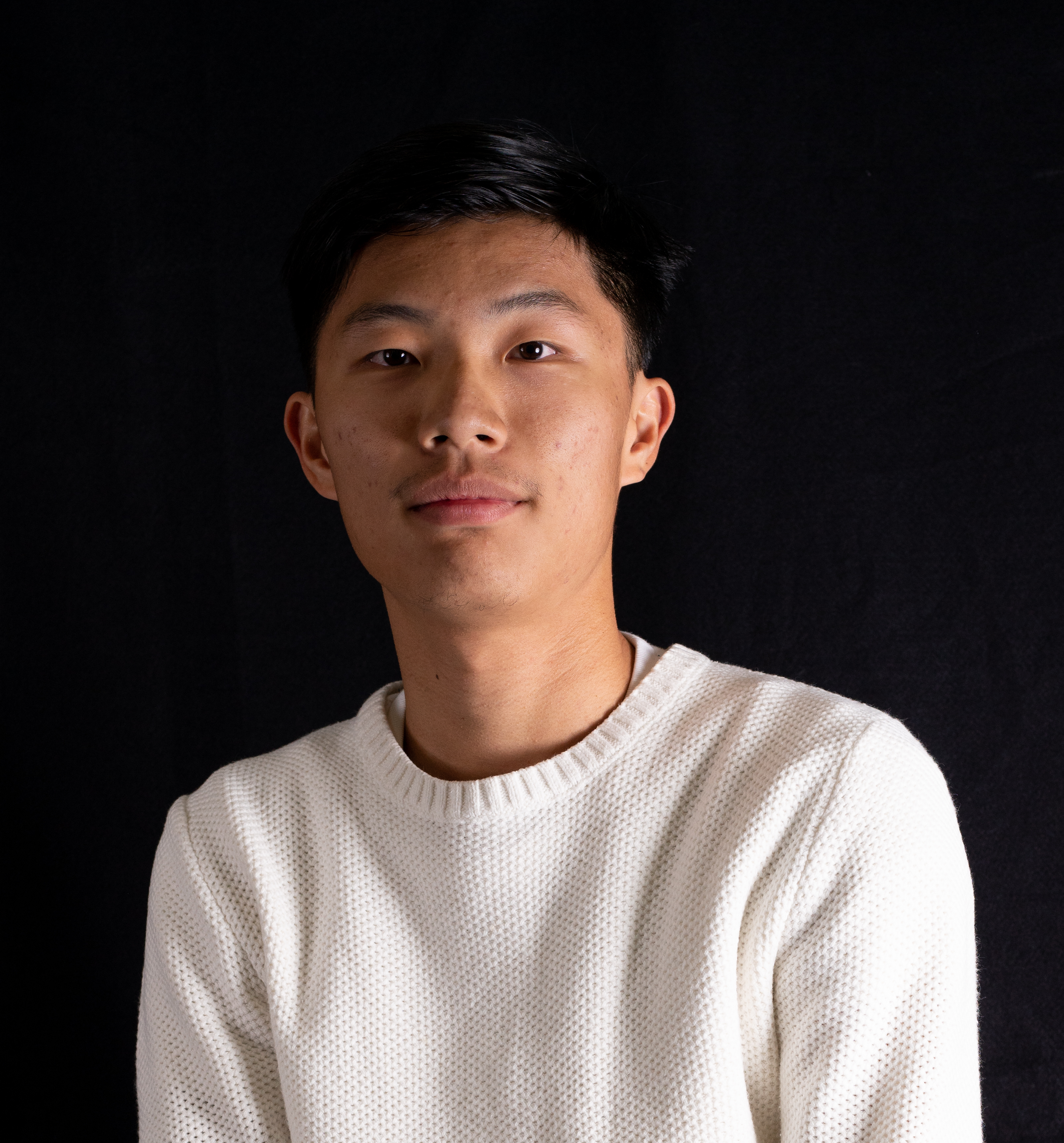
Dr Chris Carignan serves as Programme Director for the Language Science MSc at University College London's Division of Psychology and Language Sciences within the Faculty of Brain Sciences. His research focuses on the intricate mechanisms of human speech production, particularly through cross-linguistic phonetic studies and articulatory dynamics using advanced imaging technologies. PhD in Speech Science Specializes in the intersection of language heritage and phonetic research Develops innovative methodologies for speech data collection and analysis His work spans multiple areas including nasal coarticulation , real-time MRI of vocal tract movements , and cross-linguistic phonetic analysis . He has contributed significantly to understanding how speakers produce complex speech sounds across different languages through comparative studies. Dr Carignan's research has led to the development of open-source tools for speech production analysis and pioneered new approaches for ultrasound articulography . His work on vowel nasalization and sibilant contrasts has been particularly influential in speech science. As Programme Director, he oversees a comprehensive curriculum that provides students with methodological training , statistical expertise , and hands-on research experience while allowing specialization through optional modules. His teaching philosophy emphasizes the importance of curiosity-driven research and interdisciplinary approaches in advancing language sciences.
Srinivas Narayana is an Assistant Professor in the Department of Computer Science at Rutgers University, specializing in programmable networking, formal verification, and systems research. He holds a PhD from Princeton University and a B.Tech from IIT Madras, with postdoctoral work at MIT. His research focuses on building safe, high-performance networks through optimizing compilers, verified programming, and distributed system monitoring. He has received NSF grants, the CGO 2022 Distinguished Paper Award, and the 2017 SIGCOMM Best Paper Award. Education: PhD and MA in Computer Science, Princeton University (2016) B.Tech in Computer Science, IIT Madras (2010) Postdoctoral Research, MIT (2018) Research Interests: His work bridges networking and systems with a focus on compilers, formal methods, and programmable hardware. Notable projects include K2 compiler for eBPF, the eBPF verifier soundness work, and congestion control mechanisms like CCP. He explores parallel packet processing, privacy-preserving analytics, and load balancing strategies. Grants & Awards: NSF Awards #2422076, #1910796, #2019302 eBPF Foundation Grant Facebook Networking Research Award Network Programming Initiative (NPI) Funding Lab & Teams: Leads the NetSys group at Rutgers, collaborating with teams on projects like the eBPF verifier, verified packet processing, and network monitoring tools like Marple. His lab emphasizes open-source contributions and industry collaboration.
Stephen Brooks is a Professor in the Faculty of Computer Science at Dalhousie University, actively contributing to research and education in computer graphics, visualization, and human-computer interaction. He is affiliated with the Human-Computer Interaction, Visualization & Graphics research cluster and currently supervises multiple graduate students on diverse projects. PhD in Computer Science, University of Cambridge (2004) MSc in Computer Science, University of British Columbia (2000) BSc, Brock University (1998) His research focuses on computer graphics and visualization, particularly non-photorealistic rendering, image editing, 3D geospatial systems, ocean visualization, and real-time rendering of natural phenomena. He has also worked in sound synthesis and motion editing. His recent publications show a strong emphasis on visual analytics, network flow visualization, and ocean science applications. His work spans interdisciplinary domains including environmental science, genomics, cybersecurity, and digital art. He has developed visualization tools for ocean science under a major CFREF-funded initiative and created novel methods for rendering stained glass, mixed media art, rivers, and ocean surfaces. His research integrates perception, automation, and user interaction to enhance visual analysis. Notable scientific contributions include work on tone mapping optimization, uncertainty visualization using chromatic aberration, semantic object clouds, and hybrid 2D/3D GIS. His publications appear in top venues such as IEEE TVCG, ACM Transactions, and SIGGRAPH. NSERC Discovery Grants Canada First Research Excellence Fund (CFREF) NSERC CREATE Mitacs Accelerate and Globalink CFI New Opportunities Grant Cyber Security Research and Development Grant He has supervised numerous PhD, Master’s, and undergraduate students in areas including ocean visualization, tone mapping, network security, VR, and geospatial analytics. He teaches courses in Game Design, Visualization, Computer Animation, and Network Computing, emphasizing project-based and interdisciplinary learning. He leads research in visual analytics for network data (FloVis), ocean science, and mixed reality collaboration. His lab develops interactive systems for data exploration in domains ranging from marine biology to cybersecurity. Future work includes expanding ocean-first climate visualization and enhancing mixed presence collaboration in immersive environments.
Tom Mitchell is a Professor of Audio and Music Interaction at the University of the West of England (UWE), Bristol . As leader of the Creative Technologies Laboratory , his research focuses on interactive technologies for creative expression, blending computer science, music, and artificial intelligence. He is the principal investigator for the UKRI Future Leaders Fellowship project "Sensing Music Interactions from the Outside-In" and co-investigator for the Bridge , a £3M creative technology facility. His research spans digital musical instrument design , GPU-accelerated audio processing , and sonification of scientific data . Recent work includes accessibility improvements in virtual environments, AI-driven DMI development, and interdisciplinary collaborations like the MiMU Gloves with Imogen Heap. He also contributes to robotics teleoperation through auditory feedback systems. Selected publications highlight trends in GPU acceleration for audio , generative AI in musical contexts , and human-robot collaboration via sonification. As a software developer , he specializes in C++ and the Juce library , with applications in live performance systems and scientific visualization projects like Soma and danceroom Spectroscopy . UKRI Future Leaders Fellow Active in AHRC and WECA-funded projects Best paper nominations at EvoMUSART and International Faust Conference Mitchell collaborates with institutions including the Bristol Robotics Laboratory , Computer Science Research Centre , and Pervasive Media Studio . His work bridges academic research with commercial applications through ventures like May Productions and x-io Technologies.
Fernando Lopez-Lezcano is a Lecturer at Stanford University's Center for Computer Research in Music and Acoustics (CCRMA) where he has been working since 1993. His work combines music composition, electronic engineering, and programming with a focus on spatial audio and sound diffusion technologies. He was the Edgar Varese Guest Professor at TU Berlin during the Summer of 2008 and is the 2014 winner of Stanford's Marsh O'Neill Award for Exceptional and Enduring Support of Stanford University's Research Enterprise. Lopez-Lezcano's research interests center on computer music, spatial audio technologies, and sound diffusion systems. He has pioneered work in High Order Ambisonics (HOA), developing novel decoders and reverberation architectures for immersive sound environments. His work on the SpHEAR Project has created innovative 3D-printed soundfield microphone arrays, while his development of the GRAIL (Giant Radial Array for Immersive Listening) has revolutionized concert speaker arrays for HDLAs (High Density Loudspeaker Arrays). He has also created numerous open-source tools and software environments for spatial sound composition and diffusion. His recent creative output demonstrates a consistent exploration of 3D sound spatialization, modular synthesis, and interdisciplinary collaborations. Across his compositions, he frequently integrates custom-built hardware like his modular synthesizers (including the famous 'El Dinosaurio' built in 1980-81) with sophisticated software environments written in SuperCollider. His work often bridges acoustic and electronic sound sources, creating rich spatial experiences that explore the relationship between technology and artistic expression. Among his notable achievements is the 2014 Marsh O'Neill Award, recognizing his exceptional support of Stanford's research enterprise. This prestigious award was inspired by Marsh O'Neill, Associate Director of the W.W. Hansen Laboratories, and honors outstanding staff members who support faculty research activities. Lopez-Lezcano has mentored numerous students in the development of musical instruments and performance systems, most notably the 'Ensemble AnaLocos' (Analógicos Locos or 'Crazy Analogs') which created the 'Noise Toaster' synthesizers. He has also developed important infrastructure for CCRMA including 'Planet CCRMA,' a collection of open-source audio software for Linux. His teaching includes the 'Sound in Space' course (Music 222), which covers historical background, techniques, and theory on the use of space in music composition and diffusion. He directs the CCRMA Stage concerts and has been instrumental in developing CCRMA's spatial audio infrastructure, including the GRAIL system used in Bing Concert Hall. His work with the SpHEAR Project has advanced 3D sound recording techniques, while his collaborations with performers like Michiko Theurer (violin) and Chris Chafe (celletto) have produced innovative interdisciplinary performances.
Liang-Yuan 'Leo' Wu is a Researcher at the University of Michigan's Computer Science and Engineering department, working with Prof. Dhruv 'DJ' Jain in the Soundability Lab at the AI Laboratory. He recently completed his Master's degree in Computer Science & Engineering at the University of Michigan. His educational background includes: Master of Science in Computer Science & Engineering, University of Michigan (2022-Present) University of Edinburgh (2021) Bachelor's degree, National Taiwan University (2017-2021) Wu's research centers on human-centered AI solutions for auditory accessibility, with deep collaboration with the Deaf and Hard of Hearing (DHH) community. He develops technologies that leverage multimodal AI and large language models to interpret soundscapes, generate personalized audio descriptions, and enhance captioning systems—particularly in challenging environments like clinical settings where communication accuracy is critical. His work bridges technical innovation with real-world user needs through mixed-methods UX research. His publication trajectory reveals a strategic focus on applying cutting-edge AI models to solve accessibility gaps in sound interpretation and captioning, with increasing emphasis on healthcare applications and community-driven design principles. This represents a significant shift toward context-aware, deployable accessibility tools rather than theoretical frameworks. Wu's research impact is recognized through: BEST POSTER AWARD at ASSETS 2024 for CARTGPT Google Academic Research Award for 'Audio Scene Understanding' proposal While not yet mentoring formal advisees, Wu secures competitive research funding through awards like Google's Academic Research Award and actively collaborates with interdisciplinary teams across HCI, AI, and accessibility domains. His work in the Soundability Lab emphasizes community co-creation with DHH individuals to ensure technologies address authentic user needs rather than theoretical scenarios. The Soundability Lab serves as Wu's primary research environment, focusing on making sound universally accessible through AI-driven innovation. The lab maintains direct partnerships with the DHH community throughout the research lifecycle—from problem identification to solution validation—ensuring technologies are both technically robust and socially impactful.
Ethan Williams is an Assistant Professor at the University of California, Santa Cruz, Department of Earth & Planetary Sciences. His research focuses on distributed acoustic sensing (DAS) applications in seismology, oceanography, and environmental monitoring, particularly studying wave dynamics, subduction geohazards, and ocean-solid Earth interactions. Ph.D. in Geophysics, California Institute of Technology (2023) M.S. in Geophysics, California Institute of Technology (2019) B.S. in Geophysics and B.A. in Music, Stanford University (2017) Research Interests: Williams specializes in DAS technology, subduction zone geohazards, surface wave dynamics, and ocean-solid Earth coupling. His work bridges seismic monitoring, marine geophysics, and environmental sensing. Publication Trends: His recent articles emphasize DAS innovation for offshore seismic monitoring, wave propagation analysis, and integrating fiber-optic data with conventional measurements. Themes include earthquake detection, climate change impacts, and multi-scale ocean dynamics. Scientific Awards: 2022 SSA Student Presentation Award for 'Continuous seismic monitoring of a building over 20 years' Advising & Collaboration: Williams collaborates with institutions like the University of Washington and Caltech, working on NSF-funded projects such as the Ocean Observatories Initiative. He invites prospective students/postdocs to contact him via email.
Prof. Wim Desmet is a full professor at the Faculty of Engineering Science and head of the Department of Mechanical Engineering at KU Leuven . His research focuses on advanced modeling techniques for mechanical systems, including: noise and vibration control in automotive and industrial systems computational acoustics and interval field uncertainty modeling metamaterials for broadband vibroacoustic performance AI-driven diagnostic systems in renewable energy and manufacturing Current research projects address challenges in electric vehicle drivetrains, wind turbine monitoring, and multi-physical digital twin development. He actively contributes to academic governance as: Managing Director of KU Leuven Head of Subdivision HIST Chair of multiple executive committees Member of 15+ academic and administrative councils
Dr. Armin Mustafa is an Associate Professor in Computer Vision and AI at the University of Surrey, where he holds a prestigious Royal Academy of Engineering Research Fellow position. He is affiliated with the Centre for Vision, Speech and Signal Processing (CVSSP), the School of Computer Science and Electronic Engineering, and the Surrey Institute for People-Centred Artificial Intelligence (PAI). His research focuses on developing AI systems for visual understanding of complex dynamic scenes, with applications in entertainment, autonomous systems, and augmented/virtual reality. Dr. Mustafa completed his PhD in general dynamic scene reconstruction from multi-view videos in 2016 from the University of Surrey under the supervision of Prof. Adrian Hilton. Prior to his doctoral studies, he worked for three years (2010-2013) at Samsung Research Institute in Bangalore, India, in the field of Computer Vision. His research expertise spans Computer Vision, Scene Understanding, 3D/4D Vision, Virtual Reality, Light Fields, Machine Learning, Video Captioning, Augmented Reality, Artificial Intelligence, and Audio-visual Video Understanding. Dr. Mustafa has pioneered advances in 4D vision, NLP, and Scene Understanding over the past decade, with a particular focus on enabling machines to model and interpret real-world environments for socially beneficial applications. His work bridges theoretical advances in computer vision with practical applications in media production, virtual reality, and autonomous systems. Analysis of Dr. Mustafa's recent publications reveals a strong focus on multimodal learning, particularly the integration of audio and visual information for scene understanding. His work spans diverse areas including shadow detection and removal, audio event classification, video captioning, person image generation, and dynamic scene reconstruction. A notable trend is his exploration of transformer architectures for both vision and audio tasks, as well as the application of self-supervised learning techniques to reduce dependency on labeled data. Dr. Mustafa has received numerous prestigious awards: 2018 - Research Fellowship, The Royal Academy of Engineering, UK 2017 - Young Researcher award, CVPR 2016 - Doctoral Consortium grant, CVPR 2015 - BMVA travel grant for ICCV 2014 - Set-Squared Research to Innovator grant 2013 - Overseas Research Scholarship, FEPS, The University of Surrey 2010 - Cadence Silver Medal, Indian Institute of Technology, Kanpur As a dedicated mentor, Dr. Mustafa supervises several PhD students working on cutting-edge topics including multi-person reconstruction, audio-visual scene understanding, and automatic storyboard generation. His research is supported by significant grants including a £15 million UKRI Prosperity Partnership with the BBC (AI4ME), a 5-year Royal Academy of Engineering fellowship (4D Vision for Perceptive Machines), and multiple projects with industry partners such as Figment Productions and Foundry. Dr. Mustafa is an active member of the Centre for Vision, Speech and Signal Processing (CVSSP), one of the world's leading research centers in vision, speech, and signal processing. He also contributes to the Surrey Institute for People-Centred Artificial Intelligence (PAI), where he serves as a Surrey AI Fellow. His work often involves collaboration with industry partners and other academic institutions across Europe.
Alexander Refsum Jensenius is a Professor of Music Technology and Director of the RITMO Centre for Interdisciplinary Studies in Rhythm, Time and Motion at the University of Oslo. He also leads the fourMs Lab and co-founded the MishMash Centre for AI and Creativity. His work bridges musicology, psychology, and technology, focusing on embodied music cognition, human motion analysis, and creative applications of AI. Notably, he pioneered research on air guitar motion and human micromotion through projects like the Oslo Standstill Database . Educated at the University of Oslo (BA in Music and Mathematics, MA in Musicology) and Chalmers University of Technology (MSc in Applied IT), Jensenius holds a PhD in Music Technology from UiO. He has held visiting researcher roles at UC Berkeley, McGill University, and KTH. Leadership roles include Department of Musicology Head (2013–2016) and Steering Committee Chair for the International Conference on New Interfaces for Musical Expression (NIME, 2011–2022). Research interests span music-related body motion, AI in creative contexts, and open research practices. Key contributions include the Music Moves and Motion Capture MOOCs, the Musical Gestures Toolbox software, and monographs like Sound Actions and Sonic Design . His work emphasizes interdisciplinary collaboration, with projects addressing ventilation systems' acoustic properties and cell culture vibrational effects. Awards include the European Open Data Champion recognition. He advocates for open science and maintains extensive digital archives of research materials, emphasizing institutional web pages as critical research infrastructure.
Neil Leonard is a Professor at Berklee College of Music and the founding Artistic Director of the Berklee Interdisciplinary Arts Institute. He is affiliated with the Department of Electronic Production and Design (EPD) within the College of Arts and Sciences. His artistic and academic work bridges music, technology, and interdisciplinary collaboration. Ph.D. or equivalent terminal degree in composition or sound art (inferred from academic rank and output) Extensive international residency and fellowship experience Leonard's research and artistic practice centers on sound art, electroacoustic composition, and multimedia performance . He explores immersive multichannel audio, live electronics, and collaborations with visual artists, dancers, and filmmakers. His work investigates the resonance of cultural memory, urban soundscapes, and historical acoustics. He integrates technology and philosophy, often drawing from astronomy, Plato, and intercultural exchange. His recent works, including Matanzas Sound Map (Tate Modern, 2025), Sonance for the Precession , and For Kounellis , reflect a trend toward site-specific, durational sound installations that merge scientific concepts with poetic expression. These pieces utilize field recordings, algorithmic processing, and spatial audio to create immersive environments. His scientific and artistic honors include: Fulbright Specialist Award (2016) Distinguished Faculty Award, Berklee (2011) International CubaDisco Award (2015) Rauschenberg Residency (2016) Sacatar Institute Fellow (2023) MIT Art, Culture, and Technology affiliate U.S. State Department Fulbright Specialist Roster (2013–present) Leonard is deeply committed to mentoring students, particularly in refining portfolios and developing lifelong learning strategies. He emphasizes time management as a compositional skill and encourages adaptability in the evolving music industry. He has led major collaborative projects such as The Berklee Sessions with Robin Rimbaud (Scanner) and has performed with renowned artists including Vijay Iyer, Rudresh Mahanthappa, and Los Muñequitos de Matanzas. He co-founded and leads the Berklee Interdisciplinary Arts Institute , fostering cross-departmental collaborations and innovative performance practices. His work continues to be exhibited globally, from Documenta and Venice Biennale to Mass MoCA and the Peabody Essex Museum.
Professor Ole-Christoffer Granmo is a distinguished academic at the University of Agder, Norway, where he serves as Professor in the Department of Information and Communication Technology. He is the Founding Director of the Centre for Artificial Intelligence Research (CAIR) at the University of Agder, leading cutting-edge research in artificial intelligence and machine learning. Dr. Granmo obtained his master's degree in 1999 and his PhD in 2004, both from the University of Oslo. His academic journey has been marked by significant contributions to the field of AI, most notably the creation of the Tsetlin machine in 2018, for which he received the AI research paper of the decade award from the Norwegian Artificial Intelligence Consortium (NORA) in 2022. Professor Granmo's research primarily focuses on logical and causal world modeling across multiple modalities including images, sound, and natural language. His work spans logical auto-encoding, convolution, regression, transformer architectures, and reinforcement learning, all with the overarching goal of creating ultra-low-power artificial general intelligence through transparent logical learning and reasoning. His publications reveal a strong emphasis on interpretable AI systems, hardware implementations, and applications across diverse domains including cybersecurity, healthcare, social media analysis, and bioinformatics. AI Research Paper of the Decade (2022) - Norwegian Artificial Intelligence Consortium (NORA) Eight paper awards in machine learning Professor Granmo has coordinated over seven research projects and mentored 55+ master's students and nine PhD students. His leadership extends to co-founding the Norwegian Artificial Intelligence Consortium (NORA) and establishing two companies: Anzyz Technologies AS and Tsense Intelligent Healthcare AS. As an advisor at Literal Labs, he actively bridges academic research with practical industry applications, demonstrating his commitment to translating theoretical innovations into real-world solutions that address complex challenges across multiple sectors.
Professor Stefan Bleeck is a Professor of Hearing Science and Technology at the University of Southampton, leading the Hearing and Balance Centre and directing the Institute of Sound and Vibration Research (ISVR). His research focuses on the intersection of hearing science, audiology, and signal processing, with specialties in bio-inspired auditory modeling, speech intelligibility in noise, cochlear implants, and auditory evoked potentials. He holds a PhD in computational neuroscience and has held roles including Head of the Hearing and Balance Centre. Awards include Vice-Chancellor's Teaching Awards (2009) and Google Research Awards (2012). Education: Diploma in Physics (University of Darmstadt, 1995), PhD in Computational Neuroscience (University of Darmstadt, 2000). Research spans experimental, computational, and clinical approaches to improve hearing aids and cochlear implants. Active projects include developing speech enhancement algorithms, antiphasic speech tests for hidden hearing loss, and neural-space speech processing. Supervises multiple PhD students in engineering and computer science. Publications highlight advancements in speech enhancement, bio-inspired models, and cross-linguistic hearing tests. Collaborates with institutions like Google and the European Union on projects funded by EPSRC, Cancer Research UK, and others. His work aims to enhance speech understanding for hearing-impaired individuals through innovative signal processing and auditory modeling.
Ming Li is a Professor of Electrical and Computer Engineering at Duke Kunshan University's Division of Natural and Applied Science, and a Principal Research Scientist at the Digital Innovation Research Center. He holds an adjunct position as a Professor at Wuhan University's School of Computer Science. His research focuses on audio/speech processing, multimodal behavior signal analysis, and applications in autism spectrum disorder diagnosis. Li has over 200 publications and serves on editorial boards of journals like IEEE Transactions on Audio, Speech and Language Processing. Education: Ph.D. in Electrical Engineering from the University of Southern California (2013). Awards include the IBM Faculty Award (2016), ISCA 5-Year Best Paper Award (2018), and Youth Achievement Award (2020). He leads initiatives in anti-spoofing countermeasures, voice conversion, and speech synthesis. Recent Courses: Random Signals and Noise Speech Recognition Data Science Key Research Contributions: Development of datasets like KunquDB, TMCSpeech, and systems for speaker verification, deepfake detection, and autism diagnosis tools. His work bridges signal processing with clinical applications, leveraging AI for social interaction improvement in neurodiverse populations.
Andrea Morichetta is an Associate Professor at the University of Camerino (UNICAM). His research focuses on blockchain technology, smart contracts, and business process management. He explores the integration of blockchain with choreography-based systems, model-driven engineering, and process mining. His work addresses challenges in smart contract testing, distributed systems coordination, and auditability in decentralized applications. Key research areas include: Blockchain-based execution frameworks for BPMN choreographies Mutation testing strategies for Solidity smart contracts Decentralized identity systems using blockchain Event log analysis for Ethereum applications His publications highlight advancements in: Smart contract security and testing methodologies Choreography-driven architectures for IoT and MLOps Formal analysis of business process collaborations He contributes to international conferences and workshops on blockchain, enterprise modeling, and business informatics research. His work bridges theoretical foundations with practical implementations in distributed systems and process automation.