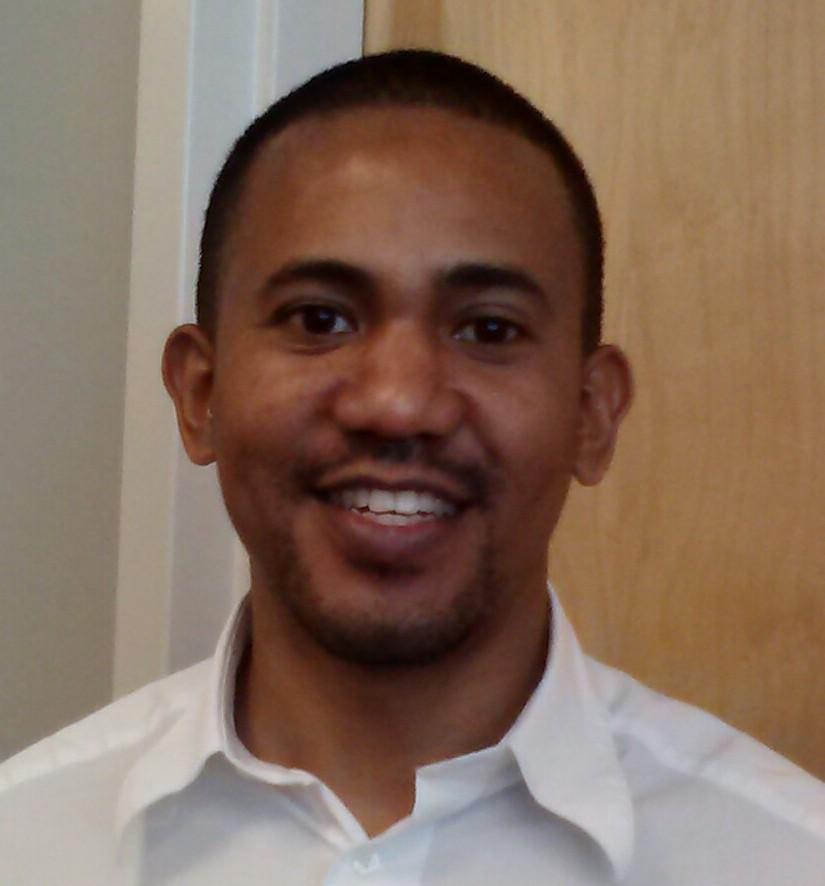
Craig A. Chin is an Associate Professor in the Department of Electrical Engineering at Kennesaw State University. He holds a Ph.D. and M.S. in Electrical Engineering from Florida International University (2006, 2001) and a B.S. in Electrical and Computer Engineering from the University of the West Indies (1995). Research Interests: Digital Signal Processing for Biomedical Applications Machine Learning in Biomedical Signal/Image Analysis Wireless Body Area Networks (WBANs) for Healthcare Network Security in Resource-Constrained Environments Biometric Authentication for Wireless Sensor Networks Innovations in Engineering Education (Cooperative/Active Learning, Humanities Integration) Article Trends: His publications (2001–2019) focus on Biomedical Signal Processing (EMG/Eye-Gaze Integration, Stress Detection), WBANs for mHealth , and Engineering Education Pedagogy . Recent work (2013–2019) emphasizes Cooperative Learning Strategies and Wireshark-based Network Security Labs . Academic Contributions: Craig has taught courses such as Biometrics, Data Communications, Biomedical Instrumentation, and Medical Electronics. He actively explores future research on biometric-driven security for Body Area Sensor Networks and active learning strategies in online education.
Vassilis Christophides is a Professor of Computer Science at the University of Crete and holds an advanced research position at Inria Paris, where he leads work in the MiMove team. His research spans databases, web information systems, big data processing, and IoT analytics, with a strong emphasis on entity resolution, data integration, and scalable data mining. He has supervised numerous research projects funded by the European Union and the Greek State, and has published over 130 articles in top-tier conferences and journals. Research Interests: His primary research areas include Databases, Web Information Systems, Big Data Processing and Analytics, and Information Systems for the Internet of Things. He also focuses on entity resolution, knowledge graphs, streaming data, and explainable AI, particularly in the context of anomaly detection and fairness-aware data systems. His recent work explores hybrid attention models for entity alignment and causal analysis in time series classification. Recent Research Trends: Analysis of his recent publications (2021–2025) reveals a strong focus on entity resolution with fairness constraints, explainable anomaly detection, and adaptive scheduling in IoT edge analytics. He also investigates deepfake detection, crop type mapping using satellite data, and structural bias in knowledge graphs, demonstrating a broad and impactful research portfolio at the intersection of data management and machine learning. Scientific Awards: 2004 SIGMOD Test of Time Award Best Paper Award, ISWC 2003 Best Paper Award, ISWC 2007 Advising and Grants: While specific student names are not listed in the provided texts, Christophides has co-authored numerous papers with researchers such as Vasilis Efthymiou, Ioannis Tsamardinos, and Nikolaos Myrtakis, suggesting active mentorship. He has been the scientific coordinator of multiple EU and national research projects, indicating substantial grant leadership and project management experience. Labs and Teams: He is affiliated with the MiMove team at Inria Paris, a research group focused on mobility and data-intensive systems. His work bridges academic and applied research, leveraging Inria’s infrastructure for large-scale data experimentation and innovation in IoT and edge computing environments.
Nathan Pettit is a Professor of Management and Organizations and Vice Dean for MBA and Graduate Programs at the Leonard N. Stern School of Business, New York University. He is also the George and Edythe Heyman Faculty Fellow and has been at Stern since 2011. He teaches leadership courses in the full-time MBA, NYC Executive MBA, and DC Executive MBA programs. His academic credentials include: Ph.D. in Management, Cornell University, 2011 M.A. in Social-Organizational Psychology, Columbia University, 2006 M.P.S. in Statistics, Cornell University, 2003 B.S. in Statistics, Cornell University, 2002 Nathan's research focuses on social hierarchy, underdogs and favorites, and cross-cultural issues in organizations. He investigates how status influences perception, motivation, and behavior in competitive and organizational settings. His work bridges management, psychology, and behavioral science, often exploring the cognitive and emotional dynamics of power and competition. The 15 most recent articles reflect a consistent focus on hierarchical dynamics, status perception, and competitive mindsets. They span disciplines including organizational behavior, psychology, and general science, with publications in top journals such as Academy of Management Journal , Organization Science , PNAS , and Psychological Science . The research reveals how high-status individuals perceive the world more positively, how underdogs and favorites adopt different motivational strategies, and how these dynamics shape organizational and societal outcomes. His scientific awards include: Named one of Poets & Quants '40 most outstanding MBA professors under 40' Stern’s Distinguished Teaching Award 'Professor of the Year' by MBA students (twice) 'Great Professor' by EMBA graduates (four times) Nathan actively contributes to academic leadership and student development. He serves on the editorial boards of Academy of Management Discoveries and Organizational Behavior and Human Decision Processes . He is the founding director of the NYU Stern Leadership Accelerator, pioneering experiential learning through live case models. He also mentors students as the faculty representative for the Stern Chats podcast. While specific advisees are not listed, his role as a PhD-trained professor and program leader implies significant advising and mentorship responsibilities. He has likely secured research grants supporting his work on status and competition, though specific grants are not detailed in the text. He is central to the Leadership Accelerator initiative, which integrates faculty, students, and coaches to develop leadership skills through real-world challenges. This team-based approach emphasizes experiential learning and behavioral development, positioning Stern at the forefront of innovative business education.
Sal Hagen is a postdoctoral researcher at the Institute for Logic, Language and Computation (ILLC) at the University of Amsterdam, working within the Natural Language Processing & Digital Humanities group. His research focuses on the intersection of computational methods and cultural analysis, particularly examining online communities, political discourse, and meme culture. His educational background includes a Research Master's in Media Studies from the University of Amsterdam, for which he received the prestigious 2018 Internet Thesis Prize in the Internet & Social Sciences or Humanities category for his work "Here I Am, Praying to an Egyptian Frog: Exploring Political Fluidity on 4chan/pol/". He also won the Audience Award for his presentation at the ceremony. Hagen's research interests center on understanding the dynamics of online communities, with particular expertise in 4chan and related platforms. His work combines qualitative and quantitative approaches to analyze political discourse, far-right movements, and the evolution of memes across digital spaces. He examines how anonymity, platform architecture, and cultural context shape online interactions and political expression. His publication record demonstrates a consistent focus on tracing political movements through digital footprints, with particular attention to the interplay between platform-specific cultures and broader political trends. Hagen's work often bridges computational social science with cultural studies, creating methodologies that capture both the quantitative patterns and qualitative meanings of online discourse. Scientific Awards: 2018 Internet Thesis Prize (Internet & Social Sciences or Humanities category) Audience Award for presentation at Internet Thesis Prize ceremony Hagen has secured significant research funding, including an NWO PhD grant for humanities research running from 2019-2024. He has been involved in multiple research projects including the CAT4SMR project (2024), OILab (2017-present), and the ERC-funded ODYCCEUS project (2018-2019). As part of OILab (Online Intelligence Lab), Hagen contributes to research on online political subcultures, while his work on the CAT4SMR project focuses on stabilizing and developing tools for social media data collection and analysis. He is also the developer of the 4CAT Capture and Analysis Toolkit, which provides transparent and traceable methods for social media research.
Wendy Meiring is a Professor in the Department of Statistics and Applied Probability at the University of California, Santa Barbara. Her research focuses on statistical methods for analyzing complex data in neuroscience, environmental science, and biomedical applications. She specializes in spatial and temporal processes, computational statistics, machine learning, and uncertainty quantification. Her work integrates advanced statistical techniques with real-world challenges, such as analyzing brain imaging data, pharmacokinetic models, and environmental monitoring. She has contributed to methodologies for functional data analysis, clustering-based correlation estimation, and spatial-temporal modeling. Dr. Meiring has published extensively in top journals, including The Journal of Computational and Graphical Statistics , focusing on topics likeFréchet regression, pharmacokinetic modeling, and environmental phenology. Her research bridges theoretical statistics with practical applications in health, neuroscience, and ecology. She collaborates across disciplines, contributing to programs like the Interdepartmental Graduate Program in Dynamical Neuroscience at UCSB. Her lab develops innovative statistical tools for analyzing high-resolution datasets, emphasizing reproducibility and methodological rigor.
José Manuel Ferreira Machado is a Full Professor at the Department of Informatics, School of Engineering, University of Minho, where he has been affiliated since 1988. His research integrates Artificial Intelligence, Medical Informatics, and Data Mining, with applications in healthcare, industrial systems, and public services. He founded ALGORITMI's 'Knowledge Engineering' group and served as Director of the ALGORITMI R&D Center (2018-2024). Education: Agregado in Informatics (AI), Universidade de Trás-os-Montes e Alto Douro (2011-2012) PhD in Informatics (AI), Universidade do Minho (1995-2002) Licenciatura in Systems and Informatics Engineering, Universidade do Minho (1982-1988) Research Interests: Machado's work focuses on intelligent systems for healthcare (e.g., AIDA medical platform), industrial automation, and smart cities. He emphasizes real-world applications, including clinical decision support, predictive maintenance, and sustainable urban infrastructure. Publications: His recent articles (2022-2025) demonstrate a strong focus on healthcare AI (e.g., disease prediction, COVID-19 analytics) and smart systems (e.g., traffic optimization, energy sustainability), utilizing data mining and machine learning. Awards: Hospital of the Future (2007, 2008, 2009) Good Practices in Health (2014) Portugal Digital Awards (2016) IHF Awards (2021) Advising & Grants: Supervised 16 PhD, 101 MSc, and 4 post-doc students. Leads sub-projects in PRR agendas GReenAuto and Be.Neutral. Secured funding from FCT, EU, and industry partners (e.g., Bosch) for 50+ projects. Labs & Teams: Coordinates the 'Knowledge Engineering' research group at ALGORITMI, focusing on intelligent decision support and interoperability in healthcare and industry.
Professor Ole-Christoffer Granmo is a distinguished academic at the University of Agder, Norway, where he serves as Professor in the Department of Information and Communication Technology. He is the Founding Director of the Centre for Artificial Intelligence Research (CAIR) at the University of Agder, leading cutting-edge research in artificial intelligence and machine learning. Dr. Granmo obtained his master's degree in 1999 and his PhD in 2004, both from the University of Oslo. His academic journey has been marked by significant contributions to the field of AI, most notably the creation of the Tsetlin machine in 2018, for which he received the AI research paper of the decade award from the Norwegian Artificial Intelligence Consortium (NORA) in 2022. Professor Granmo's research primarily focuses on logical and causal world modeling across multiple modalities including images, sound, and natural language. His work spans logical auto-encoding, convolution, regression, transformer architectures, and reinforcement learning, all with the overarching goal of creating ultra-low-power artificial general intelligence through transparent logical learning and reasoning. His publications reveal a strong emphasis on interpretable AI systems, hardware implementations, and applications across diverse domains including cybersecurity, healthcare, social media analysis, and bioinformatics. AI Research Paper of the Decade (2022) - Norwegian Artificial Intelligence Consortium (NORA) Eight paper awards in machine learning Professor Granmo has coordinated over seven research projects and mentored 55+ master's students and nine PhD students. His leadership extends to co-founding the Norwegian Artificial Intelligence Consortium (NORA) and establishing two companies: Anzyz Technologies AS and Tsense Intelligent Healthcare AS. As an advisor at Literal Labs, he actively bridges academic research with practical industry applications, demonstrating his commitment to translating theoretical innovations into real-world solutions that address complex challenges across multiple sectors.
Dr. Oliver Guidetti serves as a Level A Lecturer in Psychology at the University of Wollongong, specializing in human factors, cyber vigilance, and applied cognitive science. His interdisciplinary research bridges psychology, cybersecurity, and artificial intelligence to address critical challenges in human-machine collaboration and security operations environments. His educational foundation includes: Bachelor of Mathematics from Edith Cowan University (2011-2014) Bachelor of Science in Psychology from Edith Cowan University (2011-2014) Bachelor of Science (Psychology Honours) from Edith Cowan University (2015) Doctor of Philosophy from Edith Cowan University (2019-2022) Guidetti's research centers on the cognitive and physiological dimensions of human performance in security contexts. He investigates how eye-tracking, biometric monitoring, and neuroergonomic approaches can optimize vigilance in cybersecurity operations, while exploring socio-technical impacts of AI on human decision-making. His work extends to digital relationship literacy and AI bias mitigation, demonstrating applications across defense, healthcare, and industrial settings through collaborations with the Department of Home Affairs and Western Australian Cyber Defence Taskforce. His 2023-2024 publications reveal a cohesive research trajectory focused on cyber vigilance task design, human-AI teaming frameworks, and neuroergonomic validation methods. The corpus shows increasing integration of biometric data with cognitive theory to develop real-time performance assessment tools, alongside growing attention to ethical AI governance and cross-sector resilience in critical infrastructure protection. As an educator, Guidetti supervises Honours and PhD students in human factors and AI-driven research while teaching psychology research methods and cybersecurity applications. He co-developed an Australian Psychological Society-certified professional development course for psychologists entering cybersecurity fields, demonstrating his commitment to translating research into industry practice. His professional leadership includes advising on cyber vigilance frameworks, developing AI bias mitigation strategies, and serving on APS committees focused on digital psychology applications. Current projects involve designing AI-driven dating simulators for relationship literacy interventions and creating certified training programs for security operations personnel.
Victor M. Preciado is a Professor in the Department of Electrical and Systems Engineering at the University of Pennsylvania. His research focuses on network science , control theory , and graph signal processing . Research Interests: Modeling and controlling spreading processes on complex networks Optimization algorithms for time-varying systems Applications in public health and cyber-physical security Selected Publications: Recent work includes machine learning for operator inference (2022), hybrid systems stability analysis (2021), and pandemic modeling frameworks (2021). Earlier contributions focus on spectral analysis of epidemics (2009-2016) and geometric optimization (2014).
Dr. George O'Mahony serves as Head of Department of Computer Science at Munster Technological University (MTU) and is a CONNECT Associate Investigator with Research Ireland. He leads Ireland's Cyber Range infrastructure development and acts as WorldSkills Ireland Expert for Cybersecurity Skill 54, driving national cybersecurity initiatives through academia-industry collaboration. Education: B.E. in Electrical and Electronic Engineering, University College Cork (UCC) Ph.D. in Electrical and Electronic Engineering, University College Cork (UCC), 2021 His research pioneers cyber resilience frameworks for OT/IoT systems, zero-trust architectures, and machine learning applications in anomaly detection. He develops low-complexity security solutions for resource-constrained edge devices, with emphasis on wireless sensor networks, GPS applications, and penetration testing methodologies. His work bridges theoretical innovation with practical infrastructure implementation. Recent publications reveal accelerating focus on quantum-resistant cryptography, MQTT-ZT secure brokers, and unified cyber resilience models. His scholarly output consistently addresses interference detection in wireless networks while expanding into satellite communications security and AI-driven network customization, reflecting strategic adaptation to emerging cyber threats. Research Leadership: CONNECT: Associate Investigator advancing cyber security research NCF Cyber Shock: Co-Principal Investigator Cyber Explore: Principal Investigator at MTU Cyber Range: National infrastructure lead (mobile/cloud) Horizon Telemetry: Core research team member As STEM advocate and Cyber Futures Academy contributor, O'Mahony shapes cybersecurity education through WorldSkills Ireland engagement and industry-focused cyber range deployments that serve academic, governmental, and commercial sectors.
Anand Mohan is an Associate Professor at the University of Georgia , affiliated with the College of Agricultural & Environmental Sciences and the Department of Food Science and Technology . He can be contacted at anandmohan@uga.edu or via mail at 0129 Food Science Building, Athens, GA 30602. Research focuses on food ingredient innovation and meat product safety Teaches courses in food science and meat product development Developed the Food Product & Ingredient Innovation Lab Active in food chemistry and oxidation stability studies His research interests include food product development , physicochemical characterization , and meat safety . He explores oxidation reactions in muscle foods, antimicrobial interventions , and valorization of food byproducts . Recent work emphasizes plant-based meat analogs , edible flowers , and starch-based fortification . Recent publications highlight trends in food chemistry (e.g., lipid aldehyde detection), plant-based food innovation (culinary techniques and packaging), and starch modification . He also investigates meat preservation and enzymatic stabilization of food ingredients.
Dr. Xinqun Zhu is an Associate Professor at the University of Technology Sydney (UTS) in the School of Civil and Environmental Engineering . He has held academic positions at Western Sydney University (2016-2017), University of Western Australia (2005-2009), and University of Manchester (2001-2005). His research spans structural health monitoring, steel-concrete composite structures, physics-informed machine learning, and advanced sensor systems.
Michael Wallace serves as an Assistant Professor at Boston University, leading research at the intersection of basal ganglia circuitry, motivated behavior, and synaptic transmission mechanisms. His work addresses fundamental questions about neural control of goal-directed actions and their disruption in neurological disorders. Education: Ph.D. in Neurobiology from the University of North Carolina at Chapel Hill Dr. Wallace's research program centers on genetically defined circuits within the basal ganglia, investigating how these structures guide motivated behaviors and motor control. His laboratory employs a sophisticated multidisciplinary toolkit including in vivo electrophysiology, optogenetics, molecular genetics, computational modeling, and behavioral assays. Key research themes encompass neurotransmitter cotransmission (particularly GABA/glutamate interactions), synaptic vesicle dynamics, and circuit-level pathophysiology in conditions ranging from Parkinson's disease to addiction. The lab's long-term mission targets therapeutic interventions through mechanistic understanding of neural circuit dysfunction. Analysis of his publication record reveals consistent focus on multitransmitter neurons and basal ganglia microcircuitry since 2011, with increasing emphasis on entopeduncular nucleus function and neurotransmitter co-packaging mechanisms. His work demonstrates methodological evolution from anatomical and transcriptional profiling toward real-time circuit interrogation using optogenetic and electrophysiological approaches. The Wallace Lab operates as a dynamic neuroscience research hub, integrating expertise across molecular, cellular, and systems levels. Current investigations leverage cutting-edge techniques to dissect how specific basal ganglia pathways process motivational signals and motor commands, with particular attention to disease-relevant perturbations. This systems neuroscience approach bridges fundamental circuit mechanisms with translational applications for neurological and psychiatric disorders.
Dr. Georgiana Ifrim is an Associate Professor at the School of Computer Science, University College Dublin , where she serves as Director of Graduate Research and Co-Lead of the SFI Centre for Research Training in Machine Learning (ML-Labs). She holds concurrent appointments as an SFI Funded Investigator at the Insight Centre for Data Analytics and VistaMilk SFI Research Centre . Her academic journey includes postdoctoral research at Insight Centre, Cork Constraint Computation Centre (4C), and Aarhus University's Bioinformatics Research Centre (BiRC). Education: BSc in Computer Science, University of Bucharest, Romania MSc and PhD in Informatics, Max-Planck Institute for Informatics, Germany Dr. Ifrim specializes in scalable predictive modeling for diverse applications including: Sequence learning (DNA analysis, time series) Real-time prediction for streaming data (news/social media, energy) Interpretable machine learning models Knowledge graph exploitation (WordNet/Yago, Naga) Wearable sensor data analysis (sports science, health monitoring) Energy price forecasting for sustainable systems Her recent publications focus on time series explainability (TSHAP, tsCaptum), multivariate analysis (scalable channel selection), and healthcare applications (fall detection, walking speed estimation). Key contributions include open-source tools like SEQL (sequence learner) and Twitter-Topics (event detection). Scientific Awards: Winner of SNOW@WWW14 Data Challenge As Director of Graduate Research, she oversees advanced academic training while leading funded projects at the intersection of machine learning , real-time analytics , and domain-specific applications in agriculture, healthcare, and digital journalism. Her research group maintains active GitHub repositories with open-source implementations.
Professor Ahmet Bindal is a faculty member in the Department of Computer Engineering at San José State University . He earned his B.S. in Electrical Engineering from Bogazici University, Turkey, followed by M.S. and Ph.D. degrees from the University of California, Los Angeles. Industry Experience : 20 years at IBM, Intel, Philips, and Cadence Design Systems. Current Research : Nano-scale electron devices, silicon nanowire transistors, robotics, and VLSI architecture. Research Trends : His work focuses on silicon nanowire transistors for VLSI, FPGA, and robotics. Key themes include low-power/high-speed integrated circuits , dynamic logic design , neuromorphic engineering , and advanced semiconductor processing . Patents and Publications : He holds four U.S. patents (three with IBM, one with Intel). His 30+ journal and conference publications span nanowire transistors, FPGA architecture, robotics, and semiconductor process modeling. Teaching Contributions : Developed an undergraduate System-on-Chip (SoC) course and a MOSFET design laboratory at SJSU. Books Authored : Fundamentals of Computer Architecture and Design (Springer, 2017). Electronics for Embedded Systems (Springer, 2017). Silicon Nanowire Transistors (Springer, 2017).