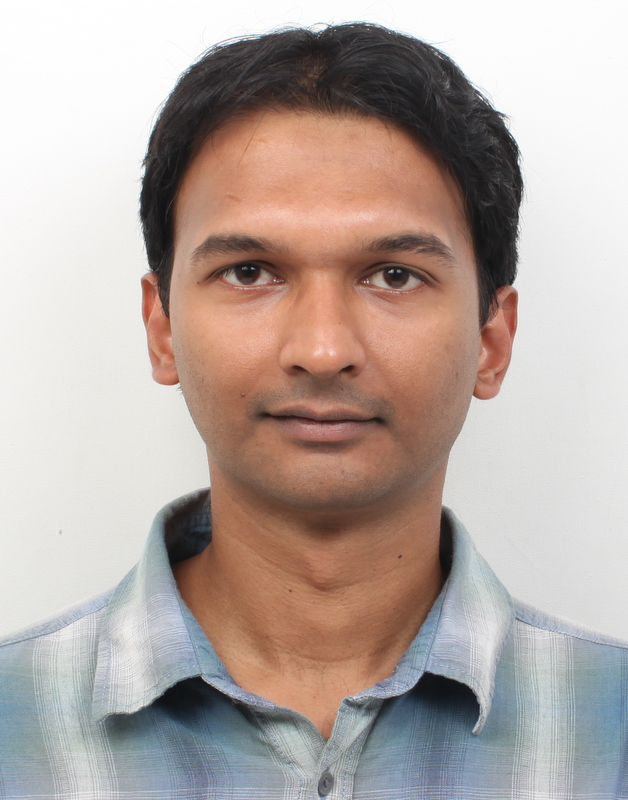
Shivaram Kalyanakrishnan is an Associate Professor at the Department of Computer Science and Engineering , Indian Institute of Technology Bombay , specialising in Artificial Intelligence and Machine Learning . His research spans sequential decision making , multiagent learning , multi-armed bandits , and humanoid robotics , with applications in robot soccer , computer games , and online advertising . He teaches advanced courses like CS 747: Foundations of Intelligent and Learning Agents and CS 748: Advances in Intelligent and Learning Agents , focusing on end-to-end system design and theoretical analysis. His scientific awards include the Best Student Paper Award at RoboCup International Symposium 2006 and nomination for Best Student Paper Award at AAMAS 2007 . His work on reinforcement learning and policy iteration has been published in leading venues such as IJCAI , ICML , and COLT , with recent contributions to railway scheduling and bandit algorithms. While no explicit list of advisees is provided, his research projects and publications suggest mentorship of students in collaborative efforts. Contact : shivaram@cse.iitb.ac.in .
Soumya Dutta is an Assistant Professor in the Department of Computer Science and Engineering at the Indian Institute of Technology Kanpur (IITK), where he leads the INSIGHT: Intelligent Scientific and Visual Computing of Big Data Research Group. He joined IIT Kanpur in October 2022 after working as a Scientist II at Los Alamos National Laboratory (LANL) from July 2019 to August 2022, and previously as a Postdoctoral Research Associate at LANL from June 2018 to July 2019. His educational background includes a Ph.D. and M.S. in Computer Science and Engineering from The Ohio State University (2011-2018), where he was part of the GRAVITY research group, and a B.Tech. in Electronics and Communication Engineering from West Bengal University of Technology, India (2005-2009). Research Interests: Dr. Dutta's research focuses on the intersection of machine learning, visual computing, big data, and high-performance computing. His primary research areas include Machine Learning for Visual Computing and Image Analysis, Big Data Visualization and Analytics, Data Science and HPC, Machine Learning for Scientific Computing, and Explainability and Interpretability of AI Models. His work addresses various big data characteristics including the 5 Vs: Volume, Velocity, Variety, Veracity, and Value. He develops techniques that make complex machine learning models more interpretable and explainable, enabling their effective adoption in real-life applications across scientific domains, social media, IoT, healthcare, and industry applications. Dr. Dutta's research group has secured multiple funded projects including: DAVi: An Intelligent Data Analytics and Visualization Framework (funded by ISRO), Intelligent Visual Computing of Extreme-scale Data for Accelerating Scientific Discovery (IIT Kanpur Initiation Grant), Enabling Interactive Big Data Analytics and Visualization at Exascale (SERB), Development of AI-Enabled National Portal for Efficient Search of Missing People (C3iHub), and Proactive and Generalized Deepfake Defense Mechanisms (C3iHub). Best Reviewer, Honorary Mention Award for IEEE Transactions on Visualization & Computer Graphics (TVCG), 2021 Best Paper Award at ISAV 2021, co-located with Supercomputing (SC) LAAP Award at Los Alamos National Laboratory, 2021 Best Paper Award at TopoInVis 2019 Best Paper Award at ISAV 2018, co-located with Supercomputing (SC) Best Poster Award in 12th Annual CSE Student Poster Exhibition, The Ohio State University, 2018 Best Poster Award in 11th Annual CSE Student Poster Exhibition, The Ohio State University, 2017 Best Paper Honorable Mention Award at IEEE Visualization Conference (IEEE VIS) 2016 Dr. Dutta actively mentors a large group of students including Ph.D., M.Tech., and B.Tech. students. His current Ph.D. students include Shanu Saklani, Sankhadeep Bhowmick, Ananya Chaturvedi, Arpita Santra, Anubhav Dixit (co-supervised), and Robin Shah. He has supervised numerous M.Tech. students with thesis topics ranging from uncertainty-aware neural networks to deepfake detection. Dr. Dutta currently teaches courses including CS360 - Introduction to Computer Graphics and CS661 - Big Data Visual Analytics. The INSIGHT research group collaborates internationally with researchers from Meta, Oak Ridge National Laboratory, and National Taiwan Normal University. The group's work focuses on building machine learning and data science-based solutions to analyze large-scale multifaceted data in a scalable way, enabling interactive and interpretable analytics of complex data from scientific simulations, social media, IoT, healthcare, and other application domains.
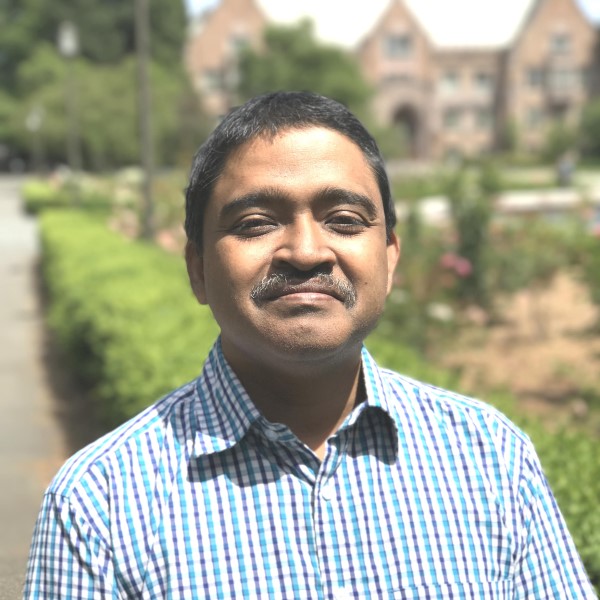
Kishalay Mitra is a Professor at the Indian Institute of Technology Hyderabad , with affiliations to the Department of Chemical Engineering , Department of Climate Change , and Department of Artificial Intelligence . He also holds visiting professorships at Washington University in St. Louis and University of Washington, Seattle . His work in the Global Optimization & Knowledge Unearthing Laboratory (GOKUL) spans interdisciplinary optimization, machine learning, and their applications in industrial-scale engineering problems. Education : Ph.D. from IIT Bombay. Research Interests : Mitra's research focuses on optimization under uncertainty , surrogate modeling , multi-objective optimization , and integrating machine learning with physics-based models . His work addresses real-world challenges in wind energy , bioenergy supply chains , chemical process control , nanoscience , and environmental modeling (e.g., PM10 spatiotemporal analysis, forest fire prediction, and carbon capture). Article Trends : His recent publications emphasize wind energy systems (layout optimization, yaw control, forecasting), materials science (precipitate growth prediction, polymerization), and industrial processes (crystallization, grinding circuits). Techniques include neural operators , Bayesian optimization , generative adversarial networks (GANs) , and explainable AI .
Roop Aparajita Subhra Purushottam is an Associate Professor in the Department of Computer Science and Engineering at the Indian Institute of Technology Kanpur. His research focuses on machine learning foundations and applications, particularly in extreme classification, optimization techniques, robust learning, and educational technology. He has developed scalable algorithms for web-scale applications and innovative teaching tools for programming education. His research interests span: Design and analysis of machine learning algorithms Statistical learning theory and online optimization Non-convex optimization for large-scale problems Robust learning against adversarial corruptions Applications in information retrieval, education, and environmental monitoring Recent publications demonstrate a strong focus on extreme classification techniques, efficient deep learning architectures, and educational technologies. His work consistently appears in top-tier conferences including KDD, ICML, NeurIPS, and CVPR, with innovations in scaling machine learning systems to handle millions of labels and users. Significant Awards: Gopal Das Bhandari Distinguished Teacher Award (2024) PK Kelkar Faculty Fellowship (2024-2027) Microsoft Bing Ads Greatness Award (2021) Computer Society of India Faculty Award (2018) Multiple best paper awards and nominations at major conferences He leads several research grants and consults for industry partners including Microsoft Research and Tower Research. His team develops open-source tools like Prutor for programming education and DEFRAG for efficient feature agglomeration in extreme classification. He has advised numerous PhD and Master's students who have received prestigious awards for their research contributions.
Naren Naik is a Professor in the Department of Electrical Engineering at the Indian Institute of Technology (IIT) Kanpur, specializing in computational tomographic reconstructions and analysis for subsurface imaging and shape/target tracking. His educational background includes: PhD from the Indian Institute of Science (IISc) Bangalore in 2000 M.E. in Electronics and Communication Engineering from IISc Bangalore in 1992 B.Sc. from Bangalore in 1988 Professor Naik's research focuses on development and analysis of reconstruction algorithms for nonlinear tomography , with particular emphasis on shape-based and dynamic tomography, tracking and battlefield surveillance, and numerical solutions to partial differential equations in electromagnetics. His work spans multiple imaging modalities including subsurface imaging with Ground Penetrating Radar (GPR), fluorescence optics, electrical impedance tomography, and photoacoustic tomography. His research bridges theoretical mathematics with practical applications in electromagnetic imaging and target tracking systems, addressing complex inverse problems in computational imaging. His publication record shows a clear progression from electromagnetic tomography to advanced Kalman filtering techniques for target tracking applications. The most recent works focus on wireless sensor networks and maneuvering target tracking, demonstrating his ability to adapt theoretical frameworks to evolving technological contexts while maintaining mathematical rigor in solving inverse problems. His professional recognition includes: Invited presentation at the special session on advances in model based inversion at the 2011 IEEE AP-S International Symposium on Antennas and Propagation Professor Naik maintains an active research program with consistent publication output in high-impact journals and conferences. His work demonstrates strong interdisciplinary collaboration, particularly with researchers in electromagnetics, signal processing, and imaging sciences. His research has significant applications in defense technology (battlefield surveillance), medical imaging, and subsurface exploration systems, contributing to both theoretical advances and practical implementations in these fields. He is based in Office 303A ACES (Advanced Centre for Electronic Systems) at the Department of Electrical Engineering, IIT Kanpur, where he leads research activities in computational imaging and tomographic reconstruction.
Dr. Triratna Muneshwar is an Assistant Professor in the Department of Metallurgical Engineering and Materials Science at the Indian Institute of Technology Bombay (IIT Bombay), where he has been serving since November 2021. His research focuses on advanced thin film deposition techniques, particularly atomic layer deposition (ALD) and atomic layer etching (ALE), for next-generation semiconductor devices. Ph.D. in Materials Engineering, University of Alberta, Canada (2014) Dual Degree (B.Tech & M.Tech) in Metallurgical Engineering and Materials Science, IIT Bombay (2009) His research interests lie at the intersection of materials science and semiconductor technology, with a strong emphasis on modeling and experimental analysis of vacuum thin film processes. He investigates atomic layer deposition of oxides, nitrides, and metals, surface reaction kinetics , dopant distribution in thin films , and parasitic reactions in high-aspect-ratio structures . His work bridges lab-scale innovation to industrial fabrication (Lab-to-Fab). Dr. Muneshwar's publications reveal a consistent focus on improving the precision, efficiency, and scalability of ALD processes. His work spans plasma-enhanced ALD , precursor chemistry , in-situ characterization , and numerical modeling of growth mechanisms. Key themes include precursor utilization optimization, nucleation control, and material characterization for logic and memory applications. Scientific recognitions include: Featured Article, Journal of Applied Physics (2016) Editors Pick, Journal of Applied Physics (2018) U.S. Patent on precursor utilization in pulsed ALD processes Dr. Muneshwar has mentored research at the postdoctoral and associate levels and continues to build a research program involving graduate students and collaborative projects. His prior experience includes a Postdoctoral Research Fellowship and Research Associate role at the University of Alberta. He is actively involved in advancing ALD/ALE technologies with industrial relevance. His research is conducted within the MEMS department at IIT Bombay, leveraging advanced fabrication and characterization facilities. He collaborates with teams working on semiconductor materials, nanofabrication, and process modeling, contributing to India's growing expertise in microelectronics and advanced materials.
R.K. Shyamasundar is a Professor at the Indian Institute of Technology Bombay , with a focus on Real-Time and Reactive Programming, Logic Programming, Pi-Calculus, and Parallel Programs. Research spans formal verification, concurrency, and distributed systems. Key contributions include RT-CDL semantics, Esterel language extensions, and hybrid system controller synthesis. Scientific awards include JC Bose National Fellow, Fellowships at Indian Academy of Sciences and Indian National Science Academy, and Senior Membership in IEEE. His work involves collaborations with institutions like TCS Group and researchers such as Basant Rajan, N. Raja, and Deepak Kapur.
Dipak Kumar Giri is an Assistant Professor in the Department of Aerospace Engineering at the Indian Institute of Technology Kanpur (IIT Kanpur). He received his PhD from IIT Kharagpur and has established himself as a specialist in aerospace control systems with a focus on satellite attitude dynamics and control. Dr. Giri's educational background includes a doctoral degree from IIT Kharagpur, one of India's premier technical institutions. His academic journey reflects a strong foundation in aerospace engineering principles and control theory, which has enabled his transition from research engineer to faculty position at IIT Kanpur. His research program centers on linear and nonlinear control systems for aerospace applications, with particular expertise in satellite attitude control using innovative actuation methods. Dr. Giri has pioneered work in magneto-Coulombic satellite attitude control systems, developing fault-tolerant control strategies and advanced sliding mode techniques. His research bridges theoretical control methodologies with practical aerospace applications, addressing critical challenges in spacecraft orientation and stabilization. The consistent publication of his work in top-tier journals demonstrates his scholarly contributions to the field of aerospace control systems. Analysis of Dr. Giri's publications reveals a sustained research focus on satellite attitude control through magneto-Coulombic systems, Lorentz forces, and magnetic actuation. His work spans theoretical developments in control theory to practical implementations for Earth-pointing satellites. The progression of his research from basic magneto-Coulombic control (2014) to fault-tolerant systems (2015-2019) and applications to aircraft control (2020) shows an expanding research scope while maintaining core expertise in control systems. Dr. Giri has held prestigious positions including DST INSPIRE Faculty at IIT Kanpur (2018-2020), Postdoctoral Research Associate at Singapore-MIT Alliance for Research and Technology (2017-2018), and Postdoctoral Fellow at Ulsan National Institute of Science and Technology in South Korea (2016-2017). These international research experiences have enriched his academic perspective and contributed to collaborative research efforts across borders. His laboratory work focuses on spacecraft dynamics and control systems, with particular attention to innovative actuation methods for satellite orientation. The research environment likely supports both theoretical modeling and simulation studies of spacecraft control systems, with potential applications to real-world satellite missions and aerospace technology development.
Pranamesh Chakraborty serves as an Assistant Professor in the Department of Civil Engineering at the Indian Institute of Technology Kanpur (IIT Kanpur), where he specializes in Transportation Engineering with expertise spanning Intelligent Transportation Systems, Machine Learning, Big Data Analytics, and Naturalistic Driving Studies. Faculty position: Assistant Professor, Department of Civil Engineering Academic qualifications: PhD from Iowa State University (2019), M.Tech from IIT Kanpur (2014), B.E. from IIEST Shibpur (2012) Previous appointments: Assistant Professor at Techno India University and KIIT University Dr. Chakraborty's research program focuses on developing innovative computational approaches to transportation challenges, with particular emphasis on applying machine learning techniques to traffic management, incident detection, and policy analysis. His work bridges civil engineering principles with cutting-edge data science methodologies. Analysis of his publication record reveals a consistent research trajectory centered on data-driven transportation solutions, with increasing emphasis on deep learning applications and real-world policy implications. His work demonstrates strong interdisciplinary integration across engineering, computer science, and urban planning domains. Research Excellence Award, Iowa State University, 2019 Best Student Paper, TRB Managing Roadways and Transit Together Conference, Seattle, 2018 Student Essay Competition Winner, ITS America, San Jose, 2016 Academic Excellence Award, Indian Institute of Technology Kanpur, 2013 Dr. Chakraborty maintains an active research program with multiple publications in high-impact transportation journals. His previous experience includes serving as a Graduate Research Assistant at Iowa State University and teaching positions at multiple Indian institutions before joining IIT Kanpur.
Faiz Hamid serves as an Associate Professor in the Department of Management Sciences at Indian Institute of Technology Kanpur. With a Ph.D. in Decision Sciences & Information Systems from IIM Lucknow (2012) and a B.Tech. in Computer Science and Engineering from Institute of Engineering & Management (2007), he brings strong technical and analytical expertise to his academic position. His research interests span Operations Research, Combinatorial Optimization, Network Optimization, and Data Science, with particular focus on transportation systems, pandemic response modeling, and revenue management applications. Dr. Hamid's scholarly work demonstrates consistent publication in high-impact journals including European Journal of Operational Research, Omega, Transportation Research, and IEEE Transactions on Signal Processing. His recent publications reveal a strong trend toward applying optimization techniques to real-world problems, particularly addressing pandemic-related challenges in transportation systems and developing sophisticated mathematical models for railway operations. His 2024 edited volume 'Optimization Essentials: Theory, Tools, and Applications' demonstrates his leadership in the field. Ph.D. Thesis recognized as runner-up for 2014 Best Dissertation Award by The INFORMS Technical Section in Telecommunications Best Paper Award at COSMAR 2010 Doctoral Conference, Indian Institute of Science, Bangalore Professor Dipak C Jain Best Paper Award at IMR Doctoral Conference 2010, IIM Bangalore Silver Medal, National Mathematics Olympiad 2002 Dr. Hamid has advised numerous students and collaborated extensively with researchers globally, particularly in transportation optimization problems. His professional journey includes industry experience as Associate Functional Architect at JDA Software and post-doctoral research at Telecom SudParis, France, before joining IIT Kanpur's faculty.
Karthik P. N. is an Assistant Professor in the Department of Artificial Intelligence at the Indian Institute of Technology Hyderabad (IIT Hyderabad). He previously served as a Research Fellow at the Institute of Data Science, National University of Singapore (NUS), and completed his Ph.D. and Master of Science (Engineering) at the Department of Electrical Communication Engineering, Indian Institute of Science (IISc), Bengaluru, under the guidance of Prof. Rajesh Sundaresan. Earlier, he worked as a Project Assistant in Prof. Chandra R. Murthy's lab at IISc and earned a Bachelor of Engineering in Electronics and Communications from R V College of Engineering, Bengaluru. Ph.D., Electrical Communication Engineering, IISc Bengaluru M.Sc. (Engineering), IISc Bengaluru B.E., Electronics and Communications, R V College of Engineering His research focuses on Probability Theory, Detection and Estimation Theory, Markov Decision Processes , and Multi-armed Bandits , with applications in Federated Learning, Differential Privacy, Reinforcement Learning, Information Theory , and Statistics . Recent work explores optimal strategies for best arm identification in restless bandits and privacy-preserving machine learning. He has received high instructor ratings for courses like Stochastic Processes and Programming for AI , and was honored with the Faculty Teaching Excellence Award 2025 at IIT Hyderabad. His Google Scholar articles highlight advances in 3D point cloud security, railway accident prevention, and vision-language model robustness . Scientific awards include the Faculty Teaching Excellence Award 2025 and First place in the INAE Kanpur Chapter 100 Seconds Competition (2021) . He collaborates with researchers like Prof. Vincent Y. F. Tan and Prof. Yeow Meng Chee, and has served on technical program committees for conferences such as APWDSIT 2025 and ISIT 2025 . Teaching roles at IIT Hyderabad involve graduate-level courses on Probability and Stochastic Processes , cross-listed with Electrical Engineering.
Mohammad Arshad Rahman is an Associate Professor in the Department of Economic Sciences at IIT Kanpur. His research spans Bayesian econometrics, quantile regression, machine learning, and applied econometrics. He has held positions at Zayed University and University of California, Irvine, and currently teaches econometrics and finance courses. Education: Ph.D. Economics, University of California, Irvine (2013) M.S. Statistics, UC Irvine (2011) M.A. Economics, UC Irvine (2009) M.A. Economics, Delhi School of Economics (2006) B.Sc. Economics Hons., St. Xavier's College, Kolkata (2004) Research focuses on developing Bayesian methods for econometric problems, with applications in energy economics, finance, and social policy. Research areas include: Bayesian inference techniques, quantile regression models, machine learning applications in economics, discrete choice modeling, and time series analysis. Awards and Honors: Social Science Merit Fellowship Multiple Summer Research Fellowships All India Post-Graduate Scholarship Analyst Accolade Award
Professor Amarendra Kumar Singh is a distinguished faculty member in the Department of Materials Science and Engineering at Indian Institute of Technology Kanpur, specializing in process modeling and simulation of metallurgical processes. With over three decades of academic and industrial experience, he has established himself as a leading expert in steel refining, solidification processing, and computational materials engineering. PhD, IIT Kanpur, 2003 PG, IIT Kanpur, 1990 UG, IIT Kanpur, 1987 Dr. Singh's research focuses on Steel Refining and Casting, Extractive Metallurgy, Integrated Computational Materials Engineering, Solidification Processing, and Sustainable Manufacturing. His work bridges fundamental scientific principles with practical industrial applications, particularly in the steel industry. He employs advanced computational techniques to model complex metallurgical processes, enabling optimization of manufacturing parameters and improvement of material quality. His research has significant implications for energy efficiency, environmental sustainability, and cost reduction in metal production. His publication record demonstrates a consistent trajectory of research excellence, with a focus on mathematical modeling of steelmaking processes, solidification phenomena, and computational approaches to materials engineering. The publications span from fundamental studies of macrosegregation and solidification to applied research on ladle refining, electric arc furnaces, and inclusion engineering in steel. Recent work shows increasing integration of data science approaches with traditional materials modeling. Metallurgist of the Year Award, Ministry of Steel, Government of India, 2014 Distinguished Scientist Award, TCS, 2011 AICTE-INAE Distinguished Visiting Professor at IIT Bombay (2009-2012) Multiple Best Paper Awards from Indian Institute of Metals As a faculty member at IIT Kanpur, Dr. Singh has contributed significantly to academic programs, mentoring students, and advancing research in materials engineering. His professional affiliations with The Minerals, Metals and Materials Society (TMS), Indian Institute of Metals (IIM), Materials Research Society of India (MRSI), and Indian Society of Heat & Mass Transfer (ISHMT) reflect his standing in the academic community. His research has practical applications in industrial settings, particularly in the steel manufacturing sector where process optimization is critical for competitiveness.
Dr. Preethi Srivathsa is an Assistant Professor - Senior Scale in the School of Computer Engineering at Manipal Academy of Higher Education (MAHE), Bengaluru. She holds a B.Tech, M.Tech, and Ph.D. (awarded by Presidency University in 2022). Her academic career includes positions at Presidency University (2019-2023) and East Point College of Engineering (2008-2019). Her research focuses on: Computer architecture and low-power hardware design IoT applications and cyber-physical systems Cryptography and blockchain security Machine learning implementations in hardware FPGA-based accelerators and optimization techniques Her publication portfolio shows strong emphasis on hardware-efficient algorithms, cryptographic systems (especially elliptic curve applications in blockchain), and emerging IoT architectures. Recent work integrates machine learning with hardware acceleration for smart home systems and agricultural technology. Awards and recognitions: Best Paper Award at IEEE iSES-2021 for low-power sorter design Infosys Bronze Partner Faculty (2013) She has developed intellectual property including IoT-based monitoring systems and blockchain educational frameworks. Technical skills include Verilog, FPGA design, IoT platforms (Arduino/Raspberry Pi), and multiple programming languages.
Dr. Venkatesan Kanagaraj is an Assistant Professor in the Department of Civil Engineering at the Indian Institute of Technology Kanpur, specializing in Transportation Engineering. His research focuses on complex traffic phenomena and transportation systems modeling. Education: Ph.D., IIT Madras, 2011 M.E., College of Engineering, Guindy, Anna University, 2004 B.E., Government College of Technology, Coimbatore, 2002 Dr. Kanagaraj's research interests span Traffic Flow Theory, Crowd Dynamics, and Connected and Autonomous Vehicles, with particular emphasis on mixed traffic conditions common in developing countries. His work combines theoretical modeling with empirical data analysis to develop more accurate traffic simulation frameworks. He has made significant contributions to understanding merging behaviors, car-following dynamics, and the characteristics of disordered traffic flows. His publication record demonstrates consistent contributions to high-impact transportation journals, with a focus on Physica A and Transportation Research journals. The research shows an evolution from fundamental traffic flow theory toward more complex modeling of mixed traffic systems and autonomous vehicle integration. Scientific Awards: Marie Curie Individual Fellowship from European Commission Humboldt Research Fellowship from Alexander Von Humboldt Foundation PBC Fellowship Program for Outstanding Post-Doctoral Researchers Best Project Award for Post Graduate thesis from College of Engineering, Guindy Dr. Kanagaraj has held prestigious research positions including Marie Curie Fellow and Humboldt Research Fellow at TU Dresden, Germany, and Post-Doctoral Research Fellow at Technion - Israel Institute of Technology. His industry experience as a Scientific Software Developer at Transport Simulation Systems (TSS) in Barcelona provides practical perspective to his academic research. His work bridges theoretical transportation engineering with real-world applications, particularly in contexts with heterogeneous traffic conditions.